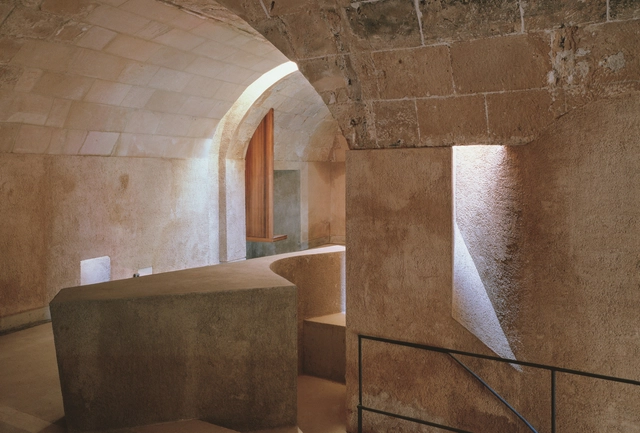
Eva Prats and Ricardo Flores started their Barcelona-based practice, Flores & Prats Arquitectes in 1998 after both worked at the office of Enric Miralles. They overlapped for about one year there, from 1993 to 1994. After her nine-year stint with Miralles, Eva won the EUROPAN III International Housing Competition with a friend. The success that led to a real commission and was going to be built, served as the springboard for starting their independent practice. Shortly thereafter they won another competition. Ricardo joined Eva after working for five years with Miralles. By then they were a couple for three years and decided to start working together. Today they practice out of the same sprawling apartment where Eva’s original studio rented a room along with several other young architects and designers. Even though the office now occupies the entire space—the architects told me they typically employ ten, no more than twelve people—they keep traces and memories of the former “dwellers” alive. Curiously, Eva and Ricardo implement the same strategy in their architectural projects as well.
In the realm of architectural design and interior furnishings, achieving a balance between form and function is a daily challenge that designers encounter. This interplay between utility and aesthetics has not only evolved over time but also involves a constant exchange of styles and production methods. Frequently, this interchange leads to standardization and generic designs, potentially causing a depletion of authenticity in the design process.
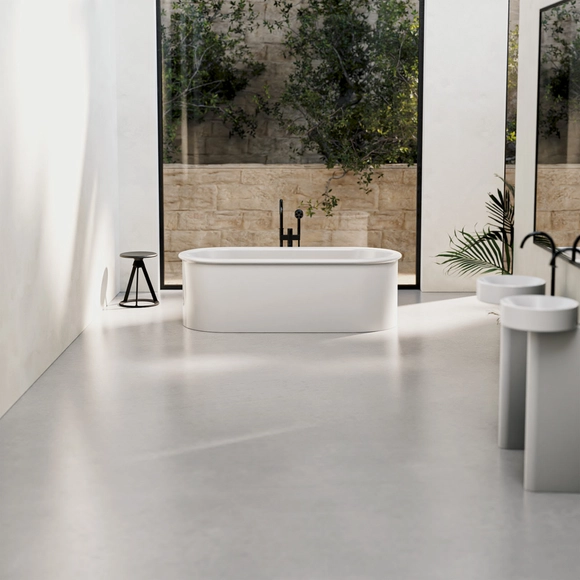
For this reason, in the contemporary era, designers are revisiting the fundamentals, rediscovering manual design processes that range from sketching to model making, all while embracing pure forms. Designers and manufacturers alike are embracing conscientious approaches to develop proposals that maintain simplicity in design while retaining a distinctive identity. In response to this, Bette, in collaboration with the British design studio Barber Osgerby, proposes the creation of minimalist-style bathrooms through the BetteSuno bathroom collection, stripping away complex shapes and seeking a light visual design.
https://www.archdaily.com/1005100/handcrafted-design-for-minimalist-washbasins-and-bathsEnrique Tovar
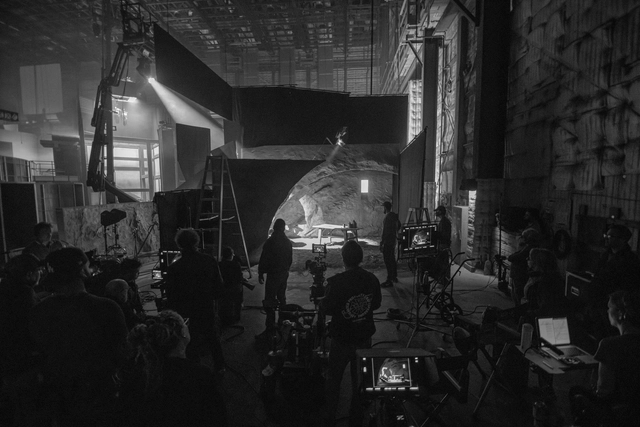
Photo set. Ensemble of doormen. The Tragedy of Macbeth. Image via Stefan Dechant
"I have a feeling we're not in Kansas anymore," Dorothy says to her dog in 1939's 'The Wizard of Oz' as she walks around, discovering a fantasy set in which, without realizing it, we find ourselves immersed. From the initial sketch to the construction of the sets, production design for film requires careful detail to truly bring visions to life and transport viewers.
In this combination of creativity, research, and collaboration, various production designers have approached us to share their adventures and design processes. The importance of creating a cohesive visual aspect, understanding language and styles, and translating all of this to the screen come together in the following series of 8 interviews we conducted with Annie Beauchamp, Luca Tranchino, Felicity Abbott, Jacinta Leong, Alexandra Schaller, Ina Mayhew, Amy Lee Wheeler, and Stefan Dechant.
In architecture, drawing is a technical and artistic expression that involves creating visual representations using various analog instruments. While drawing remains relevant and current in practice today, efforts have been made to carry out architectural tasks and studies more efficiently. The drafting machine, a significant development in this regard, enabled precise strokes using fewer instruments. However, the emergence of computational tools, such as computer-aided drafting (CAD), has revolutionized the workflow by leveraging the advantages offered by computers. Architects can now play a more direct and creative role in the design process, reducing their reliance on time-consuming drawing and repetitive tasks. Moreover, workflow enhancements have fostered more effective collaboration among different stakeholders in the architectural process.
https://www.archdaily.com/1001757/generative-space-design-exploring-8-transformative-tools-in-architectureEnrique Tovar
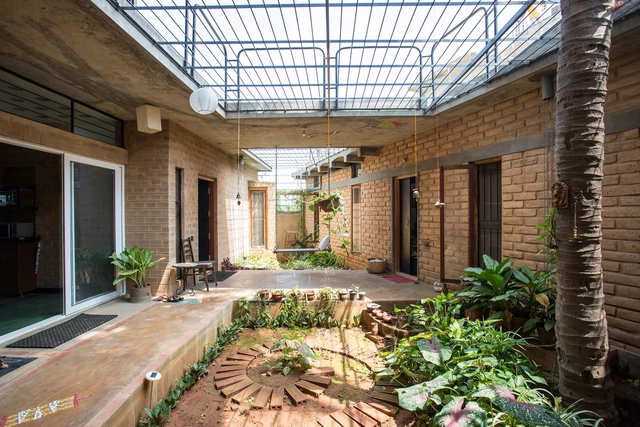
Water scarcity is one of the most stressful situations that one could ever endure. And yet, in India, a country that holds 18% of the total world population with only 4% of its water resources, this is a recurring struggle with notable numbers of Indian households having to manage water scarcity on a daily basis.
The yearly water cycle is a tough one, ranging from one extreme to another. Harsh monsoons and flood seasons turn into insufferable droughts, making it increasingly difficult to control and retain water resources. While most large-scale actions focus on consequences to agricultural and production sectors, the result is also recognizable at an individual household level. Therefore cumulative small-scale actions are relevant gateways for citizens (? people, designers) to mitigate the issue.
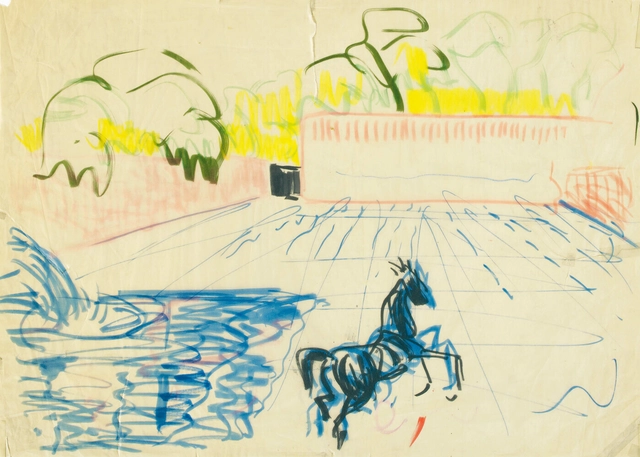
Cuadra San Cristóbal, Los Clubes, Atizapán de Zaragoza, State of Mexico, 1966-1968. Perspective sketch of the main courtyard by Luis Barragán. Image via Barragan Foundation
Two years ago, as part of an initiative by the Barragan Foundation, the launch of the institution's renewed website was announced via its Instagram account. This represented an effort to compile all the information that exists so far from the Barragán Archive that enriches the study of his career, opening up the panorama to understand his trajectory and evolution from a clear chronology, experiments, and collaborations, as well as unrealized or demolished projects. The website compiles these five decades of career, presenting a list of 170 works inside and outside the country that is updated as more material is researched and collected.
Architecture has the power to emotionally engage with its occupants. Tactfully crafted spatial moments extend architecture into experience design - a growing need in the experience economy. Through sensorial and intellectual stimulation, spaces can deeply connect with their occupants to result in memorable instances. The orchestration of an experience requires not only an understanding of spatial principles but also how the service of the space is designed.
Cities are inseparable from fast-paced lifestyles. Rising rents and “not-that-small” apartments characterize urban environments, perpetuating the chase for “bigger, faster, and more”. As economies develop and human needs grow, buildings are erected at alarming rates to rush toward progress. The risks of urban living are gradually being exposed, raising questions about more intentionally-driven actions. One way to return to slower lifestyles is by returning to slow architecture.
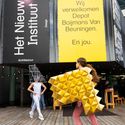
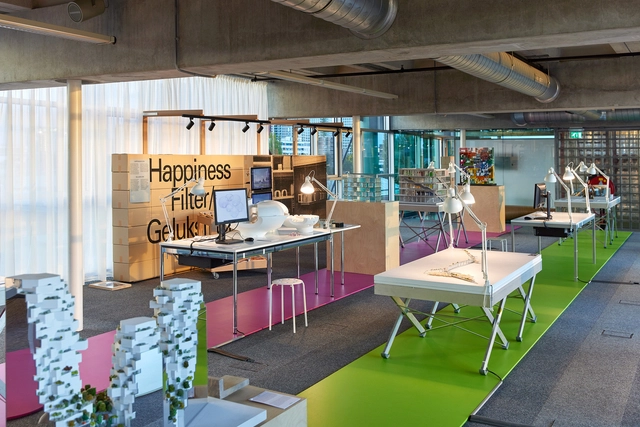
Hosted at the top floor of Het Nieuwe Instituut in Rotterdam, the Netherlands, the “MVRDVHNI: The Living Archive” exhibition showcases 30 years of MVRDV’s work, looking into the design philosophy of each project and future visions. The exhibition, which sits right next to the firm's latest project, the Depot Boijmans Van Beuningen, highlights the creative process behind each project, how they were developed, and the challenges of preserving their materials and approaches for future generations.
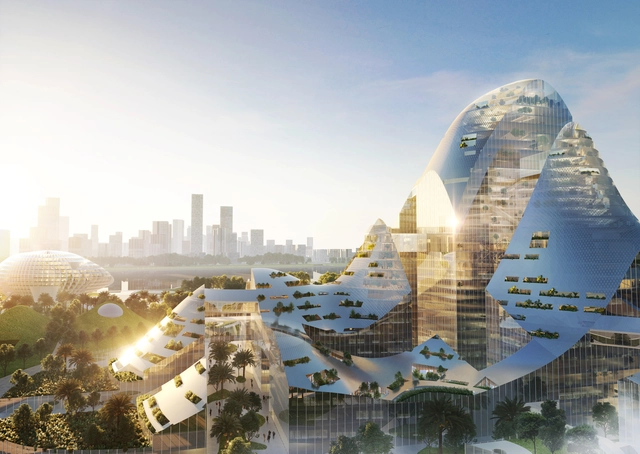
MVRDV has just released images of the firm’s competition entry for the next Tencent headquarters campus, located in Qianhai Bay, Shenzhen. Highlighting the green potential of Smart CityTechnology, the project imagines an entire urban district including offices, homes for Tencent employees, commercial units, public amenities, schools, and a conference center.
This is just one of the many questions we architects frequently ask, and get asked. But how much easier it would be if there was a foolproof way to manage revisions and know that everyone else is on top of it too.
https://www.archdaily.com/913919/the-foolproof-way-to-manage-revisionsRachel Hur
You're an architect so you know organization is key. You think you’re on top of all the categories, rules and folders in Outlook that you've created to get by. You file away all of your emails by project and category, but time and again, your email search function fails you and finding any file is a nightmare.
https://www.archdaily.com/913000/how-to-streamline-the-design-processRachel Hur
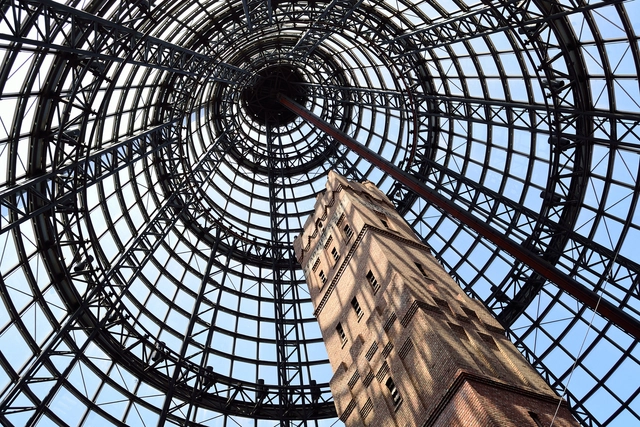
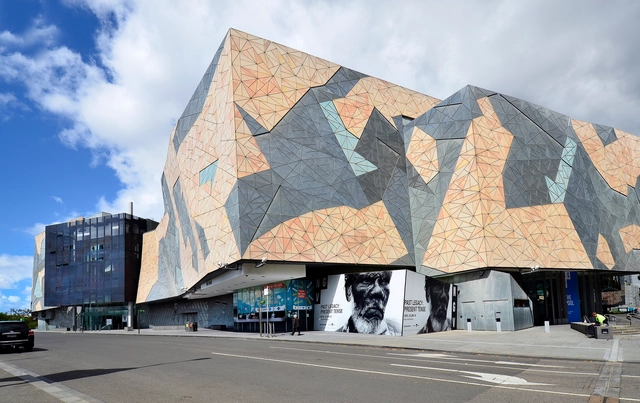
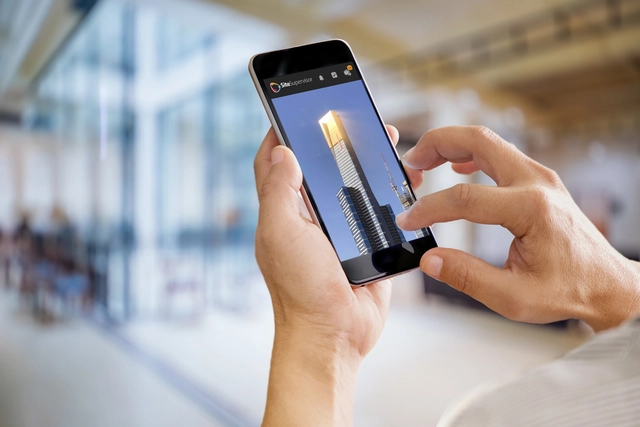
Federation Square, near the head office of SiteSupervisor, Melbourne, Australia
As architects, we often find ourselves as defacto Project Manager on site throughout construction. Whether it’s a small or large project, many of us find ourselves going from documentation to construction. SiteSupervisor provides a seamless transition from design to build that can be easily set up at the beginning of a project without costing your team more transition time, effort and money. The architect can set up the hierarchy of the project and share relevant details with assigned consultants and contractors, who can then easily pass on information to the subcontractors without breaking the communication protocols in place. So, don’t worry, you still remain in control of your project at all times.
https://www.archdaily.com/911556/how-to-make-end-to-end-design-build-easier-for-architectsRachel Hur
Communication is key. As architects, clear communication is possibly the most vital part of our role. It enables us to share our ideas with clients and is crucial in getting that vision built exactly how we want it. Starting with the parti diagrams through to intricate construction details, we know by now (many, many years post-architecture school) that we’re pretty darn good at communicating our ideas across. But have you ever thought about managing communications?
Wait. Hold on… Managing... Communications? Don’t worry, it’s not as complicated as you might think. This is just about keeping everything organized, such as your correspondence with a builder/general contractor or client. SiteSupervisor can help make this an easy process with its user-friendly interface for project communication. Here are some of the communication benefits I have found with SiteSupervisor.
https://www.archdaily.com/915149/why-managing-communications-is-essentialRachel Hur
We all get 24 hours in a day. Sometimes we feel like the clock is overtaking us with each new day adding more and more to the list that we can never seem to quite get to the end of. If only there was a way that each task could be made efficient, manageable, then the process of checking things off would be so much easier.
https://www.archdaily.com/914287/do-yourself-a-favor-and-save-timeRachel Hur
It’s a tale as old as time. The architect slaves away night after night designing the most beautiful architecture. The people are raving, excited to see what new and impressive building will go up this time. The render looks amazing!
https://www.archdaily.com/915907/realize-your-visionRachel Hur
There may be times when you remember an old project you did, perhaps at uni, that you want to show someone. The one that had the amazing render that took 10hrs of Photoshopping. But no, it’s at home on hard-drive no.2 of 5. If only you had uploaded that one to SiteSupervisor, you could be showing it off right... about... now.
SiteSupervisor is your new pocket portfolio. No, not the portfolio that you keep in the drawing tube that only ever sees the light of day at a job interview, but a real, live portfolio that you can access on your phone anytime, anywhere. It's time to take pride in the work you do and have done, and really use what you have to not only bring in more work, but also solve problems.
https://www.archdaily.com/912085/access-your-portfolio-anytime-anywhereRachel Hur











.jpg?1640769856 "© Florine van Rees")