1. ArchDaily
  2. News

News

Amazon and the Return of “Starchitecture”

Subscriber Access | 

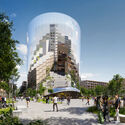
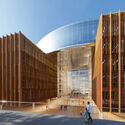
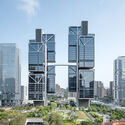
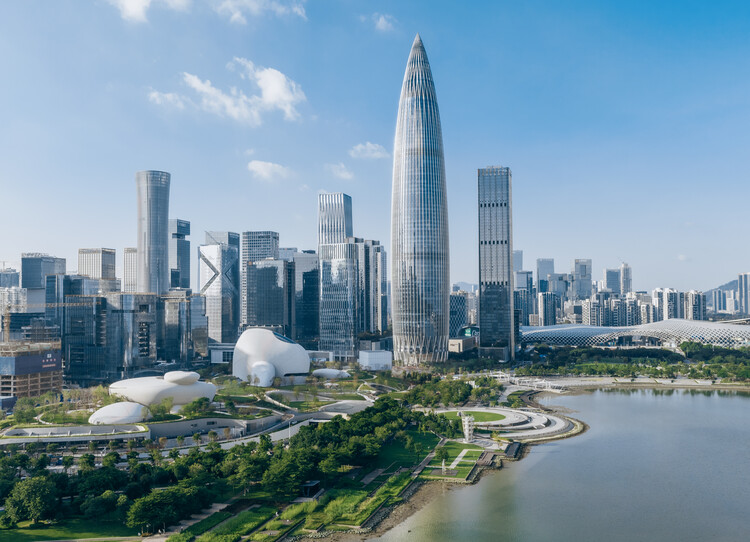
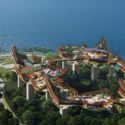
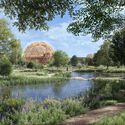
While the corporate world debates remote work, Amazon has decided to double down on physical offices. Earlier this year, the company announced plans for its new headquarters in Arlington, Virginia. The building complex will be anchored by a spiraling structure more than 100 meters tall, dubbed the Helix. In addition to 260,000 square meters of office space, there will also be 10,000 square meters of public space, including an amphitheater, a market, restaurants, and plazas. The choice of location, in the heart of the Washington, D.C. metropolitan area, stands in contrast to companies like Apple and Facebook, which built their closed-off headquarters in the suburbs.

Amazon and the Return of “Starchitecture” - Imagen 1 de 4Amazon and the Return of “Starchitecture” - Imagen 2 de 4Amazon and the Return of “Starchitecture” - Imagen 3 de 4Amazon and the Return of “Starchitecture” - Imagen 4 de 4Amazon and the Return of “Starchitecture” - More Images

How does Brutalism enter the decade that is now beginning?

How does Brutalism enter the decade that is now beginning? - Image 1 of 4How does Brutalism enter the decade that is now beginning? - Image 2 of 4How does Brutalism enter the decade that is now beginning? - Image 3 of 4How does Brutalism enter the decade that is now beginning? - Image 4 of 4How does Brutalism enter the decade that is now beginning? - More Images+ 12

"The image provided by Brutalism, an architecture of sensual extremes, is often an extraordinary and unfamiliar experience for the city explorer. There can be something aggressive and a bold vocabulary (...) in the expressive palette that displays the truth of its materials and a disdain for the frivolous." This is how Simon Phipps [1] describes the fascination that Brutalist works still hold for us today. Yet, what does it mean to think about this architecture in 2021?

Japanese architecture and its reflections in Brazil

Subscriber Access | 

Throughout the 113 years of celebrating Japanese immigration, discussions surrounding Japanese culture have gained considerable attention. As Brazil is home to the largest Japanese community outside the archipelago, the country's connection to Japanese cultural expressions is clear. Many cities settled by Japanese immigrants preserve their Japanese history and culture to this day; consequently, the architectural field has consolidated itself primarily through buildings that represent the political and social dimensions of Japanese immigration, fused with new technologies and construction methods. 

Japanese architecture and its reflections in Brazil - Image 1 of 4Japanese architecture and its reflections in Brazil - Image 2 of 4Japanese architecture and its reflections in Brazil - Image 3 of 4Japanese architecture and its reflections in Brazil - Image 4 of 4Japanese architecture and its reflections in Brazil - More Images+ 1

Assisted self-construction: an unexplored path in Brazil

Subscriber Access | 

Did you know that, in almost every part of the world, people build their homes every day without the help of architects and engineers?

Common in Brazil's peripheral areas, self-construction is an option for those who want their own customized home without facing unwanted bureaucracy or long-term debt. However, the choice to build one's own residence without the technical support of engineers and architects is often accompanied by a lack of information, which can lead to irregularities, poor construction quality, and risks for the residents.

Assisted self-construction: an unexplored path in Brazil - Image 1 of 4Assisted self-construction: an unexplored path in Brazil - Image 2 of 4Assisted self-construction: an unexplored path in Brazil - Image 3 of 4Assisted self-construction: an unexplored path in Brazil - Image 4 of 4Assisted self-construction: an unexplored path in Brazil - More Images

Manual teaches how to build a sustainable septic tank with repurposed tires

The septic tank developed by the Municipality of Uberlândia is a compelling alternative for repurposing waste materials while also addressing basic sanitation challenges common in many Brazilian cities.

The Municipal Department of Water and Sewage (DMAE) is the agency responsible for designing the system and manufacturing the sustainable septic tanks distributed in the city. To share this knowledge more widely, however, they created a step-by-step manual so the design can be replicated anywhere.

From Lina to Artigas: a friendly embrace

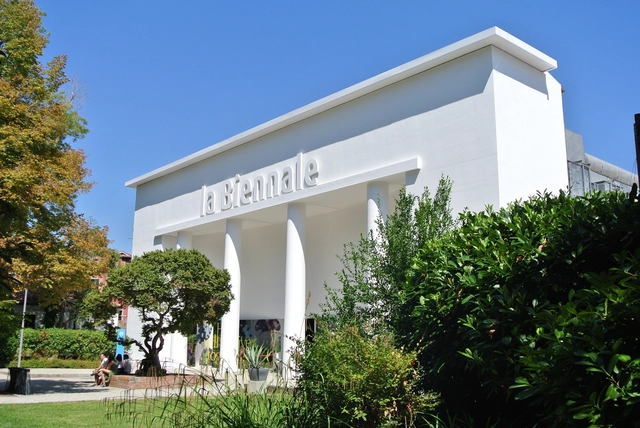
Closing out the week dedicated to publications focusing on women in architecture, as well as the week marking the posthumous recognition of Lina Bo Bardi with the Special Golden Lion from the Venice Biennale, the Virginia and Vilanova Artigas Institute shared with us a brief and touching letter sent by the Italian-Brazilian architect to Artigas on August 21, 1978.

Arquiteturas Film Festival explores the theme "Bodies Out of Space" with a selection of films from Angola

The 8th edition of the Arquiteturas Film Festival, taking place from June 1 to 6 in Lisbon, explores the theme “Bodies Out of Space” through an exploration of the social construction of space, connected by a thread running through its own narratives of domination. These are also narratives of identity, which is often stripped away or forced to represent our bodies.

Each year, the festival is dedicated to presenting documentaries, fiction, animation, and experimental films relevant to promoting contemporary Portuguese architecture both nationally and internationally. The 2021 edition is no different, structured around three distinct pillars: the official selection, the competition program, and the guest country program.

What is Brutalism?

Subscriber Access | 

Trend, style, and movement are some of the most common classifications used in attempts to define Brutalism—a term used to describe a body of architectural work produced between the 1950s and 1970s that shares certain characteristics, most notably the raw, exposed use of building materials. Defining Brutalism precisely, however, remains a difficult task, even though (or perhaps precisely because) the term has achieved such widespread currency, sparking numerous attempts to conceptualize it.

What is Brutalism? - Image 1 of 4What is Brutalism? - Image 2 of 4What is Brutalism? - Image 3 of 4What is Brutalism? - Image 5 of 4What is Brutalism? - More Images+ 1

Post-Disaster Reconstruction: How to Integrate Memory and Identity into a Completely Rebuilt Territory

Subscriber Access | 

Natural disasters, whether or not compounded by human activity, are becoming increasingly frequent in today's world.

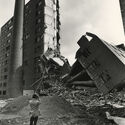
Chile has a long history of natural disasters, many of which have occurred in recent years, underscoring the dramatic and disheartening toll on its population. It is as if the country lives in a permanent state of reconstruction.

Post-Disaster Reconstruction: How to Integrate Memory and Identity into a Completely Rebuilt Territory - Image 1 of 4Post-Disaster Reconstruction: How to Integrate Memory and Identity into a Completely Rebuilt Territory - Image 2 of 4Post-Disaster Reconstruction: How to Integrate Memory and Identity into a Completely Rebuilt Territory - Image 3 of 4Post-Disaster Reconstruction: How to Integrate Memory and Identity into a Completely Rebuilt Territory - Image 4 of 4Post-Disaster Reconstruction: How to Integrate Memory and Identity into a Completely Rebuilt Territory - More Images

Design competition for energy efficiency in social housing: registration open

Gathering innovative, sustainable architectural designs for social housing that enable a reduction in energy consumption is the objective of the National Competition of Architectural Ideas for Energy Efficiency in Social Housing, launched this Monday (15) by the German governmental cooperation agency Deutsche Gesellschaft für Internationale Zusammenarbeit (GIZ) GmbH. Applications are open until April 26.

São Paulo organizations demand that the Master Plan revision be participatory and democratic even during the pandemic

One hundred and twenty civil society organizations (NGOs, institutes, foundations, collectives, and social movements) advocating for the right to the city sent an open letter to the Mayor of São Paulo, Bruno Covas, demanding that the Strategic Master Plan (PDE) review process be conducted by the Municipal Government in a way that guarantees full public participation, respecting the principles of democracy, popular sovereignty, and transparency, even amid the pandemic.

Instructions for Climbing an Escalator: Photography as an Element of Analysis of the Appropriation of the Body and Its Historical Relations

Subscriber Access | 

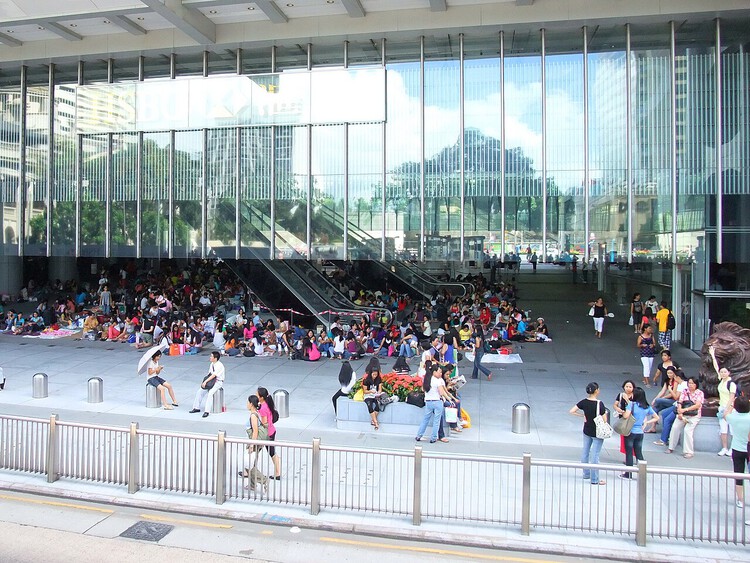
Stairs vs. Escalators. Until the beginning of the 20th century, vertical circulation was carried out through stairs. Without the apparatus of electricity, vertical circulation demanded physical effort and the attention of users, relying solely on human strength. The escalator emerged "with the rush of industrial inventions together with the science fiction desires of the 1800s, presented in 1915 as an object of entertainment at the great exhibitions of Paris and Coney Island" (KOOLHAAS, 2014, p. 1303). Soon after, it began to be used as a functional element of circulation. Initially, its use was intended to replace common stairs; however, the new technological apparatus failed to fulfill this function, becoming a complementary element and acquiring a new meaning. With larger steps to accommodate a standing, stationary body, the escalator enables a more intense flow of people, connecting steeper spaces within a smaller footprint. Compared to stairs, escalators demand different rhythms, sensations, and physical conditioning from those who traverse them. 
Instructions for Climbing an Escalator: Photography as an Element of Analysis of the Appropriation of the Body and Its Historical Relations - 1 的图像 4Instructions for Climbing an Escalator: Photography as an Element of Analysis of the Appropriation of the Body and Its Historical Relations - 2 的图像 4Instructions for Climbing an Escalator: Photography as an Element of Analysis of the Appropriation of the Body and Its Historical Relations - 3 的图像 4Instructions for Climbing an Escalator: Photography as an Element of Analysis of the Appropriation of the Body and Its Historical Relations - 4 的图像 4Instructions for Climbing an Escalator: Photography as an Element of Analysis of the Appropriation of the Body and Its Historical Relations - More Images+ 10

How do forests ensure water for cities?

Subscriber Access | 

Water is an essential resource for human life. Ensuring basic sanitation and clean drinking water is one of humanity's greatest challenges. In both urban and rural areas, access to water is critical for the health and well-being of communities and for the success of a wide range of human activities. 

This is why the water crisis is such an alarming threat. Rising global temperatures and natural disasters associated with climate change contribute to this scenario. Studies suggest that by 2025, approximately 1.8 billion people will face water scarcity.

World Water Day: Reuse and Sustainability in Architectural Projects

Subscriber Access | 

Today, March 22, marks World Water Day. According to data from the UN, the organization responsible for establishing this commemorative date, by the year 2050, between 3.5 billion and 4.4 billion people will have limited access to this resource, the use of which increased sixfold over the last century and currently grows at a rate of approximately 1% per year.

In light of such concerning figures, the concept of sustainability and the importance of solutions aimed at water conservation and reuse become even more critical.

World Water Day: Reuse and Sustainability in Architectural Projects - Imagem 3 de 4World Water Day: Reuse and Sustainability in Architectural Projects - Imagem 4 de 4World Water Day: Reuse and Sustainability in Architectural Projects - Imagem 6 de 4World Water Day: Reuse and Sustainability in Architectural Projects - Imagem 7 de 4World Water Day: Reuse and Sustainability in Architectural Projects - More Images+ 4

The future of food is flexible, autonomous, and passes through cities

Subscriber Access | 

Twelve thousand years ago, our ancestors noticed that wherever a seed or fruit fell, a plant grew. Realizing they could intentionally plant seeds and harvest them later, they stopped migrating in search of food and settled permanently where they could cultivate. In doing so, they began establishing the world's first cities and inventing what we now call agriculture.

The future of food is flexible, autonomous, and passes through cities - Imagem 1 de 4The future of food is flexible, autonomous, and passes through cities - Imagem 2 de 4The future of food is flexible, autonomous, and passes through cities - Imagem 3 de 4The future of food is flexible, autonomous, and passes through cities - Imagem 4 de 4The future of food is flexible, autonomous, and passes through cities - More Images+ 1

Other ways of building: women's production in the field of architecture

Subscriber Access | 

Through its Seminar on Culture and Contemporary Reality course, Escola da Cidade, in collaboration with the Carmen Portinho Feminist Collective, hosted seven women to discuss architectural production in today's context and how gender issues intersect with this field.

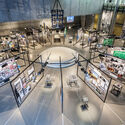
12 Free Virtual Exhibitions on Cities and Urbanism

Subscriber Access | 

We have curated a selection of online exhibitions on urbanism—available for free on Google Arts & Culture—exploring the history of development in major cities around the world. Discover them below:

The importance of architecture in disease prevention and control

Subscriber Access | 

In today's global landscape, bridging architectural studies and public health is highly critical. The year 2020 brought the world to a standstill, underscoring the urgent need to focus on the most vulnerable areas. How can we guarantee high-quality public services equally to an entire population when the urban environment of one segment is so deeply compromised? Finding answers to this question is essential to planning a sustainable future for humanity. 

To this end, this article reflects on spatial socioeconomic inequality, positioning architecture as a tool for transforming these spaces. It presents data on the housing and urban conditions of substandard settlements (referred to by the Brazilian Institute of Geography and Statistics - IBGE as "subnormal agglomerations") and analyzes the neglected diseases affecting these communities.

UIA2021RIO launches its virtual programming with debates on architecture, peripheries, and social inclusion.

Subscriber Access | 

The 27th World Congress of Architects launched its online program this week, preceding the in-person events scheduled to take place between July 18 and 22. Social inclusion, the periphery, and architectural interventions in favelas were the topics of debates featuring Fabienne Hoelzel, Maria Alice Rezende de Carvalho, Alfredo Brillembourg, Jorge Mário Jáuregui, Alejandro Echeverri, and Adriana Levisky.

The Body Beyond Itself and Architecture: Hundertwasser's Five Skins

Subscriber Access | 

Imagining and experiencing alternative ways to understand the relationship between the human body, space, and the ideas that connect it to the world was one of the central themes that Hundertwasser brought to light. The Austrian artist and architect, born in 1928, dedicated much of his work to environmental issues, expressing his perspective through the theory of the five skins: the epidermis, clothing, the home, social identity, and the world. Due to its universality, this concept retains a contemporary relevance.

The Body Beyond Itself and Architecture: Hundertwasser's Five Skins - Imagen 1 de 4The Body Beyond Itself and Architecture: Hundertwasser's Five Skins - Imagen 2 de 4The Body Beyond Itself and Architecture: Hundertwasser's Five Skins - Imagen 3 de 4The Body Beyond Itself and Architecture: Hundertwasser's Five Skins - Imagen 4 de 4The Body Beyond Itself and Architecture: Hundertwasser's Five Skins - More Images+ 5

Flávio Villaça Dies at 91 in São Paulo

With a foundational career as a professor at FAUUSP, serving for 15 years at the São Paulo Municipal Planning Department and as an urban planning consultant for municipal, state, and federal agencies, Flávio Villaça will be remembered for his professional integrity and as one of Brazil's most prominent urban theorists. His intellectual work shaped generations of architects and urban planners, fostering a critical perspective on Brazilian cities—their development, inequalities, segregation, and potential.

Challenges and advantages of implementing BIM software in architecture firms

Subscriber Access | 

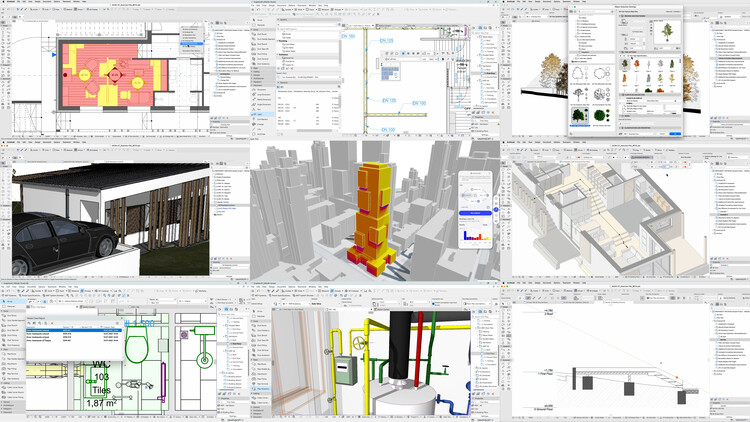
More than just software, BIM (Building Information Modeling) represents an entire approach to representing, modeling, and managing a project, factoring in different dimensions and quality parameters throughout a building's design and subsequent operation—such as architectural design, budgeting, process management, thermal performance, and the environmental impact of materials and their application. Design thinking through BIM must be implemented from the very initial ideas and is most effective when it influences the entire decision-making chain that shapes the project, including post-occupancy evaluations. 

The concrete poetics of Pier Luigi Nervi, pioneer of Brutalism

Subscriber Access | 

Pier Luigi Nervi is a curious case in architectural history. He designed large reinforced concrete buildings—and was even responsible for technical developments related to this material—defined by their bold, expressive, and heroic structural concepts. His design method was similar to Le Corbusier's during his so-called "Brutalist phase," which "(...) approached the architectural program starting from general principles, subsequently adapting them to the real situation. The project was defined by the structural concept [partido], which was organized from the general to the particular" (Acayaba, 1985). This is evident in the Italian's buildings, which are largely pavilion-like structures in which a massive structural roof spans the specificities of the program.

The concrete poetics of Pier Luigi Nervi, pioneer of Brutalism - Imagen 1 de 4The concrete poetics of Pier Luigi Nervi, pioneer of Brutalism - Imagen 2 de 4The concrete poetics of Pier Luigi Nervi, pioneer of Brutalism - Imagen 3 de 4The concrete poetics of Pier Luigi Nervi, pioneer of Brutalism - Imagen 4 de 4The concrete poetics of Pier Luigi Nervi, pioneer of Brutalism - More Images+ 2

Traffic evaporation: what happens when road space is redistributed

Subscriber Access | 

The construction of streets throughout the twentieth century was largely based on the premise that more infrastructure eases traffic. Evidence shows, however, that instead of reducing congestion, building more roads actually increases traffic. Reducing drive times makes driving more convenient; consequently, coupled with the status-symbol appeal of private vehicles, people tend to make more trips by car. A recent study by researchers at the University of Barcelona analyzed data from 545 European cities between 1985 and 2005, confirming that two decades of efforts to expand road capacity led to an increase—rather than a decrease—in vehicle traffic, failing to alleviate congestion.

You've started following your first account!

Did you know?

You'll now receive updates based on what you follow! Personalize your stream and start following your favorite authors, offices and users.