Camilla Ghisleni

BROWSE ALL FROM THIS AUTHOR HERE

Designing the School of the Future: Multifunctional Spaces for Dynamic Learning

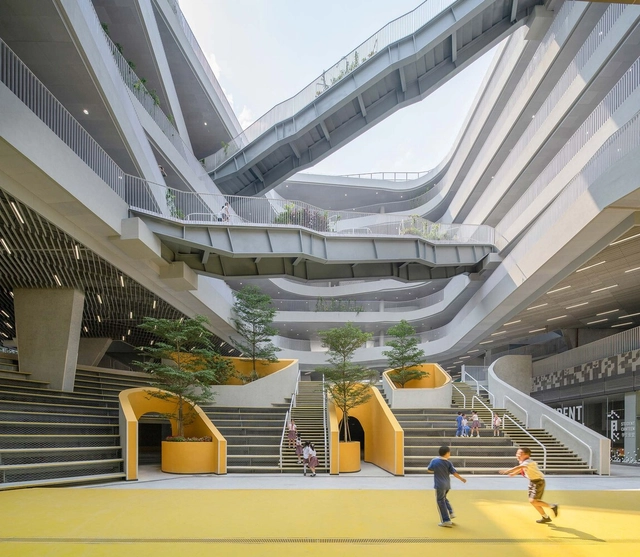
The 21st century has dramatically transformed school architecture, driven by new educational philosophies, technological progress, and social values emphasizing sustainability and inclusion. This change goes beyond mere aesthetics, deeply reshaping how physical spaces contribute to education. Traditional narrow hallways and rows of desks have been replaced by dynamic, flexible spaces that are well-integrated with their surroundings and the community. These modern designs prioritize versatility and multifunctionality.

Designing the School of the Future: Multifunctional Spaces for Dynamic Learning - Image 1 of 4Designing the School of the Future: Multifunctional Spaces for Dynamic Learning - Image 2 of 4Designing the School of the Future: Multifunctional Spaces for Dynamic Learning - Image 3 of 4Designing the School of the Future: Multifunctional Spaces for Dynamic Learning - Image 4 of 4Designing the School of the Future: Multifunctional Spaces for Dynamic Learning - More Images+ 8

Beyond Sports: 10 Reversible and Multifunctional Olympic Villages

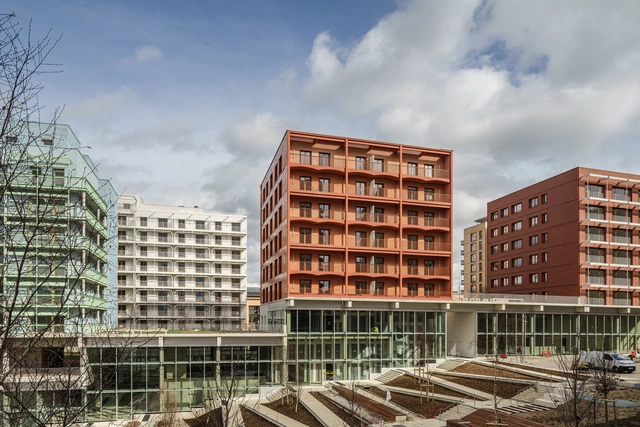
The first Olympic village was built for the 1924 Summer Games in Paris. Before this, athletes stayed in hotels, hostels, schools, headquarters, and even on the ships that brought them to the host cities. Pierre de Coubertin, co-founder of the International Olympic Committee (IOC), proposed the idea of an Olympic village. He realized it would be more cost-effective to house athletes in temporary structures rather than hotels. He believed the village would also create a sense of community among the international competitors.

Beyond Sports: 10 Reversible and Multifunctional Olympic Villages - Image 1 of 4Beyond Sports: 10 Reversible and Multifunctional Olympic Villages - Image 2 of 4Beyond Sports: 10 Reversible and Multifunctional Olympic Villages - Image 3 of 4Beyond Sports: 10 Reversible and Multifunctional Olympic Villages - Image 4 of 4Beyond Sports: 10 Reversible and Multifunctional Olympic Villages - More Images+ 7

Reimagining an Abandoned Urban Landmark: The Story Behind the Piraeus Tower in Athens, Greece

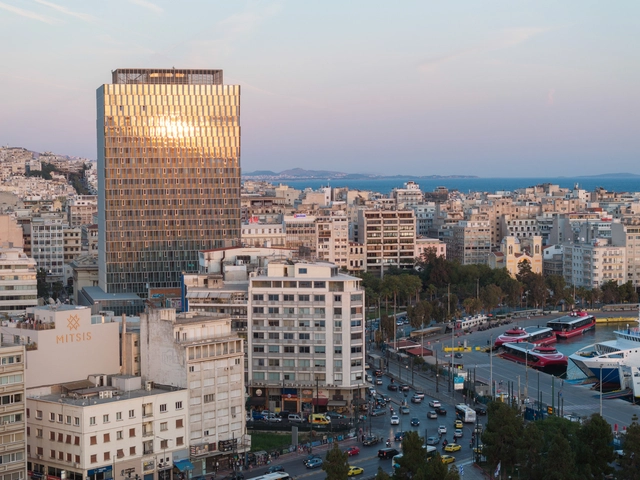
The landmark of Piraeus, located in the heart of the largest passenger port in Europe, began construction in 1972 but remained unfinished and vacant for decades. Finally completed in 2023, after an international competition, it now stands as Greece's first green and digital skyscraper. The architectural firm PILA took on the design of the facades, while the office ASPA-KST designed the commercial spaces, and the new general architectural study was entrusted to Betaplan. After over four years of renovation, Piraeus Tower officially opened its doors to tenants and visitors on June 4th with a night of celebrations, establishing itself as a bustling hub and injecting vitality into the area.

Reimagining an Abandoned Urban Landmark: The Story Behind the Piraeus Tower in Athens, Greece - Image 1 of 4Reimagining an Abandoned Urban Landmark: The Story Behind the Piraeus Tower in Athens, Greece - Image 2 of 4Reimagining an Abandoned Urban Landmark: The Story Behind the Piraeus Tower in Athens, Greece - Image 3 of 4Reimagining an Abandoned Urban Landmark: The Story Behind the Piraeus Tower in Athens, Greece - Image 4 of 4Reimagining an Abandoned Urban Landmark: The Story Behind the Piraeus Tower in Athens, Greece - More Images+ 14

How to Improve Energy Efficiency in Modernist Buildings?

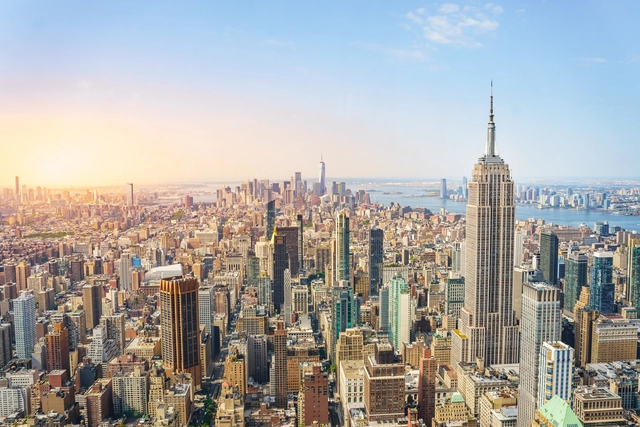
Throughout the history of architecture, energy efficiency, and CO2 emissions were considered marginal issues until the late 20th century. The low scores of some iconic modernist buildings in the Energy Star certification program illustrate this situation. The MetLife/PanAm Building (designed by Walter Gropius and Pietro Belluschi in 1963) received a dismal score of 39 (on a scale of 0 to 100), while the Lever House (designed by Skidmore, Owings & Merrill in 1952) scored 20. The worst performance was by Mies Van der Rohe's iconic Seagram Building, constructed in 1958, which received only 3 points. On the other hand, two revered Art Deco buildings from the 1930s, the Chrysler Building and the Empire State Building achieved scores of 84 and 80, respectively, as a result of extensive upgrades to their mechanical and insulation systems.

How to Improve Energy Efficiency in Modernist Buildings? - Image 1 of 4How to Improve Energy Efficiency in Modernist Buildings? - Image 2 of 4How to Improve Energy Efficiency in Modernist Buildings? - Image 3 of 4How to Improve Energy Efficiency in Modernist Buildings? - Image 4 of 4How to Improve Energy Efficiency in Modernist Buildings? - More Images+ 5

Urban Spaces for an Overheated Planet: 12 Projects that tackle this Global Challenge

Subscriber Access | 

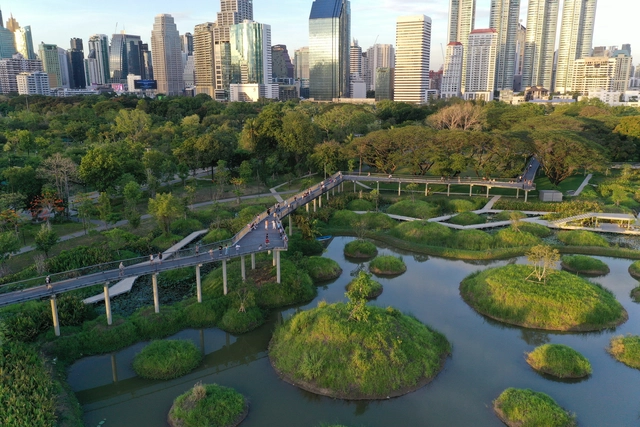
Due to climate change, heat waves are becoming increasingly frequent and intense, and they present a critical challenge for the design of urban spaces. Elevated temperatures exacerbate public health issues, increase energy consumption, and diminish cities' overall quality of life. Urban design must adopt strategies that promote resilience to mitigate these effects rather than merely replicating traditional formats that do not address the thermal stress experienced by many.

For quite some time, we have recognized the positive effects of urban green spaces, interaction with nature, water, and soil, and the associated health and well-being benefits for residents living next to parks. The significance of this matter has been further underscored, particularly in the aftermath of the panic induced by the Covid-19 pandemic. However, the present moment once again highlights the influence of our urban models on modern life, now grappling with unprecedented extreme temperatures.

Urban Spaces for an Overheated Planet: 12 Projects that tackle this Global Challenge - Image 1 of 4Urban Spaces for an Overheated Planet: 12 Projects that tackle this Global Challenge - Image 2 of 4Urban Spaces for an Overheated Planet: 12 Projects that tackle this Global Challenge - Image 3 of 4Urban Spaces for an Overheated Planet: 12 Projects that tackle this Global Challenge - Image 4 of 4Urban Spaces for an Overheated Planet: 12 Projects that tackle this Global Challenge - More Images+ 14

How Are Super Tall Buildings Aging?

In 1853, at the New York World Expo, a man climbed onto a suspended platform and ordered the rope supporting it to be cut. He dropped a few inches, but the safety system activated, and the platform remained stable, to the delight of the watching crowd. At that moment, perhaps not even Elisha Graves Otis realized how his invention would permanently change the course of architecture.

With the invention of the elevator, the sky became the limit, and buildings of 7 to 10 stories began to appear. Mosette Broderick, Director of Architectural and Urban Studies at New York University, explains that the Equitable Life Assurance Building that opened in 1870 with seven stories inspired both fascination and fear.

How Are Super Tall Buildings Aging? - Image 1 of 4How Are Super Tall Buildings Aging? - Image 2 of 4How Are Super Tall Buildings Aging? - Image 3 of 4How Are Super Tall Buildings Aging? - Image 4 of 4How Are Super Tall Buildings Aging? - More Images+ 2

Overcoming Barriers: 4 Residential Projects with Accessibility Strategies in Latin America

Subscriber Access | 

According to the United Nations (UN), over 1 billion people worldwide live with disabilities, whether physical or intellectual, with 80% residing in Global South countries. Despite advancements in their rights, they still encounter significant barriers and remain among the most marginalized in accessing essential services like healthcare, education, and employment. In this context, architecture is crucial for ensuring safety and spatial independence, enabling their full and effective participation in society.

Overcoming Barriers: 4 Residential Projects with Accessibility Strategies in Latin America - Image 1 of 4Overcoming Barriers: 4 Residential Projects with Accessibility Strategies in Latin America - Image 2 of 4Overcoming Barriers: 4 Residential Projects with Accessibility Strategies in Latin America - Image 3 of 4Overcoming Barriers: 4 Residential Projects with Accessibility Strategies in Latin America - Image 4 of 4Overcoming Barriers: 4 Residential Projects with Accessibility Strategies in Latin America - More Images+ 8

Perfect Days: An Ode to Tokyo's Public Toilets

Subscriber Access | 

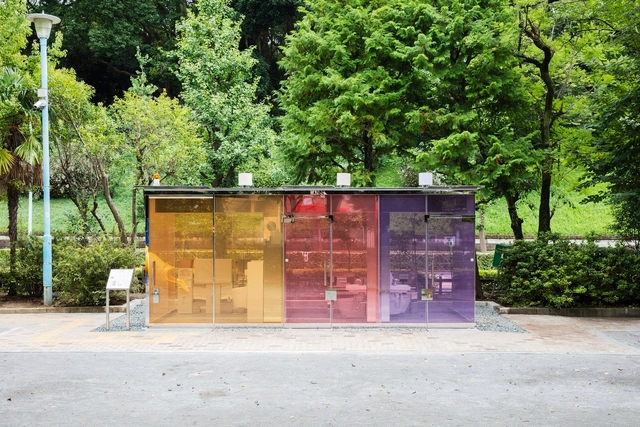
"A bathroom is a place where everyone is equal—there is no rich or poor, no old or young; everyone is part of humanity." This reflection was shared by Wim Wenders, exponent of New German Cinema and director of the film Perfect Days (2023) when asked about the striking sets of his most recent work. Wenders selected Tokyo's public restrooms to craft a narrative that deeply explores themes of solitude, simplicity, and the beauty of everyday life.

The story follows Hirayama, a middle-aged man working as a public toilet cleaner in Tokyo. His life is simple and routine, yet filled with small pleasures and moments of reflection. This modest lifestyle contrasts with the technological, colorful, and innovative designs of the public restrooms he cleans every day.

Perfect Days: An Ode to Tokyo's Public Toilets - Image 1 of 4Perfect Days: An Ode to Tokyo's Public Toilets - Image 2 of 4Perfect Days: An Ode to Tokyo's Public Toilets - Image 3 of 4Perfect Days: An Ode to Tokyo's Public Toilets - Image 4 of 4Perfect Days: An Ode to Tokyo's Public Toilets - More Images+ 12

Dystopian Disneyland: The Story Behind Turkey’s Castle Ghost Town

Subscriber Access | 

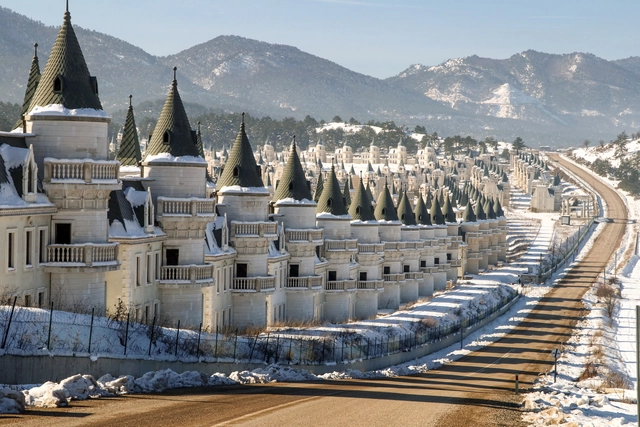
Most of us have probably imagined living in a castle at some point, whether during childhood, enchanted by fairy tales, or as adults studying European monarchies. Considering this fascination, what would you think if you had the chance to buy your castle? In mid-2014, you could make that dream a reality in Turkey for just $370,000. Each luxurious 325-square-meter castle came complete with blue turrets and spiral staircases. The only catch? Your castle would be one of 731 identical ones. But who cares about exclusivity when you have the chance to live in a Disney fairy tale?

Dystopian Disneyland: The Story Behind Turkey’s Castle Ghost Town - Image 1 of 4Dystopian Disneyland: The Story Behind Turkey’s Castle Ghost Town - Image 2 of 4Dystopian Disneyland: The Story Behind Turkey’s Castle Ghost Town - Image 3 of 4Dystopian Disneyland: The Story Behind Turkey’s Castle Ghost Town - Image 4 of 4Dystopian Disneyland: The Story Behind Turkey’s Castle Ghost Town - More Images+ 2

Urban Landscape as an "Art of Survival”: An interview with Kongjian Yu, the Advocate of the Sponge Cities Concept

Subscriber Access | 

Alarming cases of climate disasters are a constant presence in world news. Last month's floods in southern Brazil gained special attention from heat waves and forest fires to droughts and cyclones. This tragedy, which left over half a million people homeless, was understood to be the result of a combination of factors, including human actions that have devastated ecosystems to create environmentally irresponsible cities.

In this context, the work of Beijing-based architect Kongjian Yu, founder of the landscape architecture firm Turenscape, has gained international visibility and recognition, which included receiving the 2023 Cornelia Hahn Oberlander International Landscape Architecture Prize (“Oberlander Prize”). His "sponge cities" concept, designed to address and prevent urban flooding in the face of accelerated climate change, was adopted as national policy in China in 2013. This approach prioritizes large-scale nature-based infrastructures such as wetlands, greenways, and parks.

Urban Landscape as an "Art of Survival”: An interview with Kongjian Yu, the Advocate of the Sponge Cities Concept - Arch Daily InterviewsUrban Landscape as an "Art of Survival”: An interview with Kongjian Yu, the Advocate of the Sponge Cities Concept - Arch Daily InterviewsUrban Landscape as an "Art of Survival”: An interview with Kongjian Yu, the Advocate of the Sponge Cities Concept - Arch Daily InterviewsUrban Landscape as an "Art of Survival”: An interview with Kongjian Yu, the Advocate of the Sponge Cities Concept - Arch Daily InterviewsUrban Landscape as an Art of Survival”: An interview with Kongjian Yu, the Advocate of the Sponge Cities Concept - More Images+ 4

What Are Vernacular Technologies?

Vernacular architecture has been gaining more and more space in theory and design practice, with its characteristics being studied and revised. An impulse related to different factors, but mainly to the context of climate change that we are experiencing, which calls for more sustainable and context-connected construction solutions.

Within this scope, much is said about the different vernacular techniques employed in architecture, whether it is the production of adobe bricks, thatched roofs, woven bamboo walls, among many others. However, while vernacular technique focuses on specific actions or skills, its meaning differs from vernacular technologies.

What Are Vernacular Technologies? - Image 1 of 4What Are Vernacular Technologies? - Image 2 of 4What Are Vernacular Technologies? - Image 3 of 4What Are Vernacular Technologies? - Image 4 of 4What Are Vernacular Technologies? - More Images

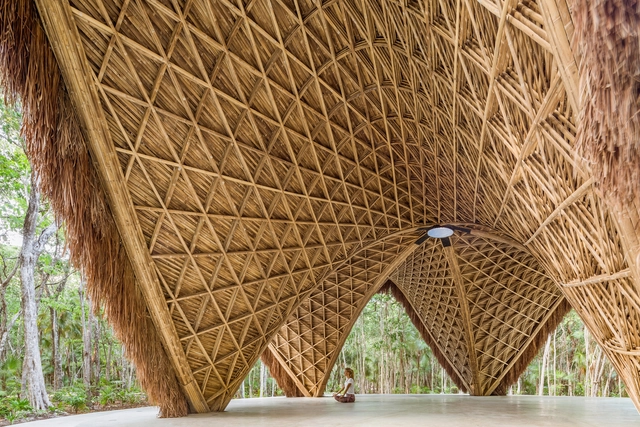
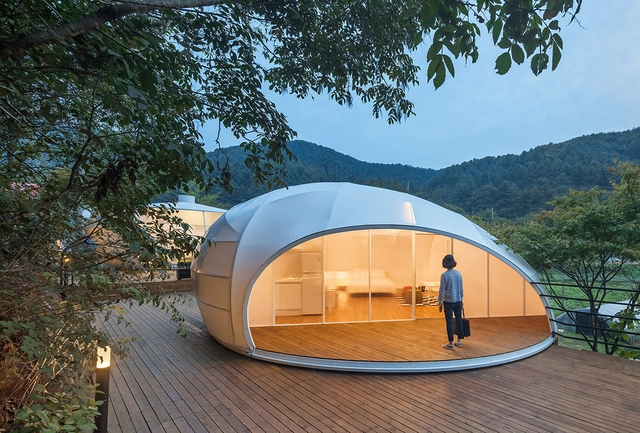
Architecture for Glamping: Embracing Nature with Comfort

Camping, as defined in dictionaries, involves temporarily staying outdoors, setting up makeshift accommodations, and settling in natural surroundings. In architecture, tents symbolize these aspects, representing a typology that has endured across centuries and cultures, often linked with notions of impermanence and vulnerability.

In light of this common understanding, the term 'glamping' emerged in the early 2000s, blending 'camping' with 'glamour,' suggesting a fusion of camping with luxurious amenities. However, despite its recent popularization, the concept is far from original. Camping has not always been seen as the antithesis of luxury.

Architecture for Glamping: Embracing Nature with Comfort - Image 1 of 4Architecture for Glamping: Embracing Nature with Comfort - Image 2 of 4Architecture for Glamping: Embracing Nature with Comfort - Image 3 of 4Architecture for Glamping: Embracing Nature with Comfort - Image 4 of 4Architecture for Glamping: Embracing Nature with Comfort - More Images+ 12

Land as Raw Material: Latin American Homes Built With Locally Sourced Soil

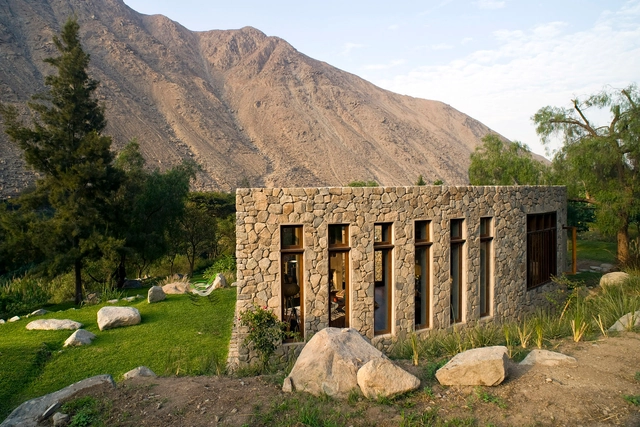
Organizing, shaping, stacking. Transforming raw materials from the soil into architecture. This is a challenge that many Latin American architects embrace, demonstrating that scarcity can be daunting but also a rich opportunity to unleash creativity.

The use of materials extracted from the local soil serves a dual purpose. In regions with limited industrialization, using locally sourced materials makes economic sense because industrial materials such as concrete and steel are expensive and often require long-distance transportation, adding to their cost. Environmentally, choosing locally sourced materials from the start of a project reduces transportation needs and carbon emissions, supporting sustainability efforts.

Land as Raw Material: Latin American Homes Built With Locally Sourced Soil - Image 1 of 4Land as Raw Material: Latin American Homes Built With Locally Sourced Soil - Image 2 of 4Land as Raw Material: Latin American Homes Built With Locally Sourced Soil - Image 3 of 4Land as Raw Material: Latin American Homes Built With Locally Sourced Soil - Image 4 of 4Land as Raw Material: Latin American Homes Built With Locally Sourced Soil - More Images+ 9

Floods in Rio Grande do Sul: The Tragedy of Non-Resilient Cities

Subscriber Access | 

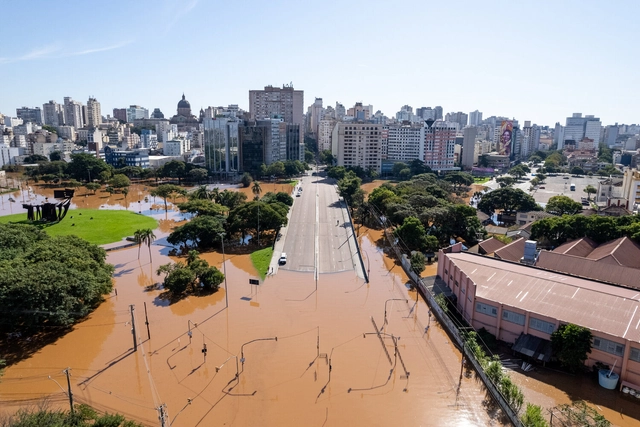
The world has changed, and accepting this fact is no longer a matter of choice but survival. Our rainfall patterns, periods of drought, average temperatures, sea levels—everything is in constant flux. The denialist stance of many countries, including Brazil, has led to catastrophic situations like the one we are facing now.

The floods that devastated the southern region of the country in recent days cannot be considered isolated incidents. Due to global warming, climate events like this will become increasingly frequent. In other words, unfortunately, we cannot prevent them from happening, but we can—and must—make our cities more resilient to these situations.

Floods in Rio Grande do Sul: The Tragedy of Non-Resilient Cities - Image 1 of 4Floods in Rio Grande do Sul: The Tragedy of Non-Resilient Cities - Image 2 of 4Floods in Rio Grande do Sul: The Tragedy of Non-Resilient Cities - Image 3 of 4Floods in Rio Grande do Sul: The Tragedy of Non-Resilient Cities - Image 4 of 4Floods in Rio Grande do Sul: The Tragedy of Non-Resilient Cities - More Images+ 11

Kenyatta International Convention Center: A Modernist Icon of Post-Colonial African Architecture

Subscriber Access | 

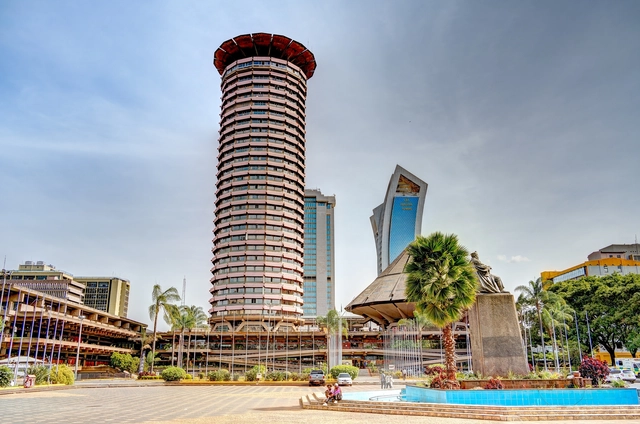
The modern and futuristic architecture of Sub-Saharan Africa reflects the aspirations and progressive spirit that dominated the early years of independence for many countries in this region between the late 1950s and early 1960s. This architectural production, coinciding with economic growth, employed complex construction methods in designs that seamlessly blended interior and exterior spaces (thanks to the tropical climate), focusing on form and expression of materiality. From this fusion of specific conditions emerged architectural masterpieces of unique value that demand 'rediscovery,' among them the Kenyatta International Convention Center (KICC) in Nairobi, Kenya.

Amazonian Cities: What It Is Like to Live Close to the Largest Tropical Rainforest on the Planet

Subscriber Access | 

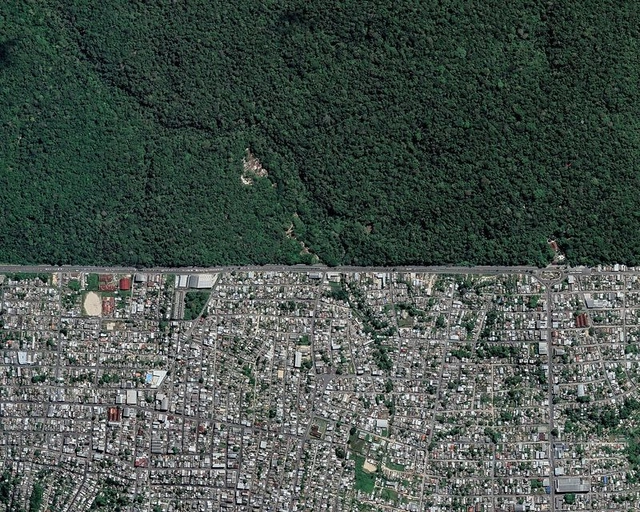
The world has its eyes on the Amazon. Geographical data about this vast territory, spanning 6.74 million square kilometers across eight countries in Latin America, is constantly featured in national and international media. Headlines often highlight its sheer magnitude as the largest tropical rainforest in the world, home to 10% of the planet's biodiversity, and responsible for 15% of the Earth's freshwater. However, little attention is paid to what transpires beneath its canopy, on the ground where people live.

Amazonian Cities: What It Is Like to Live Close to the Largest Tropical Rainforest on the Planet - Image 1 of 4Amazonian Cities: What It Is Like to Live Close to the Largest Tropical Rainforest on the Planet - Image 2 of 4Amazonian Cities: What It Is Like to Live Close to the Largest Tropical Rainforest on the Planet - Image 3 of 4Amazonian Cities: What It Is Like to Live Close to the Largest Tropical Rainforest on the Planet - Image 4 of 4Amazonian Cities: What It Is Like to Live Close to the Largest Tropical Rainforest on the Planet - More Images+ 7

Between Modular and Vernacular: How Combining Construction Techniques Can Bring Agility and Identity to Social Housing in the Global South

The opening scenes of the award-winning Brazilian film "City of God" (2002) portray a newly constructed housing complex situated on the outskirts of Rio de Janeiro. Subsequently, this complex evolves into a hub of poverty and violence. Despite the film being set in the 1960s, the housing development depicted was a recent construction.

This choice made no difference because, despite the 40-year difference between the depicted era in the film and the time of filming, the architectural solutions employed by housing programs in the country remained stagnant. They continued to replicate outdated models, showcasing a lack of progress in the sector.

Between Modular and Vernacular: How Combining Construction Techniques Can Bring Agility and Identity to Social Housing in the Global South - Image 1 of 4Between Modular and Vernacular: How Combining Construction Techniques Can Bring Agility and Identity to Social Housing in the Global South - Image 2 of 4Between Modular and Vernacular: How Combining Construction Techniques Can Bring Agility and Identity to Social Housing in the Global South - Image 3 of 4Between Modular and Vernacular: How Combining Construction Techniques Can Bring Agility and Identity to Social Housing in the Global South - Image 4 of 4Between Modular and Vernacular: How Combining Construction Techniques Can Bring Agility and Identity to Social Housing in the Global South - More Images+ 8

7 Bioclimatic Façade Strategies for Tropical Architecture

Subscriber Access | 

When we think of the word "tropic," the image that typically comes to mind is an exotic space, characterized by perpetual warmth and humidity, with frequent and heavy rainfall nurturing lush vegetation. Throughout history, this tropical climate has been romanticized as a paradise and criticized for potentially fostering weakness due to its perceived clemency.

Thankfully, those judgments and associations have been relegated to the past, paving the way for theoretical and practical projects that outline the advantages and disadvantages of living in a tropical climate. These projects acknowledge the various strategies to enhance human adaptability within these distinctive climatic conditions.


7 Bioclimatic Façade Strategies for Tropical Architecture - Image 1 of 47 Bioclimatic Façade Strategies for Tropical Architecture - Image 2 of 47 Bioclimatic Façade Strategies for Tropical Architecture - Image 3 of 47 Bioclimatic Façade Strategies for Tropical Architecture - Image 4 of 47 Bioclimatic Façade Strategies for Tropical Architecture - More Images+ 15