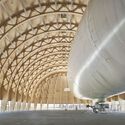
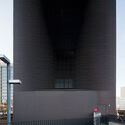
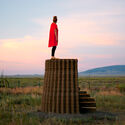
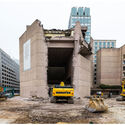
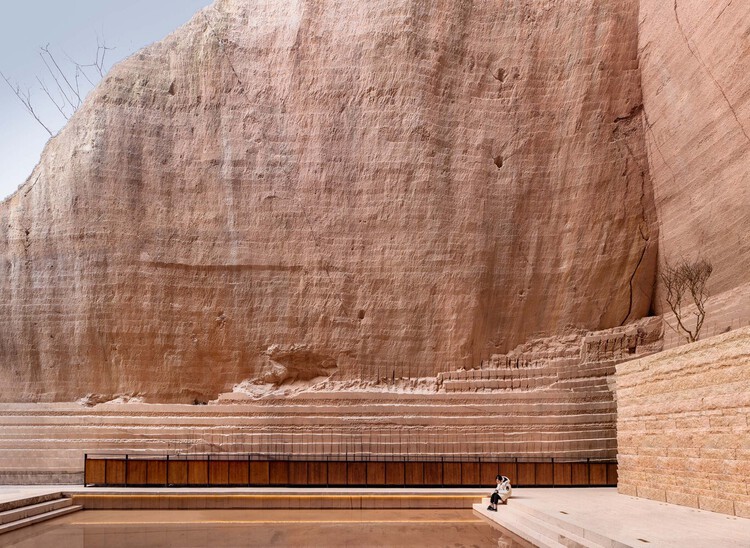
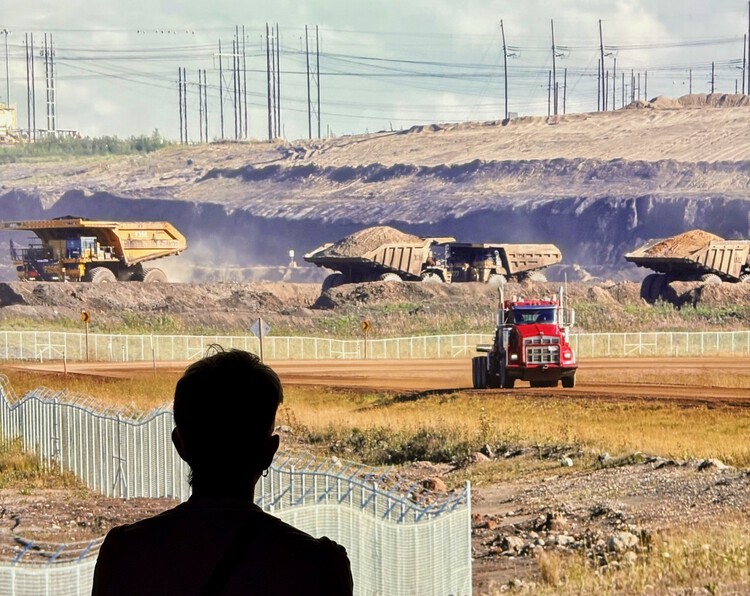
Thirty trillion tons. This is the estimated mass of all human-made matter on Earth, and the starting point for the 7th edition of the Lisbon Architecture Triennale. Curated by Ann-Sofi Rönnskog and John Palmesino, founders of Territorial Agency, the event asks a deceptively simple question: How heavy is a city? To answer it requires more than data. It demands a shift in perception: from the scale of the city to the planetary technosphere.
The technosphere, a term borrowed from Earth sciences, defines the vast system of infrastructures, technologies, and materials that sustain human life while reshaping the planet. Cities, in this view, are not only territories but dense nodes within this planetary metabolism. From October to December 2025, Lisbon becomes a lens to examine that magnitude, hosting three main exhibitions (Fluxes, Spectres, Lighter), a book of essays, a talks program, and more than twenty independent projects across the city.
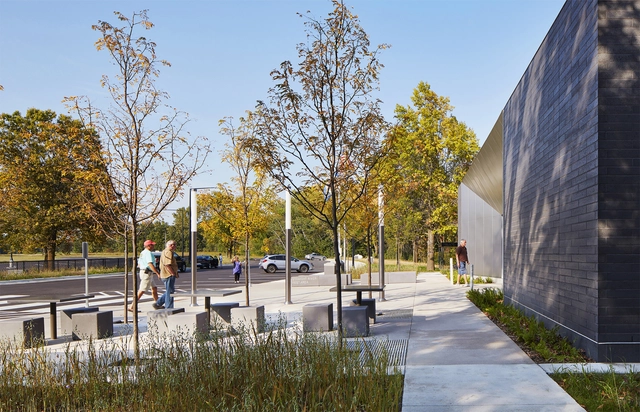
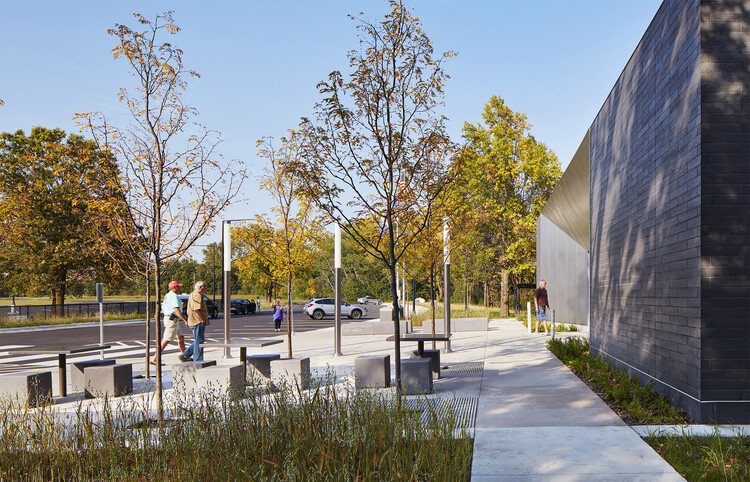
"The public square and civic infrastructure are the front lines against this kind of attack", proclaimed then-President of the American Institute of Architects, Thomas Vonier. The decades since 9/11 and mass violence have pressured cities, in the United States and globally, to reconsider what "safety" means. Is it about barriers, bollards, surveillance? Or is it about trust, visibility, evidence, resilience? Several projects confront these questions at various scales to demonstrate how architecture and forensic thinking can collectively protect communities and civic life.
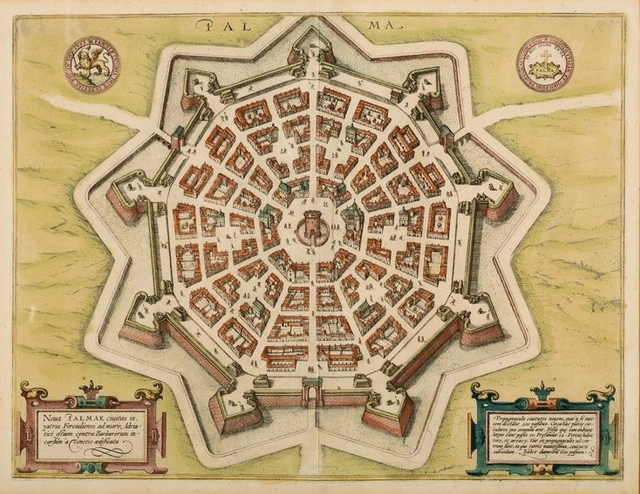
The concept of an “ideal city” is something that is often talked about today, as we look towards the future and think about what aspects of urban life we feel are most important for residents to thrive in a healthy community. However, ideal cities were conceived during the Italian Renaissance, as planners and architects prioritized rationale in their designs focusing on human values, urban capacities, and the recursive waves of cultural and artistic revolutions that influenced large-scale planning schemes.
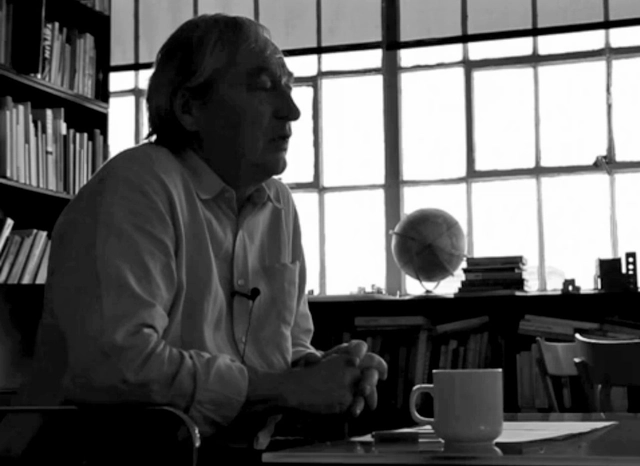
Believing firmly that "architecture is [...] too important to leave solely to architects", Ole Bouman embarked on diverse activities throughout his three decades of work, reflecting on “architecture, not so much as the art or technique of making buildings, but architecture as the intelligent way to organize our lives on earth, and infuse it with purpose”.
After having shared Bouman's essay Finding Measure, ArchDaily had the chance to discuss with DesignSociety’s founding director his thoughts on the role of architecture, the current challenges of the world, the digital revolution, and many other thought-provoking topics.
Human Rights Day is celebrated every year on the 10th of December. After visiting numerous sites that commemorate the scenes of regrettable crimes against humanity and violence, one common observation can be made: the place of memory is not only a building. In fact, it is more about the encounter, the appropriation, and the gesture.
Children's furniture is all furniture –fixed or mobile– that is designed according to the ergonomic guidelines and anatomical dimensions of children specifically. Following this definition, we can identify two types of furniture: (1) those that facilitate a relationship between the caregiver and the child, and (2) those that allow the child to use them independently.
The big difference between these two types is that the first has dimensions that mainly adapt to the ergonomics of the adult, while the second is designed to meet the ergonomic needs of the child at each stage of their development. Since the growth of children occurs relatively quickly, it is common for the furniture of this second group to be multifunctional or even extendable.
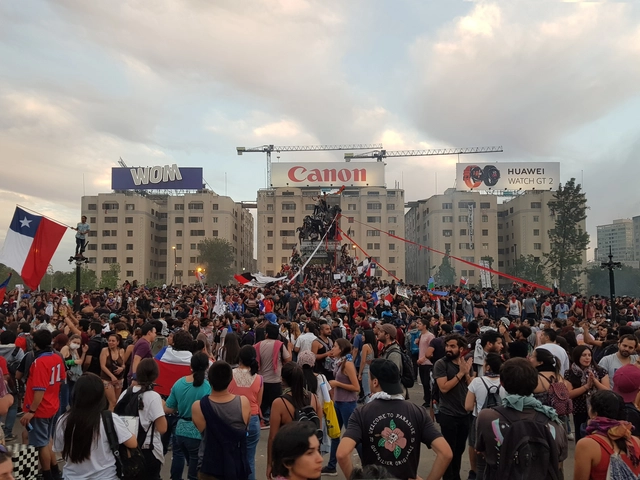
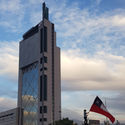
This article was originally published in ArchDaily en Español last October 30, twelve days after the social crisis in Chile escalated. Some ideas of the analysis may feel outdated since some structural reforms were recently announced, but the author decided to keep the original spirit of the piece.
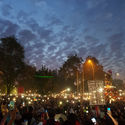
A 4 cent fair increase for the Metro in Santiago sparked mass fare-dodging protests in Chile starting on October 6. Alongside spontaneous street demonstrations, the protests spilled into widespread violence across Santiago during the following days until October 18. That day, the Metro network collapsed, the riots multiplied across the city, and looting and fires were out of control. That night, President Sebastian Piñera declared a state of emergency.
New digital advancements and technologies are redefining how we design. Looking at how these tools are becoming more ubiquitous and pervasive, IKEA's research and design lab SPACE10 published The Digital in Architecture report to explore the impact of digital technology and its larger movements. Authored by architecture theorist Mollie Claypool, the report illustrates these changes through data research, concepts, and visualisation by Pentagram.
The International Committee of Architectural Critics CICA is pleased to announce an invitation to publishers, editors, curators and authors to submit their publications for consideration for the 10th CICA Awards 2020 by 30th November 2019. Award winners will be announced during the UIA XXVII World Congress of Architecture to be held in Rio de Janeiro from July 19th to 23rd, 2020.
The Awards fall into four categories:
“Bruno Zevi CICA Book Award” For published books on architectural criticism, theory and history “Pierre Vago CICA Journalism Award” For an article
Layered Landscapes Lofoten — Understanding of Complexity, Otherness and Change adresses today’s most urgent issues about living together in landscapes and territories under severe pressure and transformation. The landscape holds essential information about our common history, ecology and social behavior — both rational and cognitive experience, and even hidden enigmas. The authors suggest how an open and unbiased approach to the landscape enables us to understand and operationalize knowledge and theory into valid proposals and projects for the future — not primarily through the traditional and habitual idea of the architectural object, but rather in contact with a global, collective
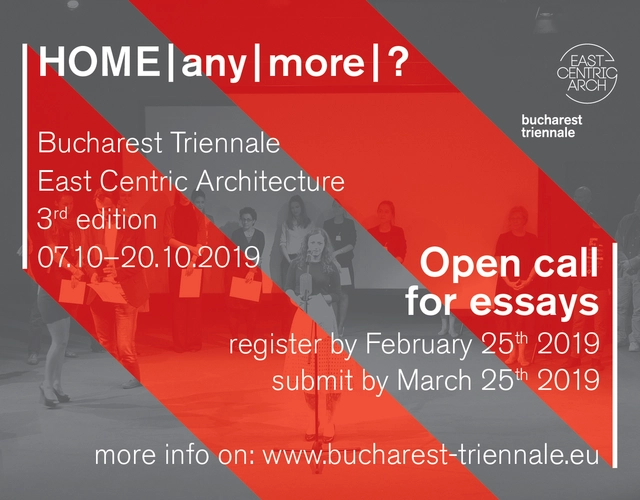
For more than 20 years, The Arhitext Design Foundation has been developing editorial and cultural projects that raise awareness of the national and international state of architecture, urbanism, design and visual arts. The most important projects of the Foundation are the Arhitext Magazine and the Bucharest Triennale, dedicated to the Central and Eastern European region. In October 2019, the Foundation, in partnership with the Romanian Order of Architects and the "Ion Mincu" University of Architecture and Urbanism will organize the third edition of the Bucharest Triennale East Centric Architecture. The main topic of this edition, HOME|any|more|?, proposes an interrogative approach
Dealing with the context of a project’s site is an essential part of architecture, be it by denying or incorporating preexisting elements and the environment’s conditions in the design. However, understanding what lies around as an active agent of the decisions and space organization goes beyond simply considering the good views, natural ventilation, solar orientation, etc; it is about seeing these conditions as co-authors.
These cases are most notable when practices think of the architecture's surrounding environment as an active agent.
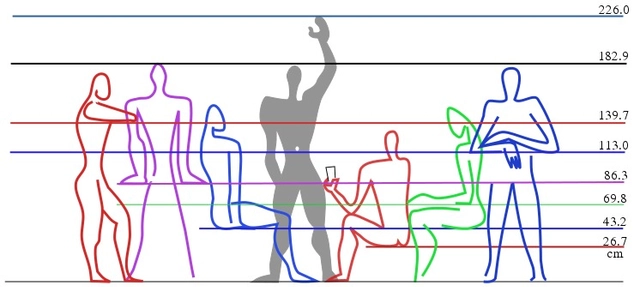
In 1948, the architect Charles-Édouard Jeanneret-Gris, better known as Le Corbusier, released one of his most famous publications titled Modular, followed by Modular 2 (1953). In these texts, Le Corbusier expressed his support of the research that Vitrubio, DaVinci, and Leon Battista Alberti started centuries before: to find the mathematical relationship between human dimensions and nature.
The research of the previously mentioned authors also represents the search to explain the Parthenon, the temples, and cathedrals built according to exact measurements that reference a code of essentiality. Knowing what instruments were used in finding the essence of these buildings was the starting point, instruments that at first glance seemed to bypass time and space. It wouldn't be farfetched to say that the measurements came from essence: parts of the body such as the elbow, the finger, thumb, foot, arm, palm, etc. In fact, there are instruments and measurements that carry names alluding to parts of the human body, an indication of architecture's proximity to it.
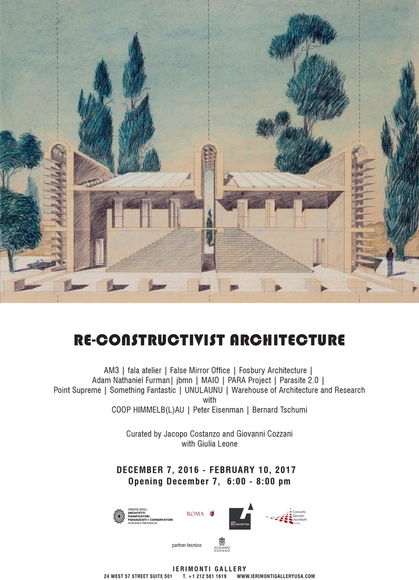
Casa Cecchini a S. Maria di Galeria, Roma, 1971 - A. Anselmi (with C. Giannini) - edited by Warehouse of Architecture and Research with Valentino Danilo Matteis
Ierimonti Gallery New York is pleased to present Re-Constructivist Architecture, curated by Jacopo Costanzo and Giovanni Cozzani with Giulia Leone and promoted by the Scientific Technical Committee of Casa dell'Architettura in collaboration with Consulta Giovani Roma. The exhibition will feature the work of thirteen international emerging architecture firms, aiming to portray a generation of architects born in the ‘80s: a countertrend that tries to recover a debate lost years ago and obstructed by a cumbersome star system.
Call for Submissions, UC Berkeley's Room One Thousand, Issue 5: Timeless
Timeless | Adjective | org. 1550
: staying beautiful or fashionable as time passes : lasting forever : having no beginning or end, eternal. : not affectetd by time : referring or restricted to no particular time : untimely, ill-timed : without time
Dallas Architecture Forum, a non-profit organization for everyone interested in learning about and improving the architecture, design, landscape and urban fabric of the North Texas region is pleased to continue its 2015-16 Lecture Season with outstanding architect Iñaki Ábalos, Chair of the Department of Architecture at the Harvard Graduate School of Design and Co-Founder and Partner of Abalos+Sentkiewicz Arquitectos in Boston and Madrid, with Renata Sentkiewicz,Co-Founder and Partner at A + S and Design Critic at the Harvard Graduate School of Design. Their projects and built work are internationally recognized and have been the subject of 15 individual exhibitions and many collective exhibitions in the most prestigious centers in London, Paris, New York and Venice.