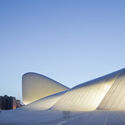
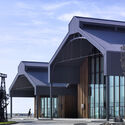
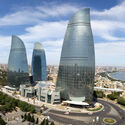
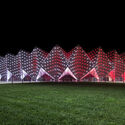
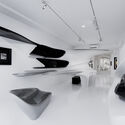
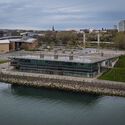
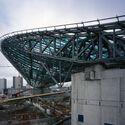
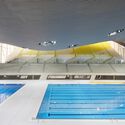
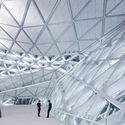
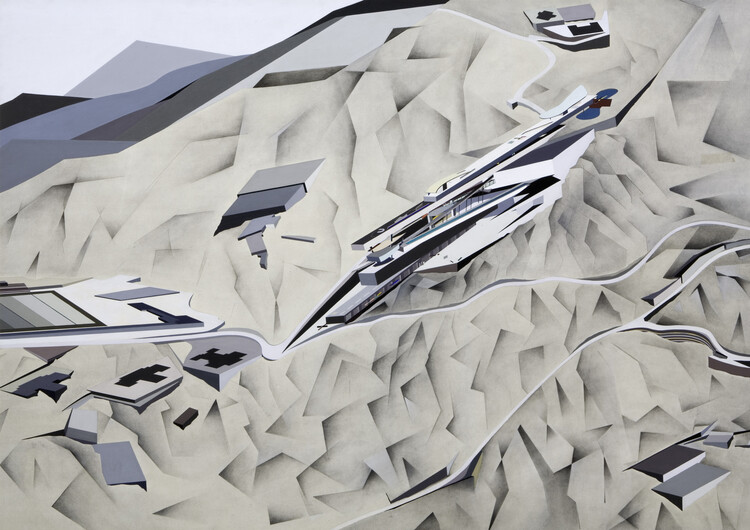
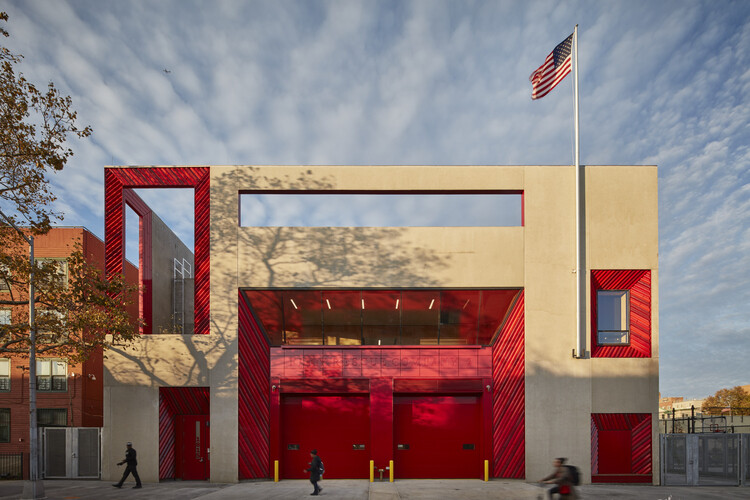
What should be taken into account when designing a fire station? The answer may seem obvious: functionality and efficiency. After all, every second counts in an emergency. But can a building designed for urgent operations also be aesthetically compelling, welcoming, and connected to its community? In recent decades, architects such as Zaha Hadid and Álvaro Siza have demonstrated that it can. By rethinking this building type, they have created spaces that go beyond emergency response—spaces that strengthen social ties, support the well-being of firefighters, and become urban landmarks.
French-Lebanese architect Lina Ghotmehhas been recognized on the TIME100 Next 2025 list, an annual ranking of emerging leaders and innovators across disciplines. Known for her sensitive approach to context and materiality, Ghotmeh has built an international portfolio that bridges tradition and modernity. In her TIME profile, written by Danish architect Bjarke Ingels, Ghotmeh is praised for combining historical awareness with forward-looking experimentation. The acknowledgment positions her as the only architect on this year's list, highlighting the continued presence of design voices in a ranking that typically spans entertainment, politics, science, and business.

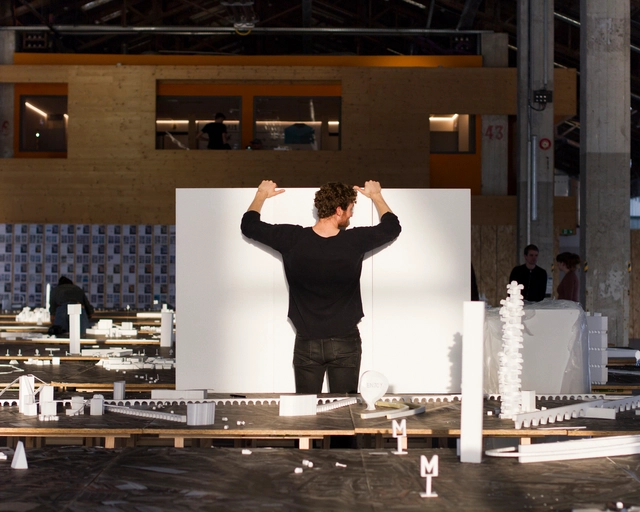
MVRDV and Delft University of Technology Release _Le Grand Puzzle_, an Urban Study of Marseille in the South of France. Image Courtesy of HÇläne Bossy, Manifesta
In architecture, most practices revolve around delivering projects to clients. Offices are shaped by deadlines, budgets, and clear briefs. While this structure produces buildings, it rarely leaves space for architects to question broader issues — about how we live, how cities are changing, or what the future demands of design. But alongside this production-focused system, a quieter movement has emerged: studios, collectives, and foundations that prioritize research, experimentation, and reflection. These are the architecture think tanks — spaces designed not to build immediately, but to think first.
The idea of a think tank is not new. Traditionally found in politics, economics, or science, think tanks bring together experts to study complex problems and propose solutions. In architecture, their rise reveals a tension at the heart of the discipline. If architecture is to remain socially and environmentally relevant, can it continue to rely only on client-driven practice? Or must it carve out space for slower, deeper inquiry?
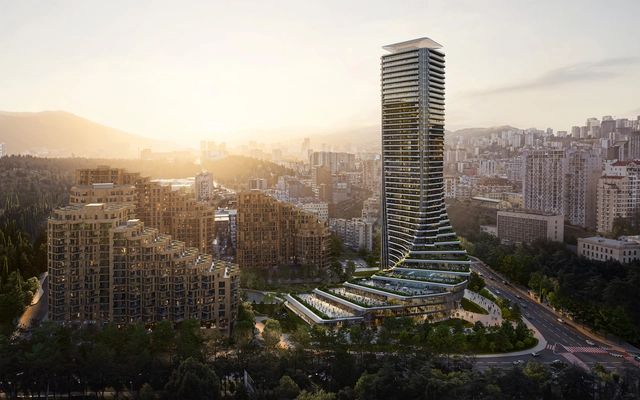
Zaha Hadid Architects has just revealed the design for Cityzen Tower, a 42-story high-rise set to become a landmark in Tbilisi, Georgia. Positioned in the Saburtalo district, the tower is part of the Cityzen development, a new civic hub integrating residential, commercial, and public spaces. Designed as a vertical extension of Tbilisi's new Central Park, the tower will bring together urban living and nature through cascading terraces and green spaces.
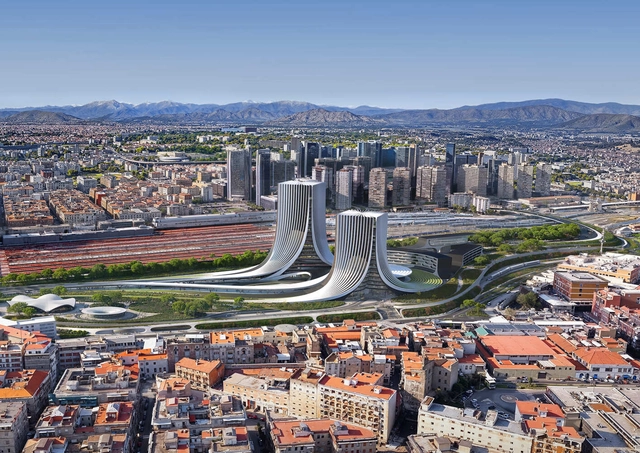
Zaha Hadid Architects (ZHA) has been announced as the winner of the international design competition for the Napoli Porta Est masterplan, a large-scale urban regeneration project in Naples, Italy. The project, which includes the new Campania Region headquarters, aims to reconnect fragmented urban areas and revitalize a district that has long been considered isolated and unsafe due to inadequate public spaces and physical barriers.
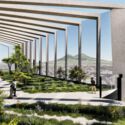
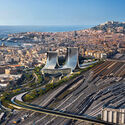
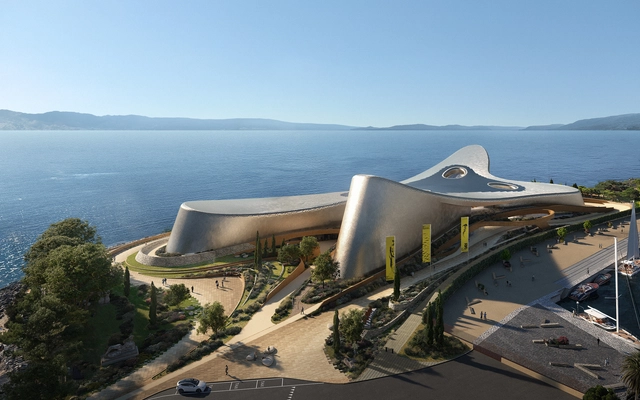
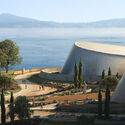
Zaha Hadid Architects have announced the breaking ground for the Centre of Mediterranean Culture in Reggio Calabria, Italy. The 24,000 square-meter structure houses diverse spaces, including a network of exhibition galleries, both permanent and temporary, capable of showcasing a wide range of displays. An integrated aquarium is a key feature, offering visitors a glimpse into the marine life of the Strait. The building also provides conference facilities, including a large auditorium suitable for performances, presentations, and industry events. Dedicated educational spaces are incorporated to support the region's schools, and visitor amenities include a bookshop and a restaurant and bar overlooking the port.
The Pritzker Prize is the most important award in the field of architecture, awarded to a living architect whose built work "has produced consistent and significant contributions to humanity through the art of architecture." The Prize rewards individuals, not entire offices, as took place in 2000 (when the jury selected Rem Koolhaas instead of his firm OMA) or in 2016 (with Alejandro Aravena selected instead of Elemental); however, the prize can also be awarded to multiple individuals working together, as took place in 2001 (Herzog & de Meuron), 2010 (Kazuyo Sejima and Ryue Nishizawa of SANAA), and 2017 (Rafael Aranda, Carme Pigem, and Ramon Vilalta of RCR Arquitectes).
Modernism, a movement that sought to break away from traditional forms and embrace the future, laid the groundwork for many technological and digital advancements in contemporary architecture. As the Industrial Revolution brought about mass production, new materials, and technological innovation, architects like Le Corbusier, Walter Gropius, and Mies van der Rohe championed the ethos of "form follows function" and a rational approach to design. Their principles resonate in the digital age, where computational design and high-tech materials redefine form and construction.

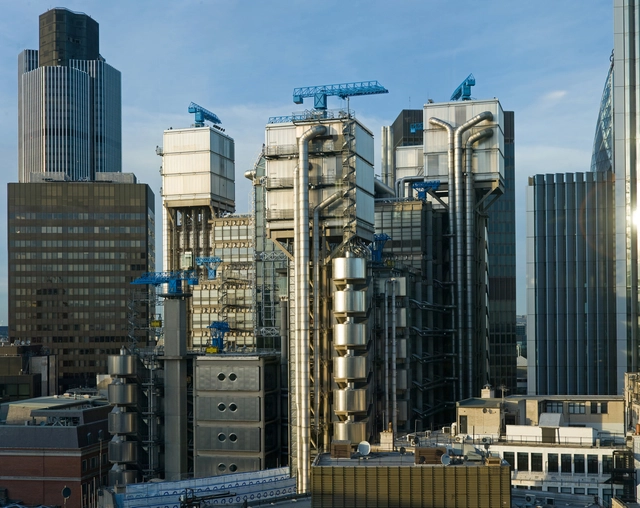
The 20th century's modernist ideals — efficiency, simplicity, and functionality — created a foundation for architects to experiment with structural clarity and material honesty. High-tech architecture, which emerged in the late 20th century, evolved from these principles, merging modernism's clean lines with advanced engineering and technology. This paved the way for parametricism and algorithm-driven design processes, revolutionizing architecture and enabling complex forms previously thought impossible.
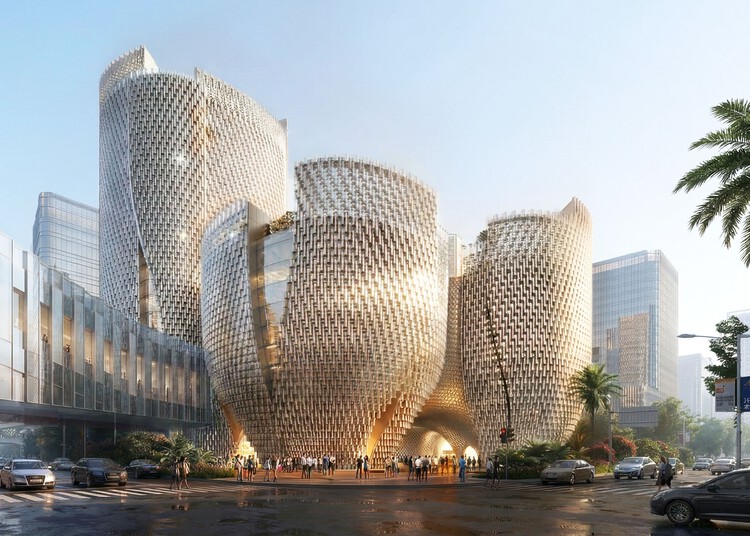
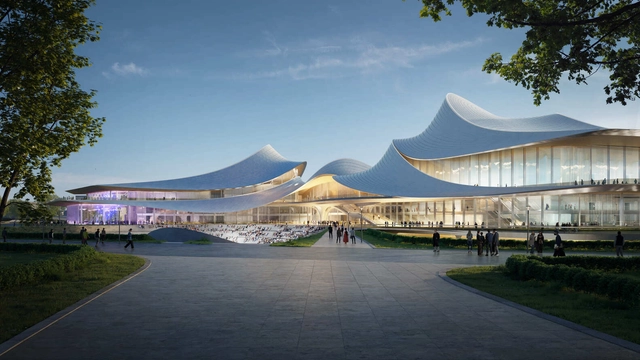
Zaha Hadid Architects has been selected to design the Zhejiang Shaoxing Shangyu District Cao'e River Culture and Art Center, located within a newly planned cultural district in Shaoxing's Shangyu area in Zhejiang province, China. The project is situated along the Cao'e River, a location with historical significance, and is envisioned to serve as a key cultural and artistic space for both the local community and visitors. Its design seeks to integrate contemporary functionality with the architectural and cultural traditions of the region.
Although there is more of a balance between women and men in architecture today, the landscape was quite different a few decades ago. Pioneering women architects have been resistant in a profession dominated by men, and have faced skepticism in challenging contexts, such as construction sites itself. Zaha Hadid commented on the difficulty of inclusion in what she called the "boys club", listing the difficulties in coming to agreements or creating partnerships. Lina Bo Bardi, in turn, used her strong personality to overcome the sexism of her time. Even though these difficulties, women have always found a way to stand out and bring priceless contributions to the profession.
On countless occasions architecture has remembered famous architects and their material discoveries through time, but what about recognizing women's contributions to the discipline? Discussing their pioneering material explorations is key to understanding their role in projects. With an analysis of the work of the well-known architects Lina Bo Bardi, Norma Merrick Sklarek and Zaha Hadid –which introduced innovative techniques and material trends– the following discussion brings to light how women's ideas have influenced the development of architecture. Identifying their approaches on how to managing structures and materials helps to understand the personality of their work and how to implement similar strategies in the future.
Architecture has long been understood as a powerful tool for shaping the physical environment and social dynamics within it. However, its potential to foster social equity is often overlooked. Empathy-driven design invites architects to approach their work not only as creators of space but as facilitators of human connection and community well-being. This approach centers on understanding people's lived experiences, struggles, and aspirations — particularly marginalized communities — and responding to their needs through thoughtful, inclusive architecture. It goes beyond aesthetics and functionality, instead focusing on creating spaces fostering dignity, accessibility, and social equity. By prioritizing empathy, architects can design environments that uplift communities, address disparities, and create inclusive spaces that promote positive societal change in a tangible, human-centered way.
The relationship between architecture and naval design has been a fascinating interplay of form and function that has evolved significantly. Both disciplines have a shared history of innovation, aesthetics, and functionality that have informed and inspired each other. This "love affair" has seen architects drawing inspiration from boats, particularly in the modernist era when ships' streamlined, efficient designs influenced the aesthetic of buildings. Conversely, architectural principles have also been adapted to enhance the functionality and form of boats, demonstrating a reciprocal exchange that continues to shape both disciplines.
The Central Bank of Iraq (CBI) headquarters, designed by the UK-based Zaha Hadid Architects, is a new landmark on the banks of the Tigris River in Baghdad. Now the tallest building in the city, the 170-meter-tall skyscraper aims to echo the values of the institution: solidity, stability, and sustainability. Blending innovation with the rich heritage of Baghdad, her birthplace, Zaha Hadid’s vision for the Central Bank of Iraq headquarters stands as a tribute to the city's enduring legacy.
Today, the first cornerstone has been laid at Zaha Hadid Architects' new terminal, marking the start of construction works for the Ülemiste Passenger Terminal in Tallinn, Estonia. Zaha Hadid Architects won the competition in 2019 to design this transport hub, serving as a multi-modal transport hub for city commuters, international rail passengers, and air travelers using the adjacent Tallinn Airport. Set to open in 2028, the hub has been designed to unite various districts of the city, currently divided by railway tracks, and will act as a connecting bridge for the city.
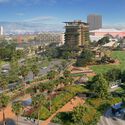
Construction has reached the roof level in Zaha Hadid Architect’s development above Hong Kong High-Speed Rail West Kowloon Terminus. Adjacent to the West Kowloon Cultural District, this development connects established and emerging neighborhoods with a network of public gardens and landscaped plazas. Designed by Zaha Hadid Architects (ZHA), it seeks to integrate seamlessly with the surrounding station and rooftop park, offering civic, office, and retail spaces.
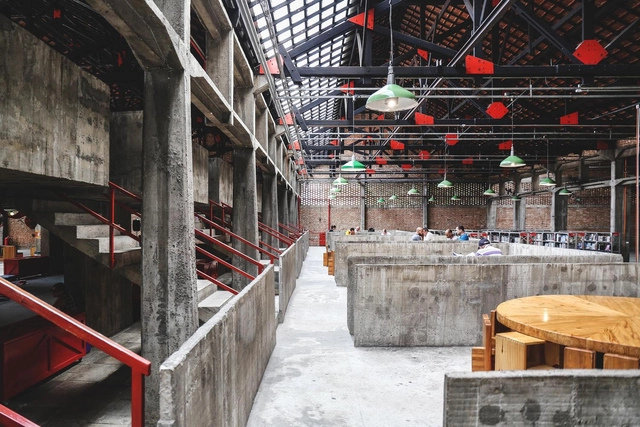
As cities grow and evolve, the question of preserving, rehabilitating, or adapting historic sites arises. The intervention in such buildings requires a delicate balance between honoring their heritage and meeting contemporary demands. Often, the most innovative and radical solutions emerge when architects attempt to renew a building while maintaining its original footprint and as many features as possible. They then create modern extensions that either harmonize or contrast with the original structure. This approach not only revitalizes the building but also celebrates the synergy between the past and present, including materials, construction technology, architectural movements, stories, and overall building quality. The layering of both old and new elements through harmony or contrast requires an intelligent and sensitive approach that gives the building a unique aesthetic and a new meaning.