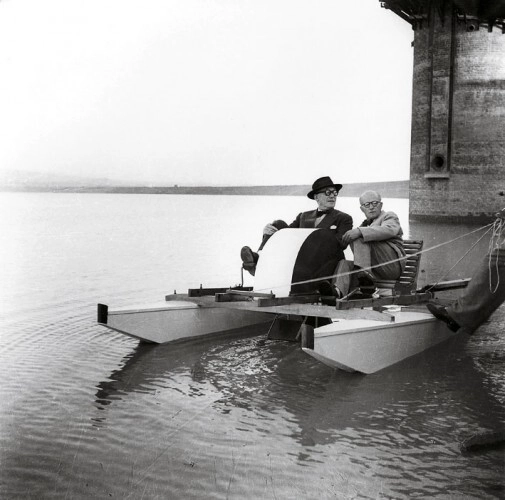
The relationship between architecture and naval design has been a fascinating interplay of form and function that has evolved significantly. Both disciplines have a shared history of innovation, aesthetics, and functionality that have informed and inspired each other. This "love affair" has seen architects drawing inspiration from boats, particularly in the modernist era when ships' streamlined, efficient designs influenced the aesthetic of buildings. Conversely, architectural principles have also been adapted to enhance the functionality and form of boats, demonstrating a reciprocal exchange that continues to shape both disciplines.
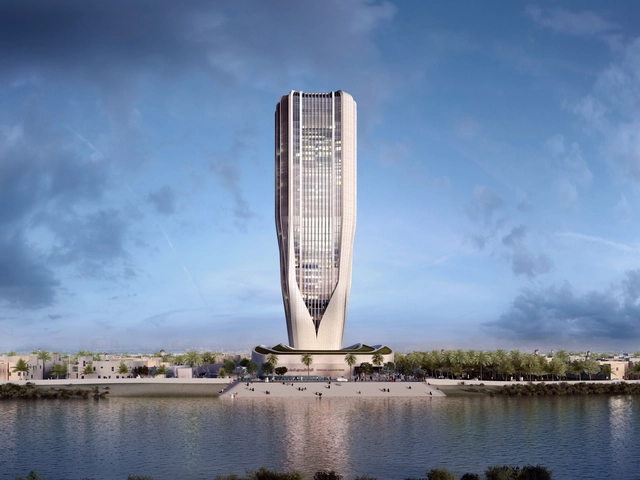
The Central Bank of Iraq (CBI) headquarters, designed by the UK-based Zaha Hadid Architects, is a new landmark on the banks of the Tigris River in Baghdad. Now the tallest building in the city, the 170-meter-tall skyscraper aims to echo the values of the institution: solidity, stability, and sustainability. Blending innovation with the rich heritage of Baghdad, her birthplace, Zaha Hadid’s vision for the Central Bank of Iraq headquarters stands as a tribute to the city's enduring legacy.
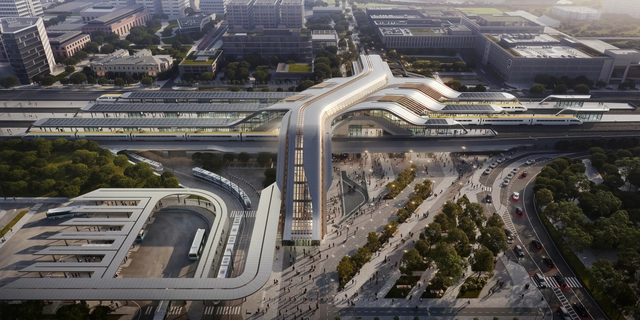
Today, the first cornerstone has been laid at Zaha Hadid Architects' new terminal, marking the start of construction works for the Ülemiste Passenger Terminal in Tallinn, Estonia. Zaha Hadid Architects won the competition in 2019 to design this transport hub, serving as a multi-modal transport hub for city commuters, international rail passengers, and air travelers using the adjacent Tallinn Airport. Set to open in 2028, the hub has been designed to unite various districts of the city, currently divided by railway tracks, and will act as a connecting bridge for the city.
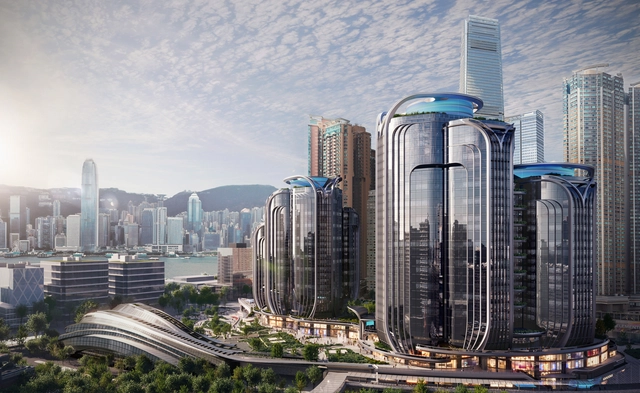
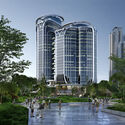
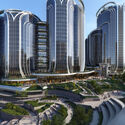
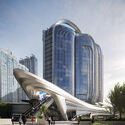
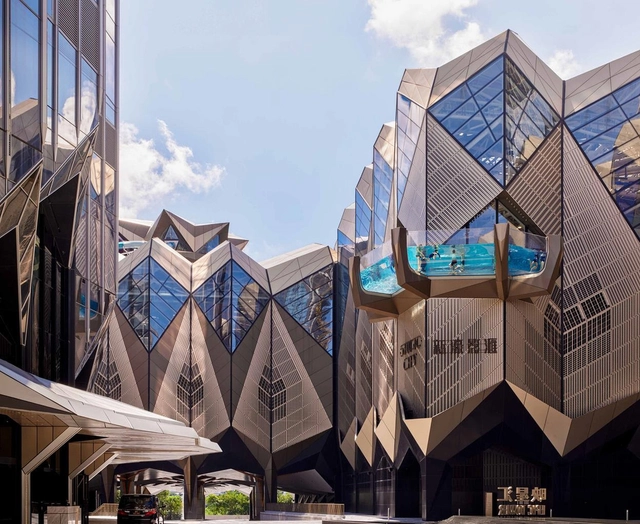
Construction has reached the roof level in Zaha Hadid Architect’s development above Hong Kong High-Speed Rail West Kowloon Terminus. Adjacent to the West Kowloon Cultural District, this development connects established and emerging neighborhoods with a network of public gardens and landscaped plazas. Designed by Zaha Hadid Architects (ZHA), it seeks to integrate seamlessly with the surrounding station and rooftop park, offering civic, office, and retail spaces.
As cities grow and evolve, the question of preserving, rehabilitating, or adapting historic sites arises. The intervention in such buildings requires a delicate balance between honoring their heritage and meeting contemporary demands. Often, the most innovative and radical solutions emerge when architects attempt to renew a building while maintaining its original footprint and as many features as possible. They then create modern extensions that either harmonize or contrast with the original structure. This approach not only revitalizes the building but also celebrates the synergy between the past and present, including materials, construction technology, architectural movements, stories, and overall building quality. The layering of both old and new elements through harmony or contrast requires an intelligent and sensitive approach that gives the building a unique aesthetic and a new meaning.
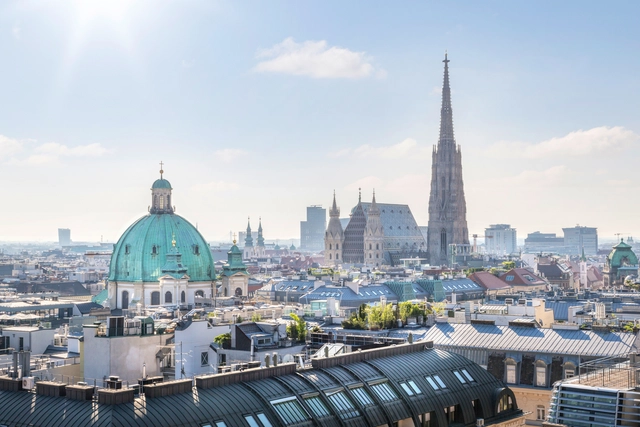
Often referred to as the “City of Music,” Vienna stands as a living testament to architectural evolution across centuries. Bring together an array of styles, ranging from the grandeur of Baroque palaces to the innovative Art Nouveau designs and the Vienna Secession movement, visitors are drawn to the city for its architectural marvels. Vienna's eventful past is reflected in its architectural landscape, which has withstood wars, imperial expansions, and the changes of numerous artistic trends while managing to maintain its unique identity as a symbol of resilience and reinvention.
From Adolf Loos, whose radical ideas challenged the trends of his time, to Otto Wagner, a pioneer of Viennese Modernism, Vienna's architectural legacy continued to evolve. Fast-forwarding to contemporary times, Vienna's skyline bears the mark of internationally renowned architects like Zaha Hadid, whose fluid and futuristic designs push the boundaries of architecture. Hadid's work, including the Library and Learning Center at the University of Economics and Business, offers a dynamic contrast to the city's historic landscape. Moreover, firms like CRAB Studio, founded by Sir Peter Cook and Gavin Robotham, bring experimentalism to Vienna's architecture, infusing contemporary concepts into the urban fabric. These architects and firms contribute to Vienna's architectural richness, adding new chapters to its storied history while honoring its innovation and artistic legacy.
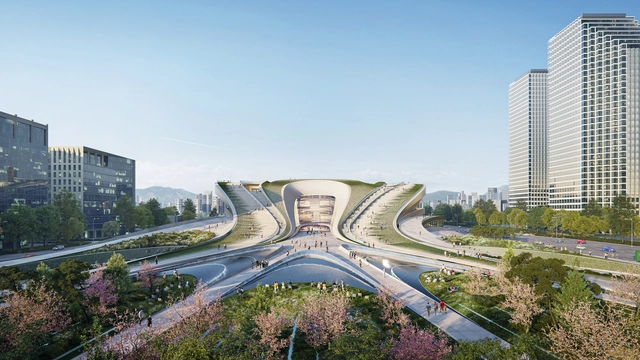
Courtesy of Tegmark | Sejong Cultural Center / ZHA
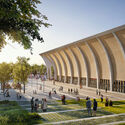
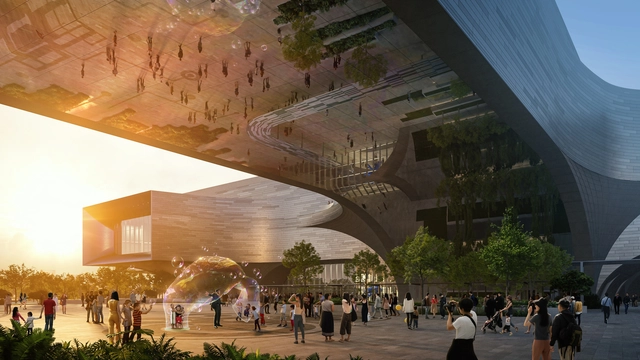
Zaha Hadid Architects has been shortlisted for their proposal for the 2ndSejongCultural Center. The proposal draws inspiration from the surrounding city’s lengthy history as well as future vision. Connecting Yeouido Park to the Han River, the 2ndSejong Cultural Center is embedded within the park's natural landscapes, aiming to become an integral part of the public function in the city within a natural setting, seamlessly connecting indoor and outdoor spaces.
If you’ve been in the profession of architecture long enough, you come to know a certain rarified subset of fellow professionals: Those who call themselves “architects,” who have a degree, and who may even be licensed and members of the AIA, but who do not practice architecture. They simply like being an “architect.”
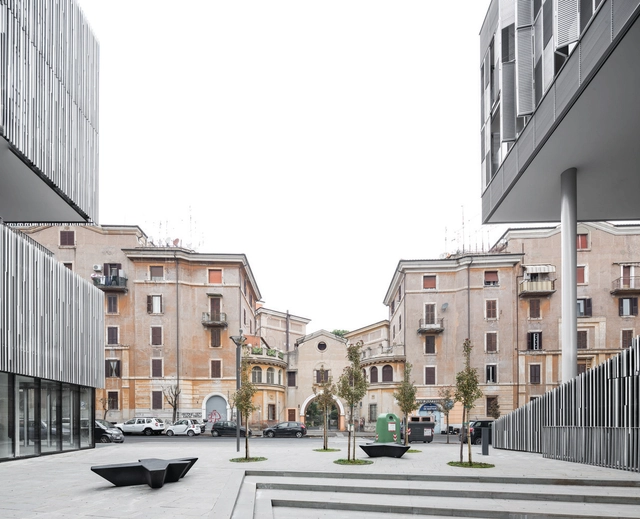
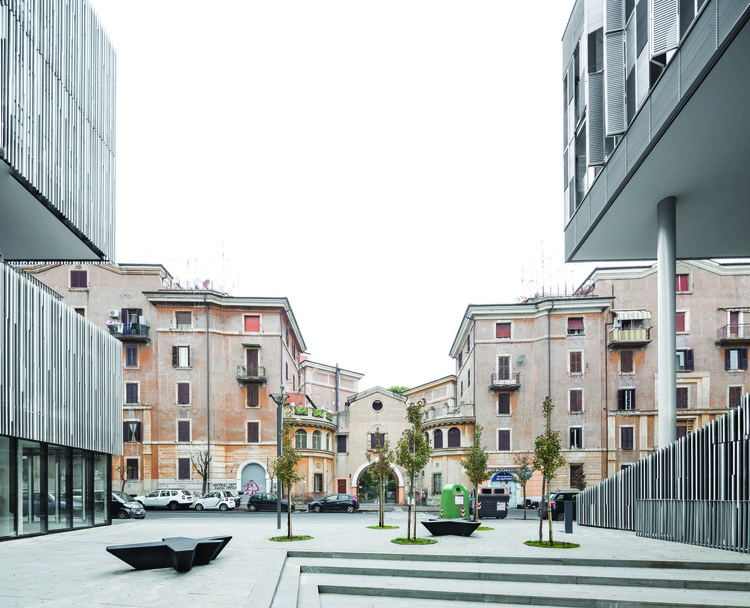
Spanning over 3 millennia with one of the highest concentrations of architecture in the world, Rome is a transcendental influence on the world's culture. Often called “The Eternal City,” it developed as the capital and seat of power of the Roman Empire, regarded by many as the first Imperial city and among the first ancient metropolises. As a city continuously occupied for over 28 centuries, Rome has maintained its countless layers of history to become a perfect depiction of old meets new. Rich in history, academia, and art, the Italian capital is now one of the most visited cities in the world.
Rome's historic center, which stretches from Piazza del Popolo to Piazza Venezia and from the east bank of the Tiber up to Piazza di Spagna, is listed as a UNESCO World Heritage Site. Along with its historical significance, the presence of renowned contemporary architects and designers in the city has made Rome an influential design destination. In 2019, it was the 14th most visited city in the world, welcoming over 8.6 million tourists seeking to discover the ways in which the history of the Ancient Romans blends with contemporary life, making it the third most visited city in Europe and the most popular tourist destination in Italy.
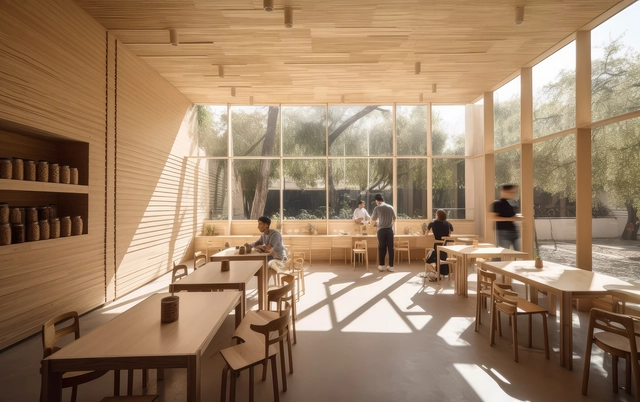
On April 6, SPACE10 will introduce a global design competition to reimagine home — using AI. Over the past year, generative AI tools have enhanced imaginative and creative capabilities, allowing millions of people to visualise worlds beyond those we ever thought possible. In a first of its kind competition, SPACE10 challenges participants to apply new AI tools to future homes and cities. Regenerative Futures is part competition, part open-source research, and open to everyone. The competition encourages play and imagination to create visual concepts of future homes, communities, and cities that help address some of the biggest challenges facing everyday life.
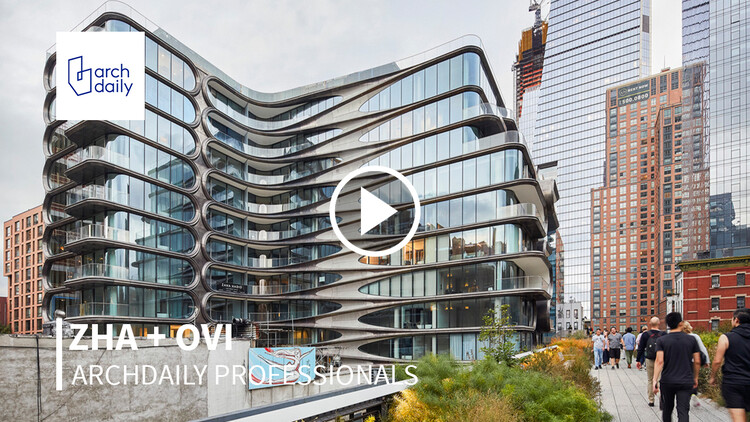
With more than 900 projects in over 40 countries, every project that Zaha Hadid Architects designs and builds has an impact on the narrative of contemporary architecture. At ArchDaily, we know that each architectural project has a team of professionals behind it which makes it possible. In this edition of the ArchDaily ProfessionalsVideo Interviews, we talked to Johannes Schafelner, associate director at Zaha Hadid Architects, and Enrique Peiniger, founder of OVI-Office for Visual Interaction about their long-standing collaboration in projects merging design and lighting.
The Zaha Hadid-designed Business Stadium Central has been granted approval by the City of Vilnius. In collaboration with Lithuanian developer Hanner, the project seeks to become a new gathering place for the city, creating a variety of new public spaces and amenities with flexible workplaces as well as health and wellness facilities for everyone in Vilnius. Construction is scheduled for the second quarter of this year.
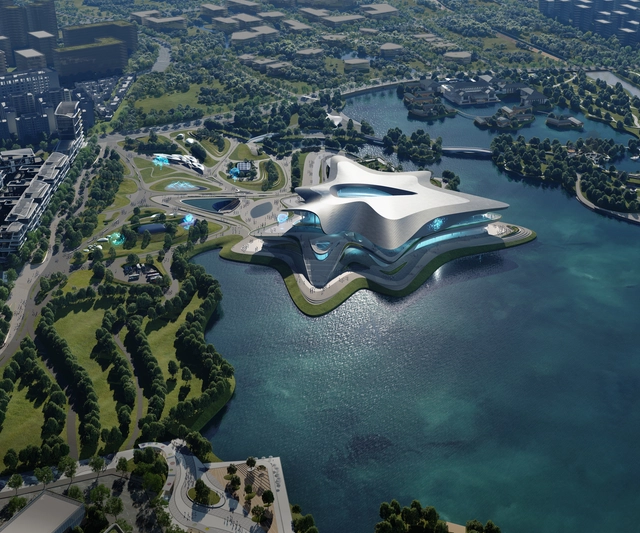
The world’s largest science fiction event Worldcon will take place in the Chengdu Science Fiction Museum, designed by Zaha Hadid Architects. Under construction, the 59,000 sq. m venue that will host the 81st annual World Science Fiction Convention and the Hugo Awards, is set to become a vibrant center of innovation and gathering place for the “leading incubator of science fiction writing in China”. In fact, the city of Chengdu, home to over 20 million residents, is transforming into an important global center of scientific innovation and research.
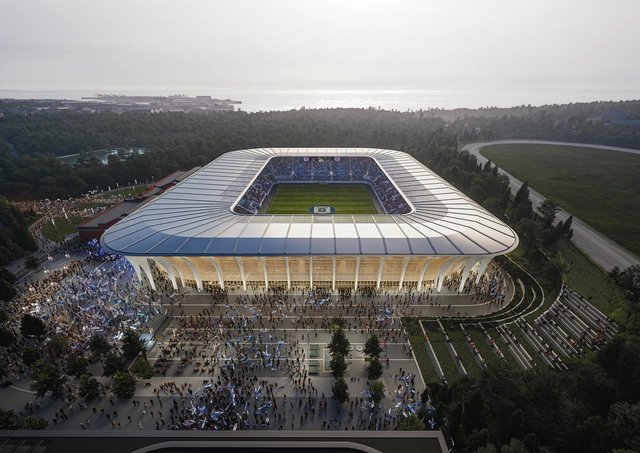
In collaboration with architecture and engineering consultancy Sweco and landscape architects Tredje Natur, Zaha Hadid Architects was selected to deliver the new Aarhus football stadium in Denmark. Dubbed the "Arena of the Forest," the stadium will be embedded within the city's Marselisborg forest, offering public and ticketed spaces all year round while revealing glimpses of the surrounding landscape. Scheduled for opening in 2026, the complex will cover 69,912 square meters, including the Aarhus arena and the renovation of the adjacent 'Stadionhallerne' building completed in 1918 by architect Axel Høgh-Hansen.
Zaha Hadid Architects and Architects 61 unveiled the design for the new Science Center in the Jurong Lake District, Singapore. The 52,460 square meters complex aims to make science, technology, engineering, and mathematics (STEM) more accessible through specialized amenities, educational programs, and interactive experiences. The building is expected to open in 2027, which also marks the 50th anniversary of the Science Center and aligns with the Singapore Green Plan 2030.
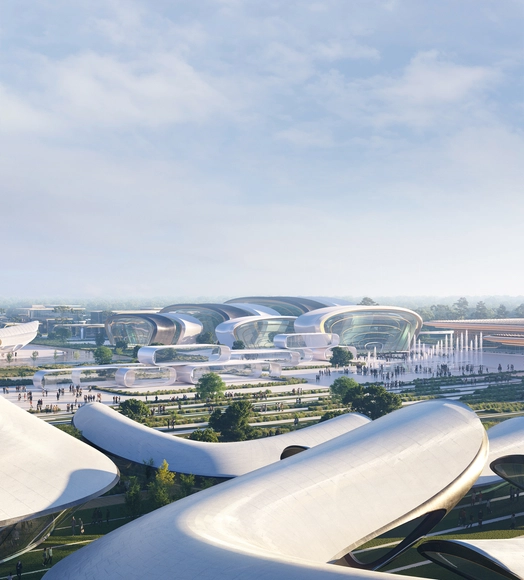
Zaha Hadid Architects has joined Ukrainian authorities to present the OdesaExpo 2030 bid proposal, an event planned to become the first Expo to be hosted in Eastern Europe. The masterplan is designed with legacy and sustainability in mind. The central pavilions are configured to be transformed into Ukraine’s first fair exhibition hub after the closing of the Expo, while the national pavilions are designed to be dismantled and redeployed as new civic buildings throughout Ukraine.