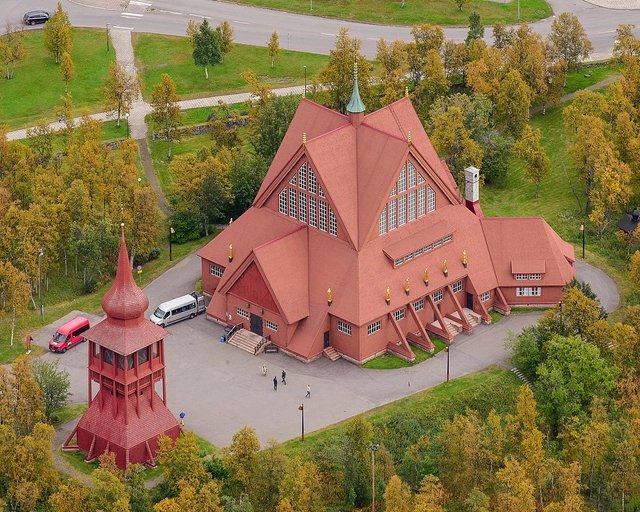
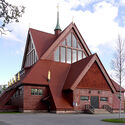
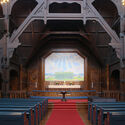
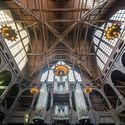
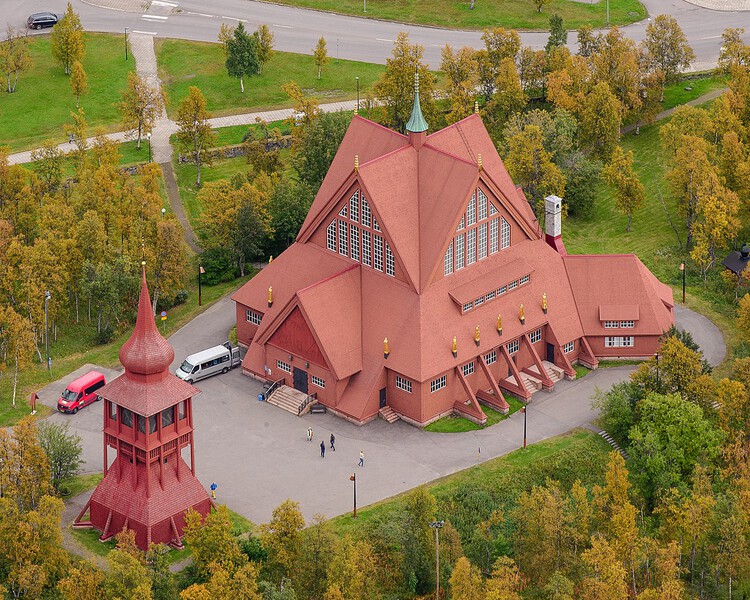
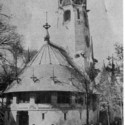
Between August 19 and 20, 2025, thousands of spectators watched as one of Sweden's largest wooden buildings was lifted onto beams and wheeled across town. The Kiruna Church, constructed between 1909 and 1912, was designed to echo the form of a Sámi hut in Sweden's far northern region, within the Arctic Circle. The building was designed by architect Gustaf Wickman, who served as the church's architect at the time, and combines elements of Gothic Revival with an Art Nouveau altar. The building, one of the city's main tourist attractions, was moved to a new location between the cemetery and the new city center to prevent damage caused by the expansion of the local mine.
Historically, architecture has served as a canvas for artistic expression. Building elements have been adorned with relief-carved garlands, inscriptions, fresco murals, portrait busts, and classicizing figurative sculptures, all of which emphasize the unique and intentional nature of each component. However, the industrialization of the 19th century brought about a shift in ideals, that stripped architectural components of their decorative elements. Instead, it preferenced the search for beauty in standardization and the economic accessibility provided by mass-produced building elements.
But is there room for artistry within mass production? Can artists be involved in the industrial-making processes of building elements? And how can new technology facilitate artistic mass customization of building components? These questions prompt us to consider the potential for expression, communication, and reflection in the craft of building elements in both interior and exterior spaces.
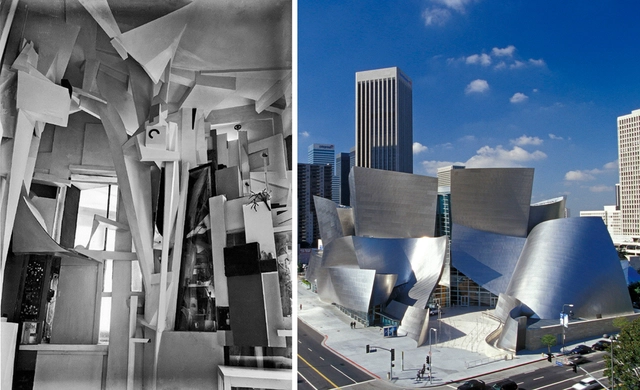
As far as history goes back, art and architecture have always been interrelated disciplines. From the elaboration of the Baroque movement to the geometric framework of modernism, architects found inspiration from stylistic approaches, techniques, and concepts of historic art movements, and translated them into large-scale habitable structures. In this article, we explore 5 of many art movements that paved the way for modern-day architecture, looking into how architects borrowed from their characteristics and approaches to design to create their very own architectural compositions.
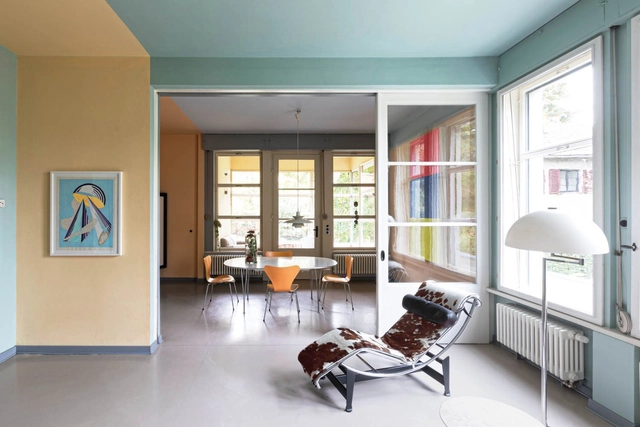
Art has always been a means for people to connect with space, and art movements have served as a platform for exploring new relationships with architecture. By incorporating art into buildings and interior spaces, they have been transformed, resulting in a fusion that creates beautiful, inspiring, and spiritually uplifting environments. Throughout history, various art movements, such as the Renaissance in the 17th century, Baroque in the 18th century, and Art Nouveau, Art Déco, and Bauhaus in the early 20th century, have had a significant impact on architecture. Architects drew inspiration from the ideals, concepts, stylistic approaches, and techniques of these movements, using them to create large-scale habitable structures. As the home is a fundamental expression of an architectural movement and the simplest canvas to exhibit the artistic ethos of any particular era, studying the interior spaces of houses provides a detailed picture of art's influence on spatial organization, furniture design, product patterns, and user interaction.
Architectural education has always been fundamentally influenced by whichever styles are popular at a given time, but that relationship flows in the opposite direction as well. All styles must originate somewhere, after all, and revolutionary schools throughout centuries past have functioned as the influencers and generators of their own architectural movements. These schools, progressive in their times, are often founded by discontented experimental minds, looking for something not previously nor currently offered in architectural output or education. Instead, they forge their own way and bring their students along with them. As those students graduate and continue on to practice or become teachers themselves, the school’s influence spreads and a new movement is born.
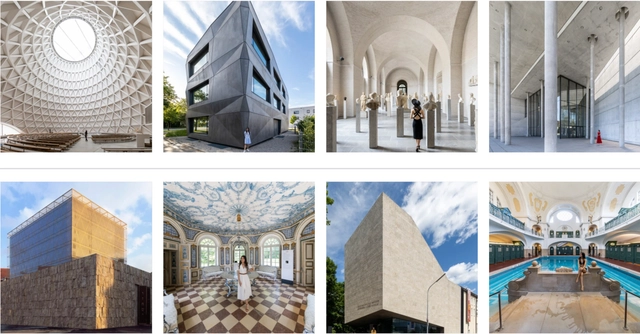
Munich – Bavaria’s capital since 1506 – is a city with layers and layers of history. Its many years as a rising architectural epicenter have left an interesting and unique mix of buildings. From Middle Age churches and cathedrals to contemporary synagogues. From skyscrapers to small pavilions. Brutalism to Art Nouveau. Munich’s architecture is truly extensive and marvelous.
Though not acknowledging Munich’s beer wonders would be wrong, the only mention of this substance would be in the stunning buildings (like the new Paulaner HQ by Hierl Architekten) that contain them. Yes, other aspects of the city are grandiose, but let’s focus on Munich’s top attraction: its architecture.
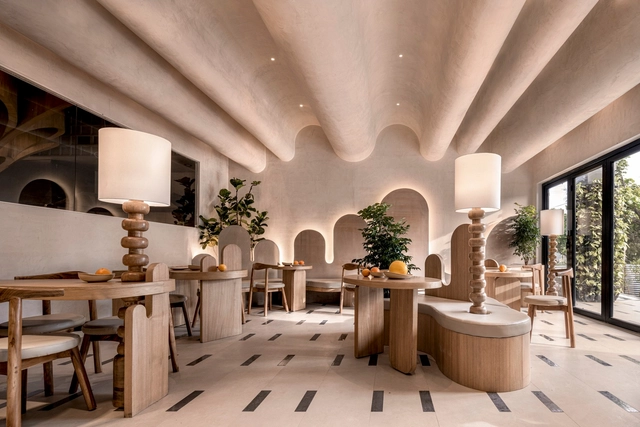
Interior design has progressively become a subject of interest among architects and designers. Having spent more time indoors recently, practitioners have been experimenting with their spaces and exploring different approaches to scale, comfort, and aesthetics. Much like everything else, design is highly influenced by external factors; any change to people's lifestyle influences how they respond to it, whether consciously or subconsciously. And while this dynamic is often seen in fashion or graphic design, it has been noticeable in interior design as well. Following years of linear, clean-cut, and refined spaces, curved silhouettes were revived, becoming one of the dominating interior design trends across the world.
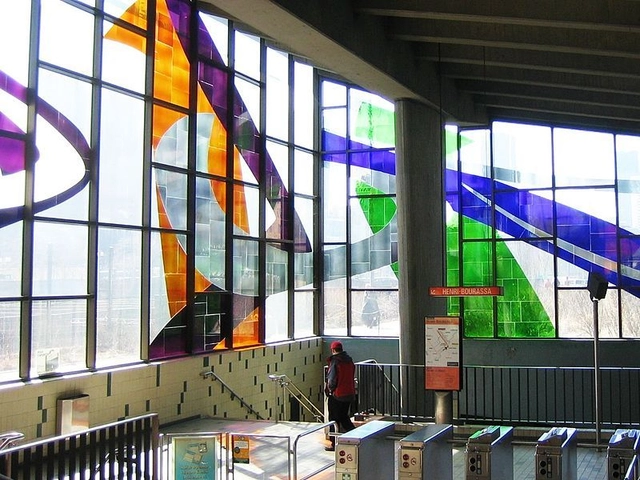
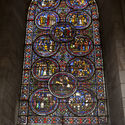
In terms of architectural enhancement, stained glass is often pieced together in order to produce depictions of decorative art, allowing light to filter and penetrate a particular structure or building. As a component it is both decorative and a variety of window, allowing a substantial and sufficient amount of light into a space, for atmospheric and beneficial effect.
Emerged in a period marked by the development of the industry and the experimentation of new materials, the Art Nouveau artistic movement was opposed to historicism, favoring originality and a return to handicrafts. In this context, it is portrayed as an attempt at dialogue between art and industry, revaluing beauty and making it available to everyone through series production.
History has often been taught in a linear way. This way of teaching has often left out grand historical narratives, and focused primarily on the occidental world.
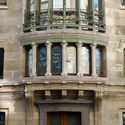
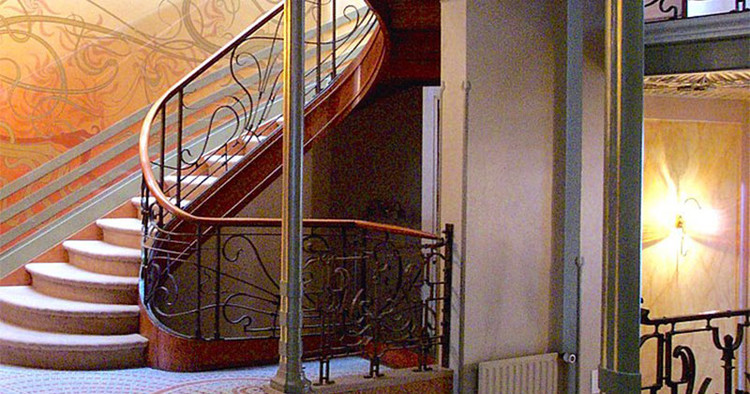
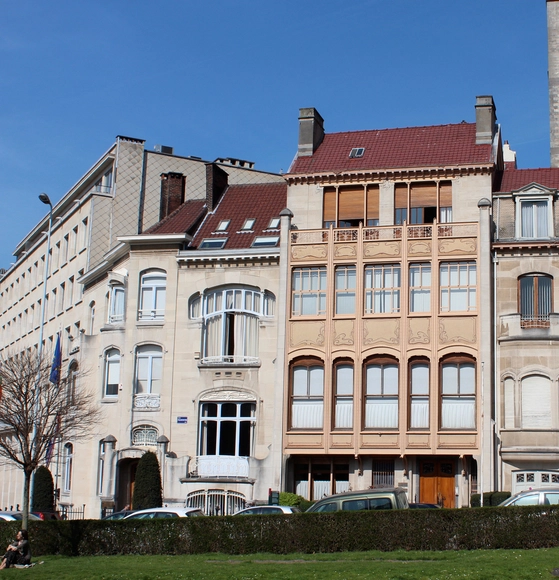
Situated throughout Brussels, Victor Horta's architecture ranges from innocuous to avant-garde. While many of his buildings were completed in the traditional Beaux Arts style, it is Horta’s Art Nouveau works—most of them built as townhouses for the Belgian elite—that are most beloved. Emerging from the decorative arts tradition and, in some ways, anticipating the coming onslaught of modernism, Horta’s Art Nouveau buildings were erected during a fleeting decade: roughly 1893 to 1903.
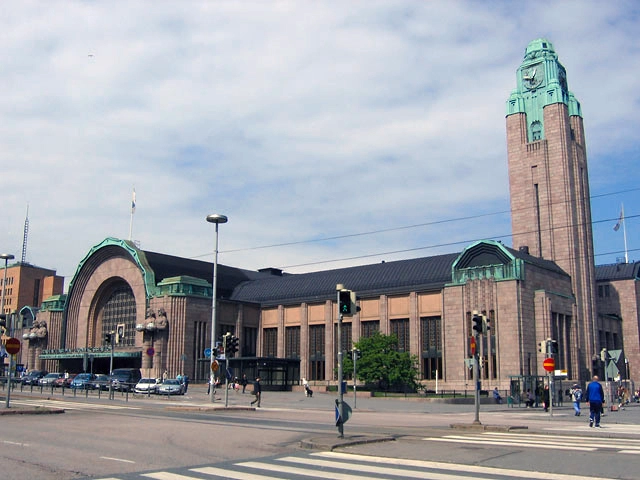
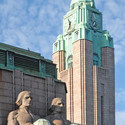
Though some may now know him only as the father of Eero Saarinen, Eliel Saarinen (August 20, 1873 – July 1, 1950) was an accomplished and style-defining architect in his own right. His pioneering form of stripped down, vernacular Art Nouveau coincided with stirring Finnish nationalism and a corresponding appetite for a romantic national style and consciousness; his Helsinki Central Station became part of the Finnish identity along with Finnish language theaters and literature. Later moving to America, his city planning and Art Deco designs resonated through western cities in the first half of the 20th century.
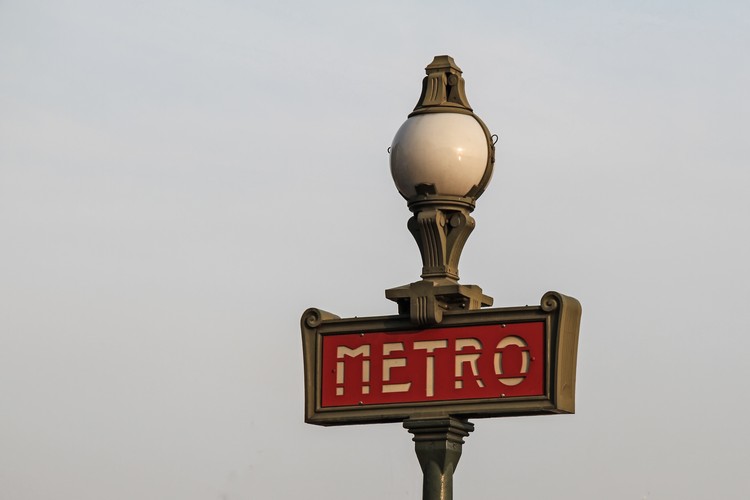
Scattered throughout the streets of Paris, the elegant Art Nouveau entrances to the Métropolitain (Métro) subway system stand as a collective monument to the city’s Belle Époque of the late 19th and early 20th Centuries. With their sinuous ironwork patterned after stylized plants, the Métro entrances now count among the most celebrated architectural emblems of the city; however, due to the city’s wariness in the face of industrialization and architect Hector Guimard’s decision to utilize a then-novel architectural aesthetic, it would take decades before the entrances would earn the illustrious reputation that they now enjoy.
Courtesy of Wikimedia user Zinneke (licensed under CC BY-SA 3.0)
To the contemporary observer, the flowing lines and naturalistic ornamentation of Art Nouveau do not appear particularly radical. To some, Art Nouveau may even seem to be the dying gasp of 19th Century Classicism just before the unmistakably modern Art Deco and International Styles supplanted it as the design modes of choice. The Hôtel van Eetvelde, designed in 1897 by Victor Horta—the architect considered to be the father of Art Nouveau—suggests a different story. With its innovative spatial strategy and expressive use of new industrial materials, the Hôtel van Eetvelde is a testament to the novelty of the “New Art.”
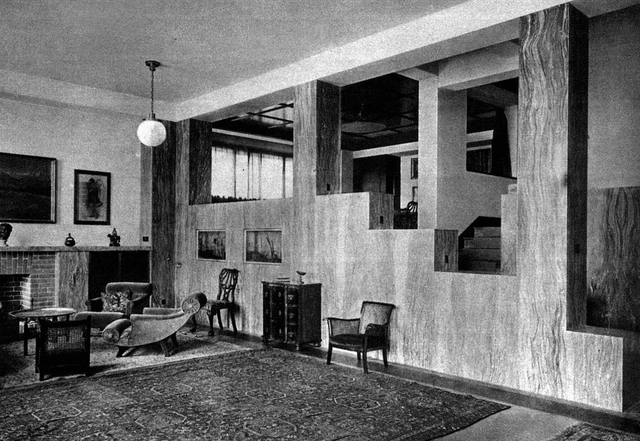
Welcome to the fourth installment of The Long(ish) Read: an AD feature which presents texts written by notable essayists that resonate with contemporary architecture, interior architecture, urbanism or landscape design. Ornament and Crime began as a lecture delivered by Adolf Loos in 1910 in response to a time (the late 19th and early 20th Centuries) and a place (Vienna), in which Art Nouveau was the status quo.
Loos used the essay as a vehicle to explain his distain of "ornament" in favour of "smooth and previous surfaces," partly because the former, to him, caused objects and buildings to become unfashionable sooner, and therefore obsolete. This—the effort wasted in designing and creating superfluous ornament, that is—he saw as nothing short of a "crime." The ideas embodied in this essay were forerunners to the Modern movement, including practices that would eventually be at core of the Bauhaus in Weimar.
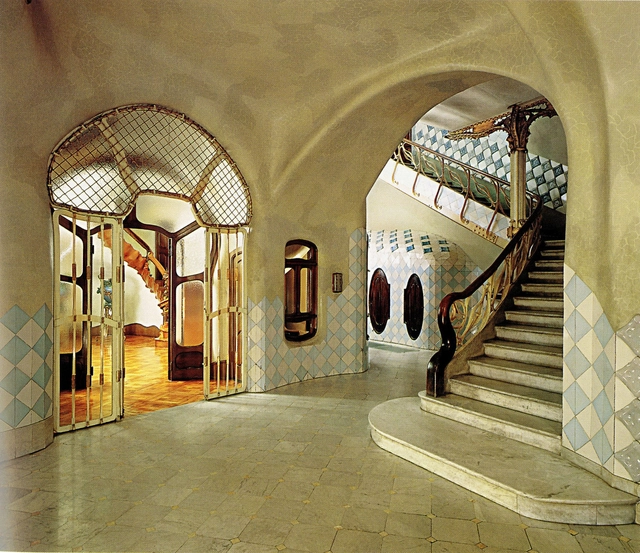
Designed by Antonio Gaudí in Barcelona when he was 30, and designated a World Heritage Site by UNESCO in 2005, Casa Vicens will be converted into a museum and open its doors to the public during the second half of 2016.
Built between 1883 and 1889, Casa Vicens was the first house designed by Gaudí. The building’s current owner, a subsidiary of the financial group Mora Banc Grup, is currently working on its restoration and the museum planning. “The mission of Casa Vicens as a house museum is to present the first Gaudí house, presenting it as an essential work to understand his unique architectural language and the development of Art Nouveau in Barcelona,” explained the executive manager of the project, Mercedes Mora, in a recent interview with Iconic Houses.
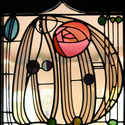
Charles Rennie Mackintosh is considered to be one of the most influential artists and architects of the late nineteenth and early twentieth century, and earlier this year his work was displayed in an exhibition at the Royal Institute for British Architects (RIBA), following a five-year research project by the University of Glasgow. Among the exhibition of over 60 original drawings, watercolors and perspectives spanning the entirety of his career, highlights included models of his unbuilt work and original designs for the Glasgow School of Art. Watch the short documentary above on the five-year research process by the Arts & Humanities Research Council (AHRC), who funded the University of Glasgow's work.