Underneath surfaces, behind structures, or within building services, numerous fastening systems and adhesives provide the necessary connections for building facades, finishes, and envelopes. As buildings age and design trends shift at an accelerated pace, modernizing structures requires addressing deterioration, maintenance, and performance optimization. Regardless of their installation methodologies, technologies, or tools, ventilated facade systems continue to transform how we approach building design and aesthetics.
Nicolás Valencia speaks with Chilean architect Sebastián Irarrázaval following the release ofEscritos y arquitectura, the first monograph on his career, curated by Fernanda de Maio, published by Lettera Ventidue Edizioni in a bilingual Spanish and Italian edition, and funded by the 2023 National Fund for the Arts and Culture.
Who is Sebastián Irarrázaval? He graduated with a degree in architecture from the Pontificia Universidad Católica de Chile. He founded Sebastián Irarrázaval Arquitectos, an office through which he has developed housing, public architecture, and cultural facilities in Chile and abroad. He has served as a faculty member at the UC School of Architecture, where he taught design studios and project courses. His work has been widely published and exhibited, earning various national and international awards, and is notable for its experimental approach to materials, construction systems, and the adaptive reuse of existing structures.
https://www.archdaily.com/1054652/sebastian-irarrazaval-the-architect-as-translatorArchDaily Team
Martínez de Guereñu examines the body of work created by Lilly Reich and Mies van der Rohe as a creative partnership: from the famous Glass Room at the Die Wohnung (The Dwelling) exhibition in Stuttgart and the Velvet and Silk Café at the Die Mode der Frau (Women's Fashion) exhibition in Berlin, both in 1927, to their masterpiece for the German section of the 1929 Barcelona International Exposition, the official German Pavilion.
https://www.archdaily.com/1054662/the-life-and-work-of-lilly-reich-according-to-laura-martinez-de-guerenu-and-anna-ramosArchDaily Team
In Santiago, Nicolás Valencia speaks with Chilean architect Cristián Izquierdo, author of the bookComposición Centralizada, a collection of eight essays on eight houses designed and built by Izquierdo in Chile, weaving together theory and practice.
Who is Cristián Izquierdo? He holds a degree in architecture from the Pontificia Universidad Católica de Chile and an MSc from Columbia University. He is a partner at Izquierdo Lehmann Arquitectos and the founder of Taller Tecton, where he develops low-emission civic projects. He is the author of Composición Centralizada and El material de lo construido. His work has been recognized with honors such as Architectural Record's Design Vanguard and the AOA Medal for Outstanding Young Architect. He is a professor at the Pontificia Universidad Católica de Chile.
https://www.archdaily.com/1054656/eight-timber-houses-in-chile-with-cristian-izquierdoArchDaily Team
Nicolás Valencia talks with Chilean architects Emilio de la Cerda and Paulette Sirner aboutArchivo Christian de Groote: cinco décadas de arquitectura, a comprehensive publication on the vast work of one of the leading Chilean architects of the second half of the 20th century.
https://www.archdaily.com/1054675/christian-de-groote-five-decades-of-modern-architectureArchDaily Team
Nicolás Valencia talks with Chilean architect and 2022 National Architecture Prize winner Fernando Pérez Oyarzún about the third volume ofArquitectura en el Chile del siglo XX, at the Lo Contador Campus auditorium of the Pontificia Universidad Católica de Chile.
The period spans from 1950 to 1980, an era when Chile developed an architecture that reflected the years of European reconstruction and the rise of a new world order marked by US global dominance and the Cold War.
https://www.archdaily.com/1054650/fernando-perez-oyarzun-the-history-of-modern-architecture-is-full-of-interruptions-and-reinterpretationsArchDaily Team
ArchDaily China is 11 years old this year. The design based on Chinese culture and site has become an important part of the global architectural design exchange, and has become a highly topical part of the global architectural and design development wave. ArchDaily China brings global architecture and design consulting and information to Chinese readers. Moreover, it showcases Chinese architecture and design to the world. We stick to our original intention and become an open platform that benefits the public, making the architecture and design industry more inclusive and equal.
This year, we once again extend an invitation to Chinese readers, hoping that everyone can participate in the selection of the 2026 China Annual Architecture Award. Through an unbiased and non-geographical voting method, everyone is a member of the jury, selecting the most representative Chinese architecture and design projects for everyone.In the next three weeks, the whole process of the selection will be divided into two stages: In the first stage, you will vote on 455 projects released in the past year, and the top 15 with the highest nominations will enter the second stage finalist list; In the second stage, the 15 outstanding projects will be voted again to determine the best champion, runner-up and third place of the year.
The 2026 Building of the Year Awards China is brought to you thanks to Dornbracht, renowned for leading designs for architecture, which can be found internationally in bathrooms and kitchens.
The architecture of Latin America and Spain is testament to the rich and diverse cultures, traditions, needs, and solutions that define these territories. With more than 700 projects built in Spanish-speaking countries published on ArchDaily en Español, the time has come to explore, debate, and choose your favorites for the Obra del Año 2026 award.
In its seventeenth edition, the Obra del Año reaffirms its place as the largest architecture award in the Spanish-speaking world, decided by its community. Starting today, March 24, readers will take on the responsibility of choosing the best architectural works of 2025.
Ten years ago, ArchDaily Brasil launched the inaugural edition of the Obra do Ano Award. Over the past decade, hundreds of architectural projects have been recognized as the best in the Portuguese-speaking world, thanks to the collective intelligence of ArchDaily Brasil's readers.
Today marks the start of the 2026 Obra do Ano Award, and once again we are counting on the ArchDaily Brasil community to select the best built projects in the Portuguese-speaking world. Over the next three weeks, you will be responsible for choosing the 15 finalists and 3 winners of this edition.
All projects published during 2025 from the following countries are eligible: Angola, Brazil, Cape Verde, East Timor, Equatorial Guinea, Guinea-Bissau, Macau, Mozambique, Portugal, and São Tomé and Príncipe. In this first phase, readers can nominate one project per day to advance to the finalist stage, which will be announced on April 8.
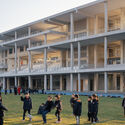
Following two exciting weeks of nominations, ArchDaily's readers have evaluated 455 projects and selected 15 finalists for the Building of the Year Award China. Architects and enthusiasts participated in the nomination process, choosing projects that exemplify what it means to push architecture forward. These finalists are the buildings that have inspired ArchDaily readers the most, which also reveal the growing trend of Chinese architecture.
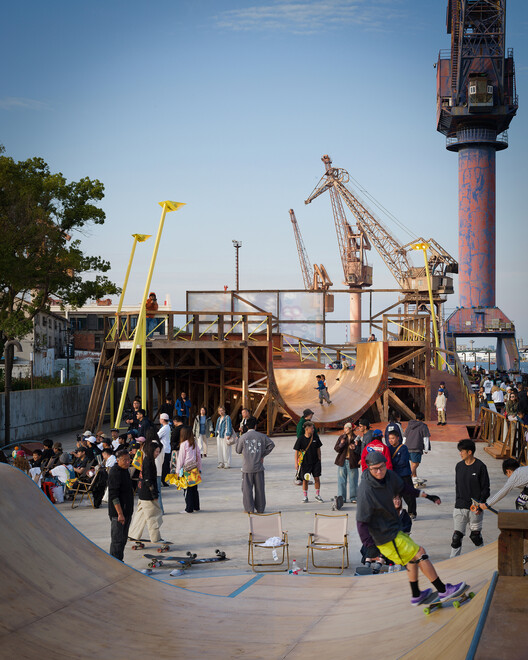
Among the 15 finalists of the 2026 China Building of the Year Award, we can see a gradual shift in focus from large-scale public buildings to rural revitalization, community public spaces, exploration of new typology of school and small-scale interior spaces. People are paying more attention to their personal needs and living experiences as well as the surrounding spaces. We can also observe how different firms are responding to the needs of cities and users during the period of transformation in the real estate.
Before we get to shortlisted nominees, we want to highlight the values of this awards process — as the world's largest platform for architecture we are acutely aware of our responsibility to the profession, and to the advancement of architecture as a discipline. Since our mission is directly related to the architecture of the future—inspiring and educating the people who will design the urban fabric of the future—the trust placed in us by our readers to reflect architectural trends from regions around the whole world creates challenges that we are eager to rise to. The democratically-voted, user-centered Building of the Year Awards is one of the key pillars of our response to these challenges, aiming to tear down established hierarchies and geographical barriers. Here are the 15 finalists of the 2026 China Building of the Year Award, and the voting period will run from April 8th to April 15th, 11:59 PM (Beijing Time), 2026. The final winners will be announced on April 16th, 2026. Click here to see the details and how to vote.
We invite you to participate in the ArchDaily China's 2026 Building of the Year Awards. We ask you to recognize and reward the projects that you feel are creating the largest impact in the built environment, that ArchDaily China has published on our projects database in 2025. By nominating and voting, you form part of an interdependent, impartial, distributed network of jurors and peers that has consistently helped us celebrate architecture of every scale, purpose, and condition, from countries large and small, and architects of all descriptions. Over the coming weeks, your votes will result in 455 projects being filtered down to just 15 projects. The 15 projects with the most nominations will move on to the voting round.
https://www.archdaily.com/1040283/last-days-for-nominations-in-the-archdaily-chinas-2026-building-of-the-year-awards韩爽 - HAN Shuang
With only five days left until the finalists are announced, there is still time to choose your favorite projects for the 2026 Obra do Ano Award. As the largest architectural award in the Portuguese-speaking world decided by popular vote, the Obra do Ano is dedicated to recognizing the best architectural projects published every year on ArchDaily Brasil.
On April 8, the 15 finalists chosen by the ArchDaily community over these two weeks of nominations will be revealed. By nominating projects, each reader becomes part of an unbiased network of jurors, bringing visibility to the best of architecture in Portuguese-speaking countries.
https://www.archdaily.com/1054674/last-days-to-choose-the-finalists-for-archdaily-brasils-2026-obra-do-ano-awardArchDaily Team
With just five days remaining until the finalists for the 2026 Obra del Año Award are announced, there is still time to vote for your favorite projects of the year. As the largest architecture award in the Spanish-speaking world decided by its community, the Obra del Año exists to recognize the most influential architectural projects published each year on ArchDaily en Español.
On April 8, the 15 finalists chosen by the ArchDaily community during this two-week nomination period will be revealed. By nominating projects, each reader becomes part of an impartial global jury, bringing visibility to the best architecture across Spanish-speaking countries.
https://www.archdaily.com/1054665/last-chance-to-choose-the-finalists-for-the-2026-building-of-the-year-awardArchDaily Team
The world of architecture is evolving rapidly. Faced with technological transformation, environmental urgency, and growing cultural complexity, architects must combine creativity with technical expertise, cultural sensitivity, analytical skills, and the ability to work across multiple disciplines. The Master's Degree in Architecture at CEU Cardenal Herrera University responds to these demands through a transformative academic experience.
Over the last two weeks, the ArchDaily en Español community submitted more than 17,000 nominations, yielding 15 finalists that represent some of the most emblematic architectural works of the past year. Decided by its community, the 2026 Building of the Year Award—the most significant architecture prize in the Spanish-speaking world—exists to recognize the best of architecture across Spanish-speaking countries.
These 15 finalists, chosen by public vote in this 17th edition, showcase the breadth of recent Ibero-American production while highlighting shared shifts in contemporary practice: an architecture that prioritizes clear construction choices, operates within real-world constraints, and understands design as a way of adapting to specific contexts.
https://www.archdaily.com/1054657/the-15-finalists-of-the-2026-archdaily-en-espanol-building-of-the-year-awardArchDaily Team
Over the past two weeks, the ArchDaily Brasil community has nominated more than 14,000 projects, resulting in 15 finalists representing some of the most iconic architectural works published over the last year. Now in its 10th edition, the Obra do Ano Award recognizes the best of architecture in Portuguese-speaking countries, chosen by the readers themselves. The finalists offer a snapshot of the current state of architecture, spanning residential, urban, cultural, and other programs.
Representing Brazil and Portugal, the 15 projects reflect the needs of their specific contexts through creative solutions proposed by local architects. From interior renovations to large-scale urban interventions, and from single-family homes to community projects, the selection is diverse, yet united by a common thread: recognition from the public, who seek to see their own aspirations represented.
https://www.archdaily.com/1054658/the-15-finalists-of-archdaily-brasils-2026-building-of-the-year-awardArchDaily Team
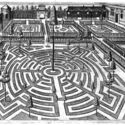
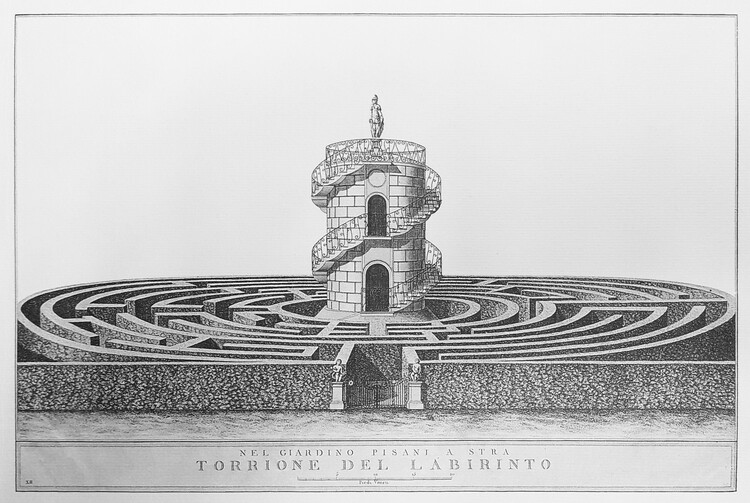
Villa Pisani, labirinto. Image Cortesia de Martins Fontes
Architecture is typically understood through principles such as order, clarity, and functionality. In O Livro dos Labirintos, Francesco Perrotta-Bosch proposes another entry point: thinking about the discipline through the labyrinth—a structure that, since its mythical origins, has operated through detours, ambiguity, and disorientation.
Drawing on the Labyrinth of Crete, attributed to Daedalus in Greek mythology, the author shifts the discussion on the origins of architecture to a realm less associated with constructive rationality and closer to spatial experience. The book's guiding question is direct: why would architecture have begun with a form that subverts linearity and legibility?
Heimtextil Colombia 2026 brings together an international showcase and a knowledge program that highlight a shift in value toward the home and hospitality sectors, where Colombian and Latin American designers are expanding their creative DNA to move up the value pyramid, diversify revenue, and compete in global markets.
Work is no longer confined to a single place. It moves. It changes. It adapts. Today, it can begin in an office, continue in an acoustic booth, pass through a shared space, and end at home. In this transition, the laptop has become a constant fixture. As work becomes increasingly mobile, spatial needs change as well.
Work no longer happens in a single place; it is fluid, fragmented, and adaptable. It might begin in an office, move to an acoustic pod, transition to a shared space, and end at home. Throughout this journey, the laptop remains a constant fixture. As work becomes increasingly mobile, spatial configurations must adapt to support this fluidity.
Three Brazilian projects have been chosen as the winners of the 2026 Obra do Ano Award by ArchDaily Brasil's readers. After three weeks of public voting, more than 700 projects were narrowed down to 15 finalists, concluding the process with three grand winners that represent the very best of Lusophone architecture.
https://www.archdaily.com/1054654/meet-the-winning-projects-of-archdaily-brasils-2026-building-of-the-year-awardArchDaily Team
Soporte oculto para vigas - CBH. Image Cortesía de Simpson Strong Tie
In the field of architecture, wood was one of the first materials used by humans in construction, evolving and facing various challenges over the years. From the integration of new technologies in industrial production processes to ancestral techniques and materials reinterpreted in contemporary ways, timber construction continues to capture the interest of architecture and design professionals. Beyond its versatility, strength, appearance, and sustainability, cross-laminated timber, known as CLT, presents a promising future for the industry.
Another year, another successful ArchDaily China Building of the Year Awards! Once more, the award has proved to be the largest architecture prize centered around people's opinion. Crowdsourced, the most relevant projects of the year were nominated and selected by our readers.