

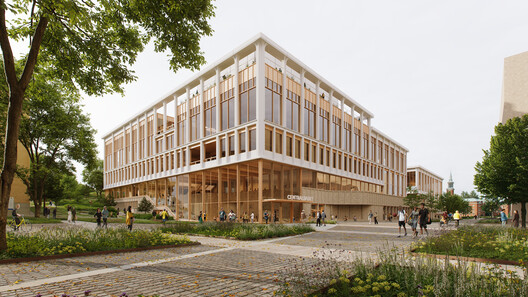
Henning Larsen has been selected to design Gothenburg's new Centralbadet, a public swimming and sports facility intended to strengthen the city's network of community and health-oriented spaces. The winning team includes Winell & Jern Architects, Ramboll, and John Dohlsten, Sports Science Lecturer at the University of Gothenburg. Organized by the City of Gothenburg, the competition included teams such as BIG and Wingårdh Arkitektkontor. The new center is planned as a multifunctional public facility that supports both everyday recreation and organized sport for residents of all ages.
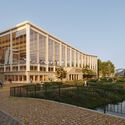
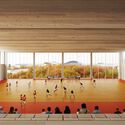
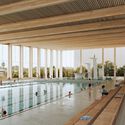
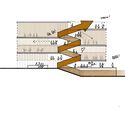
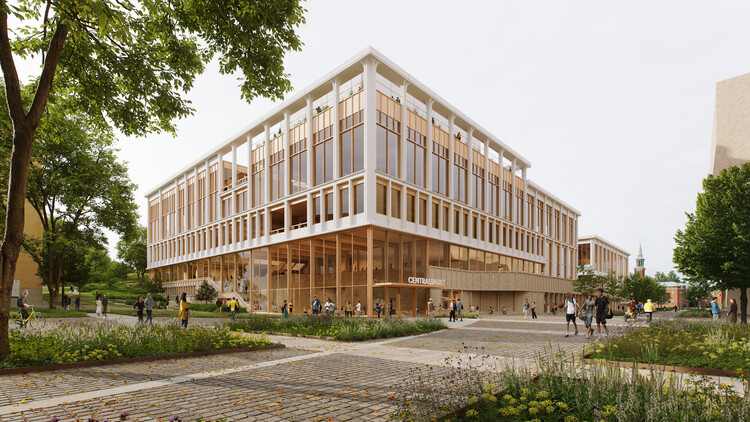

The project references Gothenburg's Valhallabadet, one of Scandinavia's largest indoor swimming centers, built in 1956, continuing the city's legacy of public access to sport and wellness. The design integrates art, landscape, and urban connections, extending from the landscaped Valhallagade to pathways inspired by Swedish artist Nils Wedel's mosaic walls. Covering 51,850 square meters, Centralbadet will include Olympic-standard swimming and diving facilities, family and learning pools, four sports halls, a basketball court, and a gym. Additional spaces include saunas, outdoor pools, a café and restaurant, multipurpose gathering areas, and offices for approximately 200 municipal employees. The design also incorporates practical amenities such as changing areas, bicycle storage, and stroller parking to ensure accessibility.


Located in Katrinelund, historically known for its health and outdoor recreation facilities, the new Centralbadet continues this focus through a flexible landscape strategy that can adapt to future urban developments. The entrance faces the planned sports arena to the south and connects with Burgårdsparken and the Mölndal River. Active street façades, open sightlines, and integrated lighting improve safety and accessibility. The multi-level roof extends the building's public use outdoors with running tracks linked to the park, outdoor exercise areas, and sunlit terraces. Planted areas and green roofing contribute to biodiversity and stormwater management.
Related Article
From India to Brazil: 6 Unbuilt Sports and Wellness Spaces Connecting Community and Well-BeingThe project combines concrete and timber to balance structural performance and environmental considerations. Concrete provides stability for the pool basins, while the upper structures use lightweight timber, including long-span glulam beams designed for humid conditions. Wood is also used in interior elements and insulation to reduce embodied carbon. Recycled bricks are used in the façades, and timber components are designed for disassembly and reuse. The green roofs further support ecological functions, in the aim of creating a long-lasting and resource-efficient building.

We have designed the space to ensure every visit prioritizes social and health benefits, creating a democratic space where everyone can feel welcome. From quiet nooks to lively terraces, from playful learning pools to sunlit rooftops, every visit will feel welcoming and connected to the rhythms of the city — Martin Stenberg Ringnér from Henning Larsen.


In its decision, the jury chaired by Johan Sävhage, Director of the Sports and Associations Administration, commended the project for its social inclusiveness and strong urban connections. The statement described Centralbadet as "a place where the citizens of Gothenburg come together," emphasizing its integration with surrounding parks and streets, and its potential as a setting for both sports and daily activities. The design team will now refine the project in collaboration with the City of Gothenburg, with completion expected in 2031. Centralbadet forms part of the city's broader effort to expand and modernize public facilities that support health and community life.
Other recent developments in sports architecture include the completion of SOM's Milan Olympic Village, as the city prepares to host the most geographically extensive Winter Games to date, with 90% of the sports venues being existing or temporary. In Morocco, Populous has completed the Prince Moulay Abdellah Stadium in Rabat; in Japan, VUILD has designed a timber soccer stadium planned for Fukushima; and in England, AFL Architects has received approval for its all-electric stadium in Oxford.


