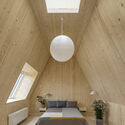
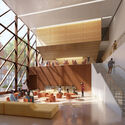
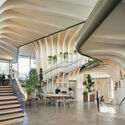
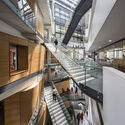
Wellbeing is no longer confined to exclusive resorts, spas, or hospitality settings. Today, it has become an essential part of contemporary living, inspiring homeowners to create private spaces dedicated to relaxation and personal care. Collections such as LEMI's Home Spa Collection explore this growing interest in residential wellness through a selection of massage beds and relaxation loungers.
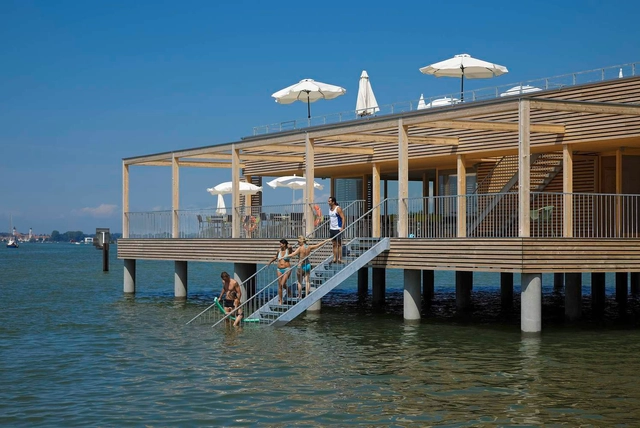
Marina Opatija and the Kvarner Bay shoreline from above. Image Courtesy of Smart & Sustainable Marina Rendezvous
M3 Monaco's Smart & Sustainable Marina Rendezvouscompetition returns for its sixth edition with an open-architecture Call for Ideas centered on Marina Opatija, on Croatia's Kvarner Bay. This article sets out what the competition asks of designers: a focused, high-impact intervention built around three required buildings, the pillars and sustainability criteria behind the brief, the key dates leading to the August 2026 deadline, and how to enter, free of charge, for professionals and students alike, with the top finalists pitching their work at the Yacht Club de Monaco.
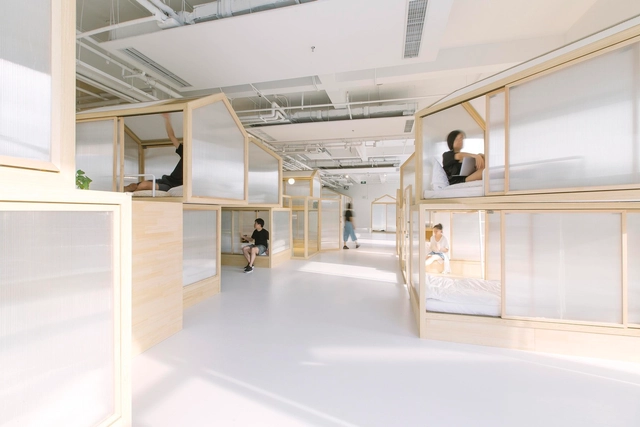
Work is no longer confined to a single place. It moves. It changes. It adapts. Today, it can begin in an office, continue in an acoustic booth, pass through a shared space, and end at home. In this transition, the laptop has become a constant fixture. As work becomes increasingly mobile, spatial needs change as well.
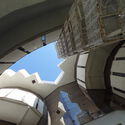
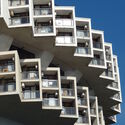
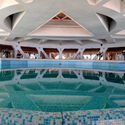
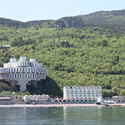
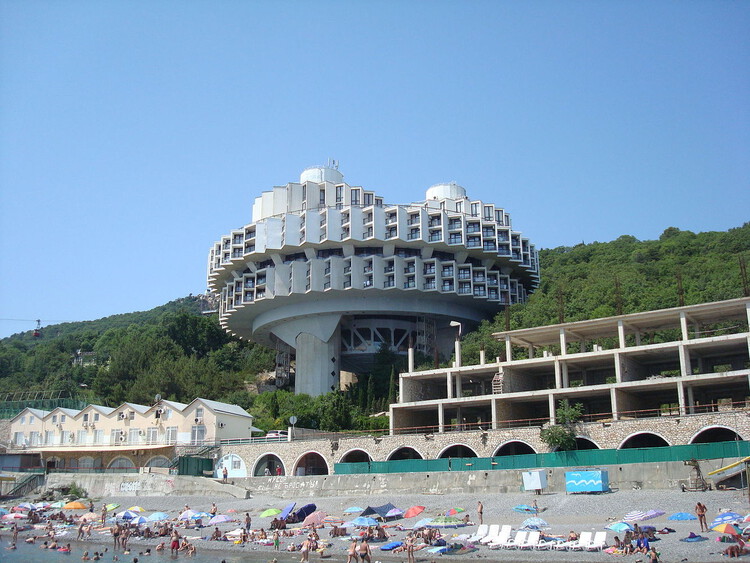
Perched above the cliffs of Crimea, the Druzhba Thermal Sanatorium appears less as a building than as a landed spacecraft. Its circular forms, suspended decks, and spiraling ramps evoke a scene from Andrei Tarkovsky's Solaris (1972), where architecture and psychology merge into a single landscape. Built between 1978 and 1985 by Igor Vasilevsky, the complex was conceived as a thermal resort for workers of the oil industry, part of the Soviet Union's extensive network of sanatoria dedicated to health and recreation.
Beyond its function as a place of recovery, Druzhba, meaning "friendship", embodied a broader political and aesthetic ambition. It sought to merge technological prowess with the restorative ideals of socialist modernity, translating collective well-being into concrete form. Rising from a steep coastal slope overlooking the Black Sea, its massive structure defies gravity, supported by a central concrete core from which radial wings extend like the blades of an enormous gear. Seen from a distance, it feels simultaneously mechanical and organic, a hybrid of infrastructure and landscape.
Cities around the world share a common goal: to become healthier and greener, supported by civic infrastructure that restores ecosystems and strengthens public life. The question is how to reach this. Global climate targets, local building codes, and municipal standards increasingly guide designers and planners toward better choices. Still, many cities struggle to translate these frameworks into everyday, street-level comfort and long-term ecological protection. What happens if the city is no longer treated as a traditional city, but as a national park?
National parks operate through systems of protection that treat land as a network of ecological relationships rather than a collection of isolated sites. They establish a shared baseline for what must be preserved, maintained, and made accessible over time. When this logic is applied to the urban environment, success can inspire pride and a sense of shared responsibility among designers, policymakers, and residents, fostering a collective commitment to health, habitat, and civic infrastructure.
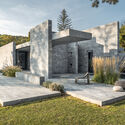
This international competition invited architects to design a boutique wellness retreat along the serene banks of the Vez River in northern Portugal. The project challenged participants to propose a space of tranquility and renewal that would harmonize with its extraordinary natural setting and complement a restored historic watermill already on site. The project partner, the site landowner, plans to construct one of the winning entries.
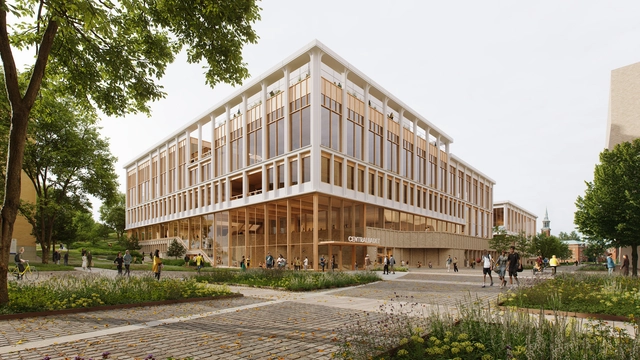
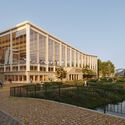
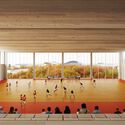
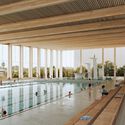
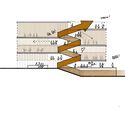
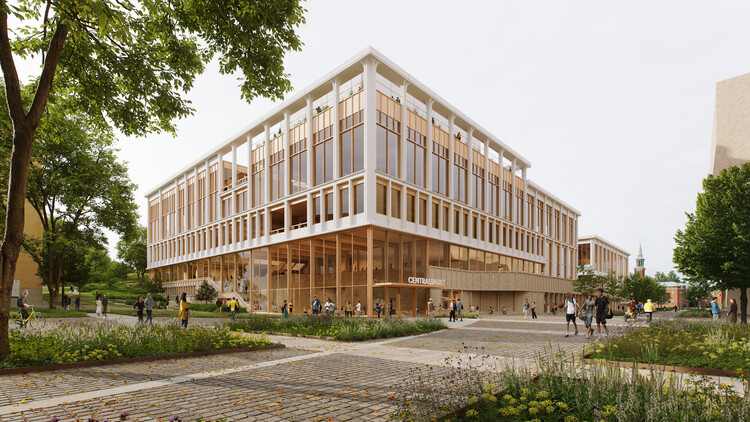
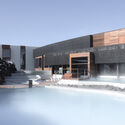
Centralbadet public swimming and sports center project in Sweden. Entrance render. Image Courtesy of Plankton Group
Henning Larsen has been selected to design Gothenburg's new Centralbadet, a public swimming and sports facility intended to strengthen the city's network of community and health-oriented spaces. The winning team includes Winell & Jern Architects, Ramboll, and John Dohlsten, Sports Science Lecturer at the University of Gothenburg. Organized by the City of Gothenburg, the competition included teams such as BIG and Wingårdh Arkitektkontor. The new center is planned as a multifunctional public facility that supports both everyday recreation and organized sport for residents of all ages.
As cities and landscapes evolve, architecture is increasingly asked to support well-being,performance, and collective experience. From stadiums that honor deep cultural memory to intimate wellness spaces that foster restoration and connection, sports and wellness typologies are expanding beyond mere functionality. They create environments where movement and health intersect with design quality, sustainability, and social meaning. Today, these spaces range from elite training grounds and recreational clubs to contemplative retreats and inclusive public amenities, shaping how communities gather, heal, and celebrate shared identity.
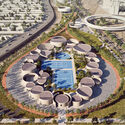
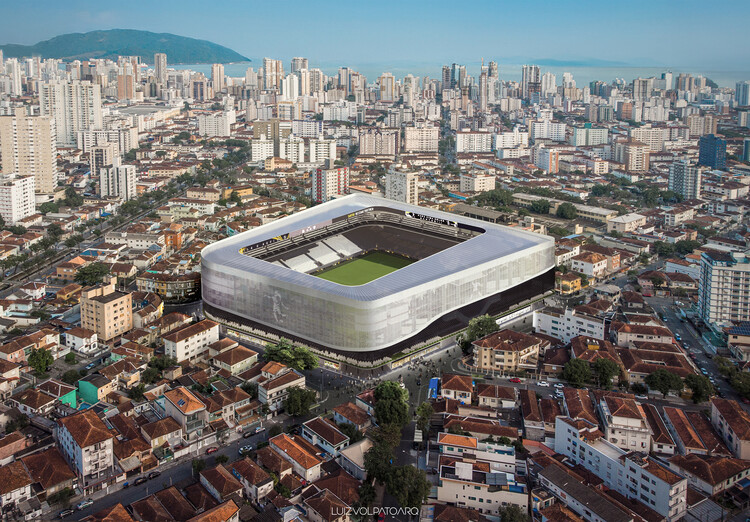
This selection of unbuilt proposals submitted by the ArchDaily community illustrates that diversity. In São Paulo, Luiz Volpato Arquitetura reinvents the historic Santos Futebol Clube stadium with a geometry that preserves fans' memory while introducing new commercial and social uses. In Hanoi, Van Aelst I Nguyen and Partners bring filtered light and fresh air to a dense urban sports complex. In Dubai, RSP proposes Haven, a residential development anchored in holistic wellness and nature-driven experiences, while India's Tropic Responses imagines Aira Club as a climate-conscious leisure hub. High in the Himalayas, Gadasu + Partners carve a meditative spa into mountain stone, and in Isfahan, Arsh4d Studio rethinks segregated women's parks to create inclusive, future-oriented civic space.
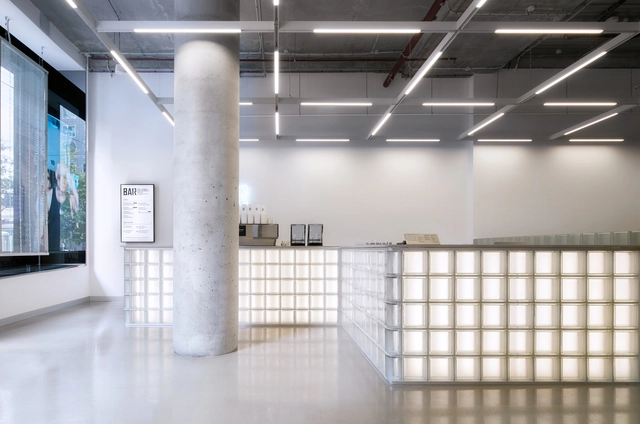
From the interior design of sports facilities to wellness spaces, contemporary architecture continues to experiment with incorporating different uses, installations, and materialities that make it possible to reach broader audiences, generate new spatial experiences, and enhance the simultaneous development of various activities. While each sport requires its own type of architecture, such as climbing training, for example, architecture and design professionals are striving to create atmospheres where exercise becomes more than just a physical experience, but also a psychological one, connecting mind and body through a state of physical renewal, relaxation, and sociability.
A good conversation can make time feel like it's passing more quickly. But is this effect solely due to the verbal exchange, or could our perception of time be shaped by the spatial conditions surrounding us? There are environments that, due to their scale, distribution, and atmosphere, are conducive to meeting, listening, or pausing, thereby influencing the human experience. Perhaps it's not the words we share, but the space in which we speak that truly shapes our understanding of time. Some sociological theories about our society and the built environment go beyond considering it as a mere physical container and suggest that architecture, in its very duality, can act as both an inhibitor and a catalyst for our temporal experiences, impacting our wellbeing.
https://www.archdaily.com/1029304/wellbeing-and-slow-spaces-can-architecture-distort-the-way-we-experience-timeEnrique Tovar
The term "biophilia" understandably conjures images of buildings engulfed by vegetation and integrated into natural landscapes. In modern architectural discourse, the concept has come to be associated with the incorporation of greenery into built environments, yet such applications represent only a sliver of biophilic design's true scope. Inarguably, nature plays a central role in biophilic design. However, its influence stretches to often-overlooked strategies that involve spatial configuration and environmental patterning. "Invisible" biophilia frequently leads to positive health outcomes for occupants, working impactfully beneath the surface.
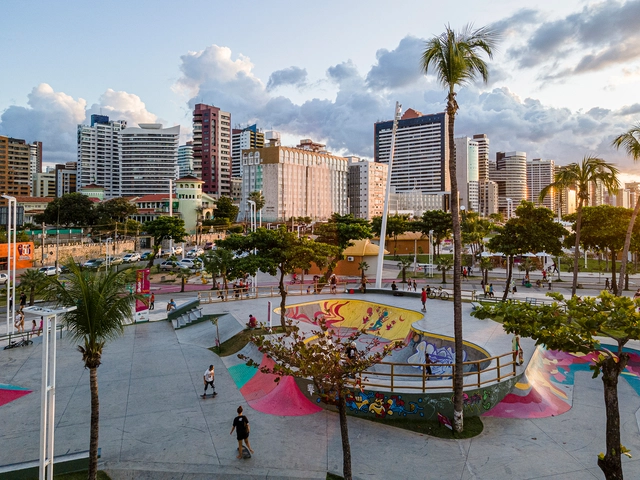
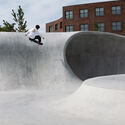
How is it possible to achieve emotional well-being in public spaces? What role do public spaces play in promoting urban well-being? Considering that sports practices can be a vital component in creating healthy public spaces, skateboarding, one of the most globally recognized urban activities, offers an alternative for building opportunities for the physical, recreational, social, cultural, and even professional development of multiple generations.
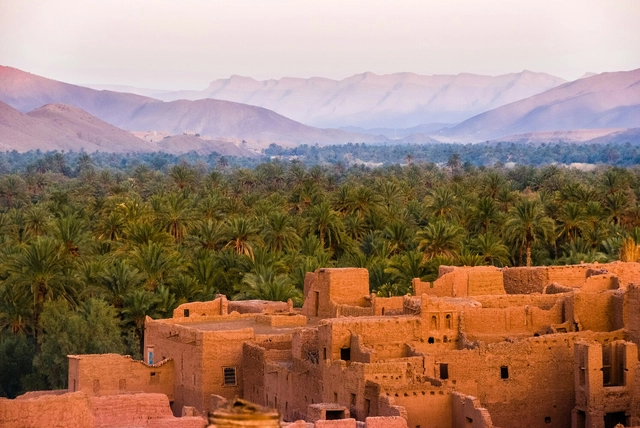
Wellness and healing spaces are shaped by cultural traditions, geographical contexts, and social structures. Across the world, certain practices have been deeply rooted for centuries, like Roman baths, Turkish hammams, and Japanese onsens, while others evolve by drawing inspiration from rituals or redefining their own concept and image of a healing environment. Europe, North America, and Oceania are characterized by a focus on personal journeys, self-care, and often luxurious wellness spaces. Asia shapes the prevailing global perception of wellness through meditation-based healing, inner reflection, and holistic retreats. In Africa, wellness is deeply rooted in ancestral traditions, integrated with nature, and centered around community and social interaction. The commonality worldwide lies in sensory engagement, relaxation, and holistic healing, often tied to nature. But what does wellness look like in Africa? What are the healing spaces that shape it, and what architectural languages define wellness from north to south?
https://www.archdaily.com/1028770/rooted-in-tradition-nature-and-community-wellness-and-healing-spaces-from-the-north-to-the-south-africaHadir Al Koshta
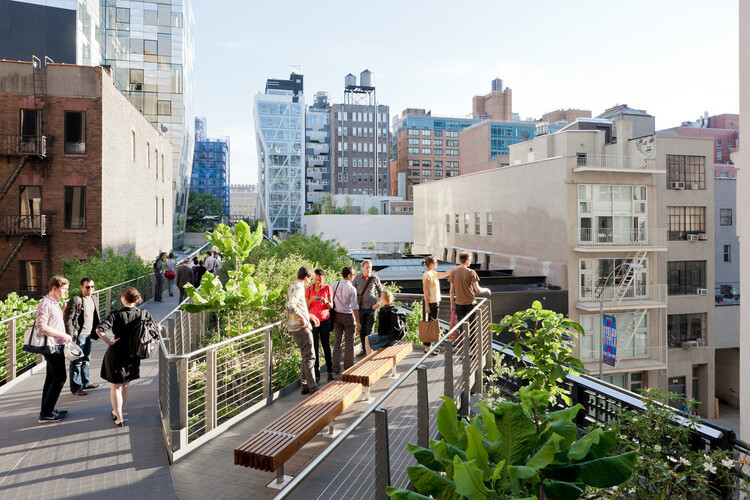
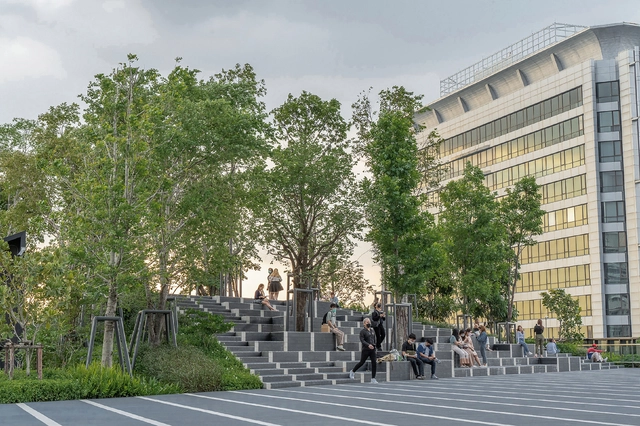
In contemporary urban development, the concept of Privately Owned Public Space (POPS) has gained increasing prominence. These are spaces that, while built, owned, and maintained by private developers, are legally required to remain publicly accessible. Often the result of negotiated planning incentives—such as zoning bonuses or increased floor area—POPS have become especially prevalent in dense urban environments where land is limited and demand for public amenities is high.
Historically, public bathing was a fundamental necessity for hygiene, giving rise to communal bathhouses in regions where private bathrooms were a rarity. In Japan, for instance, sento bathhouses emerged during the early Edo period, serving as essential facilities when most households lacked their own bathing spaces. Similarly, in other parts of the world where plumbing and water management were considered luxuries, shared public baths became vital components of urban life. Over time, these spaces evolved beyond their functional role, becoming venues for socializing, relaxation, and a temporary escape from daily routines.
However, in the modern era, private bathrooms have become ubiquitous in contemporary homes, effectively addressing the hygiene concerns that once made public bathhouses indispensable. With the rise of alternative social spaces—cafés, fitness centers, bars, and jazz lounges—the traditional communal bath no longer serves the same essential function. While some may still appreciate the social aspect of public bathing, the inconvenience of changing clothes and getting wet in front of strangers can deter many from engaging in the experience.
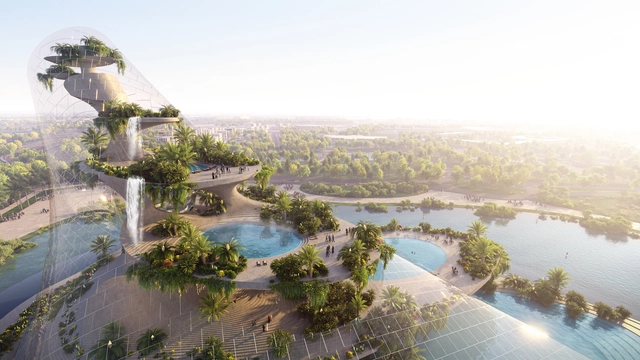
Diller Scofidio + Renfro has unveiled the design for Therme Dubai – Islands in the Sky, a new urban wellbeing destination set to be developed in Zabeel Park, United Arab Emirates. The project, created in collaboration with Therme Group and Dubai Municipality, has been approved as part of Dubai's Quality of Life Strategy 2033, which aims to enhance the city's landscape through innovative and sustainable infrastructure.
The built environment significantly impacts public health, yet its potential as a tool for health promotion remains largely unrecognized. Historically, architects and urban planners have explored the connections between design and health, identifying foundational factors that improve a building's health performance. Built environment professionals possess compelling evidence on how spatial interventions can improve health outcomes, yet health practitioners often lack this perspective. Breaking down these silos is essential in the creation of spaces that promote occupant well-being.