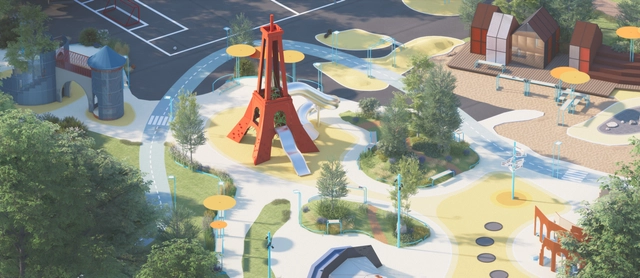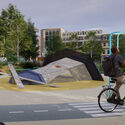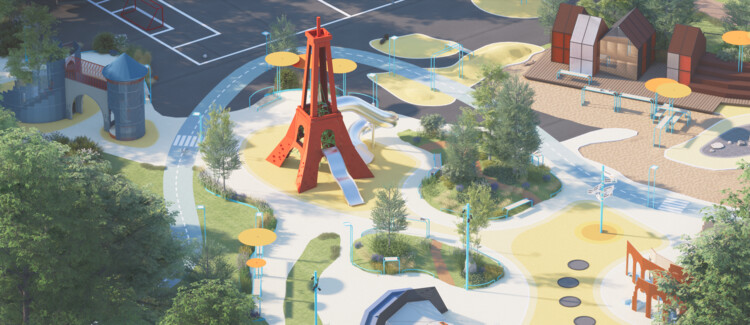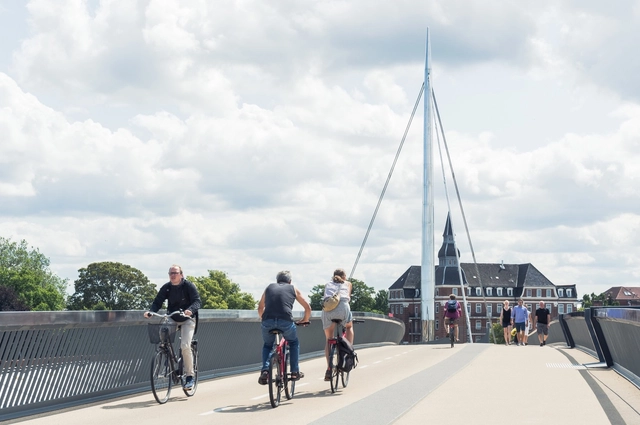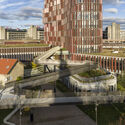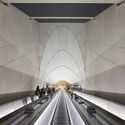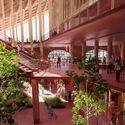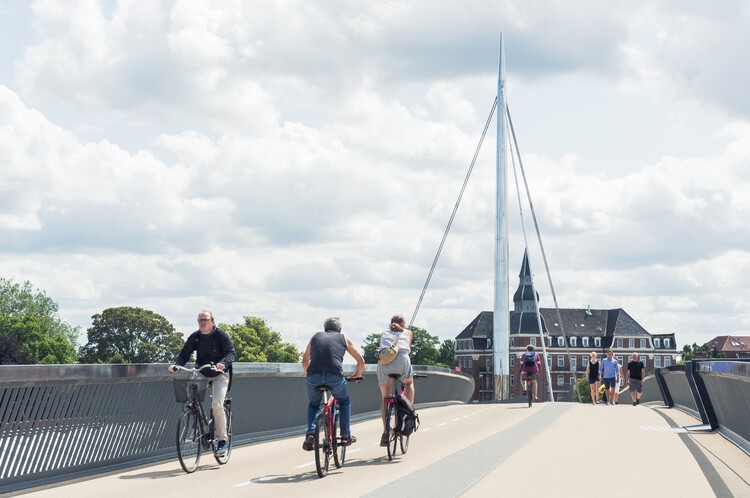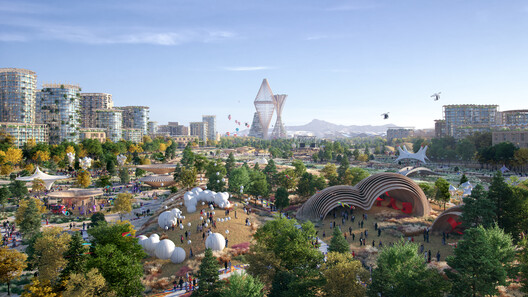
Concordia University and the University of Montreal, both in Canada, organized an international student competition challenging participants to reimagine the public transit experience in a post-pandemic metropolis. The competition aimed to stimulate discussion around new public transit experiences that could improve urban resilience.
Among the more than eighty entries received, the organizers sought to identify those that best addressed the theme through new narratives associated with public transit in a (post-)pandemic context, design proposals promoting public transit ridership, and design principles fostering new experiences in public transportation systems.
This Sunday, September 19, marks National Theater Day in Brazil. As an artistic and cultural medium, theater manifests in diverse spaces, from the stage to the streets. From actors and playwrights to costumes and set design, numerous roles and elements come together to move and captivate the audience. Architecture also plays a vital role, shaping lighting, acoustics, and the relationship between the stage and the audience. Ultimately, in theater, the story is materialized through space. To mark this national celebration, we have selected ten Brazilian theater projects previously featured on ArchDaily Brasil.

Forecasts for the future are alarming—at least, that is what the recently published 2021 IPCC report from the Intergovernmental Panel on Climate Change (a UN body) shows. According to the document, human-induced climate change is irrefutable and will worsen in the coming decades without concerted efforts to reverse the trend, warning that warming of 1.5°C to 2°C will be surpassed in the very near future.
The choice of finishes is crucial to a project's overall quality, both for its aesthetic impact and its budget implications. Often, designers opt for modular flooring—materials installed in individual pieces—which requires a clear layout logic. This article explores different flooring patterns and how they can be applied to various materials.
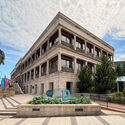
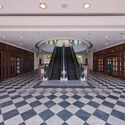
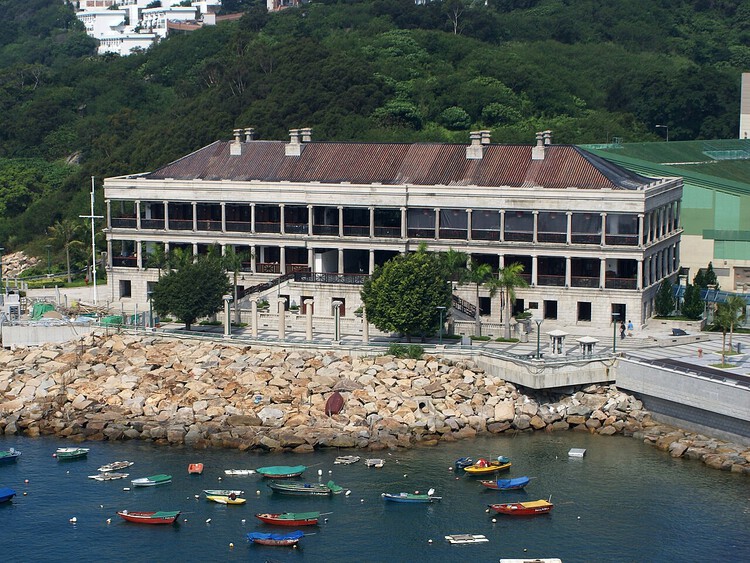
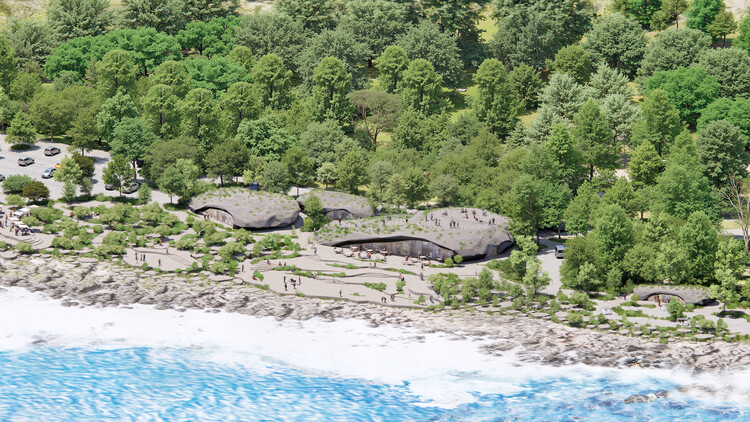
Organized by the Cultural Department of the Abrigo do Marinheiro (DCAMN), in partnership with the Brazilian Navy and the Rio de Janeiro Department of the Institute of Architects of Brazil (IAB/RJ), the national competition for the Maritime Museum of Brazil was won by the team comprising the offices messina | rivas (São Paulo, Brazil) and Ben-Avid (Córdoba, Argentina). The binational group presented a project that seeks to "reclaim proximity to the water and what it can represent as a common space amidst difference." Explore the proposal below.
We have long been accustomed to environmental education campaigns—indeed, more recent generations have even had school lessons on the subject. The concept is simple and thoroughly drilled into our minds: Reduce, Reuse, and Recycle. Yet, for some reason, most people still fail to follow the straightforward recommendation of sorting the waste we discard daily: organics (which can be repurposed as compost), dry recyclables, and finally, refuse (non-recyclable waste) that inevitably ends up directly in landfills.
Sunset Square (Praça do Pôr do Sol) surrounded by construction fences. Photo: Daniel Teixeira / Estadão
Conflicts, disputes, and antagonisms are frequent in the dynamics of social life, making it necessary to reconcile different interests and needs as best as possible. Today, urban conflicts are reduced to two poles. On one hand, those who oppose new projects, commonly known as NIMBYs (an acronym for “Not In My BackYard”), but who can also be seen as “neighborhood defenders.”
When a portion of the street is dedicated to parking, a decision is made to privatize one of the city's most valuable assets. From bike lanes and dedicated bus corridors to wider sidewalks, parklets, or even mixed-traffic lanes, the range of uses more beneficial to the public is vast. Now more than ever, we must rethink mobility for the sake of more prosperous and inclusive cities. Charging for metered parking is an excellent place to start.
Public transit, cycling, and walking are the most sustainable options for urban mobility. Yet, while bus systems languish amid a lack of funding and falling ridership, and cyclists and pedestrians face precarious infrastructure, cities invest substantial resources in road maintenance—and still reserve a significant portion for drivers to store a private asset.
https://www.archdaily.com/1128144/charging-more-for-street-parking-can-promote-transportation-equityJúlia Hartmann Mozetic, Guillermo Petzhold, Francisco Pasqual, Virginia Tavares e Fernando Corrêa
Conceived from the collection of the MAXXI museum in Rome, the traveling exhibition of At Home, at Garagem Sul, Centro Cultural de Belém in Lisbon, is complemented by Portuguese examples, expanding the interpretations and meanings of the presented materials. The exhibition ranges from the small scale of the shelter to the large scale of collective housing, revealing hybrid and complex experiences that bear witness to new ways of relating the individual and the community.
On September 21, the world celebrates Arbor Day, a date aimed at raising awareness about environmental conservation. During childhood, we establish relationships with nature that become deeply rooted in our imagination, eventually evolving to influence architectural design. We have selected 22 projects of various uses that draw inspiration from our relationship with nature and this shared imagination.
In this episode, Arquicast crosses the Atlantic to dive into our Lusitanian roots. The relationship between Portuguese and Brazilian architecture is a subject of constant theoretical reflection and has long guided key design practices, such as those undertaken by Lucio Costa in the early days of the Modern Movement in Brazil, when seeking a national architectural language that was innovative yet coherent with its origins.
Today, in an era of cultural globalization and the intense flow of knowledge, we know that the dialogue between Brazil and Portugal extends far beyond architecture, also reflecting in an ecosystemic approach to the landscape and a humanized vision of the territory. There is still much to learn together, and there is no better way to learn than through dialogue.
Gabriela de Matos stands out for her pioneering path. The only Black woman in her undergraduate architecture program, she founded the country's first research group on Afro-Brazilian architecture and gender – Arquitetas Negras. She is also the first Black woman to be elected vice president of the Institute of Architects of Brazil's São Paulo department, as well as the first to win the Architect of the Year award from IAB Rio de Janeiro in 2020. This year, she once again makes history as the first Black woman to participate in CasaCor São Paulo. Her debut could not be more auspicious: she has designed Espaço Agô, which welcomes visitors to the 34th edition of the exhibition, centered on the theme "the original house."
The results of the National Wood Architecture Award - PNAM’21 have been announced. In its sixth edition, the award recognized a winning project and two honorable mentions in “Sustainability and Circular Economy” and “Material Typology.” The main prize was awarded to Casa no Castanheiro, designed by architect João Mendes Ribeiro, located in Valeflor.
Often overlooked or dismissed, gender inequality in architecture has consequences for both women and their careers, as well as for the spaces and products created. There is, however, a niche within the construction industry that contradicts this logic, proposing to create a more egalitarian workspace. This article reflects on this inequality and how it is challenged by self-managed practices.
In partnership with BeGreen, Latin America's first urban farm, iFood has opened an urban farm on the rooftop of its headquarters in Osasco, Greater São Paulo. The 950-square-meter facility is dedicated to cultivating 1.7 metric tons per month of fresh, pesticide-free greens, fruits, and vegetables.
Located on the building's seventh floor, the urban farm aims to direct its entire production to the 3,000 families registered with the Osasco Food Bank. The first official harvest will take place in August and will be entirely donated to the municipal project.
Over 60 years ago, Brasília emerged from the Brazilian interior. Developed in a desolate cerrado between 1956 and 1960, the city that replaced Rio de Janeiro as the nation's capital was a joint creation of urban planner Lúcio Costa and architect Oscar Niemeyer.
With its winged shape, Brasília became a powerful symbol, representing one of the purest embodiments of the hope, splendor, and ingenuity of 20th-century architecture.
Responsible for a large share of atmospheric carbon emissions, the construction industry strictly follows a linear path that begins with the extraction of natural resources, moves through building construction, and ends with eventual demolition—or, in some cases, adaptation to other uses. Seeking to challenge this system by transforming it into a circular process, RUÍNA, a São Paulo-based firm founded by architects Julia Peres and Victoria Braga, has launched a catalog of construction materials salvaged from demolitions.
Peter Cook’s text ‘Some Notes on the Archigram Syndrome’ is a symbol of architecture at the beginning of the era of mass reproducibility. First published in *Perspecta 11: Yale Architectural Journal* in 1967 and republished in the 1999 book *Textos de Arquitectura de la Modernidad*, the text revisits, through the author's eyes, the chronology and consequences of the way of thinking and making architecture proposed by the Archigram group—an annual publication that gave rise to the architecture collective of the same name.
The group stands out as a milestone in the transformation of thinking about the city, representation, architecture, and the limitless application of technological knowledge within their production. Consequently, their work was not produced in isolation but was closely linked to major artistic movements in England and the United States, such as the Independent Group and the waves of counterculture.
Balneário Camboriú, Santa Catarina. City with 5 of the 10 tallest buildings in Brazil. Photo by: carlosoliveirareis on VisualHunt
What do you think about building more highways to reduce traffic congestion? If you follow the debate on urban policy, you probably already have the answer on the tip of your tongue: building more lanes doesn't improve traffic! The more highways, the more cars!
Building roads encourages more people to drive. With more paved lanes at their disposal, more people are willing to swap public transit for the convenience of a personal car. Residents might seek housing further away, assuming they can quickly drive to work.
While some countries are just beginning to harness their wind energy potential, others are already replacing older turbines with newer, more efficient models. This transition has raised a critical question: what should be done with the decommissioned turbine blades, which are massive and notoriously difficult to recycle?
Wind energy technology has advanced rapidly over the past 15 years. Given the 20-year lifespan of current wind turbine blades, they will need to be disposed of in the near future. In response, industry companies established the Re-Wind program, which supports researchers worldwide in finding alternatives for reusing turbine materials. The project explores the potential of repurposing these blades into architectural and engineering structures.
https://www.archdaily.com/1128012/wind-turbine-blades-become-bike-racks-in-denmarkMayra Rosa
Water tanks are vital components of any building due to their role in the health, safety, and comfort of occupants. Their primary function is to guarantee supply regardless of temporary municipal water cuts, making them increasingly essential during times of water crises.
The 8th {CURA} Award has announced the winners of its competition, which was themed around collective housing for the 21st century. The competition invited participants to reflect on new ways of living in the city, focusing primarily on issues of urban mobility, density, and bioclimatic efficiency.
Each project was evaluated individually, based on criteria such as consistency with the proposed theme; conceptual and architectural quality; creativity and critical vision in the proposed solution; suitability to the urban and territorial context; quality of graphic representation and clarity in communicating the proposal; social and environmental impact; and compliance with the competition brief. Team identities were only revealed after the jury's final decision.
https://www.archdaily.com/1079998/meet-the-winners-of-the-8th-cura-prize-collective-housing-for-the-21st-centuryArchDaily Team
Padre Manuel da Nóbrega Square, 2020. Image credit: Author's own
It comes as no surprise that the land issue in Brazil is a highly complex topic. As Ermínia Maricato defines it, the “knot of land” lies at the center of various conflicts—whether regarding the productive occupation of rural lands or at the core of questions surrounding the right to the city, housing, and infrastructure in urban centers. Yet, what is rarely discussed in the fields of urban planning and public policy are the cause-and-effect relationships of this land conflict on the current management of public areas, particularly concerning the organization of municipal assets and, more importantly, its practical effects on city design and urban dynamics.
The 2021 Intergovernmental Panel on Climate Change (IPCC) report left many of us wondering whether the world can indeed keep global warming below 1.5°C, the threshold scientists consider safe to avoid the most dangerous impacts of climate change. New research from WRI and Climate Analytics shows that G20 countries, which account for about 75% of global greenhouse gas emissions, can steer the world toward this goal – if they significantly increase their ambition.
https://www.archdaily.com/1128227/ambitious-climate-action-by-g20-countries-could-limit-global-warming-to-degrees-cJamal Srouji, Taryn Fransen e David Waskow