

-
Architects: MARS Architectes
- Area: 6778 m²
- Year: 2025

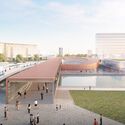
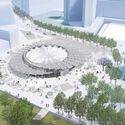
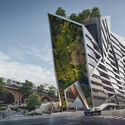
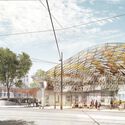
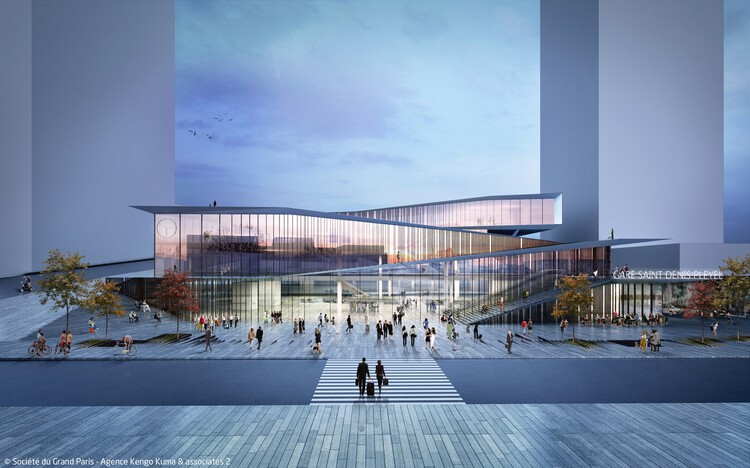
The Grand Paris Express project consists of 200 kilometers of new, fully automated metro lines, 68 new stations, and four new orbital lines (15, 16, 17, and 18), in addition to the extension of Line 14. The network is being delivered in phases between 2024 and 2031: Line 14's 8 stations are fully operational following its 2024 extension, Line 18 is the most advanced of the new lines, with testing underway ahead of its first opening, and civil engineering is largely complete on many sections, with tracks, systems, architectural fit-out, and testing now progressing station by station. Each of the 68 stations is assigned to a specific architect or architectural team, sometimes in collaboration with landscape architects for above-ground elements.


Public space is often understood as belonging to no one in particular, collectively accessible yet institutionally maintained, yet a growing number of initiatives are challenging this assumption by testing shared management and distributed ownership models. In Paris, Adoptez un banc introduces a sponsorship-based approach, allowing individuals and groups to support temporarily and symbolically claim responsibility for historic public furniture without compromising its collective use. Elsewhere in the city, community gardens operating under the Main Verte framework demonstrate a self-managed model, in which public and private landowners retain ownership while delegating day-to-day control to citizen associations for food production and shared use. In New York, Common Corner represents a third pathway, based on institutional collaboration and participatory design, where public agencies, nonprofits, designers, and residents co-produce public space within a public housing context. Taken together, these three cases suggest that care, authorship, and responsibility can be distributed across citizens and institutions, producing more resilient, locally grounded urban environments.

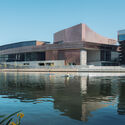
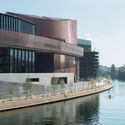
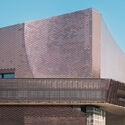
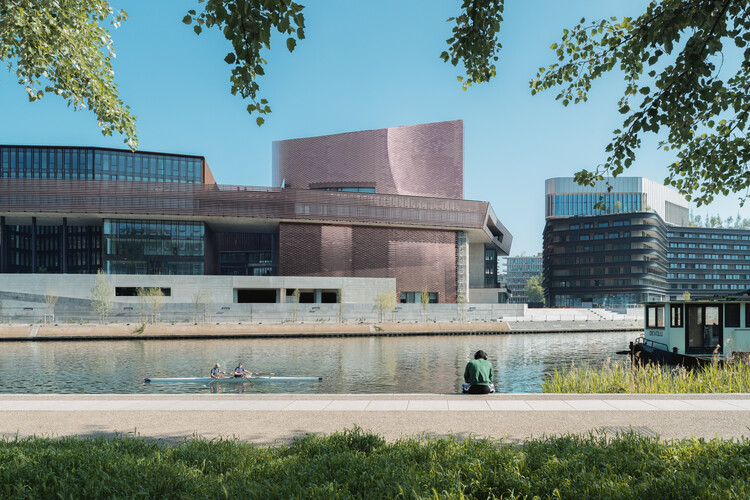
A new space dedicated to contemporary art on the Île Seguin, in the Greater Paris area, is opening in October 2026. The new cultural institution, named "Large," will be housed in a building designed by Catalan architects and Pritzker Prize recipients RCR Arquitectes, the studio's first project in Paris. It is situated on La Pointe des Arts, a large-scale redevelopment of the Île Seguin's former industrial area into a mixed-use complex spanning more than 53,000 m² and focused on arts and culture. The project's architectural massing follows the stratification concept set out in the masterplan by Ateliers Jean Nouvel. The institution will open with the exhibition "Imaginary Engine: From Masterpieces of the Collection Renault to Artists of Today," bringing together 55 artists from 23 countries to explore the relationship between humanity and machines, in tribute to the site's industrial history and Renault's decades-long collaboration with artists.

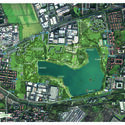
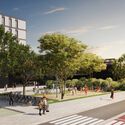
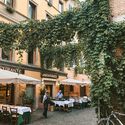
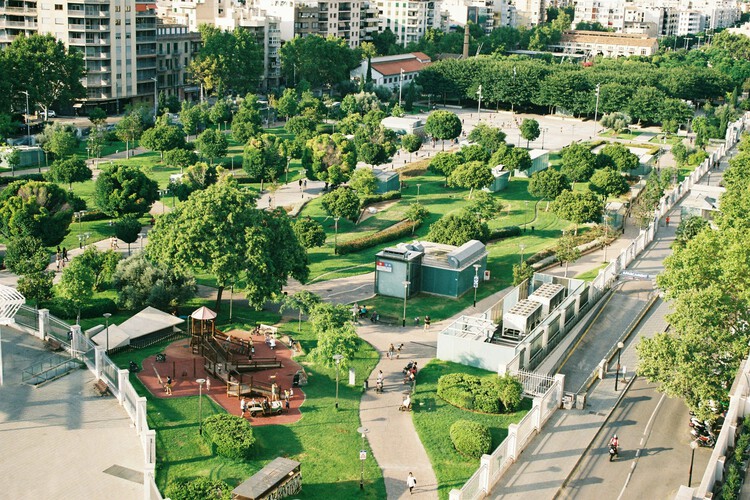
ReGreeneration is a Horizon Europe-awarded project working across nine cities to advance urban regeneration through nature-based solutions, participatory governance, and integrated approaches to climate resilience and social equity. The nine cities in the project portfolio span a range of urban typologies, scales, and planning traditions, forming a living laboratory for rethinking sustainable urban transformation in practice. Each city brings distinct challenges and ambitions to the collaboration, and this series of articles explores what each city is doing and what the broader design community can learn from it.

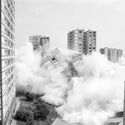
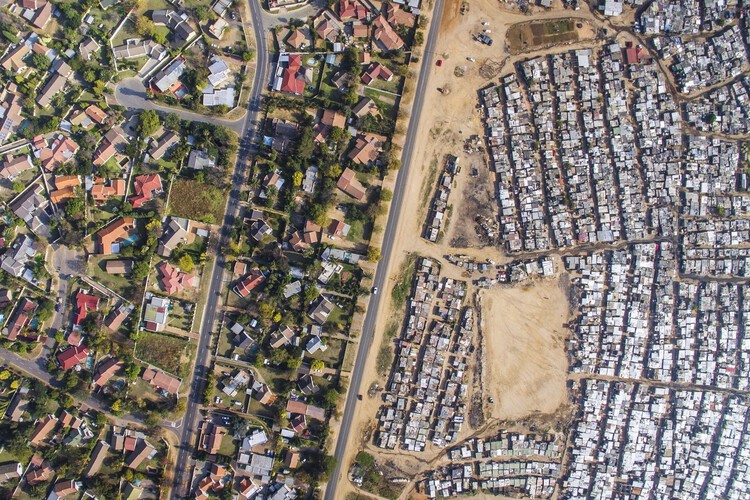
What architecture leaves in the ground outlasts what it puts in the air. A demolished building disappears from the skyline in a matter of days, but its foundations remain embedded in the soil for generations. The contamination caused by an industrial complex does not clear when the complex is torn down. The legal boundaries inscribed across colonial territory do not dissolve when the colonial administration ends. The ground holds what architecture quickly forgets.
This is what makes soil so uncomfortable as a subject. The discipline tends to orient itself upward, toward the form, the façade, the spatial experience of inhabitation. The ground is where architecture begins and, in a certain sense, where it ends: the point at which building becomes geology, legal title becomes territorial claim, and construction becomes extraction. Treating soil as a medium rather than a datum means acknowledging that the acts of building carry consequences that run deeper than the visible object above grade.

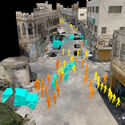
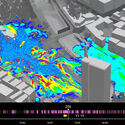
Modern cities are running on performance indicators. They move millions of people each day, concentrate capital, separate land uses, and sustain complex systems of logistics and consumption. In that sense, the city functions as a system to be continually adjusted and optimized.
Today's dominant metrics are familiar and widely witnessed: vehicles per hour, average commute times, floor area ratios, parking turnover, housing starts, and tax revenue per parcel of land. These figures describe a city that is legible through efficiency. They are inherited from an industrial logic, where urban space is treated more like a production mechanism than a lived-in environment. In this framing, cities begin to mimic the needs and metrics of a machine.

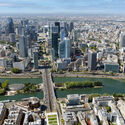
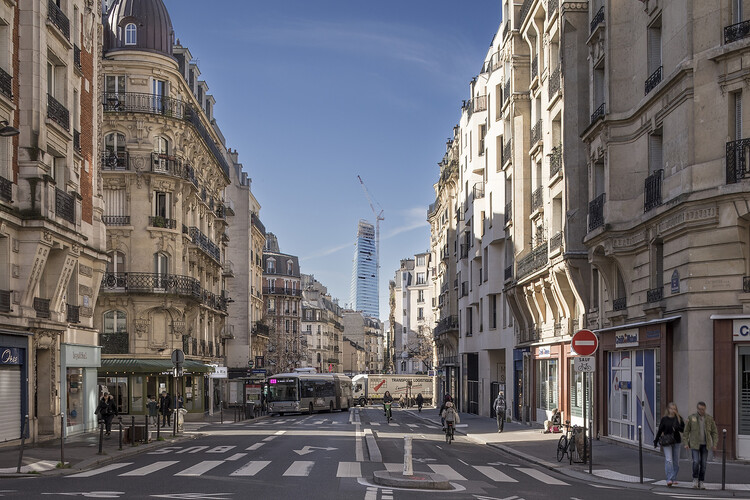
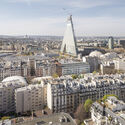
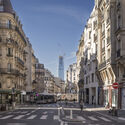
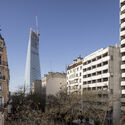
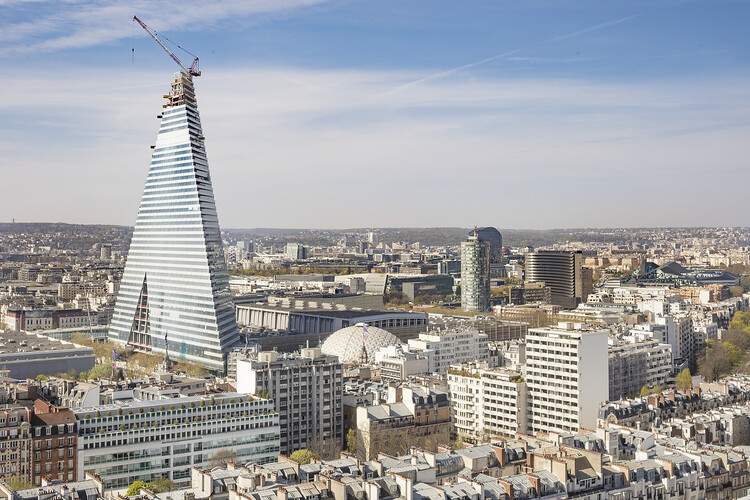
Twenty years after its ideation, Herzog & de Meuron's controversial Tour Triangle in Paris is reaching completion. The triangular, all-glass tower located in the city's 15th arrondissement topped out at 42 stories on April 24, 2026. The project's progress was marked by opposition, financial roadblocks, and legal disputes before construction began in 2022. The 180-meter tower is now the third-tallest building within Paris city limits, behind the 330-meter-tall Eiffel Tower, the 231-meter-tall The Link in La Défense, and the 210-meter-tall Tour Montparnasse. The building will retain this title indefinitely due to a skyscraper ban reinstated in 2023 by Mayor Anne Hidalgo, following persistent opposition to tall buildings in the city. The recent progress was documented by photographer Stefano Candito, ranging from an urban view of the building to a close-up look at its nearly completed structure.

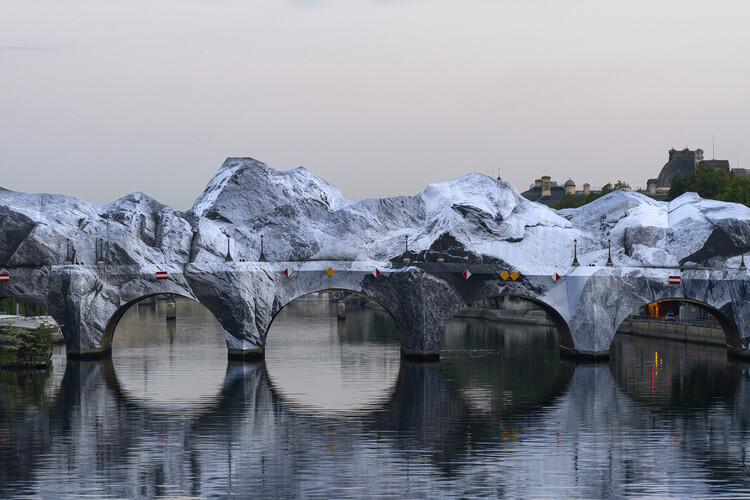
On May 21st, a realistic cave took shape on Paris' Pont Neuf, the oldest standing bridge across the Seine. The inflatable artwork was designed and built by French photographer and street artist JR, along with an extensive multidisciplinary team. La Caverne du Pont Neuf was conceived in honor of Christo and Jeanne-Claude's 1985 work The Pont Neuf Wrapped, an environmental artwork in which the artists wrapped the historic bridge in sandstone-colored fabric for two weeks. The structure creates a trompe-l'œil effect that mimics a textured rock formation through photographic printing in tones of white, black, and gray. The shape of the exterior already gives the public the optical illusion of the artwork, while paving the way for the final stage of the interior design.


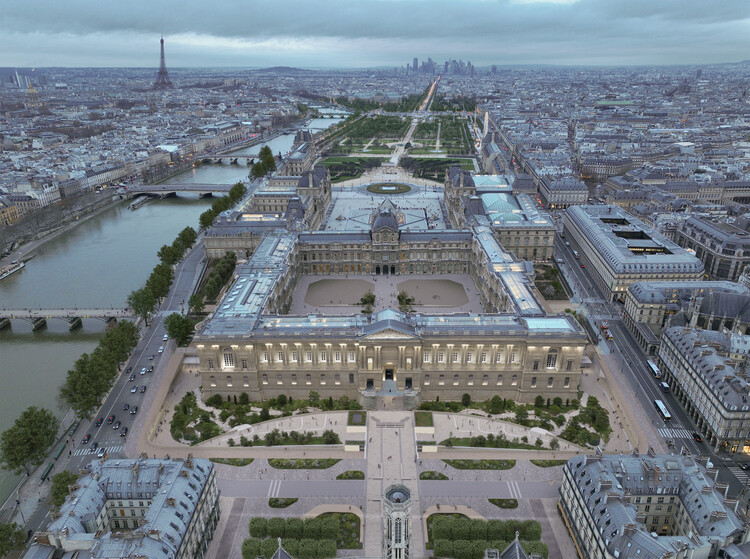
The French Minister of Culture announced on Monday, May 18, 2026, the winner of the "Louvre–Nouvelle Renaissance" competition. The team selected to transform the world-renowned Musée du Louvre is led by STUDIOS Architecture, New York-based Selldorf Architects, and landscape architecture firm BASE Paysagiste. The renovation initiative was announced in January 2025 as a major intervention for the historic complex following concerns expressed by the museum's director regarding its deteriorating condition. The first round of the competition took place in June, with a shortlist of five teams revealed in October. According to French authorities, the project has a dual objective: to repair and transform the building to preserve its collections while updating it to meet contemporary public expectations, including sustainability requirements that will pose significant challenges for the museum in the coming decades.


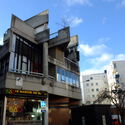
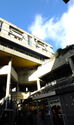
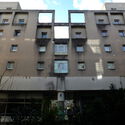
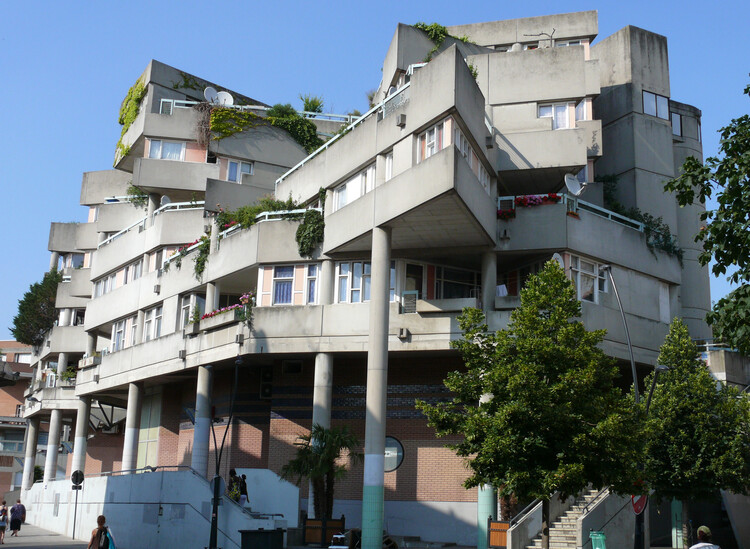
Saint-Denis is a commune in the northern suburbs of Paris, France, known for the Gothic Basilica of Saint-Denis and the Stade de France. At one corner of Place Jean-Jaurès in its historic center, adjacent to the Basilica, stands the Îlot 8 housing complex, a Brutalist landmark designed by architect Renée Gailhoustet. Built between 1975 and 1986 to provide workers' housing in the city center, countering the trend of relegating social housing to peripheral areas, the project is now at the center of a controversial redevelopment plan. Often referred to as "residentialization" and restructuring, the proposal involves the demolition of significant parts of its original design. This reconversion is part of the French Nouveau Programme National de Renouvellement Urbain (NPNRU) and is justified by concerns over structural deficiencies, safety, and maintenance.

The ReGreeneration project, a Horizon Europe project led by Inetum and supported by C40 Cities, ARUP, Placemaking Europe, and several others, operates as an active collaboration with local governments, private companies, academia, and civil society organizations at the intersection of urban regeneration, green public spaces, and neighborhood-scale design. Its premise addresses how European cities are built and maintained and how they experience a changing climate, arguing that cities must fundamentally change to remain livable under accelerating climate pressures.