1. ArchDaily
  2. Ruin

Ruin: The Latest Architecture and News

Limbo Museum Opens Its Debut Exhibition Within an Unfinished Brutalist Building in Ghana, West Africa

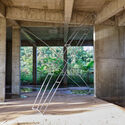
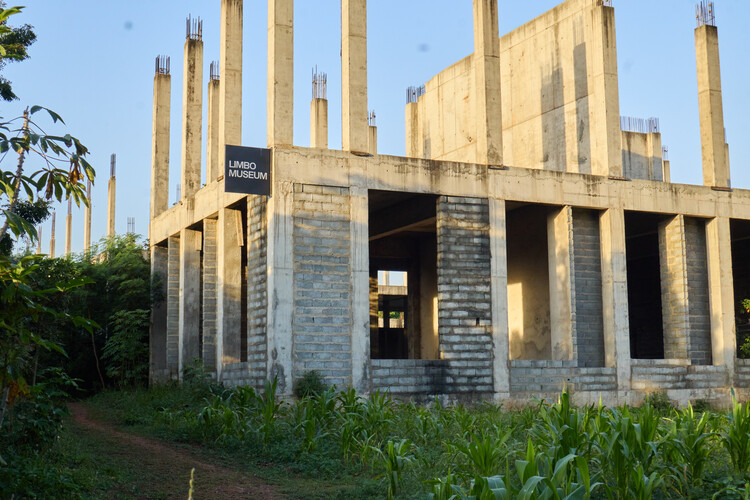
The Limbo Museum is a new institution dedicated to architecture, art, and design based in Ghana, West Africa. The museum challenges the concept of the ruin, operating from a formerly abandoned Brutalist estate that currently conveys the image of an unfinished building. The project was founded by Limbo Accra, a spatial design and research-based practice established in 2018 by Dominique Petit-Frère and Emil Grip, dedicated to "unlocking the potential of unfinished buildings across West Africa and beyond." On October 31, 2025, the museum opened its first public exhibition, On the Other Side of Languish by Reginald Sylvester II, developed through the institution's visiting artist residency program.
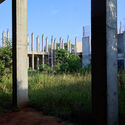
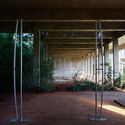
Limbo Museum Opens Its Debut Exhibition Within an Unfinished Brutalist Building in Ghana, West Africa - Image 1 of 4Limbo Museum Opens Its Debut Exhibition Within an Unfinished Brutalist Building in Ghana, West Africa - Image 2 of 4Limbo Museum Opens Its Debut Exhibition Within an Unfinished Brutalist Building in Ghana, West Africa - Image 3 of 4Limbo Museum Opens Its Debut Exhibition Within an Unfinished Brutalist Building in Ghana, West Africa - Image 4 of 4Limbo Museum Opens Its Debut Exhibition Within an Unfinished Brutalist Building in Ghana, West Africa - More Images+ 20

The Chilean Architecture Biennial Revives a Church Ruin as a Temporary Pavilion

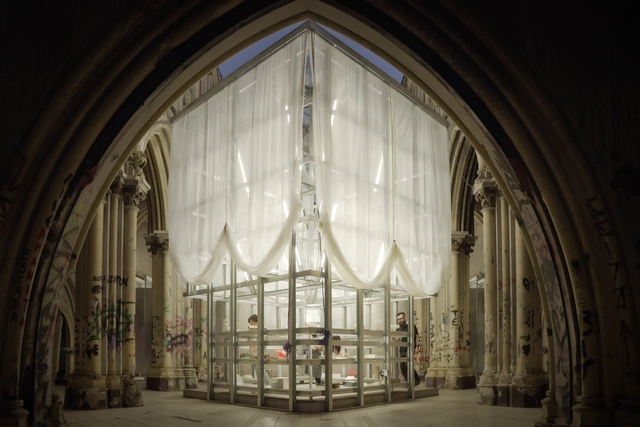
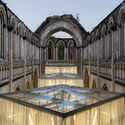
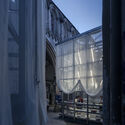
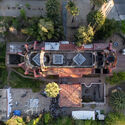
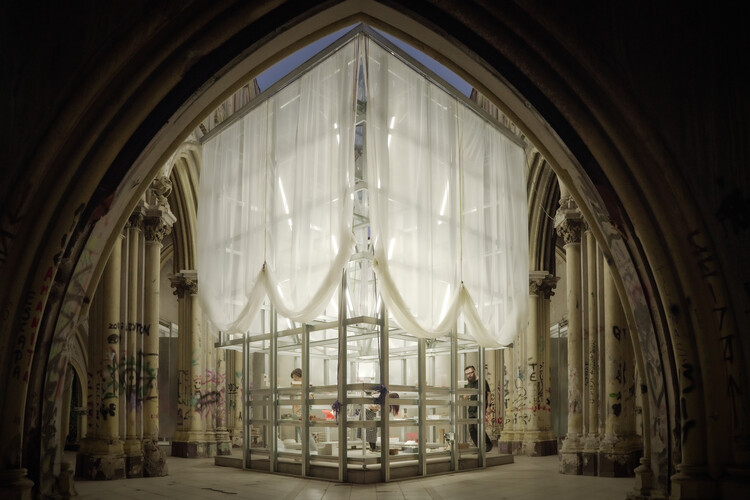
Between September 25 and October 5, 2025, the XXIII Chilean Architecture and Urbanism Biennial took place in Santiago. Under the title "DOUBLE EXPOSURE: (re)program · (re)adapt · (re)construct," the event was organized around the idea of "understanding architecture not as the production of the new, but as the ability to reactivate what already exists." Based on this premise, the curatorial team, composed of Ángela Carvajal and Sebastián López (Anagramma Arquitectes) together with Óscar Aceves, conceived a circuit of eight venues located in downtown Santiago. Their goal was to revive and reclaim urban spaces through a series of free public activities that drew around 70,000 visitors. Among the reactivated sites, the ruins of the San Francisco de Borja Church stood out. Burned during the social outburst of October 2019, the site hosted a temporary pavilion that served as a venue for talks, readings, art installations, discussions, and community events.

The Chilean Architecture Biennial Revives a Church Ruin as a Temporary Pavilion - Imagen 1 de 4The Chilean Architecture Biennial Revives a Church Ruin as a Temporary Pavilion - Imagen 2 de 4The Chilean Architecture Biennial Revives a Church Ruin as a Temporary Pavilion - Imagen 3 de 4The Chilean Architecture Biennial Revives a Church Ruin as a Temporary Pavilion - Imagen 4 de 4The Chilean Architecture Biennial Revives a Church Ruin as a Temporary Pavilion - More Images+ 17

BIG Designs a 21st Century Ruin for Oakland's Coliseum

After revealing the design for the new Oakland Athletics baseball stadium, Bjarke Ingels Group has proposed a new use for the existing 51-year-old Oakland-Alameda County Coliseum. The existing stadium will be overhauled into a new commercial and housing hub to create new economic, cultural, and recreational opportunities. The Coliseum will be converted into a sunken amphitheater at the heart of a new municipal park.

Somali Architecture Students Digitally Preserve Their Country's Heritage—Before It's Too Late

Subscriber Access | 
Somali Architecture Students Digitally Preserve Their Country's Heritage—Before It's Too Late - Featured Image
via Somali Architecture

Since the start of civil war in 1991, the political and architectural landscapes of the East African country of Somalia have been unstable. While the country’s urban centers, such as the capital city Mogadishu, boast a diverse fabric of historic mosques, citadels, and monuments alongside modernist civic structures, the decades of conflict have resulted in the destruction of many important structures. And, while the fighting has substantially subsided in recent years, the future of the country's architectural heritage is still far from secure.

In response, Somali architecture students from across the UK, Italy, and the United States have banded together to form Somali Architecture, an ongoing research project archiving and digitally "rebuilding" iconic structures through 3D models. Their goal is “to preserve the identity and authenticity” of Somalia through its architecture—both existing and destroyed. “We want each iconic building of the past to be reinterpreted for a more coherent future,” they say.

See below for a selection of the structures Somali Architecture has uncovered and re-constructed so far.