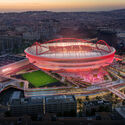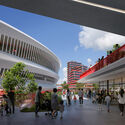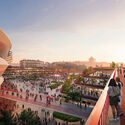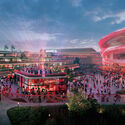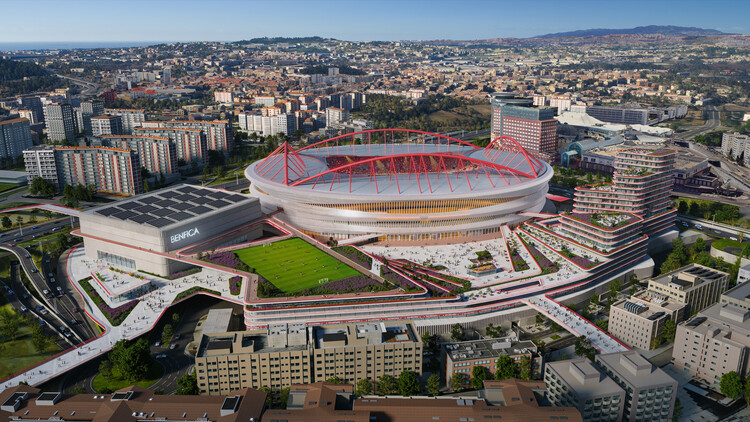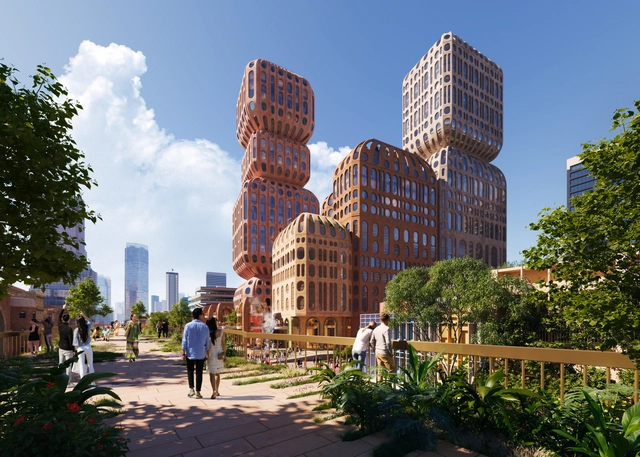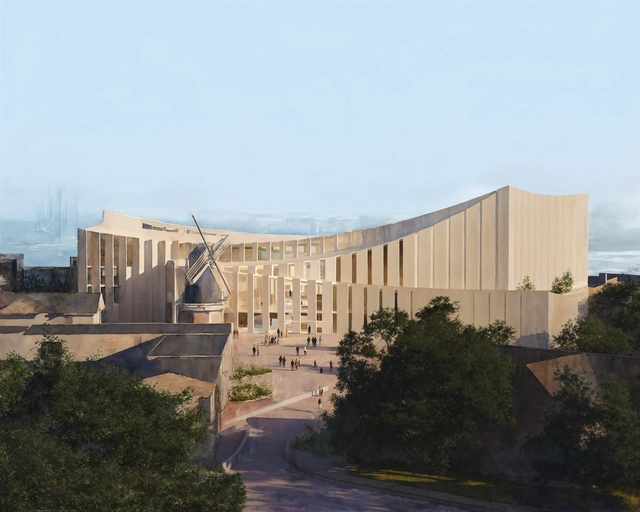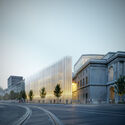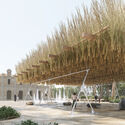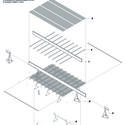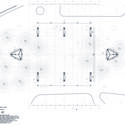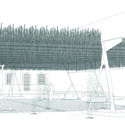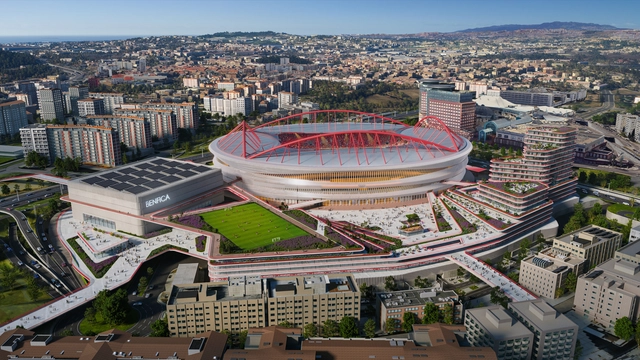
Zaha Hadid Architects has been selected to design the Zhejiang Shaoxing Shangyu District Cao'e River Culture and Art Center, located within a newly planned cultural district in Shaoxing's Shangyu area in Zhejiang province, China. The project is situated along the Cao'e River, a location with historical significance, and is envisioned to serve as a key cultural and artistic space for both the local community and visitors. Its design seeks to integrate contemporary functionality with the architectural and cultural traditions of the region.
In a quest to enhance and attract new natural experiences to city centers, the design, planning, and revitalization of certain urban spaces align with strategies aimed at improving the quality of life for residents while maintaining a connection with nature rooted in the local landscape. Through technical solutions for wastewater treatment and stormwater drainage, improved accessibility, incorporation of recreational activities, introduction of native vegetation, and more, numerous parks, plazas, and gardens are integrated into urban and rural fabrics. These efforts seek to filter pollution, purify the air, address social issues, and promote experiences that foster connections between nature, biodiversity, and society.
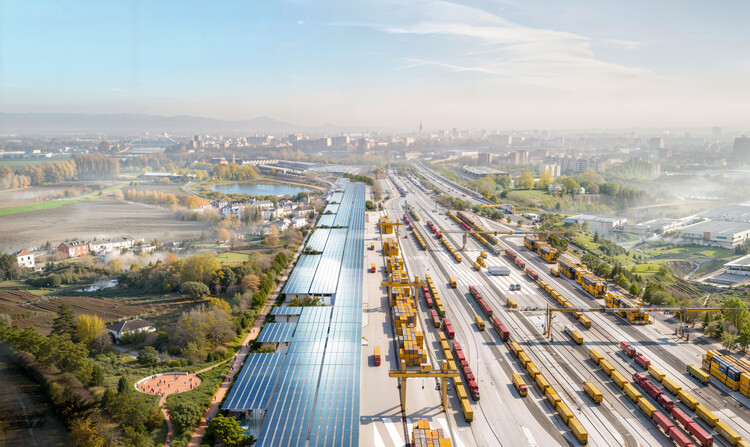
Salford Central Railway Station, Manchester. Image Courtesy of Pilkington
Infrastructure comprises the core services that urban areas must provide to ensure access to essential health and well-being standards, such as basic sanitation, energy, roads, transportation, and communication. Beyond being a functional network, infrastructure plays a transformative role in shaping how people live, work, and connect. Train stations, for instance, extend beyond their mobility functions to become centers of social interaction, economic hubs, and symbols of sustainable development. Their design reflects a delicate balance between functionality, safety, and architectural value, illustrating how infrastructure can enhance and transform urban experiences.
Buildings are deeply interconnected with their surroundings—the climate, culture, landscape, and the lives of their occupants. For Dorte Mandrup, a renowned Danish architect, context is more than a mere consideration; it is the driving force behind her designs. Her work demonstrates a profound curiosity about the people who will inhabit her buildings and the unique stories embedded within each site. Her buildings aren't just structures; they're thoughtful responses to their surroundings, without aiming to disappear within them.
Dorte Mandrup is featured, alongside Tosin Oshinowo, in the second installment of the documentary Women in Architecture, released November 12, 2024. Produced by Sky-Frame in collaboration with ArchDaily and directed by Boris Noir, the film builds upon the first episode, which highlighted Toshiko Mori, Gabriela Carrillo, and Johanna Meyer-Grohbrügge, offering a continued exploration of diverse perspectives within architecture.
Küçükçekmece Djemevi. Image Courtesy of EAA-Emre Arolat Architecture
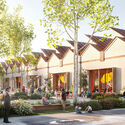
EAA-Emre Arolat Architecture has recently released its design for the Küçükçekmece Djemevi, a new concept for a civic space in Istanbul designed to combat social exclusion and provide a comfortable and inviting environment for the Alevi community. The building is comprised of a series of interconnected spaces and structures that generate a complex topography, offering ample recreational areas and a space of identity for the local community. The concept was recognized during the World Architecture Festival 2024, earning them the award of Future Project of the Year in recognition of its social inclusivity and careful adaptation to local traditions and needs.
Women have played a pivotal role in the evolution of landscape architecture, overcoming the constraints of a male-dominated profession to introduce groundbreaking ideas and fresh perspectives. From early pioneers to contemporary leaders, their work has reshaped how we interact with public and private spaces, intertwining aesthetics, functionality, and sustainability in innovative ways.
In the late 19th and early 20th centuries, female landscape architects carved out their place in the profession, emphasizing harmony between built structures and natural landscapes. Their projects showcased a deep commitment to community and ecological balance, setting the stage for an inclusive and thoughtful approach to design that continues to inspire the field today.
Recognized for completing 36 distinct yet cohesive public projects across Mexico in just 36 months, Colectivo C733 showcases the impact of collaborative design on public spaces and communities. The 36 projects were part of a national effort to revitalize vulnerable urban and rural areas in Mexico, earning them the 2024 Obel Award focused on the theme of "Architectures With". The team behind the designs, Colectivo C733, is a collaborative group formed by the joint offices of architects Gabriela Carrillo (Taller Gabriela Carrillo), Carlos Facio, and José Amozurrutia (TO), along with Eric Valdez (Labg), and Israel Espin. In a recent conversation with ArchDaily's Editor-in-Chief, Christele Harrouk, the collective discussed their approach to public architecture, the process of integrating diverse voices, and remaining flexible to the challenges of local conditions.
Cultural centers are vibrant places where art, community, and innovation intersect—each uniquely crafted to embody and celebrate its local character. This month's projects, submitted by the ArchDaily community, showcase a diverse array of cultural spaces, from the transformation of a historic townhouse in Montreal to a dynamic creative hub in Riyadh and an eco-conscious visitor center in Tennessee's mountains. Each design offers a new perspective on what a cultural center can be, whether a hub for creativity, a sanctuary for nature, or a bridge to the past.
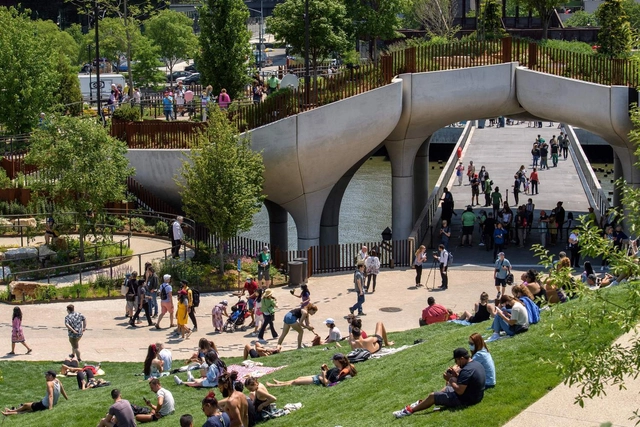
Superstorm Sandy inundated Lower Manhattan, causing billions in property and infrastructure damage. To protect against future flooding, storm surges, and sea level rise, landscape architects are developing an innovative mix of green and grey solutions along the southern coast of Manhattan.
These are not nature-based solutions but forms of armor. And designers are showing how this armature can be woven into the public realm, creating new kinds of infrastructure. Smart design is resulting in retractable gates and walls, landscaped berms, and raised platforms. No concrete walls separating communities from each other or the waterfront here.
The 2024 European Prize for Urban Public Space has announced the overall winners for the 12th edition: For the General Category, the "Park at the Warsaw Uprising Mound" in Poland by studios topoScape and Archigrest received recognition its ability to honor the site's historical significance; while the Seafront Category prize was given to the "Beach Improvement and Redevelopment of the Harbour Edge" in Porto do Son, Spain, designed by CREUSeCARRASCO and RVR Arquitectos for its careful integration of natural and manmade elements. Selected from a list of 10 finalists, the projects were appreciated for their sensible response to local memory and an understanding of the interplay between various elements that interact with urban life.
In recent years, Public-Private Partnerships (PPPs) have become a significant model for delivering large-scale infrastructure projects around the world. These partnerships bring together the strengths of both the public sector, represented by governments or municipalities, and the private sector, combining their resources, expertise, and investment power. In the context of architecture and urban development, PPPs are increasingly being used to address the complex needs of growing cities, helping to finance, build, and maintain critical projects that would be difficult for either sector to accomplish alone. But what exactly are PPPs, and how do they function in the built environment? This article explores the concept of PPPs, providing examples from across the globe to illustrate how these partnerships are shaping the future of urban spaces, sometimes beyond commercial gains. Furthermore, by exploring the different projects, the article aims to develop a framework around PPPs' positive and negative potential impacts.
Over the past twenty years, the Holcim Foundation Awards has committed USD 20M to spotlighting projects from an industry-changing cast of architects, designers, and engineers who champion innovative practices in sustainable design and construction.
To better tell these success stories, the Foundation launched a short film series called 'Words with Winners.' The series includes a conversation with Loreta Castro Reguera, co-founder of Taller Capital in Mexico City, about the design of the highly innovative La Quebradora Waterpark, which received a Holcim Foundation Award in 2018.
New York-based office Field Operations, renowned for their work on Seattle's waterfront and New York's High Line, along with Toronto's Brook McIlroy, have been tasked with transforming underutilized lands beneath the Gardiner Expressway in Toronto. The project was launched by The Bentway Conservancy, in partnership with the City of Toronto, and represents the second phase of the development aiming to revitalize underutilized spaces along the expressway. The initiative set out to transform three large traffic islands between Dan Leckie Way and Spadina Avenue into an 11,500-square-meter public space for recreation and community activities.
The consortium led by the French architecture firm Coldefy, in partnership with Albanian studio Atelier 4, Sempervirens, and Italian firm AEI Progetti, has just won the international competition to design Albania's new Public Administration Cluster in Tirana. This 31,000-square-meter project will bring together over 20 government institutions under one roof, aiming to improve administrative efficiency while fostering greater public accessibility and engagement.
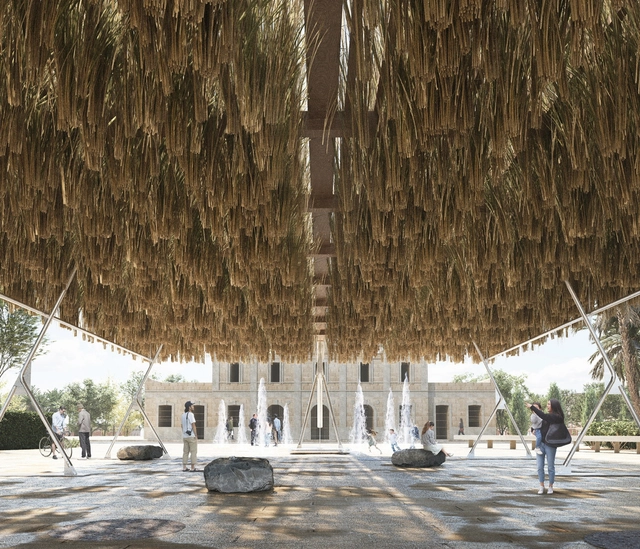
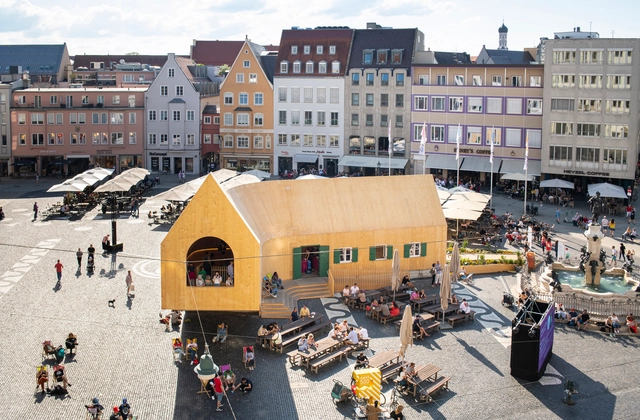
In celebration of Urban October, a month dedicated to recognizing the significance of innovative urban spaces, this curated selection presents 8 conceptual projects that demonstrate the transformative potential of public spaces. These projects, submitted by the ArchDaily community, showcase the myriad ways public spaces can enhance cultural identity, community interaction, and environmental quality. Conceptual projects and competition entries serve as a platform for architectural experimentation, challenging the norms and sparking discussions about the future of urban landscapes. From rural settings to layered historical squares or small-scale urban interventions, the designs engage with their contexts, aiming to improve the experience of residents and visitors, highlight the histories of the space, and ensure accessibility for all.
Each month, ArchDaily's editors select a collection of conceptual projects centered around a theme or program, submitted to ArchDaily. These projects are developed by small and large-scale architecture offices from around the world and submitted openly to the ArchDaily platform, thus forming a worldwide community of practitioners sharing their work, be it purely conceptual, a competition entry, or an early-stage design phase. Submissions are open to everybody. If you wish to contribute, send in your work by following the instructions here.
Oppenheim Architecture has unveiled the design for the College of Europe's new campus in Tirana, Albania. This project introduces the first "purpose-built" campus for the College, following its established campuses in Bruges, Belgium, and Natolin, Poland. The College of Europe, created under the initiative of the Hague Congress, is dedicated to promoting European ideals of unity, cooperation, and integration. This expansion to Tirana aims to reflect both a continuation of this mission and an opportunity for the College to establish a presence in a historically significant city.