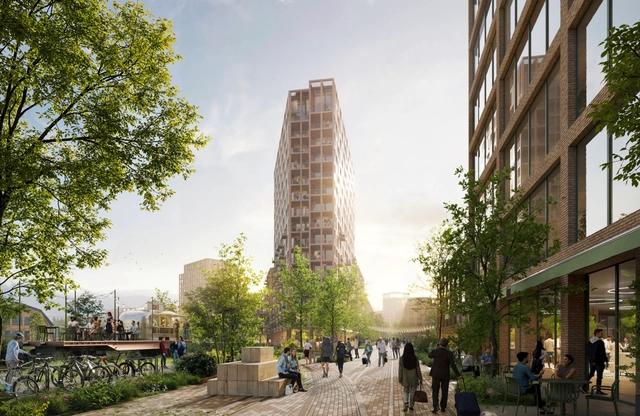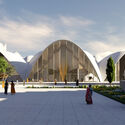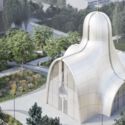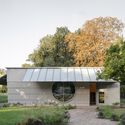
As cities and communities adapt to new cultural, environmental, and social realities, architecture is taking on an expanded role in shaping spaces of resilience, gathering, and imagination. This edition of Architecture Now highlights six recent projects that span continents and typologies, from the redevelopment of post-industrial landscapes to sacred architecture, cultural pavilions, and civic hubs. Whether through mass timber innovation in Vancouver and Jülich, adaptive reuse in Ostrava, a children's pavilion in London, a spiritual centre in India, or a parametric church in Kyiv, each project demonstrates how design can bridge heritage and innovation while fostering connection, care, and community.
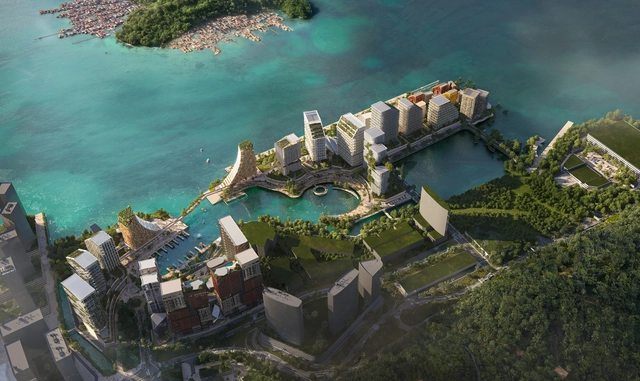
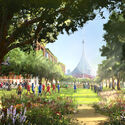
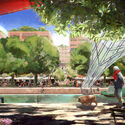
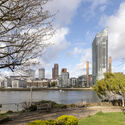
Snøhetta has unveiled plans for Jesselton Docklands, a tropical waterfrontmaster plan in Kota Kinabalu, Malaysia, on the island of Borneo. The development reimagines the city's former port as a civic and cultural hub, strengthening its connection to the waterfront and positioning it as a new gateway to Sabah and the wider Southeast Asian region. Situated near Kota Kinabalu International Airport, the development includes a new ferry and cruise terminal, integrating infrastructure with the island's ecological and cultural context to position the city as a key point of connection within the region.
In today's architectural discourse, masterplanning is increasingly recognized as a means to reconcile growth with long-term social, cultural, and environmental priorities. Beyond organizing buildings and infrastructure, these large-scale proposals aim to regenerate urban fabrics, adapt historic or underutilized sites, and establish frameworks for inclusive and resilient communities. Submitted by the ArchDaily community, the projects featured in this edition of Unbuilt Architecture highlight how masterplans can respond to contemporary challenges while preparing cities for an uncertain future.
Spanning diverse geographies, from Europe to the Middle East and the Americas, the selected projects reinterpret industrial complexes, cultural sites, and residential neighborhoods through strategies that prioritize sustainability, mobility, and collective identity. Many share a focus on regenerative design: reopening historic canals, creating climate-adapted public spaces, and introducing green corridors and community hubs to reconnect people with their environments. Together, they showcase how masterplanning is evolving into a critical tool for rethinking how cities grow, adapt, and sustain civic life.
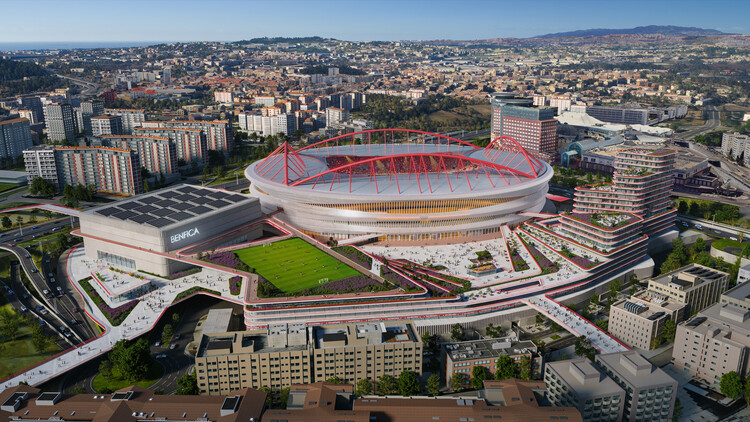
Estadio da Luz, Daytime Aerial. Image Courtesy of Populous
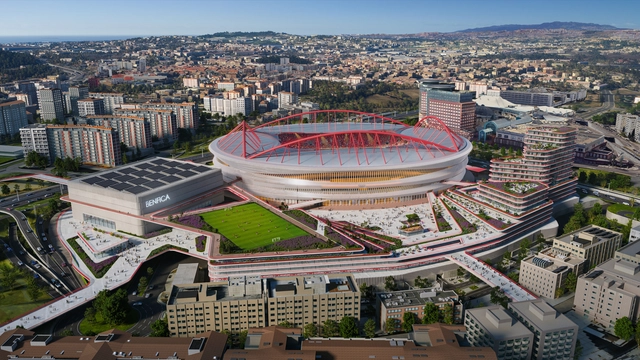
Populous has unveiled the design for a new master plan for the Estádio da Luz in Lisbon, in collaboration with Lisbon-based architecture firm Saraiva + Associados. Commissioned by S.L. Benfica, the project aims to upgrade the stadium and introduce new mixed-use and public facilities within the surrounding precinct. Populous describes the project as part of a wider trend in stadium-led urban development, referencing parallels with venues like Wembley Stadium and the Etihad Campus. According to the firm, the design responds to the stadium's existing context while supporting future expansion and new forms of public engagement. Completion is expected in alignment with upcoming internationalsporting events, including the 2030 FIFA World Cup.
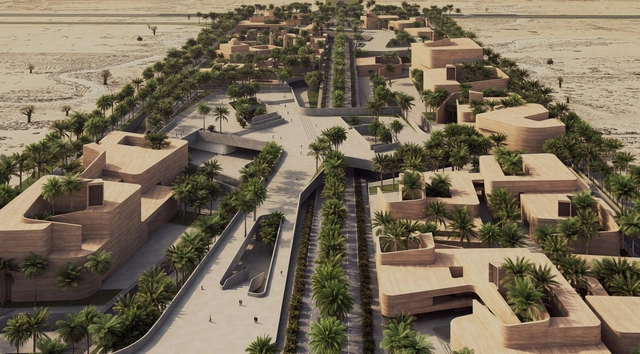
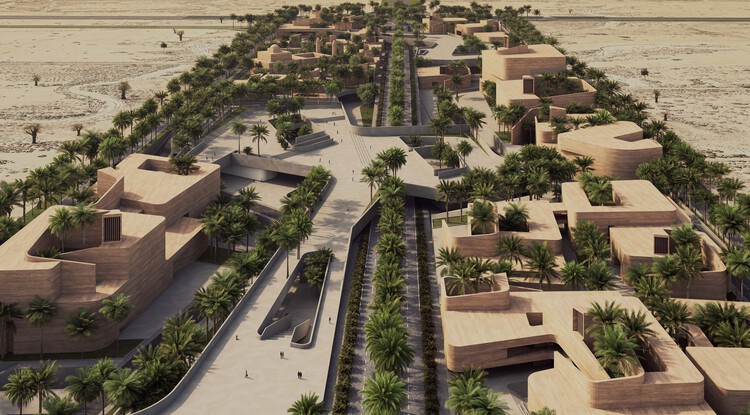
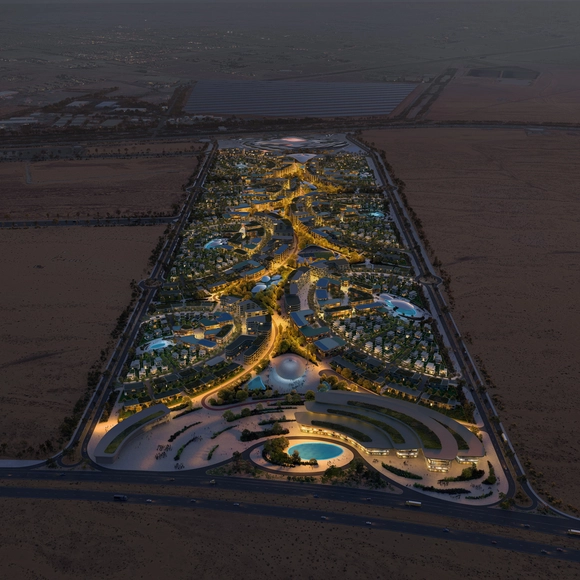
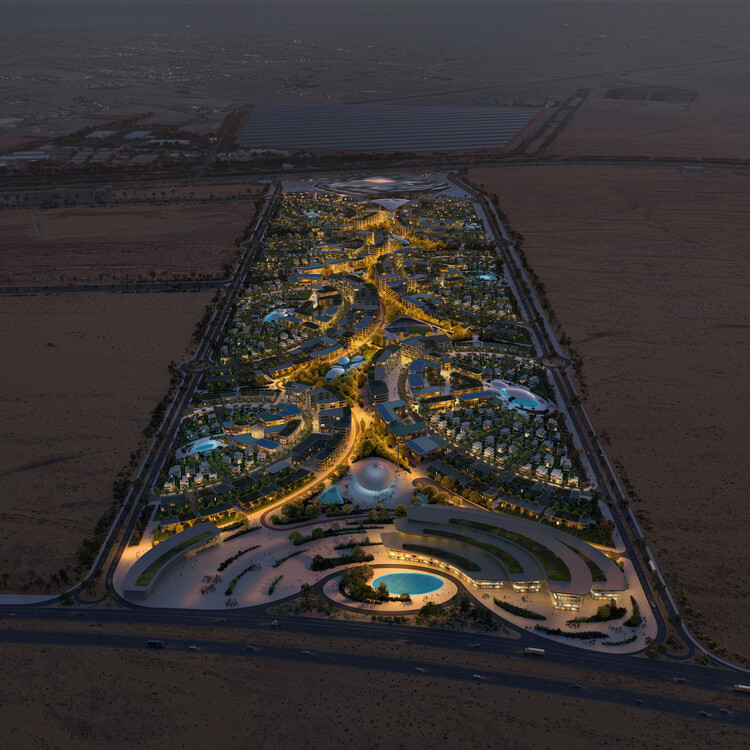
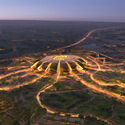
Zaha Hadid Architects (ZHA) has unveiled images of a master plan for Khalid Bin Sultan City in Sharjah, United Arab Emirates. Located adjacent to its BEEAH Headquarters, the development draws inspiration from that building's design, incorporating fluid architectural forms reminiscent of wind-swept desert dunes. Planned as a design and business district, the new urban area will consist of seven residential neighbourhoods connected by shaded walkways and anchored by a two-kilometre-long central oasis.
New settlement and production in Øm. Render. Image Courtesy of THIRD NATURE
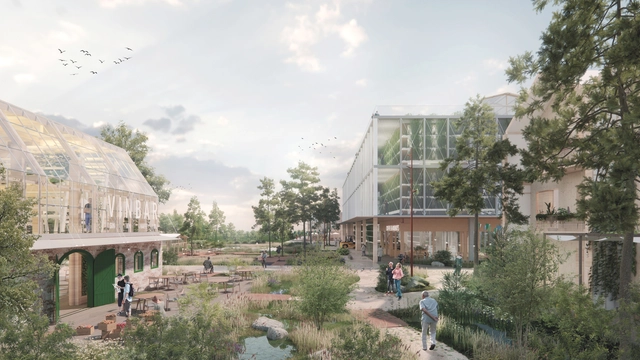
Danish architecture firm Third Nature, together with Sophie Sahlqvist Landskab, Arkaia, ILC, and Artelia, recently shared images of Øhjem, their proposed strategic vision for the re-naturalization of Denmark's Greater Copenhagen region toward 2050. The regenerative plan is part of the Water's Ways program under the Agenda Earth initiative, an interdisciplinary project run by the Danish Association of Architects in collaboration with the Dreyers Foundation and the Danish Bar Association. Led by urbanist Boris Brorman Jensen, the program calls for long-term solutions to restore 15% of Danish agricultural land while also protecting 600,000 homes from water-related threats. Third Nature's Øhjem masterplan reimagines the 25 km Ramsø Dale as a step toward implementing the land management objectives outlined in the Danish Green Tripartite Agreement (Grøn Trepart), signed in June 2024.
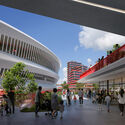
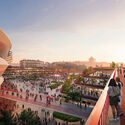
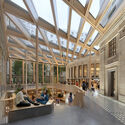
Aerial render. Image Courtesy of Foster + Partners
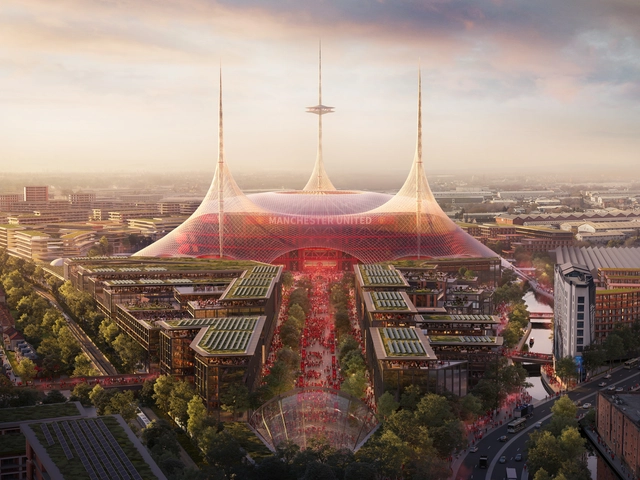
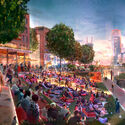
In September 2024, Foster + Partners announced its appointment by Manchester United for the development of a master plan for the Old Trafford Stadium District. The centerpiece of the master plan is a new stadium, set to become the largest football venue in the United Kingdom with a capacity of 100,000 seats. This week, the firm unveiled images of the stadium design along with surrounding public spaces, including parks, mixed-use developments, an open-air cinema, and a renovated train station. These images contain the illustrative concepts that will become the basis for more detailed feasibility, consultation, and planning work as the project enters new stages.
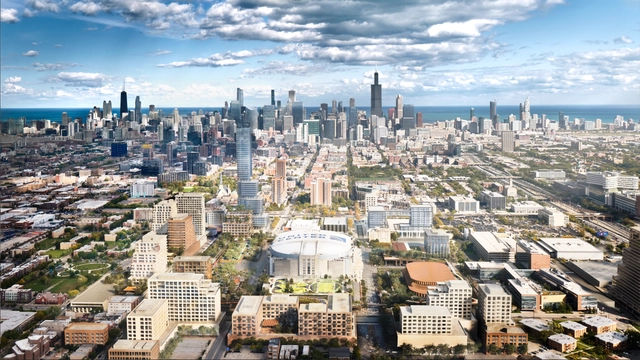
The United Center arena in Chicago, designed by HOK Sport (now Populous), Marmon Mok, and W.E. Simpson Company, was built between 1992 and 1994. With a capacity of over 20,000 seats for sports and general events, it includes more than 6,000 parking spaces in lots surrounding the arena. These parking lots span approximately 55 acres (over 22 hectares) in Chicago's West Side (1901 W. Madison Street). A new master plan, named the 1901 Project, aims to transform this space into a mixed-use neighborhood. Led by design collective RIOS, with contributions from landscape architecture studio Field Operations, this long-term, multi-phase project aims to connect neighborhoods by creating new public spaces and infrastructure on a metropolitan scale. The proposal recently received approval from the Chicago Plan Commission.
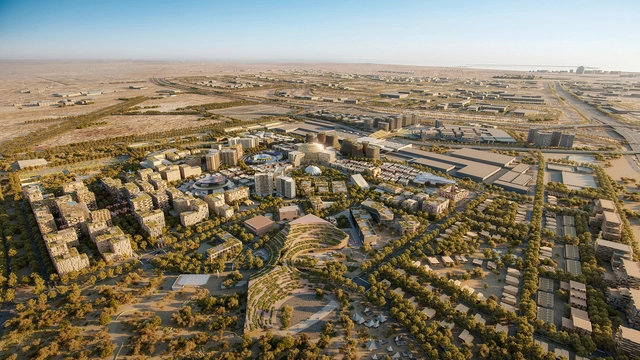
The site of Expo 2020 Dubai is scheduled to undergo a major transformation, developed by UNStudio in collaboration with several other firms. The master plan aims to reimagine the location of the first World Expo held in the Middle East, Africa, and South Asia into a new urban center, integrating the structures of the original Expo with new developments to create a cohesive and engaging new district. The development, part of Dubai's 2040 Urban Master Plan, leverages approximately 80% of the existing infrastructure and buildings from Expo 2020, minimizing waste and maximizing the value of previous investments.
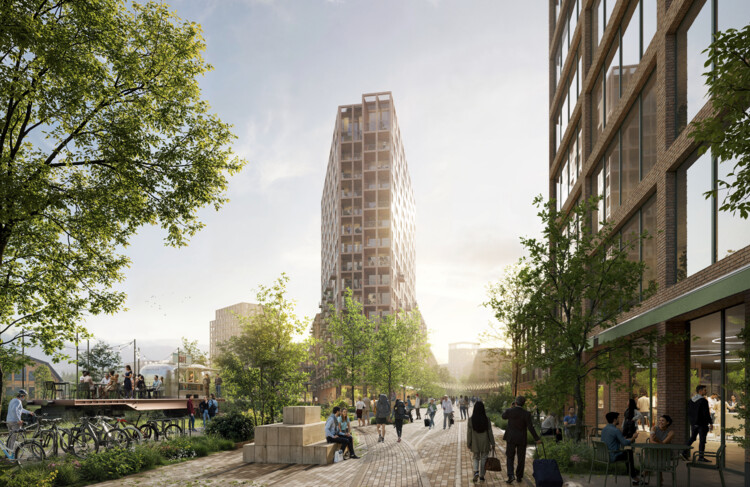
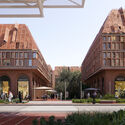
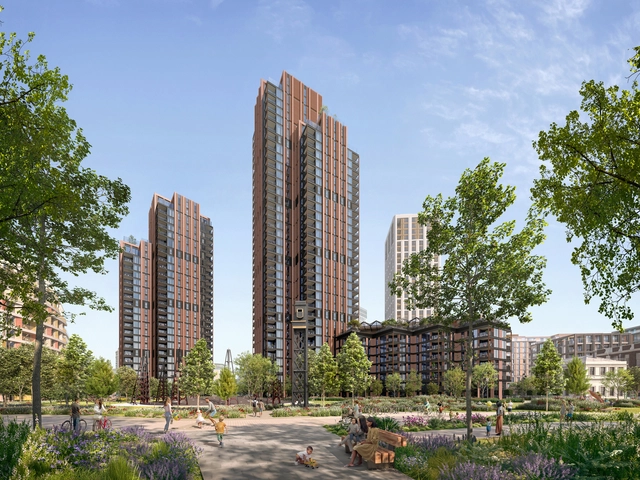
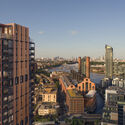
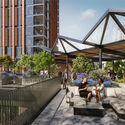
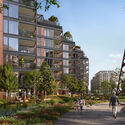
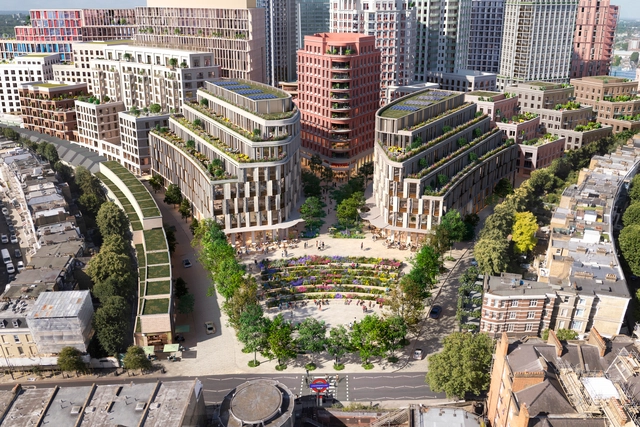
Phase four of the King's Road Park masterplan, designed by Foster + Partners for St William, has received detailed planning permission. The design, located in the London Borough of Hammersmith & Fulham, comprises two residential towers of 28 and 38 stories, a seven-story podium building, and 1.9 acres of new parkland and public open space, totaling 357 new homes. The residential buildings incorporate communal spaces, including a ground-level amenity and a rooftop garden sheltered by a louvered canopy. The towers' slender profiles are intended to complement the existing urban skyline, featuring terracotta paneling in a nod to local architectural styles.
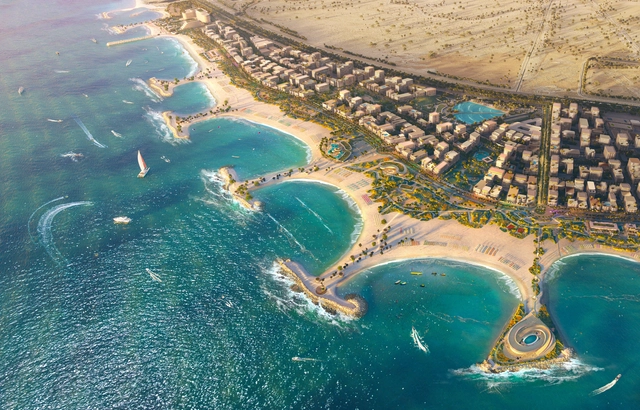
Foster + Partners have revealed their proposal for the Bilaj Al Jazayer Beach master plan, a new development aiming to introduce a new touristic destination along Bahrain's southwest coast. The 3.5-kilometer beachfront introduces a pedestrian-friendly infrastructure along with a mixed-use district fitted with residential areas, hotels, retail spaces, and public amenities.
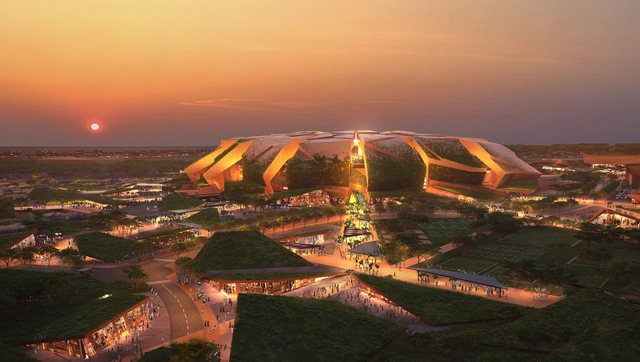
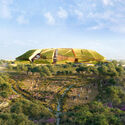
Populous has unveiled the design for the King Salman Stadium and Masterplan, set to become the largest-capacity stadium in Saudi Arabia and the primary headquarters for the Saudi Arabia national football team. Developed with the Royal Commission for Riyadh City and the Ministry of Sports, the stadium is located in northern Riyadh, adjacent to King Abdulaziz Park. Scheduled for completion in late 2029, the venue is also announced as one of the primary locations for the 2034 FIFA World Cup, set to be hosted by Saudi Arabia, whose bid includes the construction of 11 new stadiums and the refurbishment of 4 existing ones.
In recent weeks, a series of significant architectural developments have been announced, showcasing the varied work of renowned firms from around the globe. These projects, revealed between late September and October 2024, emphasize the transformative potential of architectural design in rehabilitating historical structures, revitalizing urban areas, and proposing new facilities to meet the evolving needs of communities. Notable names such as Zaha Hadid Architects, Kohn Pedersen Fox (KPF), and Studio Egret West are among those leading ambitious projects, from the waterfront residences on Qetaifan Island in Qatar to the reimagining of London's Earls Court. This collection of recent announcements provides a glimpse into the ongoing evolution of urban landscapes and community-centric architecture.
The New Jersey Performing Arts Center (NJPAC) has announced a three-year redevelopment of its 2-acre downtown Newark campus. The project, designed by architectural firms Skidmore, Owings & Merrill (SOM), and Weiss/Manfredi, has recently broken ground and is scheduled for completion in the fall of 2027. It integrates 350 mixed-income residential units, retail spaces, and a dynamic education and community center, in addition to rehearsal spaces, a new headquarters for jazz public radio station WBGO, and various outdoor gathering areas.
Situated in Hangzhou's Central Business District, the Euro American Innovation City is a mixed-use development designed by Foster+Partners to become a dynamic addition to the city. The 346,450 square-meter project includes two 200-meter-high office towers and four high-rise apartment buildings, complemented by a public plaza, an IT incubator, and a retail mall on the lower levels. Construction is currently progressing in phases, with the first phase nearing completion next month and the second set to finish by year-end, while the entire project aims for completion in September 2025.
The team led by Henning Larsen, in collaboration with Ramboll, Cistri, Gehl, Participate in Design, and Camphora has won the commission for the master plan consultancy to design Singapore’s North-South Corridor’s surface streets. The project proposes an expansive urban transformation, aiming to integrate public transport, active mobility, community-focused spaces, and greenery along the 21.5km corridor. Local communities and stakeholders are also actively engaged in the design process through public engagement sessions. The initial master plan design is set to continue into 2026, over the next 18 months.
Sports-focused architecture office Populous has been confirmed as the lead designer of the Aramco Stadium, one of the main locations scheduled to host the upcoming 2027 AFC Asian Cup and the 2034 FIFA World Cup. The office has also been commissioned with the design of the surrounding master plan in Al Khobar, Saudi Arabia. The new 47,000-seat venue will be compliant with international standards for premier football competitions, aiming to establish Al Khobar as an international sporting destination.