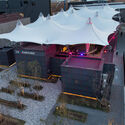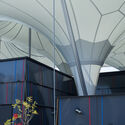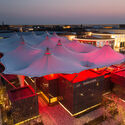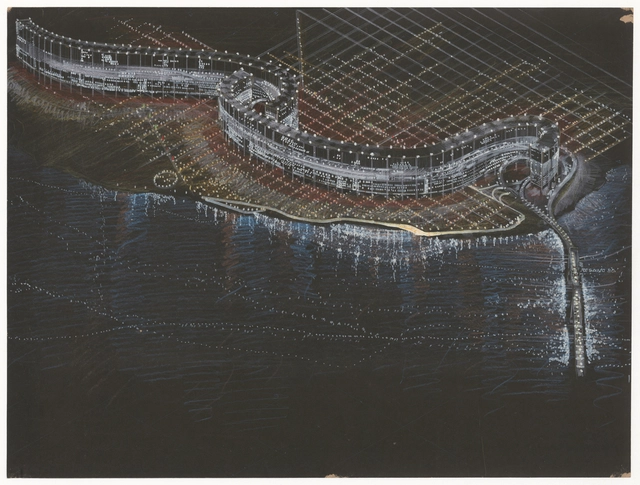
The Transamerica Pyramid Center has just announced the completion of the long-awaited Foster + Partners led renovation in San Francisco, United States. An iconic landmark of San Francisco's skyline since its completion in 1972, has been undergoing its most significant renovation to date. Originally designed by American architect William Pereira in a Brutalist style, the 48-story tower was the tallest building in San Francisco for nearly 50 years. This renovation will also include enhancements to the adjacent buildings.
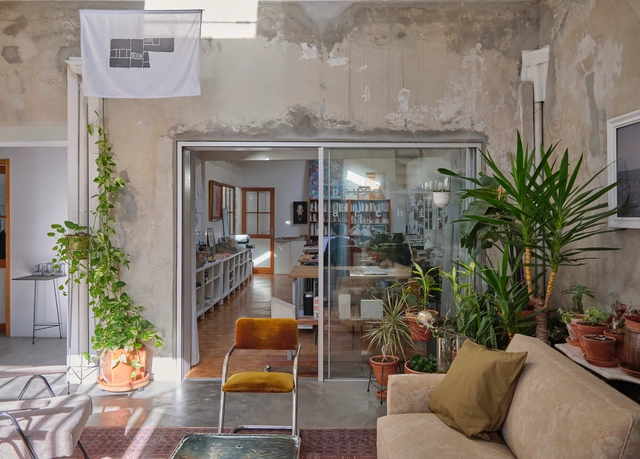
Resisting an adverse context and navigating its restrictions, Grupo Finca emerges, a collective that explores the practice of architecture from an artistic and pedagogical dimension in Havana, Cuba. Given the complexity of the country's political and social situation, informal architecture is common: low resources, difficulty in obtaining materials, high costs, and a lack of skilled labor, among other challenges, are some of the obstacles faced by independent architecture professionals. Coupled with the absence of a regulatory legal framework that would allow them to work formally in the labor market or acquire materials and supplies, the construction of contemporary architecture in Cuba is relegated to independent processes that can somehow overcome these barriers.
Cheongye Stream, known as Cheonggyecheon (청계천) in Korean, runs eastward through the heart of Seoul, passing through 13 neighborhoods in four districts of the capital of South Korea. Throughout its history, the stream played different roles in the city until it was covered by an elevated highway in the 1970s. For over 30 years, this natural artery remained hidden. It was not until 2003 that the city government launched a restoration project to reintegrate this urban waterway into the city fabric, revitalize the local economy, and revive the area's history and culture. The revitalization efforts were led by Mikyoung Kim Design. Since the project's completion in 2005, it quickly became one of Seoul's most visited tourist attractions. Moreover, it has become a focal point for ample urban research, with many studies offering positive assessments of the impact it had on Seoul's urban, economic, and ecological context.
On the morning of September 11, 2001, two hijacked commercial jetliners struck the Twin Towers in Lower Manhattan, a third plane struck the Pentagon, and a fourth crashed in rural Pennsylvania. A total of 2.977 people were killed in the terrorist attacks. In the face of this unprecedented loss, the city of New York promised to rebuild Lower Manhattan as a lively neighborhood while honoring and maintaining the memory of this day. Thus began one of the largest reconstruction projects in New York City, a process that is still ongoing now, 23 years after the tragedy.
Japanese architect and humanitarian Shigeru Ban has been named the 35th Laureate of the Praemium Imperiale Award for Architecture. Established in 1988 by the Japan Art Association, the annual award seeks to recognize exceptional achievements in Painting, Sculpture, Architecture, Music, and Theatre/Film. Shigeru Ban's contributions to architecture have been significant, not only for the distinctive design aesthetics but also for the innovative use of materials, particularly in the context of emergency interventions and humanitarian work.
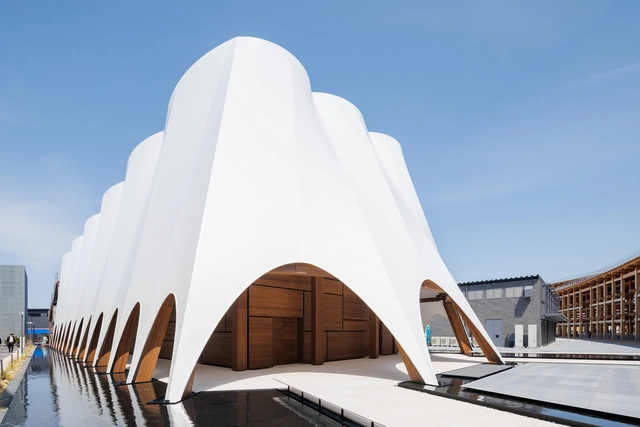
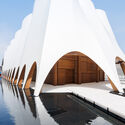
Azerbaijan Pavilion. Image Courtesy of Bellprat Partner
The Republic of Azerbaijan has just revealed its design for it's pavilion at Expo 2025 in Osaka, Kansai. Shining a spotlight on the country's culture, history, and forward-thinking approaches, the pavilion aims to promote connection and sustainability. Designed by Bellprat Partner in collaboration with Eleven, the pavilion will offer visitors a journey through Azerbaijan's rich traditions while emphasizing its modern goals for sustainability and international cooperation.
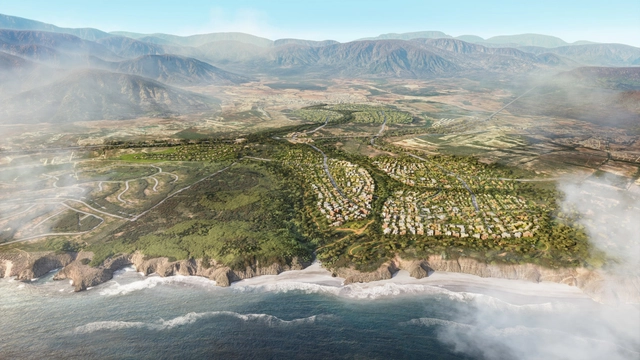
Courtesy of BCT Design Group and Gensler | The Wildset
Master plans are comprehensive design strategies that guide the future development of cities, districts, or large-scale projects. From a design and architectural perspective, they strive to balance the need for flexibility, long-term vision, and the integration of infrastructure with the public realm. Key themes in master planning often include sustainable development, urban connectivity, and cultural integration. Master plans shape not only the physical environment but also the social fabric of communities by emphasizing walkability, mixed-use spaces, and the blending of natural and built environments. These large-scale frameworks showcase the role architecture plays in shaping the future of urban life.
This curated selection of Unbuilt Architecture,submitted by the ArchDaily community, illustrates a range of visionary urban strategies. Whether it’s the revival of the village of Ad-Damun in Palestine, reconnecting with a rich historical past, or the bold reconstruction of the Al-Nouri Complex in Iraq as a cultural and spiritual hub, some of these projects engage with complex narratives of memory and restoration. From the sustainable design of Mokolo Green Scarf City in Cameroon to the marine research center in Yemen, these projects showcase diverse approaches to architectural challenges, focusing on community, environment, and the preservation of cultural heritage. By addressing unique regional contexts, these proposals reflect a broader commitment to rethinking how architecture can foster resilience and inclusivity.
Borderless Studio, “Kohn School in Roseland,” Chicago, 2023. Digital photograph. Photo: David Schalliol. From the 2024 grant to Borderless Studio and MAS Context for the publication “Beyond Closure: Reimagining Possibilities for Chicago’s Closed Schools” . Image Courtesy of Graham Foundation

The Graham Foundation, based in Chicago, has allocated $390,000 in grants to support 33 innovative projects worldwide. These initiatives include exhibitions, publications, and presentations aimed at enriching the discourse in architecture and its role in society. The projects, undertaken by architects, artists, curators, and educators, span various cities such as Johannesburg, New York, Chicago, and others, reflecting a global perspective on contemporary architectural issues.
The National Building Museum in Washington, D.C. has just announced Walter Hood as the 26th recipient of the prestigious Vincent Scully Prize. Walter Hood is a celebrated landscape designer working in public spaces and urban environments. Established in 1999, this award honors outstanding contributions in architecture, historic preservation, and urban design through practice, scholarship, or criticism. Hood now joins the ranks of past notable winners like Theaster Gates, Dolores Hayden, and Mabel O. Wilson.
Contemporary challenges and technological developments inevitably trigger changes in how we design and build our cities. The traditional construction industry suffers from inefficiencies that render methods slow, expensive, or harmful to the environment. Excessive material waste and lengthy build times pose significant challenges to built environment professionals, calling attention to the complexity and rigidity of conventional construction processes. The optimization of time and physical resources in construction calls for innovative methods that enhance efficiency.
In an industry where innovation often moves with the eagerness of setting mortar, WoHo Systems, one of ArchDaily's 2024 Best New Practices, has emerged as a disruptor aiming to address global sustainability and housing affordability issues. Born from the experimental roots of Ensamble Studio, this architectural startup wields prefabrication and sustainability as core pillars to redefine construction norms and deliver adaptable building solutions. Their solutions aim to speed up and simplify the construction process, as well as reduce costs and minimize environmental impact.
Beka & Lemoine’s Film Tokyo Ride Features Pritzker Prize Winner Ryue Nishizawa . Image Courtesy of Beka & Lemoine
Kazuyo Sejima and Ryue Nishizawa, founders of the renowned architecture firm SANAA, have been announced as the recipients of the 2025 Le Prix Charlotte Perriand by the Créateurs Design Awards. Announced today in Paris, France, the award honors exceptional contributions to modern architecture and design. Sejima and Nishizawa, known for their minimalist designs that integrate form, function, and the environment, continue to be recognized as innovators in the field, having been previously recognized with the prestigious Pritzker Architecture Prize in 2010. Sejima and Nishizawa will accept Le Prix Charlotte Perriand at the Créateurs Design Awards ceremony in Paris on January 18, 2025.
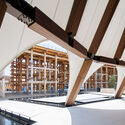
The Chile Pavilion, recently revealed by Constructo Architects for Expo Osaka 2025, blends contemporary industrial design and traditional Mapuche textile artistry. Constructed using industrialized wood (CLT) and featuring handwoven textiles, the pavilion emphasizes both innovation and cultural heritage. The structure is designed to be a "nomadic pavilion," easily assembled and disassembled, allowing it to travel from Chile to Japan and back.

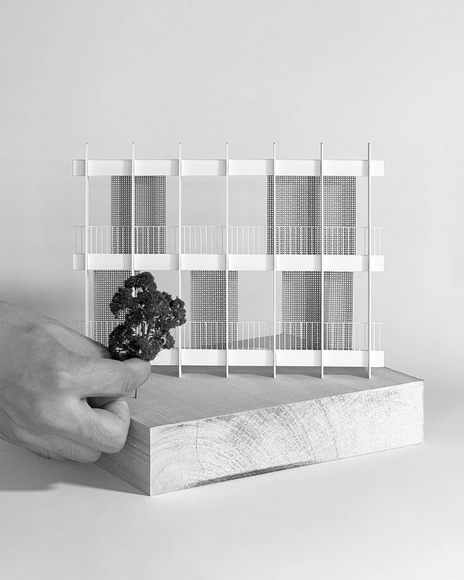
In dense urban living, the ability to connect with the outdoors for enjoyment and for wellbeing becomes starkly important. This became particularly apparent in the COVID-19 pandemic when millions of people across the globe had to be confined to their homes for long periods. Notwithstanding that, as the world increasingly urbanizes, good quality housing design is vital and this includes access to the outside. In a city like London, this need was recognized, and providing an outside space in every dwelling became mandatory around the year 2010. In multi-storey housing, providing outside space usually takes the form of a balcony. The design possibilities are endless, so what are the key considerations when incorporating balconies in an urban residential building?
Biosphere at Treehotel / BIG. Image Courtesy of BIG
Today's population lives in large, vibrant, and sometimes chaotic cities. That’s why the most popular options involve escaping to natural settings such as remote forests, tropical jungles, or pristine beaches when choosing places to take a break from daily responsibilities and routines. For those seeking to disconnect completely from city life while staying closely connected to nature, small-scale hotels, cabins, and lodges are excellent options. Whether it’s a private vacation home or a cabin hotel, these accommodations are designed to make their natural surroundings their most important asset, allowing the buildings to blend seamlessly into the landscape.
Courtesy of COOP HIMMELB(L)AU | Al Maktoum International Airport
Coop Himmelb(l)au has been selected to lead the architectural design for the new Al Maktoum International Airport in Dubai, United Arab Emirates. Working in collaboration with Dubai Aviation Engineering Projects (DAEP) and Dar Al-Handasah, the design integrates advanced structural solutions, energy efficiency, and modern technologies to create a facility of global significance.
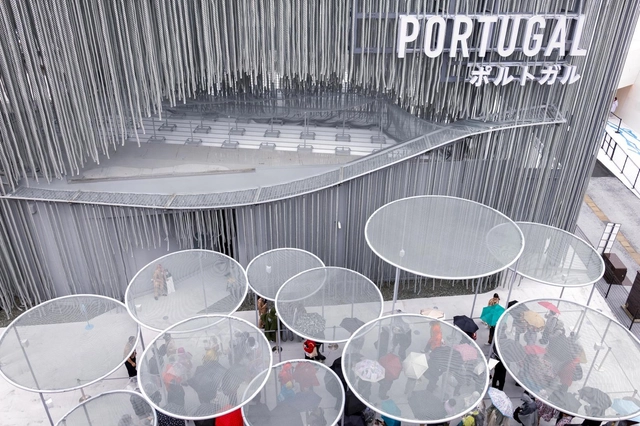
Porto, Portugal's second-largest city, is a captivating blend of historical charm and contemporary innovation. Perched along the Douro River, this UNESCO World Heritage site boasts a rich architectural tapestry that spans centuries. Porto's urban landscape is a testament to its evolving identity from its medieval Ribeira district with narrow cobblestone streets to the iconic Luís I Bridge. The city's skyline is punctuated by Baroque churches, neoclassical palaces, and modernist structures, creating a visually striking contrast that reflects its dynamic history.
Porto has undergone a remarkable architectural renaissance in recent years, becoming a magnet for local and international talent. The city has evolved into a dynamic canvas where bold contemporary designs seamlessly integrate with its rich historical fabric. The influence of renowned architects like Álvaro Siza Vieira and Eduardo Souto de Moura, both Pritzker Prize laureates and native to Porto, has solidified the city's status as a key player on the global architectural stage. Among the city's most striking contemporary landmarks is the Casa da Música, a futuristic, diamond-shaped cultural center designed by Dutch architect Rem Koolhaas, which stands as a testament to Porto's forward-thinking spirit. This sophisticated blend of tradition and modernity, coupled with a strong commitment to urban regeneration, has transformed Porto into a vibrant hub of architectural innovation, making it a must-visit destination for architecture enthusiasts and cultural explorers
"O beautiful, for spacious skies, for amber waves of grain, has there ever been another place on earth where so many people of wealth and power have paid for and put up with so much architecture they detested as within thy blessed borders today?"
Tom Wolfe wrote this in his 1981 book From Bauhaus to Our House. The conflict between modern and traditionaldesign has barely abated since, as is evident in this recent article. In the U.S., modern buildings are often met with community aversion, for familiar reasons: their perceived coldness and lack of contextual sensitivity, the impact on local character, and the loss of historical continuity. But on another level, the critique against modern design finds even more purchase on the larger scale: the city. Modern U.S. cities reek of traffic congestion and pollution, social inequality and gentrification, a loss of community and cultural spaces, and a lack of usable open space.
https://www.archdaily.com/1020898/contemporary-architecture-and-the-modern-cityGerhard W. Mayer