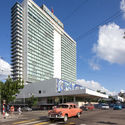
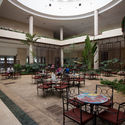
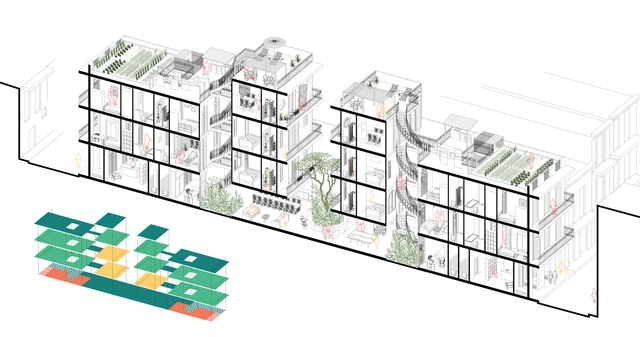
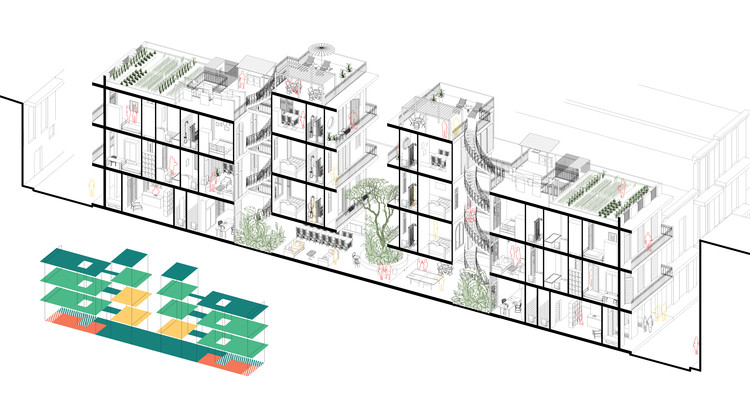
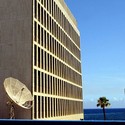
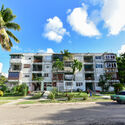
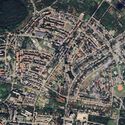
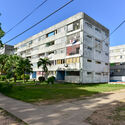
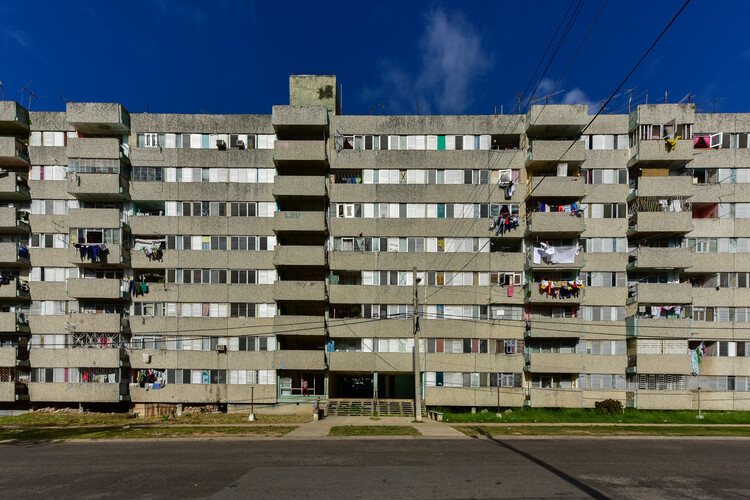
In the 1970s, Cuba faced a severe nationwide housing shortage due to population growth, rural-to-urban migration, and the degradation of existing housing stock. The government's answer was a system that pulled ordinary workers off their regular jobs and put them on building sites instead. This program, known as the Microbrigadas (microbrigades), reshaped entire districts of Havana, where they combined collective self-construction and state-backed technical knowledge, which left a mark on the urban grid of its capital city that persists until today.
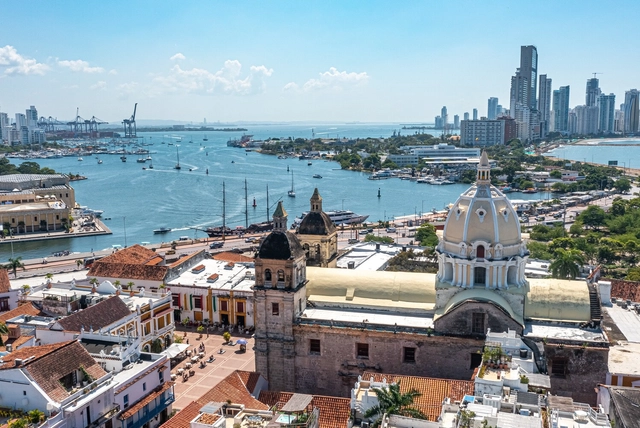
A look at most of the cities within Latin America reveals striking commonalities across countries, from Mexico down to Argentina: most cities have a well-defined area known as "El Centro" (The Center), anchored by a main plaza (Plaza Mayor), flanked by a church on one side and key buildings like the city hall on another. This is no coincidence, as it can be traced back to an urban planning system established during the Spanish colonization of the Americas in the 17th and 18th centuries. It gave standardized guidelines for city design across its viceroyalties. Unlike French and English colonies, Spanish settlements adhered to regulations that contributed to the emergence of a shared urban identity, with cities displaying similar spatial logic and architectural cohesion despite differing scales and contexts.
Resisting an adverse context and navigating its restrictions, Grupo Finca emerges, a collective that explores the practice of architecture from an artistic and pedagogical dimension in Havana, Cuba. Given the complexity of the country's political and social situation, informal architecture is common: low resources, difficulty in obtaining materials, high costs, and a lack of skilled labor, among other challenges, are some of the obstacles faced by independent architecture professionals. Coupled with the absence of a regulatory legal framework that would allow them to work formally in the labor market or acquire materials and supplies, the construction of contemporary architecture in Cuba is relegated to independent processes that can somehow overcome these barriers.
Infraestudio is an architecture and art practice based in Havana that has been obsessed with fiction since its foundation in 2016. Fernando Martirena, Anadis González, and other members and collaborators work from a narrative and discursive approach to experiment with various resources such as buildings, research, exhibitions, writings, and activism. This has allowed them to operate discreetly in a city frozen in time, recounting how contemporary architecture is done in Cuba today.
For these reasons, Infraestudio was selected by ArchDaily as one of the best new architectural practices of 2023. They are concerned with creating architecture that blends into the landscape, showcasing emptiness as a representation of an idea, focusing not on forms but on strategies, and building with the bare essentials.
The average age of a home in Cuba is just over 75 years old, and three of them collapse every day.Cuba’s housing crisis is perhaps one of the most unique examples of urban inequity in the world. While the island nation’s extensive history of waves of foreign influence has largely shaped their government, and in turn their public policies and urban planning strategies, they yet have been able to stabilize their long-standing housing crisis- forcing thousands of Cubans to live in derelict homes or public shelters. Now, many questions are being raised about how they will build new housing, repair the existing structures, and revise laws that allow Cubans to have more autonomy in the homeownership process.
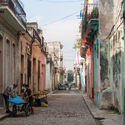
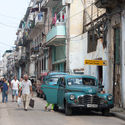
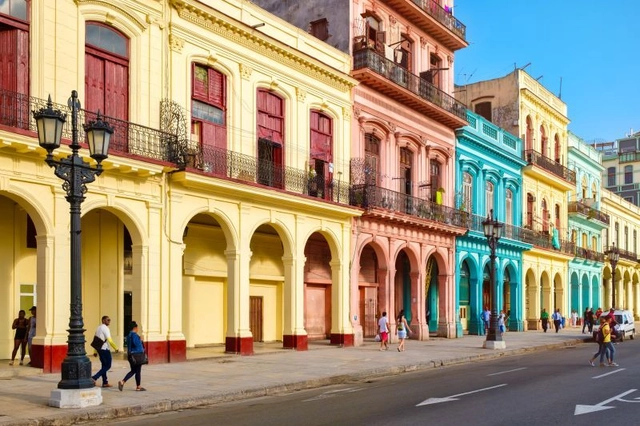
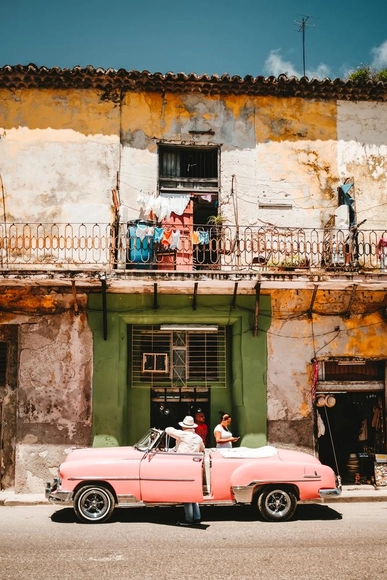
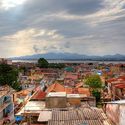
Havana appeals to those who romanticize the idea of a city that seems to be completely frozen in time. The capital’s urban fabric proudly displays its history, as it experienced waves of Spanish, Moorish, and Soviet influence. What really lies beyond the Revolutionary kitsch of vintage Buicks parked in front of colorful, yet crumbling homes, is the deprivation that Cuba has experienced throughout history.
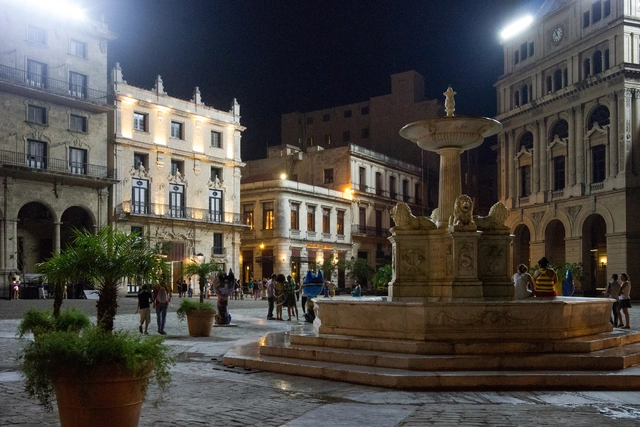
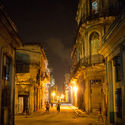
Havana has often been referred to as a time machine — a city that transports its visitors to a distant moment and time in history. The capital city’s colorful Spanish colonial-style architecture has made it a go-to destination for photographers, architects, and people seeking life in a bygone era. From classic cars to “its overall sense of architectural, historical and environmental continuity makes it the most impressive historical city center in the Caribbean and one of the most notable in the American continent as a whole,” remarks UNESCO.
https://www.archdaily.com/906621/street-photography-tour-of-havana-cuba-with-pratt-instituteSponsored Post
The grays of concrete and pollution are not the only representation of cities and towns in the Americas. As perfect postcard material, many cities in the new world express the vibrancy of the people and places through color. HAUS, ArchDaily's partner, has selected five of these cities, which show us how color can bring light to the day-to-day life of cities.
Havana is often referred to as a time machine that transports visitors to a particular moment in history, seemingly frozen in time. While it is a city that boasts an exhaustive timeline of imported styles, Havana in the present day is not defined by a singular historical era—either in its political climate or in its architectural zeitgeist.
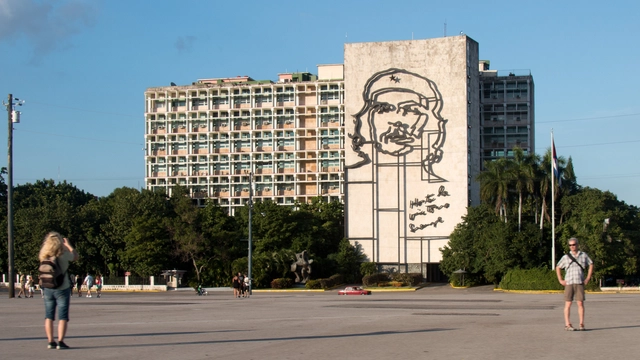
Over the decades, the Cuban Revolution has had powerful domestic and international repercussions. In particular, it transformed Cuba’s relationship with the United States. But efforts to improve diplomatic relations have gained momentum in recent years, with the teetering lift of the embargo that exacerbated a David and Goliath situation and left a lasting economic impact on the Cuban people. Havana’s skyline has hardly altered since the fall of the Soviet Union, and the city became shut off from the rest of the world, having to rely heavily on its own resources. Today, the government in Havana occupies the gap between the last stance of post-Cold War communism, and the looming influence of Capitalism, a situation which reveals itself in the variety of distinct architectural styles. These seven sites in the island nation’s capital best explain the story about where Havana has been, and offer a prediction as to where it may head next.
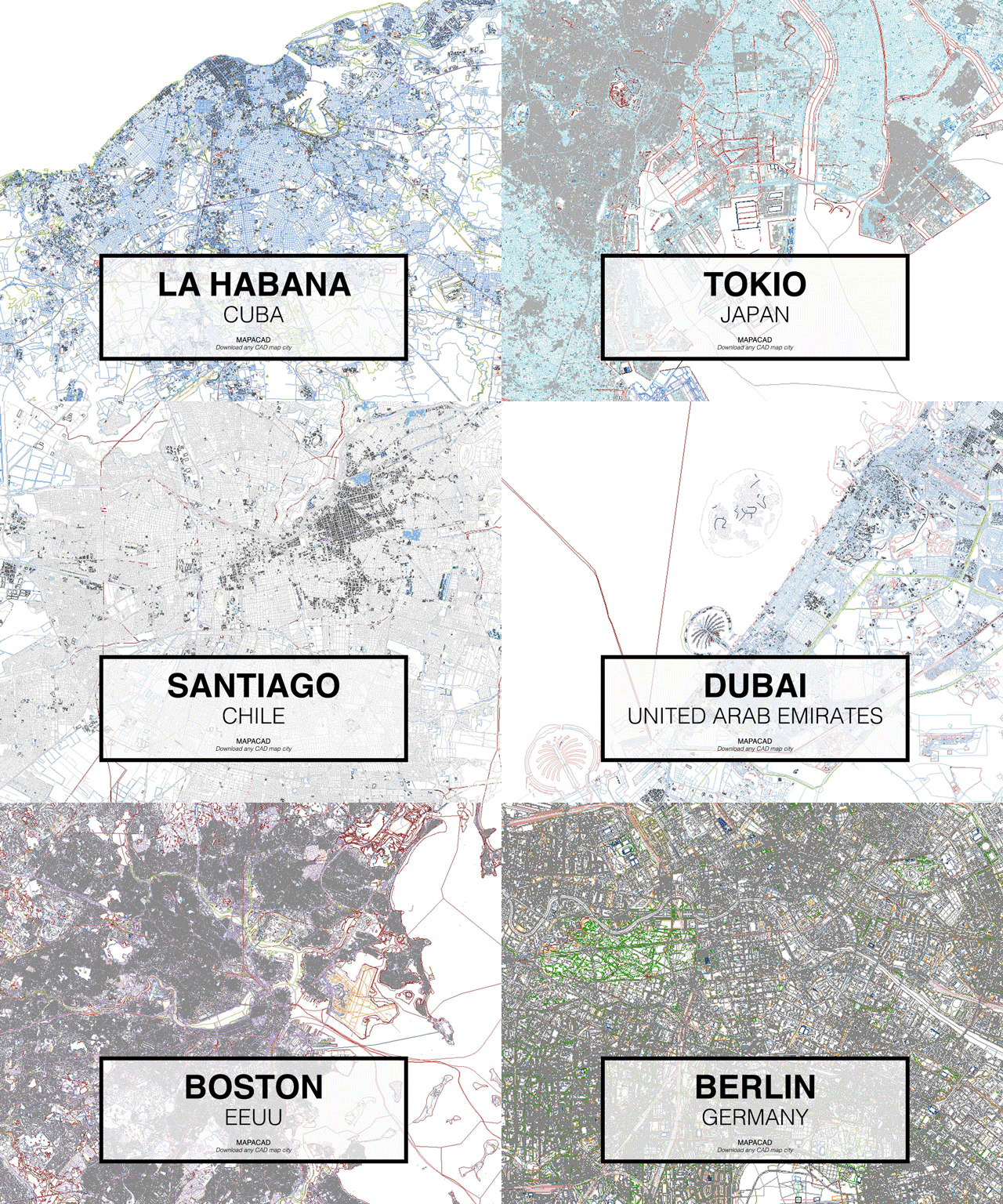
Mapacad is a website that offers downloads of .dwgs of dozens of cities. With 200 metropolises in their database, the founders have shared a set of their most-downloaded cities.
The files contain closed polyline layers for buildings, streets, highways, city limits, and geographical data--all ready for use in CAD programs like Autocad, Rhino, BricsCad and SketchUp.
The largest of the Caribbean islands, Cuba is a cultural melting pot of over 11 million people, combining native Taíno and Ciboney people with descendants of Spanish colonists and African slaves. Since the 1959 revolution led by Fidel Castro, the country has been the only stable communist regime in the Western hemisphere, with close ties to the Soviet Union during the Cold War and frosty relationship with its nearby neighbor, the United States, that has only recently begun to thaw. While the architecture in the capital city of Havana reflects the dynamic and rich history of the area, after the revolution Havana lost its priority status and government focus shifted to rural areas, and the buildings of Havana have been left to ruin ever since. Iwo Borkowicz, one of three winners of the 2016 Young Talent Architecture Award, has developed a plan that could bring some vibrancy, and most importantly some sustainability, back to Havana, the historic core of the city.
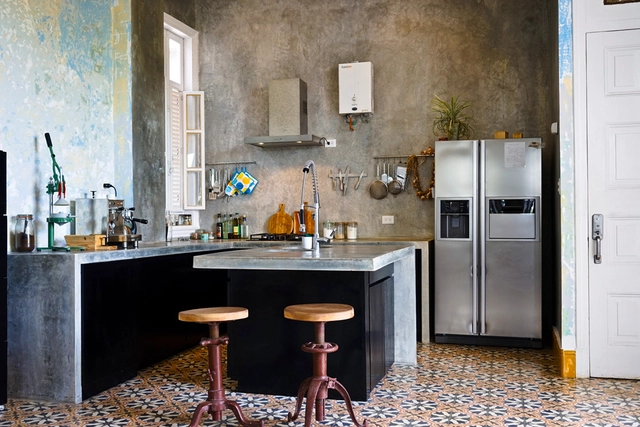
Conceptual artist Wilfredo Prieto's kitchen. He designed the kitchen himself and had it made by local craftspeople. Image Courtesy of Hannah Berkeley Cohen via Curbed
For decades, Cuba's communist economic system has essentially outlawed all forms of private architectural work. In 2011 though, wide-ranging economic reforms brought a challenge to this status quo. In this article, originally published on Curbed as "In Cuba, Architecture and Design Blossom Under New Laws," Julia Cooke explores how these laws to bring about a more flexible economic system are allowing a different kind of architecture to emerge.
This May, visitors were allowed into Havana's long-defunct Tallapiedra electric plant for the first time since it was shuttered in the 1960s. They could climb the grated stairs to the plant's nave, see how the light glinted off unchipped white and green tiles set in place in 1915, how tiny, stalky trees had grown out of clumps of dirt where machinery once sat, how the high, church-like central space and the split-level, open workspaces on one side might be adapted to any number of uses. The opening—for locals and some of the thousands of tourists in Cuba for the Twelfth Havana Biennial—was the work of Claudia Castillo and Orlando Inclán, and their eight-year-old think tank, Habana Re-Generación.
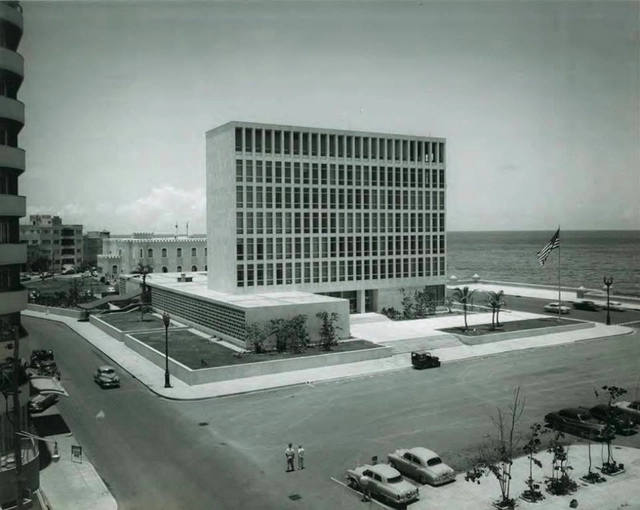
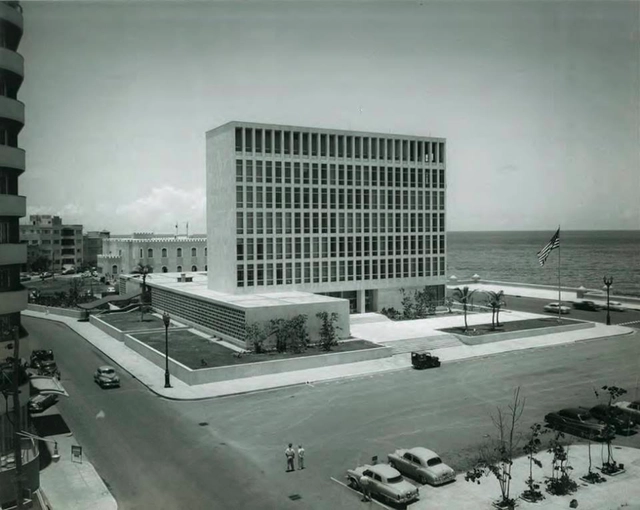
Completed in 1953, the U.S. Embassy in Havana was a defining project of midcentury American modernism
For the first time in over a half-century, the United States reopened its official diplomatic embassy in Havana earlier today, shining an international spotlight on Harrison and Abramovitz's modernist shoreline classic. Historically maligned by many Cubans as an embodiment of American arrogance and imperialism, the building has played a pronounced symbolic role in the escalation - and now the easement - of political animosities between the two countries.
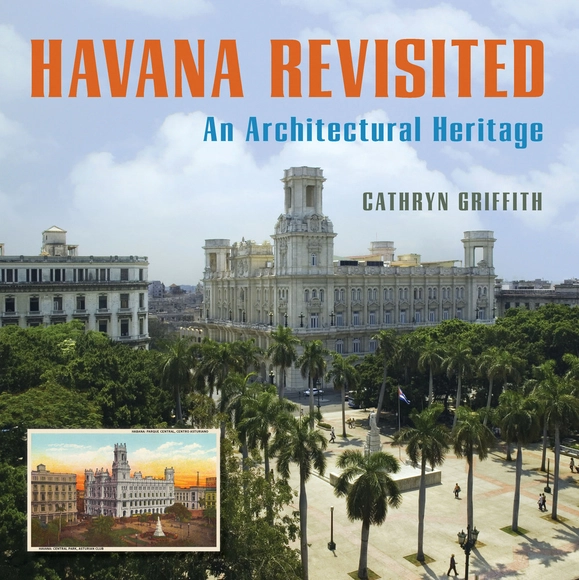
Thanks to its privileged position as a gateway to North America and Cuba's unique political history, the architecture of the City of Havana has a rich and layered quality rarely found. In a new book edited by Cathryn Griffith, "Havana Revisited: An Architectural Heritage," this history is explored in detail through 12 essays by renowned architects, historians, scholars, preservationists, and urban planners in both Cuba and the United States and a selection of 350 color images comparing historic postcards with the city of today. The following text is the book's introduction, written by Cuban architect, urban planner and critic Mario Coyula (1935-2014).
Havana’s modest beginnings came in the sixteenth century, as the springboard for Spain’s conquest of America. When the port became the obligatory last American stop for Spanish ships making their return voyages to Europe, its significance grew until Havana had become the most important city in the Gulf of Mexico and the Caribbean. From the beginning, it was a settlement oriented toward providing services, especially that of protection. Hence, Havana became home to the most formidable system of defensive fortifications in the colonial Americas.
The United States’ diplomatic presence in Cuba is housed in a severe, early-1950s office building perched on the shoreline over Havana Bay. Walled off from the city and pulled back from the street, the building has the uneasy presence of a haunted castle – shunned and maligned by its neighbors, but subjected to the unending scrutiny of suspicious eyes and intrigued gossip of the locals. With its regimented orthogonalities and the unmistakably foreign imprint of modernist efficiencies, both the embassy's architecture and the optimistic political spirit it embodies seem to belong to another era, a cooperative past no longer conceivable in the wake of a half century of underhanded diplomacy, calumnious propaganda, and failed attempts to restore relations between the embattled countries.
















.jpg?1596070691)
.jpg?1597804529&format=webp&width=640&height=580)
.jpg?1597800639 "© Albor Arquitectos")
.jpg?1597804135)
.jpg?1597800771 "© Albor Arquitectos")
.jpg?1597801449 "© Albor Arquitectos")
.jpg?1597804529)