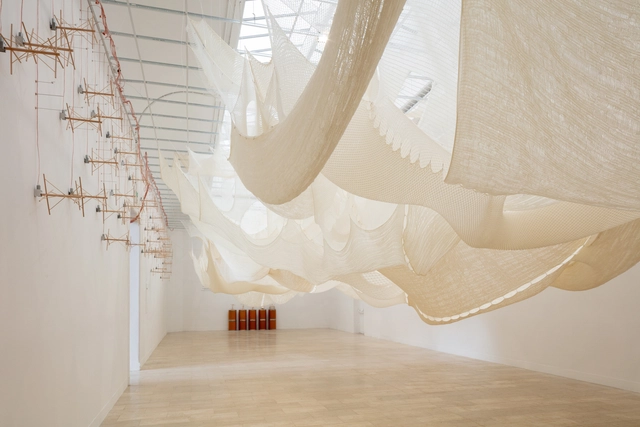
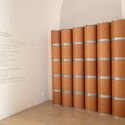
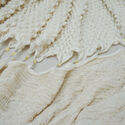
The Serbian Pavilion at the 19th Venice Architecture Biennale consists of an immersive installation made of wool. The exhibition, titled Unraveling: New Spaces, was curated by architect Slobodan Jović and designed by an interdisciplinary team composed of Davor Ereš, Jelena Mitrović, Igor Pantić, Sonja Krstić, Ivana Najdanović, and Petar Laušević. The interior space of the Pavilion, located in the Biennale's Giardini, is occupied by an ephemeral installation that follows the principles of circular design, effectively producing no waste. The installation consists of a broad woven wool fabric that gradually unknits according to a guided choreography of algorithmic precision, completely disassembling by the end of the Biennale's exhibition.
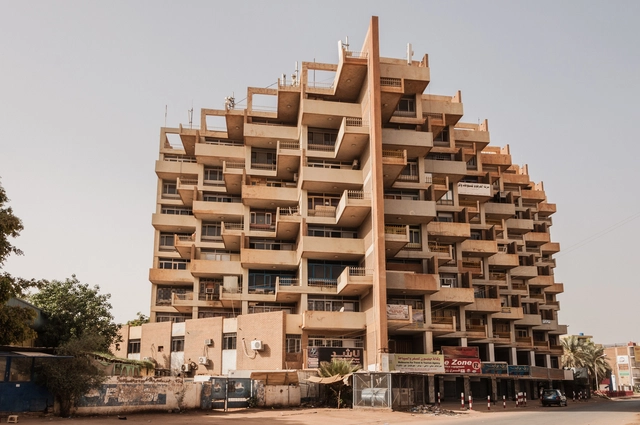
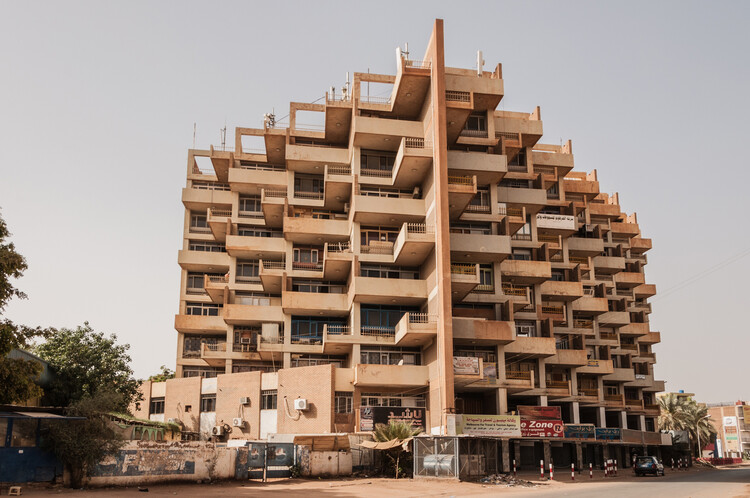
Little has been written about the work of Abdelmoneim Mustafa, one of the most respected architects in his homeland of Sudan and a pioneer in his profession in the mid-twentieth century. Esra Akcan, who made extensive research of his work with a team in Sudan during a small window of opportunity between 2019 and 2021, laments this lack of recognition thus, "How could someone as gifted as Moneim Mustafa… designer of some of the most exciting mid-century modernist buildings anywhere, be so neglected, so ignored out of Sudan, that to this day there is no internationally accessible publication in his name." Akcan's writings, coupled with the personal blog of Hashim Khalifa, who trained under Mustafa, shed light on his extensive legacy.
The Pavilion of China at the 19th International Architecture Exhibition - La Biennale di Venezia presents the exhibition CO-EXIST, curated by Ma Yansong, founder of MAD Architects, and organized by the Ministry of Culture and Tourism of the People's Republic of China at the Arsenale. Through ten works by twelve interdisciplinary groups, the pavilion examines how traditional Chinese philosophical thought can inform architectural responses in the age of advanced technology and artificial intelligence.
"The limits of our design language are the limits of our design thinking". Patrik Schumacher's statement subtly hints at a shift occurring in the built environment, moving beyond technological integration to embrace intelligence in the spaces and cities we occupy. The future proposes a possibility of buildings serving functions beyond housing human activity to actively participate in shaping urban life.
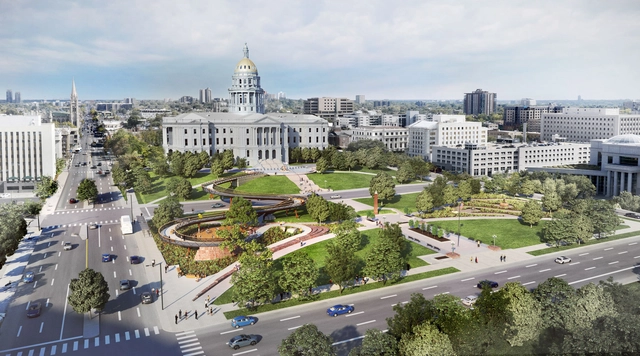
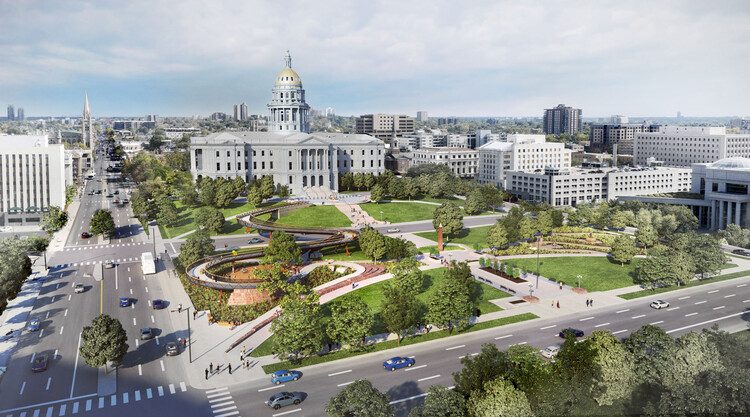
Studio Gang, led by Jeanne Gang, has revealed its design for the Colorado 150 PedestrianWalkway, a new civic infrastructure project commissioned by Governor Polis and the America 150-250 Commission. Spanning 11,000 square feet, the walkway is conceived as both a connective urban thread and a commemorative landscape, marking the 150th anniversary of Colorado's statehood. Strategically sited in downtown Denver, the intervention links key public spaces and monuments, enhancing pedestrianaccessibility while fostering a layered experience of art, culture, and history. Set to be completed by July 2026, various features, such as viewing platforms, monuments, new public artworks by Colorado-based artists, play areas, and interpretive elements, aim to invite users to explore, gather, and reflect along the route.
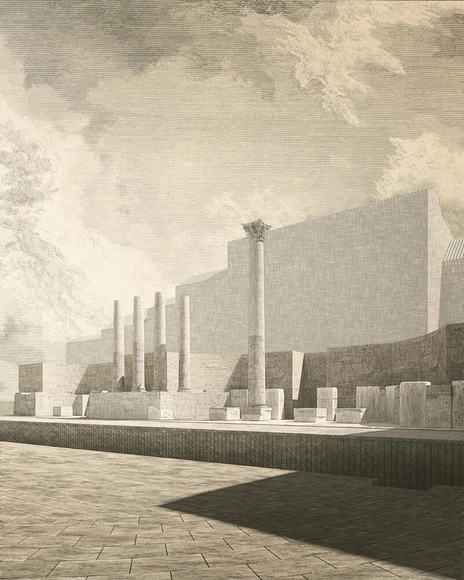
Scaenae view render. Image Courtesy of David Chipperfield Architects
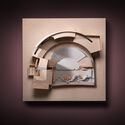
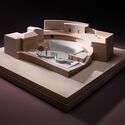
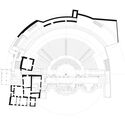
The preliminary design for the architectural restoration and functional redevelopment of the Roman Theatre was presented on Tuesday, April 8, 2025, at the Auditorium of the Santa Giulia Museum in Brescia. The project was developed by the Milan office of David Chipperfield Architects, commissioned by the Fondazione Brescia Musei in collaboration with the Municipality of Brescia and the Brescia Chamber of Commerce, Industry, Handicraft, and Agriculture. Chipperfield was tasked with identifying the essential architectural elements to guide future design phases, leading to the drafting of the Technical-Economic Feasibility Project (PFTE) and the final project, including the necessary authorizations. This initiative is financially supported by the Italian Chamber of Commerce under a 2019 ministerial decree prioritizing cultural heritage, especially where it enhances tourism.
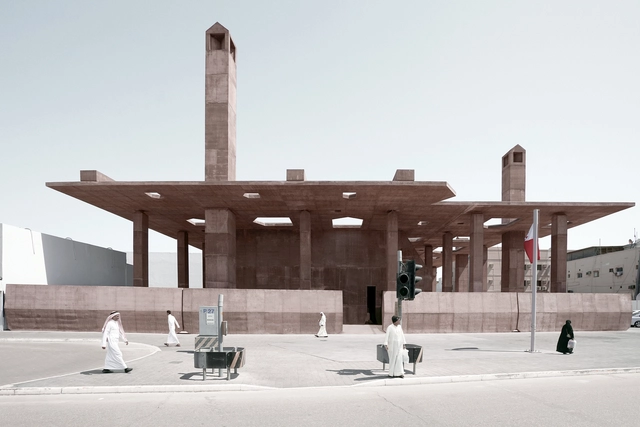
A place of rebirth, the city of Muharraq in Bahrain has undergone a visionary cultural and urban transformation, emerging as a pioneering model for culturally-led regeneration in the Arab world, particularly in the Gulf region. Once the capital of the country's pearling industry, Muharraq has preserved, reinterpreted, and reintegrated its historical legacy into its evolving urban fabric.
Faced with the challenge of redefining its future—marked by an intact urban layout but deteriorating architectural structures—Muharraq envisioned a linear urban narrative, weaving together the memory of the industry through a sequence of key buildings. The city set out to connect the individual properties tied to its pearling past, such as homes of divers, boat captains, and pearl merchants.
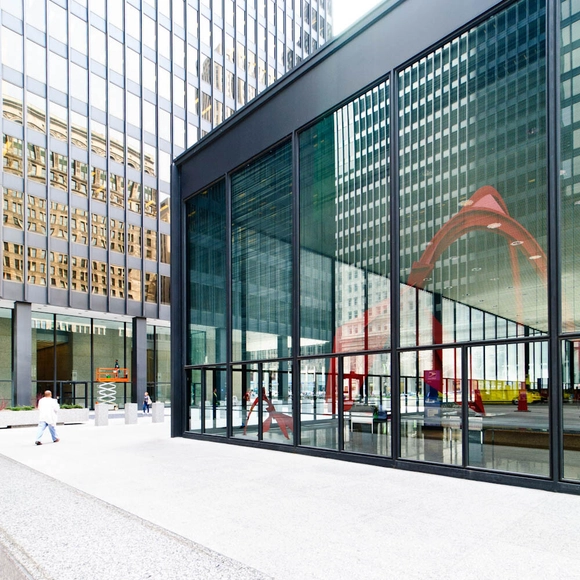
The Mid-Century Modernist movement was more than an aesthetic or material shift in the United States, as it was a response to a rapidly changing world. Emerging after World War II, this architectural revolution rejected ornate, traditional styles of the past in favor of clean lines, functional design, and incorporation of flashy materials like steel, glass, and concrete. Modernism was a break from tradition, focusing instead on simplicity, efficiency, and a vision for the future. It reflected the optimism of a nation rebuilding itself, where technology and innovation shaped everything from cityscapes to suburban homes.
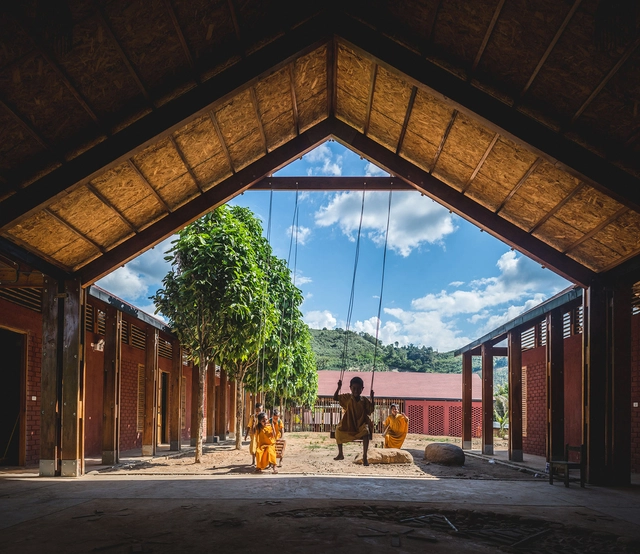
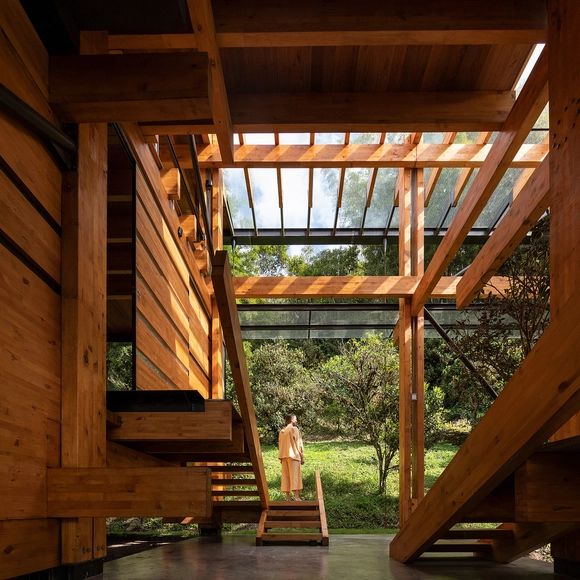
In an effort to foster a sense of belonging among its inhabitants, to value ancestral cultures, and to preserve identity, the Latin American region embraces an architecture rich in nuances and regional characteristics. The use of local materials and construction techniques, or the dialogue between modular and vernacular approaches, among other aspects, reflect the intention to promote the involvement of native communities, students and their families, Iindigenous peoples, and local builders in the design and construction processes of a wide variety of rural schools throughout Latin America.
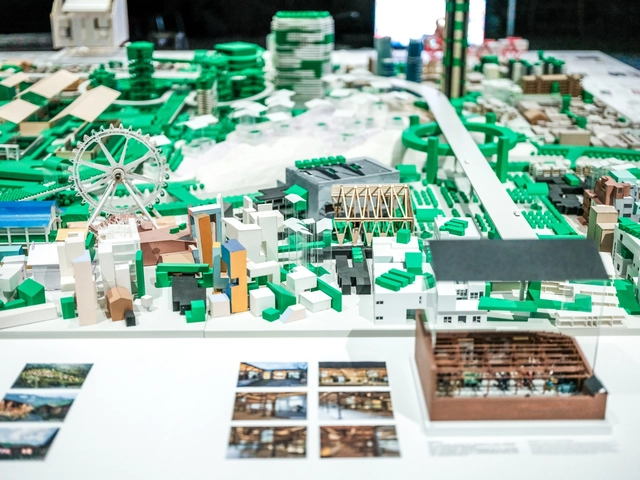
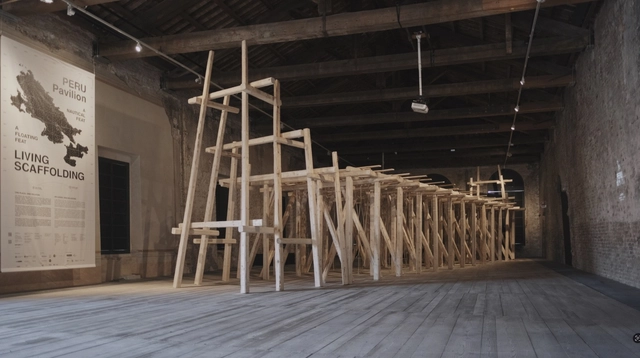
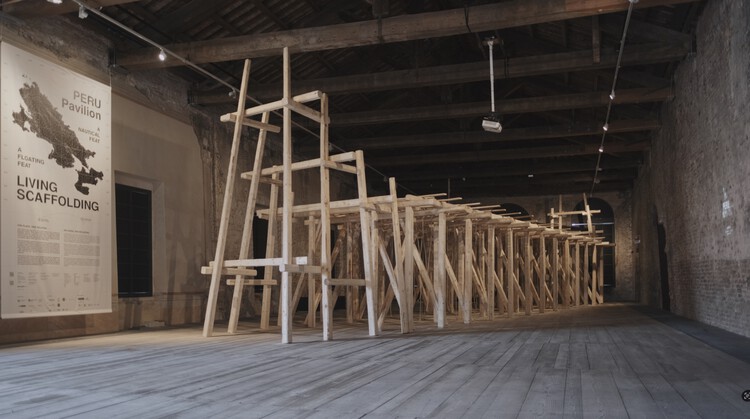
The 19th edition of the Venice Architecture Biennale officially opened to the public on May 10, becoming a significant international platform for exploring the current state of global architecture and sparking conversations about the challenges the discipline faces today—both shared and specific to each territory. This year’s theme, "Intelligens. Natural. Artificial. Collective," proposed by general curator and Italian architect Carlo Ratti, invites reflection on architecture’s interconnection with other fields—such as art, artificial intelligence, and technology—while also emphasizing the importance of territories, landscapes, and, above all, the people who collectively shape our built environment.
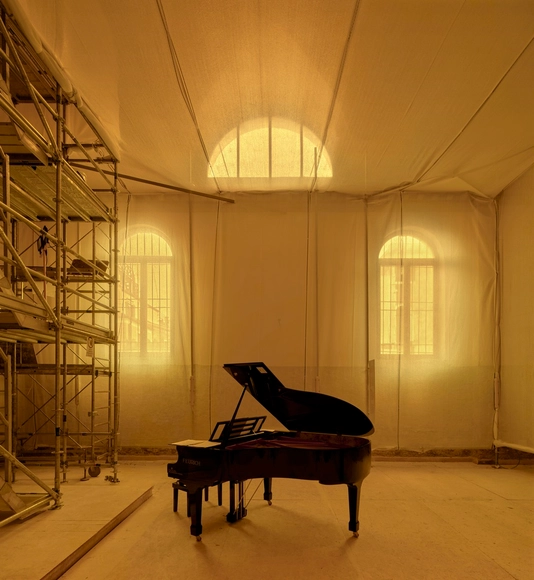
At the 19th International Architecture Exhibition, La Biennale di Venezia, the Dicastery for Culture and Education presents "Opera Aperta", a project that positions architecture as a practice of collective care and responsibility. Curated by Marina Otero Verzier and Giovanna Zabotti, Opera Aperta is set within the Santa Maria Ausiliatrice Complex in Venice's Castello district. Designed by Tatiana Bilbao ESTUDIO and MAIO Architects, the project transforms the 500-square-meter site into a space for collaborative restoration and public engagement. Conceived as a work in progress rather than a finished installation, Opera Aperta functions as a platform for ongoing exchange, participation, and engagement rooted in the local context. This open and process-oriented approach was recognized during the opening events, where the Holy See Pavilion received the Golden Lion's Special Mention for National Participation.
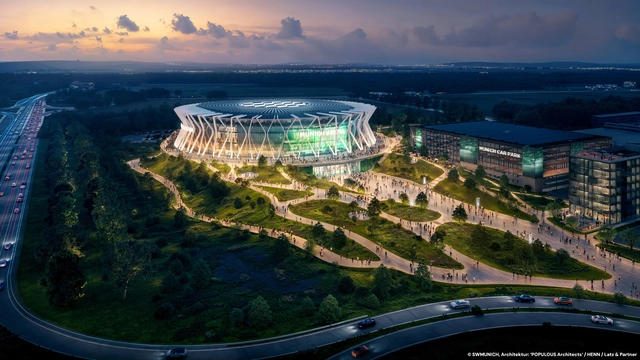
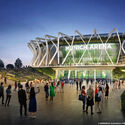
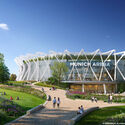
Architecture firm Populous was chosen to design a new multi-use, climate-neutral event arena in Munich, Germany. The structure aims to create a "compact, efficient, and visually stunning" venue that will be instantly recognizable and reflective of the character and culture of the Bavarian metropolitan area, serving as a new landmark. The 20,000 capacity venue draws upon Bavarian heritage through a support structure that pays homage to the lozenge shape used in the Bavarian state flag. Populous developed the design with general planners HENN from Munich and landscape architects Latz+Partner from Freising.
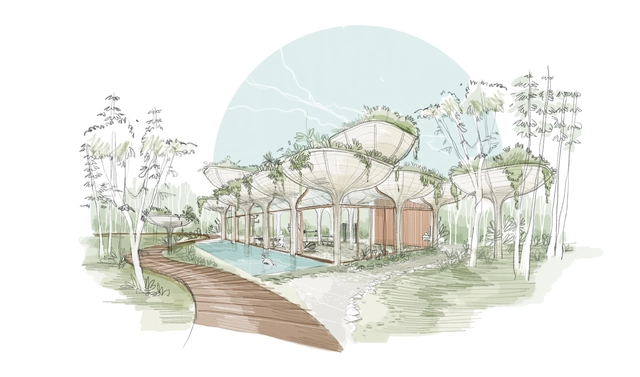
At a time when architectural practice is increasingly tied to climate and context, the boundary between the built and the natural has become a critical site of experimentation. This month's unbuilt selection gathers eight conceptual projects that work with the edges of landscape. In Ramia by João Teles Atelier, the architecture draws directly from the metaphor of a seed breaking through soil, using wood, concrete, and water to create a sensorial route through Tulum's ecology. Meanwhile, Mobius Pier by X Atelier loops gently over the river edge, becoming both infrastructure and observation point. Similarly, Il mare degli Umbri approaches the threshold differently, restoring the historic shoreline of Lake Trasimeno and reintroducing local wetland ecologies. Each project in this collection reflects a unique position: some treat the edge as a spatial experience, others as a regulatory line, and others still as a point of cultural or ecological return.
In partnership with the European Cultural Center (ECC), ArchDaily has launched its inaugural exhibition as part of the seventh iteration of Time Space Existence, an architectural showcase occurring concurrently with the 19th VeniceArchitecture Biennale. Open from May 10 to November 23, 2025, in various locations throughout Venice, this edition centers on the theme of "Repair, Regenerate, and Reuse," promoting innovative and sustainable approaches in architecture. ArchDaily's contribution is located at Palazzo Mora, complementing other venues like Palazzo Bembo, Marinaressa Gardens, and Palazzo Michiel.
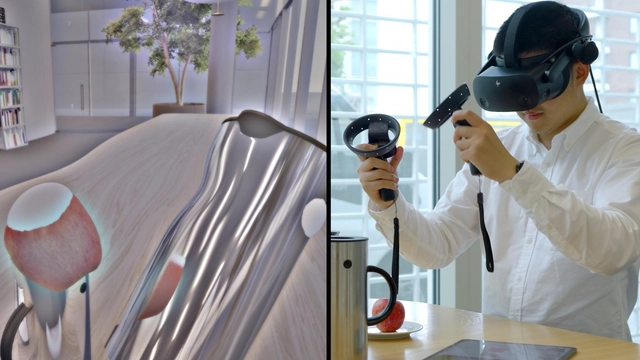
VARID A VR-AR Toolkit for Inclusive Design.. Image Courtesy of Foster + Partners
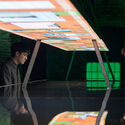
Over the last decade, architectural design has relied on 2D methods of representation, such as elevations, sections, and floor plans, paired with digital renderings of 3D models. While these tools are essential to convey geometry and intent, they remain limited by their two-dimensional format. Even the most realistic renderings, created through programs like SketchUp, Revit, or AutoCAD, still flatten space and distance the viewer from the lived experience of a project. Recently, architects have begun to explore immersive technologies as a way to bridge this gap between drawing and experience, offering new ways to inhabit and assess spatial proposals.
In today’s dense, vertical cities, terraces—often overlooked as mere technical rooftops—are emerging as key spaces for reconnecting with nature, expanding residential functions, and offering moments of collective relief. Particularly in single-family homes located in compact urban areas, these elevated surfaces represent valuable opportunities to increase usable living space without occupying more land. By lifting daily life above street level, terraces open new ways of inhabiting the city, enabling a range of uses from leisure and contemplation to food production and social gathering. In contexts marked by limited green space and strained infrastructure, they hold the potential to generate what landscape architect Catherine Mosbach calls "additional layers of urbanity." Whether imagined as hanging gardens, gathering spots, edible landscapes, or wellness zones, terraces challenge the idea that the city ends at the top floor—inviting us to see the roof as a new kind of ground.
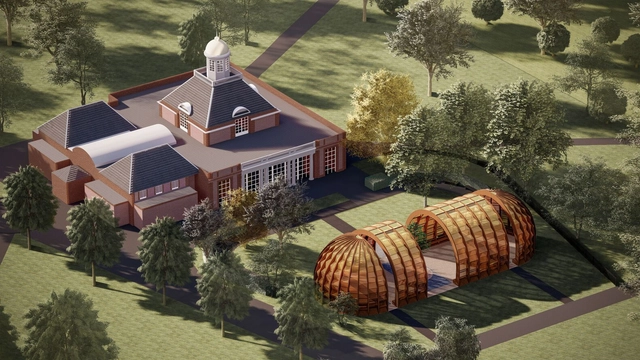
Bangladeshi architect and educator Marina Tabassum and her firm, Marina Tabassum Architects, have been selected to design the 2025 SerpentinePavilion. Titled "A Capsule in Time," the proposal takes inspiration from the ephemeral nature of architecture in the Bengal Delta, incorporating a semi-transparent structure intended to evoke a sense of community and connection. The Pavilion will open to the public on June 6th, until 26 October 2025, with a press preview two days before the opening. Tabassum's pavilion will mark the 25th year since the Serpentine's first commission of Zaha Hadid's inaugural structure in Hyde Park in 2000.