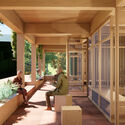
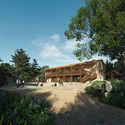
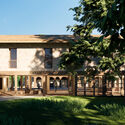
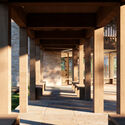
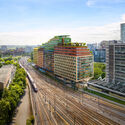
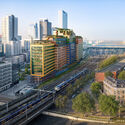
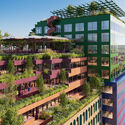
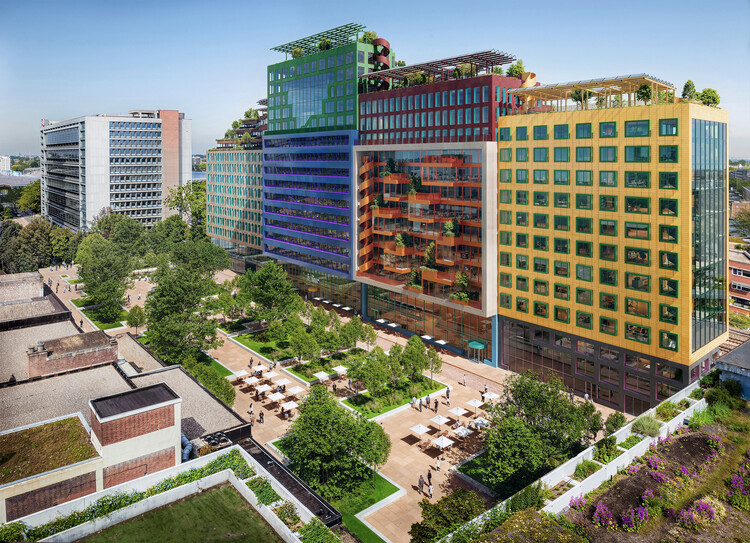
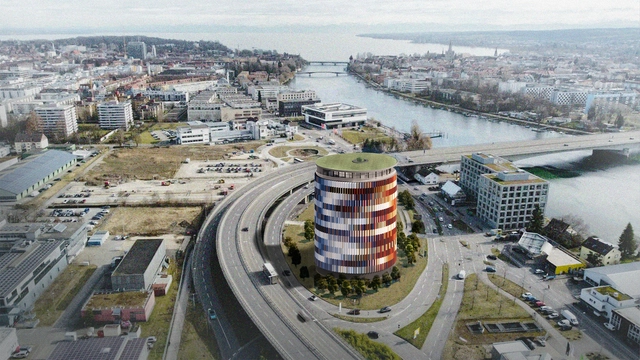
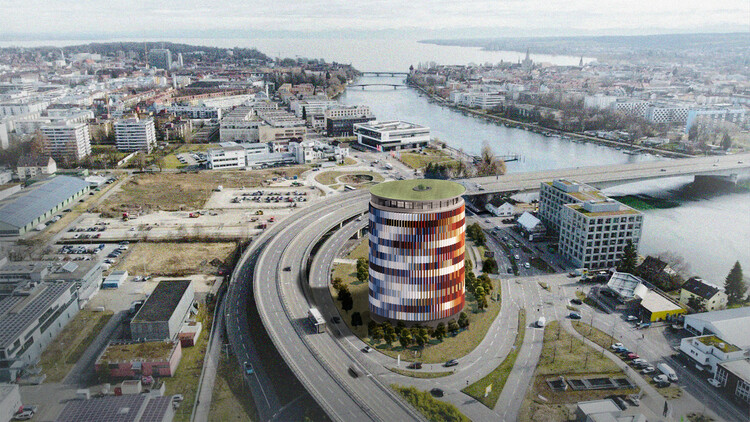
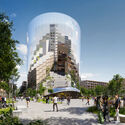
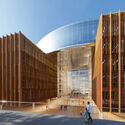
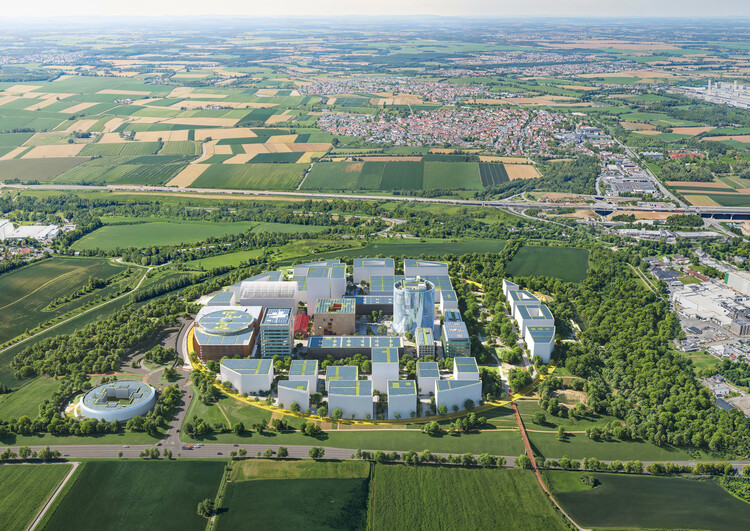
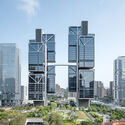
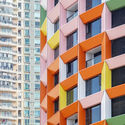
MVRDV has revealed its design for Monaco, a six-story office building situated in Munich's transforming Werksviertel neighborhood. This region, previously known for its industrial past and later as a cultural hotspot, has been evolving into a dynamic work-and-leisure district since 2016. Positioned near MVRDV's earlier project, WERK12, the Monaco building uses recycled materials and distinctive shapes to create a balanced "work and play" office environment, inspired by the color and creative spirit of the Kultfabrik era.
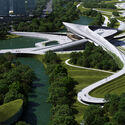
MVRDV, in collaboration with Huayi Design, has been awarded the design contract for the Shenzhen Pingshan Sports Park in eastern Shenzhen, China. The sports park will feature a wide range of facilities, including an arena for badminton and other competitive sports, the new Chinese National Badminton Training Centre, and a National Fitness Centre, alongside various amenities for public use. Central to the project is the inclusion of 100 badminton courts, which also inspired the architectural design, particularly exemplified by the 240-meter-long roof shaped like a badminton racket head.
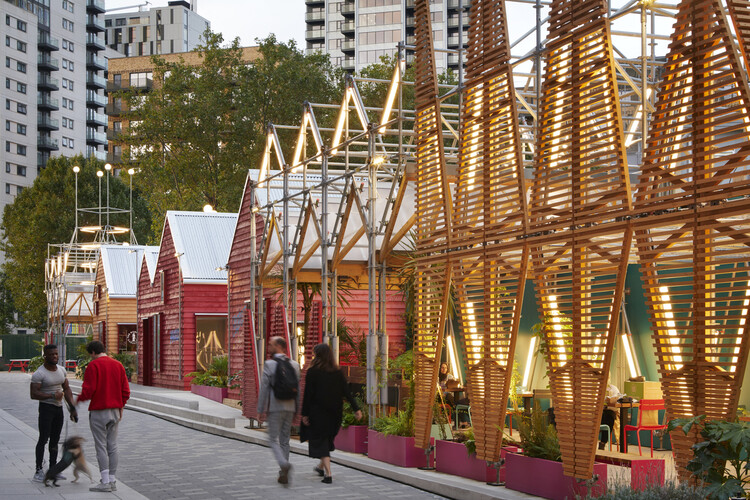
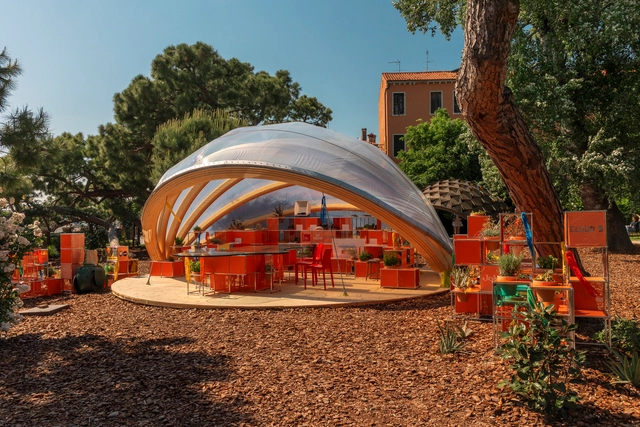
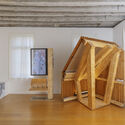
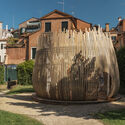
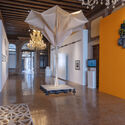
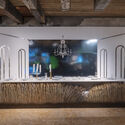
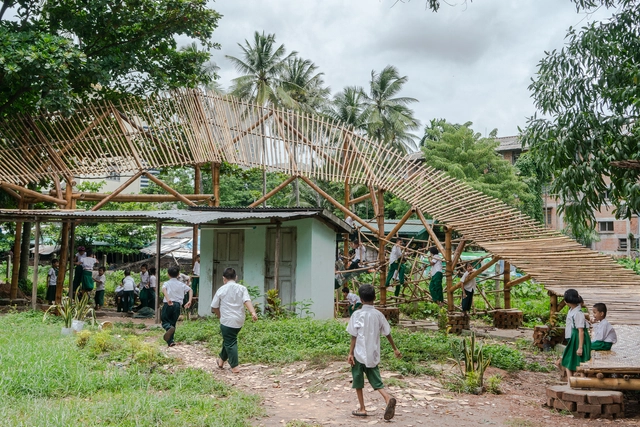
Ephemeral architectures, characterized by their temporary and flexible nature, have emerged as powerful tools for revitalizing urban spaces and fostering architectural creativity. These transient installations transform public areas, engaging communities, and prompting reflections on the potential futures of our cities. By temporarily transforming environments, ephemeral architectures encourage both architects and the public to reimagine the possibilities of urban living. This dynamic interplay, between the temporary and the permanent, challenges traditional architectural practices and opens up new avenues for sustainable and inclusive urban development.
Madrid, the vibrant capital of Spain, offers a blend of tradition and modernity, reflected in its diverse architectural heritage. This rich past is etched into the old façades, expansive public spaces, and historic religious institutions that define much of Madrid’s character today. The city’s continuous architectural renewal, reflected in both respectful restorations and innovative new constructions, highlights Madrid’s commitment to preserving its heritage while embracing modernity.
In the 20th century, Madrid embraced modernity, influenced by movements such as Rationalism, the International Style, and Brutalism. Today, Madrid is a showcase for contemporary design, where contemporary projects by renowned architects coexist with its historical legacy. Structures like the CaixaForum by Herzog & de Meuron and Jean Nouvel’s Reina Sofía Museum exemplify the city’s interest in architectural explorations
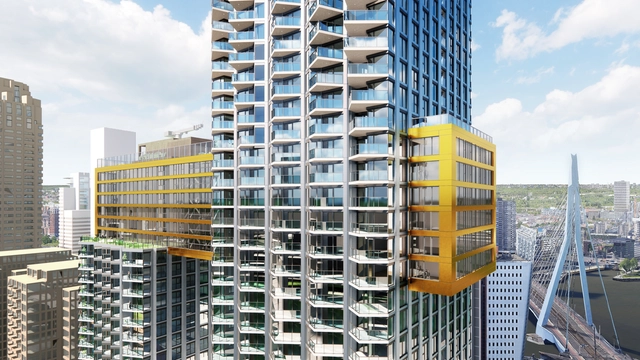
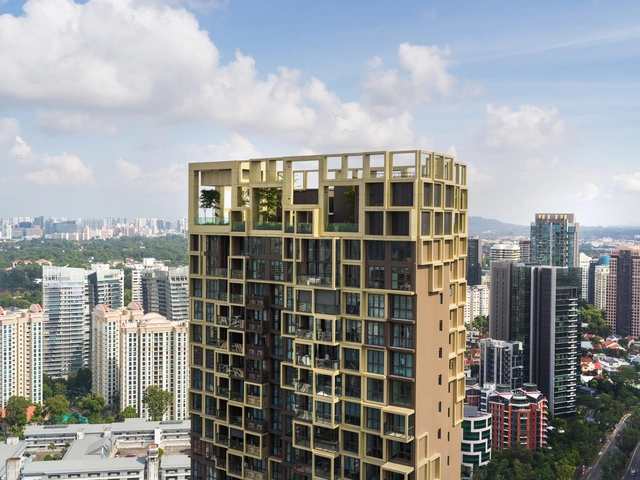
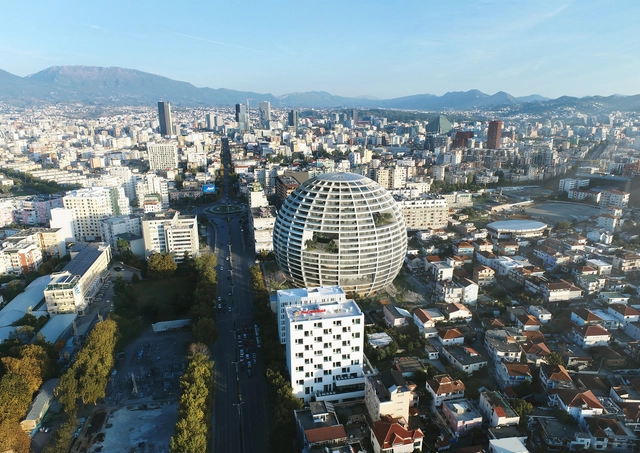
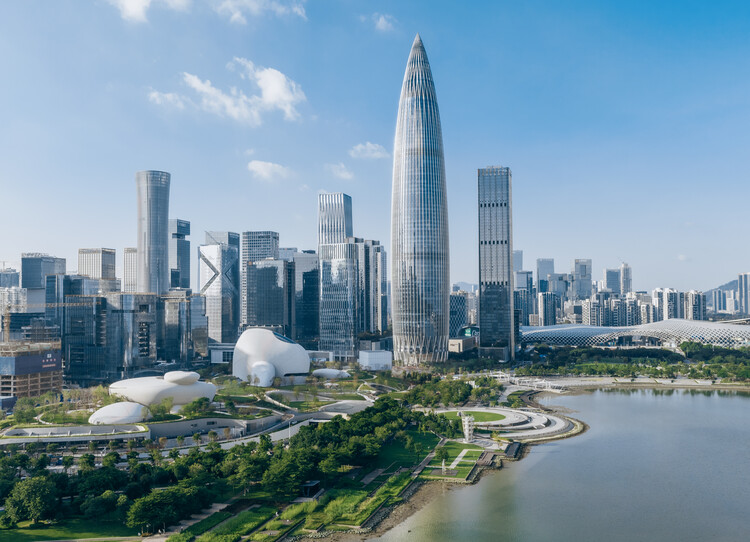
Deutsches Architekturmuseum (DAM) has announced the International High-Rise Award 2024/25. Selected from more than 1,000 new high-rises worldwide dating from the past two years, the nominated projects are located in 13 counties from 5 continents. In autumn, the five finalists will be announced, followed by the winner announcement scheduled for November 12, 2024. The main objective of the award is to highlight good practices in the ongoing trend of mixed-use high-rises.
With the increase in the construction of high-rises, special features such as the introduction of greenery in the design, unusual shapes, or the construction of clusters of towers, have become the new normal. DAM’s research this year also shows a growing eco-awareness, as the focus in high-rise construction is increasingly on the use of existing buildings. While the majority of tall buildings continue to be erected in China, followed by the USA, Australia, and Singapore have emerged as new hubs of high-rise architecture.
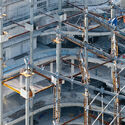
In 2021, MVRDV unveiled the design of a terraced office building created for the agriculture company Lankuaikei. Set within a rapidly developing area of Shanghai, the 11-storey structure is covered by a curved technological roof that follows the stepping structure. The project is conceived as a showcase of the company's vision of food production, with an extensive sustainability agenda encompassing various strategies. These include extensive use of greenery, integration of renewable energy, and the use of low-carbon materials. The construction process is now captured by StudioSZ Photo / Justin Szeremeta, revealing an intermediary state where the bare-bone structure begins to reveal the shape and scale of the building. Structural construction details are also visible at this stage,
MVRDV has unveiled its design for a new mixed-use building in Eindhoven, The Netherlands. Situated in the heart of the vibrant Strijp-S district, the design was created in collaboration with the Trudo housing association. Titled “The Tribune,” the architecture boasts a stepped tribune-like structure, offering residents and visitors access and views onto the public square below.
Formally, transparency usually takes the shape of a window, a door, a curtain wall, or a skylight. These are commonly created through rectangular punched openings or in the form of glass curtain wall systems or translucent screens. The following projects play with traditional notions of transparency and window-making in playful and unconventional ways. They create visually striking facades and dynamic relationships between their exterior and interior. They filter light and frame views through their glazing and opening articulation to craft memorable architectural experiences.
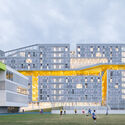
MVRDV has revealed a large-scale residential complex to take shape as part of a new smart city campus built by technology company Tencent in Qianhai Bay, Shenzhen, China. MVRDV’s intervention, named Tencent P5, is comprised of 11 apartment towers arranged around four courtyards. The project also includes amenities such as an adjacent kindergarten, to offer all the necessary facilities for the company’s employees. Construction began in early 2022 and is scheduled for completion in 2024.
LXK Office and Residential Campus. Image Courtesy of MVRDV
MVRDV has just begun construction on the LXK Office and Residential Campus in Berlin. Situated in Friedrichshain, near Berlin Ostbahnhof, the development spans approximately 61,200 sqm and boasts city center views from its green rooftops and terraces. Designed as two buildings, a horizontal band encircles the middle of either structure, serving as a distinctive landmark in Berlin.
MVRDV has just released a new design study exploring how co-living can help shape the future of housing. Created in collaboration with developer HUB and sustainable investor Bridges Fund Management, the study introduces a comprehensive study exploring diverse typologies, aiming to revolutionize communal living and vibrant neighborhoods. It addresses modern housing needs, including flexibility, sustainability, and community, while tackling climate crisis and affordability issues. The endeavor offers tailored solutions for various co-living projects, catering to many demographics and lifestyles.
Courtesy of MVRDV | Ucharm | MVRDV Gate M West Bund Dream Cente
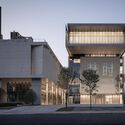
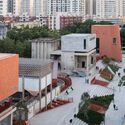
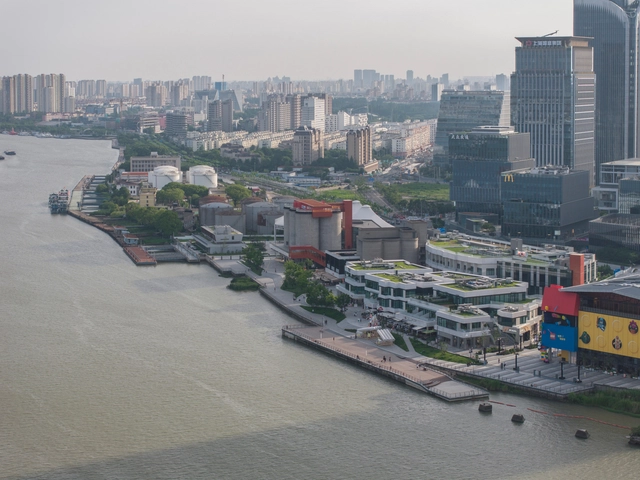
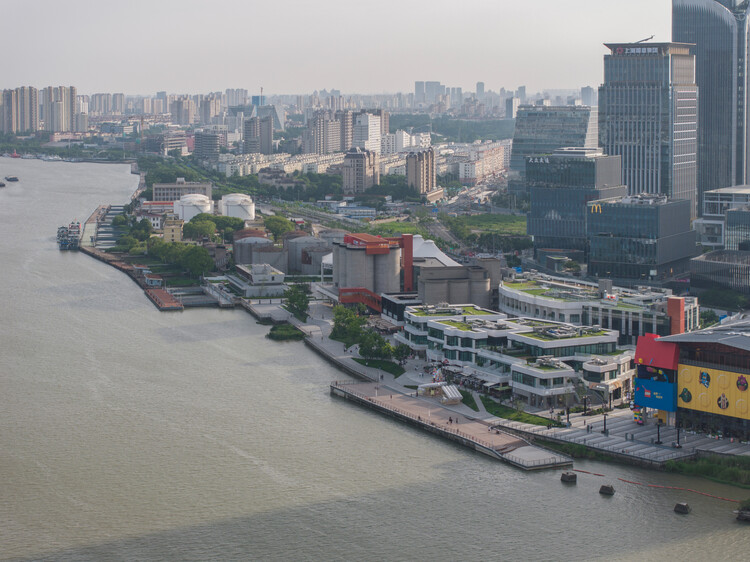
MVRDV has just introduced its comprehensive plan and architectural vision for the construction of the Gate M West Bund Dream Center in Shanghai. Formerly home to a cement plant factory, the design uses the existing structures for cultural programs and combines them with new structures to house new functions. The Dream Center aims to revitalize the riverbank area into a thriving cultural and recreational district.
Courtesy of ATCHAIN | Chengdu Tianfu Software Park
MVRDV has won the competition to design two structures within the Tianfu SoftwarePark in Chengdu, China. One of the structures is a 150-meter-tall tower that acts as a centerpiece to the entire campus. The other is a four-story cultural center featuring an art museum, conference hall, library, and exhibition space. Boasting a faceted sloping design, the scheme invites visitors to explore its interior.
MVRDV and LOLA Landscape Architects have just revealed the new development of “Grüne Mitte” in Düsseldorf, Germany. Centered around open communication, negotiation, and compromise, the project aims to introduce 500 new apartments and community spaces to enhance the neighborhood. Approximately 50% of the scheme is designated as social or affordable housing, which was designed in participatory processes with the residents.
MVRDV has just announced the WärtZ masterplan, that repurposes a former business park near the railway station into a dynamic innovation hub. Developed by AM and designed by a team including MVRDV, Orange Architects, and LOLA Landscape Architect, the scheme introduces residential homes, creative workspaces, dining establishments, and various neighborhood amenities. At the core of the new design is the newly renovated Wärtsilä hall, a former factory redesigned with a signature undulating roof topped by a hovering wooden apartment block.
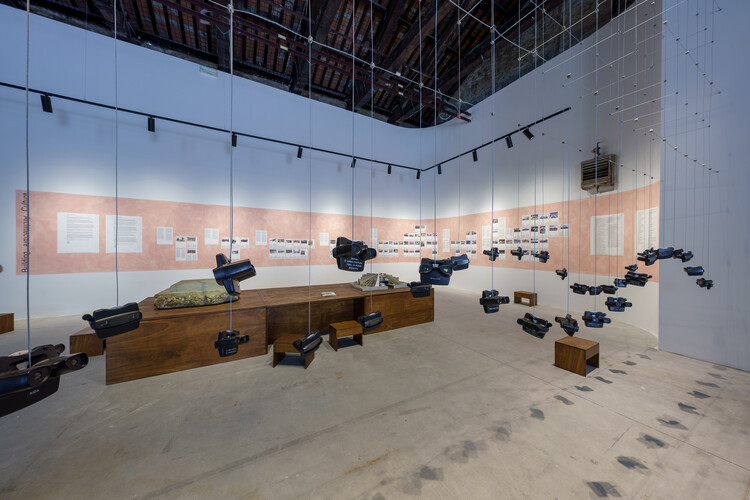
“ReviveR,” a new exhibition by MVRDV opened at the Shenzhen Women & Children’s Centre, focused on the different narratives surrounding its hosting building, from the role of play and social interaction, to the importance of fun environments for people of all ages, along with the need to reduce carbon emissions by applying principles of circularity. The exhibition is on display in the building’s 5th-floor auditorium from December 6, 2023, until February 28, 2024.
As we reflect on the tumultuous events of 2023, it becomes evident that the challenges posed by changing environmental conditions have left an indelible mark on communities worldwide. In response, architects and urban planners have set out, searching for the ways in which their actions can help create safer environments for communities worldwide, responding with both fast-to-deploy emergency architectures and long-term strategies to build resilience and mitigate risks.
Beyond merely responding to events like the devastating earthquakes in Turkey, Syria, and Morocco, or the widespread flooding in Libya or Pakistan, professionals are attempting to take proactive approaches, developing strategies that extend from predictive modeling to the application of re-naturalizing techniques or the ongoing research into the physics of safer and resilient structures.
Sun Tower / OPEN Architecture. Image Courtesy of OPEN Architecture
As the year 2023 comes to a close, we review the evolution of the field of architecture, but we also look forward to the most anticipated projects planned to open in 2024. As Paris is preparing to host the 2024 Summer Olympic Games, several projects and infrastructure updates have been planned to support the global event. Another milestone for Paris will be the reopening of the Notre Dame Cathedral, as reconstruction works near completion for the fire-damaged 12th-century monument.
The selection of projects spans various scales and programs, from restoration and expansion works such as OMA's plan for Museo Egizio in Turin, or David CHipperfield's Grand Residential Building in Belgium, to architecture developed with indigenous peoples, such as Snøhetta's Čoarvemátta in Northern Norway, cultural facilities in Asia and Europe and environmentally-conscious buildings such as Studio Gang's Hotel in the United States.