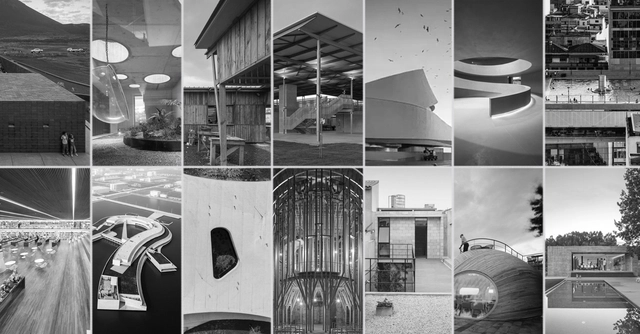
The "Building of the Year" has reached its tenth edition and is now considered the world's largest crowd-voted architecture award, showcasing the projects that you, our readers, consider the most significant of the year. In the 2019 edition, "Sesc 24 de Maio," one of the most recent landmarks of Brazilian architecture, was voted the winner in the Public Architecture category, while the Portuguese "Capelas Imaculada e Cheia de Graça" project also stood out in the Religious Architecture category. However, this is not the first time both countries have been featured among the award winners. With this in mind, we look back at the last five years of the awards, showcasing the Brazilian and Portuguese projects that stood out across various categories to offer a glimpse of the best work being produced in both Portuguese-speaking nations.
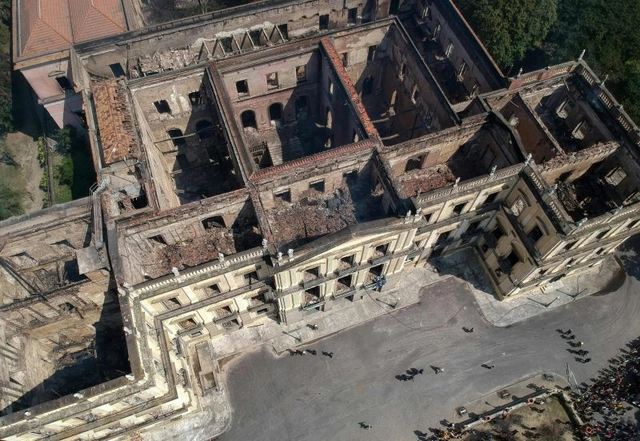
Federal Police experts found strong evidence that a series of makeshift connections in the electrical wiring caused the fire that swept through the National Museum eight months ago, keeping its doors closed ever since.
What if you could send a WhatsApp message and a bright green van delivered native tree saplings directly to you? In Salvador, the local government does exactly that. Painted with the image of a biodiverse Brazilian forest, this green van is part of the "Disque Mata Atlântica" (Atlantic Forest Hotline) program. Since its launch in 2017, the initiative has delivered 4,500 trees to residents wishing to plant them at home.
https://www.archdaily.com/1122917/salvador-and-sao-paulo-invest-in-initiatives-to-restore-the-atlantic-forestSabin Ray, Will Anderson e Maria Franco Chuaire
Female architects and urban planners account for 63.47% of the 174,513 registered professionals currently in the country. Despite being the majority in the profession, the spotlight remains focused on men. To break this paradigm and promote dialogue and ways to foster the inclusion and visibility of women in the multiple fields of Architecture and Urban Planning, the Council of Architecture and Urbanism of Rio de Janeiro (CAU/RJ) has launched the CAU + Mulheres Award.
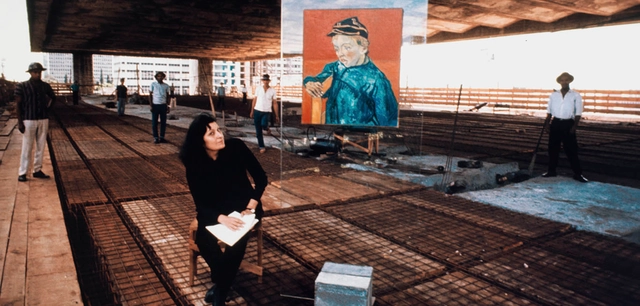
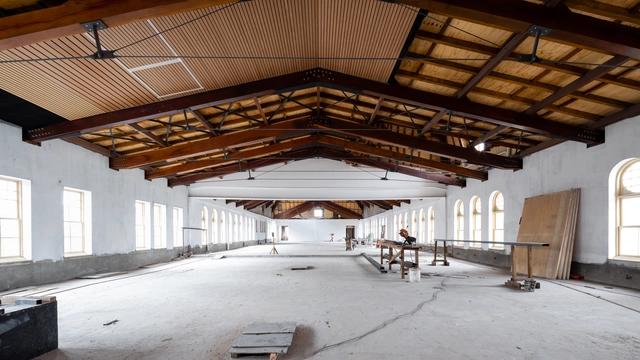
One of the most beloved and undeniably successful museums in the Portuguese-speaking world, the Museum of the Portuguese Language is preparing to reopen its doors after the fire it suffered in 2015. The opportunity to rethink the institution and understand its relationship with the public were the guiding principles that aligned with the new usage needs and desires for improvement that permeated the entire concept behind the building's rehabilitation.
Today, October 18, the Casa da Arquitectura – Portuguese Center for Architecture opens the exhibition “Souto de Moura – Memory, Projects, Works,” which will remain on display until September 6, 2020. Curated by Francesco Dal Co and Nuno Graça Moura, the exhibition offers a unique monographic reading of the work of Eduardo Souto de Moura, 2011 Pritzker Prize laureate and one of the most prestigious Portuguese architects.
Just 100 cities account for 18% of all global carbon emissions, even though half of the world's population lives in urban areas. This is one of the findings of the study titled Carbon footprints of 13 000 cities, conducted by an international team of researchers. The study compared the carbon footprints of 13,000 cities using national emissions data, urban and rural consumer profiles, population, and city incomes.
Kanye West is increasingly dedicating himself to architecture and has now announced that he will build homes for the homeless inspired by Star Wars. Image: Star Wars/Publicity. Image via Haus
Kanye West has a well-documented interest in architecture. Recently, the rapper announced the construction of housing for the homeless inspired by the Star Wars film franchise. Yeezy Home, his architecture-focused venture, is working on three prefabricated prototypes reminiscent of the aesthetic of Tatooine, the home planet of Luke and Anakin Skywalker.
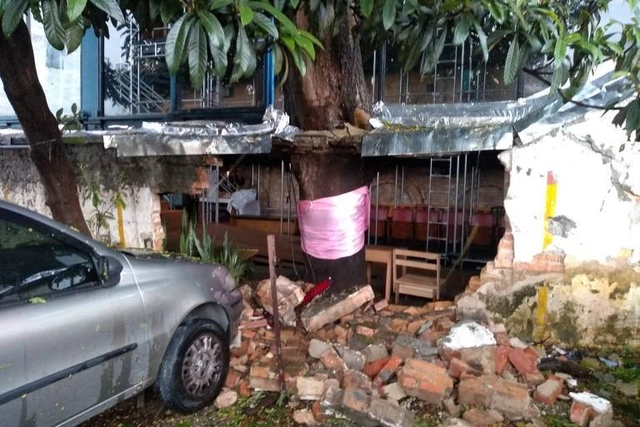
The wall of Teatro Oficina that collapsed under the pressure of the tree following Tuesday's heavy rains in São Paulo. Photo: Courtesy of Teatro Oficina
The Teatro Oficina, designed by Lina Bo Bardi and Edison Elito in 1984, had one of its walls partially destroyed by heavy rain that hit São Paulo yesterday afternoon. The wall of the large glass facade, which faces one of the last vacant lots in the Bixiga neighborhood, collapsed around the iconic tree planted inside the theater.
The Portuguese firm Aires Mateus, led by brothers Francisco and Manuel Aires Mateus, has won the international competition to design the renovation of the Museum of Fine Arts of Reims in France. This is the duo's third large-scale cultural project in France, alongside the Olivier Debré Contemporary Creation Center in Tours and the Musée des Augustins in Toulouse.
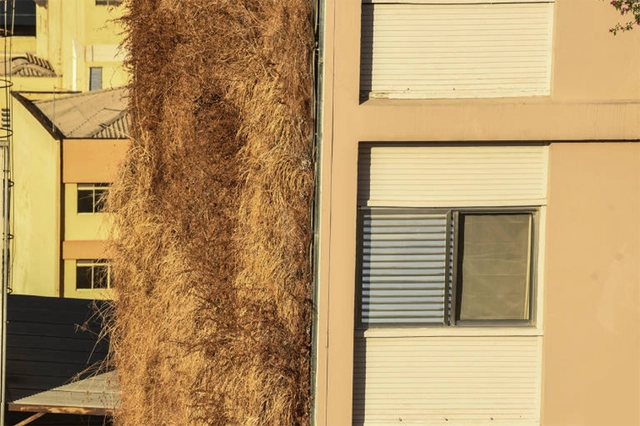
Installed about three years ago, the vertical gardens occupying the blind walls of several buildings near the Minhocão have lacked maintenance for over a year and have become a nuisance for residents. According to an article published in Folha de S. Paulo, the green walls went from being an attraction to a liability for the buildings that chose to adopt the system.
Marginal Pinheiros in São Paulo. Photo: Felipe Lange Borges, via Flickr. License CC BY-NC-ND 2.0
The exuberance of the native pines that named one of São Paulo’s most traditional neighborhoods and one of the city's main rivers is today restricted to old photographs. While this could be just another nostalgic account, it actually serves as the catalyst for an ambitious project by Legado das Águas – Reserva Votorantim: bringing the Atlantic Forest back to the city. Designed by Cardim Arquitetura Paisagística, in partnership with the São Paulo State Secretariat for Infrastructure and Environment and the Metropolitan Water and Energy Company (EMAE), this new phase of the Pomar Urbano (Urban Orchard) Project will see Legado das Águas execute the state's largest urban landscaping project using native Atlantic Forest species, offering an innovative approach to transforming the relationship between the river and the metropolis.
https://www.archdaily.com/1122840/marginal-pinheiros-to-receive-30000-saplings-of-native-and-rare-speciesMayra Rosa
Artist Patrícia Golombek celebrates some of the most iconic pillars of modern Brazilian architecture in her series of acrylic on canvas paintings titled Brazilian Columns of the 20th Century, on display at the Espace Meyer-Zafra gallery as part of Art Miami.
The winning project creates an intuitive pathway between the complex's different spaces. Image: reproduction/Figueroa
Casa Lacerda, one of the main architectural heritage sites in the Lapa region (Paraná), will soon be revitalized. Currently operating as a museum and Heritage House—with rooms styled to recreate the home of a traditional local family—the space will be expanded with the construction of an annex. On Wednesday (18), the National Historic and Artistic Heritage Institute (Iphan) and the Paraná Department of the Institute of Architects of Brazil (IAB-PR) announced the winning proposals of the national design competition for the new building.
Illustrative photo. Credits: Agência Brasília on Visual hunt / CC BY
Starting November 5, bus riders in Vargem Grande Paulista will be exempt from paying fares. The city is the first in the São Paulo metropolitan area to offer free public transit.
Social housing in Acre. Via: Agência de Notícias do Acre, Flickr. License CC BY 2.0. - photo by Sérgio Vale
The National Secretariat of Housing of the Ministry of Regional Development and the Council for Architecture and Urbanism of Brazil (CAU/BR) agreed, during a meeting this week in Brasília, to create methods that will allow architects and urban planners to participate directly in real estate financing throughout the country. However, the agreement has not yet been finalized, and the procedures will be developed jointly with financial institutions.
The offices AUÁ arquitetos and Estúdio Itinerante were awarded third place in the national competition for the new headquarters of the Association of Engineers and Architects of Sorocaba (AEAS). Read the full project description and proposal below.


.jpg?1571338642&format=webp&width=640&height=580)