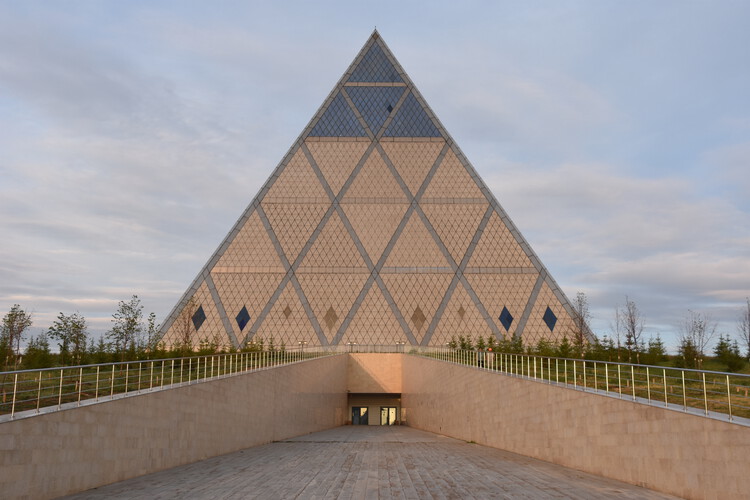
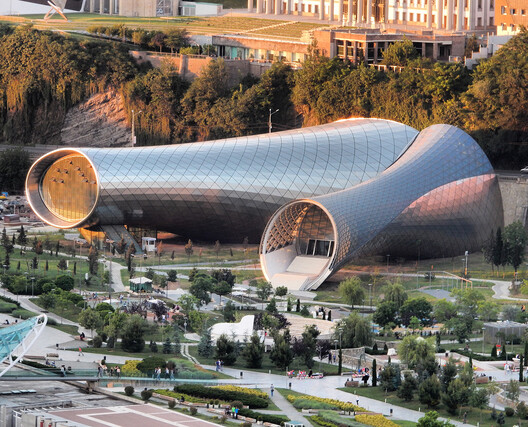
Vieux Port Pavilion / Foster + Partners, Photos by Edmund Sumner

© Edmund Sumner

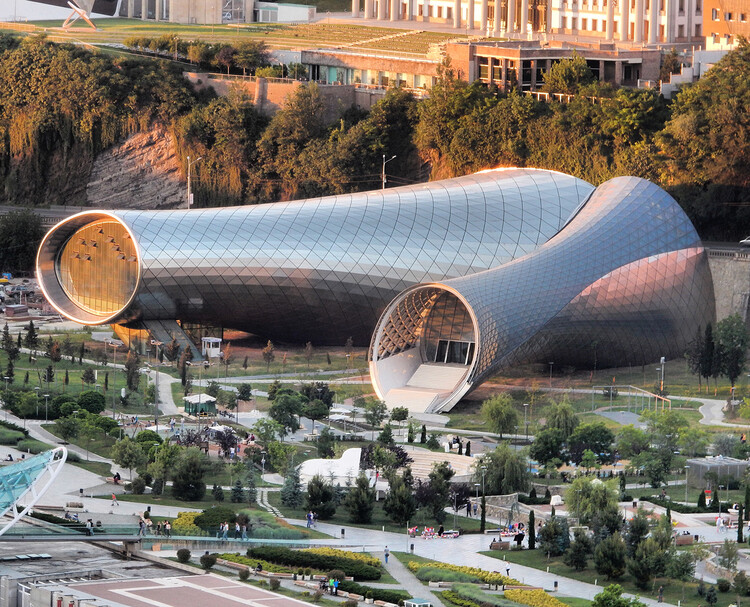
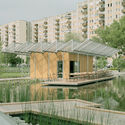
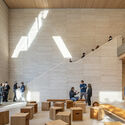
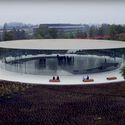
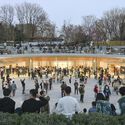
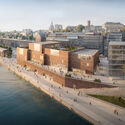
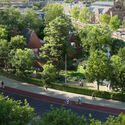
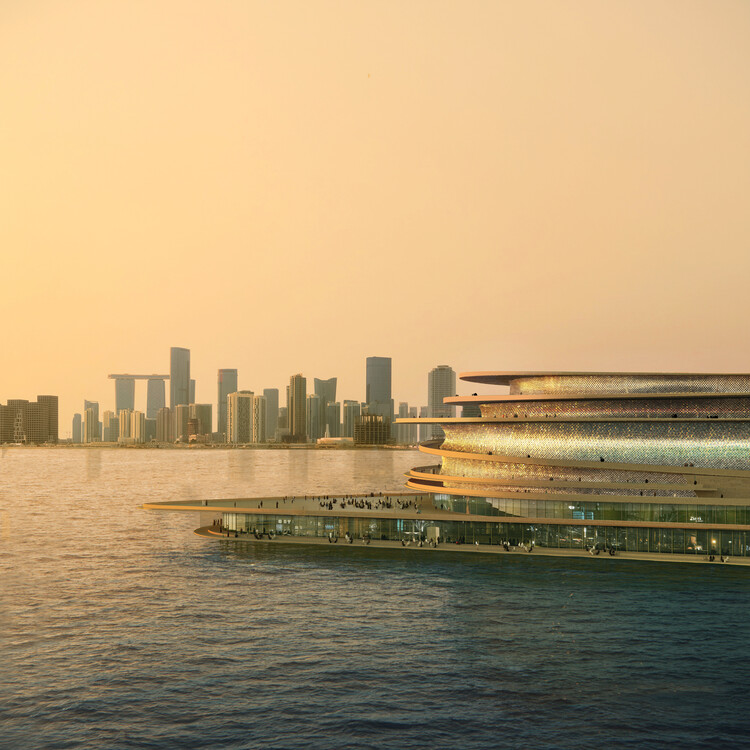
Located at the mouth of Marseille’s World Heritage-listed harbor, the Vieux Port Pavilion, designed by Foster + Partners, provides a new sheltered events space on the eastern edge of the port. Bringing new focus to the city, these photographs by Edmund Sumner demonstrate the canopy’s ability to amplify and reflect the surrounding movement of the harbor, creating a spectacle that encourages pedestrians to linger. Since its opening early this year, the project is truly an invitation to the people of Marseille to enjoy and use this grand space for events, markets and celebrations once again. A complete gallery of Sumner’s images can be viewed after the break.

Foster + Partners Reveals Residential Community Project for London

High-Rise Residential Community ©

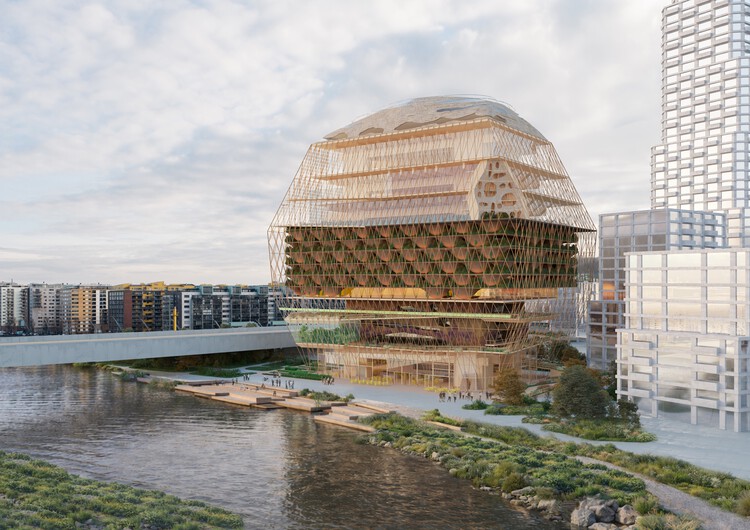
Foster + Partners has been selected to developed a proposal for a low energy, high-density residential community in Islington, .  The site is a 1980s business park that is to be regenerated into a residential zone of two towers and a landscaped park.  The project will incorporate the arera’s planned high-rise buildings and is ultimately set to provide a new landmark for the city.

Lenbachhaus Museum / Foster + Partners

© Nigel Young / Foster + Partners

Architects: Foster + Partners
Location: , Germany
Design Team: , David Nelson, Stefan Behling, Christian Hallmann, Ulrich Hamann, Klaus Heldwein, Florian Boxberg, Leonhard Weil, Judith Kernt, Henriette Hahnloser, Eike Danz, Diana Krumbein, Simon Weismaier, Christopher Von Der Howen, Inge Tummers, Jörg Grabfelder, Katrin Hass, Tillmann Lenz
Area: 12,328 sqm
Year: 2013
Photographs: Nigel Young / Foster + Partners

Updated Plans Released for Foster + Partners’ Apple Campus in Cupertino

© Foster + Partners, ARUP, Kier + Wright, ,

The City of Cupertino has released Apple’s revised campus plans, following the recent news criticizing Steve Job’s “sky-high requirements for fit and finish” that have resulted in a “ballooning budget.”

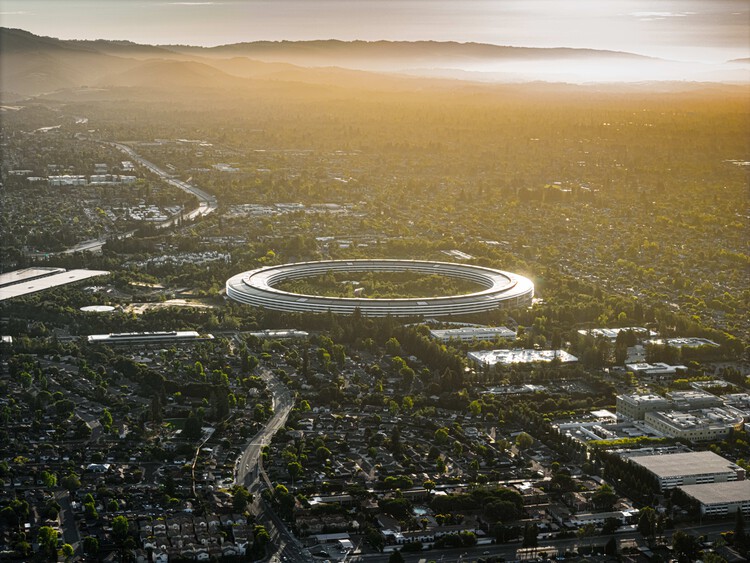
Abandoning Apple’s classic “white” detailing, architects Foster + Partners have opted to clad the 2.8 million square foot, circular monolith in black – a stylistic remedy that seems to be in line with the overarching campus goal to “provide a serene environment reflecting Apple’s brand values of innovation, ease of use and beauty.”

More details after the break… 

Foster’s Apple Headquarters Exceeds Budget by $2 Billion

© Foster + Partners, ARUP, Kier + Wright,

The estimated cost of Apple’s Cupertino City headquarters has escalated from an already hefty price of $3 billion to $5 billion (more than $1,500 per square foot), reportedly pushing back the original completion date to 2016. According to Bloomberg, Apple is working with lead architect Foster & Partners to shave $1 billion from the “ballooning budget”. Most of the cost is seemly due to Steve Job’s “sky-high requirements for fit and finish”, as the tech legend called for the 2.8 million square foot, circular monolith to be clad 40-foot panes of German concave glass, along with its four-story office spaces be lined with museum-quality terrazzo floors and capped with polished concrete ceilings.

Although lambasted for his ambitious plans and “doughnut-shaped” design, Steve Jobs wanted to create a masterpiece that looked as good as it functioned, just like his products. During a 2011 presentation to the Cupertino City Council, Jobs stated, “This is not the cheapest way to build something… there is not a straight piece of glass in this building.” He continued, “We have a shot… at building the best office building in the world. I really do think that architecture students will come here to see it.”

More after the break…

Queen Alia International Airport / Foster + Partners

© Nigel Young / Foster + Partners

Architects: Foster + Partners
Location: ,
Collaborating Architect: Maisam – Dar Al-Omran JV
Year: 2013
Photographs: Nigel Young / Foster + Partners

Foster + Partners Approved for Mixed-Use Development on London’s Albert Embankment

Courtesy of Foster + Partners

Foster + Partners have received the green light from the Lambeth Council for three towers on the 20-21 Albert Embankment in . Ranging from 15 to 27 stories, the curved steel and glass structures will provide the area with 253 apartments, including affordable homes for senior living, along with offices, restaurants and a residents’ bar, gym, pool and spa.

Grant Brooker, Senior Partner at Foster + Partners: “We are absolutely delighted that 20-21 Albert Embankment has received planning permission – working alongside our clients at St. James and with great support from Lambeth and the GLA, we hope to transform this important and highly visible site into a vibrant riverside community that sets a benchmark for the regeneration of this part of the river.”

More after the break…

Vieux Port Pavilion / Foster + Partners

© Nigel Young /

Saturday in , France, pedestrians and city officials joined Foster + Partners to celebrate the completion of the Vieux Port Pavilion at the mouth of Marseille’s World Heritage-listed harbor. Minimal, yet effective, this “discreet” intervention provides a new sheltered events space on the eastern edge of the port. With six slender pillars supporting its razor-thin profile, the polished 46 by 22 meter stainless steel canopy amplifies and reflects the surrounding movement of the harbor, creating a spectacle that encourages pedestrians to linger.

More on Foster’s Vieux Port Pavilion after the break…

British Architects Seek Infrastructure Opportunities in Brazil

AECOM Masterplan of Rio 2016 Olympic Park

Led by UK housing minister Mark Prisk, architects from five high-profile British practices – Haworth Tompkins, Foster & Partners, Amanda Levete Architects, Avanti Architects and de Matos Ryan – have embarked on a week-long visit to in search of major opportunities for the 2014 FIFA World Cup and 2016 Olympic Games. The trip is part of the UKBrasil Season, a six-month series of dynamic and engaging projects designed to showcase the best of British business, culture, science and innovation in Brazil and become the largest post-Olympic legacy project in the world.


Mark Prisk stated: “Brazilian companies in these cities are actively looking for fast-track construction systems, innovative building materials and low carbon solutions to meet current and future demand, not only in preparation for hosting the 2014 FIFA World Cup and 2016 Olympic Games but also to compete in the country’s many major infrastructure projects.

More after the break…

Foster + Partners to Submit Thames Hub Airport Proposal to Airport Commission

Courtesy of Foster and Partners

have confirmed that they will submit their proposal for a new hub airport in the Thames Estuary to the Airports Commission, an organisation investigating airport capacity in the , by mid-July. The submission will be an important step towards getting government approval of the plan. 

The airport, which will have four runways (the potential to expand to six) and capacity for 150 million passengers, is part of Foster + Partners’ Thames Hub proposal. The hub would be built on a platform on the Isle of Grain in the Thames Estuary and be connected to London via a spur linking directly to the existing high-speed rail line; in this way, Foster + Partners hope that it would eliminate the environmental, noise and security problems that come with the UK’s dependence on Heathrow Airport.

The self-funded Thames Hub vision was first made public in 2011. See our previous coverage: here. 

Story via Foster + Partners 

Faena Aleph Residences / Foster + Partners

© Nigel Young

Architects: Foster + Partners
Location: Buenos Aires, Argentina
Area: 17,500 sqm
Year: 2012
Photographs: Nigel Young

2013 RIBA Norman Foster Travelling Scholarship

Courtesy of RIBA

The 2013 RIBA Norman Foster Travelling Scholarship has recently been launched and is inviting applications from schools of architecture around the world. Proposals for research might include: learning from the past to inform the future; the future of society; the density of settlements; sustainability; the use of resources; the quality of urban life; and transport. A £6,000 grant will be awarded to one student by a panel of judges which includes Lord Foster and the President of the RIBA. The deadline for submissions is Friday, April 26. For more information, please visit here.

Norman Foster’s Sainsbury Centre Listed

© Xavier de Jauréguiberry

On the advice of English Heritage, architecture minister Ed Vaizey has listed ’s first major public building: the 1977 Sainsbury Centre at the University of East Anglia, , in the United Kingdom. According to BDOnline, the popular public art museum, which houses the collection of Lord and Lady Sainsbury, was granted grade II* protection for its innovative engineering, fine design, historic association, flexibility and group value. Its revolutionary design features an innovative, prefabricated modular structure that is cleverly designed to allow for subsequent extension.

Vaizey described: “Norman Foster’s design for the Sainsbury Centre is recognized around the world as a high point of the British ‘high-tech’ movement and, by any standards, a modern classic.”

Read Foster’s response after the break.

Foster’s Design for the New York Public Library Unveiled

The ’s (NYPL) main building on Fifth Avenue, is a Beaux-Arts masterpiece designed by architects Carrère & Hastings. Image via Flickr User CC wallyg.

The New York Public Library (NYPL) has unveiled the details of their controversial plan to renovate the 20th century, Carrère and Hastings “masterpiece” on 5th Avenue. Designed Foster + Partners, the $300 million dollar proposal is a response to the cultural shift from traditional stacks to online resources, as the library has experienced a 41% decrease in the use of collections over the last 15 years.

Sensitive to concerned critics, the renovation promises to preserve the building’s legacy as it integrates a new, state-of-the-art Circulating Library into its flagship Stephen A. Schwarzman Building on 42nd Street. Foster’s “library within a library” will transform seven floors of stacks, currently occupying the back of the building, into an aesthetically, technologically and environmentally advanced public space that meets the needs of our 21st century society.

“We need to be respectful of the beloved, iconic building and to create a new inspiring space,” Anthony W. Marx, the library’s president, said in an interview with the New York Times. “At a time when people wonder about the future of libraries, we’re going to create the greatest library the world has ever seen.”

Learn all the details and see the renderings after the break…

Ada Louise Huxtable Takes On The New York Public Library

The Public Library’s (NYPL) main building on Fifth Avenue, is a Beaux-Arts masterpiece designed by architects Carrère & Hastings. Image via Flickr User CC wallyg.

The New York Public Library has a plan to save millions of dollars, improve efficiency, and reverse the cutbacks that have been plaguing it. How? By sending little-used resources off-site (after all, most people use the library for its online resources these days), the Library will consolidate three libraries into one Mid-Manhattan branch, renovating the building with a streamlined, efficient design – courtesy of Foster + Partners - to create “the largest combined research and circulating library in the country.”

It sounds like a wonderful, modern solution. Ms. Ada Louise Huxtable would beg to differ.

The former New York Times architecture critic and current critic for the Wall Street Journal has come out swinging against the plan. First, she builds on the critique that others have made, that by moving volumes off-site (to New Jersey, or “Siberia, as she puts it) to make room for more modern amenities, the library will devalue its primary purpose (making resources readily accessible). To put it another way, as Scott Sherman did in his article for The Nation, it would turn the library into “a glorified internet café.” Then, Huxtable makes her own argument: that removing the current, intricate system of stacks would be an enormously complex, expensive, and hopelessly misguided structural challenge.

But, ultimately Ms. Huxtable’s argument comes down to the intrinsic architectural and value of this Beaux Arts Masterpiece: “You don’t “update” a masterpiece.”

More on the Ms. Huxtable incendiary critique of The New York Public Library’s Central Plan, after the break…

The architect at work: 425 Park Ave

YouTube Preview Image

A few months ago we informed you about a competition to re develop the massive “wedding-cake” style building at 425 Park Ave in NY, near Mies’ Seagram Building and SOM’s Lever House. The objective of the developer, L&L Holding, was to turn this project into the next iconic building of the city, and for that they invited a group of eleven renowned practices, including ten Pritzker laureates.

The shortlist was announced in October, and included , , Zaha Hadid Architects and Foster + Partners, which was later announced as the winner of the competition a few weeks ago.

Over the last days, the presentations of the architects to the clients appeared on YouTube, and now we have the opportunity to see these interesting group of architects doing a fundamental part of their work. In the videos we see each architect using their own presentation style, either a PPT, video or just physical boards, connecting it to the practice’s research and discourse, projecting their passion about certain features of their projects and engaging with the client around their main objective: to turn this into an iconic project.

Four videos that take us further into how we understand projects, showing insights that we often don’t have access to, turning the competition into a particular moment of architecture this year.

Zaha Hadid Architects, OMA and Rogers Stirk Harbour + Partners presentations after the break:

Avery Fisher Hall To Be “Radically” Renovated

Interior of . Courtesy of Wikipedia Commons User Mikhail Klassen at en.wikipedia

About a decade’s passed since Foster+Partners won the competition to re-design Avery Fisher Hall (as part of ’s campus-wide re-haul, designed by Diller Scofidio + Renfro), and the famous music hall is finally ready to go through with it – just not necessarily with Foster+Partners.

After Lincoln Center and the New York Philharmonic failed to raise the $300 million they needed to cover construction costs, and due to concerns that displacing the orchestra would jeopardize potential revenue, Foster+Partners’ plans languished. However, the Philharmonic is now under new leadership, and its young directors are anxious to transform the conventional music hall, hence why they’ve decided to solicit new proposals for the building.

As the Orchestra’s new executive eirector, Matthew VanBesien, told the New York Times: “If you’re not thinking about the way in which our art form and music and audiences are evolving, you’re not serving the art form long term. You really want to build this next great hall in a new way, to do the kinds of things you maybe are doing but want to do in a more compelling way or maybe can’t even imagine yet.”

More info about the proposal for the new Avery Fisher Hall, after the break…

425 Park Avenue / Foster + Partners

Courtesy of Foster + Partners

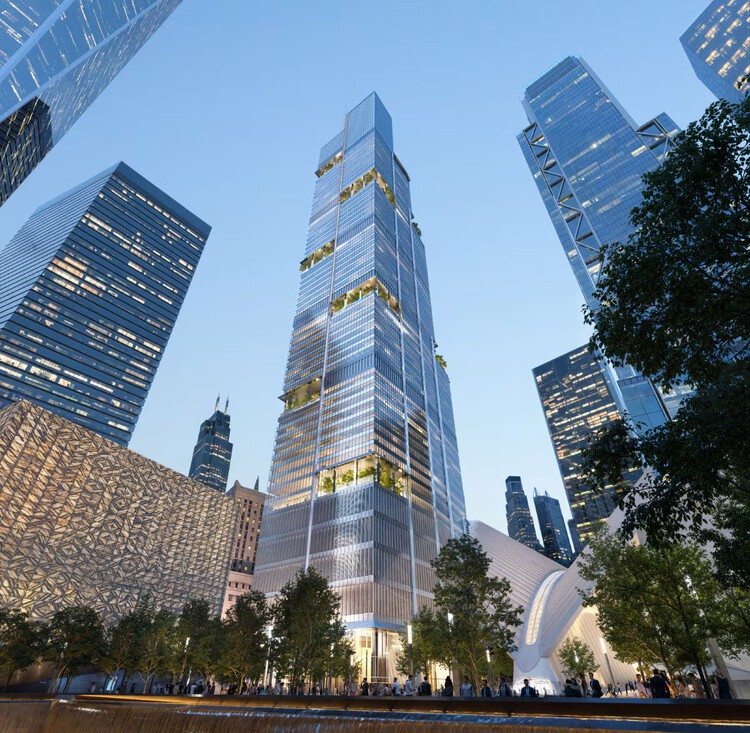
As we announced in early October, British powerhouse Foster + Partners have been declared as winner of the six-month long, all-star competition to design the next “landmark” high rise on the prime site of 425 Park Avenue in New York City. The tapered, steel-frame office tower is planned to rise 687 feet to claim a spot on the New York City skyline by 2017. Upon competition, the world-class high rise is expected to achieve LEED Gold status and serve as an exemplar for sustainable office design.

Foster’s concept succeeded visions from , and Richard Rogers (view all the proposals here). Construction is expected to begin in 2015, shortly after the completion of Foster’s first U.S. residential high rise, which broke ground this week in New York.

Details of 425 Park Avenue after the break…

Foster+Partners’ First US Residential Building Breaks Ground

image by dbox for Foster and Partners

50 UN Plaza, Foster+Partners‘ first residential building in the U.S., broke ground this morning. With the Hearst Tower long finished, Tower 2 at Ground Zero near complete, and a new iconic building planned for 425 Park Avenue, 50 UN Plaza will only further solidify Lord Foster’s mark on City.

The 44-story luxury tower’s privileged spot at the United Nations Plaza will give it remarkable views of the UN Building, the East River, and the Manhattan skyline. According to Foster, the building’s deep bay windows (which line each of the tower’s 3 volumes) will maximize that view and, along with its steel and glass facade, give the tower a distinctive, “jewel-like quality”: “The slender proportion of 50 United Nations Plaza is attenuated by the vertical stacks of bay windows, which give it a distinctive identity[...] The polished detailing of the facade is in the sprit of earlier historic towers in the city and it reflects the sharp quality of light which is special to New York.”

The building, whose construction will incorporate recycled materials, also has a strong environmental agenda, combining active and passive energy strategies. According to the New York Observer, the tower’s 87 units will range in size from 1,100 square feet one-bedrooms; three bedrooms as big as 3,000 square feet; full-floor residences; and a penthouse duplex, measuring about 10,000 square feet. One of the marquee features will also be a private driveway. The tower is expected to cost $500 million and be completed in 2014.  

Foster+Partner’s description of 50 UN Plaza, after the break…

Which Grand Central Vision Is the Best for New York?

Courtesy of 2012

The New York Time’s Michael Kimmelman described it as an “ennobling experience, a gift,” a lesson on what architecture, at it’s best, can be.

Indeed, entering the Main Concourse of Grand Central Terminal is a pleasure that rivals few others. For me, it took me by surprise: walking, as New Yorkers do, in a determined beeline through an undistinguished tunnel, I was suddenly struck by light. I stopped, as New Yorkers never do, to observe a vaulted, starry ceiling, the changing light, and multitudes of people whipping by.

Grand Central is one of New York’s most beloved icons, one of the few which tourists and natives share alike. Which is not to say, of course, that it isn’t in need of a face-lift.

The Terminal’s upcoming centennial, which corresponds with proposed re-zoning laws that would completely change the face of Midtown, makes now the perfect moment to consider how Grand Central’s grandeur can be preserved and its neighborhood reinvigorated. Last week, the Metropolitan Art Society (MAS) invited three firms to share their visions – and while SOM’s gravity-defying “halo” may have stolen the show, only one truly captured the spirit of Grand Central, and explored the full potential of what it could – and should – one day be.

Foster + Partners re-imagines New York’s Iconic Grand Central Station

© Courtesy Foster + Partners

Only weeks after revealing their designs for 425 Park Ave., soon to be New York’s latest “Iconic” Building, Foster + Partners have now taken a stab at one of New York’s oldest iconic buildings: Station.

Yesterday, at the MAS 2012 Summit, was one of three architects to present his re-imaginings of the station, which turns 100 this February. Unfortunately, it hasn’t borne its age well. Designed to support 75,000 people a day, Grand Central, one of the world’s busiest transport hubs, routinely handles about ten times that much (and even a million on peak days). With the upcoming LIRR East Side Access and plans to re-zone the area, now is the time to re think this building’s future.

Foster + Partners has developed tremendous expertise in transit programs, having designed some of the world’s largest airports, viaducts, subway stations – even a spaceport (perhaps there’s no better example of their facility for tackling enormous infrastructure challenges than their proposal for the Thames Hub). That expertise shows in their vision for Grand Central, which eases accessibility and mobility by widening concourses, improving entrances, enlarging public spaces, and reconfiguring streets in favor of pedestrian traffic – bringing, in their words, “clarity back to Grand Central Terminal.”

More about this project from Foster + Partners after the break: