Humanity has become obsessed with breaking its limits, creating new records only to break them again and again. In fact, our cities’ skylines have always been defined by those in power during every period in history. At one point churches left their mark, followed by public institutions and in the last few decades, it's commercial skyscrapers that continue to stretch taller and taller.
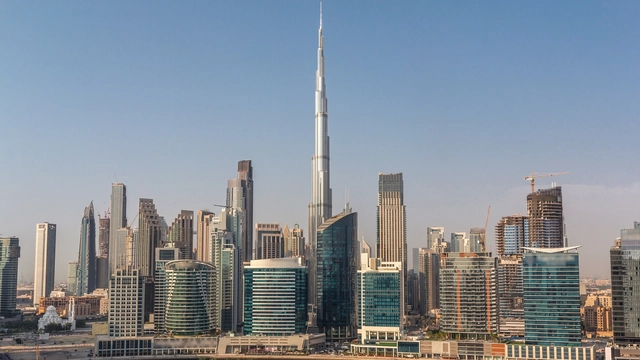
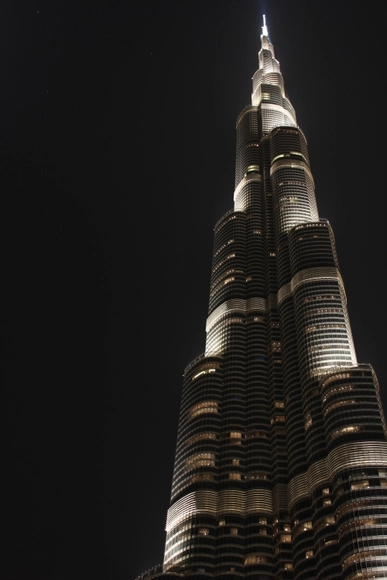
The Council on Tall Buildings and Urban Habitat (CTBUH) has developed its own system for classifying tall buildings, stating that the Burj Khalifa (828 m.) is the world’s tallest building right now. Read on for the 25 tallest buildings in the world today.
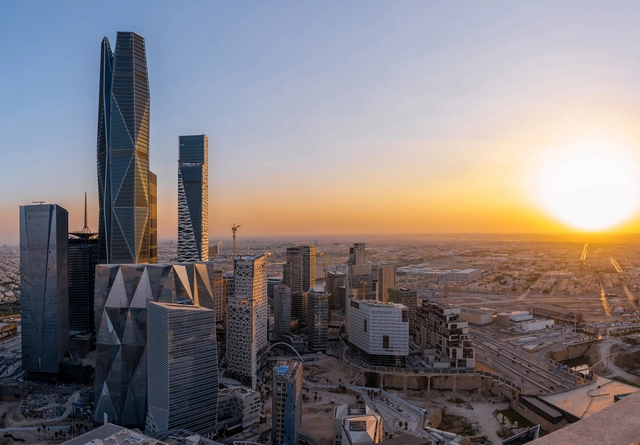
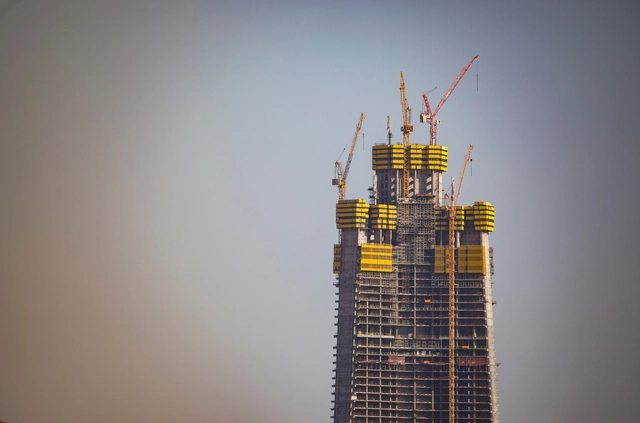
PIF Tower, Riyadh, Saudi Arabia Photo: Bader Otaby. Image Courtesy: The International High-Rise Award 2022/23
The future Saudi tower designed by Foster + Partners is expected to reach a staggering height of two kilometers. This multibillion-dollar project, towering twice as high as the current record holder, the Burj Khalifa in Dubai, will dominate the skyline of Riyadh, accommodating offices, residences, and entertainment spaces. It forms part of a development program led by Saudi Arabia, driven by the vision of Crown Prince Mohammad bin Salman to establish the country's presence through ambitious, large-scale projects. While these super-tall towers symbolize visibility and global recognition, they face criticism for their extravagant construction costs and environmental impact.
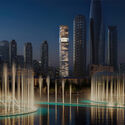
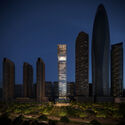
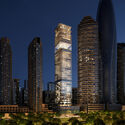
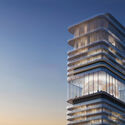
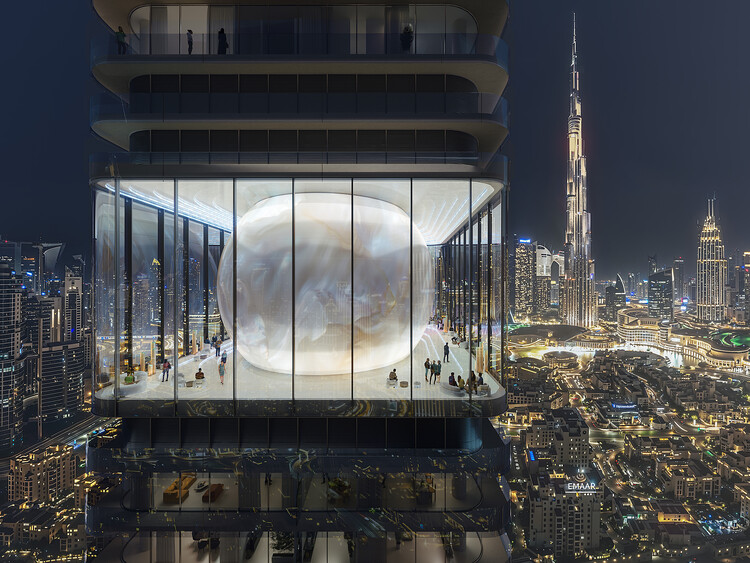
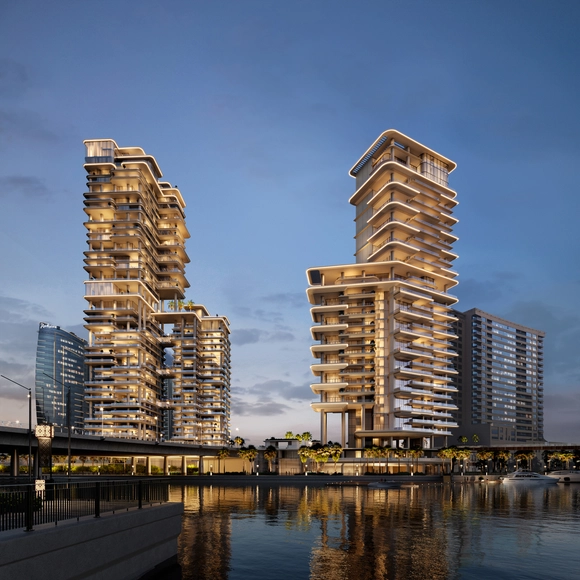
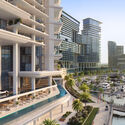
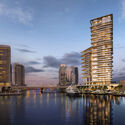
Foster + Partners has just unveiled the designs of two neighboring residential towers in Dubai, United Arab Emirates. Named VELA and VELA VIENO, the two towers offer waterfront living, providing direct access to the promenade and the marina. Situated in Dubai’s Marasi Bay with a direct view of the Burj Khalifa, the developments are “characterized by a horizontal rhythm, emphasized structure, and strategic voids in the massing.”
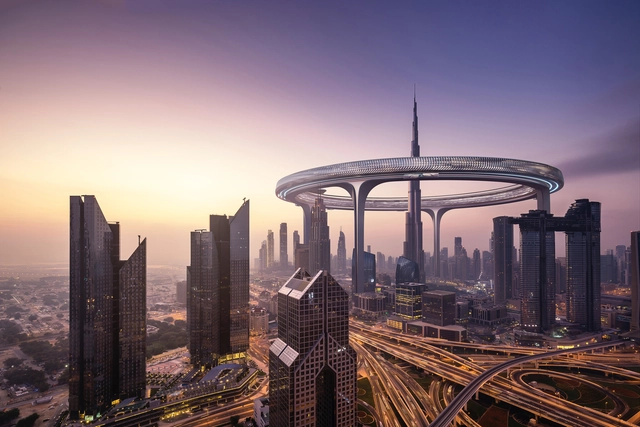
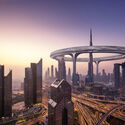
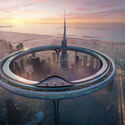
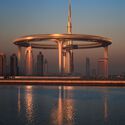
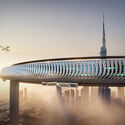
Dubai-based architecture firm ZNera Space has proposed a new type of contemporary symbol for the city: a green and natural landmark that serves as a "continuous metropolis" around Burj Khalifa. Dubbed "Downtown Circle", the project features installing a giant ring-like structure of 550 meters in length around the world’s tallest free-standing structure. The structure will "investigate how at this critical time in the country’s development, architects, and urban planners can move away from previous urban models of isolated skyscrapers, towards a more humane typology that seeks to emulate nature and create diverse public spaces".
In the modern era of design where advancements in technology and construction have enabled architects to build better, faster, and taller, the sky’s the limit. Every few months, another headline boasts the tallest residential tower or the newly constructed office building that breaks yet another record for its impressive height. But as time goes on and new projects are completed, trends show that the United States is falling out of the spotlight in terms of being able to claim the title of world’s tallest building, and the drawing boards show that no American city will be reclaiming this title any time soon.
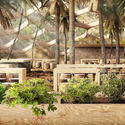
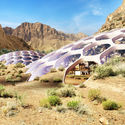
The world’s tallest building, the Burj Khalifa, towers at 828 meters in the heart of Dubai’s ever-growing urban core. But just a few hours east of the metropolis, a different kind of monument is garnering tourism to the United Arab Emirates: the Al Hajar Mountains. With its peak at 3,008 meters, the mountain range’s natural elegance rivals the country’s architectural achievements. The Biodomes Wildlife Conservation Centre, a project from Baharash Architecture for the UAE’s Eco Resort Group, seeks to celebrate the mountain range through an ecotourism paradigm.
The targeted maximum wait time in office building elevators is 20 seconds—it just feels like 2 minutes when you’re in a rush. But how quickly are the elevators actually moving?
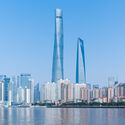
The fastest installed elevator reaches speeds of 67 feet per second (20.5 meters per second), or 46 miles per hour (73.8 kilometers per hour) in the Shanghai Tower. Not only does the Gensler-designed Shanghai Tower boast the fastest elevator, but also the longest continuous run of 1,898 feet of the 2,073-foot tower (578.5 of 632 meters), as revealed in a recent study by the Council on Tall Buildings and Urban Habitat (CTBUH). At these speeds, you can reach the 119th floor in 55 seconds.
A fire has broken out at a construction site near the Dubai Mall and Burj Khalifa in the United Arab Emirates. At around 6:30 am (02:30 GMT), flames broke out in the lower levels of the Address Residences Fountain Views towers, a complex of three towers, each 60 floors in height, being built by Dubai developer Emaar Properties.
In this video, members of the engineering team behind the the world’s largest LED screen explain the process behind its installation on the facade of the Burj Khalifa last year. The massive screen required 72 kilometers of cabling and 10,000 connectors to cover a total area of 33,000 square meters.
“We faced sandstorms, we faced rain, we faced heavy wind, so quite often we had to wait until we had a good slot in terms of wind to go out and do the installation,” says Senior Project Manager Kris Vloemans.
The screen has been utilized for a range of different shows since it was first used to ring in the New Year in 2015. Earlier this year, the Burj Khalifasent out an open call to artists to submit their own dynamic designs to be displayed on the building facade.
Also check out some videos of the screen in action, below.
The Burj Kahlifa has been the world’s tallest building since 2009, and last year the Dubai-based supertall broke another record by implementing the world's largest LED-illuminated facade. Building on these accomplishments, Minus5 Architects in collaboration with Studio Mr. White, has proposed using LED technology to create scale silhouettes of architectural monuments from around the world on the facade, including the Empire State Building, Beijing's CCTV Tower, London's Shard, Toronto's CN Tower, Taipei 101, the Petronas Towers, and others.
New research has found that (unsurprisingly) the Eiffel Tower and Burj Khalifa - the world’s tallest building - are among the top three most popular backdrops for “selfies.” The study, conducted by attractiontix, used data from Instagram to come up with the list, of which the Colosseum in Rome and Barcelona’s La Sagrada Familia seems to have also secured a top spot.
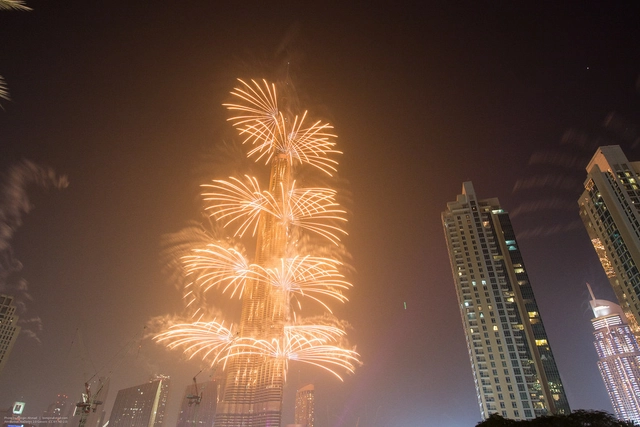
As any self-respecting world city now knows, when the time comes to change the calenders, you'd better also have an iconic building from which to hang some fireworks. With people all over the world looking out for the most impressive New Year's celebrations, we've picked the most impressive architecturally-focused displays. Not surprisingly, Dubai - the world capital of "go big or go home" - probably had the most impressive show of the year, with a combined light-and-firework show to turn the Burj Khalifa into the world's largest celebratory canvas. However, a special mention goes to Paris' Arc de Triomphe, where a tasteful 14-minute light mapping display paid homage to the city's other great architectural works, from the Eiffel Tower to the Centre Pompidou, before moving onto stylized scenes of Paris life to bring in the new year.
Continue after the break for all the videos of the world's best New Year celebrations.
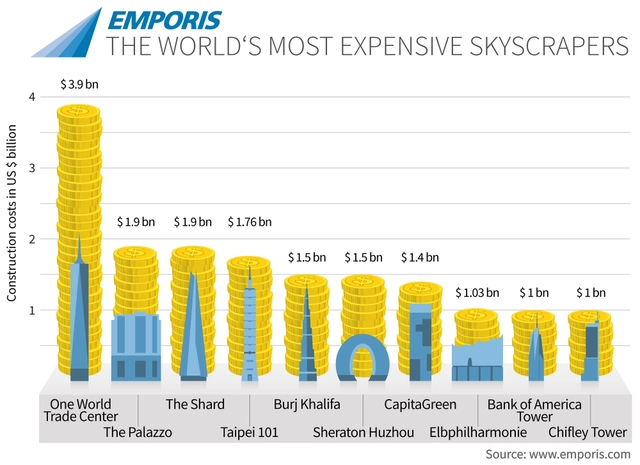
It may or may not be the tallest building in North America, but one thing's for sure: when it comes to costs, no other skyscraper comes close to New York's One World Trade Center. This is the conclusion of Emporis, whose list of the world's top ten most expensive buildings puts 1WTC way out in front at $3.9 billion. Originally estimated at just half that cost, this sets a trend in the top ten list, with many of the featured buildings suffering staggering overruns. The second-place Shard, for example, overshot it's original £350 million ($550 million) budget nearly four times over (although this is to be expected in London).
Courtesy of Civil Engineering Program, Norwich University
For time immemorial, humanity has sought to outdo itself architecturally, building longer tunnels, taller towers, and stronger walls. Now, the Master in Civil Engineering program at Norwich University has compiled a definitive top ten list of these impressive structures. In the following infographic, you’ll find some familiar entries - such as the Great Wall of China and the Hoover Dam - as well as some lesser known greats, like the Qingdao Haiwan Bridge. Spanning over 2000 years of architectural ingenuity and invention, this list is sure to teach you something new about the most impressive engineering projects of all time.
Check out the awesome video above in which a souped-up drone soars over the Burj Khalifa (the world's tallest tower), filming unbelievable aerial views of fast-developing Dubai. The drone, which has an extraordinary range of up to 3 kilometers, is flown by Team BlackSheep, who have many similar videos of cities such as London and New York on their YouTube Channel. Enjoy!
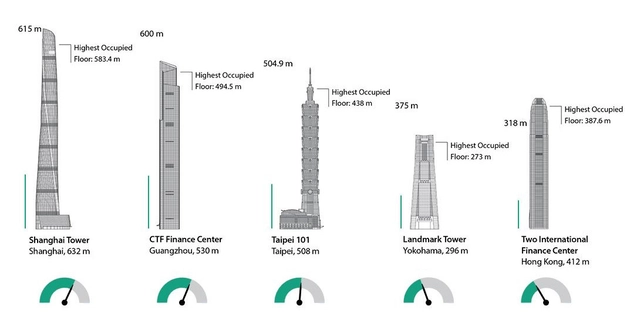
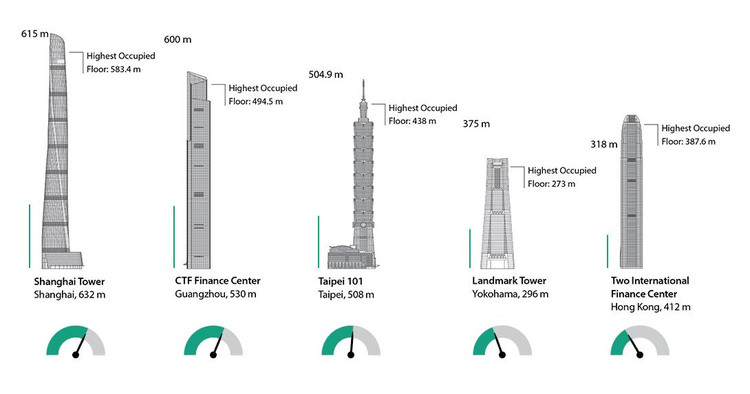
Ever expanding population growth coupled with the continuous development of urban centres mean that buildings, in general, will continue to get taller. With the topping out of One World Trade Centre in May this year the worldwide competition to construct towers with soaring altitudes doesn’t seem to be slowing, especially in China and the UAE. The question on many people’s lips, however, is how much of these colossal buildings is actual usable space?