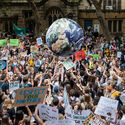
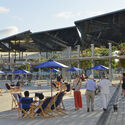
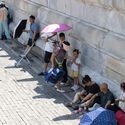
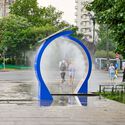
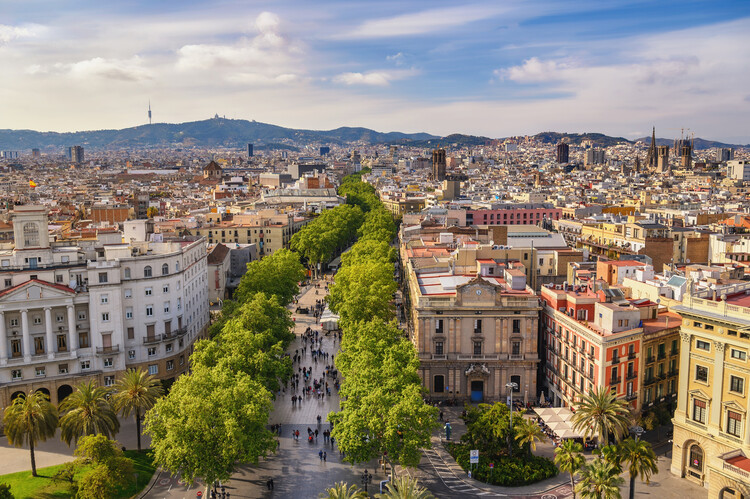
As Europe experiences one of its earliest and most intense heatwaves in recent years, World Environment Day 2026 arrives amid renewed discussions about climate adaptation, urban resilience, and the capacity of cities to respond to increasingly extreme temperatures. Across Portugal, France, Italy, Spain, Germany, Switzerland, Ireland, and the United Kingdom, temperatures have surged well above seasonal averages, prompting heat alerts, school closures, emergency planning measures, and growing concerns about the performance of buildings and public infrastructure under prolonged heat stress. The convergence of these highlights a reality that is becoming increasingly worldwide: climate change is no longer solely an environmental concern but an issue that is fundamentally reshaping the spaces where people live, work, and gather.
Modern cities are running on performance indicators. They move millions of people each day, concentrate capital, separate land uses, and sustain complex systems of logistics and consumption. In that sense, the city functions as a system to be continually adjusted and optimized.
Today's dominant metrics are familiar and widely witnessed: vehicles per hour, average commute times, floor area ratios, parking turnover, housing starts, and tax revenue per parcel of land. These figures describe a city that is legible through efficiency. They are inherited from an industrial logic, where urban space is treated more like a production mechanism than a lived-in environment. In this framing, cities begin to mimic the needs and metrics of a machine.
How can the most structured elements in architecture give rise to unplanned forms of everyday life? "Spontaneous order" describes how structured systems can generate unplanned but coherent patterns of behavior. In urban discourse, it is often used to describe cities: frameworks of streets, plots, and buildings that are designed, while everyday life is not. Movement, encounters, routines, and informal uses emerge from simple spatial rules rather than explicit programming. In cities, this is visible in how sidewalks, stations, and thresholds operate. The structure is fixed, but the social order is fluid, setting conditions for behavior rather than defining it.
A similar logic can be observed in architectural micro-infrastructures such as locker systems. Like cities, lockers rely on structured frameworks that do not prescribe how life unfolds within them. A locker system is highly controlled in architectural terms: repetitive modules, strict grids, standardized dimensions, controlled access. Yet once in use, it produces spontaneous behaviors. People pause in corridors, return at irregular times, linger near locker zones, or briefly interact with others doing the same. What appears to be a strictly infrastructural storage system begins to generate informal social and spatial behavior.
This week, we revisited the ideas currently shaping the design of 21st-century cities, with a view toward a longer timeframe than that which characterised modern design. These examples of today's urban design point toward the cities of tomorrow, seeking to reflect collective memory and social identity while addressing the climate challenges we face today. From a new museum in Panama drawing on Latin American architectural tradition to an inflatable installation on Paris's oldest bridge over the Seine, built and not-yet-built projects rescue architecture as a repository of collective memory, while others explore its transformative potential through the lens of contemporary well-being. In this weekly news compilation, we present ongoing projects from Panama, numerous African countries, France, Canada, Italy, Australia, and the United States.
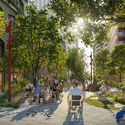
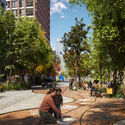
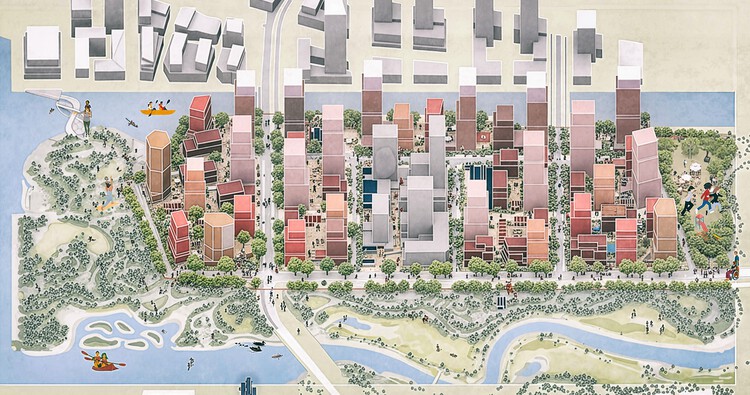
Landscape and urban design studio SLA has unveiled the design for the public realm and streetscapes of Toronto's new 39.8-hectare waterfront community. The urban landscape project "Ookwemin Minising" is located in the Port Lands, an industrial and recreational district southeast of downtown Toronto, currently undergoing urban revitalization to transform the area from a former industrial zone into a naturalized river valley, mixed-use neighbourhoods, and public parkland. The overall transformation is being led by Waterfront Toronto, a publicly funded, not-for-profit corporation established in 2001 to oversee the regeneration of the area, as part of a broader government initiative to renaturalize urban areas and increase housing density. The redevelopment of Ookwemin Minising is expected to be completed in phases between 2031 and 2040.
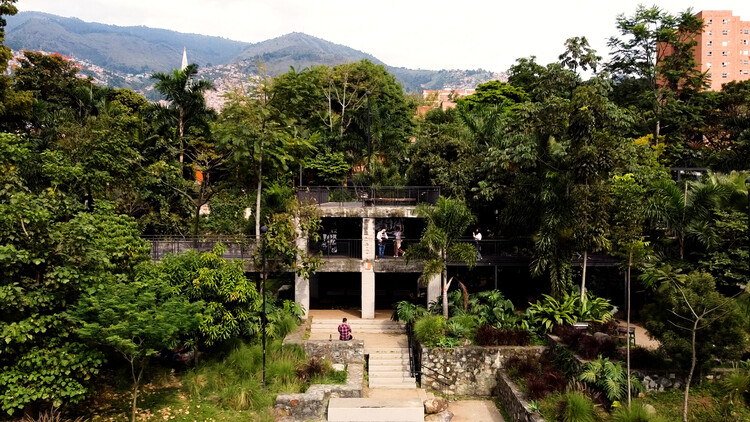
Parque Prado, Colombia, by Connatural Arquitectura en el Paisaje, Category 5 Winner of the UIA 2030 Award. Image Courtesy of International Union of Architects (UIA)
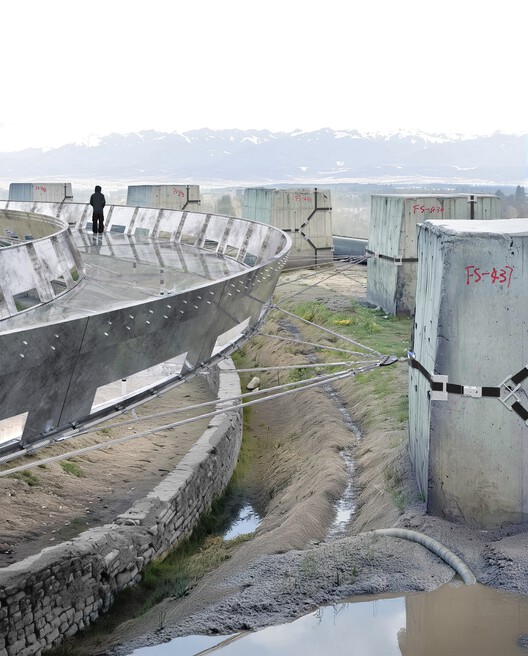
This week's stories reveal a growing focus on reconnecting design with physical reality, whether through construction, landscape, public space, or collective participation. From the curatorial direction of the upcoming Venice Architecture Biennale 2027 to internationally recognized projects addressing flood resilience, affordable housing, and ecological restoration, many of the week's discussions challenged architecture's increasing detachment from material, environmental, and social conditions. At the same time, major cultural interventions, temporary structures, and public forums explored how institutions and civic spaces can become more accessible, adaptable, and engaged with everyday urban life.
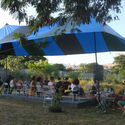
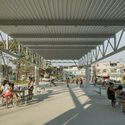
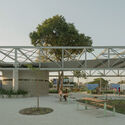
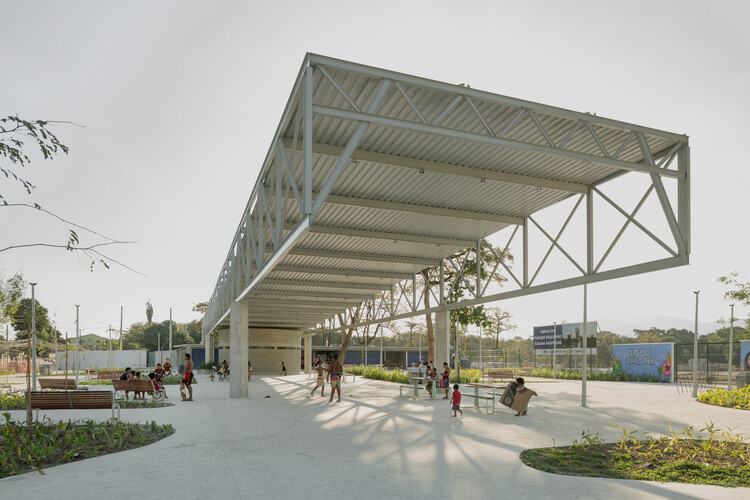
Before any drawing or formal decision, a space in constant motion was already pulsing where the Market Square at Realengo Park stands today in Rio de Janeiro. Improvised stalls, informal gatherings, music, children running, and adults gathered under makeshift shelters made up a living landscape, shaping an ephemeral architecture.
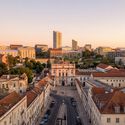
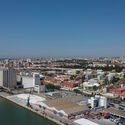
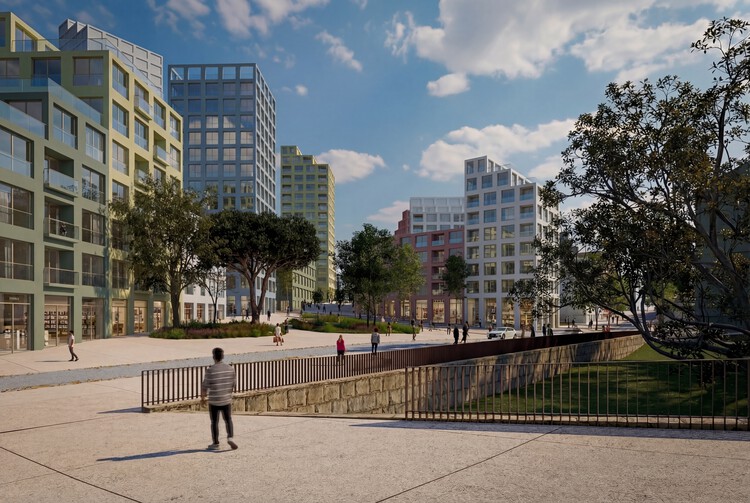
MVRDV and OODA have revealed a new masterplan for the regeneration of a vacant 28-hectare site between Marvila and Beato on Lisbon's riverfront. Recently approved by the Lisbon City Council, the project was developed in collaboration with LOLA Landscape Architects and Thornton Tomasetti to transform the area into a landscape-led urban district. Titled The Marvila Masterplan, the proposal establishes a framework for introducing 1,400 homes alongside public facilities, commercial spaces, and services within a fragmented and largely abandoned territory. The project is a private initiative led by the principal landowner and developed in coordination with the Lisbon City Council and Infraestruturas de Portugal.
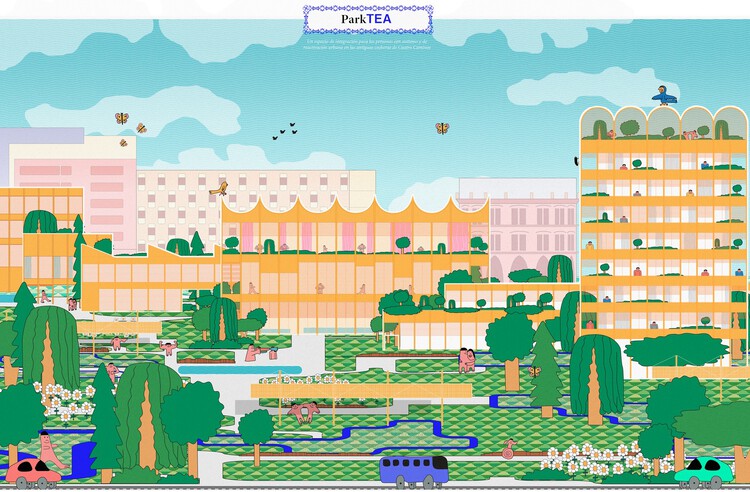
Public space is often designed around a narrow idea of how people move, interact, and respond to their surroundings. ParkTEA starts from a different position. The city can also make room for those who experience space through different sensory and social conditions.
Developed by Ignacio Martínez Pardo at the Escuela Técnica Superior de Arquitectura de Madrid (ETSAM), the project was conceived within the Master's thesis (Graduate-MHab) program during the 2024 to 2025 academic year, under the guidance of Héctor Fernández Elorza, Jesús Aparicio, Carlos García Fernández, and Jaime Daroca Guerrero. Recognized as one of the winners of the first edition of the ArchDaily Student Project Awards, ParkTEA engages the theme of coexistence through a proposal that brings together care, infrastructure, and urban life.
Today, interdisciplinary learning and exchange are more important than ever in addressing increasingly complex environmental, social, and urban challenges.
Each summer, the University of California, Berkeley's College of Environmental Design (CED) becomes an intensive laboratory for architectural, landscape, and urban exploration. Through two complementary programs—Design + Innovation for Sustainable Cities (DISC) and the Summer Institutes—Berkeley offers an immersive curriculum grounded in disciplinary rigor, intentional exchange, and a shared institutional culture. Together, these programs reflect CED's long-standing multidisciplinary structure, with architecture, landscape architecture, city planning, and urban design thriving and collaborating under one roof.
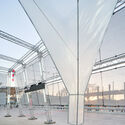
Daryan Knoblauch's work sits at the intersection of architecture and live cultural production, with a focus on how space is made legible through tension and atmosphere. Rather than treating temporary work as a lesser category of architecture, Knoblauch approaches installations, stages, and event architectures as full disciplinary problems—where enclosure, stability, light, and movement must be resolved with the same seriousness as any building, often under tighter constraints and faster timelines.
Across projects, a consistent thread is the productive tension between high-modern precision and an intentionally raw clarity of assembly. Membranes and lightweight systems are not deployed as surface effects, but as structural and spatial instruments—tuned to wind, load, and occupation, and calibrated to produce a sublimity that is felt as much as it is seen. Here, ephemerality is not simply a duration, but a design condition: temporality makes forces—weather, wear, performance—more visible, and demands an ethic of making that is both exacting and adaptable.
Architecture is often evaluated through what gets built. But in many cases, what matters happens after: how spaces are used, adapted, and made part of everyday life. For Región Austral, winner of ArchDaily's 2025 Next Practices Awards, this is where design really begins. Working across many contexts, the practice approaches public space not as a single object, but as something that needs to be activated, negotiated, and sustained over time. Their projects focus less on defining form and more on creating the conditions for use, with design serving as the starting point.
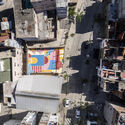
This approach can be seen across different contexts, from the Olympic Neighborhood Square to the Playón de Chacarita network. While each project responds to a specific situation, both explore how public space can support collective life in areas marked by fragmentation and inequality. Instead of following a predefined approach, the work adapts to different urban conditions, using participation and incremental strategies to shape how spaces function over time.
Honduras is the second-largest country in Central America, both in territory and population. Today, its urban fabric remains heavily influenced by modernist principles from the 1970s that prioritised high-speed arterial corridors and automobile-dependent "point-to-point" mobility. In addition, the country faced many challenges regarding public safety during the 2010s, which contributed to creating an urban space characterised by blind facades, high perimeter walls, and gated enclosures designed to isolate the interior from the public realm.
We had the opportunity to talk to Alejandra Ferrera, a Honduran architect raised in Danlí, a city in eastern Honduras. With over 15 years of practice across Brazil, the Netherlands, and Australia, she argues that while the security-driven design was a functional necessity of its time, it has resulted in a fragmented urban experience where the street serves only as a transit void rather than a place for social encounter. She suggests that even though this isolation was a justified safety measure, it created detachment between the inhabitants and the city. She also argues that overall, the public safety situation contributed to the creation of a wounded national identity that often looks outward for quality, dismissing the potential of its own context.
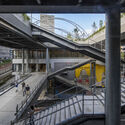
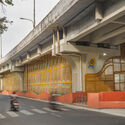
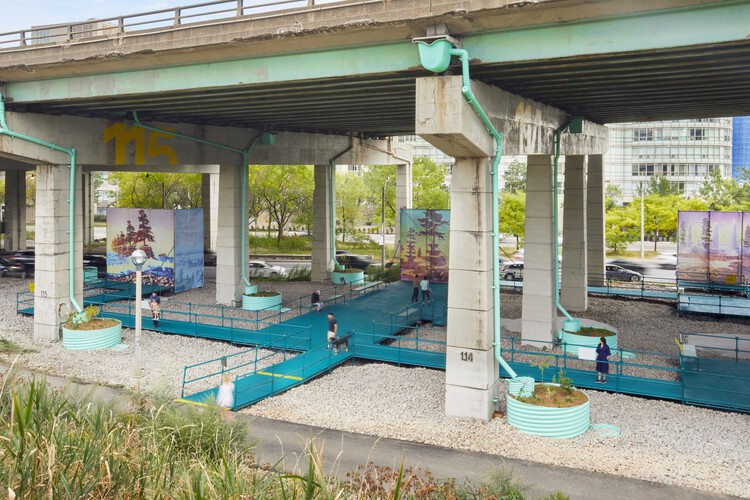
Elevation is often framed as progress, lifting movement above the friction of the city and smoothing circulation into uninterrupted flow. Every act of lifting produces a secondary condition in its wake. Beneath flyovers, metro lines, and railway viaducts, a second ground emerges as shaded, ambiguous, and rarely planned with the same intent as what moves above. These spaces are not incidental leftovers. They are the spatial consequence of a design decision that privileges speed, clearance, and efficiency, redistributing value and visibility across the city in the process.
What lies below is not empty. It is structured, constrained, and defined by infrastructure, left without a clear role. Studies on elevated highways consistently describe these undercroft zones as residual spaces, formed when transport systems are conceived independently of the ground they pass through. An Arup report on spaces beneath viaducts notes how they often disrupt pedestrian continuity while remaining outside formal planning frameworks. Similarly, recent academic reviews of under-flyover environments highlight that these areas are rarely integrated into urban design strategies at all. The result is a peculiar condition: space that is physically present and structurally determined, but programmatically undefined.
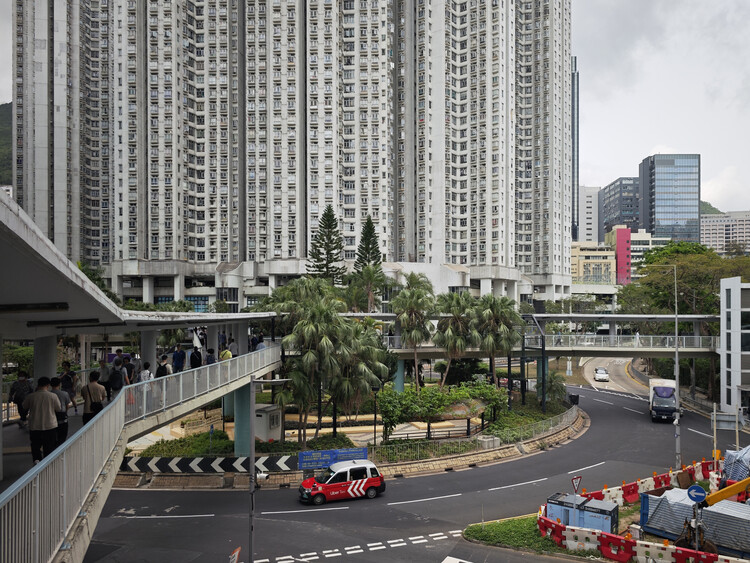
In 2012, Cities Without Ground: A Hong Kong Guidebook offered one of the clearest documentations of a condition that many residents experience intuitively but rarely name: Hong Kong's dependence on elevated, second-storey urbanism. Through drawings and careful mapping, the book captured how the city's pedestrian networks are routinely lifted above the street—separating people from traffic, extending commercial frontage beyond ground level, and negotiating a hilly topography where "flat" circulation is often an engineered achievement. Since its publication, these systems have only grown in prominence—not only for their sheer spatial complexity, but for the way they recast public space as something continuous yet selective, connective yet curated.
This fascination, however, has always carried a parallel unease. Elevated passages can be generous and effective, offering sheltered movement and reliable connectivity. Yet they also raise persistent questions: where do these routes lead, who gets to connect, and what kinds of programs are invited—or excluded—by this "privileged" level of circulation? The second-storey city does not simply bypass vehicles; it can also bypass the street as a civic stage. Over time, it risks shifting architectural attention away from ground-level public life, relieving designers from having to negotiate pedestrian scale, frontage, and the messy reciprocity of the street. In its worst moments, the result is a landscape of podium clusters and sealed megastructures—buildings that perform connectivity at Level 2 while remaining indifferent to the neighborhood at Level 0.
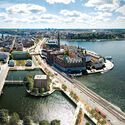
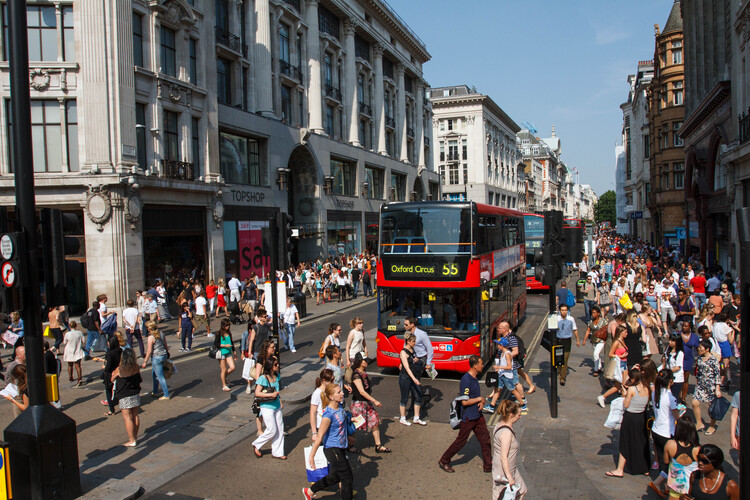
Across Europe and North America, pedestrianisation is increasingly being deployed as a context-specific urban strategy shaped by distinct economic, social, and spatial pressures. As cities continue to reassess the role of streets in the wake of economic shifts, climate pressures, and changing mobility patterns, pedestrianisation is emerging as a tool in current urban transformation efforts. Across London, New York, Houston, and Stockholm, ongoing pedestrian-first projects are testing different pathways toward more resilient and walkable cities, ranging from statutory planning and capital construction to research-driven visioning. London's Oxford Street is advancing through consultation and governance reform to address retail decline; New York's Paseo Park is moving from a temporary pandemic intervention into permanent infrastructure; Houston is accelerating the pedestrianisation of its downtown core in preparation for a global sporting event; and Stockholm's Superline is using design research to rethink the future of an inner-city motorway. These initiatives reveal how pedestrianisation is being actively negotiated, designed, and built today, adapting to local motivations while converging on a shared objective of streets that perform as resilient public spaces rather than traffic conduits.