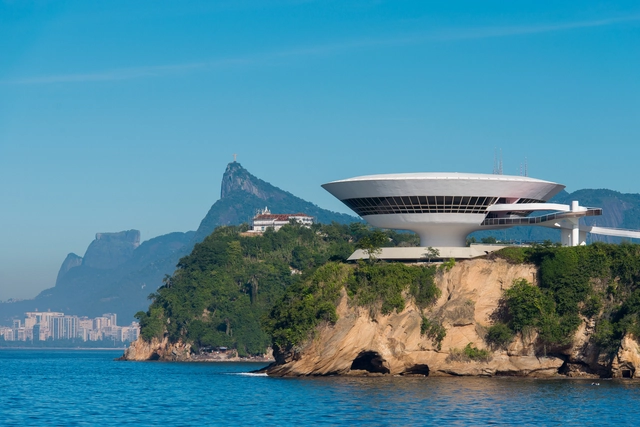
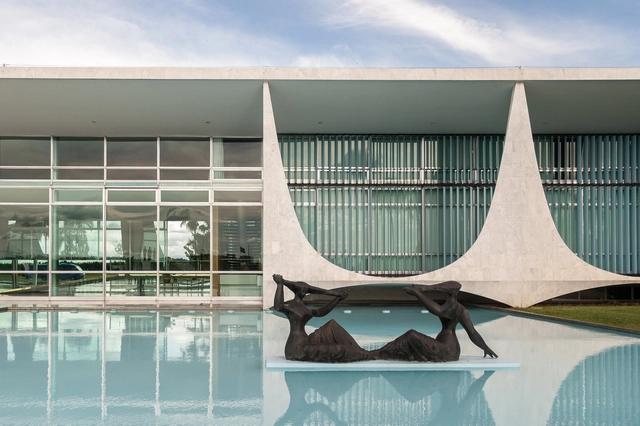
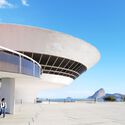
Located on the top of the Boa Viagem viewpoint in the city of Niterói, the Niterói Contemporary Art Museum - MAC was designed by architect Oscar Niemeyer. Inaugurated in 1996, it is a modern architectural masterpiece dedicated to housing a collection of Brazilian contemporary art from the 1960s to the 1990s. Rising above the cliff like a lighthouse, it appears to float in the air, resting on a water basin. Facing Rio de Janeiro’s Guanabara Bay in Brazil, its circular lines and revolutionary double-curved form stand out on the horizon, offering an open plaza of 2,500 square meters alongside a reflective pool that gives the structure a remarkable sense of lightness.
The use of technology has become vital in the documentation and conservation of heritage, especially in difficult or urgent circumstances. After many landmarks of the historic city of Palmyra were destroyed during Syria's war in 2015, conservators built three-dimensional digital models of the destroyed city to aid its future reconstruction. The destruction of the Buddhas of Bamiyan in Afghanistan in 2001 with very little prior documentation prompted action in the documentation of vulnerable monuments, such as the establishment of CyArk. More recently, detailed digital surveys and a heritage BIM model were essential in the restoration of Notre-Dame Cathedral in Paris after it was devastated by fire in 2019.
Maria Carlota de Macedo Soares was born in 1910 in Paris, where her father—who ran one of Rio de Janeiro’s most influential newspapers, Diário Carioca—was exiled. Raised among the elite, Lota arrived in Brazil in 1928 at the age of 18. She was often described as a controversial figure, known for her love of race cars, wearing jeans and men’s shirts, and for her discreet yet enduring relationship with the acclaimed American poet Elizabeth Bishop.
Modernism, a movement that sought to break away from traditional forms and embrace the future, laid the groundwork for many technological and digital advancements in contemporary architecture. As the Industrial Revolution brought about mass production, new materials, and technological innovation, architects like Le Corbusier, Walter Gropius, and Mies van der Rohe championed the ethos of "form follows function" and a rational approach to design. Their principles resonate in the digital age, where computational design and high-tech materials redefine form and construction.
The 20th century's modernist ideals — efficiency, simplicity, and functionality — created a foundation for architects to experiment with structural clarity and material honesty. High-tech architecture, which emerged in the late 20th century, evolved from these principles, merging modernism's clean lines with advanced engineering and technology. This paved the way for parametricism and algorithm-driven design processes, revolutionizing architecture and enabling complex forms previously thought impossible.
"Soane and Modernism: Make it New" brings together architectural drawings from Sir John Soane's extensive collection in dialogue with works by renowned modernist figures, including Le Corbusier, Frank Lloyd Wright, Adolf Loos, and Ernő Goldfinger. Curated by Dr. Erin McKellar, Assistant Curator of Exhibitions at Sir John Soane's Museum, the exhibition highlights the presence of 20th-century modern architectural design ideals in the work of 19th-century architect Sir John Soane. The selection of works is based on the idea that Soane's designs can be considered a precursor to many architectural principles adopted in the twentieth century.
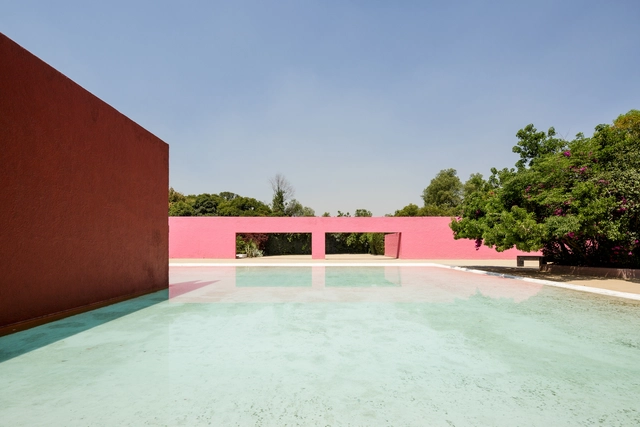
In October 2025, the Fernando Romero Foundation will officially open the doors of La Cuadra San Cristóbal, one of the late projects of Mexican architect and Pritzker Prize winnerLuis Barragán. The goal is to transform the architectural complex into a cultural campus open to the public, with a curatorial program focused on exploring the dynamic interaction between architecture and art.
The project, known as Cuadra San Cristóbal, was built between 1966 and 1968 and includes a house, a stables building, and auxiliary facilities such as the Fuente de los Amantes (Fountain of the Lovers). The complex showcases characteristic elements of Barragán's Latin American modernism, including his use of color and the integration of shadows, textures, and sounds into the experience of space.
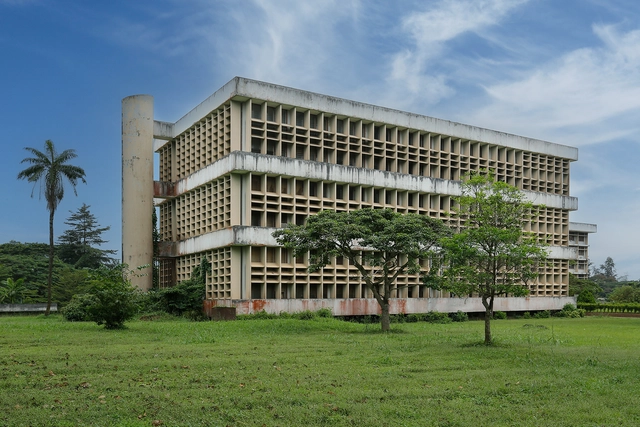
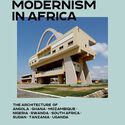
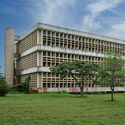
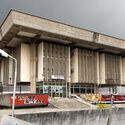
In late 2024, an important addition was made to the growing literature on Modern architecture in Africa. "Modernism in Africa: The Architecture of Angola, Ghana, Mozambique, Nigeria, Rwanda, South Africa, Sudan, Tanzania, Uganda" was published by Docomomo International and Birkhäuser, shedding light on multiple previously unpublished buildings. The book has a focus on education, although other building types are included. Amongst these are several university buildings in Nigeria which are explored here. Like other Modern buildings on the continent, they illustrate historical narratives of independence, decoloniality, international relations, and architectural education.
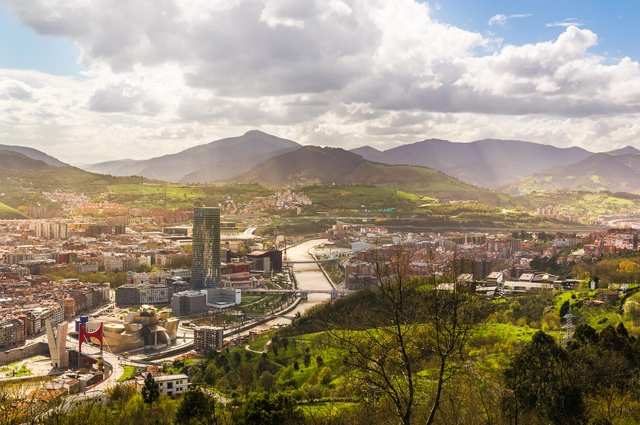
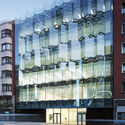
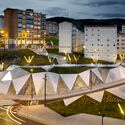
Bilbao, the largest city in Spain's Basque Country, has undergone a remarkable transformation over the past few decades. Once an industrial hub, the city has redefined itself as a center for culture, innovation, and urban regeneration. This evolution has been partly driven by architecture, which plays a central role in shaping Bilbao's identity. From contemporary landmarks to thoughtfully repurposed spaces, the city's built environment reflects a careful balance between honoring its industrial heritage and embracing modernity.
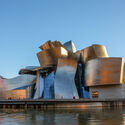
The turning point in Bilbao's architectural narrative came with the inauguration of the Guggenheim Museum Bilbao in 1997. Designed by Gehry Partners, this iconic structure catalyzed the city's renewal, sparking a wave of urban and cultural investments. This transformation became known as the "Bilbao effect," a phenomenon where a single, significant architectural project triggers wider urban regeneration and economic growth. Today, Bilbao is a dynamic architectural landscape, where works by international figures like Santiago Calatrava, Norman Foster, and Arata Isozaki coexist with projects by local studios such as ACXT and Coll-Barreu Arquitectos. Together, these interventions illustrate how architecture can be a powerful social, economic, and cultural revitalization tool.
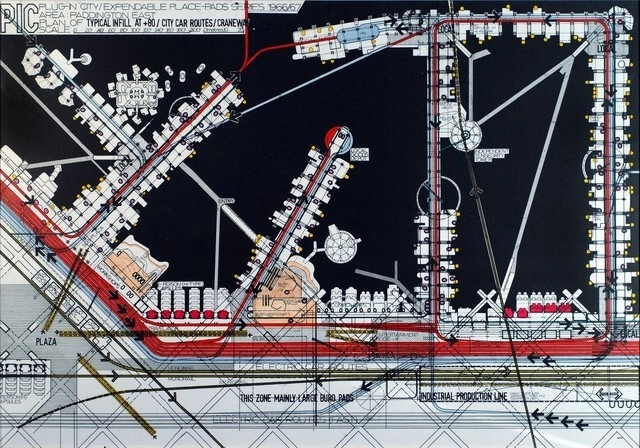
Dennis Crompton, an influential figure in the field of architecture, passed away on January 21, 2025, at the age of 90. Born in Blackpool in 1935, Crompton's remarkable career spanned several decades and left an indelible mark on modern architecture. As a key member of the avant-garde architectural group Archigram, established in London in 1961, Crompton played a pivotal role in revolutionizing architectural practice, together with Warren Chalk, Peter Cook, Ron Herron, David Greene, and Michael Webb.
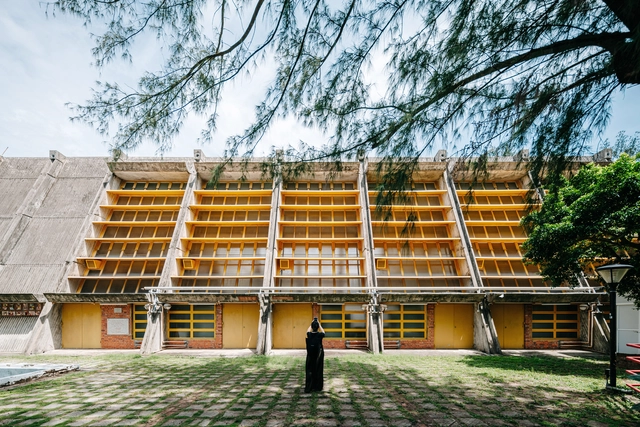
Modernism in architecture emerged at the beginning of the twentieth century, fueled by advancements in science and engineering and a deliberate departure from historical styles. It championed a focus on social equity, urban development, efficiency, and functional design, marking a significant shift in architectural philosophy. Originating primarily in Europe and the United States, modernism captivated the global imagination with its innovative redefinition of space and architecture. Its spread to Asia was facilitated by cross-cultural exchanges—East Asian architects who studied under prominent modernists and European architects working in East Asia through international collaborations or colonial-era influences.
If there is one book every architecture student must have on their shelf, it must be an architectural history. There is no more comprehensive yet compact alternative than Kenneth Frampton's Modern Architecture: A Critical History, originally published in 1980 by Thames & Hudson. Its much-expanded latest fifth 734-page, 813-illustration edition came out in 2020. In 2023, I discussed the book at length with the author in a video interview, now available on YouTube.
Regarding one compact yet fundamental survey of the evolution of the Modern movement, Modern Architecture: A Critical History is unquestionably the most authoritative, complete, and in-depth chronicle. The most valuable addition to the new book is the introduction of new chapters focusing on regions such as Canada, Mexico, Colombia, Australia, China, India, and Sri Lanka, among others. These chapters shed light on many before-overlooked practices that operated outside of traditional centers of power, namely Western Europe, the United States, and Japan.
The mid-twentieth century marked a transformative period for Africa as 29 countries achieved independence between 1956 and 1964, signaling the dawn of the nation-state across the continent. This era resonated with a spirit of liberation and progress, paralleling the global movements of that time, such as the establishment of international organizations like the United Nations (1945) and the Organization of African Unity (1963). Within this context, Modernist architecture emerged as a powerful symbol of national identity, ambition, and the collective aspiration for a brighter future. As newly independent nations sought to define themselves apart from their colonial pasts, the adoption of Modern Movement principles facilitated the construction of key infrastructures, such as convention centers, parliament buildings, and hotels, as well as the development of architectural education, as native-trained architects begun to either replace or cooperate with foreign-born professionals.
This article inaugurates a new series titled Rediscovering Modernism in Africa, aiming to explore the architectural legacy of the Modern Movement in Africa, highlighting its role in nation-building and the evolution of architectural education, while shedding light on the architects and movements that shaped this transformative era.
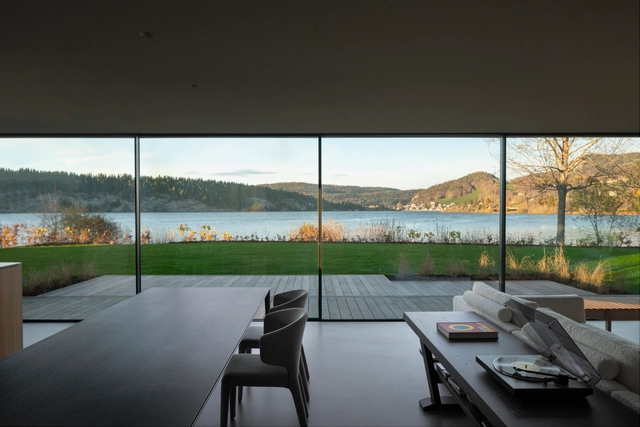
Each region possesses a distinct architectural identity, serving as a cultural "fingerprint" that makes it uniquely recognizable. Italian design, for instance, draws from the Roman legacy using stone and light hues. Turkey is distinguished by intricate glazed tilework that adorns walls and ceilings, whereas Mexico embraces vibrant colors and textures through local materials and artisanry. Many of these elements are rooted in heritage-based practices, yet over time, they have been reimagined and transformed through new processes, giving rise to contemporary architectural expressions. In Switzerland, the concept of "Swissness" frames this core identity—a fusion of watchmaking precision and functionality. Rooted in micromechanics, Swiss engineering, and craftsmanship converge in the design of modern minimalist windows, where clean lines and transparency redefine boundaries and shape the architectural language.
https://www.archdaily.com/1024621/swissness-framed-micromechanics-and-minimalist-windows-in-modern-architectureEnrique Tovar
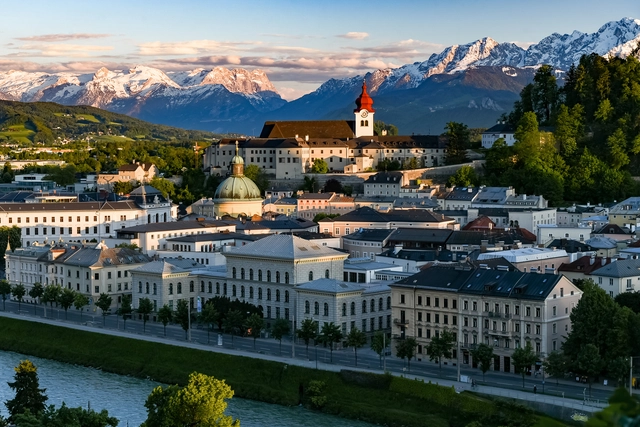
Salzburg, Austria, set along the Salzach River, is a city where history and architecture merge seamlessly. Dominated by the imposing M Castle, its historic core reflects a rich Baroque heritage. Landmarks like the Salzburg Cathedral, crafted by Santino Solari, and the elegant Leopoldskron Palace showcase a past marked by grandeur and cultural influence. Visitors can trace centuries of architectural evolution through the city's streets, from medieval strongholds to Baroque splendor, all within a UNESCO World Heritage site. Each winter, this setting hosts the Salzburg Christmas Market, recognized as one of the oldest Advent markets in Europe, with roots tracing back to a 15th-century "Tandlmarkt."
Yet, Salzburg is also a city of contrasts. Modern architecture has made its mark, blending harmoniously with its historic backdrop. Modern projects like Stadt Park Lehen and Paracelsus Bad & Kurhaus showcase contemporary design, while the Institute of Pharmacy and Gusswerk Extension add a fresh touch to the city's urban fabric. This balance between the old and the new defines Salzburg, where each architectural layer contributes to the city's dynamic, evolving story.
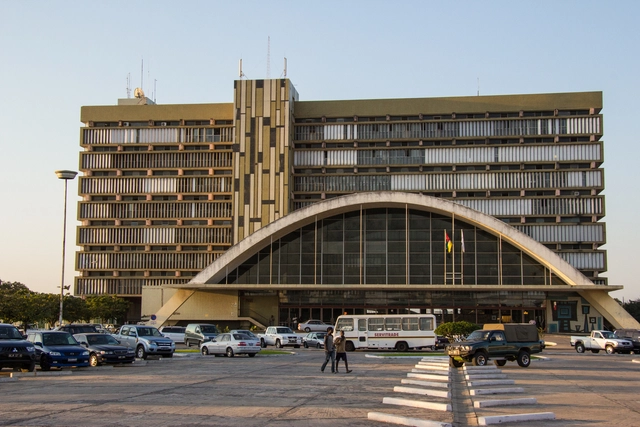
As, one by one, the African nations gained their independence in the middle of the twentieth century, building programs were central to the process of nation-building. In several of those countries, this included the construction of the state's institutions such as their respective national assembly. These buildings not only facilitate the legislative process but also symbolize the new nation's governance, identity, and aspirations. The period of independence movements also coincided with the introduction of the Modern Movement across the continent, which was associated with progress and a break from the colonial past. Across Africa, some national assemblies were constructed early and were part of the nationalization process that preceded independence, while some were constructed long after.
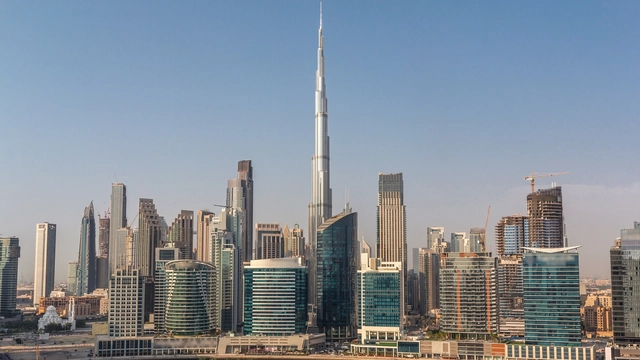
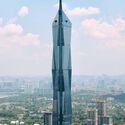
Humanity has become obsessed with breaking its limits, creating new records only to break them again and again. In fact, our cities’ skylines have always been defined by those in power during every period in history. At one point churches left their mark, followed by public institutions and in the last few decades, it's commercial skyscrapers that continue to stretch taller and taller.
The Council on Tall Buildings and Urban Habitat (CTBUH) has developed its own system for classifying tall buildings, stating that the Burj Khalifa (828 m.) is the world’s tallest building right now. Read on for the 25 tallest buildings in the world today.