Cities in Southeastern Europe do not wait to be read. They accumulate, layer upon layer of socialist planning, post-socialist disruption, and the quieter, less legible work of citizens remaking space from the ground up. Here, space and legacy insist on their own terms. What happens to architectural research when the cities that we observe already seem to know something our discipline has not yet learned to see?
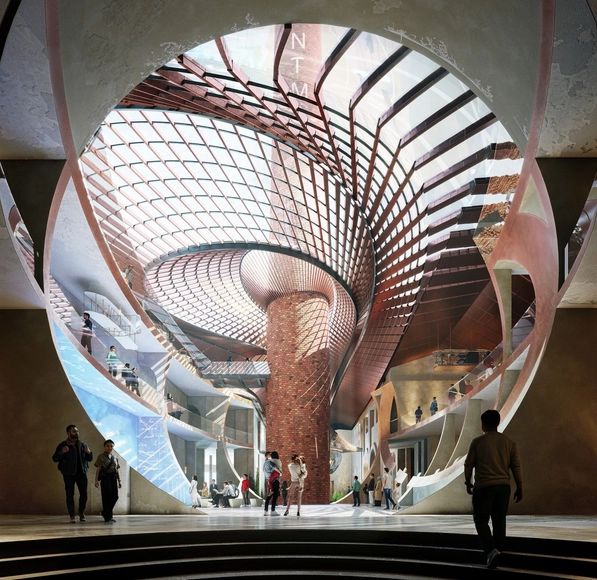
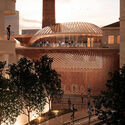
Cultural institutions represent an active field for unbuilt architectural exploration, reflecting how architects continue to question the role of public buildings in shaping urban life. In this Unbuilt edition, submitted by the ArchDaily community, the selected proposals bring together a range of projects that engage with museums, exhibition centers, and diplomatic buildings as sites of public encounter. Rather than treating these programs as fixed types, these projects approach them as evolving spatial settings through which cities engage with history, knowledge, and representation.
Across varied geographies, from Wenzhou and Helsinki to Belgrade, Debrecen, Mexico City, and Nürnberg, the proposals explore different responses to contemporary cultural architecture. They range from adaptive reuse of industrial and ideological structures to new buildings embedded in waterfronts, parks, and residential neighborhoods. While some emphasize continuity with historical contexts, others experiment with lighter structures, environmental strategies, or new relationships between interior programs and the public realm. Together, they offer a snapshot of how cultural institutions are being reimagined in diverse urban conditions.
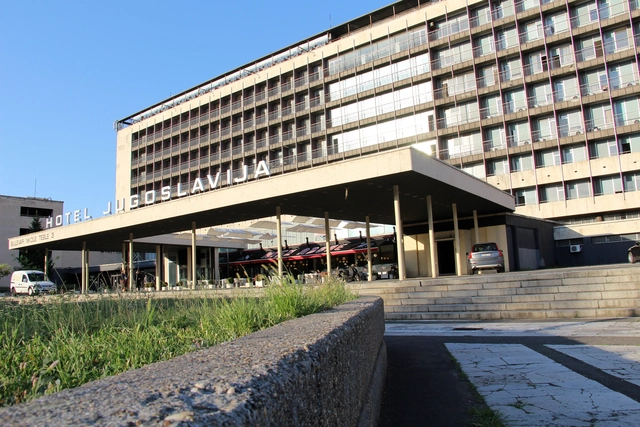
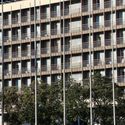
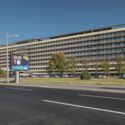
The demolition of Hotel Jugoslavija, a notable example of modernist architecture in Belgrade, has begun, making way for new development in the city's rapidly changing urban landscape. Constructed in 1969 in New Belgrade, the hotel was once among the largest and most prominent in Europe, reflecting the aspirations of the Socialist Federal Republic of Yugoslavia (SFRY) during its peak. Designed by Zagreb architect Lavoslav Horvat, the eight-story hotel was a key project under the leadership of Josip Broz Tito. It showcased the modernist principles of the time, combining functionality with imposing architectural forms. Its interiors featured luxurious details, including a Swarovski chandelier comprised of 40,000 crystals, which underscored the building's significance as a flagship of Yugoslavia's international presence.
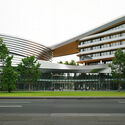
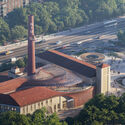
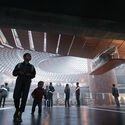
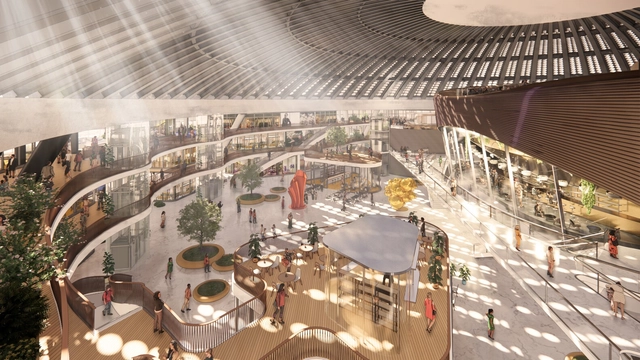
WilkinsonEyre has unveiled their proposal to revitalize the 1950s constructivist Belgrade Fair Hall 1, a landmark location overlooking the river Sava. The project is set to transform the exhibition hall into a mixed-use destination comprising three cultural venues and retail spaces, in addition to redesigning the waterfront park. WilkinsonEyre’s design incorporates light-touch interventions to the existing building, as it strives to respect and highlight the architectural qualities of the existing structure, such as the exposed concrete soffit or the unique shape of the building.
Eastern and Southern Europe is enduring a severe heatwave, with temperatures reaching over 40 degrees Celsius in many countries including Greece, Croatia, Macedonia, and Romania. Driven by hot air from North Africa, this prolonged heatwave has raised significant threats for residents and has strained the cities’ mechanisms for protection and climate mitigation. As the heatwaves expose the vulnerabilities of urban infrastructures, cities across Europe are striving to implement measures to address these challenges.
Architectural competitions are valuable learning tools, offering architects a unique opportunity to experiment and expand their creative boundaries. By engaging with real-world challenges and receiving critical feedback, participants gain practical experience and a deeper understanding of the profession. Whether conceptual or not, competitions foster innovation, encouraging design professionals to think outside the. This week's curated selection showcases winning competition entriessubmitted by the ArchDaily community, providing architects and architecture students with new perspectives and inspiration for their own practice, be it diploma projects, professional licensing, or commissions.
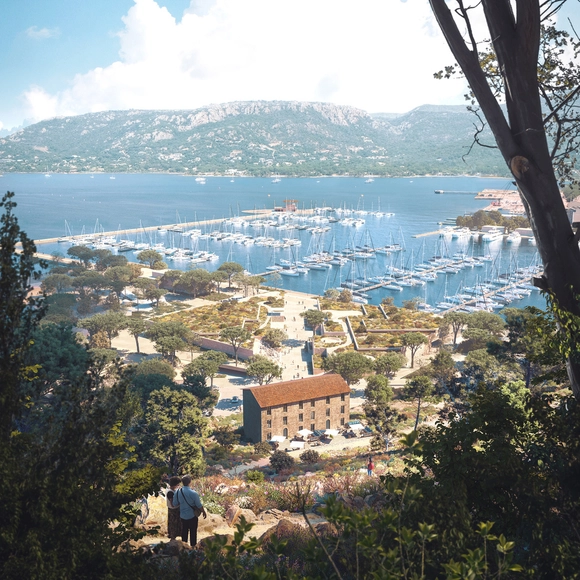
From an immersive urban park in Seoul, South Korea, to a rural education campus in the Amazon, or a reimagined port in Corsica, this selection highlights projects that have stood out in competitions from around the world. While some of the proposals have been developed by established firms, including KAAN Architecten, ArchiWorkshop, Studio Akkerhuis, or Richez Associés, these competitions have also proven to be an opportunity for emerging designers to showcase their creativity and problem-solving abilities
The National Pavilion of Serbia, curated by Iva Njunjić and Tihomir Dičić, has just announced its exhibition at the 2023 Venice Biennale, which explores architecture's futures, presents, and pasts through the lens of an international Trade Fair in Lagos, Nigeria, in 1977. The trade fair was a product of non-aligned cooperation between Yugoslavia and Nigeria.
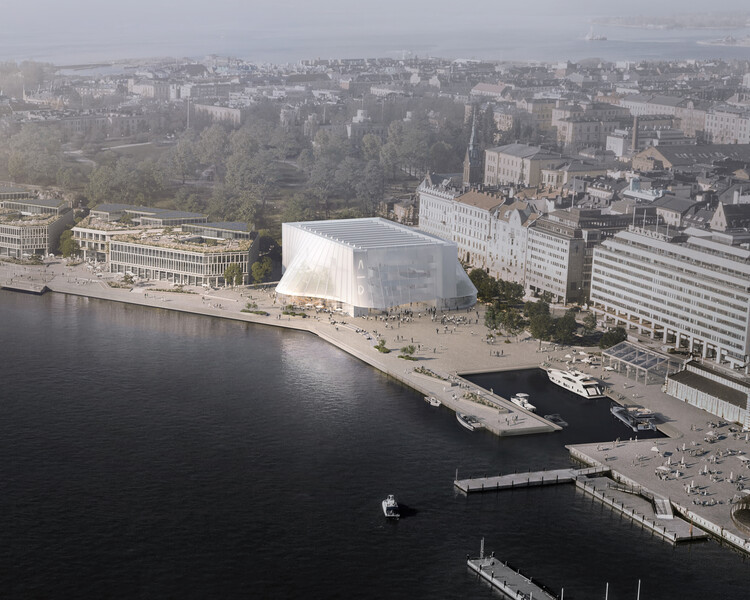
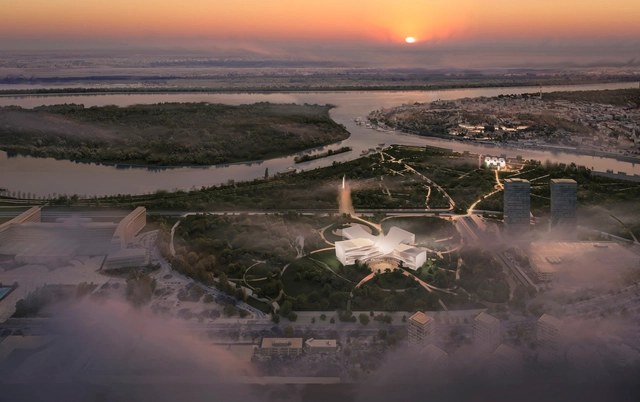
Following an international competition, London-based architecture studio AL_A has been selected to design the new BelgradePhilharmonic Concert Hall. The project will become a landmark for the Serbian capital, as it represents the biggest cultural investment in the region in the last decades. Located near the historic Palace of Serbia in New Belgrade, the Concert Hall features multiple performance, rehearsal, and creative spaces, including a 1,600 seats symphonic concert hall. The design team led by AL_A also includes landscape designers VDLA, engineers AFA Consult, and local architects Zabriskie. They are joined by Arup, who coordinates the acoustic and theatrical design.
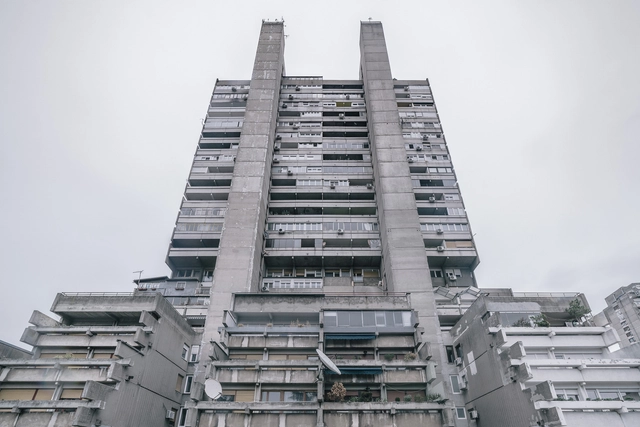
Brutalism is a deeply dividing architectural style - a subcategory of the Modernist movement that featured bare concrete finishes, unusual shapes, and an undoubtedly unique aesthetic. Whilst emerging into prominence in 1950s Great Britain, the most iconic examples of this architectural style are arguably found in Eastern Europe - particularly in the territory formerly known as Yugoslavia.
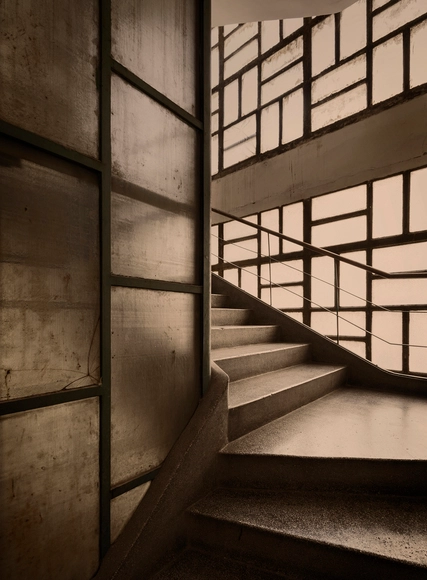
A city of electric architectural diversity – Belgrade’s Modernist structures give the Serbian capital a unique character. The grey of Belgrade’s Brutalist concrete is one of the city’s architectural signatures, existing in both complex volumetric facades and monolithic rectilinear forms. But while a plethora of architectural appraisals has been conducted on the external qualities of brutalist structures in Belgrade and beyond, photographic documentation of Belgrade’s brutalist interiors is relatively rare – something that photographer Inês d’Orey has sought to change in her most recent exhibition.
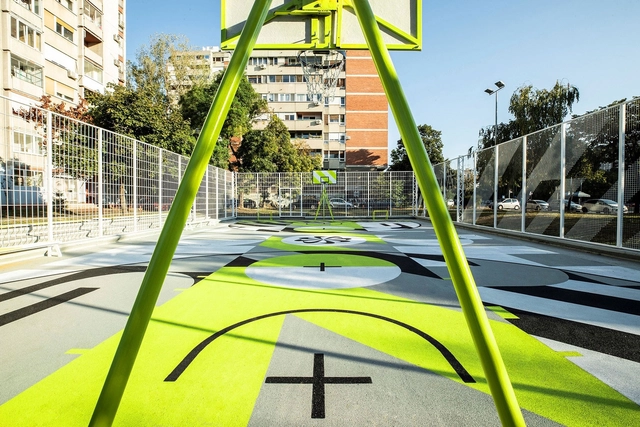
Creative agency Accept & Proceed has designed a new basketball court for Nike using 20,000 recycled sneakers in New Belgrade, Serbia. Inspired by the ‘Move to Zero’ ethos, the design features the court, children’s playground, bleacher benches, chain link fence, outdoor gym, collection bins, in-store campaign presence and restoration of existing elements. The renewal aims to re-energize the local neighborhood while providing a space for play and for sport among kids and adults alike.