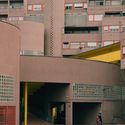
For the 1957 International Builders Fair, Oscar Niemeyer developed the Interbau Apartment House, a modernist eight-storey building that sits on V-shaped pillars in the city of Berlin. While the building's facade consists of uniform windows and loggias clad with primary-colored mosaics, it is interrupted by enclosed pathways that connect the structure to the external elevator.
Architectural photographer Bahaa Ghoussainy explored the building and highlighted the complementary relationship between its uniform modernity and dynamic suspensions.
The second issue of Room will reconvene in the Kitchen; a space that savors the possibilities of both cultural appreciation and cross contamination, serving basic sustenance and special occasions. Taste here is significant though subjective, with its stainless steel tongue wiped perpetually in an attempt to cleanse the palate. Nuanced residues of gender, class, labour, race, and climate cling to the cloth among germs and grains of salt.
The kitchen is a volume of complex geographies. Contents enveloped in their natural and synthetic skin's come together from landscapes distant and near, to land on the counters of the heart of
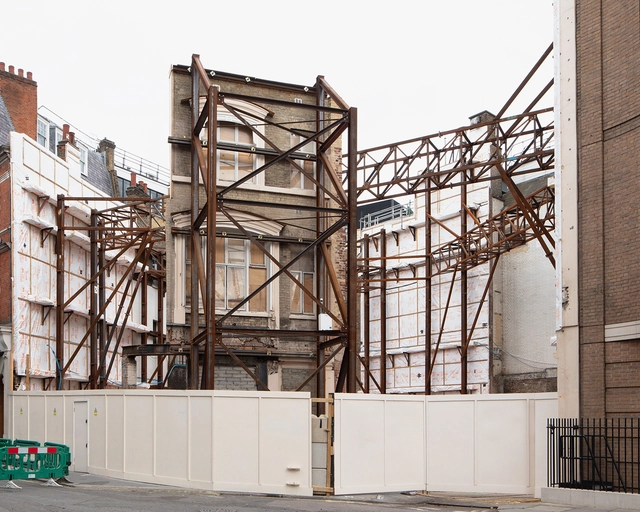
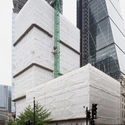
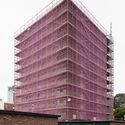
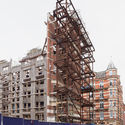
A lot can change in a city within one year; from demolitions, to reconstructions and project completions, a city's urban fabric is constantly being altered. During the past 4 years, Chilean architect and photographer Francisco Ibáñez Hantke of Estudio Ibanez has put together a photo-series titled Non-Structures, which focuses on London's urban regeneration and transformation and captures its various moments of ruins, planning, process, and eventually, complete architecture.
Description via Amazon. Marc Mimram ( born 1955), the award-winning French architect and engineer, presents his work of architecture and structure through the lens of Erieta Attali (born 1966), world-renowned architectural photographer, who explores the relationship between human-made structures and the landscape.Architecture is often represented as a product or disembodied object. This view transforms inhabitants into spectators of an architecture that is dematerialized, delocalized, dehumanized and reduced into an image of itself. The collaboration between Mimram and Attali aims for an all-encompassing approach, placing the architecture within its time-frame and physical environment, rather than presenting mere glossy images of the projects.
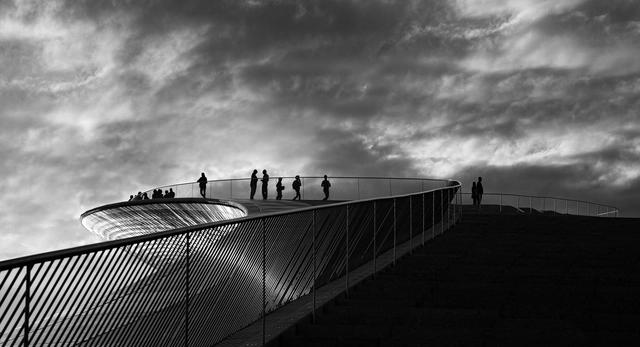
The Museum of Art, Architecture and Technology, Lisbon, Portugal by Amanda Levete shot by Inge Schuster. Image Courtesy of The Architectural Photography Awards 2019
The Architectural Photography Awards 2019 has revealed its shortlisted images under 6 categories: Exterior, Interior, Sense of Place, Buildings in Use, Mobile, and Portfolio. Sponsored by Sto and supported by the World Architecture Festival (WAF), this year’s lineup was selected from nearly 2000 entries from 42 countries.
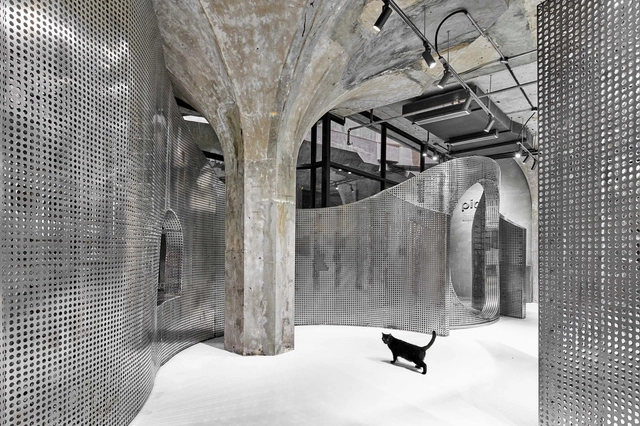
Cats just don’t care. They don’t care if you bought them gourmet food. They don’t care if you got them customized furniture or luxury cardboard boxes, and they definitely don’t care if they are barging into an architectural photo shoot (although, we do think it’s their way of being the center of attention).
Don't believe us? Here's a collection of photographs collected from our projects database where cats are clearly not trying to steal the spotlight.
The “New Créteil” was an urbanization program carried out in the seventies. It was intended to provide the city of Créteil, which is located around 6 km southeast of Paris, new apartment buildings and public facilities such as a town hall, prefecture, hospital, and courthouse. In a series called “See the New Créteil,” photographer Robin Leroy documents a city considered transcendent of the traditional clichés of modern architecture.
https://www.archdaily.com/924842/robin-leroys-timeless-photographs-of-new-creteilLilly Cao
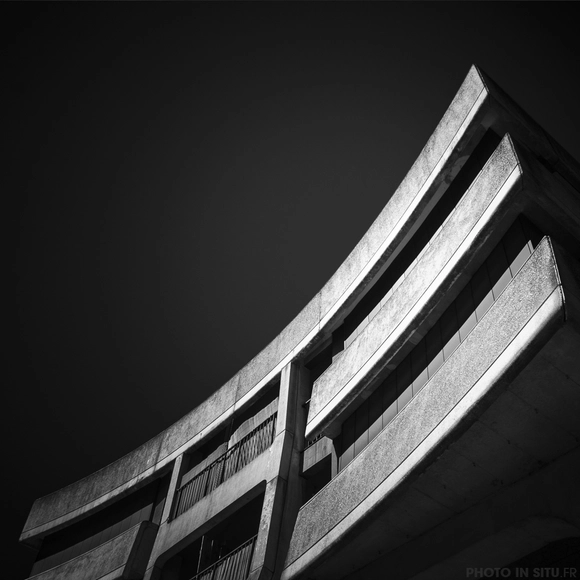
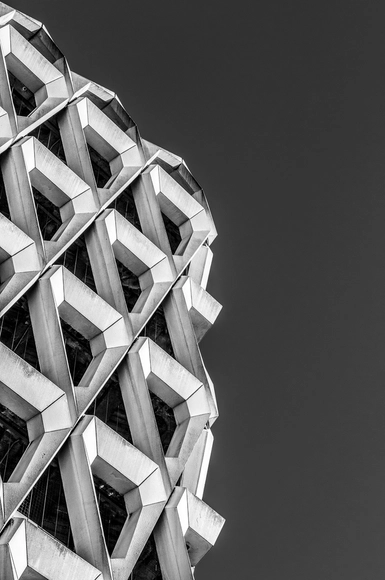
Rarely does one see brutalist architecture in the city of London. Primarily, these buildings were perceived as rebellious and grotesque, only to become the "go-to" style for commercial and governmental buildings after the Second World War. Nowadays, with the real estate market demands and dominance of contemporary architecture, these monumental grey structures are gradually fading away.
Santiago-based architect and photographer Grégoire Dorthe developed the passion of photography during his military service, when he realized that through his images, he is able to freeze moments and preserve what will be lost with time. In his photographic series titled "Brutal London", the Swiss photographer captures the raw forms and graphic qualities of the city's brutalist architecture, before these buildings meet their end.
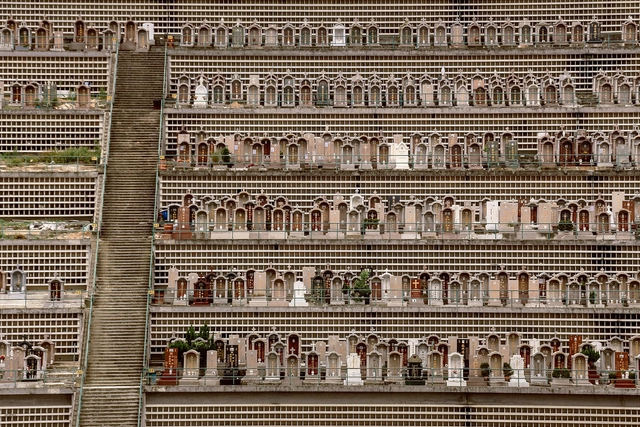
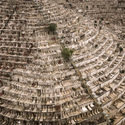
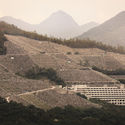
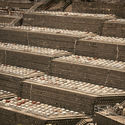
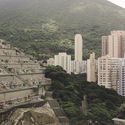
Hong Kong is considered to have one of the most exceptional skylines and urban schemes in the world: contemporary skyscrapers stand amidst the mountains and harbour, ancient houses nestled between futuristic structures, neon lights, landscapes... But among Hong Kong's numerous remarkable architectures, its spatial typology of death is like no other.
Over the course of five years, RIBA-nominated architectural photographerFinbarr Fallon captured the hyper-dense graveyards of Hong Kong, showcasing the sublime geometry of its mountainside burials in a series titled "Dead Space".
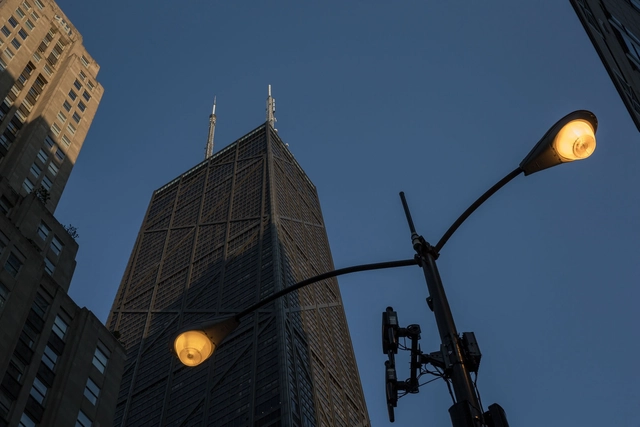
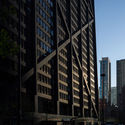
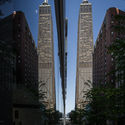
Ste Murray has recently visited Chicago and photographed the famous John Hancock Center on its 50th Anniversary. Completed in 1969, and conceived by architect Bruce Graham and structural engineer Fazlur Khan of Skidmore Owings and Merrill, the building was once the tallest structure in the world outside of New York.
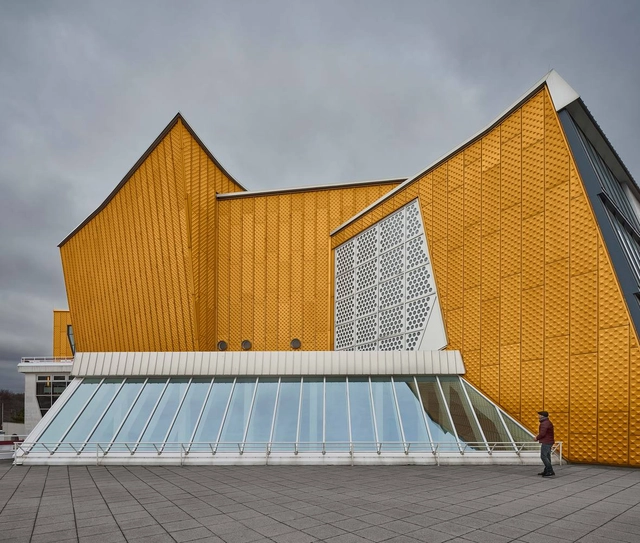
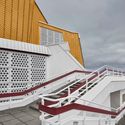
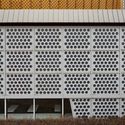
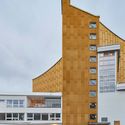
The Berlin Philharmonic by Hans Scharoun is one of the most prominent mid-20th century structures in the German city. The expressionist-style building with its bright-colored facade is the first of its kind by the German architect, as well as his most famous project to date. Scharoun’s design interprets rhythm and music as architecture, both conceptually and physically.
Architectural photographer Bahaa Ghoussainy unfolds Scharoun’s unique architecture by highlighting the concert hall’s dramatic angular geometry, vibrant yellow-hued facade, and play of lines and forms.
Photography is still one of the most widely used means of representation and communication in architecture. Although it does not incorporate the temporal dimension, the level of fidelity with which photography represents the other three dimensions of the built world makes it one of architect's favorite tools to convey their buildings.
To celebrate World Photography Day, we've gathered 15 photographers from around the world who are worth knowing - and following on Instagram.
Earlier this year, the L’Abre Blanc Residential Tower was completed in Montpellier, France. Designed by Sou Fujimoto, Nicolas Laisné, Manal Rachdi, and Dimitri Roussel, the tree-like structure features cantilevered balconies protruding from its ‘trunk’ in all directions. An eccentric but unique silhouette, the building is hoped to become an object of pride for the people of Montpellier as well as a tourist attraction.
https://www.archdaily.com/922217/sou-fujimotos-labre-blanc-through-the-lens-of-laurian-ghinitoiuLilly Cao
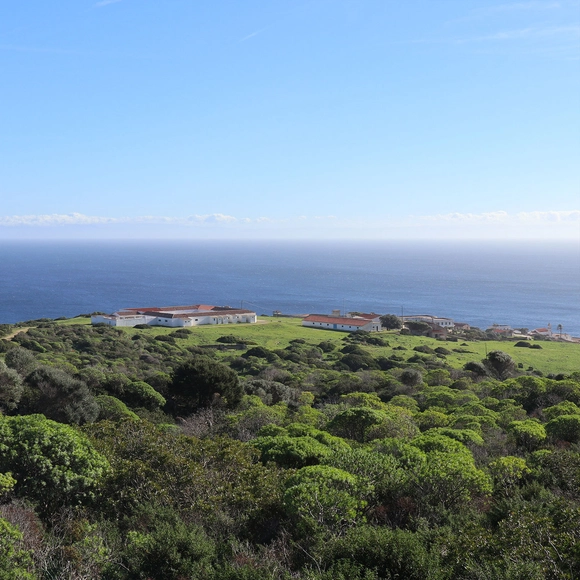
Cala d'Oliva agrarian penal colony branch, copyright Paolo Emilio Pisano
Every human intervention on an island – even those that interpret it as an ideal space for confinement - starts as an act of colonisation aimed at reducing the unescapable condition of insularity. Enacting the power of nomads as decolonising agents, Casting Castaways will migrate every two years from island to island across a former carceral archipelago in the Mediterranean Sea. We will seek for a pedagogy that, while suggesting future scenarios vis a vis current trends in tourism, environmental preservation and heritage, interrogates those territories to understand how and whether architecture can challenge and escape from the very ideas
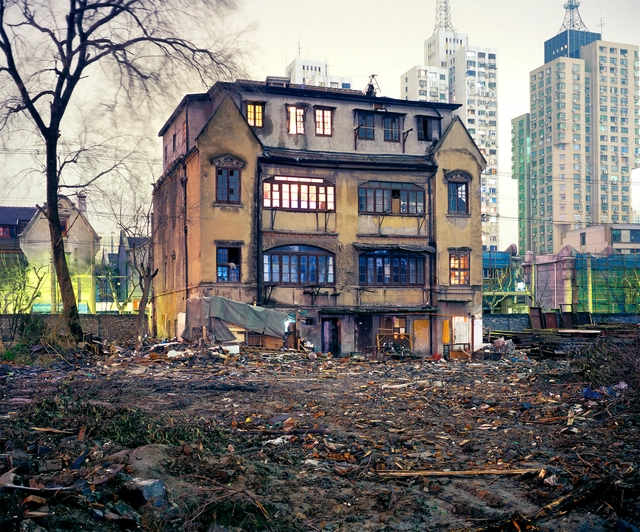
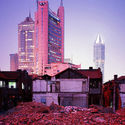
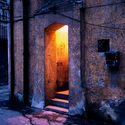
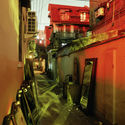
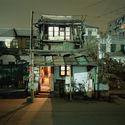
Shanghai is a city full of contradictions. Beneath the towering skyscrapers and contemporary complexes, old houses and shops are tucked away, gradually falling apart. The city's disappearing streets caught the attention of many international photographers. Some displayed the relationship between old vs new, while others focused on the historic districts and their cultural significance.
Canadian photographer Greg Girard, who spent most of his time in Asia, examined the social and physical transformations of the Chinese city and published a photo-book titled “Phantom Shanghai”.
Modern architecture emerged during the late 19th - early 20th century to break away from historical styles and create structures based on functionality and novelty. Regardless of the style's prominence, post-modernist architecture emerged a few decades later as a reaction to modernism's uniformity and formality, adding complexity, asymmetry, and color into architecture.


.jpg?1575455535&format=webp&width=640&height=580)
.jpg?1575455403 "© Bahaa Ghoussainy")
.jpg?1575455498 "© Bahaa Ghoussainy")
.jpg?1575455479 "© Bahaa Ghoussainy")
.jpg?1575455317 "© Bahaa Ghoussainy")
.jpg?1575455535)
.jpg?1575311092 "© Marc Goodwin")
.jpg?1575310961 "© Marc Goodwin")

.jpg?1575310983 "© Marc Goodwin")


.jpg?1573155672&format=webp&width=640&height=580)











_8918.jpg?1564659851&format=webp&width=640&height=580)
_9105.jpg?1564659862 "© Laurian Ghinitoiu")
_9331.jpg?1564659818 "© Laurian Ghinitoiu")
_9283.jpg?1564659903 "© Laurian Ghinitoiu")
_8623.jpg?1564659967 "© Laurian Ghinitoiu")
_8918.jpg?1564659851)