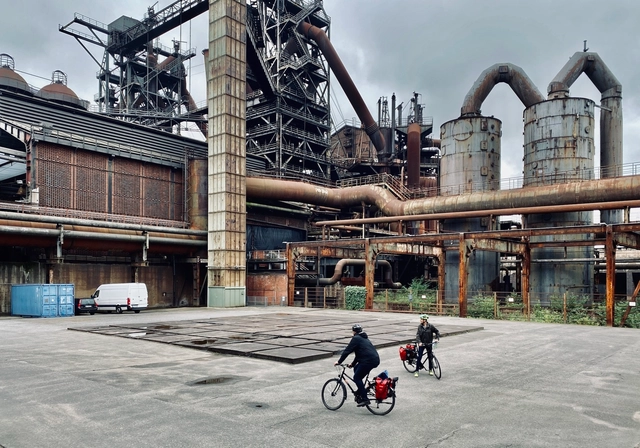
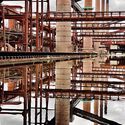
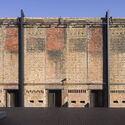
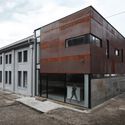
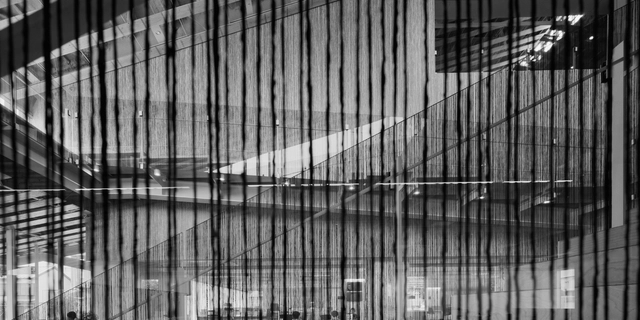
This volume celebrates the latest architectural endeavor of the Gulbenkian Foundation in Lisbon: the new building of the Centro de Arte Moderna (CAM), designed by architect Kengo Kuma in collaboration with the landscape architect Vladimir Djurovic. More than a building, this project is a living dialogue between architecture, nature, and the city—transforming museum and garden into a unified public space, rooted in the Foundation’s cultural mission.
The life and art of Felix Nussbaum, the architectural language of Daniel Libeskind, the photographs of Erieta Attali—three voices, three narratives, brought together in an impressive photo book. New York based photographer Erieta Attali has succeeded in capturing the various references inside and outside the Felix-Nussbaum-House in Osnabrück, the complex interplay of architecture, museum and exhibition spaces, and the paintings of German-Jewish painter Felix Nussbaum (1904–1944) presented therein with her photographs. Attali‘s view is not documentary, but rather the subjective view of a visual poet who, in keeping with the subtitle of the publication, explores the resistance in both Nussbaum‘s paintings and Libeskind‘s architecture. The Felix Nussbaum House was Libeskind‘s first completed building in 1998, and with its provocative, unconventional design, it continues to defy visitors‘ usual expectations of a museum building. This book is intended to arouse curiosity: about Nussbaum‘s paintings and life, about the building that bears his name. And, in keeping with the wishes of the museum‘s sponsors, it aims to keep his memory alive. The cover in the shape of an N is a reference to the name of the painter who was murdered in Auschwitz.
Beyond just a visual record, architectural photography is a powerful medium that holds the ability to reveal and explore architectural spaces from unique perspectives. Through the lens of a skilled photographer, architecture showcases its interplay of lights and shadows, the tectonics of its structural elements, the careful detailing of joined materials, and the larger narratives of cultural heritage. On World Photography Day 2024, we celebrate this unique art form by highlighting the work of 25 distinguished photographers who have captured architecture in its most evocative forms.
Among the featured photo series, Paul Clemence explores the minimalist precision of Swiss museums, Iwan Baan offers a visual narrative of Prague, while Simone Bossi highlights the contrast between man-made structures and their natural surroundings. Additionally, Marc Goodwin continues his series on architecture studios from around the world, providing a glimpse into the profession’s creative spaces. Erieta Attali’s work transports viewers to ancient ruins to explore historical juxtapositions and cultural landscapes.
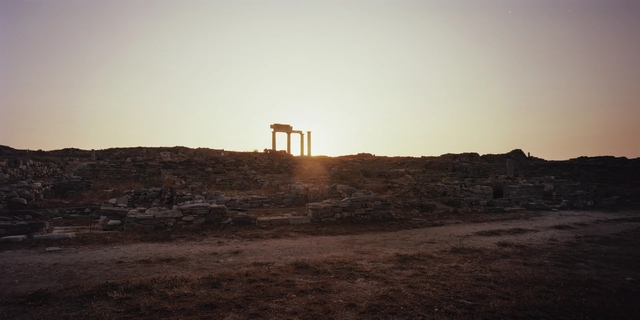
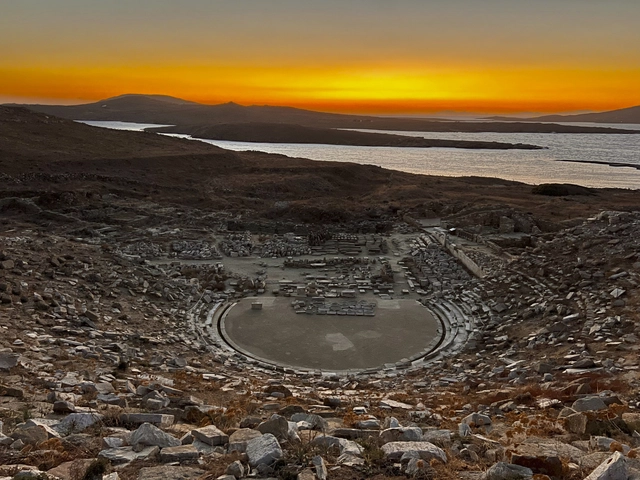
A photograph is supposed to show things, unless these belong to the indivisible, the space beyond, such as the absolute darkness of the infinite. In that expanse where the supernatural lurks. The deities long since known and attached to a particular sanctified topos. Delos Island stands out in that category as a place easily identified on a map but physically impossible to reach as one sails in the Aegean Sea. You know it is there, but you are hindered from gaining hold of it. It is as elusive as an imagined place that belongs to another sphere of existence. This explains its flickering sight from a distance which soon leads to a vanishing image at closer distance: as if the magic has escaped.
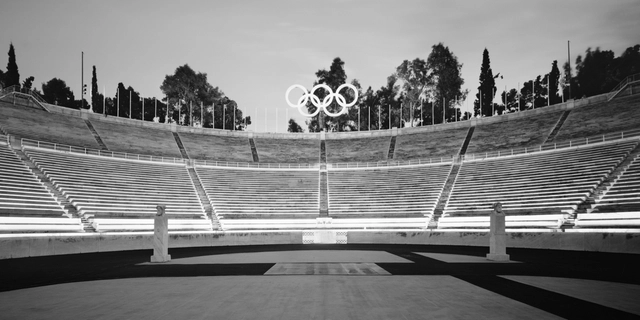
Stepping out into the sunlit arena and onto the track. The noise of a cheering crowd swells up alongside competitors as they race around the stadium and past those who just entered the site of this athletic spectacle. The atmosphere is overwhelming and intimidating, but exhilarating at the same time. What an experience. Being here. In this moment.
Erieta Attali, one of the most commanding architectural photographers working today, began her career working on archaeological sites, including Delos, the mythic birthplace of both Apollo and Artemis. Indeed, no sooner had photography been invented in the Nineteenth century than it became a key tool for archaeologists, recording the layers progressively revealing ancient civilizations from architectural fragments and traces on the ground. But for Attali to make images of an archaeological site goes far beyond literal documentation to capturing a topographical vision, extending often to the horizon, or even on the open sea and the sense it gives us of the curvature of the earth.
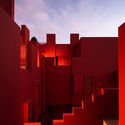
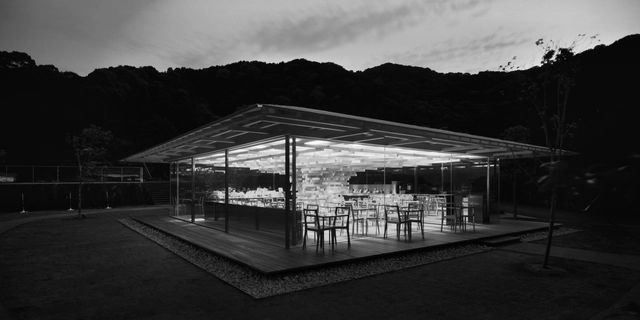
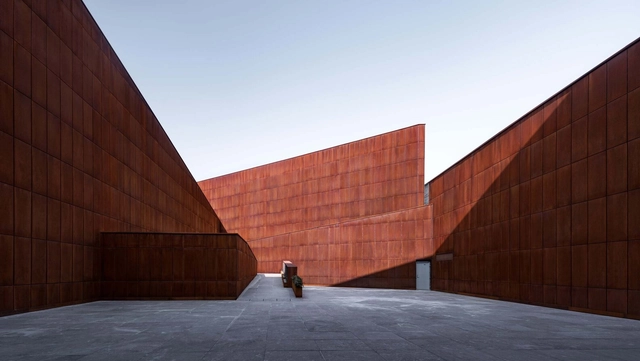
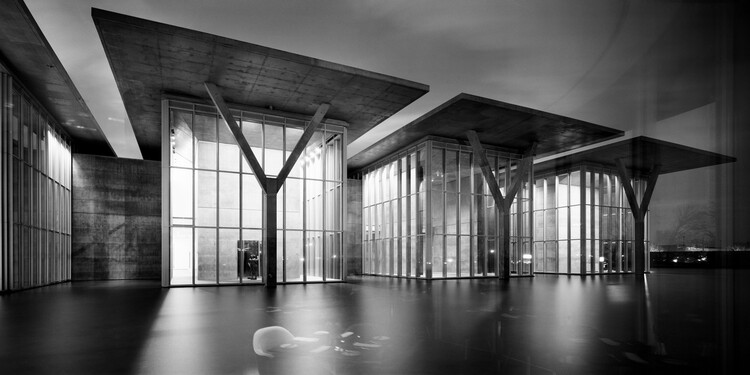
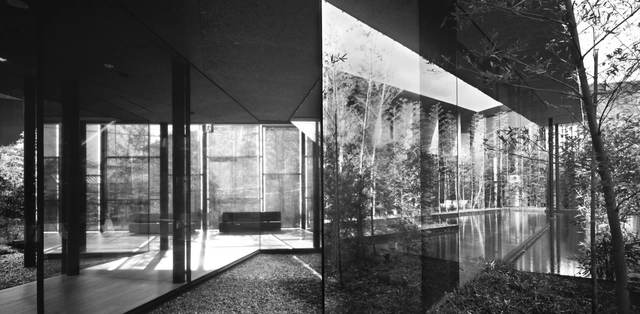
Japanese architect Kengo Kuma and Greek photographer Erieta Attali have been working together for over twenty years. Their joint work is characterized by a shared aesthetic understanding of architecture, space, and visual perception. In both Kuma’s buildings and Attali’s photographs, interior and exterior spaces merge and dissolve into one another. Both are united by the idea that spatial experience is fleeting, shaped by the rhythm of the day and the seasons, making built space a medium that expands into the landscape and encourages people to question their notion of spatial boundaries.
Nestled amidst the Aegean Sea, the ancient island of Delos emerges as a timeless testament to human ingenuity and the harmonious interplay between architecture and nature, in this captivating series of photographs shared with ArchDaily for the International Day of Photography by artist Erieta Attali, along with the insightful voice of Brazilian architect Angelo Bucci. Inspired by Attali's work, Bucci crafts a narrative that explores the profound connection between architecture and the environment, echoing the ethos of Delos itself.
Erieta Attali’s photographic projects develop over long committed years and through many, many images. Yet for this, her second exhibition at the Byzantine Museum, she has distilled the profound dialogue she entertains with architecture into a selection of fifteen photographs. These are images of layered perceptions that capture the very essence of her approach to architecture and photography as complementary experiences of shifting opticality.
Architecture has always been considered a fixed entity in contrast to the ever-shifting appearance of Nature. Photography has dutifully followed this concept of immobility by trying to fix the ‘eternal’ presence of architecture as a memorable icon. In historical terms then, architecture and landscape coexisted in the humanistic continuum of inside and outside space to which Modernism aspired, as "extensions of man", in incidental and uncanny relationships of adjacency and reflectivity. My intention through my photography has been to change this perception.
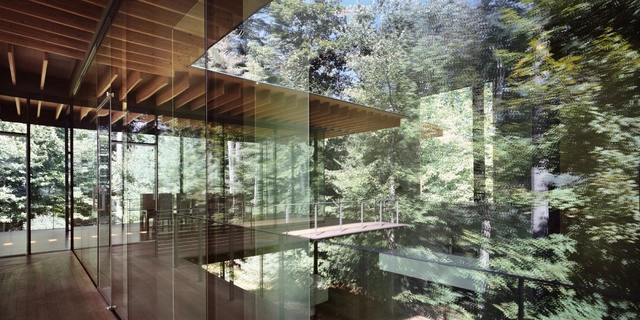
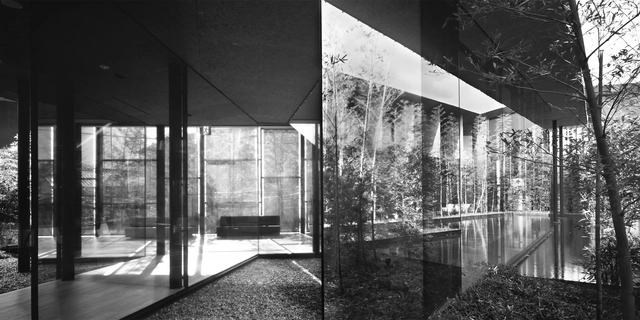
Whether glass and sky, asphalt and sand, steel and trees: the merging of architecture and landscape has always been an inevitable factor in building. In particular the buildings made of glass, steel and concrete have had an immaterial connection to their natural surroundings since the 19th century. The superimposition of structures, reflections, filters and transparencies becomes an important design element and fascinates with its ambiguous representation of reality.
Over the years, ArchDaily has brought us the most innovative architecture projects through the eyes of creative specialized photographers. Their captures bring us closer to the works, reflect the vision of the architects and, above all, transmit and generate the most varied emotions.
From conversations with these talented photographers, we can understand, at least a little, what they feel when facing an architectural project with a camera in hand.
Few other materials can convey architectural atmosphere as well as the glass. A to-go choice for the modernists, due to its transparent nature, glass still holds a solid place within the material palette for architects around the globe. Such unique element is the subject of Archiving Flux / Stasis, a photographic exhibition by Erieta Attali hosted by the Greek Ministry of Culture in Casa Romana, Kos Island, Greece, set to open its doors in July 21st.
Photography is often likened to a visual language. The “most literary of the graphic arts”[i] is after all a formal system with commonly accepted structure and recognizable motifs.
Monte Rosa Hut by Berth Desplazez Architects. Image
If “nature” and “architecture” are commonly conceived as opposing entities, representative of human encroachment on the primordially physical image of the world, under which conditions do these two fundamental factors form a strong liaison and which is the ensuing by product? Can this often ignored bond between culture and nature be unearthed and put to light by the use of photography?
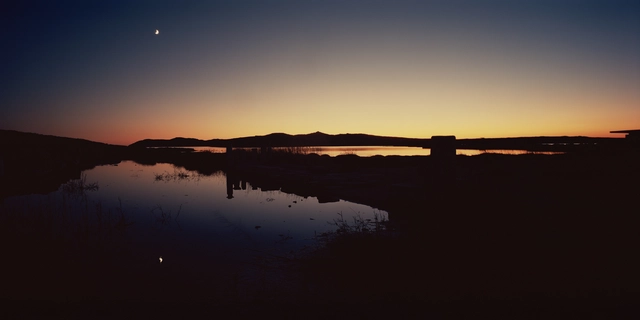
From my very first attempt at photographing architecture in December 1995 I realized that I wanted both building and landscape to narrate a common story and form an inseparable whole. There are two key processes at work when I photograph architecture as a component of its surrounding landscape: one directed inwards and one directed outwards, and they take place simultaneously.
At the dawn of photography the city could only be recorded as a virtually empty stage by a camera lens too slow to fix for posterity the vitality of urban life. Even before the new art of photography – literally writing with light – was announced in 1839 in Paris, the City of Light, Daguerre had pioneered street photography by capturing a view of the Boulevard du Temple through the double aperture of his window and his camera lens. This first urban daguerreotype. captured perfectly the city’s architecture, but this man soon to be famous for portraiture left us scarcely a trace of the bustling traffic of that spring 1838 morning, all human presence was vanquished, save a blurry pair of men, a shoe shiner and a customer, who remained still long enough to be captured as a smudge on the otherwise pristine scene. By the end of the century the camera was able to capture motion even below the threshold of human perception, making it a tool for the scientific study of human and animal locomotion.
https://www.archdaily.com/964563/limia-erieta-attalis-latest-photograph-exhibitionAlessio Assonitis & Barry Bergdoll