The flow of architectural values throughout the centuries demonstrates the prevalence of some parameters over others in each historical period. In terms of composition, one of the most fundamental considerations revolves around issues of symmetry and balance. Indeed, a design does not necessarily have to be symmetrical to convey the notion of compositional balance. Its elements do not have to be repeated side by side for the whole to convey a sense of completeness, stability, and... paradoxically, symmetry. Many contemporary projects achieve a balanced compositional whole without repeating their elements side by side.
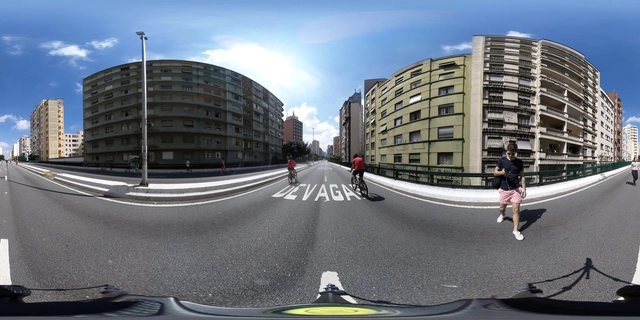
While most architectural critics and theorists agree that architecture can only really be learned on site –by experiencing its volumes, textures, sounds and smells– hardly anyone would have the time and resources to see all the projects they would like to in person. Ways of documenting a building or a city have aroused the curiosity of painters, photographers and artists throughout history. From the traditional classical portrait with perfectly adjusted proportions to disruptive forms such as Michael Wesely's long exposure images, Heinz Emigholz's experimental film set, or Tuca Vieira's Photographic Atlas of the city of São Paulo, there are myriad ways to portray the built environment. 360° cameras bring yet another set of possibilities to documenting architecture and urban scenes. We spoke to Romullo Fontenelle, architect and architectural photographer, who tested the new RICOH THETA X 360° camera and provided an account of how this technology can improve the efficiency and precision of his design processes.
On August 19th, the world photography day is celebrated, a fundamental tool for the imagery record of our society. If, on the one hand, photography is the protagonist in dialogues that involve architecture and the city, portraying historical moments and enhancing buildings, on the other hand, it guides us through the context and backstage of the moment, eternalizing the process.
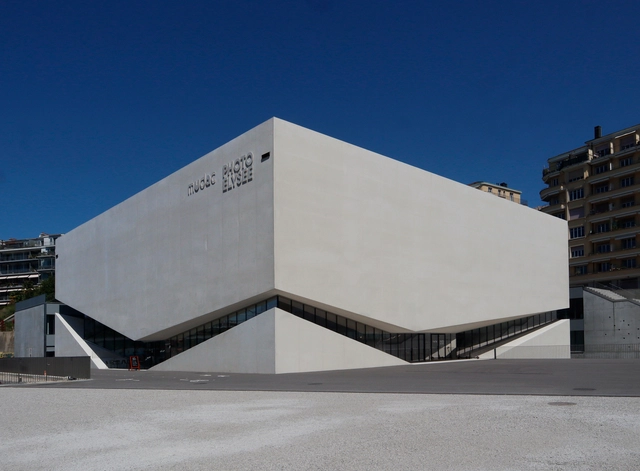
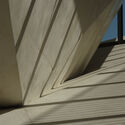
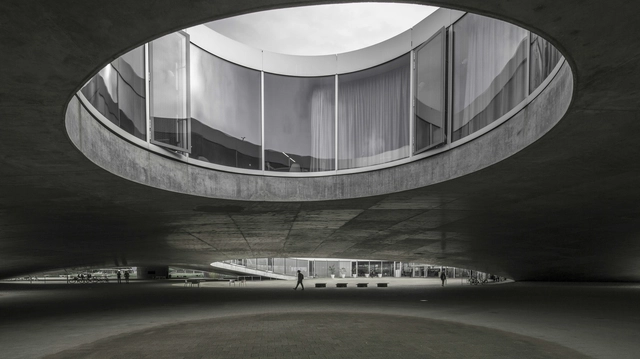
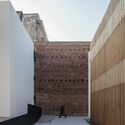
Following five years of construction, Portuguese architecture firm Aires Mateus has completed its awaited mudac: museum of Contemporary Design and Applied Arts in Lausanne, Switzerland. The sculptural building is part of a new cultural district and urban regeneration plan promoted by the Canton of Vaud, the City of Lausanne, and the CFF (Swiss Federal Railways), which features three art museums that translate the memory of the site, echoing its former industrial status with prismatic geometric forms, concrete surfaces, and sharp lines.
During his latest esplanade in Switzerland, architectural photographer Paul Clemence captured the newly inaugurated museum, highlighting its unique concrete geometry, play of shadow and light, and how the architecture complements its surroundings.
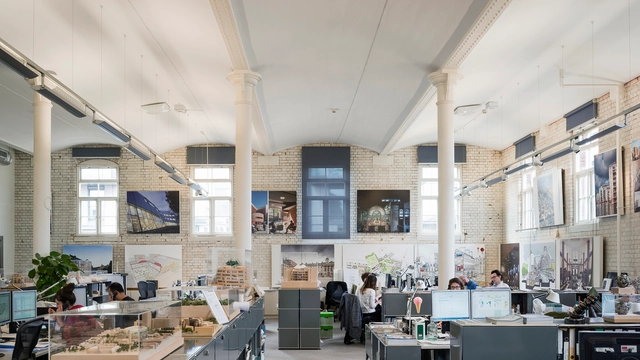
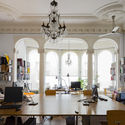
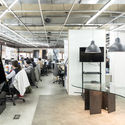
Moving forward with his "ultra-marathon of photoshoots", architectural photographer Marc Goodwin is putting together an Atlas of Architectural Atmospheres by Arcmospheres, a project that seeks to document diverse architecture and design studios from around the world. Since 2016, the architectural photographer has been traveling "far and wide to capture the atmospheres of architecture studios in order to produce an online and print resource for the architecture community", and after a two-year hiatus due to the pandemic, Goodwin resumed his project with an exploration of Berlin's architecture offices, capturing the work environment of renowned firms such as Hesse, LAVA, JWA, and FAR frohn&rojas, to name a few.
Designed by Herzog & de Meuron, Tate Modern’s Switch House was Tate Modern’s latest extension in 2016, radical in form and surface, yet intimately relative to the vast building to which it joins, which opened as London’s foremost modern art gallery in 2000. Shot recently by Bahaa Ghoussainy, the building that opened in 2016, is a model for museums in the 21st century.
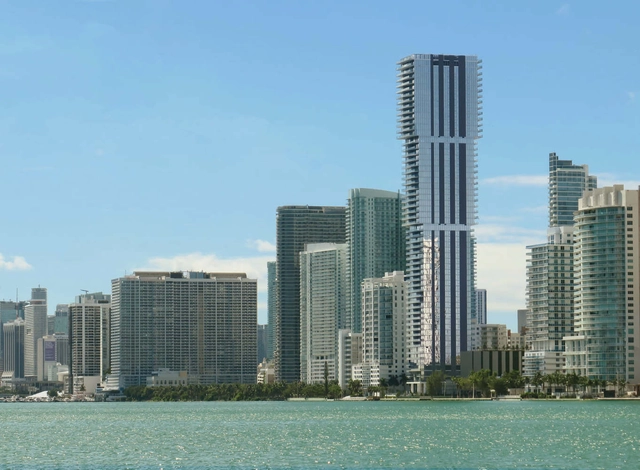
Miami’s long-awaited landmark, the Elysee Edgewater has finally reached construction completion. Designed by Arquitectonica, the 649-foot-tall glass tower features 57 storeys of luxury residences, as well as recreational and fitness amenities across its tiered floors. Architectural photographer Paul Clemence released images of the newly-completed tower, which now sits as the tallest residential building in the Edgewater district.
In this episode of “Behind the Scenes”, where we showcase the work of visionary photographers and ask about their experiences beyond what is seen by the public, we present Pablo Casals Aguirre, an architect, professor, photographer, and filmmaker based in Santiago, Chile. Here, he shares his methodology, which he developed with references to cinema, and highlights his intentions of translating the best architectural works into imagery - be it still or in movement.
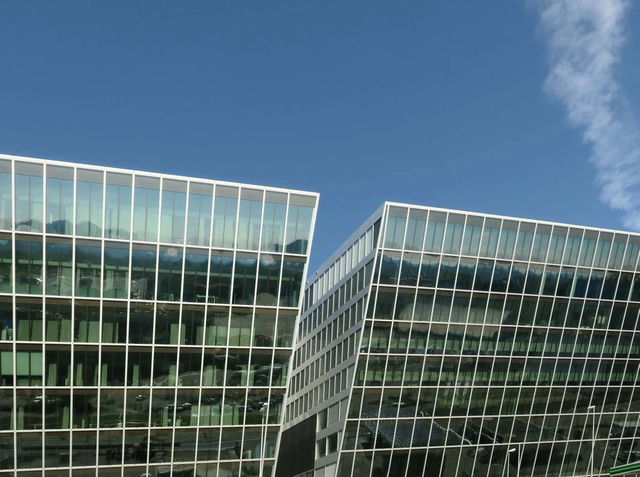
Architectural photographer Paul Clemence has released a new photoseries of Riken Yamamoto's The Circle project, a mixed use development at the Zurich Airport. The design was a competition entry that asked architects to create a program that offers visitors: Swissness, Surprise, and Connections to the World. Yamamoto's winning design, with its inclined facade and combination of linear and curved outlines, linked the airport to the park physically and visually, creating an architecture that highlights the Swiss identity.
"From your eyes to my eyes" is a project that was born from the idea of involving the people who follow me in magazines and on social media in my photo reports; inviting them to send me their favorite architectural places, the ones they carry within themselves, in their eyes.
The Architectural Photography Awards 2021 has announced its shortlist for its ninth edition. Supported by Aluprof UK and the World Architecture Festival (WAF), the shortlist was selected from around 2000 entries and 42 countries, "highlighting the expertise of architectural photography and focusing on the skill and creativity of the photographer". The photographs are divided into 6 categories: Exterior, Interior, Sense of Place, Buildings in Use, Mobile, which this year’s theme is Greening the City, and Portfolio with the theme of Building with History.
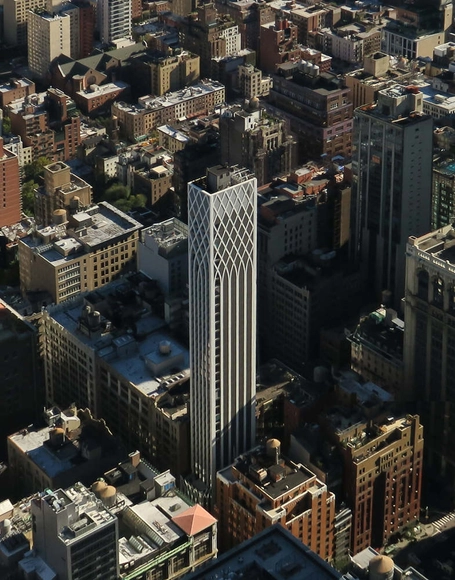
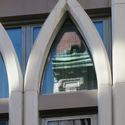
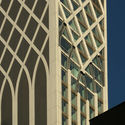
Architectural photographer Paul Clemence has released a new photoseries of 30 E 31, a luxury apartment tower in Midtown Manhattan designed by Morris Adjmi Architects. Inspired by classic New York skyscrapers of the 1920s, the architects reimagined NoMad’s Neo-Gothic and Art Deco architecture and designed a structure with a "distinctive lattice crown" that blends two architectural eras with the city’s iconic skyline.
Barcelona-based Miralles Tagliabue - EMBT under the direction of Benedetta Tagliabue, has completed its construction of the Centro Direzionale di Napoli train station and subway, an underground central station that combines the city's natural volcanic geography with the site's 1970's-built master plan designed by Kenzo Tange. The design focuses on art, architecture, and archaeology, also known as the "Triple A", giving the site a highly recognizable identity that contrasts its surroundings and historical context.
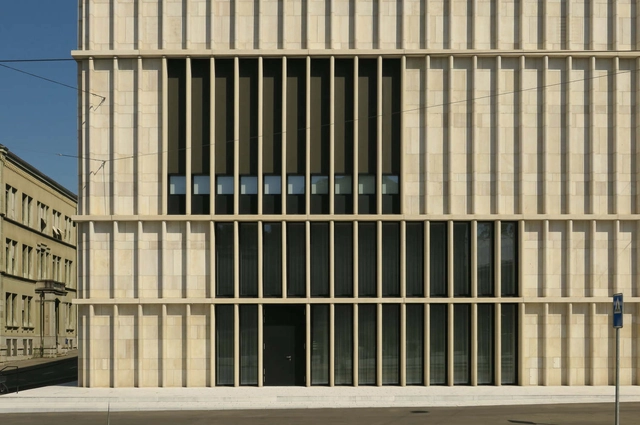
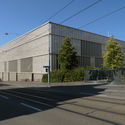
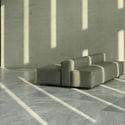
Architectural photographer Paul Clemence has released a new photoseries of the newly-opened Kunsthaus Zürich Museum Extension designed by David Chipperfield Architects. The extension is a freestanding addition to the existing Kunsthaus museum, and houses a collection of classic modernist artwork, the Bührle collection, and temporary exhibitions. The architectural identity takes inspiration from traditional stone façades found on the existing Kunsthaus as well as other significant public buildings in the Swiss city, and combines tradition and innovation through slender vertical fins crafted from local Jurassic limestone.
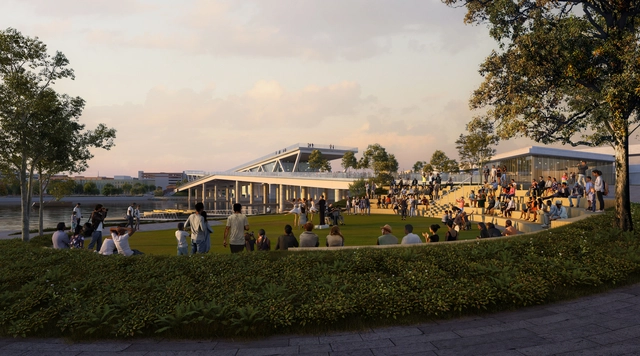
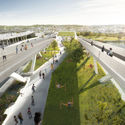
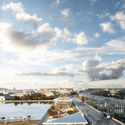
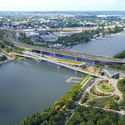
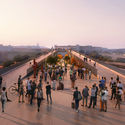
OMA/Jason Long’s 11th Street Bridge Park has reached new major milestones in its design and capital campaign after a series of design refinements. The design team has further improved the program areas across the bridge park, and has shifted the locations of the amphitheater and main gathering space, extending its capacity up to 250 people. Finishes and landscape designs have also been refined, whereas the pedestrian pathways, terraces, centers and public plazas have remained unchanged.
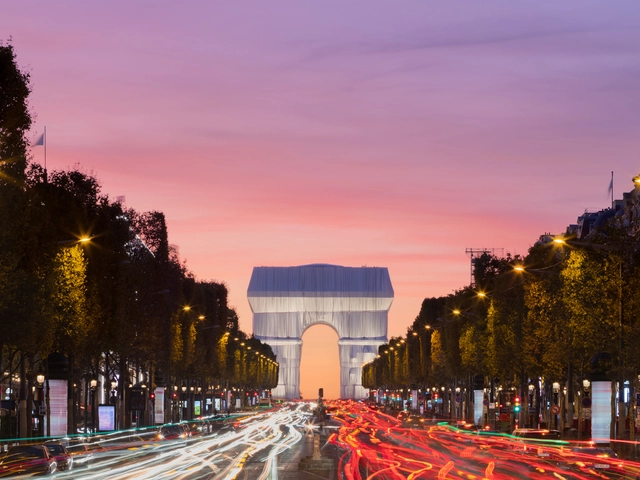
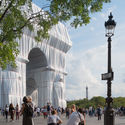
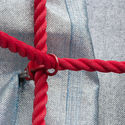
After almost 60 years of its initial ideation, Artists Christo and Jeanne-Claude’s temporary installation, the complete wrapping of L’Arc de Triomphe in Paris has opened to the public on September 18th, attracting thousands of tourists and locals. In this new photoseries, photographer Jared Chulski captures the wrapped monument, focusing on the details of the temporary intervention and how it compliments the city's urban fabric.
A building stands out along the maritime walkway in Palma, Mallorca's capital. Designed by José Ferragut Pou and completed in 1960, the building was a poster child for the modern architectural movement sweeping the globe at that time. Today, like many of its brethren, it stands in abandoned disrepair.
Lluís Bort is the Spanish architect and photographer behind "Empty Architecture," a photographic compilation of abandoned buildings from throughout the island of Mallorca, Spain.
Paul Clemence has released a new series of images showcasing the incomplete construction of Diller Scofidio + Renfro's Copacabana Museum of Image and Sound (MIS). The project first took shape in 2014 but was completely suspended in 2016. Although the project has been untouched since then, a recent announcement by Governor Cláudio Castro promised the revival of construction works at the museum, with an expected public opening in early 2023.






.jpg?1645645621&format=webp&width=640&height=580)





















.jpg?1628582806&format=webp&width=640&height=580)
.jpg?1628583235 "© Paul Clemence")
.jpg?1628583065 "© Paul Clemence")
.jpg?1628583007 "© Paul Clemence")
.jpg?1628582926 "© Paul Clemence")
.jpg?1628582806)