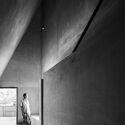
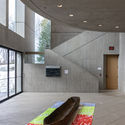
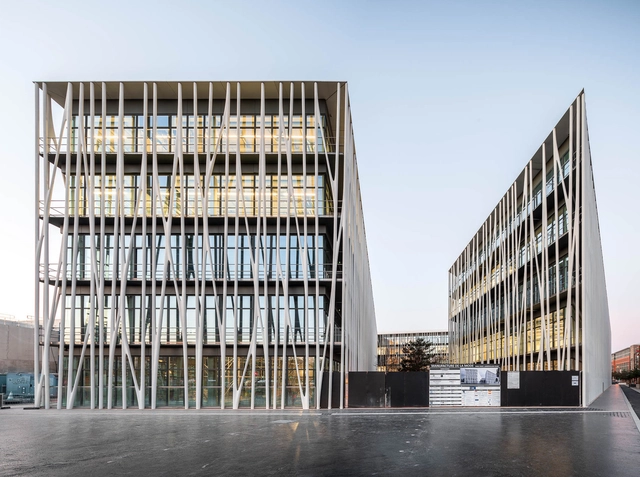
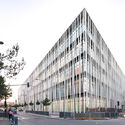
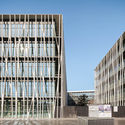
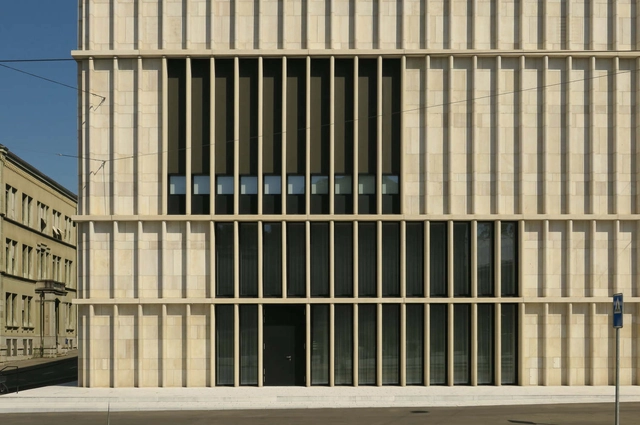
Architectural photographer Paul Clemence has released a new photoseries of the newly-opened Kunsthaus Zürich Museum Extension designed by David Chipperfield Architects. The extension is a freestanding addition to the existing Kunsthaus museum, and houses a collection of classic modernist artwork, the Bührle collection, and temporary exhibitions. The architectural identity takes inspiration from traditional stone façades found on the existing Kunsthaus as well as other significant public buildings in the Swiss city, and combines tradition and innovation through slender vertical fins crafted from local Jurassic limestone.
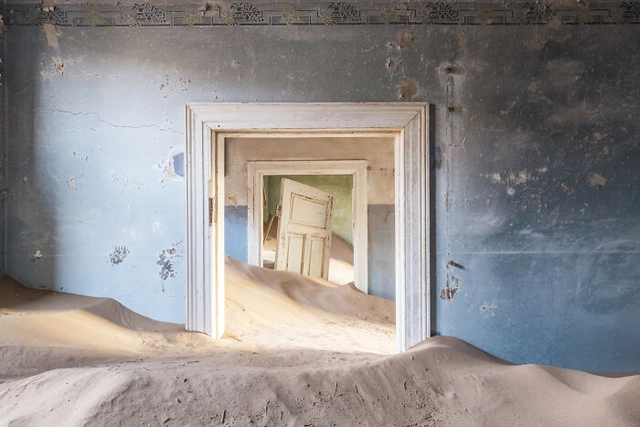
During his explorations of abandoned places across Europe, award-winning French photographer Romain Veillon has stumbled upon enchanting architectures that have been left to decay for decades. In his latest book Green Urbex: The World Without Us, Veillon explored what the world would look like if the human race disappeared and nature took its course without any human interference.
Architecture and photography are deeply dependent on one another. The first photograph ever taken frames buildings as its subject. Even more, it took an entire room to produce the image through a camera obscura. In the early days, buildings were one of the few subjects that could sit still for the 8 hours it took to burn an image onto a photosensitive medium. However, architecture is dependent on photography too. Buildings are large, slow, and immobile. Without photographs, it would be difficult to visit the important structures around the world. In this way, photographs are an easily shareable surrogate for buildings. But, photographs are not truthful 1:1 depictions so photographers have a lot of agency when it comes to how we experience architecture. This video offers some insight into this relationship and presents a few photographers as examples for how they interpret an architect's intentions and add their own voice. These include Julius Shulman, Ezra Stoller, Stephen Shore, Iwan Baan, among others.
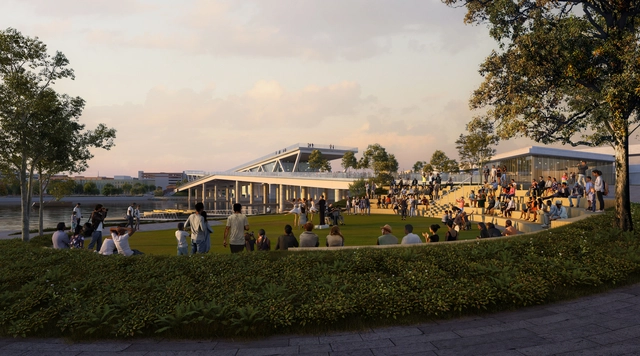
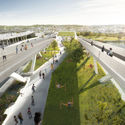
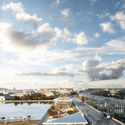
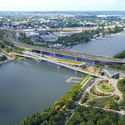
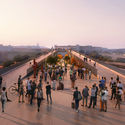
OMA/Jason Long’s 11th Street Bridge Park has reached new major milestones in its design and capital campaign after a series of design refinements. The design team has further improved the program areas across the bridge park, and has shifted the locations of the amphitheater and main gathering space, extending its capacity up to 250 people. Finishes and landscape designs have also been refined, whereas the pedestrian pathways, terraces, centers and public plazas have remained unchanged.
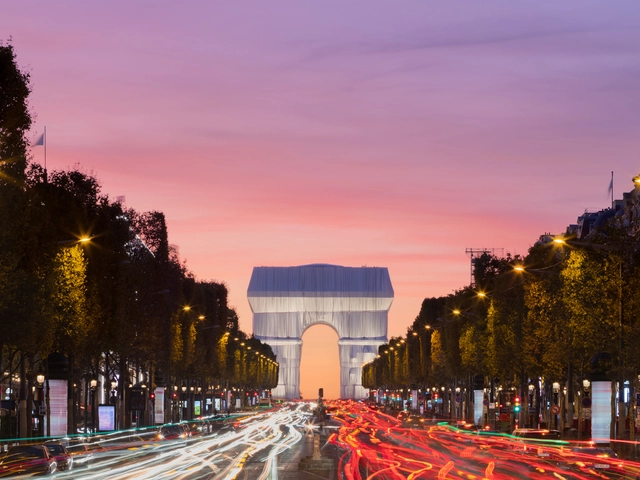
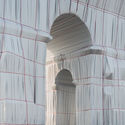
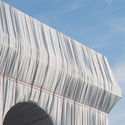
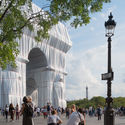
After almost 60 years of its initial ideation, Artists Christo and Jeanne-Claude’s temporary installation, the complete wrapping of L’Arc de Triomphe in Paris has opened to the public on September 18th, attracting thousands of tourists and locals. In this new photoseries, photographer Jared Chulski captures the wrapped monument, focusing on the details of the temporary intervention and how it compliments the city's urban fabric.
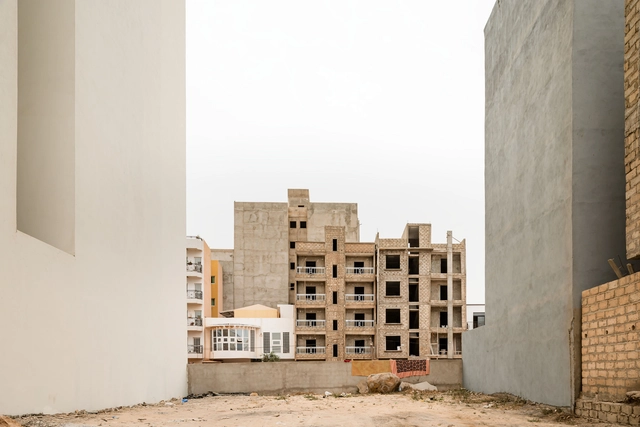
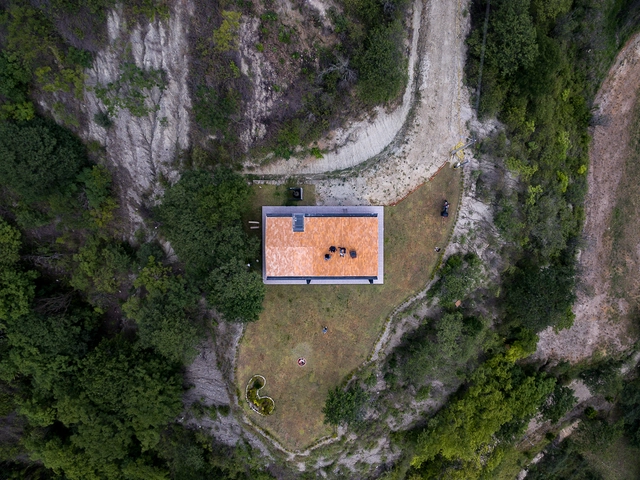
Every year on August 19th, we celebrate World Photography Day. This year, to encourage our readers who are passionate about this art, we published an open call inviting people – both amateur and professional photographers – to submit their images of architecture and the city.
We received over 400 photographs of buildings, interiors, and public spaces in various locations and contexts, captured by more than 130 participants from all over the world, including India, Brazil, Pakistan, Mozambique, Italy, and the United States. Our editorial team pre-selected 50 photographs and then voted on the 25 most compelling images. Here is the selection, listed in alphabetical order by the names of the authors.
https://www.archdaily.com/968717/the-best-architectural-photographs-submitted-by-our-readers-in-2021Equipe ArchDaily Brasil
A building stands out along the maritime walkway in Palma, Mallorca's capital. Designed by José Ferragut Pou and completed in 1960, the building was a poster child for the modern architectural movement sweeping the globe at that time. Today, like many of its brethren, it stands in abandoned disrepair.
Lluís Bort is the Spanish architect and photographer behind "Empty Architecture," a photographic compilation of abandoned buildings from throughout the island of Mallorca, Spain.
Paul Clemence has released a new series of images showcasing the incomplete construction of Diller Scofidio + Renfro's Copacabana Museum of Image and Sound (MIS). The project first took shape in 2014 but was completely suspended in 2016. Although the project has been untouched since then, a recent announcement by Governor Cláudio Castro promised the revival of construction works at the museum, with an expected public opening in early 2023.
Capturing aerial photographs allows raising awareness of a project feature usually complex to capture using traditional methods. Based on the technological opportunities offered by small unmanned aerial vehicles (UAVs), commonly called drones, architecture photographers have begun to explore new ways of capturing a project in order to expose design decisions such as implantation, dialogue with the environment, or the relationship with nearby buildings.
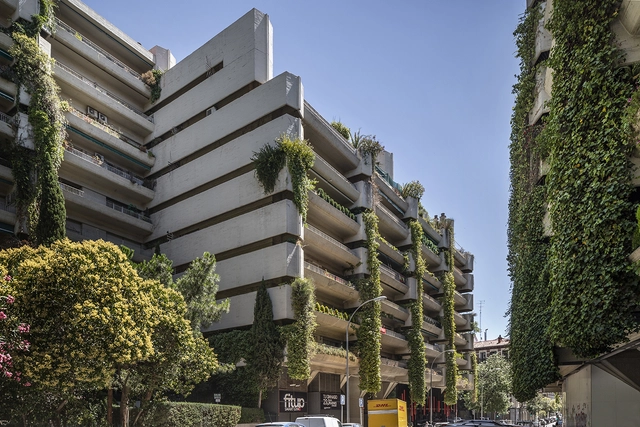
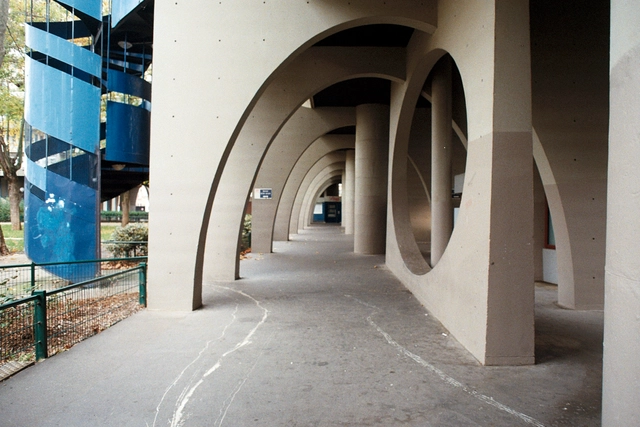
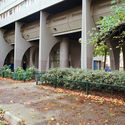
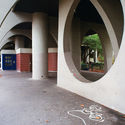
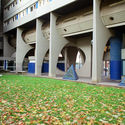
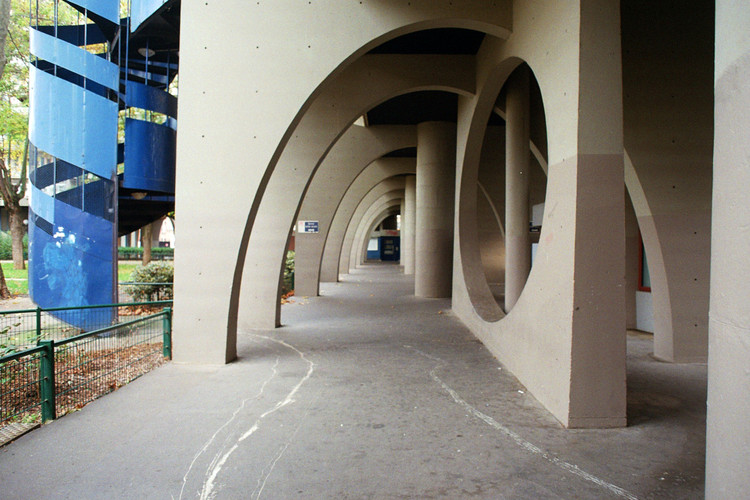
Designed by architect Renée Gailhoustet in 1972, the Cité Spinoza residential complex is part of the master plan created for downtown Ivry-sur-Seine, France. The project is a rendition of the Unité d'Habitation de Marseille by Le Corbusier, a major architectural reference for architects at that time. Architectural photographer Anthony Saroufim took the streets of the Parisian Banlieue and captured the modernist architecture's distinct concrete geometry.
Herzog & de Meuron's rehabilitation of Porta Volta took up themes of Milanese urbanism and architecture, which has defined the city's urban fabric throughout the years. The project's design was developed after an intensive historical analysis of the site - a site which dates back to the 16th century and holds remains of when the Romans defined the city's boundaries. Architectural photographer Bahaa Ghoussainy captured Herzog & de Meuron's Lombardian-inspired structure, highlighting its modernized nod to historic architecture.
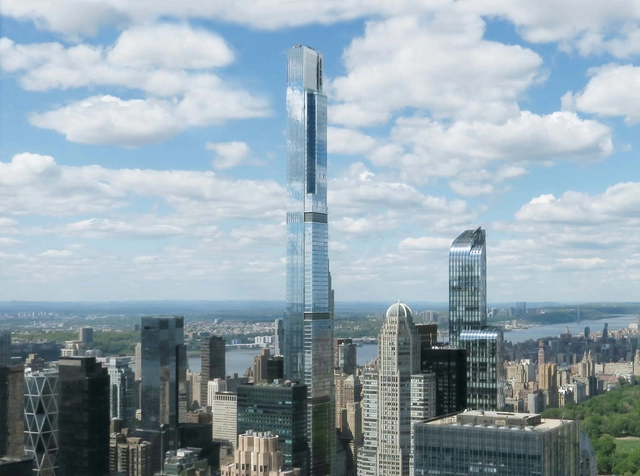
Paul Clemence has released a new series of images, showcasing the on-going construction works on Manhattan's Central Park Tower. The project is designed by Adrian Smith + Gordon Gill architecture and is set to be the tallest residential building in the world once completed. The building, as seen in the photographs, has neared completion and is set to open later this year.
In this episode of “Behind the Scenes”, where we showcase the work of visionary photographers and ask about their experiences beyond what is seen by the public, we are presenting Niveditaa Gupta, an architectural photographer, and filmmaker based in New Delhi, India. Through her photos, she looks to create visuals that can prompt a discourse about architecture itself.
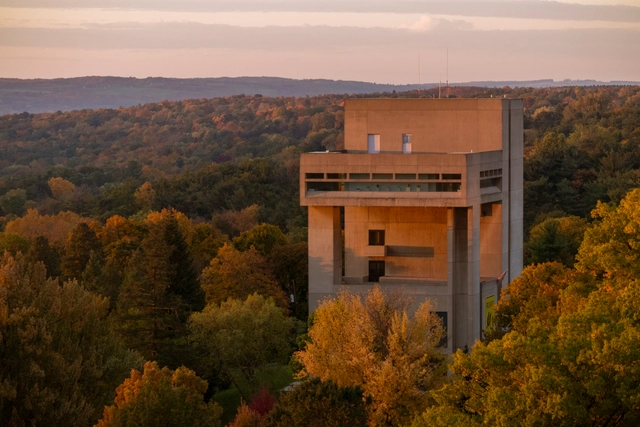
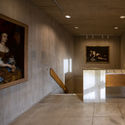
On the week commemorating American-Chinese architect I.M Pei’s birthday, Delhi-based photographer and photojournalist, Nipun Prabhakar, has shared with us a series of images of I.M Pei & Partners’ building, the Herbert F. Johnson Museum of Art. The firm was commissioned in 1968 by Cornell University to build the university’s museum that would also serve as a teaching facility and cultural center for the educational community. The building was completed in 1973 and was awarded the American Institute of Architects Honor Award in 1975.
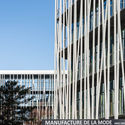
Designed by award-winning architect Rudy Ricciotti, the designer of the MuCEM in Marseille, the Jean-Boutin Stadium in Paris, and the Islamic Arts Exhibition in the Louvre Museum, the Manufacture de la Mode reintroduces Chanel's intricate craftsmanship in an architectural and urban context. Architectural photographer Simon Garcia uncovers the newly-inaugurated fashion community in a series of photographs.
The city of Madrid can be viewed as a place that is representative of all the architectural styles found on the European continent. 16th-century Renaissance buildings and 18th-century Baroque buildings all co-exist in harmony with more modern architectural styles such as Art Deco or the expressive contemporary architecture of recent years. Iconic contemporary architecture firms such as Herzog & de Meuron and Rogers Stirk Harbour + Partners, with projects such as the BBVA Headquarters and Madrid-Barajas Airport Terminal, have all played a part in defining Madrid’s architectural character too, making for a city with highly varied and distinct streetscapes.





.jpg?1633033510&format=webp&width=640&height=580)




.jpg?1628582806&format=webp&width=640&height=580)
.jpg?1628583235 "© Paul Clemence")
.jpg?1628583065 "© Paul Clemence")
.jpg?1628583007 "© Paul Clemence")
.jpg?1628582926 "© Paul Clemence")
.jpg?1628582806)
.jpg?1625498401&format=webp&width=640&height=580)
.jpg?1625498227 "© Bahaa Ghoussainy")
.jpg?1625499426 "© Bahaa Ghoussainy")
.jpg?1625498239 "© Bahaa Ghoussainy")
.jpg?1625498318 "© Bahaa Ghoussainy")
.jpg?1625498401)