1. ArchDaily
  2. Fotografia

Fotografia: The Latest Architecture and News

Photography: Mid-Century Modern Churches by Fabrice Fouillet

Subscriber Access | 
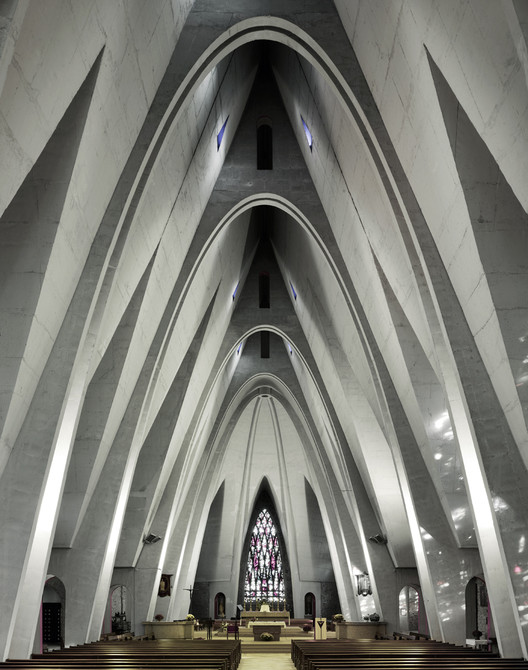
Photography: Mid-Century Modern Churches by Fabrice Fouillet - Image 2 of 4
© Fabrice Fouillet

As Europe recovered from the death and destruction of World War II, countries got back to the business of rebuilding their communities and, of course, their churches. The need to make sense of the madness of the War was palpable - as was the need to express this modern-day spirituality in a form that broke from the past and embraced this new world.

The result was a bevy of European churches that - although often misunderstood by practitioners - represent some of our best-preserved examples of Modernist architecture. Photographer Fabrice Fouillet made it his mission to photograph these beauties in a series he calls "Corpus Christi." You can see the images - as well as Fouillet's description of the work - after the break...

Photography: Mid-Century Modern Churches by Fabrice Fouillet - Image 1 of 4Photography: Mid-Century Modern Churches by Fabrice Fouillet - Image 4 of 4Photography: Mid-Century Modern Churches by Fabrice Fouillet - Image 8 of 4Photography: Mid-Century Modern Churches by Fabrice Fouillet - Image 13 of 4Photography: Mid-Century Modern Churches by Fabrice Fouillet - More Images+ 9

Photography: When World Fairs End / Jade Doskow

Subscriber Access | 
Photography: When World Fairs End / Jade Doskow - Featured Image
Montreal 1967 World's Fair, "Man and His World," Buckminster Fuller's Geodesic Dome With Solar Experimental House, 2012. Photo © Jade Doskow.

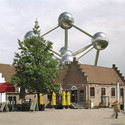
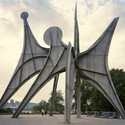
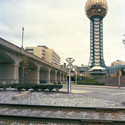
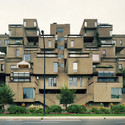
Since 1851, World Fairs have offered glimpses into specific moments in time - giving us insight into what was once innovative, high-tech, and down-right radical. But the structures, the icons of each Fair, don't always stand the test of time - no matter their architectural pedigree. In Flushing Meadows Park, New York, for example, Modernist icon Philip Johnson's 1964 New York State Pavilion now stands neglected, overgrown in ivy. Mies van der Rohe's German Pavilion for the 1929 Barcelona Expo was promptly demolished (although eventually reconstructed).

On the other hand, the Eiffel Tower, although considered "vulgar" in its day (1889), was maintained because its height made it well-suited for emitting radio signals; it's now Paris' most important tourist attraction.

The fate of World Fair Structures is the theme of New York-based photographer, Jade Doskow, who has already shot 19 former World’s Fair sites. Take a peek at Doskow's images and find out how World Fair structures have fared, some better than others, after the break...

Photography: When World Fairs End / Jade Doskow - Image 1 of 4Photography: When World Fairs End / Jade Doskow - Image 3 of 4Photography: When World Fairs End / Jade Doskow - Image 4 of 4Photography: When World Fairs End / Jade Doskow - Image 5 of 4Photography: When World Fairs End / Jade Doskow - More Images+ 8

Photography: The Rockaways, Post-Sandy / Amanda Kirkpatrick

Photography: The Rockaways, Post-Sandy / Amanda Kirkpatrick - Image 1 of 4
© Amanda Kirkpatrick

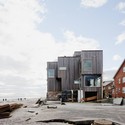
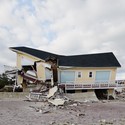
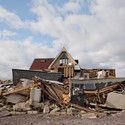
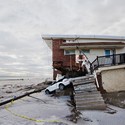
Hurricane Sandy has come and gone, but the destruction she left in her path remains a stark reminder of her strength. 

Photographer Amanda Kirkpatrick has shared with us her images of The Rockaways in Queens, an upper-class beach neighborhood that was one of the areas hit hardest by the storm. Kirkpatrick's objective eye documents the twisted boardwalks and unrecognizably distorted homes in an almost "clinical" way, honestly portraying the damage from the perspective of the broken structures themselves.

If you're interested in getting involved with Hurricane Sandy Recovery Efforts, you can get more information here. For more images from Amanda Kirkpatrick, read on after the break...

Photography: The Rockaways, Post-Sandy / Amanda Kirkpatrick - Image 1 of 4Photography: The Rockaways, Post-Sandy / Amanda Kirkpatrick - Image 3 of 4Photography: The Rockaways, Post-Sandy / Amanda Kirkpatrick - Image 6 of 4Photography: The Rockaways, Post-Sandy / Amanda Kirkpatrick - Image 7 of 4Photography: The Rockaways, Post-Sandy / Amanda Kirkpatrick - More Images+ 3

Iwan Baan vs. Sandy: The Story Behind That Iconic NYC Shot

Subscriber Access | 
Iwan Baan vs. Sandy: The Story Behind That Iconic NYC Shot - Featured Image
Photo: Iwan Baan for New York Magazine

We got in touch with Iwan Baan to ask him how on earth he got that incredible aerial shot of a Sandy-struck New York City for New York Magazine; he told us what it was like to face the frenzy and fly into the storm itself. Read his incredible story, after the break...

Google Releases Never-Before-Seen Images of Its Data Centers

Subscriber Access | 
Google Releases Never-Before-Seen Images of Its Data Centers - Image 12 of 4
“A rare look behind the server aisle. Here hundreds of fans funnel hot air from the server racks into a cooling unit to be recirculated. The green lights are the server status LEDs reflecting from the front of Google’s servers.” Photo © Google/ Connie Zhou

If you’ve never heard of a Data Center before, there’s a reason. Despite the fact that data centers are “Giant, whirring, power-guzzling behemoths of data storage – made of cables, servers, routers, tubes, coolers, and wires,” they’re often hidden far away, where their energy-guzzling is more efficient (and way less less obvious).

Indeed, largely because of their gargantuan energy requirements and high-tech secrets, Data Centers have been shrouded in mystery since their beginnings. This is particularly true in Google’s case. When Andrew Blum, author of Tubes: A Journey to the Center of the Internet, visited Google’s Data Center in The Dalles, Oregon, he said it was like “ a prison,” and couldn’t even get past the cafeteria. Nary a peek has been seen of a Google Data Center.

Until now, that is. Google just launched a new website, Where the Internet Lives, which features never-before-seen images of eight of Google’s 9 data centers, the places the “physical internet” calls home.

Check out the images of these never-before-seen Data Centers, after the break…

Rare images of Le Corbusier by Willy Rizzo, in color

Subscriber Access | 
Rare images of Le Corbusier by Willy Rizzo, in color - Image 1 of 4
Le Corbusier, by Willy Rizzo. Photos via Le Journal de la Photographie. © Willy Rizzo.

It’s hard to imagine Le Corbusier – the bespectacled legend of 20th century Modernism, known for his ultra-clean aesthetics – as living in the everyday, messy world that we all inhabit. Which is why the Fondation le Corbusier‘s decision to display rare color photographs of Le Corbusier is such a treat for us all.

The photographs were taken for the magazine Paris Match in 1953 by Willy Rizzo, a fashion photographer better known for his shots of 1950s stars and starlets. The images depict the then 66-year-old Corbusier in various spots about Paris: the Musée National d’Art Moderne, his apartment, in front of a blackboard (sporting a sketch of Unité d’Habitation).

In her Fast Company article, Kelsey Campbell-Dollaghan explains that these images give us a glimpse of the man behind the myth: “Even the way we talk about him now, as Le Corbusier, refers to an idea as much as a person. Captured 12 years before he drowned in the Mediterranean at his beloved summer home, Rizzo’s photographs give us a glimpse of the pre-sainted man–aka Charles-Édouard Jeanneret.”

The photographs will be on display at the exhibit “Le Corbusier by Willy Rizzo” at Le Corbusier’s Maison La Roche, in Paris, until December 15th.

Story via Fast Company, Photos Willy Rizzo

Check out more images of Le Corbusier, after the break…

'Chandigarh: Portrait of a City' Exhibition

Subscriber Access | 
'Chandigarh: Portrait of a City' Exhibition - Image 4 of 4
High Court (roof), 2010 / Architect: Le Corbusier, 1955 (Courtesy Manuel Bougot/Photoink)

In continuation of their exhibition program on architectural photography taking place in New Delhi, Photoink is currently presenting Chandigarh: Portrait of a City by French photographer, Manuel Bougot until October 27th. Bougot’s interest in Le Corbusier’s architecture began in the 1980s when he worked on Caroline Maniaque’s thesis in architecture–on the Jaoul Houses built in 1954 in Neuilly, France. Since 2006, Bougot renewed his interest in Le Corbusier, attending talks on Chandigarh and photographed the only building the architect ever built for himself – a cabanon (a summer cabin) in Roquebrune-Cap-Martin. Photographing Chandigarh was therefore necessary to further any understanding of Le Corbusier, the urban designer and his philosophy about architecture and modernism. More images and information on the exhibition after the break.

Photography: Copenhagen Inspires / Danica Kus

Subscriber Access | 
Photography: Copenhagen Inspires / Danica Kus - Image 9 of 4
Copenhagen Inspires, a photography series by Danica Kus. © Danica Kus.

Few cities have embraced contemporary Architecture more – or better – than Copenhagen. Since the early 2000s, international architects, from Norman Foster to Daniel Liebskind to Zaha have all left their mark, yes, but Danish architects themselves can take much of the credit for Copenhagen’s forward-thinking design. Firms with short, hip names, like BIG and 3XN, are not just transforming Denmark – they’re on the cutting-edge of architecture itself.

Architecture photographer, Danica Kus, who recently shared with us her shots of the Serpentine Gallery Pavilion, has also shared another series, “Copenhagen Inspires,” which captures Copenhagen’s many architectural gems – from The Crystal to the Green Lighthouse to Bella Sky Hotel.

See them, and more of her stunning images, after the break.

Photography: 'Fiction' Series / Antoine Mercusot

Subscriber Access | 
Photography: 'Fiction' Series / Antoine Mercusot - Image 12 of 4
© Antoine Mercusot

The ‘Fiction’ collection, by photographer Antoine Mercusot, features miniature worlds and figures to create spaces made of wood, cardboard, plastic, and paper. Inspired by his work as an architectural photographer, he then stages imaginary parts, inspired by real life characters and crossings without markings, arranged in his imagination. As Mercusot states, “These worlds refer to contemporary architecture, where simplicity of lines, righteousness of the form, the work of matter are the source of this discipline. Only the light is able to reveal and highlight these volumes. The environments appear to be empty spaces, sanitized, where time stopped, leaving room for attitudes and the psychological dimension of silhouettes that are emerging.” More photographs of his collection can be viewed after the break.

Syracuse University Unveils First Phase of Marcel Breuer Digital Archive

Subscriber Access | 
Syracuse University Unveils First Phase of Marcel Breuer Digital Archive - Featured Image
Whitney Museum of American Art / Architect: Marcel Breuer and Hamilton Smith, Architects; Michael H. Irving, Consulting Architect

Marcel Breuer, born in Hungary in 1902, was educated under the Bauhaus manifesto of “total construction”; this is likely why Breuer is well known for both his furniture designs as well as his numerous works of architecture, which ranged from small residences to monumental architecture and governmental buildings. His career flourished during the Modernist period in conjunction with architects and designers such as founder of Bauhaus Walter Gropius, Le Corbusier and Mies van der Rohe.

In 2009, Syracuse University’s Special Collection Research Center recieved a National Endowment for the Humanities grant with which it began creating the Marcel Breuer Digital Archive. The digital archive, available online, is a collaborative effort headed by the library and includes institutions such as the Bauhaus-Archiv Berlin, the Stiftung Bauhaus Dessau, the Eidgenössische Technische Hochschule Zürich, Harvard University, the Archives of American Art at the Smithsonian Institution, the University of East Anglia, and the Vitra Design Museum. It is in the first phase, which includes Breuer work up until 1955, of digitzing over 30,000 drawings, photographs, letters and other related material of his work.

More about Marcel Breuer’s career and the archive after the break.