From Trinity Church to Boston’s “high spine” of skyscrapers, explore how architectural photographers see the cityscape in this dynamic session suitable for beginner and intermediate photographers alike. During this intimate exploration of Boston’s Back Bay neighborhood, you will learn to produce memorable images that convey a sense of place and a connection to landscape and surroundings. Professional photographer Emily O’Brien will help you and other enthusiastic photographers see Boston in a whole new way.
Grégoire Alessandrini’s blog “New York City 1990’s” contains an enormous collection of images taken between 1991 and 1998 that artfully depict New York. The website is a snapshot of New York in the 1990s, capturing the spirit of the era with photographs of New York’s architecture that could only exist at that time. As politics and public sentiment have changed, the city has changed with it, and much of the New York Alessandrini captured no longer exists.
To document just how much New York has changed in the past 25 years, we have curated a selection of Alessandrini’s images and set each photograph next to a Google Street View window corresponding to the photographer’s location at the time. In the photographs where Alessandrini observes from an elevated vantage point, the Street View images are as close as possible to the photographer’s location.
Read on after the break to see the images of New York’s dynamic change from the 1990s to 2015.
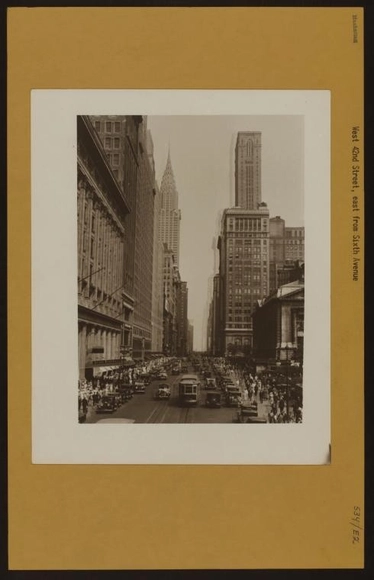
"Manhattan: 42nd Street (West) - 6th Avenue", Harold Kaye (1931). Image Courtesy of The New York Public Library http://www.oldnyc.org/
Discover historic New York with "OldNYC," a digital archive of the New York Public Library's "Photographic Views of New York City, 1870s-1970s" Collection. Bringing together an extensive catalogue of images from the library's Milstein Collection, OldNYC organizes photographs geographically, allowing users to view images specific to individual blocks and streets.
The project is also collaborative, asking visitors on the site to comment on photographs with "what's there now, what's changed, and what's stayed the same." Users can edit or add to captions on the back of each of the photos, creating a personal element in the latest retelling of New York's vibrant history.
Learn more about the project and view selected images after the break.
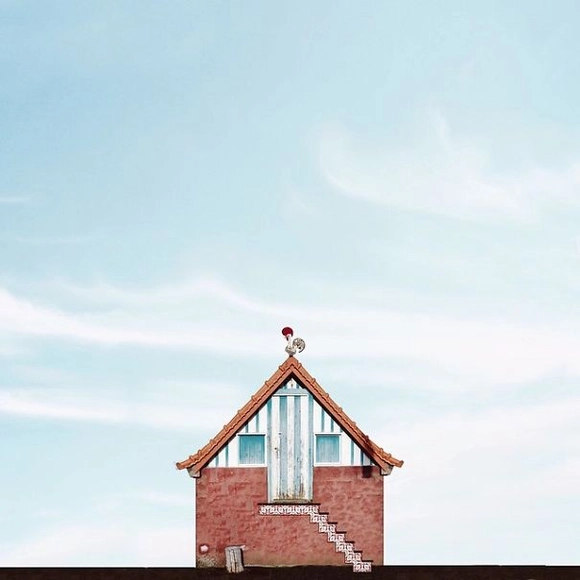
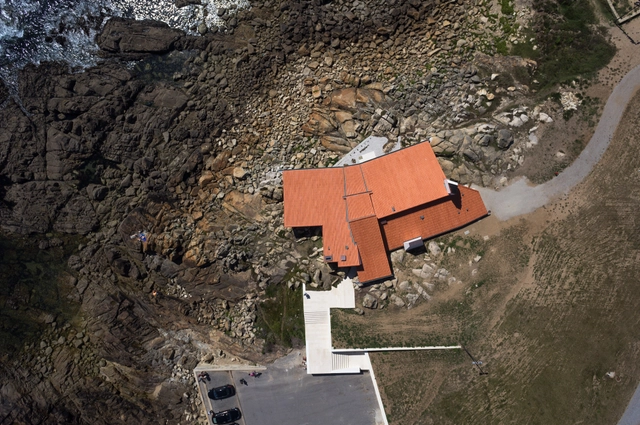
The son of Portuguese immigrants in Venezuela, Manuel Pita, also known as “Sejkko,” is a scientist and photographer who expresses his creativity on Instagram. In his latest series, “Lonely Houses,” Sejkko’s surreal photos capture the traditional houses of Portugal, edited to “bring them as close as possible to the way my eyes see them,” he explains.
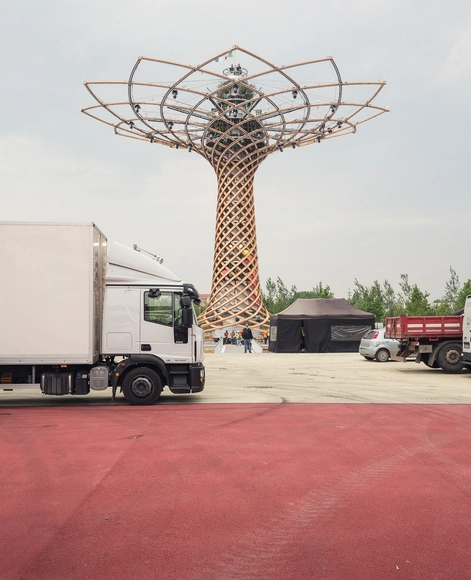
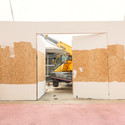
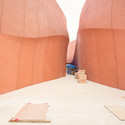
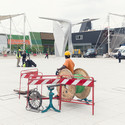
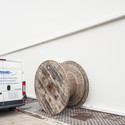
Milan-based photographer Delfino Sisto Legnani recently spent time in the compound of the 2015 Milan Expo twenty four hours prior to the inauguration of the event, which officially opened at the start of this month. This unique insight, captured through his lens and preserved for posterity, shows the state of the site and pavilions just before the Italian military began their final safety and security checks. Cables, garbage and hazard tape is strewn across the pavilion entrances and public spaces, while lorries and white vans unload the last of the interiors.
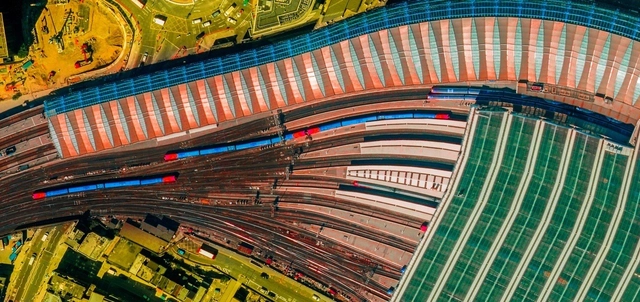
Courtesy of Federico Winer @Google Earth and satellite data providers
Hovering high above the earth's surface and presenting a serenely distant view of the terrain we inhabit, ULTRADISTANCIA is the latest photographic project from Argentinian artist, academic, and veteran traveller Federico Winer. The experimental series uses "the marvelous screens of Google Earth" to present stunning images of environments both built and natural.
Learn more about the project and view selected images after the break.
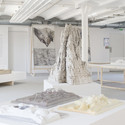
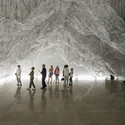
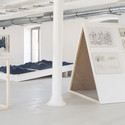
From April 10, the Frac Centre will host "Relief(s)— Designing the Horizon", a series of exhibitions, workshops, and meetings exploring the place of the relief in the timeline of modern art. Over five months the work of Yasuaki Onishi, Gérard Singer, and Aurélie Pétrel will be on display alongside a host of supplementary cultural and educational programs. Hoping to "[shed] new light on the way in which contemporary art can renew our reading of the landscape and, more broadly the environment", the exhibition will run until September 19. Learn more about the artists involved and view selected works after the break.
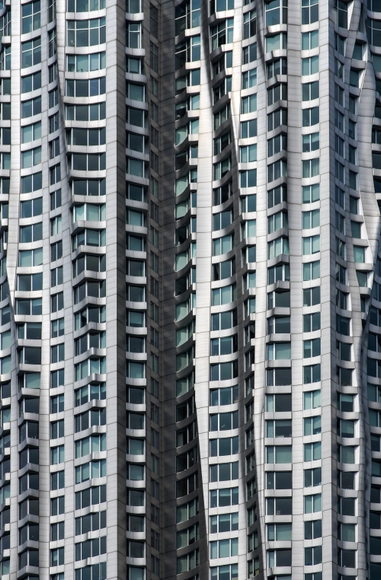
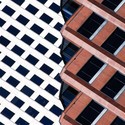
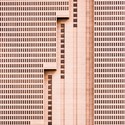
Nikola Olic is an architectural photographer based in Dallas, Texas, with a focus on capturing and reimagining buildings and sculptural objects in "dimensionless and disorienting ways." His photographs, which often isolate views of building façades, frame architectural surfaces in order for them to appear to collapse into two dimensions. According to Olic, "this transience can be suspended by a camera shutter for a fraction of a second." As part of his process, each photograph is named before being given a short textual accompaniment.
See a selection of Olic's photographs after the break.
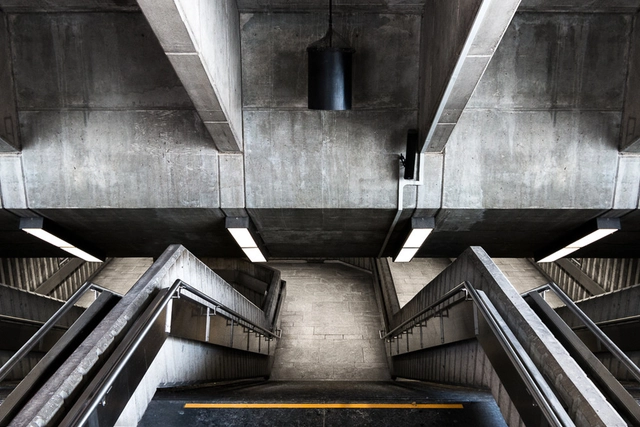
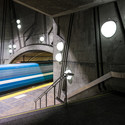
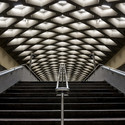
Montreal-based photographerChris Forsyth doesn't see his city the way others do -- that much is evident from his body of work, which includes rooftop photos of the Montreal skyline, nocturnal shots taken from the arm of a crane and now, images from the underground. The Montreal Metro Project is Forsyth's latest series, documenting the often overlooked architecture of the urban subway since October 2014.
Composed of 68 stations, each designed by a different architect between the 60s and 70s, the Montreal Metro system is as diverse and idiosyncratic as the city it underpins. Forsyth captures the stations empty of passengers, highlighting their architecture and reframing them in a manner rarely experienced. ArchDaily spoke to Forsyth about the series and the creative process behind it. Read his responses and view selected images from The Montreal Metro project after the break.
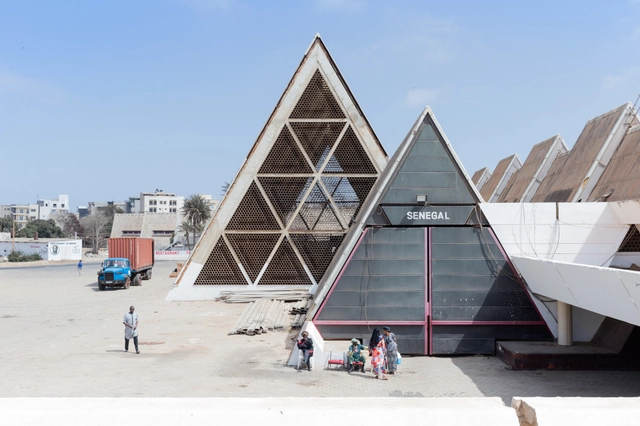
From February 20 the Vitra Design Museum will host "Architecture of Independence - African Modernism," an exhibition curated by architect and author Manuel Herz. Featuring numerous photographic contributions by Iwan Baan, "Architecture of Independence" explores the experimental and futuristic architecture produced in 1960s Central and Sub-Saharan Africa during the region's period of newfound independence.
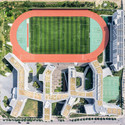
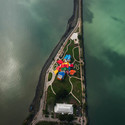
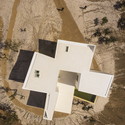
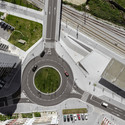
What is the draw of the aerial view? Whereas architects and designers often find solace in this particular spatial perspective there is a more inclusive, universal appeal to this way of seeing. The ease of access to online mapping services has increased our collective reliance on understanding our world from above.
Maps condense the planet into a little world inside our pocket, the commodification of which has universalised the ‘plan-view’ photograph. The question of whether or not their ubiquitous availability, having now been assimilated into our collective consciousness, is a positive step for the status of the plan is a discussion ongoing. Yet, in the face of this dilemma, architectural photographers are pushing the boundaries of drone technology in order to find new meaning.
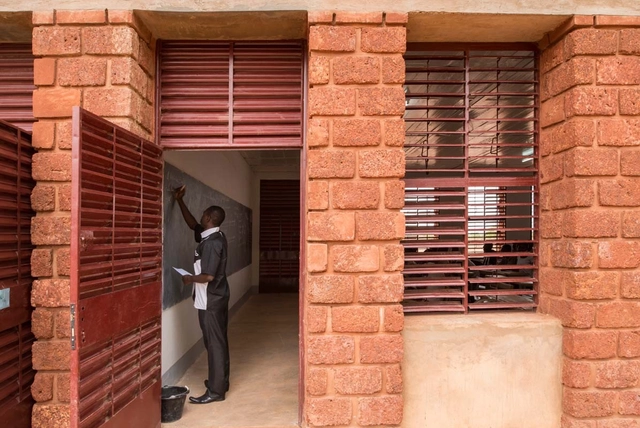
Through January 31, The Building Centre is hosting Upright and Educated, a photographic exhibition documenting the work of UK charitable organization Article 25 in Burkina Faso. Captured by award-winning photographer Grant Smith, the images chart the construction and use of a school in Gourcy, in the country's north.
Founded in 2006, Article 25 worked with local builders, craftspeople, and fellow UK charity Giving Africa to construct Bethel Secondary School, allowing up to 1100 children access to enhanced education and vocational training facilities. Learn more about the project and view selected images from the exhibition after the break.
What does it take for a 22-year-old art school drop-out to start a lifelong professional relationship with "the greatest American architect of all time"? Originally published by Curbed as "How a 22-Year-Old Became Wright's Trusted Photographer," this article reveals that for Pedro E. Guerrero, it took some guts and a lot of luck - but once they were working together this unlikely pairing was a perfect match.
When Frank Lloyd Wright hired Pedro E. Guerrero to photograph Taliesin West in 1939, neither knew it would lead to one of the most important relationships in architectural history. Wright was 72 and had already been on the cover of Time for Fallingwater. Guerrero was a 22-year-old art school drop-out. Their first meeting was prompted by Guerrero's father, a sign painter who vaguely knew Wright from the neighborhood and hoped the architect would offer his son a job. Any job.
Young Guerrero had the chutzpah to introduce himself to the famous architect as a "photographer." In truth, he hadn't earned a nickel. "I had the world's worst portfolio, including a shot of a dead pelican," Guerrero said later. "But I also had nudes taken on the beach in Malibu. This seemed to capture Wright's interest."
Pixelmator, an app which has been familiar to Mac users since 2011, have released a version of their powerful photo editing software for iPad. Although the App Store is awash with photo editing and manipulation packages, Pixelmator's clean interface and collection of the most used features iPad users require, makes it a good substitute for desktop based software packages when on the move. Alongside allowing image enhancement, a "painting engine, precise colour correction, and live histograms" (allowing you to gauge real-time colour values as you edit), the app also takes step into providing "layers, non-destructive layer styles and a collection of professional-grade selection tools."
Citizens of central Europe, perhaps uniquely in the world, are used to a life of no borders and free movement between nations. Following two devastating wars fought primarily on European soil, the formation of the early European Union in the 1950s paved the way for a more liberal, less isolated continent. It was not until the signing of the Schengen Treaty in 1985 (which came into effect in 1995) that the majority of borders were truly dissolved and travelling between nations, cultures, and communities became as simple as walking down the road.
Ignacio Evangelista's series of photographs entitled After Schengen examine the remnants of the old, abandoned crossing points that still exist across the Union. No longer necessary to maintain a country's independent sovereignty, and almost twenty years since the revolutionary pact was ratified, these palimpsests of border control remain as striking today as when they when delineated the closed boundaries between nations.
See a selection of the collection after the break...
Yet following his climb, Lebedev was arrested and charged with criminal trespass and reckless endangerment, local press reported.
We caught up with Lebedev to learn what it's like to climb to the top of the city's tallest buildings and how the city changes as it extends upward. Read what Lebedev had to say and enjoy his stunning photos after the break.
1. Iwan Baan Torre David #2, 2011 Image courtesy of the artist and Perry Rubenstein Gallery, Los Angeles. Image Courtesy of Barbican Art Gallery
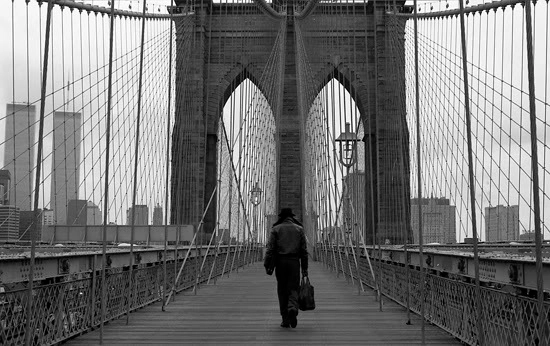
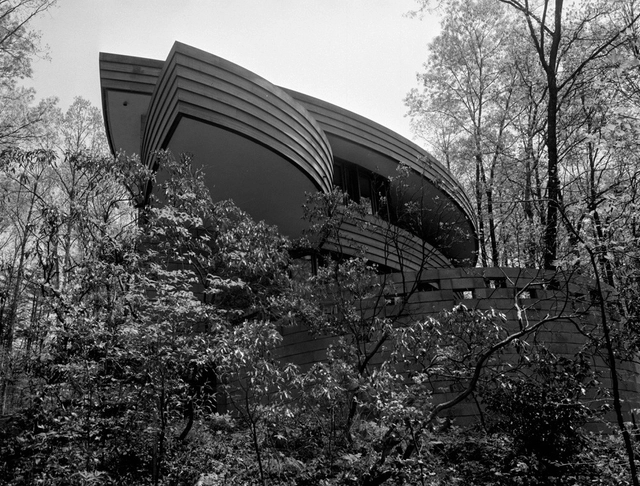
Currently on exhibition at Barbican Art Gallery in London is Constructing Worlds, an exploration of architectural photography from the 1930s to now. The exhibition brings together over 250 rarely seen works by 18 leading photographers who have demonstrated the medium’s ability to look beyond simple documentation of the built world and reveal wider truths about society. Learn more about the exhibition after the break.
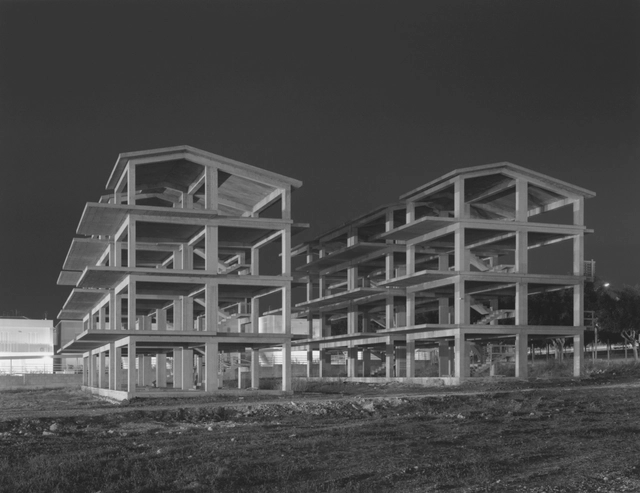
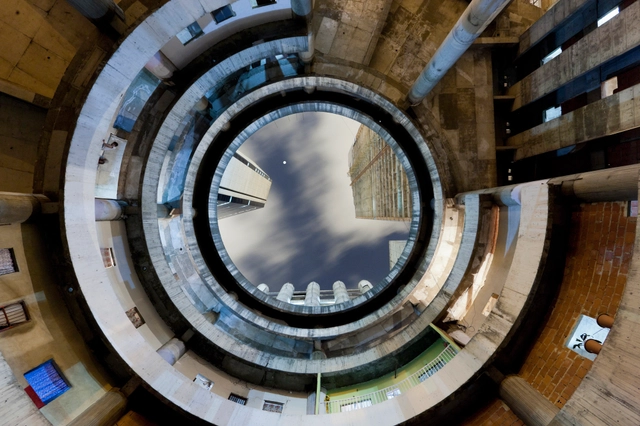
Europe's ancient ruins are numerous: Pompeii, the Parthenon, the Colosseum - but what about new ruins? Skeletons of incomplete buildings now litter the skylines of European cities. A form of memento mori, these abandoned constructions prove that no structure is permanent or impervious to the changing desires of a society in flux. EnglishphotographerSam Laughlin documents the creation of these 'ruins' in his series Frameworks, a contemporary dissection of the aging built environment.
Enter the abandoned world in Frameworks with more photos and info after the break.












.jpg?1421189427 "© Grant Smith")
.jpg?1421189433 "© Grant Smith")
.jpg?1421189422 "© Grant Smith")
.jpg?1421189447 "© Grant Smith")






__Chongqing_Municipality__2006.jpg?1412045399 "9. Nadav Kander Chongqing IV (Sunday Picnic), Chongqing Municipality, 2006 © Nadav Kander, courtesy Flowers Gallery. Image Courtesy of Barbican Art Gallery")