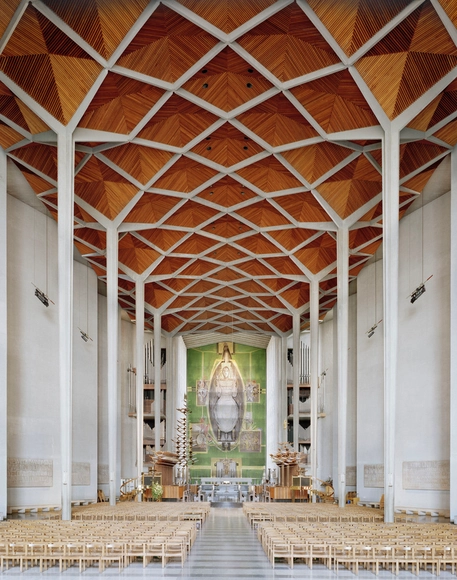
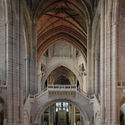
Peter Marlow’s photographs depicting all 42 of the cathedrals of the Church of England are to be exhibited inside The Chapel of Christ the Servant at Coventry Cathedral. This is the first time that the work has been displayed in one of the spaces featured in the series, and the first time the project has been exhibited outside of London. The display is a continuation of Coventry Cathedral’s tradition of, and commitment to, exhibiting work by contemporary British artists.
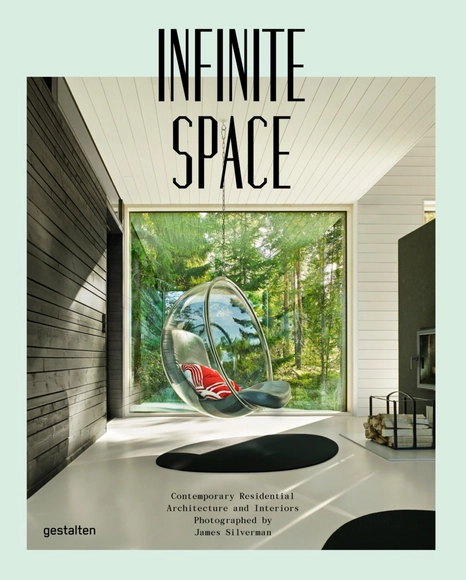
'Infinite Space' / James Silverman. Image Courtesy of Gestalten
In this extract from the introductory essay to Infinite Space, a new compilation of dream houses photographed by James Silverman over the course of his travels, Alan Rapp discusses the photographer's approach to architectural image-making in the 'age of the globalized residence'.
Whether of a remote mountain cabin in Norway, a sensuous desert oasis in Morocco, or a monolithic concrete home in Switzerland, Silverman’s photographs capture the seemingly uninterrupted flow between interior and exterior space. The architecture documented in this book is often defined by elements that absorb, reflect, or deliberately break with their surroundings. Together they show how 'infinite space has become a key precept of contemporary architecture across the world.
Since time immemorial, and more recently, humans have wondered what the world looks like from above. This fascination has historically manifested in the plan drawing and aerial photography. In this vein, and using a motorized paraglider, National Geographic photographer George Steinmetz has captured a stunning bird’s-eye view of the ancient city of Ghadames, in Libya.
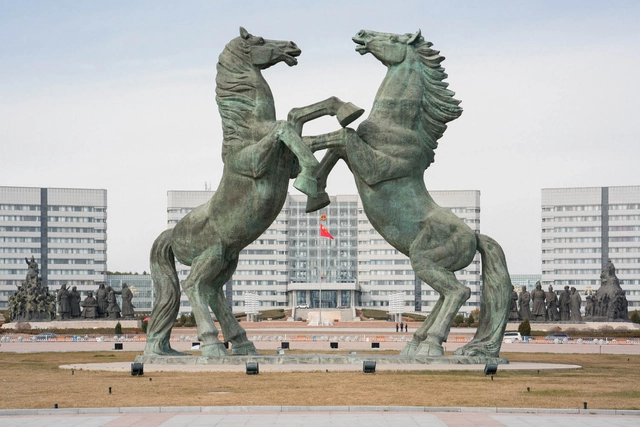
For the past quarter century, China’s rapidly expanding economy provided architects with an almost endless supply of building opportunities. Easy lending allowed for an exponential rise in infrastructure projects – China used more concrete in three years than the United States used in the entire twentieth century. But in a country where the number of cities with over a million inhabitants jumped from 16 in 1970 to 106 in 2015, the speed of development enabled high profile, but flawed, experiments alongside the many necessary building projects. There is perhaps no better example of this phenomenon than the city of Ordos. The Inner Mongolian metropolis – home to 100,000 – which sprang from the northern desert in the mid-2000s was designed for over a million inhabitants. The reality of the city came to public attention in 2009 when Al Jazeera wrote about an early uncertainty in the Chinese real estate market.
After living in China for a number of years, photographer Raphael Olivier finally gave in to the nagging urge to see Ordos for himself. Visiting last year, he found a well-maintained city that is still largely uninhabited. I interviewed Olivier about the project, his views on Ordos, Chinese prosperity, and what it means to photograph architecture.
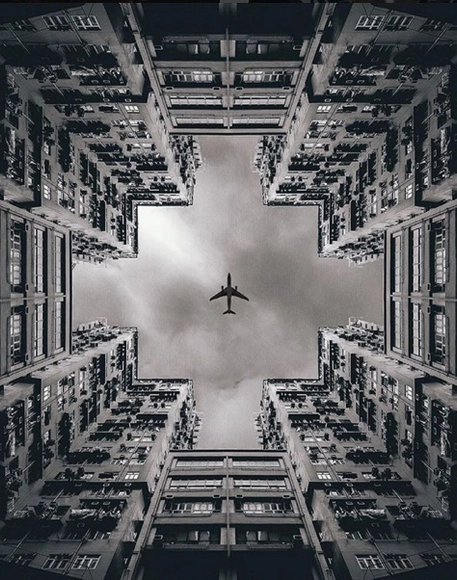
Symmetry has always been a source of obsession in architecture. In Ancient Greece, the Roman Empire, and later during the Renaissance, symmetry was used as a way to find true beauty, while in the early Modern movement its eradication was an essential part of breaking with history.
Without a doubt there is something beautiful in symmetry, and popular Instagram accounts like @symmetricalmonsters collect photos that best capture symmetry in the architecture of everyday life.
The stunning images in this collection by Argentinian photographer Guillermo Srodek-Hart tell captivating stories of the country’s rural commercial establishments. Located in the rural areas outside of bustling Buenos Aires, the commercial establishments—butcheries, bakeries, bars, repair shops, garages, dry cleaners—depicted in this collection by photographer Guillermo Srodek-Hart appear steeped in history, and are packed with details dripping with color. Throughout the collection hangs an air of abandonment, of time passing, or perhaps stopping. Whether or not that is true, Srodek-Hart has memorialized a culture worlds apart from the city that lies a short distance away. TThe exhibit at Architekturgalerie Munich, supported by Prestel Verlag and Kuckei + Kuckei Galerie Berlin, shows a selction of his works recently published in his book “Stories”, Prestel Verlag, with a foreword by Anne Tucker.
Learn how to create your own eye-catching photographs of the city’s built environment in this hands-on workshop with architectural photographer Matthew Carbone. An introductory discussion about techniques, relevant mobile phone apps and considerations of lighting and composition particular to on-site architectural photography will be followed by an outdoor shooting session in the iconic South Street Seaport neighborhood. Class size limited to allow for individual feedback and instruction.
Open to all levels of experience. Digital SLR cameras or current iPhones / Android phones with high-quality cameras recommended.
This fall, the Julius Shulman Institute at Woodbury University presents Matter, Light, and Form: Architectural Photographs of Wayne Thom, 1968-2003 at the Woodbury University Hollywood Gallery (WUHO).
Wayne Thom, an architectural photographer who built a practice under the tutelage of A. Quincy Jones, was a success from the start, quickly establishing a position as one of the leading figures in the ‘visual communication’ of architectural projects and ideas, working for developers and architects throughout the North American west and Asia, and often photographing a project from its first promotional models to finished buildings.
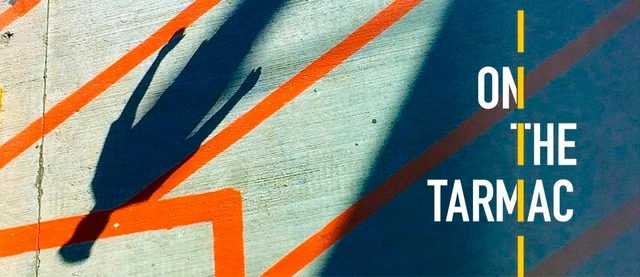
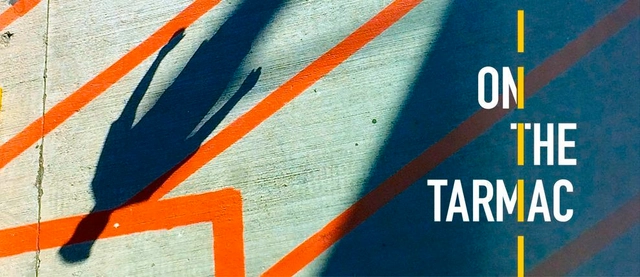
To most people, tarmac markings are hieroglyphics writ large: an obscure language that greets us as we glide down toward the earth. It is a code both intimately familiar and radically alien. On the Tarmac reconceives this code. Designer Dennis Pieprz Assoc. AIA and his photos, by freeing the tarmac from utility, allow new meanings to emerge, exploring poetry of line work and the ballet of human activity. This collection is about slowing pace and paying attention, but most important about seeking sublime moments in the everyday. The exhibition, presented by BSA Space in partnership with Sasaki Associates, features more
Don't miss the opening reception for White on White. This special event is the first opportunity to explore the exhibition while enjoying complimentary drinks and hors d'oeuvres.
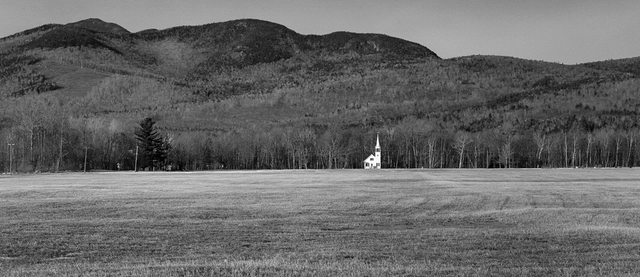
This exhibition, by photographer Steve Rosenthaland in partnership with Historic New England, showcases rural New England churches of the eighteenth and nineteenth centuries. From the early meetinghouses through the changing patterns of Greek and Gothic revivals, Rosenthal's black and white images capture what remains of the architectural gems around the region.
To most people, tarmac markings are hieroglyphics writ large: an obscure language that greets us as we glide down toward the earth. It is a code both intimately familiar and radically alien.
On the Tarmac reconceives this code. By freeing the tarmac from utility, designer Dennis Pieprz Assoc. AIA and his photos allow new meanings to emerge, exploring poetry of line work and the ballet of human activity. This collection is about slowing pace and paying attention, but most important about seeking sublime moments in the everyday.
Iwan Baan was twelve years old when he received his first camera and, "within a week, [he] had traded it in for a better one." He is one of the most well-known and highly sought after architectural photographers in the world, recognised for shooting cities from above and for always highlighting people (occupation) in his images. In a short interview with Jonathan Glancey Baan is the first to state that he "doesn't know much about architecture" — something which has not inhibited his ability to produce some of the most successful photographs of the built world, and how we design, construct and occupy it.
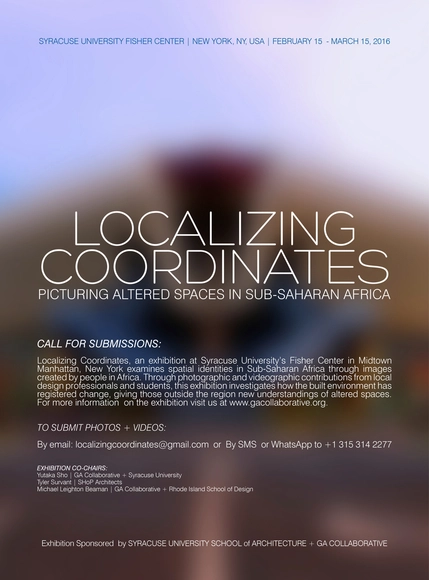
To submit photos and videos please email localizingcoordinates@gmail.com or SMS / WhatsApp to +1 315 314 2277
The story of the African built environment is often told through historical perspectives of colonization and political crises, emphasizing the difficulties that African people have faced. Economic perspectives such as poverty, development and globalization also create stereotypes of the continent. Often missing from these are the transformations in space that result from daily and repeated use. These transformations emerge from ideas exchanged between people and their movements through their neighborhoods, cities, regions and countries. The quality of spaces that we may find will paint a complex picture of Africa.
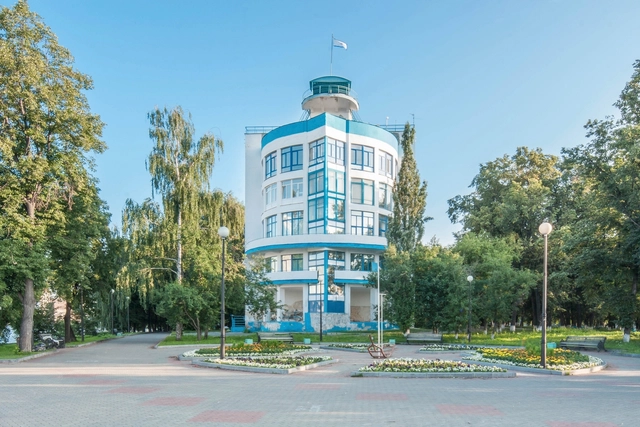
Constructivist architecture is most often remembered in writing and on paper. The movement’s two most radical and recognized structures, Vladimir Tatlin’s “Monument to the Third International” and El Lissitzky’s “Lenin Tribune,” were never built at scales larger than models. Taking hold in the wake of the Russian Revolution of 1917, Constructivism was the result of Cubo-Futurist artists marrying their kineticism and abstraction to the social concerns of the Bolsheviks, in the hopes of using art as a platform to motivate changes in society. Viewing the museum establishment as a “mauseoleum of art,” in 1918 the new broadsheet Art of the Commune affirmed: “The proletariat will create new houses, new streets, new objects of everyday life...Art of the proletariat is not a holy shrine where things are lazily regarded, but work, a factory which produces new artistic things.”[1]
In spite of the predominance of "paper architecture" in the history of Constructivism, there is one city that experienced the fruit of this movement to an unrivaled degree. Yekaterinburg is Russia’s fourth-largest city, home to nearly 1.5 million people. It is also the largest concentration of Constructivist architecture anywhere in the world, with approximately 140 structures. To celebrate the importance of Yekaterinburg in the history of architecture, photographer Denis Esakov has shared his images of the city's architecture with ArchDaily.
Monuments are deliberate gestures—objects or structures created to commemorate an event, person or era. Their meaning is usually imposed, and they often serve as focal points for aspirational civic and political attributes like valor and sacrifice, or to underscore a foundational political narrative. But their meaning can transform, changing over time as the relevance of their symbolism ebbs and flows due to social and political shifts. Like monuments, architecture and photography are also inflected with a grace of intention, and both have the ability to commemorate or represent a nation, event, time or place. The act of photographing monuments and buildings transforms them, sometimes revealing some of the original qualities and more closely evoking the response that they were originally intended to have. And photographs have an inherent memorial quality. This group exhibition examines the work of international artists, some of whose work addresses actual monuments, some whom look at architecture and its relationship to memory and how its importance and symbolism can shift over time, and others approach the idea of the future monument.
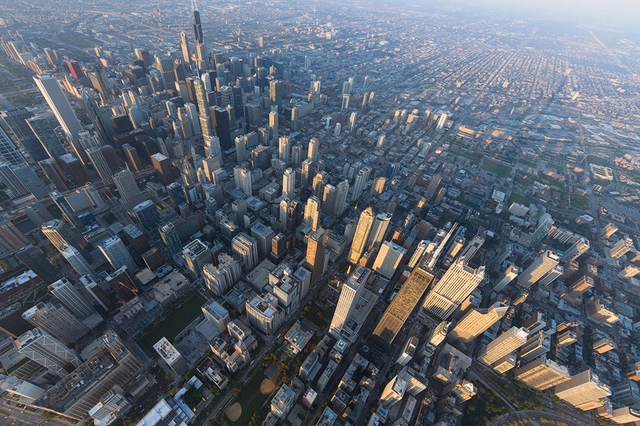
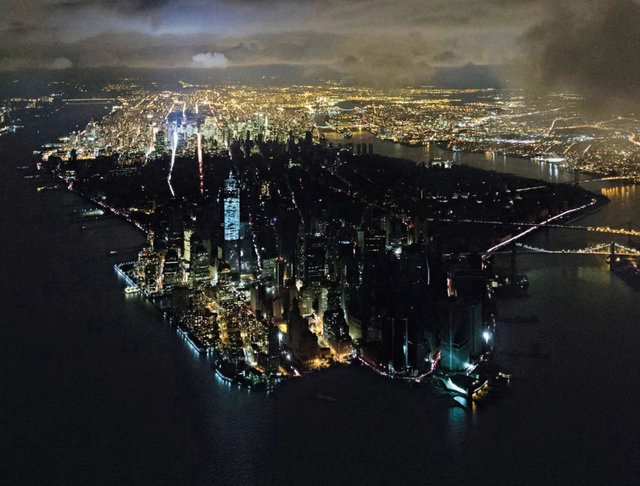
In a culture dominated by smartphones and Instagram, with estimates that over one trillion photographs will be taken this year alone, it might seem impossible for photographs to make and shape issues in the ways they once did. Despite this, images still steer debates with shocking resiliency and, with luck, become iconic in their own right. As architecture is synonymous with placemaking and cultural memory, it is only logical that images of the built environment can have lasting effects on the issues of architecture and urbanism. It's never been easier for photographs to gain exposure than they can today, and with social media and civilian journalism, debates have never started more quickly.
Image: Stannard-Greensboro Methodist Church, Stannard-Greensboro Bend Methodist Church, Stannard, Vermont, 1888. Photographed 1972, Steve Rosenthal, cropped.
Presenting 40 images by Boston photographer and trained architect, Steve Rosenthal, this exhibition showcases rural New England churches of the eighteenth and nineteenth centuries. From the early meetinghouse through the changing patterns of Greek and Gothic revivals, Rosenthal’s black and white depictions will trace the evolution of church styles in New England and capture what remains of these architecture gems around the region. The exhibition is organized by Historic New England.
East of Paris, in Seine-Saint-Denis, sits a "Babel-like" housing estate. Its otherworldly atmosphere—existing somewhere between a 'new world' utopian dream and a postmodern, neoclassical housing estate—has set the scene for two Hollywood films including Brazil (1984) and, more recently, the upcoming second instalment of The Hunger Games: Mockingjay (2015). Parisian photographer Laurent Kronental's photo series, Souvenir d'un Futur (Memory of a Future), is an homage to the senior citizens of the French capital's Grand Ensemble region — not only in Noisy-le-Grand but across the Parisian banlieue. His photographs capture a number of places and their people which, in spite of their often megalomaniacal architectural settings, have been comparatively overlooked.
See Laurent Kronental's photo series—the result of four years of visits—after the break.










.jpg?1443600100&format=webp&width=640&height=580)
.jpg?1443599941 "Les Orgues de Flandre, 19e arrondissement Paris, 2014. Image © Laurent Kronental")
.jpg?1443599908 "Le Pavé Neuf, Noisy-le-Grand, 2015. Image © Laurent Kronental")
.jpg?1443599809 "Joseph, 88 ans, Les Espaces d'Abraxas, Noisy-le-Grand, 2014. Image © Laurent Kronental")
.jpg?1443599826 "Les Tours Aillaud, Cité Pablo Picasso, Nanterre, 2014. Image © Laurent Kronental")
.jpg?1443600100)