Known as one of the world’s grandest subway systems, the Moscow Metro is filled with materials more commonly associated with palaces or museums – marble and granite walls, bronze columns, and lavish chandeliers are just a few of the opulent textures you’ll find beneath the streets of Russia’s largest city.
Despite their renown, the Moscow government almost never allows professional photographers to capture the beauty of the stations. But in 2014, photographer David Burdney was finally given that opportunity. Visiting the system late at night after the metro had closed, Burdney was able to capture each station in its best light, and completely devoid of people.
https://www.archdaily.com/868147/these-photographs-capture-the-opulent-beauty-of-empty-moscow-metro-stationsAD Editorial Team
The main objective of this competition is to select a photograph which will be the main image for a sensibilization campaign named "Cities Without Architecture" alerting to the need of working towards the improvement of the habitat.
A -Theme Area
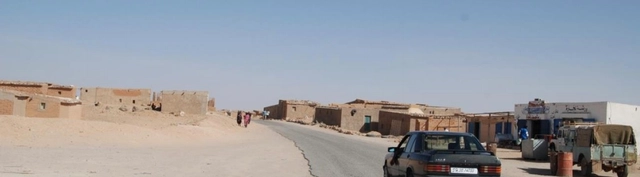
According to the Un-Habitat (United Nations) Urban Observatory, it is estimated that fifty million people will move from rural areas to the cities in western Africa over the next ten years. In Mumbay, the population has recorded a four-fold increase. Half of the population live in slums, 700.000 spend the night on the streets, 100 million people in the world, mostly kids, have no permanent home.
More than half a century has passed already since Bernanrd Rudofsky exhibited at the New York MOMA a collection of pictures he took during his trips. The exhibition would be named: Architecture Without Architect. This exhibition was shown in more than 80 cities during the following 11 years, and its catalog has become a true referent in what has been called vernacular architecture.
A question arises nowadays: what have architects learned from this famous Architecture Without Architects? But these days there is an even more important question: how much aware are we in the developed countries of the existence of cities without architecture?
With cracked paint, overgrown vines, rust, and decay, abandoned buildings have carved out a photographic genre that plays to our complex fascination with the perverse remnants of our past. While intellectual interest in ruins has been recorded for centuries, the popularity and controversy of contemporary "ruin porn" can be traced back to somewhere around 2009, when photographer James Griffioen’s feral houses series sparked a conversation about the potential harm in the aesthetic appropriation of urban collapse.
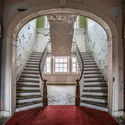
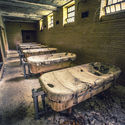
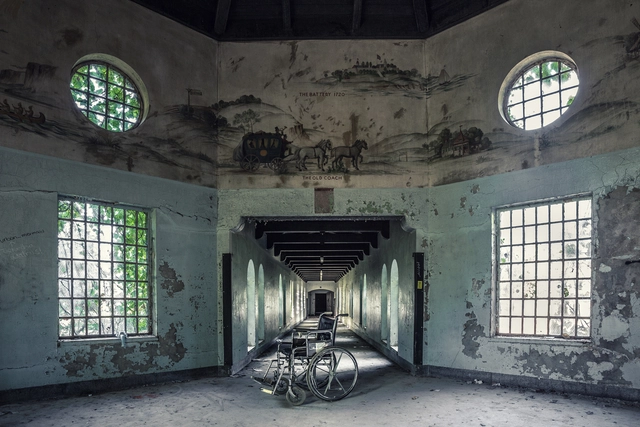
A favorite subject within this field is the American insane asylum, whose tragic remains carry echoes of the unsavory history of mental illness treatment in the United States. These state-funded asylums were intensely overcrowded and often housed patients in nightmarish conditions in the 20th century. Beginning in 1955, with the introduction of the antipsychotic drug Thorazine, these institutions were closed in large numbers, never to be reopened [1]. Now, these closed but un-demolished asylums that dot the country are the subject of "ruin porn" that neglects an equally important piece of the buildings’ narrative: the beginning. In his recent photobook Abandoned Asylums, Photographer Matt Van der Velde depicts this earlier period of asylum architecture, when the institutions were built in the belief that the built environment has the power to cure.
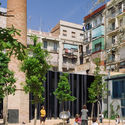
As with many of the Catalan trio's work, the library stands out for its materiality and careful construction, making intense use of transparency and light.
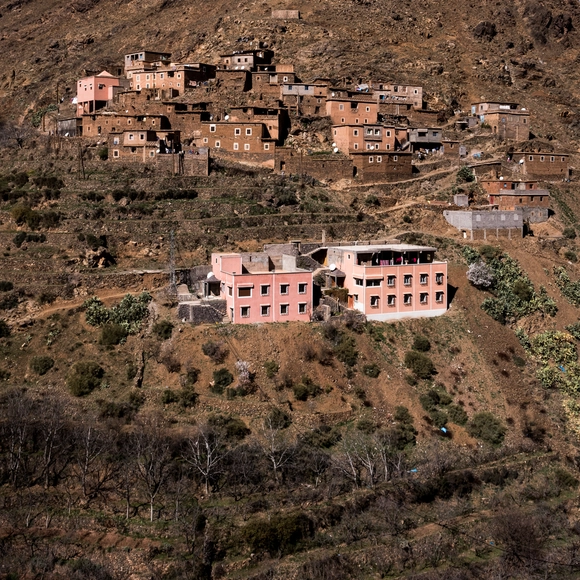
In this photo-essay, Norbert Juhász—a Hungarian photographer based in Budapest—presents a study of the Moroccan Berber villages (around Imlil and the surrounding valleys). Located in the High Atlas Mountains, these remote settlements are increasingly connected to the "outside world." In the words of Juhász, "many are now connected to the electrical grid and have some sort of road access." That said, "mules are still a popular form of transport."
42 photographs representing all 42 cathedrals of the Church of England by Magnum photographer Peter Marlow (1952 – 2016) are to be exhibited in The Lady Chapel at Ely Cathedral. This is only the second time this work has been displayed in one of the spaces featured in the series and the first time the project has been exhibited in this region of the UK.
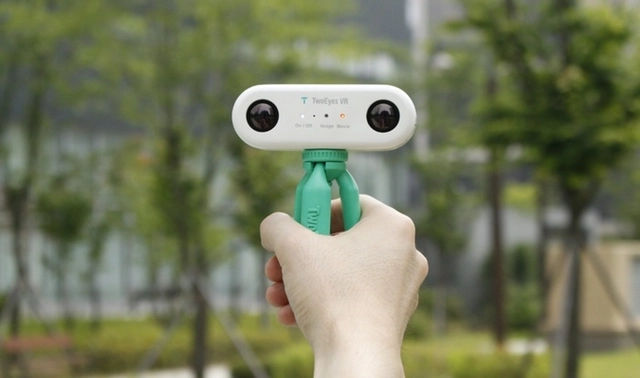
The team at TwoEyes Tech made up of HunJoo Song, SeonAh Kim, and Vivek Soni has launched a kickstarter campaign for its TwoEyes VR 360 camera, which is the first binocular 360-degree VR, 4K camera that mirrors human eye sight.
Using two pairs of 180-degree lenses that are placed 65 millimeters apart—the average distance between a person’s eyes—the camera captures 360-degree footage, “just like your natural eyes would view the world.” This footage can be uploaded to 360-degree-compatible social media platforms like YouTube 360, Facebook 360, and Twitter 360, or enjoyed through virtual reality binoculars or 3D television.
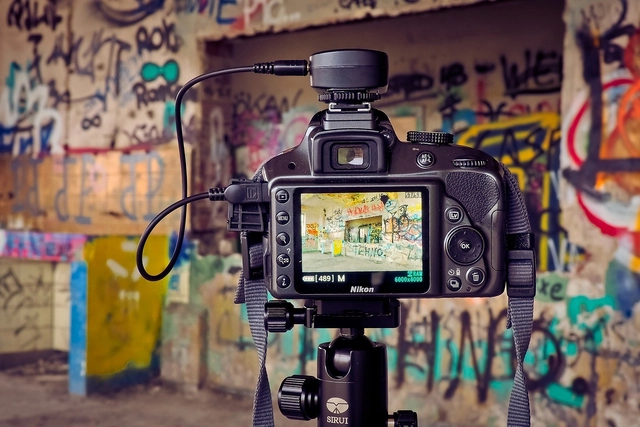
If you've always wanted to take better photos and you have 10-15 hours to dedicate to the endeavor, you'll be pleased to know this: Harvard, one of the world's most renowned universities and home to the mighty GSD (Graduate School of Design)—whose faculty has included Rem Koolhaas, Zaha Hadid, Walter Gropius and many others—is offering a free course in digital photography.
Available via ALISON, an online learning community, the course offers 13 modules that promise to teach the basics behind good photography.
https://www.archdaily.com/803406/take-harvards-online-course-in-digital-photography-for-freeAD Editorial Team
Digital Designer and Creative Director Joel Filipe has unveiled Geometry of Madrid Architecture, a series of photographs depicting the bold architecture of Madrid. Through the project, Filipe reveals varying “geometries within minimalist clichés that underline the lines of the buildings.”
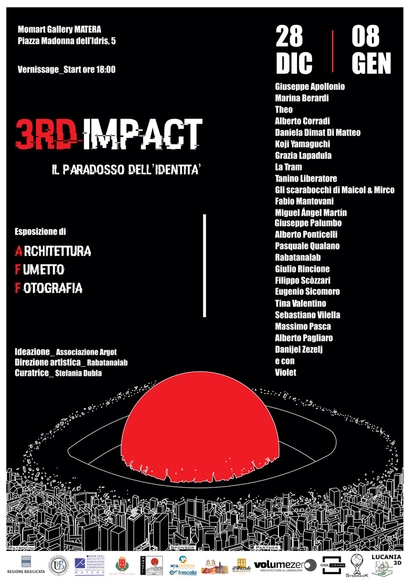
3rD Impact: The Identity Paradox. Designed by Rabatanalab
The exhibition "3rd Impact: The Identity Paradox. The relationship between architecture, comics and photography” (In italian “3rD Impact: il paradosso dell'identità. Rapporto tra Architettura, Fumetto, Fotografia”) begins in Matera (Italy) December 28, with the presentation at 10:30 in the church of the former hospital of San Rocco.
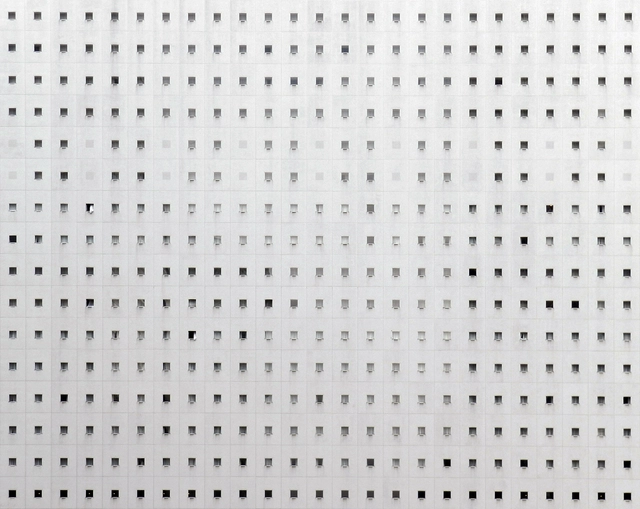
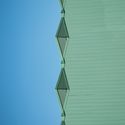
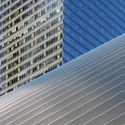
Nikola Olic, an architectural photographer based in Dallas, Texas, has a thematic focus on capturing and reimagining buildings and sculptural objects in "dimensionless and disorienting ways." His studies, which often isolate views of building façades, frame architectural surfaces in order for them to appear to collapse into two dimensions. "This transience," he argues, "can be suspended by a camera shutter for a fraction of a second." In this second series shared with ArchDaily, Olic presents a collection of photographs taken in Barcelona, Dallas, New York City and Los Angeles.
In collaboration with Kistefos Museum, photographer Frédéric Boudin has captured Jeppe Hein's installation "Path of Silence," now permanently located in Jevnaker near Oslo. The sculpture is inspired by the topography of the Kistefos Sculpture Park, creating a conversation between the installation and its site by adapting the park's stepped slope and terraces to a freeform profile.
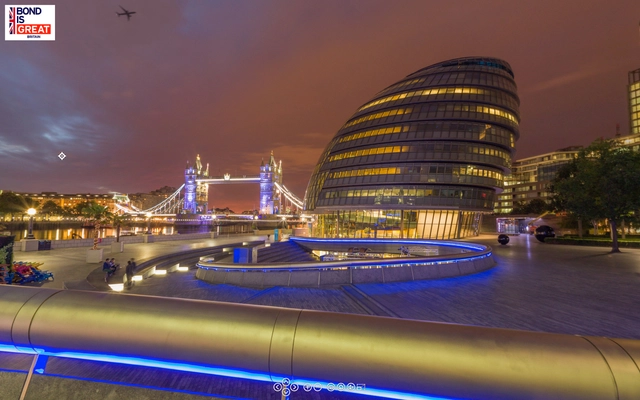
Architectural photographer Rod Edwards specializes in 360º virtual reality imagery and virtual tours of iconic buildings. Having spent the last decade producing this type of media, Edwards was recently commissioned by Visit Britain to shoot his “More London” project as part of the global campaign for the 2015 James Bond film “Spectre.”
Read on to see “More London” and more projects by Edwards.
Since 2007, American photographer Jade Doskow has been documenting the remains of World’s Fair sites, once iconic global attractions that have often been repurposed for less noble aspirations or neglected and fallen into decay. Lost Utopias brings together the substantial body of work that Doskow has completed over the past decade, including iconic monuments such as the Seattle Space Needle, the Eiffel Tower, Brussels’ Palais des Expositions and New York’s Unisphere.
This article was originally published in Redshift and is republished here with permission.
In 2001, the Taliban destroyed the Buddhas of Bamiyan in central Afghanistan using dynamite, anti-aircraft guns, and artillery. After weeks of incremental destruction, nothing of the statues remained.
That sad turn of events was the impetus for the founding of CyArk, a nonprofit that uses technology to ensure sites of rich cultural heritage remain available to future generations. Since 2003, they have used laser scanning, photography, photogrammetry, and 3D capture to record nearly 200 sites around the globe.
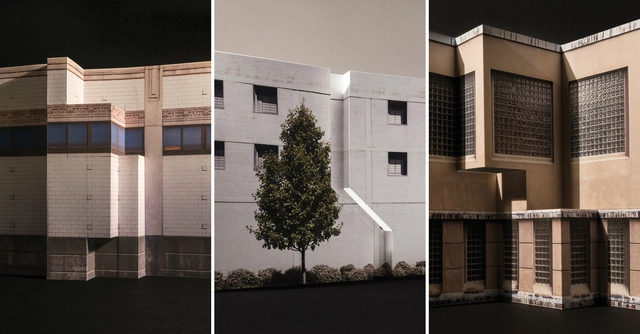
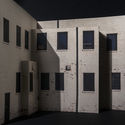
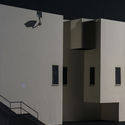
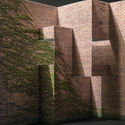
In Hidden Dimension, Boston-based Russian photographer Anna Yeroshenko converts a series of architecture photographs into three-dimensional structures. The work is intended to transform the viewer’s perspective of forgettable utilitarian buildings and encourage a closer look at the physical and social impacts of the built environment on our everyday lives.
Since 2009, Mario Carvajal has captured amazing panoramic photographs from his hometown in Colombia as well as top destination spots around the globe. He has climbed the Empire State Building in New York and Colpatria Tower in Bogota, Colombia. Carvajal has captured the geographical beauty of Iceland as well as the intensity of Paris at night.
As Carvajal mentioned in an interview with ArchDaily, images in 360 degrees "allow the viewer to dive into an attractive and interesting 'virtual world' to experience immersive sensations". Of course, with the new surge in popularity these types of pictures have experienced with the hardware becoming more readily available and these images being shared more and more every day through Facebook, Carvajal's work reaches new levels, allowing thousands of people to see the world from above.
Below, we invite you to see his best shots of iconic buildings and landscapes around the world. For a complete experience, we recommend using Google Cardboard.



.jpg?1488577068 "Courtesy of Matt Van der Velde")