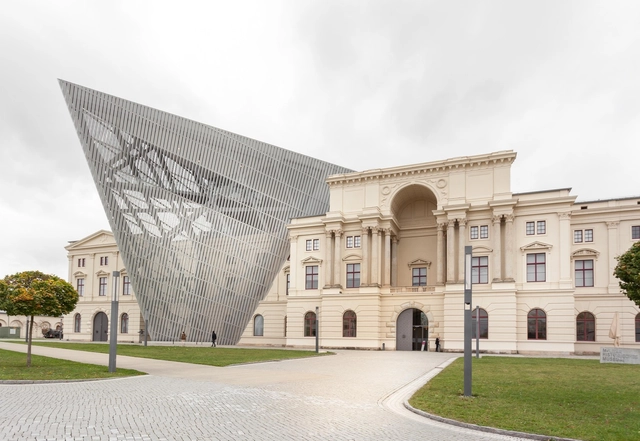
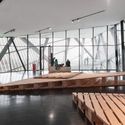
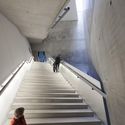
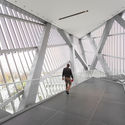
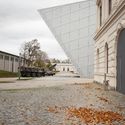
The complications of war and violence demanded a bold piece of architecture to provoke the public's understanding of the impact it had on Germany. Daniel Libeskind chooses to engage with such events in his extension to Dresden's Military History Museum, by crashing a huge steel and concrete structure through the neoclassical facade, tearing apart the symmetry of the original building. Photographer Alexandra Timpau has captured the sharp edges and harsh angles of the museum's extension that convey the pain and the stark reality of war Libeskind and the museum refer to.
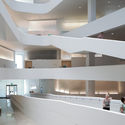
Deeply rooted in the phenomenological ideas of Maurice Merleau-Ponty, Steven Holl’s architectural philosophy is centered on human experience, materiality, and a thorough engagement with the site or context. But more than his experiments with space and material, he is best known for his mastery over what is perhaps his favorite material, or medium: natural light.
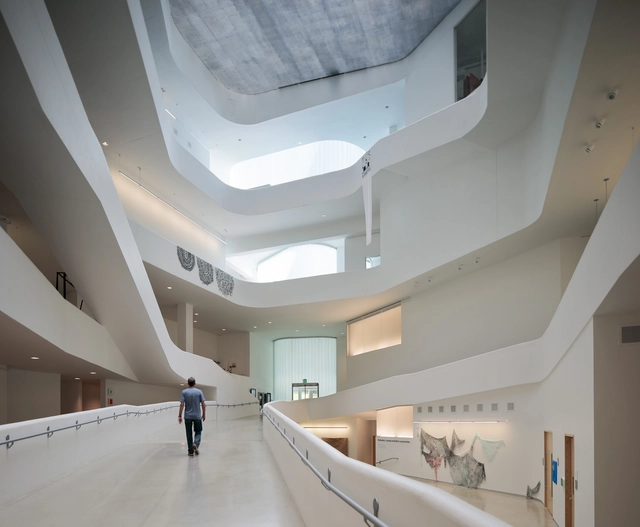
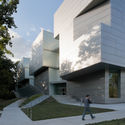
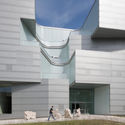
His design for the Visual Arts Building at the University of Iowa, seen here through the lens of photographer Aaron Dougherty, is one of his projects that best explores these concerns. Clad in weathering zinc and stainless steel, the four-story building houses studios, teaching spaces, galleries and faculty offices for all visual arts departments—from Ceramics, Jewelry Design and Sculpture, to Printmaking, Painting, Video Art, and 3D Design.
What do a lot of recent architecture college grads have in common besides their degree? Student loans and disillusionment (see point 1 in Megan Fowler’s 11 Things You Learn at Your First “Real” Architecture Job to understand what we mean by "disillusionment"). But with the emergence of the digital age and “side-hustle economy,” millennials are learning how to monetize their passions, and now 1 in 4 Americans are making money digitally. Side-hustling has become so popular that there is even a school for it. The difference between a side-hustle and a second job is that side-hustles aren’t just about giving yourself a raise. Your side-hustle is something you truly love to do, and would probably do anyway, but now you get to share it with the world and make a little extra cash in the process. So what side-hustle is right for you? Here is a list of side-hustles which suit the skillset of architects and designers.
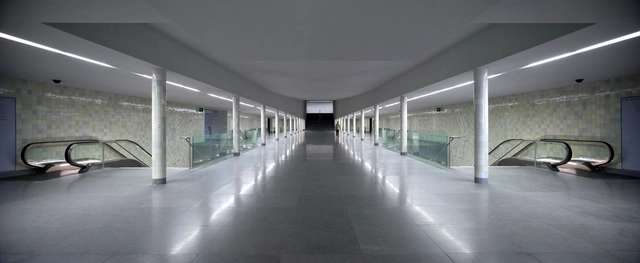
The following photo set by Fernando Guerra focuses on Porto's Subway, a project completed in 1996 and projected by the important Portuguese Architect Álvaro Siza Vieira.
Designing a subway station in Porto is about influencing the daily lives of thousands of people, where they daily circulate, establishing flows and routes, in a urbanistic and architectural intervention with large-scale dimensions. Although it demands an extremely functional and austere design, it is possible to see the gestures of the architect through the details and surprises.
We look for materials which are as intelligent, versatile and complex as natural phenomena, in other words materials which don't just appeal to the eyes of the astounded art critic, but are also really efficient and appeal to all our senses. – Jacques Herzog
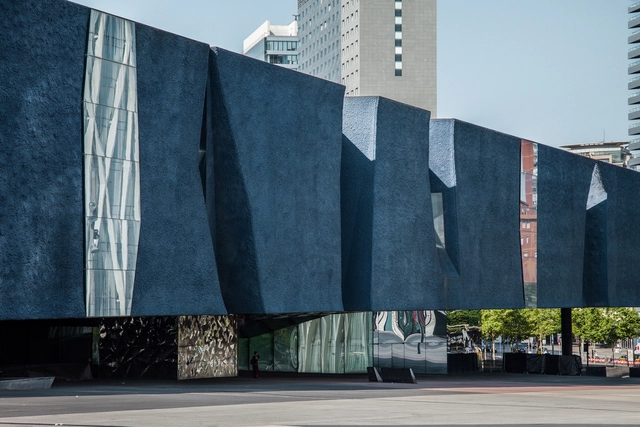
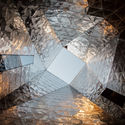
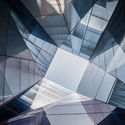
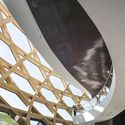
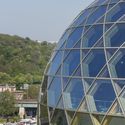
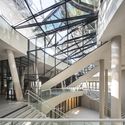
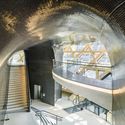
Like several other works of architecture by Herzog & de Meuron the Forum Building, known since the 2012 relocation of Barcelona's Museu de les Ciències Naturals as the Museu Blau, is remarkable for its sensitive use of materials. A triangular mass of gray-blue concrete punctured and split in places to reveal the contrasting use of reflective planes, the building is a hard one to ignore, especially for an architectural photographer.
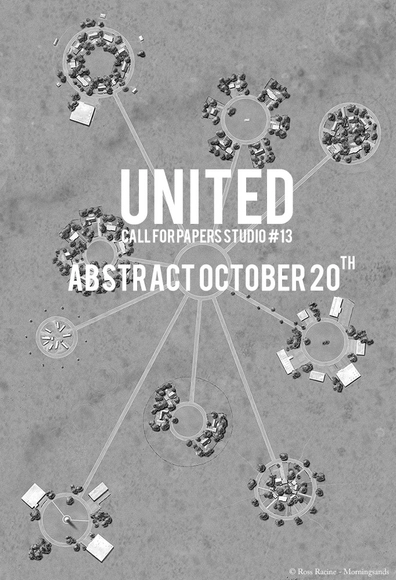
How does formal commitment of architecture and urban planning give us a UNITED (or not) city landscape, through the transformation of its knowledge into aggregational processes? Territories have different strategies of possession by its inhabitants, in between different narratives, epistemological discourses, and fragmentation processes. Within this context, the city is characterized by structural UNITED elements that shape urban futures.
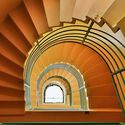
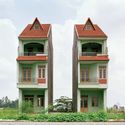
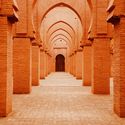
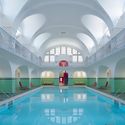
If you ever have those moments where you take a step back from your life and feel like you’ve suddenly fallen into a scene from a movie, you may appreciate the subreddit/r/AccidentalWesAnderson. Director, producer, screenwriter, and actor Wes Anderson is well known for creating scenes in his films that blur the lines between the real and the unreal. His extreme symmetry and restricted color palettes can often give the impression of a surreal, self-contained world. The purpose of the Accidental Wes Anderson subreddit is for users to post photos of real-world architecture and scenes they’ve stumbled upon that look like they could be stills from one of Anderson’s movies, with Redditors finding Anderson-esque scenes around the globe in everything from bathrooms to staircases to city streets. Even a viewer unfamiliar with Anderson’s films can browse the collection of photos and easily understand his aesthetic. Below is just a small selection of some of the most evocative photos to be found on the subreddit.
Architectural Photography Award launched by the Association of Hungarian Architects and the Hungarian Architecture magazine The main objective of this contest is to encourage and inspire thinking about our man-made environment via architecture-related photographs.
An exhibition is going to be opened in Budapest in November, 2017 to present the winning as well as the shortlisted finalist photos of the contest. From here the exhibition is to be moved on to Bratislava, Prague and Cracow at the beginning of the year 2018. All the photos exhibited are also to be published in a special issue of the Hungarian Architecture
Global photography community EyeEm has announced the finalists of their 2017 Photography Awards. Free and open to photographers of all skill levels and backgrounds to submit through the EyeEm web platform and app, this year’s awards received more than 590,000 submissions from users around the world across five categories: The Architect, The Great Outdoors, The Photojournalist, The Portraitist, and The Street Photographer.
The architecture category alone received over 95,000 submissions, from which 20 images were selected by a jury of photographers and editors from institutions including National Geographic and the BBC. All of the finalist images will be displayed at the 2017 EyeEm Photography Festival & Awards in Berlin from September 15-17, where each of the category winners and Photographer of the Year will be announced.
Continue on to see the 20 finalists in the architecture category.
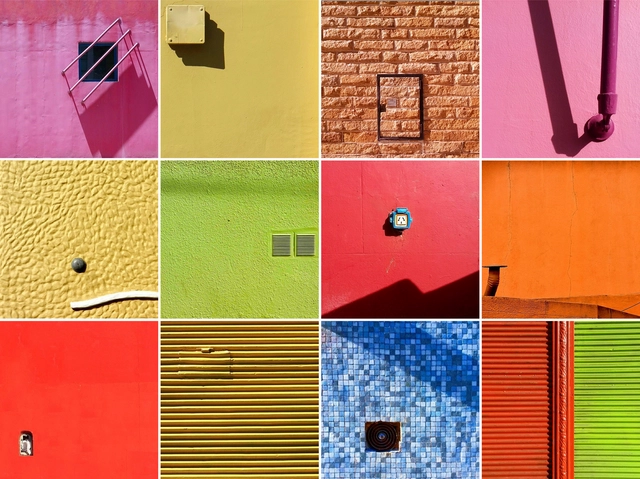
The textures, colors, and details, captured by @hernanmat in these minimalist photographs, show the vibrancy of the patterns and elements characteristic of the local, traditional and popular architecture of Argentina.
By photographing and compiling all these elements into one place, the collection becomes in a way a reflection of the different components of Argentine architecture that occupy the collective memory.
Check out below a stunning selection of minimalist photographs by @hernanmat.
Photographer duo Luc Boegly & Sergio Grazia have released a new photo series capturing the Seine Musicale, which recently opened its doors. Designed as a partnership itself between architects Shigeru Ban and Jean de Gastines, the mixed-use music and cultural center is located in Paris’ western Boulogne-Billancourt suburb. The project is the latest feature in the site’s Island Master Plan designed by Jean Nouvel. Features include a multi-purpose concert hall seating 4,000, a classical music call seating 1,150, rehearsal and recording rooms and an outdoor park area for visitors and practicing musicians.
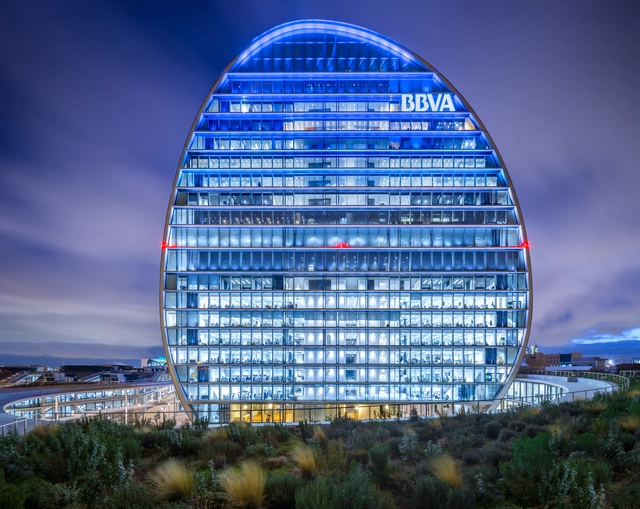
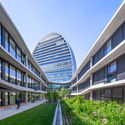
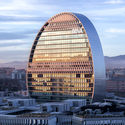
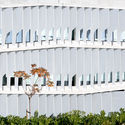
Completed in 2015 at the northern periphery of Madrid, the BBVA Headquarters by Herzog & de Meuron employs a complex network of passages, courtyards, and gardens to create a new corporate campus for the Spanish banking giant. Responding to local climatic needs, the building is recognized for its custom undulating brise-soleil along its facade and pebble-like central tower.
In this photoset, photographer Rubén P. Bescós turns his lens toward the new institutional landmark, capturing the building within its urban context.
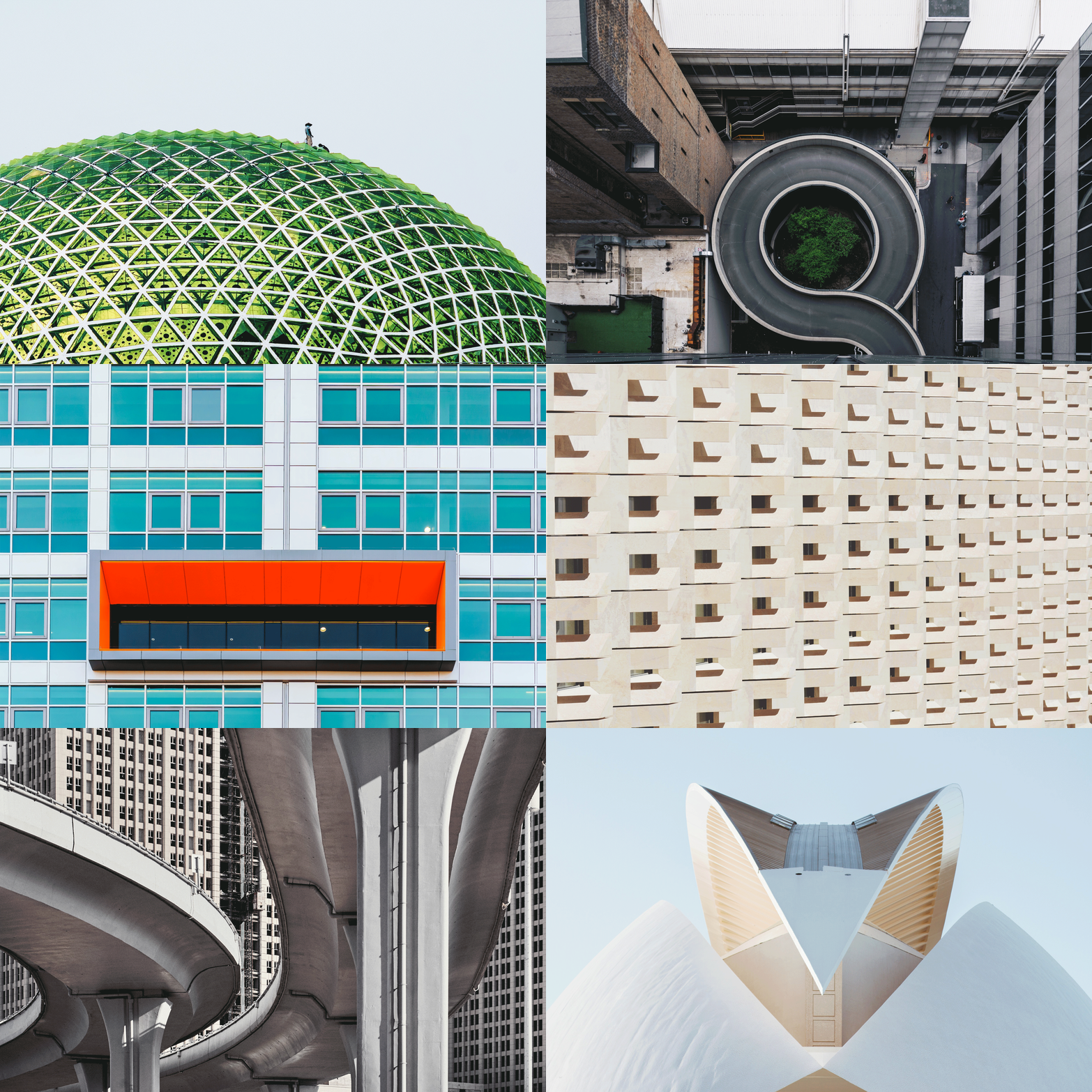
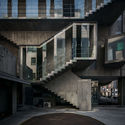
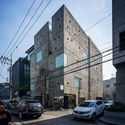
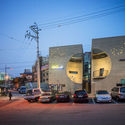
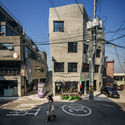
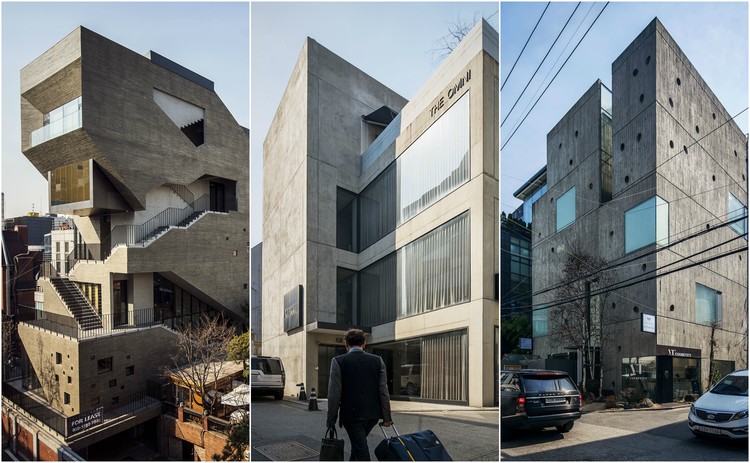
During his frequent travels to Seoul, Hong Kong- and Singapore-based photographer Raphael Olivier noticed a new trend taking the South Korean capital: a crop of geometric, concrete buildings of all genres. He calls the new style Neo-Brutalism, after the modernist movement that proliferated in the late 1950s to 1970s, in which raw concrete was meant to express a truth and honesty. Olivier's observation led him to capture the phenomenon in a personal photo series—a photographic treasure trove of these projects which, when taken as a whole, uncovers a cross-section of this trend in the city's architecture.
The exhibition 'Sketches of Spain' by photographer Ola Kolehmainen has been recently shown in Barcelona at the SENDA Gallery. The exhibition summarized the last ten years of Kolehmainen’s work. In 2015, the artist was awarded the RIBA Honorary Fellowship for his contribution in promoting the architecture of his generation.
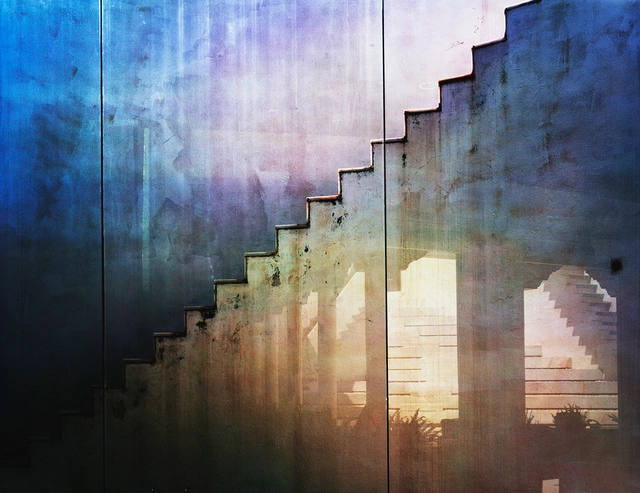
With his particular vision, Ola Kolehmainen seeks to show the constant abstractions that are partially hidden in modern architecture. His photography is dramatic and inspiring, we can find pieces of European avant-garde mixed with the crudeness of the materials and their uses. With minimal format, he shows us details we normally miss completely from well-known works such as the Barcelona Pavilion by Mies Van der Rohe (key architect in Kolehmainen's work), or the Niemeyer Center in Avilés, by Oscar Niemeyer.
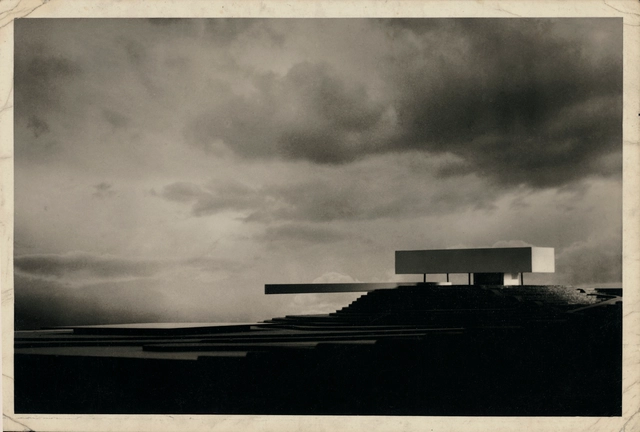
138 images, 14 albums, 20 magazines, 13 original models and one projection are part of Modeling for the Camera: Photography of architectural models in Spain, 1925-1970, the current exhibition of the ICO Museum in Madrid, curated by Iñaki Bergera, PhD of Architecture from the University of Navarra.
The exhibition is tied to the book of the same name that was published in 2016, edited by La Fábrica and the Ministry of Public Works (Spain). In times when 3D visualization software has popularized, accelerated and perfected the rendering industry, both materials choose to value the legacy of architectural model photography in the 20th century.
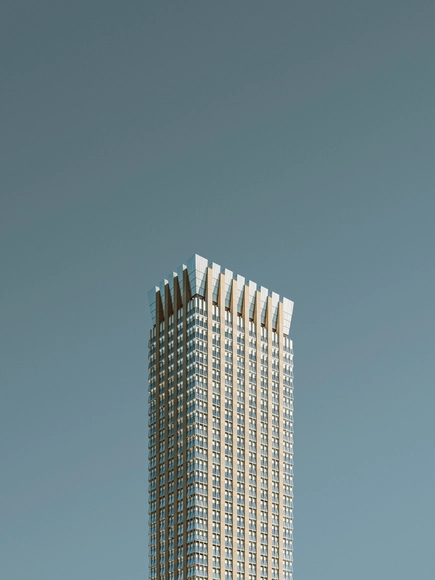
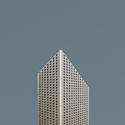
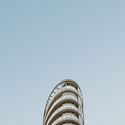
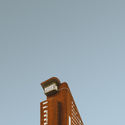
Florian W. Mueller's Singularity series is, in the photographer's own words, "just the building – reduced to the max." These deceptively simple shots of the summits of skyscrapers from around Europe and North America, each set against in infinite gradient of sky, are symbols of architecture's effort to reach ever higher in evermore unique ways. For Mueller, who is based in Cologne, they are an attempt at abstraction. In isolation—and especially when viewed together—they are remarkably revealing as studies of form and façade.
Within the framework of the recent election of Malta to the Presidency of the Council of the European Union—a position that will be held through June 2017—architectural photographer Danica O. Kus has created a photo series detailing Renzo Piano Building Workshop’s Valletta City Gate in Malta.
Completed in 2014, the project is composed of four parts: the Valletta City Gate and site, an open-air theater “machine,” a Parliament building, and landscaped space. Experience the project in beautiful detail though the photo series, after the break.
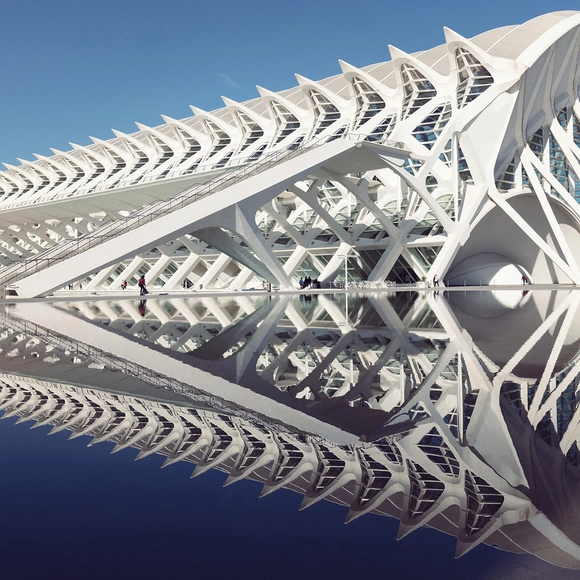
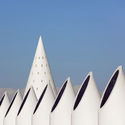
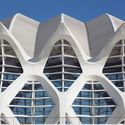
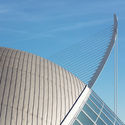
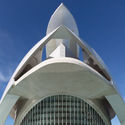
As a young boy, Santiago Calatrava's fascination with light in his native Valencia fueled his determination to draw, design, and eventually build. His Ciudad de Artes y Ciencias (City of Arts and Sciences) is a perfect example of the influence of the Valencian sun on the architect's work. The seven cultural buildings define a formal vocabulary all their own, with a dynamism between blanched curves and rhythmic visual patterns. So bright it almost glows on clear days, the materiality of the structures emphasizes the ability of light to outline the spatial relationships between Calatrava's shapes, and shift them as the sun moves through the sky.
In his most recent photo series, Sebastian Weiss has captured the tendency of the shapes of the City of Arts and Sciences to "complement each other and even merge to a harmonic unity," as the photographer himself puts it. The photos were originally featured on his Instagram, @le_blanc, and develop a new way of looking at the oft-photographed tourist spot. His images imagine the complex as a pulsating "light-space installation" of equally systematic and creature-like forms in constant conversation with one another. The series gives the sense of looking at different sections of a particularly beautiful beast—its ribs, underbelly, horns, etc.—captured within the complex's shallow pools.