From the first experiments carried out by the French Joseph Niépce in 1793, and his most successful test in 1826, photography became an object of exploring and a resource for registering lived moments and places of the world. Within the broad spectrum of photographic production throughout history, architecture has frequently played a leading role on the records, be it from the perspective of photography as an art, document or, as it was often the case, an instrument for cultural construction.
Having great autonomy as a practice and of particular debate inside this theme, architectural photography has the ability to reaffirm a series of expressive features of the portrayed works, create tension in their relation to the surroundings, and propose specific or generic readings of buildings, among other investigative possibilities.
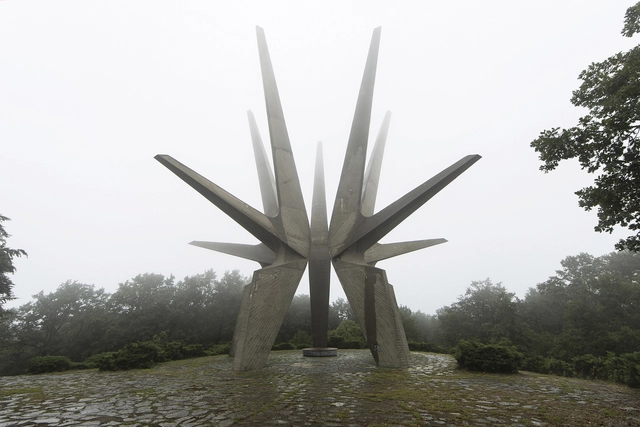
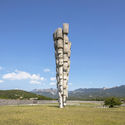
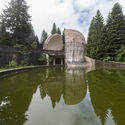
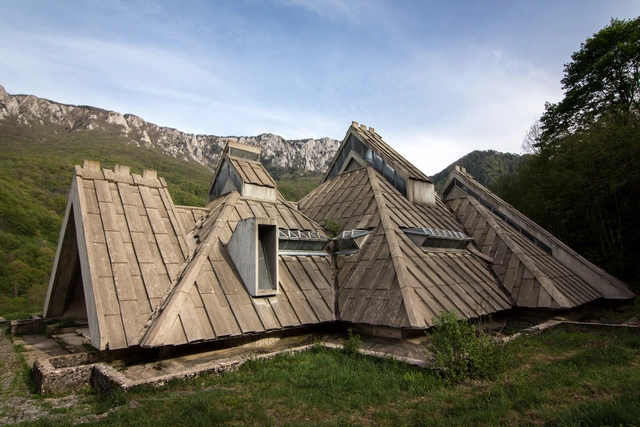
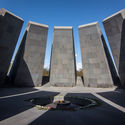
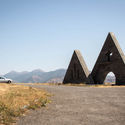
Thirty years after the breakup of the former Yugoslavia, the traces of the regime seem increasingly few and far between. Among the still existing monuments, conditions are mixed: some remain pristine, others are worn away after years of exposure to the elements.
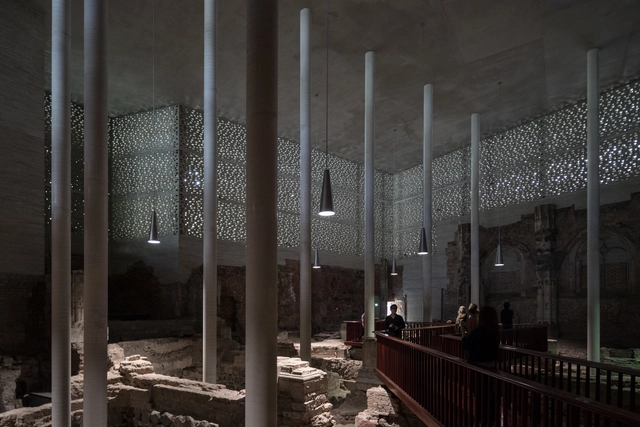
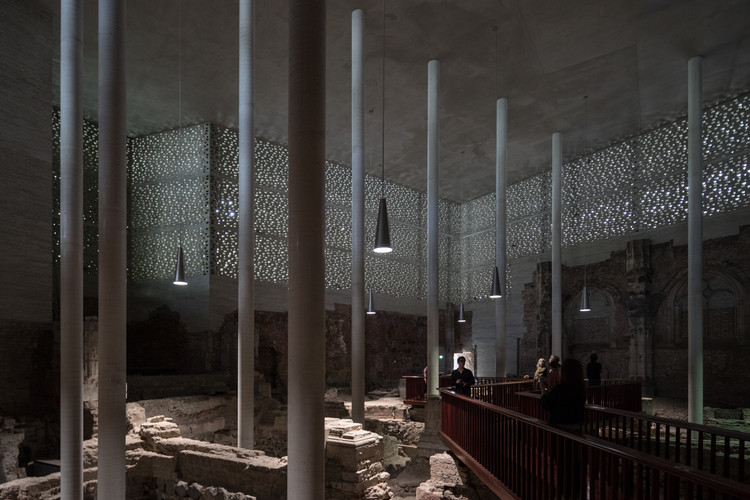
Peter Zumthor's quiet, technically pristine, and beautifully detailed work has long been an inspiration for architects. His Kolumba Museum, located in Cologne, Germany, a city that was almost completely destroyed in World War II, houses the Roman Catholic Archdiocese’s collection of art which spans more than a thousand years. Zumthor’s design delicately rises from the ruins of a late-Gothic church, respecting the site’s history and preserving its essence.
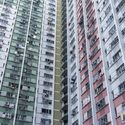
Hong Kong is an autonomous territory in southeastern China known for its skyscrapers, urban density, and high prices. However, on Nico Van Orshoven's travelogue, Everywhere in Particular, the Belgian architect creates a visual portrait of the territory beyond the stereotypes. With lively public spaces and stunning natural landscapes, Hong Kong can and will surprise you.
Below, Van Orshoven recounts his visit to Hong Kong:
British researcher Darmon Richter has recently released Monumentalism, a visual study of over 200 photographs featuring socialist architecture and designs built by 20th century regimes around the world. These photos were taken in more than 30 different countries and show a broad range of subject matter, from military parades in the former Soviet Union to revolutionary memorial sites. See more after the break.
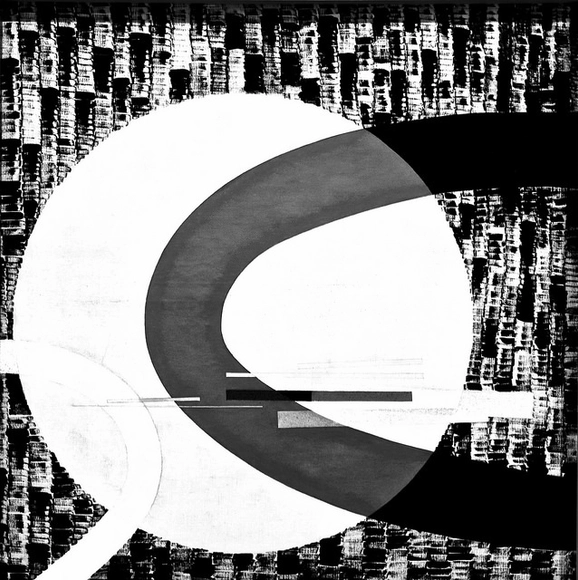
The Hungarian artist László Moholy-Nagy was one of the most influential thinkers, designers and art educators of the first half of the twentieth century. His experimentation with light, space and form generated international attention. Among those impressed by Moholy-Nagy's work was Walter Gropius, German architect and founder of the Bauhaus School, who made Moholy-Nagy one of the youngest instructors in the history of the Bauhaus. In his time at the Bauhaus, Moholy-Nagy utilized multi-disciplinary art practices to revolutionize abstract artistic media.
When we think of Istanbul, opulent mosques and bustling bazaars often come to mind. Architect and photographer Yener Torur focuses on a different side of the city, targeting lesser-known neighborhoods to capture stunning images of a hidden, rainbow-colored Turkey.
Often using friends, family, and even himself as models, his photographs create whimsical narratives where color-coordinated figures act as supporting characters in a playful world of tones. Torur describes the search for these buildings as a "treasure hunt," describing his intention to "document a different, less-known part of Istanbul to escape from the one dimensional and orientalist perception."
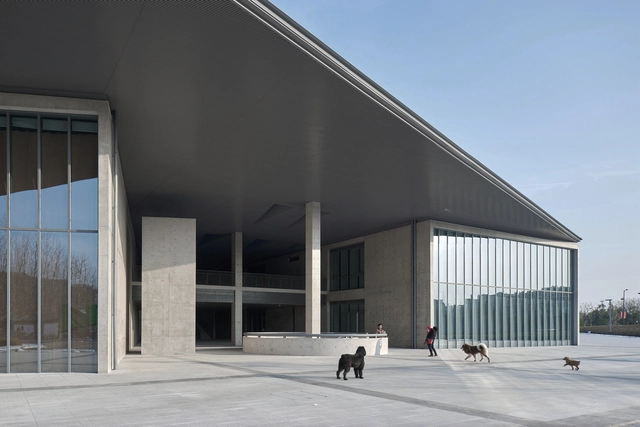
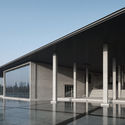
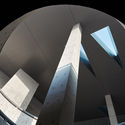
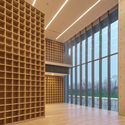
The historic Liangzhu Village in Hangzhou, China has a new monumental cultural center by the Japanese architect Tadao Ando. Opened in 2016, the building has become another popular cultural site in the village following the opening of David Chipperfield’s Liangzhu Museum a decade ago.
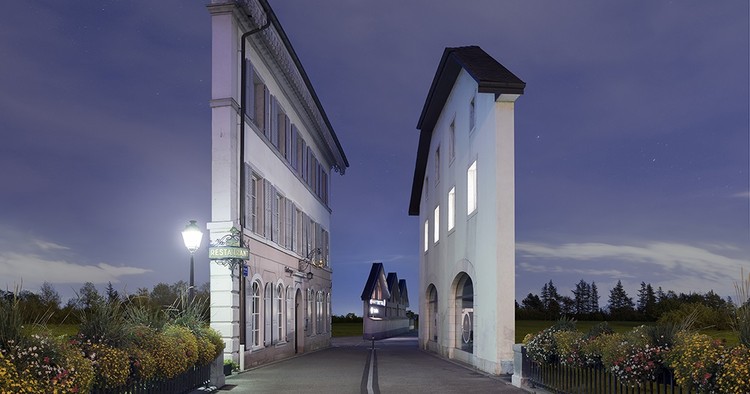
In his ongoing photo-series "Façades," French photographer Zacharie Gaudrillot-Roy a series of images in which he removes the mass and depth of buildings, and leaves behind the mere fragments of exterior skin. The photos, which resemble deserted Hollywood sets, illustrate roadways, towns, apartment complexes, and other environments without giving away the ideas of anything beyond the superficial image of the facade—leaving much to the imagination.
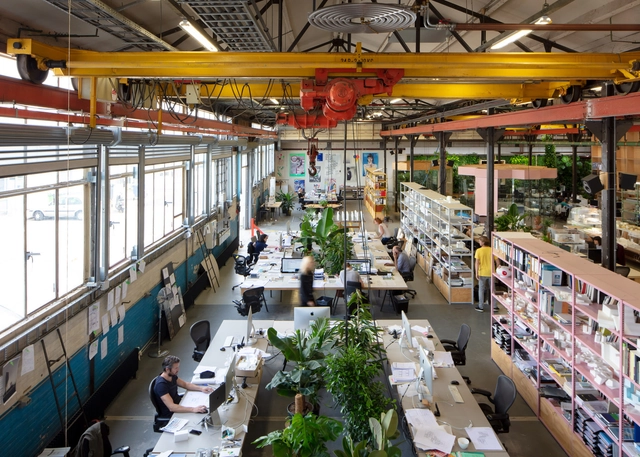
Having previously assembled sets of images featuring the offices of architecture firms in Dubai, London, Paris, Beijing, Shanghai, Seoul, the Nordic countries, and Barcelona, architectural photographer Marc Goodwin continues the series with an exploration of 17 large and small offices in the Netherlands. Occupying buildings formerly used as offices, banks and old factories, the interior and exterior images capture a glimpse of the lives of these designers and their daily architectural surroundings.
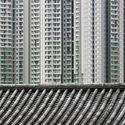
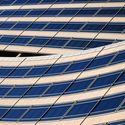
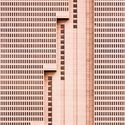
In his ongoing study, Nikola Olic - a Serbian photographer based in Dallas, Texas - focuses on “architectural photography and abstract structural quotes that reimagine their subjects in playful, dimensionless and disorienting ways.” Often isolating elements of a facade, which obscures the viewer's sense of scale and perspective, Olic provides short descriptions of each image, acting as a “demystifying tool” and reminding us of the everyday nature of his subject matter. In the third collection shared with ArchDaily, the photographs are taken in Dallas, Fort Worth, Las Vegas, New York, Los Angeles, Long Beach, and Hong Kong.
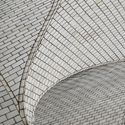
In the town of Moukhtara, Mount Lebanon, L.E.FT Architects have transformed a 100-square-meter structure into a symbolic, picturesque mosque. The Amir Shakib Arslan mosque is a rendition of old versus new with a white steel structure overlaid onto an existing building of cross-vaulted masonry. The angular geometry of the steel plates is a result of the structure’s alignment in relation to Mecca.
Lebanese architectural photographer Bahaa Ghoussainy has released a new series of images which accentuate the contrast that lies between the architectural design of the mosque and the traditional representation of Islamic mosques and prayers. The juxtaposition of an Islamic holy place built in a non-Islamic town is translated into the architecture’s design, merging two dissonant styles into one complementary structure.
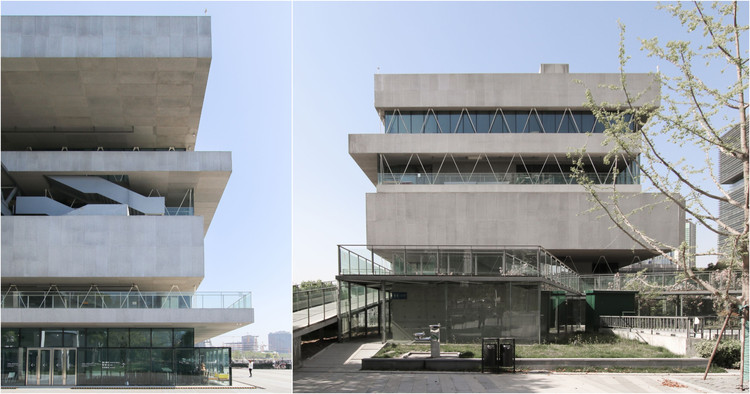
Architect Kris Provoost, who lives and works in Shanghai, has captured Atelier Deshaus' new Shanghai Modern Art Museum through a series of photographs, displaying both the details of the building as well as its context on the Shanghai riverfront. The Shanghai Modern Art Museum is an adaptive re-use project on the old Laobaidu coal bunker, its industrial exterior kept and re-interpreted into a contemporary architectural project. Provoost captured the beautiful detailing of the project, as well as how it transforms during the cherry blossom season.
With more than 590,000 submissions in 2017, the EyeEm Photography Awards is the world's largest photography competition for discovering new talents.
The 2018 EyeEm Awards feature nine categories, including a category focused on architecture: "The Architect" where we encourage you to submit interesting lines, shapes, and beautiful spaces in architecture.
With its monumental form, swept diagonal lines and elevated concrete walkways, the Issam Fares Institute building at the American University of Beirut by Zaha Hadid Architects emphasizes movement, evoking the speed of contemporary life as it presides over a connecting system of pedestrian walkways. Begun in 2006 and completed in 2014, Hadid’s award-winning concrete and glass building makes a bold statement with its prominent 21-meter, two-story-tall cantilever, which creates a covered courtyard and reduces the footprint of the building to avoid blocking circulation routes. The elevated walkways carry pedestrians through the branches of huge Cypress and Ficus trees, many of which significantly predate the building at 120 to 180 years old.
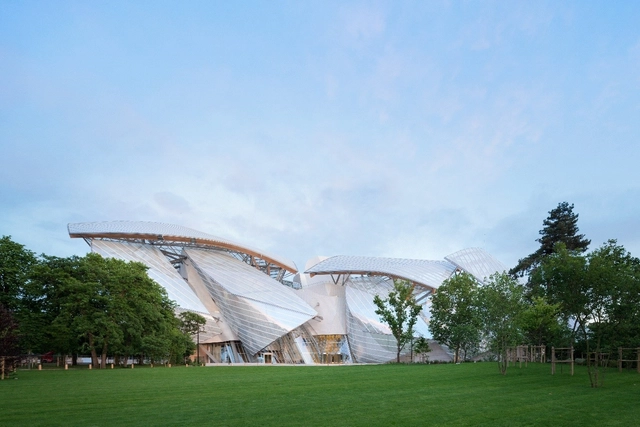
In celebration of its visitors, the Fondation Louis Vuitton is organising a photography contest on the theme of its architecture, designed by Frank Gehry. The contest is open to all, amateurs and professionals alike. A jury of representatives of the Fondation, led by Frank Gehry, will come together at the end of the contest to choose from 5 to 10 photographs.
From 3 May to 5 June, with unexpected outlooks on the architecture, both indoors and outdoors, unmissable moments from the terraces, unforgettable views of the waterfall, the contest #MyFLV honours the public and its vision of the Fondation. The best
When Spanish architect Rafael Moneo won the Pritzker Prize in 1996, the jury identified his ability to see buildings as lasting built entities—their lives extending beyond architectural drawings—as integral to his success. The South Souks, Moneo’s 2009 project in Beirut, Lebanon, indeed responds to a long history and anticipates a lasting future. After the city’s historic souq (outdoor marketplace) was destroyed during the Lebanese Civil War, developer Solidere began rebuilding the commercial area in 1991. As part of the project, Moneo designed an arcaded shopping district that follows the ancient Hellenistic grid and retains original street names.
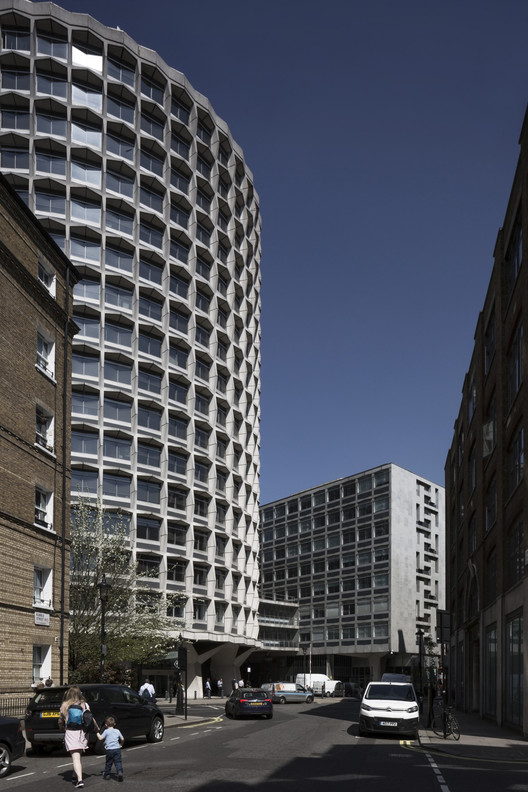
Appreciated within the industry but often maligned by the general public, brutalism came to define post-war architecture in the UK, as well as many countries around the world. In his 1955 article The New Brutalism, Reyner Banham states it must have “1, Formal legibility of plan; 2, clear exhibition of structure, and 3, valuation of materials for their inherent qualities as found.”
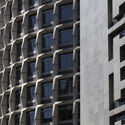
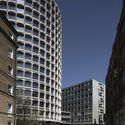
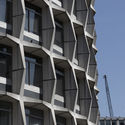
One Kemble Street, a 16-story cylindrical office block originally named "Space House" and designed by George Marsh and Richard Seifert, clearly exhibits all of these characteristics, creating a landmark in the heart of London that remains as striking today as it was upon its completion in 1968. Photographing the Grade-II listed building throughout the day, photographer Ste Murray manages to beautifully capture the building’s essence, celebrating its 50 year anniversary while also highlighting the intrigue of its form in a way that suggests parallels to contrasting ideologies.













.jpg?1527226454&format=webp&width=640&height=580)
.jpg?1527225607 "© Bahaa Ghoussainy")
.jpg?1527225807 "© Bahaa Ghoussainy")
.jpg?1527226615 "© Bahaa Ghoussainy")
.jpg?1527227695 "© Bahaa Ghoussainy")
.jpg?1527226454)


.jpg?1526579450)
.jpg?1526579373 "© Bahaa Ghoussainy")
.jpg?1526578916 "© Bahaa Ghoussainy")
.jpg?1526579342 "© Bahaa Ghoussainy")
.jpg?1526578946 "© Bahaa Ghoussainy")
.jpg?1526816206)
.jpg?1525882270&format=webp&width=640&height=580)
.jpg?1525882675 "© Bahaa Ghoussainy")
.jpg?1525882059 "© Bahaa Ghoussainy")
.jpg?1525882372 "© Bahaa Ghoussainy")
.jpg?1525883388 "© Bahaa Ghoussainy")
.jpg?1525882270)