UCSD: A Built History of Modernism

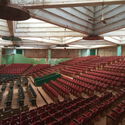
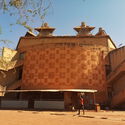
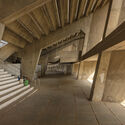
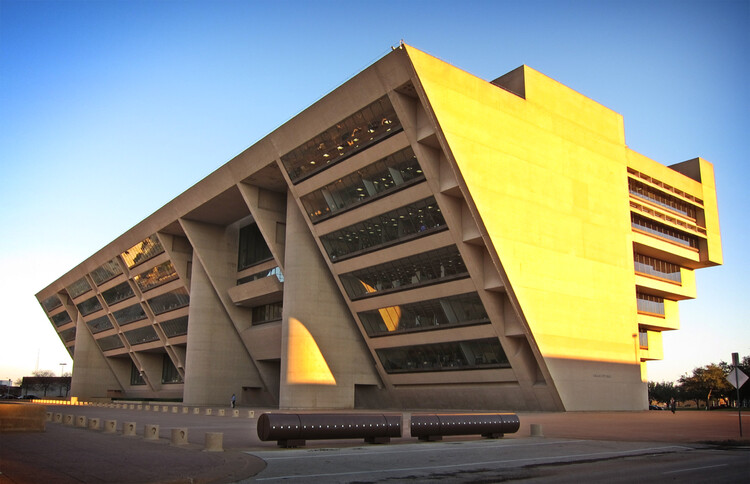
At just a little over 50 years old, the University of California San Diego is one of the younger college campuses in the United States, but despite this it is one of the most architecturally fascinating universities around. In the official UCSD campus guide, Dirk Sutro emphasizes that “UCSD does not have a single example of the historical-revival styles prevalent at other University of California campuses… and at San Diego’s two other major universities”. The history of UCSD architecture is one of ambition, which has made the campus a display case of modernism in all of its forms from the last half a century.

Thanks to photographer Darren Bradley, we can now share this history and a selection of the exciting structures it has produced.
Find out more about the UCSD campus after the break
A Crash Course on Modern Architecture (Part 2)

Merete Ahnfeldt-Mollerup is associate Professor at The Royal Danish Academy of Fine Arts. This article originally appeared in GRASP.
Miss Part 1? Find it here.
Architecture is inseparable from planning, and the huge challenge for the current generation is the growth and shrinkage of cities. Some cities, mainly in the Southern Hemisphere, are growing at exponential rates, while former global hubs in the northern are turning into countrysides. In the south, populations are still growing a lot, while populations are dwindling in Europe, Russia and North East Asia. The dream of the Bilbao effect was based on the hope that there might be a quick fix to both of these problems. Well, there is not.
A decade ago, few people even recognized this was a real issue and even today it is hardly ever mentioned in a political context. As a politician, you cannot say out loud that you have given up on a huge part of the electorate, or that it makes sense for the national economy to favor another part. Reclaiming the agricultural part of a nation is a political suicide issue whether you are in Europe or Latin America. And investing in urban development in a few, hand-picked areas while other areas are desolate is equally despised.
The one person, who is consistently thinking and writing about this problem, is Rem Koolhaas, a co-founder of OMA.
A Crash Course on Modern Architecture (Part 1)

Merete Ahnfeldt-Mollerup is associate Professor at The Royal Danish Academy of Fine Arts. This article originally appeared on GRASP.
This is where one has to quote William Gibson:”The future is already here — it’s just not very evenly distributed.”
Within architecture (and design and planning), there are always several simultaneous realities. One very pragmatic reason is that architecture is a very slow form of communication: it may take several decades from the moment a concept arises somewhere to the point where it becomes mainstream knowledge within the industry, and then even more time before it reaches the general public.
Take the “Modern Movement” in architecture. Basically, its theories and formal language were fully developed from 1919 through 1924. And when we read the history books, we get this distorted version that the great modernist pioneers were only stopped by the evil dictatorships in the Soviet Union and Germany. This is as far from the reality of the era as it can possibly be.
Keep reading Ahnfeldt-Mollerup’s crash course to architecture, after the break…
Build Your Own Neutra Home!

The mid-century modern master, Richard Neutra was well known for his cutting edge modernism. Since Julius Shulman immortalized his houses in his iconic photographs, Neutra’s bright, airy homes have widely been seen as the pinnacle of modernism and desirability. One problem though, they’re in high demand and it’s not exactly like they’re making any more Neutra buildings; in fact, quite the opposite is true and as a result they have become a pretty expensive commodity.
Read more about how to get your very own Neutra home after the break…
Kickstarter Campaign Seeks Funds To Produce Film About Eileen Gray
As we’ve mentioned before, Irish designer Eileen Gray was undoubtedly one of the most influential, and most overlooked, designers of the 20th century. However, a new Kickstarter campaign aims to put that right once and for all. The campaign is seeking funds to help renovate Gray’s seminal house, E-1027, for the production of a feature film about the architect.
Video: 75 Years of Mies van der Rohe and His Chicago School
When emigrating from Germany in 1938 to head Chicago’s Armour Institute, Ludwig Mies van der Rohe was challenged with two tasks: first reform the schools curriculum to his “back-to-basics” approach and then develop plans for a newly expanded 120-acre campus for the creation of Illinois Institute of Technology, a product of the Armour Institute and Lewis Institute merger. Mies was able to exceed both challenges and the outcomes have had a lasting influence on Chicago and modernism for the past 75 years. In celebration of this legacy and Mies’ 127th birthday, IIT complied this comprehensive video that features Mies’ contribution to the modern landscape of their campus and city.
Learn more about Mies’ IIT master plan and building here on ArchDaily.
The 10 Most Overlooked Women in Architecture History
Looking back on architectural history, you could be forgiven for thinking that women were an invention of the 1950’s, alongside spandex and power steering – but this couldn’t be further from the truth. Big names like Le Corbusier, Mies, Wright and Kahn often had equally inspired female peers, but the rigid structure of society meant that their contributions tended to be overlooked. In honor of International Woman’s Day 2013, we take a look at the 10 greatest overlooked women in architectural history.
Read the full list after the break…
Video: Louis Kahn Talks to a Brick
In this jaunty little clip, Louis Kahn stresses the importance of honoring your materials to a group of students at the University of Pennsylvania.
Estonia-born in 1901, Louis Kahn had a steadfast belief that all materials had their own destiny and wouldn’t tolerate any attempt to deviate from that. During the age of clean modernism and the use of cutting edge materials, his architecture was often dismissed for being overly symbolic and heavily venerating buildings of the past. Influenced by the arid nature of many of his sites, Kahn’s buildings often took the form of cavernous brick shells with large geometrical cut outs, which he would like to describe them – in his bizarre Kahn-way - as ruins in reverse.
Here are a few of Kahn’s intriguing brick creations:
For more information about Kahn and his brick channeling abilities you can read this rather excellent article by the Guardian’s Olly Wainwright, entitled “Louis Kahn: the brick whisperer“.
Ezra Stoller: Beyond Architecture

Now on view at the Yossi Milo Gallery through March 2, rarely-seen images by modernist architectural photographer Ezra Stroller (American, 1915-2004) captures a Post-War American landscape with stunning images of industry, technology, transportation and working class Americans.
Beyond Architecture covers the full range of Stoller’s work, including photographs commissioned by Fortune, Architectural Forum, and House Beautiful magazines in the 1940s and for commercial projects for IBM, Upjohn Pharmaceuticals and CBS in the 1940s and 1950s. Included are photographs of Skidmore, Owings & Merrill’s John Hancock Building, Chicago, and the United Nations Headquarters, designed by an international team of architects led by Wallace K. Harrison and including Oscar Niemeyer and Le Corbusier.
A selection of these images after the break…
From Psychopath Lairs to Superhero Mansions: How Cinema and Modernist Architecture Called A Truce

This article comes courtesy of ArchDaily friend Charlotte Neilson, the author of the fascinating design blog Casting Architecture, which discusses architecture and production design. Charlotte is not only a dedicated cinephile but also an honours graduate of the University of Newcastle, Australia.
We all know that psychopaths prefer contemporary design. Hollywood has told us so for decades. The classic film connection between minimal interiors and emotional detachment (see: any Bond adversary) or modern buildings and subversive values is well documented – and regrettable. The modernist philosophy of getting to the essence of a building was intended to be liberating and enriching for the lives of occupants. Hardly fair then that these buildings are routinely portrayed with villainous associations.
What the representation of Modernist architecture in film tells us about our society, after the break…
Photography: Mid-Century Modern Churches by Fabrice Fouillet

As Europe recovered from the death and destruction of World War II, countries got back to the business of rebuilding their communities and, of course, their churches. The need to make sense of the madness of the War was palpable – as was the need to express this modern-day spirituality in a form that radically broke from tradition.
The result was a bevy of European churches that – although often misunderstood by practitioners - represent some of our best-preserved examples of Modernist architecture. Photographer Fabrice Fouillet made it his mission to photograph these beauties in a series he calls “Corpus Christi.” You can see the images – as well as Fouillet’s description of the work – after the break…
Modern Tide: Midcentury Architecture on Long Island
The relationship between social dynamics and architecture has always been intimate. It is a constant dialogue between social norms and politics, stylistic trends and aesthetic choices, individual preferences and the collective good. The Modernist Period was a time when architecture took on the challenge of many social problems. In all the arts – architecture, design, music and film – the period was highly politicized and the choices often gave way to a utilitarian ideal that was a hybrid of efficiency, simplicity and comfort. Jake Gorst’s new film Modern Tide: Midcentury Architecture on Long Island, supported by Design Onscreen, is a message of preservation that takes us through the history of the modernist housing boom that took place on Long Island, NY in the period between the Great Depression and the 1970s.
On August 14th, Cook+Fox Architects hosted a private film screening at their office on 641 Ave of the Americas, presenting the treasures along the island’s shore that have fallen between the cracks of history. The film looks at works from Albert Frey, Wallace Harrison, Frank Lloyd Wright, Marcel Breuer, Philip Johnson, Charles Gwathmey, Barbara and Julian Neski and many others.
Follow us after the break to catch up on the history of the development of these houses on Long Island.
LEGO Turns 80, Remains Architecturally Awesome

“Legos were the ultimate building tool, capable of making the most advanced space ships, powerful vehicles, impressive buildings, and incredible cities. As a child, everyone I knew loved Legos, and this never seemed to change. In high school, whenever a conversation with friends happened to shift upon Legos, everyone would gleefully reminisce about their days making fantastic structures out of those awesome little building blocks. [...] No doubt Legos played a supporting role in my growth in appreciation for architecture.” - Architect Albert Lam, in a Blog post for the LPA
When you ask architects what inspired them, almost all (according to one study, 99%) can trace the calling back to the same, simple origin: playing with their LEGO bricks.
The LEGO Group, which turns 80 today, can boast that there are approximately 62 LEGO bricks for ever person on earth. However, it wasn’t until 1958, when the newly-plastic LEGO bricks incorporated the classic knob-and-tube-connecting-system, that they overtook the Froebel block (Frank Lloyd Wright’s toy of choice) to become the massively popular architectural inspiration they are today.
But while the influence of LEGO on architects may be self-evident, not many know about Architecture’s contribution to LEGO. In fact, only through the lens of Architecture, can you truly understand why LEGO merits its bold moniker as “The Toy of the Century.”
Find out Architecture & LEGOs unlikely relationship, after the break…
From Mad Men to Mies: Why Modernism Holds Sway

It’s June 1966. Mies’ iconic Seagram Building dominates New York City. Bob Dylan has just released Blonde on Blonde. The Vietnam War is escalating. John Lennon has yet to meet Yoko Ono. Martin Luther King, Jr. has yet to be assassinated. And Don Draper is readjusting to married life – with his 25 year-old secretary.
The excitement over Mad Men, while always eager, was positively explosive last Sunday. The season 5 premiere resulted in the show’s highest ratings to date (3.5 million viewers, up 21% from last year). While the show has always received critical acclaim, now, for whatever reason, it has reached a fever-pitch of popularity.
On a purely aesthetic level, it’s easy to explain. The show draws in audiences with a meticulous, sumptuous set design that allows a nostalgic journey back in time: when design was innovative & clean, architecture was confident (cocky even), and modernism still held its promise.
But on another level, the show is successful because of its inevitability. The very knowledge of the ephemerality of that confidence, a theme particularly relevant to audiences in the wake of the Recession, is what strikes a chord, what makes the show positively hypnotizing.
Watching Mad Men is like watching a Modernist car crash. A beautiful demise.
More on the Modernist Landscape of Mad Men and why the show has struck a chord with audiences today after the break.
Lloyd’s building joins Grade I Elite

The futuristic Lloyd’s of London building has become one of the few postmodern buildings to be granted Grade I listed status, elevating the building to the top 2.5% of all listed buildings. Following Richard Rogers and Renzo Piano’s success with the great Pompidou Center in Paris (1977), Rogers designed the Lloyd’s building to replace the insurance company’s original headquarters in London’s medieval financial district. The building was completed in 1986 after eight years of construction, requiring 33,510 cubic meters of concrete, 30,000 square meters of stainless steel cladding and 12,000 square meters of glass to construct.
Continue reading for more information and images.
Modernist and Traditionalist on Establishment Bias Against Traditional Architecture

Tensions mounted between modernist and traditionalist camps earlier last month when Paul Finch, UK Chairman for the Commission for Architecture and the Build Environment, praised the fact that modernists had won bids to design buildings for the 2012 Olympics. In response, Robert Adam, member of the Traditional Architecture Group, and Michael Taylor, senior partner at Hopkins, the firm that designed the Olympic velodrome, met for a discussion on hegemony, timeliness, and pastiche moderated by Guardian staffer Lanre Bakare.
The conversation is lively and aggressive. Ironically, the ‘progressive’ Taylor comes off as complaisant (“Let’s agree vast parts of our cities are covered in very bland modern buildings with too much glass and steel.” “There are some buildings where there will be common ground – for example, the works of Brunel, or Crystal Palace.”), and opinionated (“Anyone would recognise the problems with modernism and see values in traditionalism which they like, but the problem is traditionalism is fixed and isn’t something that people think is moving forward.”) and Adams, a bit of a snob, (“MT: People are benefiting from cars, aeroplanes and other modern technology, and so to take the appearance and facades of your architecture as one separate element which should make a very clear and literal quotation back to history seems to be inconsistent. And I think people struggle with that. / RA: I think only architects struggle with that. Most people don’t have a problem with a Ferrari in the drive and a Georgian house behind it.) proves to be keenly aware of traditionalism’s place in contemporary Britain (“The prejudice towards traditionalists is rather like sexism. It’s just in the culture. If you’re in the profession, that’s just what you do. When you’re delivering the prejudice you don’t really notice it, but if you’re on the receiving end of it, then it’s a problem”). More an exhibition of conflicting ideologies than a conversation about contemporary viewpoints, the discussion is a fascinating look into how two feuding camps see themselves and their place in the world at large.
Follow this link: http://www.guardian.co.uk/commentisfree/2011/aug/05/architecture-modernism-vs-traditionalism-olympics
Googie Architecture: Futurism Through Modernism

At the peak of the modern era, a meshing of car culture and the Space Age brought about the gaudy and garnished Googie architecture. The signatures Googie style lie in sweeping arches and hard angles, cantilevered roofs and bold colors, and, its most relative homage to the Space Age, the starburst. The first of the Googie style, and its namesake, was a coffee shop designed by architect John Lautner by the name of “Googies”. With its place on Sunset Boulevard in Los Angeles the new style caught the eye of many passersby who began to associate the style with the glamour of Hollywood. The spread of this movement from Southern California went most notably north and south along the shore to become a symbol of west coast futurism.