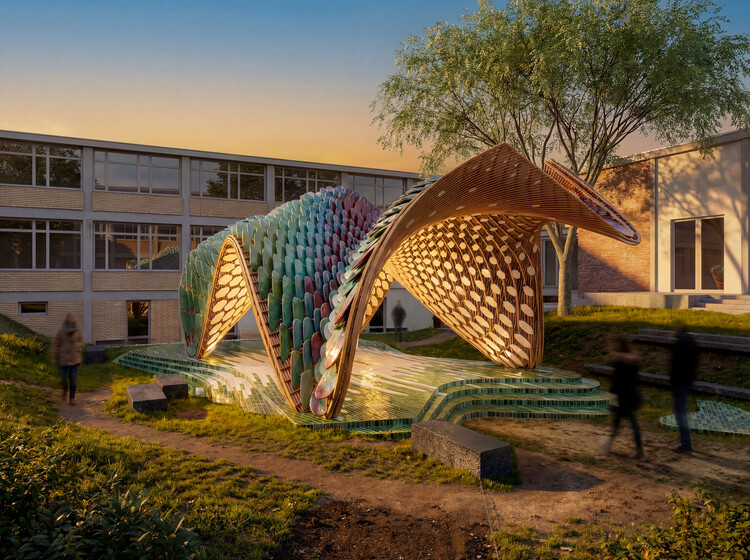
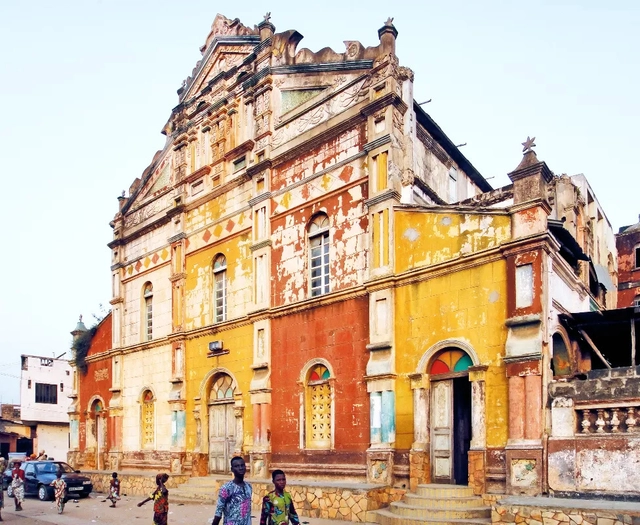
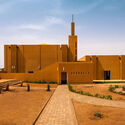
Buildings that are designed to layer stories and memories, evoke a sense of aspiration, define cultural narratives, and build a national identity will always be important in all societies. When buildings have this power to shape communities, make an impact on a city’s image, and change the course of socio-economic growth, then they can be identified as iconic. Though the term “iconic” is subjective, it is one that pushes the boundaries of architecture in any context. It calls for spatial originality, proposes innovative material technology, and necessitates a radical socio-economic investment to be realized.
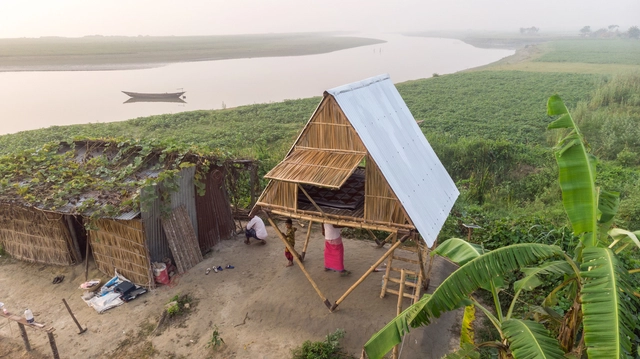
However, since the economies of developing countries in the global south cannot meet the requirements of these architectural structures, is there a more suitable socio-economic model for monumental structures in this context? Can the incremental principles of small adaptable changes and growth be applied to the finite iconic aspiration of this architecture?
In this Barcelona guide, we have rounded-up the architecture of probably the best known and most influential architect from the beginning of the century in Spain, Antonio Gaudí. Gaudí spent most of his life in Barcelona and the city boasts the largest concentration of his works in the world. His style is unique, often imitated but never matched.
Some architects have left their mark on history; one such case is Antonio Gaudí. Through his nature-inspired conceptions, he became the foremost representative of Catalan modernism. The impact of Gaudí's work can be seen on various architectural scales, including the Sagrada Familia, Parc Güell, Colònia Güell, Casa Milà, and Casa Battló, the latter being an iconic landmark of Barcelona’s architecture.
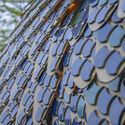
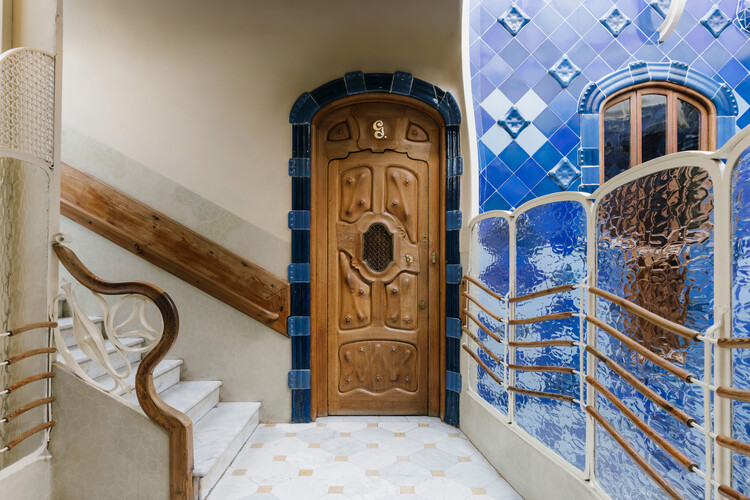
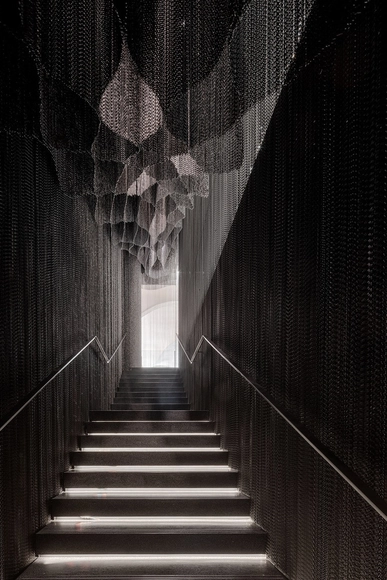
Casa Battló emerged from the renovation of an 1877 building, which was acquired in 1903 and subsequently commissioned to Gaudí for its transformation. Inspired by animal forms, particularly those of the ocean, the facade and interior were renovated using curves and a combination of vibrant colors. This intervention marked a turning point for the house, as it significantly changed the facade, redistributed the interior, and provided a sublime interaction with natural light. Following the nature of the renovation that began with Gaudí, a new interior project for the stairs and atrium of Casa Batlló was developed in 2021. This renovation is the result of a dialogue between the anodized aluminum chains developed by Kriskadecor and the abstraction of the ingenious use of light in Casa Batlló through Kengo Kuma's design.
https://www.archdaily.com/1001552/metallic-layers-in-dialogue-with-light-an-abstract-intervention-at-casa-batlloEnrique Tovar
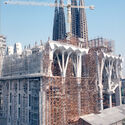
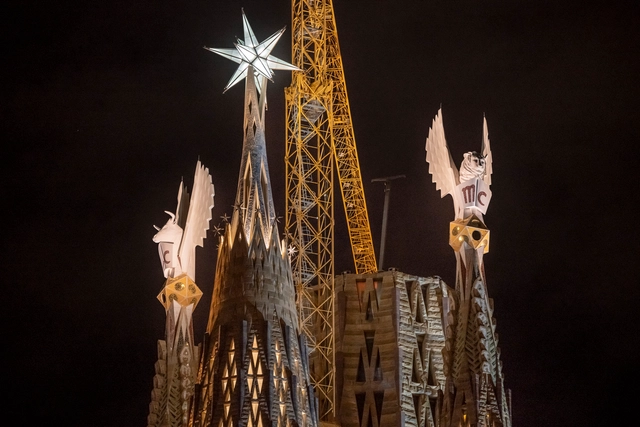
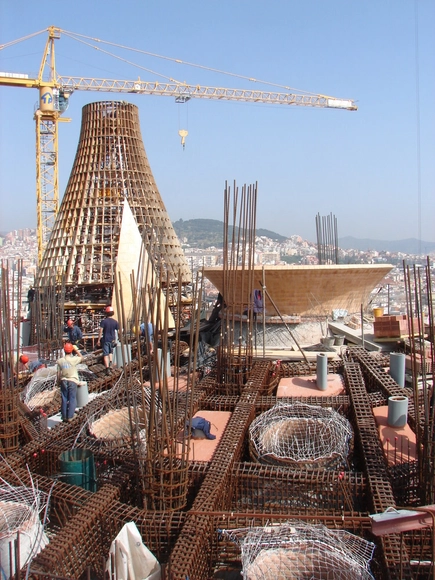
Gaudí's Sagrada Familia in Barcelona has illuminated the terminals on the towers of the Evangelists Luke and Mark, celebrating the completion of these two new structures that reach 135 meters in height. Together with the tower of the Virgin Mary, inaugurated in December 2021, 3 of the 6 central towers will be completed.
It’s an essential component of the design process, where spatial ideations are translated into built form – the design of the prototype. Architectural projects, throughout history and in contemporary practice, have been prototyped to carry out both technical and aesthetic tests, where further insight is gained into the integrity of the design. It’s the blurred line between the experimental and the practical.
The 25th of June 2022, marked 170 years since the birth of Antoni Gaudí, the greatest representative of Catalan Modernism, and we celebrate this day by sharing the story of his life and remembering his work.
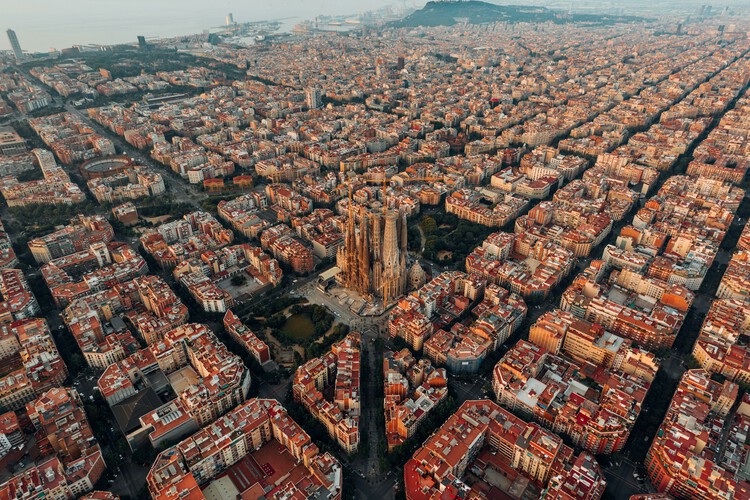
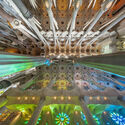
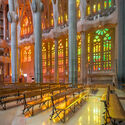
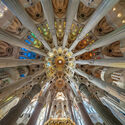
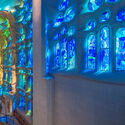
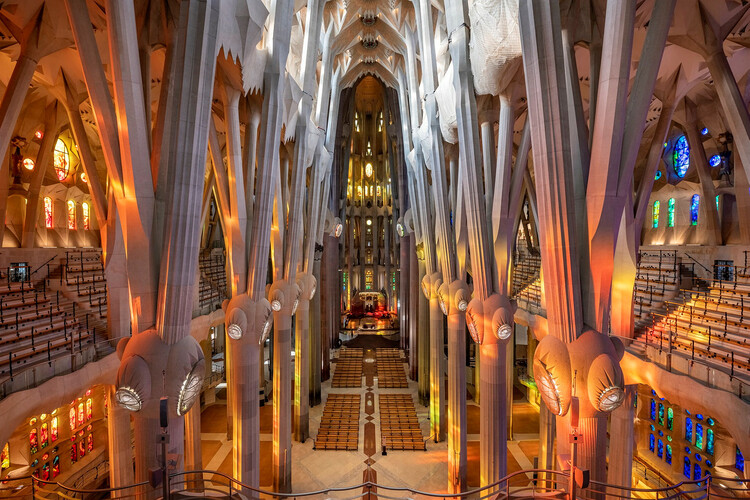
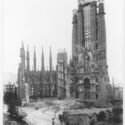
A masterpiece is often defined as the most remarkable work in an artist's career, one which highlights the height of their techniques and ideals. The Mona Lisa by Leonardo da Vinci; Michelangelo's Pietá; the Beatles' Sgt. Pepper's Lonely Hearts Club Band album. There are many examples, which are not always unanimously agreed upon. But what if what many consider to be the masterpiece was started by someone else, the credited creator didn't live to see its completion, and almost all of its documentation was destroyed? Catalan architect Antoni Gaudí and his world-famous Temple Expiatori de la Sagrada Família are examples of these complications. From a highly crafted stone construction to the most modern 3D printing techniques and high strength concrete, numerous technologies were and continue to be incorporated in the project's construction.
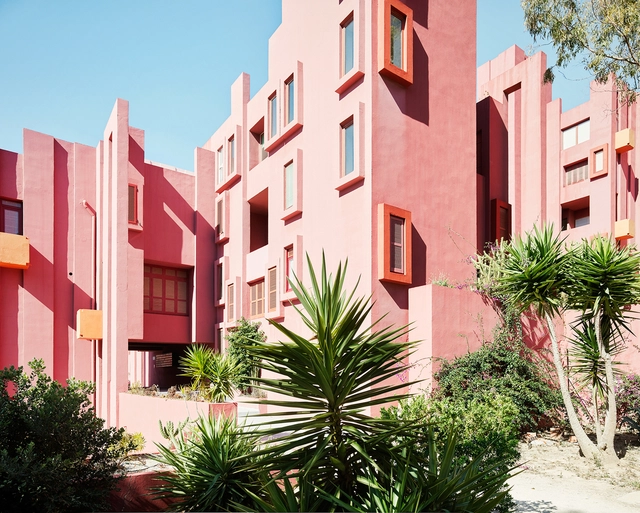
Some architects love color, some are unmoved by it, some hate it, and some love to dismiss it as too whimsical or non-serious for architecture. In an essay on the subject, Timothy Brittain-Catlin mentions the “innate puritanism among clients of architecture,” architects and their “embarrassment of confronting color,” and how “Modernism tried to ‘educate out’ bright colors.” So, while the debate on color in architecture is far from being a new one, it is not finished, and probably never will be.
In today’s world where the exhausted stereotype of the no-nonsense architect clad in black still persists, and while we quietly mull over the strange pull of the Cosmic Latte, there are some architects who haven’t been afraid of using broad swathes of color in their work at all. Read on for a list of 7 such exemplary architects both from the past and the present.
https://www.archdaily.com/881169/7-architects-who-werent-afraid-to-use-colorZoya Gul Hasan
Both today and in centuries past, it is a reality of building that not every project is destined for success. Financial issues or unrealistic timetables can complicate a building’s construction but, while usually the final result eventually meets the initial expectations, other times the worst-case scenario of a building being abandoned during construction becomes a nightmare come true. Unfortunately, these failed projects have an extensive history. Economic factors are the most common cause of unfinished construction, but buildings have also been stranded in limbo by wars, geopolitical shifts, epidemics of disease and other unpredictable obstacles, leaving partial structures as haunting reminders of what might have been.
Whether partially completed and left as ruins or still under construction decades (or centuries) after initial groundbreaking, unfinished buildings offer an alternative history of our built environment, promising long-delayed gratification or examples of design so ambitious that they prove impossible to realize. Initiated by civilizations across the globe, the following list details just a few examples of history’s most interesting and infamous unfinished construction projects.
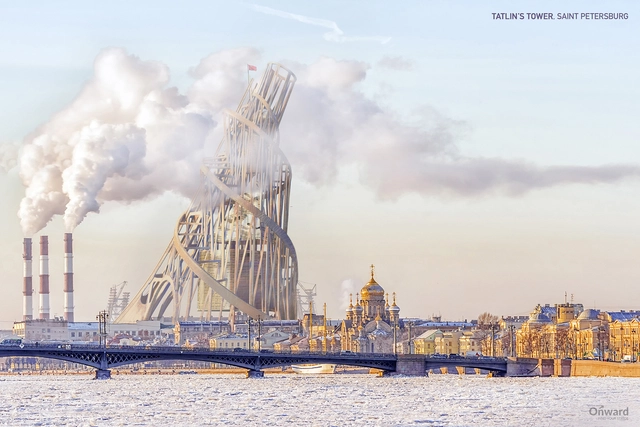
It only takes a pen, paper, and an innovative mind to create remarkable structures. Bringing these architectures to life, however, is where challenges arise. While some architects have shown their creativity and ambition by designing and constructing some of the craziest structures the world has ever seen, other architects were only left with an ambitious drawing. Whether due to financial limitations or designs that are way ahead of their time, some projects never saw the light of day.
Although you won’t be visiting these structures anytime soon—or ever, as far as we know—take a virtual tour of what could have been 7 of the world’s most iconic, innovative structures, courtesy of renders produced by Onward, the blog from Onstride Financial.
Throughout history, there have been certain architects whose unique ideas and innovative styles have influenced generations to come. Some of these pioneers introduced ideas so revolutionary that entirely new words had to be invented to truly encapsulate them. Whether they became a style embraced by an entire era, or captured the imagination of millions for decades to come, we know a Gaudiesque or Corbusian building when we see one.
Here are eight adjectives derived from the works of architects whose names are now in the dictionary:
Antoni Gaudí has a reputation as monastic, mad and hermetic, but the architect of many of the buildings that define Barcelona’s cityscape was no mad eccentric; he was a genius inspired by his faith in nature and the divine.
Antoni Gaudí’s first ever house, Casa Vicens, is set to open to the public this autumn following a major restoration effort. Located in the Barcelona neighborhood of Gràcia, the house was originally built for broker Manuel Vicens from 1883 to 1885 – helping to define Gaudí’s signature style and helping to usher in the era of Art Nouveau architecture in Catalonia.
There’s no doubt that one of the best things about architecture is its universality. Wherever you come from, whatever you do, however you speak, architecture has somehow touched your life. However, when one unexpectedly has to pronounce a foreign architect’s name... things can get a little tricky. This is especially the case when mispronunciation could end up making you look less knowledgeable than you really are. (If you're really unlucky, it could end up making you look stupid in front of your children and the whole world.)
To help you out, we’ve compiled a list of 22 architects with names that are a little difficult to pronounce, and paired them with a recording in which their names are said impeccably. Listen and repeat as many times as it takes to get it right, and you’ll be prepared for any intellectual architectural conversation that comes your way.
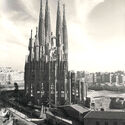
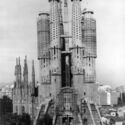
Over the course of 134 years of construction of the Sagrada Familia, the unfinished masterpiece of Antoni Gaudi in Barcelona has experienced three unresolved conflicts. First, there was a lack of a (contemporary) construction permit, the nonpayment of taxes, and finally the uncertainty about whether or not to finally build the large plaza to the southeast that Gaudí imagined with the forced expulsion of up to 3,000 residents and lessees, all living in the area surrounding Sagrada Familia’s Glory Façade.
In recent days, these three issues have come to light almost simultaneously, but let’s discuss them one by one. Bitterly upset by what he describes as "a project without plans in Gaudi's name" Councilman of Barcelona Architecture, Urban Landscape and Heritage Daniel Mòdol called the Sagrada Familia a "giant Easter cake".
His statement, reported by the press two weeks ago, overshadowed the official Municipal proposal made to the temple’s construction monitoring committee "if they plan to modify the planning around the basilica" in a maximum period of six months. This is in reference to the large esplanade designed by Gaudi in his original plan, in front of the Glory Façade (between the streets Mallorca and Arago): a walkway 60 meters wide that would connect the temple with Diagonal Avenue.
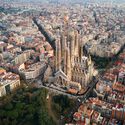
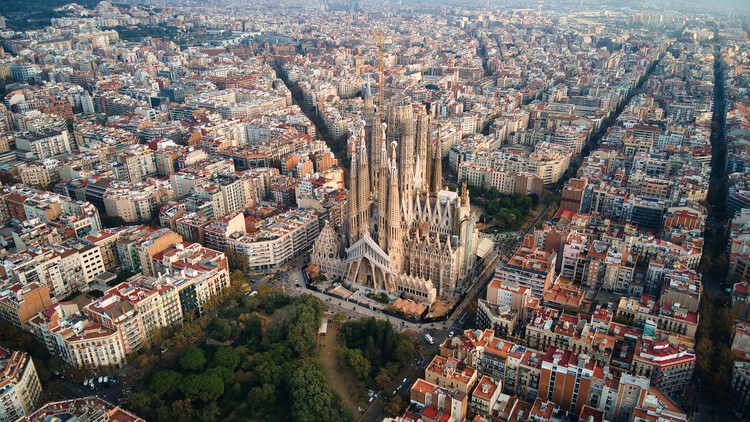
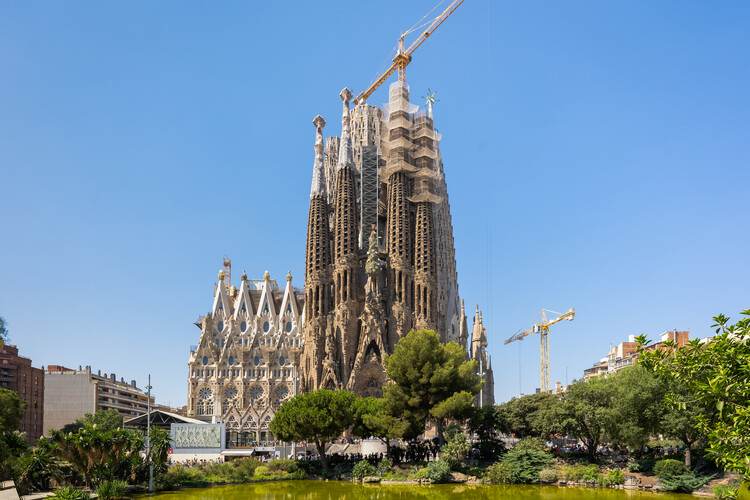
The Basílica i Temple Expiatori de la Sagrada Família, more commonly known simply as the Sagrada Família, has been under construction in Barcelona since 1882, but now completion of the church is finally in sight. As this video from the Basilica’s YouTube page illustrates, the six final towers are set to be completed by 2026, timed to coincide with the 100th anniversary of the death of Antoni Gaudí, the Catalan architect who devoted much of his life to the design and construction of the building. These six towers, representing the Virgin Mary, the four evangelists, and Jesus Christ, will be the last and tallest of 18 spires on the church, and will make the Sagrada Família the tallest church building in the world.
133 years since the laying of its foundation, the construction of Antoni Gaudí's Sagrada Família has entered its final phase. This news was announced in a recent press conference by the project's directing architect Jordi Faulí, who will oversee the completion of six new towers that will raise the "Tower of Jesus Christ" to 172.5 meters-tall, making it the tallest religious structure in Europe and Barcelona's tallest building.
The final stage will include the construction of the 172.5 meter Tower of Jesus Christ, as well as five other 135-meter towers honoring the Virgin Mary and the four apostles.
Designed by Antonio Gaudí in Barcelona when he was 30, and designated a World Heritage Site by UNESCO in 2005, Casa Vicens will be converted into a museum and open its doors to the public during the second half of 2016.
Built between 1883 and 1889, Casa Vicens was the first house designed by Gaudí. The building’s current owner, a subsidiary of the financial group Mora Banc Grup, is currently working on its restoration and the museum planning. “The mission of Casa Vicens as a house museum is to present the first Gaudí house, presenting it as an essential work to understand his unique architectural language and the development of Art Nouveau in Barcelona,” explained the executive manager of the project, Mercedes Mora, in a recent interview with Iconic Houses.