1. ArchDaily
  2. Architecture

Architecture: The Latest Architecture and News

Japan Pavilion at Expo 2025 Osaka, Designed by Nikken Sekkei, Showcases the Cycles of Life

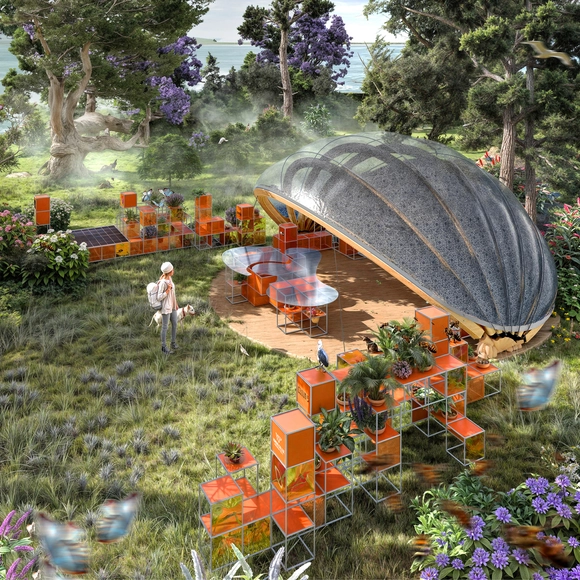
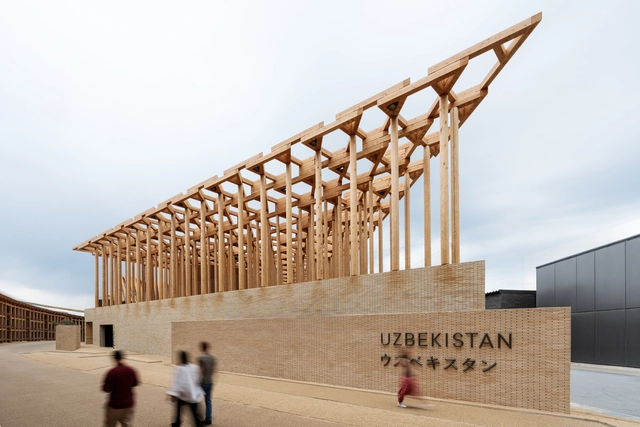
The Japan Pavilion at Expo 2025 in Osaka, designed by Nikken Sekkei Ltd, centers on the theme "Between Lives," emphasizing cycles of transformation that shape life across plants, animals, and societies. It illustrates how, as entities approach the end of their roles, they transition into new forms, passing on elements of their existence. The Pavilion reflects this continuous cycle, demonstrating how the world operates through countless interconnected loops.

Japan Pavilion at Expo 2025 Osaka, Designed by Nikken Sekkei, Showcases the Cycles of Life - Image 1 of 4Japan Pavilion at Expo 2025 Osaka, Designed by Nikken Sekkei, Showcases the Cycles of Life - Image 2 of 4Japan Pavilion at Expo 2025 Osaka, Designed by Nikken Sekkei, Showcases the Cycles of Life - Image 3 of 4Japan Pavilion at Expo 2025 Osaka, Designed by Nikken Sekkei, Showcases the Cycles of Life - Image 4 of 4Japan Pavilion at Expo 2025 Osaka, Designed by Nikken Sekkei, Showcases the Cycles of Life - More Images+ 8

What Architectural Opportunities Will the Trans-West African Coastal Highway Provide?

Subscriber Access | 

Traveling on land through vast regional areas of African countries has been an inefficient ordeal, particularly in West Africa. Google Maps optimistically estimates it would take 53 hours to drive nonstop from Lagos, Nigeria's largest city, to Dakar, Senegal's capital. However, this estimate doesn't account for the poor road infrastructure, complex border crossings, and socio-economic challenges that realistically extend the journey to about a week.

This is why the ongoing Trans-West African Coastal Highway project offers a great opportunity to connect and unlock the region's potential. This project, also known as TAH 7, is a transnational highway initiative linking 12 West African coastal nations, from Mauritania in the northwest to Nigeria in the east. Its gradual construction opens new avenues for freight movement, rail infrastructure, and, more importantly, innovative forms of architecture around borders, addressing their unique socio-cultural functions.

What Architectural Opportunities Will the Trans-West African Coastal Highway Provide? - Image 1 of 4What Architectural Opportunities Will the Trans-West African Coastal Highway Provide? - Image 2 of 4What Architectural Opportunities Will the Trans-West African Coastal Highway Provide? - Image 3 of 4What Architectural Opportunities Will the Trans-West African Coastal Highway Provide? - Image 4 of 4What Architectural Opportunities Will the Trans-West African Coastal Highway Provide? - More Images+ 4

Exploring the Legacy of Modernism in Landscape Architecture

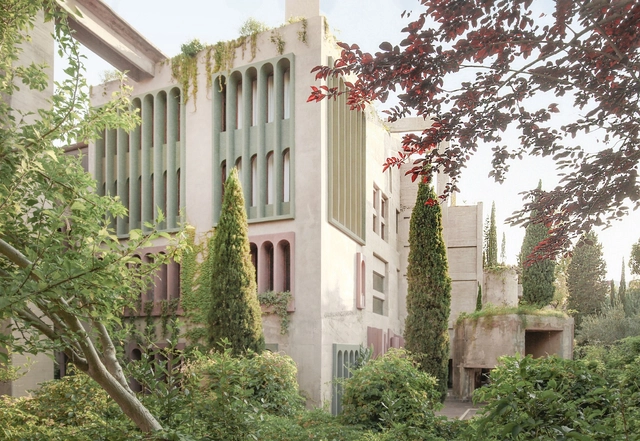
Modernist landscape architecture marked a radical shift from traditional garden designs, emphasizing simplicity, functionality, and a stronger connection between people and their environments. From the 1930s through the 1960s, this movement saw the emergence of visionary landscape architects who integrated form and function in ways that redefined outdoor spaces. Their designs responded to the rapidly evolving urban landscapes of the time, prioritizing usability and creating environments that could accommodate modern life. The enduring influence of these principles continues to shape contemporary practices, while also presenting unique challenges in preservation as these landscapes age.

Exploring the Legacy of Modernism in Landscape Architecture - Imagen 1 de 4Exploring the Legacy of Modernism in Landscape Architecture - Imagen 2 de 4Exploring the Legacy of Modernism in Landscape Architecture - Imagen 3 de 4Exploring the Legacy of Modernism in Landscape Architecture - Imagen 4 de 4Exploring the Legacy of Modernism in Landscape Architecture - More Images+ 18

BIG Reimagines Former Supermarket into Denmark’s Museum for Paper Art

Bjarke Ingels Group (BIG) is leading the transformation of a former supermarket into the new Museum for Paper Art in Denmark's North Jutland region. With paper art deeply ingrained in Danish cultural heritage, symbolized by Le Klint's folded lampshades and H.C. Andersen's intricate paper cuttings, this renovation and expansion aim to elevate the museum's profile and double its visitor numbers. The design will celebrate paper as both an art form and a craft, extending the museum's role in promoting this unique heritage.

BIG Reimagines Former Supermarket into Denmark’s Museum for Paper Art - Image 1 of 4BIG Reimagines Former Supermarket into Denmark’s Museum for Paper Art - Image 2 of 4BIG Reimagines Former Supermarket into Denmark’s Museum for Paper Art - Image 3 of 4BIG Reimagines Former Supermarket into Denmark’s Museum for Paper Art - Image 4 of 4BIG Reimagines Former Supermarket into Denmark’s Museum for Paper Art - More Images+ 5

Barcelona Completes First Phase of a Multiyear Renovation of La Rambla

La Rambla, a 1.2-kilometer-long promenade in Barcelona, was established in 1766 along the old city walls. Embraced by locals, it became the only spacious area for strolling in a city of narrow streets and grew into a central meeting place for all social classes. Over time, leisure and cultural sites, like the Gran Teatre del Liceu and Boqueria Market, emerged, making it a vibrant, cultural hub. In 2017, Barcelona's local government launched a competition for the revitalization of this beloved urban space. Km_ZERO, a 15-member interdisciplinary team that also relied on the input of community groups was declared the winner. Now the first phase of the urbanization process has been almost completed, led by Lola Domènech and Olga Tarrasó. A hundred trees still remain to be planted in this phase, postponed due to drought conditions. The entire project is expected to be finished in 2027.
Barcelona Completes First Phase of a Multiyear Renovation of La Rambla - Imagen 1 de 4Barcelona Completes First Phase of a Multiyear Renovation of La Rambla - Imagen 2 de 4Barcelona Completes First Phase of a Multiyear Renovation of La Rambla - Imagen 3 de 4Barcelona Completes First Phase of a Multiyear Renovation of La Rambla - Imagen 4 de 4Barcelona Completes First Phase of a Multiyear Renovation of La Rambla - More Images+ 5

Foster + Partners to Lead Masterplan for Old Trafford Stadium District Revitalization in United Kingdom

Foster + Partners has just announced its upcoming appointment by Manchester United to lead the development of a masterplan for the Old Trafford Stadium District, focusing on club-owned land surrounding the current stadium. The goal is to create a world-class football destination for Manchester United fans, integrated with a broader vision for a mixed-use development that benefits the local community. This transformation aims to attract new residents, increase job opportunities, and establish the area as a vibrant hub for visitors from Manchester, across the UK, and beyond.

CRA Unveils Adaptive Reuse Design for Turin's Palazzo Micca in Italy

CRA-Carlo Ratti Associati, in partnership with real estate group IPI, has revealed plans to transform the iconic modernist Palazzo Micca in Turin, Italy. Originally the headquarters of RAI, Italy's national broadcaster, the 19-story building will undergo a comprehensive adaptive reuse project. A significant feature of the redesign is the creation of an elevated public plaza at 26.5 meters, offering views of Turin's Baroque rooftops, the surrounding hills, and the Alps. The project also integrates sustainable design principles by converting parts of the office spaces into residential units and reusing existing materials.

MVRDV Wins Competition for Badminton Training Center in China

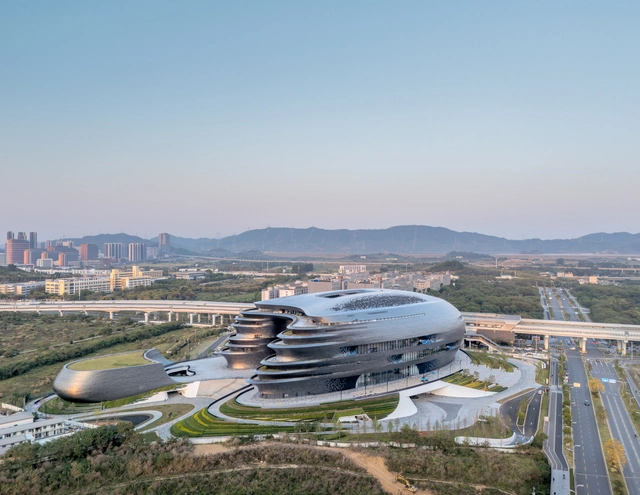
MVRDV, in collaboration with Huayi Design, has been awarded the design contract for the Shenzhen Pingshan Sports Park in eastern Shenzhen, China. The sports park will feature a wide range of facilities, including an arena for badminton and other competitive sports, the new Chinese National Badminton Training Centre, and a National Fitness Centre, alongside various amenities for public use. Central to the project is the inclusion of 100 badminton courts, which also inspired the architectural design, particularly exemplified by the 240-meter-long roof shaped like a badminton racket head.
MVRDV Wins Competition for Badminton Training Center in China - Image 1 of 4MVRDV Wins Competition for Badminton Training Center in China - Image 2 of 4MVRDV Wins Competition for Badminton Training Center in China - Image 3 of 4MVRDV Wins Competition for Badminton Training Center in China - Image 4 of 4MVRDV Wins Competition for Badminton Training Center in China - More Images+ 7

Practice Design Reveals India Autism Center as a Model of Inclusive and Accessible Design

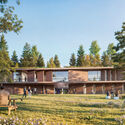
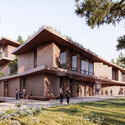
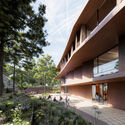
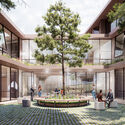
The India Autism Center (IAC), situated in Sirakole, West Bengal, represents a new perspective in accessible design and inclusivity. Designed to meet the specific needs of individuals with autism spectrum disorder (ASD) and related conditions, the center embodies a comprehensive approach to neurodiverse living. Developed by Practice Design, an architectural firm based in Mumbai and Kolkata, the 52-acre project is expected to be completed by 2030. It aims to create a supportive community where individuals with autism can realize their full potential through a variety of tailored services.

Practice Design Reveals India Autism Center as a Model of Inclusive and Accessible Design - Imagem 1 de 4Practice Design Reveals India Autism Center as a Model of Inclusive and Accessible Design - Imagem 2 de 4Practice Design Reveals India Autism Center as a Model of Inclusive and Accessible Design - Imagem 3 de 4Practice Design Reveals India Autism Center as a Model of Inclusive and Accessible Design - Imagem 4 de 4Practice Design Reveals India Autism Center as a Model of Inclusive and Accessible Design - More Images+ 5

Colin Fournier, Co-Founder of Archigram, Passes Away at 79

British architect and planner Colin Fournier, co-founder of conceptual architecture studio Archigram and Professor of Architecture and Urbanism at the Bartlett School of Architecture, has passed away at the age of 79. Fournier was best known for his co-design of the Kunsthaus Graz in Austria, also known as the "Friendly Alien." This project, completed together with Sir Peter Cook, is celebrated as one of the most distinctive cultural landmarks of its time. For his contributions to this work, Fournier was awarded Austria's Goldener Ehrenzeichen medal in 2005, a recognition of his impact on the architectural landscape.

Colin Fournier, Co-Founder of Archigram, Passes Away at 79 - Image 1 of 4Colin Fournier, Co-Founder of Archigram, Passes Away at 79 - Image 2 of 4Colin Fournier, Co-Founder of Archigram, Passes Away at 79 - Image 3 of 4Colin Fournier, Co-Founder of Archigram, Passes Away at 79 - Image 4 of 4Colin Fournier, Co-Founder of Archigram, Passes Away at 79 - More Images

Belgian Pavilion Showcases Water's Essential Role in Shaping Humanity at Expo 2025 Osaka

The Belgian Pavilion for Expo 2025 Osaka, designed by the winning consortium of Carré 7, Beyond Limits, One Designs, Pirnay, and Poly-Tech, embraces the Expo's overarching theme, "Designing the Society of the Future, Imagining Our Life of Tomorrow." With a focus on "Saving Lives," the pavilion' explores the universal significance of water and its vital role in creating and sustaining life. By highlighting water's interconnectedness with all living beings through the metaphor of cells, the pavilion aims to reflect humanity's relationship with the environment and the importance of preserving it for future generations.

Architectural Interventions in UNESCO World Heritage Sites: A Dialogue Between Preservation and Innovation

Subscriber Access | 

Contemporary architecture in UNESCO World Heritage contexts presents a unique challenge: revitalizing historically significant sites while adhering to strict preservation guidelines. From urban centers to natural landscapes and intangible cultural traditions, these projects demonstrate the delicate balance between innovation and heritage conservation. Whether working in a mega city, a protected landscape, or a culturally rich rural area, architects are tasked with reimagining these spaces without compromising their historical value. Each project offers a fresh perspective on how heritage sites can evolve and remain relevant in modern times.

Architectural Interventions in UNESCO World Heritage Sites: A Dialogue Between Preservation and Innovation - Image 1 of 4Architectural Interventions in UNESCO World Heritage Sites: A Dialogue Between Preservation and Innovation - Image 2 of 4Architectural Interventions in UNESCO World Heritage Sites: A Dialogue Between Preservation and Innovation - Image 4 of 4Architectural Interventions in UNESCO World Heritage Sites: A Dialogue Between Preservation and Innovation - Image 3 of 4Architectural Interventions in UNESCO World Heritage Sites: A Dialogue Between Preservation and Innovation - More Images+ 7

Light as an Active Participant in Space: Robert Wilson’s Minimalist Approach to Stage Lighting

Robert Wilson embodies the roles of director, set designer, scenographer, lighting designer, and architect in a single figure. Internationally celebrated as a pioneer of stage lighting and honored with numerous prestigious awards, including the Golden Lion of the Venice Biennale and the Praemium Imperiale, Wilson, now in his eighties, continues to travel the world, staging remarkable productions. His use of light and color is marked by precision and minimalism, creating scenes that skillfully oscillate between stillness and drama. During rehearsals at the Düsseldorf Schauspielhaus, he elaborates on the interplay between stage and architecture, his creative process, and the profound impact of light on darkness.

Light as an Active Participant in Space: Robert Wilson’s Minimalist Approach to Stage Lighting - Image 1 of 4Light as an Active Participant in Space: Robert Wilson’s Minimalist Approach to Stage Lighting - Image 2 of 4Light as an Active Participant in Space: Robert Wilson’s Minimalist Approach to Stage Lighting - Image 3 of 4Light as an Active Participant in Space: Robert Wilson’s Minimalist Approach to Stage Lighting - Image 4 of 4Light as an Active Participant in Space: Robert Wilson’s Minimalist Approach to Stage Lighting - More Images+ 15

In alliance with Architonic
Check the latest In ArchitectureCheck the latest In ArchitectureCheck the latest In Architecture

Check the latest In Architecture