1. ArchDaily
  2. Architecture

Architecture: The Latest Architecture and News

Behind 8,000 Doors: Inside Three Standout Architectural Projects

 | Sponsored Content

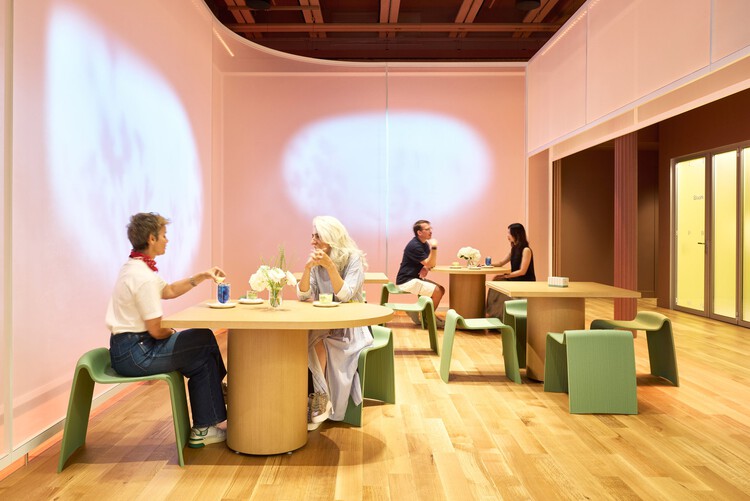
14 individual brands and two subsidiaries are represented under the Swiss brand Arbonia. Although the brand, which is now making its long-overdue public debut, maybe new, the list of realized projects certainly is not. A glance at the reference archive, which Arbonia presents prominently, shows this. These include construction projects for the healthcare sector as well as offices and administration, historical buildings, educational institutions, hospitality and residential developments. Three particular distinct highlights stand out, as they uniquely embody Arbonia's motto: 'open to aspiration'.

BIG Wins Competition to Transform Three Urban Plazas into an Interconnected 'City Stage' in Copenhagen, Denmark

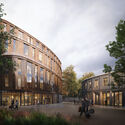
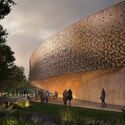
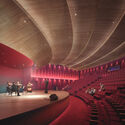
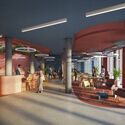
BIG, artist Doug Aitken Workshop, NIRAS, Volcano, and RWDI have won a competition to redesign three public spaces surrounding major music venues in Ørestad, Copenhagen. The initiative, titled Byens Scene ("The City's Stage"), aims to revitalize the areas around DR Koncerthuset, Bella Arena, and Royal Arena, transforming them into an interconnected landscape for everyday use and public performances.

BIG Wins Competition to Transform Three Urban Plazas into an Interconnected 'City Stage' in Copenhagen, Denmark - Imagen 1 de 4BIG Wins Competition to Transform Three Urban Plazas into an Interconnected 'City Stage' in Copenhagen, Denmark - Imagen 2 de 4BIG Wins Competition to Transform Three Urban Plazas into an Interconnected 'City Stage' in Copenhagen, Denmark - Imagen 3 de 4BIG Wins Competition to Transform Three Urban Plazas into an Interconnected 'City Stage' in Copenhagen, Denmark - Imagen 4 de 4BIG Wins Competition to Transform Three Urban Plazas into an Interconnected 'City Stage' in Copenhagen, Denmark - More Images+ 19

Architecture and Light Between Documentation and Emotion: In Conversation with the Photographer Thomas Mayer

For over five decades, Swiss photographer Thomas Mayer has developed a serene, emotional, and documentary language for architecture. His lens captures the random and memorable moments of our built environment - reflections in the rain, long blue hours in Nordic summers, and the quiet darkness of sacred spaces. Recognized by ArchDaily as one of the top architectural photographers, Mayer carries an abundant fascination for light and space.

Architecture and Light Between Documentation and Emotion: In Conversation with the Photographer Thomas Mayer - Image 1 of 4Architecture and Light Between Documentation and Emotion: In Conversation with the Photographer Thomas Mayer - Image 2 of 4Architecture and Light Between Documentation and Emotion: In Conversation with the Photographer Thomas Mayer - Image 3 of 4Architecture and Light Between Documentation and Emotion: In Conversation with the Photographer Thomas Mayer - Image 4 of 4Architecture and Light Between Documentation and Emotion: In Conversation with the Photographer Thomas Mayer - More Images+ 23

First Look at the LACMA David Geffen Galleries Designed by Peter Zumthor

The first photographs of the long-anticipated David Geffen Galleries at the Los Angeles County Museum of Art (LACMA) have been unveiled, captured by architectural photographer Iwan Baan. Designed by Pritzker Prize-winning architect Peter Zumthor, in collaboration with Skidmore, Owings & Merrill, the building marks the culmination of a process spanning more than two decades. The museum recently offered an exclusive preview of the building in its raw architectural state, ahead of the installation of artworks. Major construction was completed at the end of 2024, and portions of the lower levels are already accessible to visitors. The galleries are scheduled to officially open in April 2026, when they will house LACMA's permanent collection.

First Look at the LACMA David Geffen Galleries Designed by Peter Zumthor - Image 1 of 4First Look at the LACMA David Geffen Galleries Designed by Peter Zumthor - Image 2 of 4First Look at the LACMA David Geffen Galleries Designed by Peter Zumthor - Image 3 of 4First Look at the LACMA David Geffen Galleries Designed by Peter Zumthor - Image 4 of 4First Look at the LACMA David Geffen Galleries Designed by Peter Zumthor - More Images+ 7

Snøhetta and Hassell’s Harbourside Redevelopment Moves Forward with Public Domain Approval in Sydney

The NSW Independent Planning Commission has approved the public domain works for Sydney's Harbourside redevelopment, marking a significant milestone for the project designed by Snøhetta in collaboration with Hassell and Mirvac. First unveiled in December 2021 as the winning entry in an international design excellence competition, the scheme aims to transform Harbourside at Darling Harbour into a new, iconic destination at the heart of the city. The proposal reimagines the waterfront at Tumbalong / Darling Harbour with more than 11,200 square meters of renewed public space, featuring significant trees, planted areas, sculptural sandstone pathways, and integrated public artworks.

Snøhetta and Hassell’s Harbourside Redevelopment Moves Forward with Public Domain Approval in Sydney - Image 1 of 4Snøhetta and Hassell’s Harbourside Redevelopment Moves Forward with Public Domain Approval in Sydney - Image 2 of 4Snøhetta and Hassell’s Harbourside Redevelopment Moves Forward with Public Domain Approval in Sydney - Featured ImageSnøhetta and Hassell’s Harbourside Redevelopment Moves Forward with Public Domain Approval in Sydney - Image 3 of 4Snøhetta and Hassell’s Harbourside Redevelopment Moves Forward with Public Domain Approval in Sydney - More Images

Forming a Distinct Identity: How Brutalism Shaped American Architecture Education

By the mid-nineteenth century, American universities began to distinguish architecture from civil engineering and the applied sciences formally. Architecture was emerging as a discipline defined by both technical competence and conceptual inquiry, spatial imagination, and cultural agency. As this disciplinary identity evolved in the postwar decades, its built expression coalesced into the emerging architectural language of Brutalism.

Forming a Distinct Identity: How Brutalism Shaped American Architecture Education - Imagen 1 de 4Forming a Distinct Identity: How Brutalism Shaped American Architecture Education - Imagen 2 de 4Forming a Distinct Identity: How Brutalism Shaped American Architecture Education - Imagen 3 de 4Forming a Distinct Identity: How Brutalism Shaped American Architecture Education - Imagen 4 de 4Forming a Distinct Identity: How Brutalism Shaped American Architecture Education - More Images+ 12

YSL and Louis Vuitton at Paris Fashion Week Feature Tadao Ando’s Bourse de Commerce and Bijoy Jain’s Set Design

Paris Fashion Week Men's Spring/Summer 2026 has just concluded, featuring a series of shows that highlight the relationship between architecture and fashion as creative disciplines. Through carefully curated architectural environments, these shows engage viewers on multiple sensory levels, weaving together visual impact with spatial and material stories that echo the themes and philosophies behind each collection. This intersection between fashion and architecture opens up new possibilities for storytelling, inviting audiences to explore how fashion design and spaces can resonate together to create immersive experiences.

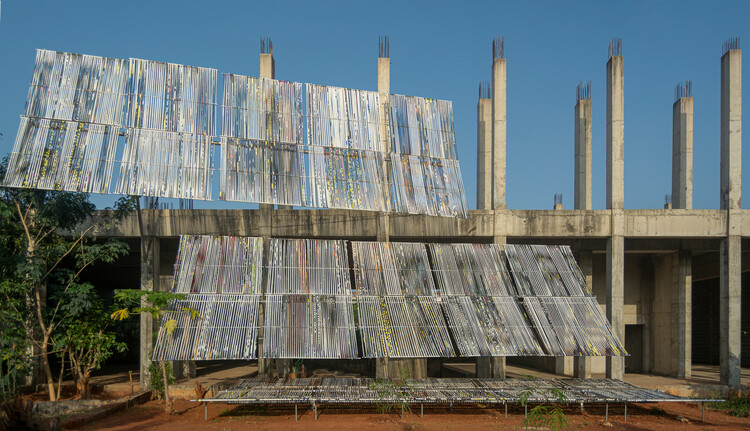
Saint Laurent presented its menswear collection at Tadao Ando's Bourse de Commerce, where the building's cylindrical concrete form and filtered natural light provided a minimal and contemplative backdrop. Louis Vuitton, by contrast, staged its show in the plaza of the Centre Pompidou, where Studio Mumbai's intervention introduced a large-scale, hand-painted installation inspired by Snakes and Ladders. These site-specific choices reflected distinct approaches to engage with architectural context, illustrating how contemporary fashion presentations can extend beyond the runway to enter into dialogue with their surroundings.

YSL and Louis Vuitton at Paris Fashion Week Feature Tadao Ando’s Bourse de Commerce and Bijoy Jain’s Set Design - Image 1 of 4YSL and Louis Vuitton at Paris Fashion Week Feature Tadao Ando’s Bourse de Commerce and Bijoy Jain’s Set Design - Image 2 of 4YSL and Louis Vuitton at Paris Fashion Week Feature Tadao Ando’s Bourse de Commerce and Bijoy Jain’s Set Design - Image 3 of 4YSL and Louis Vuitton at Paris Fashion Week Feature Tadao Ando’s Bourse de Commerce and Bijoy Jain’s Set Design - Image 4 of 4YSL and Louis Vuitton at Paris Fashion Week Feature Tadao Ando’s Bourse de Commerce and Bijoy Jain’s Set Design - More Images+ 7

The Spanish Biennial of Architecture and Urbanism 2025 Addresses the Challenges of Hyperconnectivity

The seventeenth edition of the Spanish Biennial of Architecture and Urbanism (BEAU) will take place in December 2025. The event consists of an exhibition hosted in a former thermal power station repurposed as a cultural center in Ponferrada, in northeastern Spain. This edition will be curated by architects Ander Bados Sesma, from Atelier Ander Bados, and Miguel Ramón López, a Ponferrada native and architect at Estudio Lamela, under the curatorial proposal titled flujos comun.es ("common flows"). Their curatorial proposal responds to the theme of the open call: Architecture as a Policy for Change, an invitation to reflect on the role of the discipline in processes of social, economic, and environmental transformation. Within this framework, flujos comun.es presents a critical perspective on the challenges associated with hyperconnectivity. The call for proposals and project submissions is currently open, and will be until the end of July, depending on the category.


The Spanish Biennial of Architecture and Urbanism 2025 Addresses the Challenges of Hyperconnectivity - Imagen 4 de 4The Spanish Biennial of Architecture and Urbanism 2025 Addresses the Challenges of Hyperconnectivity - Featured ImageThe Spanish Biennial of Architecture and Urbanism 2025 Addresses the Challenges of Hyperconnectivity - Imagen 1 de 4The Spanish Biennial of Architecture and Urbanism 2025 Addresses the Challenges of Hyperconnectivity - Imagen 2 de 4The Spanish Biennial of Architecture and Urbanism 2025 Addresses the Challenges of Hyperconnectivity - More Images

Built to Last—or Change? The Case for Dry Construction in Humid Cities

Subscriber Access | 

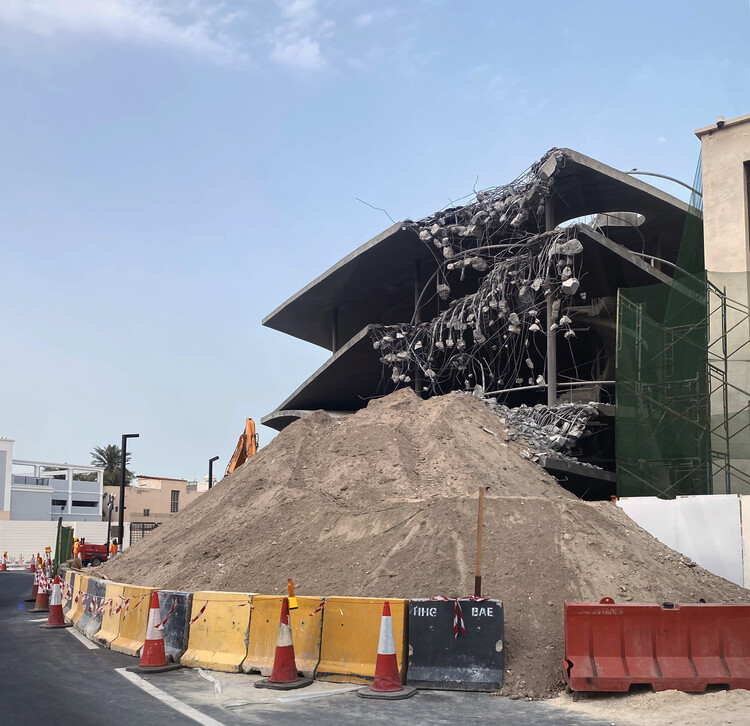
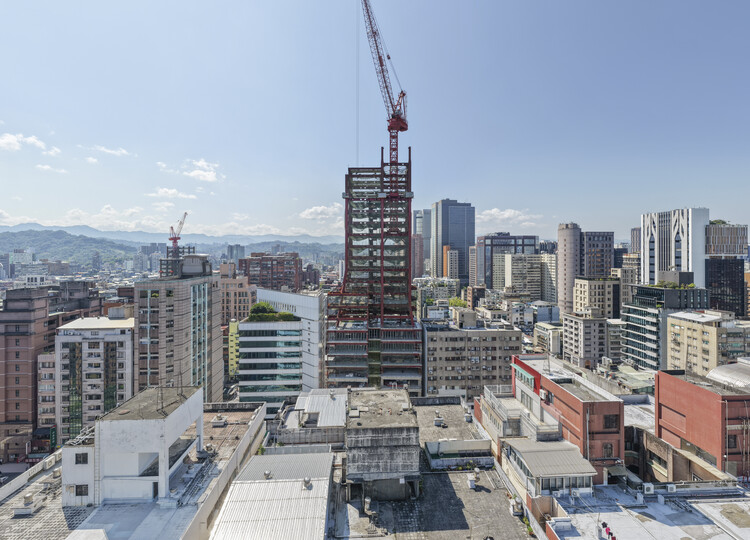
In certain parts of the world, construction is still dominated by wet systems—concrete, masonry, and cementitious materials that are poured, cured, and fixed in place. While this has long been considered the norm in some south-east Asia countries, such as Singapore, Thailand, Malaysia, and China, in most of these regions, they typically share a common trend where labor is relatively inexpensive. This serves as one of the reasons to make concrete more easily available, as one of the typical downside of concrete is its intensive labour cost - this further differentiates concrete as a cheaper and more efficient material system to be building out of.

However, not enough considerations in the region are given to the sustainability aspect when using these wet construction materials,often overlooking the significant drawbacks of its material lifecycle and the difficulty to recycle it without downcycling - making it one of the more unsustainable materials available to be built out of.

Built to Last—or Change? The Case for Dry Construction in Humid Cities - Image 1 of 4Built to Last—or Change? The Case for Dry Construction in Humid Cities - Image 2 of 4Built to Last—or Change? The Case for Dry Construction in Humid Cities - Image 3 of 4Built to Last—or Change? The Case for Dry Construction in Humid Cities - Image 4 of 4Built to Last—or Change? The Case for Dry Construction in Humid Cities - More Images+ 10

Zaha Hadid Architects Wins Competition for New Arrivals Terminal at Vilnius Airport, Lithuania

Lithuanian Airports has announced Zaha Hadid Architects as the winner of the international competition to design the new arrivals terminal at Vilnius Airport. Conceived as an integral part of the airport's evolving infrastructure, the new terminal will complement the recently completed departure terminal, enabling Vilnius Airport to accommodate up to 10.6 million passengers annually. The project marks a significant step in the airport's long-term development strategy, addressing future growth in passenger demand while enhancing Lithuania's role as a key gateway in the Baltic region.

Zaha Hadid Architects Wins Competition for New Arrivals Terminal at Vilnius Airport, Lithuania - Imagen 1 de 4Zaha Hadid Architects Wins Competition for New Arrivals Terminal at Vilnius Airport, Lithuania - Imagen 2 de 4Zaha Hadid Architects Wins Competition for New Arrivals Terminal at Vilnius Airport, Lithuania - Imagen 3 de 4Zaha Hadid Architects Wins Competition for New Arrivals Terminal at Vilnius Airport, Lithuania - Imagen 4 de 4Zaha Hadid Architects Wins Competition for New Arrivals Terminal at Vilnius Airport, Lithuania - More Images+ 3

10 Pavilion Highlights from the London Design Biennale 2025

The fifth edition of the London Design Biennale is taking place at Somerset House from 5 to 29 June 2025. The theme of this year's edition is "Surface Reflections," an invitation to explore "the dynamic interplay between internal experience and external influence." The curatorial proposal, set by British artist and designer Samuel Ross, encourages a focus on the underlying layers of the objects, systems, and spaces that shape our daily lives. The Biennale exhibition is a journey through 35 pavilions by countries, institutional design teams, and curators, presenting soundscapes, immersive experiences, and performances, as well as sculptural and evocative objects. To confront contemporary global challenges, topics include identity, memory, innovation, technology, craftsmanship, ecology, and belonging.

10 Pavilion Highlights from the London Design Biennale 2025 - Imagen 1 de 410 Pavilion Highlights from the London Design Biennale 2025 - Imagen 2 de 410 Pavilion Highlights from the London Design Biennale 2025 - Imagen 3 de 410 Pavilion Highlights from the London Design Biennale 2025 - Imagen 4 de 410 Pavilion Highlights from the London Design Biennale 2025 - More Images+ 42

From Milan to Chicago: Architecture Now and the Leading Practices of Herzog & de Meuron, Gensler, and Heatherwick

Subscriber Access | 

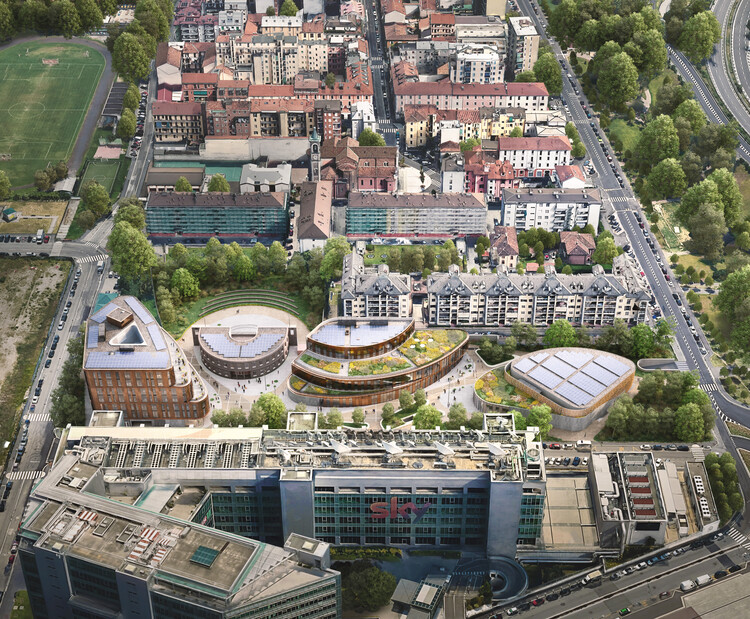
From Milan's Scalo Farini to downtown Chicago, and from the Tuscan countryside to the UK's retrofit initiatives, recent announcements demonstrate how architecture is evolving in response to climate goals, cultural identity, and urban transformation. Herzog & de Meuron's new headquarters for UniCredit will anchor one of Europe's largest redevelopment sites with a focus on sustainability and workplace innovation, while Gensler's stadium design for Chicago Fire FC aims to redefine the U.S. matchday experience as part of a major waterfront development. In Tuscany, Alvisi Kirimoto's Sapaio Pavilion merges agricultural production with architectural sensitivity, and in the UK, RIBA and The King's Foundation are advancing retrofit as a national agenda. Meanwhile, finalists including MVRDV, Heatherwick Studio, and Mecanoo are advancing in an international competition to create a climate landmark intended to inspire large-scale behavioral change. This edition of Architecture Now brings together diverse yet interconnected efforts to shape how architecture can support long-term ecological, cultural, and civic impact.

From Milan to Chicago: Architecture Now and the Leading Practices of Herzog & de Meuron, Gensler, and Heatherwick - Image 1 of 4From Milan to Chicago: Architecture Now and the Leading Practices of Herzog & de Meuron, Gensler, and Heatherwick - Image 2 of 4From Milan to Chicago: Architecture Now and the Leading Practices of Herzog & de Meuron, Gensler, and Heatherwick - Image 3 of 4From Milan to Chicago: Architecture Now and the Leading Practices of Herzog & de Meuron, Gensler, and Heatherwick - More Images+ 3

In alliance with Architonic
Check the latest In ArchitectureCheck the latest In ArchitectureCheck the latest In Architecture

Check the latest In Architecture