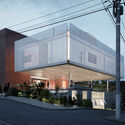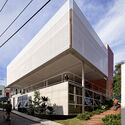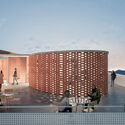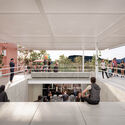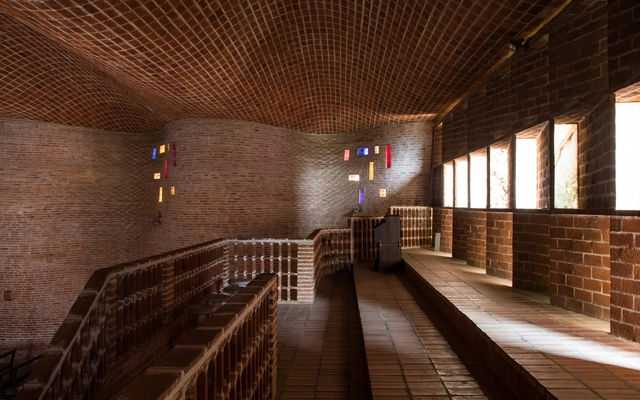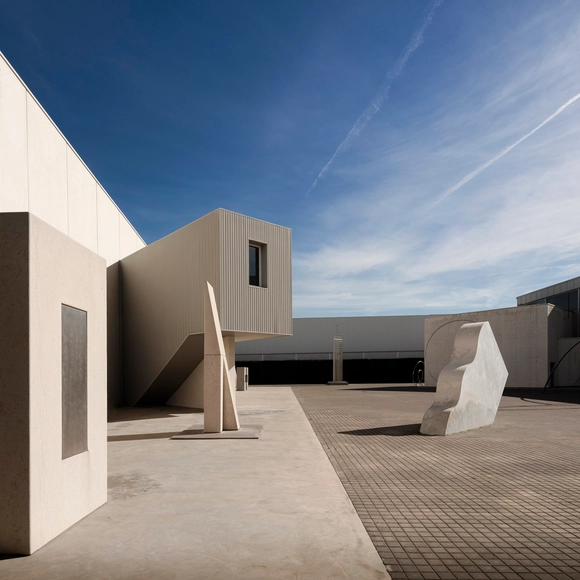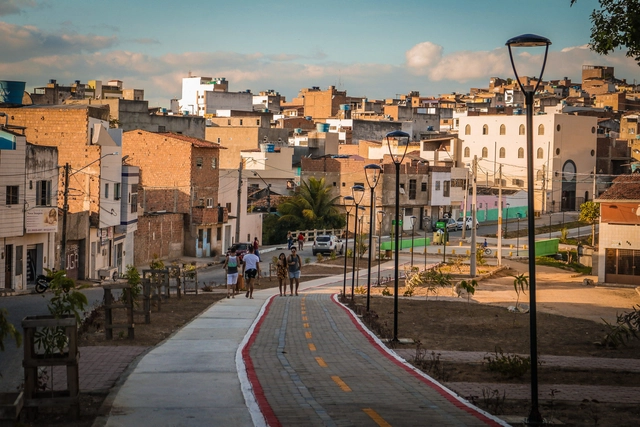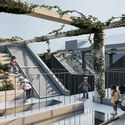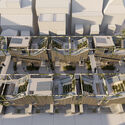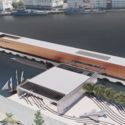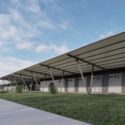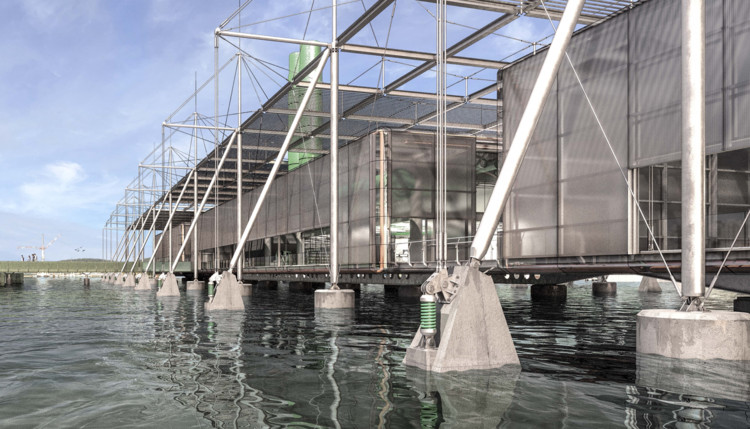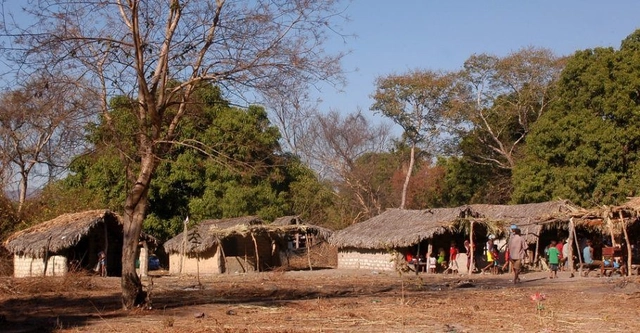
Rozana Montiel, alongside Werner Sobek, Ersen Gürsel, Ammar Khammash, and Jorge Lobos, has won the Global Award for Sustainable Architecture 2019. The award ceremony will take place on May 13 in Paris, France.

Rozana Montiel, alongside Werner Sobek, Ersen Gürsel, Ammar Khammash, and Jorge Lobos, has won the Global Award for Sustainable Architecture 2019. The award ceremony will take place on May 13 in Paris, France.
.jpg?1554826043&format=webp&width=640&height=580)
The project is located in Baxoi County, Qamdo, Tibet, approximately 48.5 kilometers from the county seat. The "Nujiang 72 Curves," also known as the "72 Curves of the Heavenly Road," is a critical passage along the southern route of National Highway 318 (G318), renowned worldwide for its treacherous terrain. The viewing platform is sited on a cliff edge between the 72 Curves and the Nujiang River Canyon, with National Highway 318 winding past to the north and the roaring Nujiang River flowing eastward to the south.

Following two weeks of enthusiastic voting, ArchDaily readers have selected their top 10 projects of the year from a pool of over 400 nominees.
The nomination phase demonstrated the positive impact of these awards on architectural development. The shortlisted projects are undoubtedly those that have most inspired and resonated with our readers.
The selection features not only industry-leading design firms but also small practices and highly personal works. This year's competition also highlights projects that actively improve our built environment.

On April 17, 2019, details were announced for the "2019 Shanghai Urban Space Art Season" (SUSAS), hosted by the Shanghai Urban Sculpture Committee and co-organized by the Shanghai Municipal Planning and Natural Resources Bureau, the Shanghai Municipal Culture and Tourism Bureau, and the People's Government of Yangpu District, Shanghai.
Following the successful editions in 2015 and 2017, the 2019 Space Art Season continues to explore urban space topics against the backdrop of Shanghai's current phase of urban regeneration. This year's theme is rooted in the municipal government's "One River, One Creek" public space development strategy. Focusing on the global topic of "waterfront spaces bringing a better life to humanity," the event will span nearly two months. Through themed exhibitions, case studies, joint exhibitions, and various public activities—combined with cultural and tourism initiatives like "One Million Citizens Viewing Shanghai"—it will showcase Shanghai's recent achievements and future vision in connecting and improving waterfront spaces citywide. The main exhibition will open at the Yangpu Waterfront at the end of September.

Nanjing Chengtian Bridge spans the Qinhuai River, crossing the Beijing-Shanghai High-Speed Railway to the south and running adjacent to the Ring Expressway to the north. Connecting the city's CBD with an ecological park, the bridge serves as a major gateway and urban landmark for the Southern New Town.
The Southern New Town occupies a unique geographical position, situated at the center of four mountains: Jiangjun Mountain, Fang Mountain, Qinglong Mountain, and Purple Mountain. The silhouettes of these four mountains converge here, inspiring the main structure of the bridge. Floating above the Qinhuai River, its flowing lines present a picturesque landscape from afar. Four triangular arches symbolize the converging mountains, giving the Chengtian Bridge structural stability and a dynamic, tension-filled presence.

In 2018, ArchDaily China’s reach grew stronger than ever. We brought Chinese architecture into the global conversation, introducing Chinese design to the world while delivering global architectural news to our Chinese readers. Remaining true to our founding mission, we strive to be an open platform that benefits the public, fostering a more inclusive and equitable architectural community. This year, we once again invited our Chinese readers to vote for the 2019 ArchDaily China Building of the Year Awards. Through an unbiased, geographically unrestricted voting process, our readers became part of a massive jury to select the most representative architectural projects of our time.
Over the past three weeks, more than 300,000 votes were cast. From over 400 Chinese projects published in 2018, voters selected the top ten nominated projects, and ultimately, the three most representative winners. Because ArchDaily’s readers consist of industry professionals and architecture enthusiasts, this award represents peer-to-peer recognition, carrying immense significance.
The following are this year’s winning projects:

Located in Pingle, Qionglai, Sichuan, the M50 Art Hotel project takes inspiration from "music," aligning with Pingle Ancient Town's master plan as a music-themed town. In this design, MUDA-Architects sought to activate the local cultural DNA, creating an iconic, forward-looking landmark that honors historical context while engaging with the future.

(Article by Wang Xin) Recently, Chengdu officially launched the detailed design phase for the “Capital of Pandas,” marking the start of construction on the new home for the pandas. In January 2019, the master planning and conceptual design scheme developed by the consortium of Shanghai Tianhua Architecture Planning & Design, Chapman Taylor LLP, and Masa Studio (Hong Kong) Co., Ltd. won the competition. The consortium was awarded the detailed design contract for the “Beihu Area,” the project's largest plot and home to the Chengdu Research Base of Giant Panda Breeding.

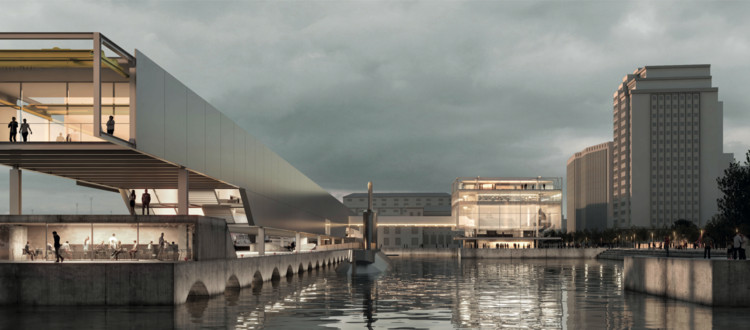
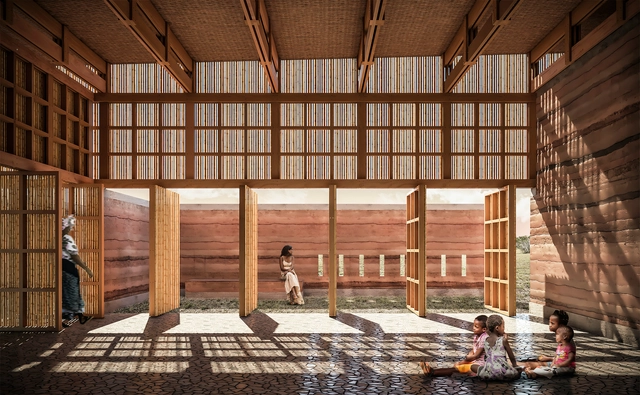
The “Peace Pavilion,” located in Sédhiou in southern Senegal, is the winning proposal of the KAIRA LOORO International Architecture Competition, organized by the Balouo Salo Association. The organization's team of architects and engineers, in collaboration with Senegalese authorities and institutions, will conduct a construction evaluation of the winning design to assess its financial and technical feasibility. The project is situated in a particularly delicate urban environment, on a flat clay site along the Casamance River. It serves as a multifunctional venue for hosting permanent and temporary art exhibitions, sharing the values of peace and memory.
Past, Present, Future is an interview project by Itinerant Office that invites prominent architects to share their perspectives on the constantly evolving world of architecture. Each interview is divided into a three-part video series—Past, Present, and Future—where interviewees discuss their architectural philosophies and experiences. The project's first installment featured 11 architects from Italy and the Netherlands, while the second edition comprises interviews with 13 architects from Spain, Portugal, France, and Belgium.
The aim of this interview series is to study these successful firms and understand their methodologies. The videos seek to offer a clear picture of what it means to be an architect in the 21st century, while serving as inspiration for the next generation of emerging architects and students entering the field.

The Fundação Bienal de São Paulo has announced the curatorial team for the Brazilian Pavilion at the 19th International Architecture Exhibition – La Biennale di Venezia, scheduled to open on May 10, 2025. The task will be led by the group Plano Coletivo, composed of architect Luciana Saboia and architects Eder Alencar and Matheus Seco. The selection of the group reflects the Foundation's commitment to highlighting architectural practices that foster positive social and environmental impact.
Plano Coletivo is recognized for its collaborative and multidisciplinary approach, integrating architecture, urbanism, and design with a focus on sustainable and inclusive solutions. The team has carried out significant projects across various regions of Brazil, always seeking to engage local communities in the design and implementation process.

The Architects Association of Chile and the Ministry of Cultures announced the results of the competition for the XXIII Chilean Biennial of Architecture and Urbanism. The winning proposal, "Double Exposure: reprogram, revitalize, rebuild", by Sebastián López, Ángela Carvajal, and Óscar Aceves, addresses interventions in disused heritage spaces, merging old and new works. In addition, awards were presented to "Urban Amusements" and "Weaving Territories". The event reflects on historical architecture and its revitalization.
The curatorial team for the XXIII Chilean Biennial of Architecture comprises Sebastián López Jeldes, Ángela Carvajal Fernández, and Óscar Aceves Álvarez, and the jury is composed of Fernando Pérez Oyarzún, Amarí Peliowski, Cristián Izquierdo, Macarena Cortés, Pablo Rojas, Beatriz Buccicardi, Fernando Miranda, Martín Urrutia, and Vicente Burgos.

The Council for Architecture and Urbanism of Amazonas (CAU/AM) announced the winners of the ATHIS Ideas Competition - Arquiteto e Urbanista Zezéu Ribeiro Award, which sought to promote technical assistance projects for social housing (ATHIS). The initiative's main goal is to address the housing challenges of vulnerable communities in the state through affordable, innovative, and socially responsible architectural solutions.
The winning projects stood out for their sensitive and contextualized approach to local needs, incorporating principles of sustainability, community participation, and the efficient use of resources. Focusing on housing improvements, land tenure regularization, and the upgrading of urban spaces, the proposals align with the objectives of the ATHIS program, established by Federal Law 11,888/2008, which guarantees free technical assistance to low-income families.

Urban agriculture is increasingly seen by organizations and communities as a sustainable alternative that, besides putting vacant land to use, promotes social engagement and reduces the distance from seed to plate, as food is produced within the city itself—often in the very neighborhood or block where the consumer lives. In Brazil, Curitiba offers an interesting example, where a vacant 300-square-meter plot, which served as a trash dump for four decades, was converted into an urban garden in just over ten months.

The São Paulo Court of Justice today cleared the concession of Ibirapuera Park, the largest in the state capital, to the private sector. According to reports by Folha de S. Paulo, the process had been suspended since March of this year, after being challenged by the Public Prosecutor's Office and Green Party council member Gilberto Natalini.

On Saturday, September 21, the City of Paris inaugurated the Marielle Franco Garden in honor of the Brazilian councilwoman assassinated in 2018 in Rio de Janeiro. Located in the city's 10th arrondissement, next to the Gare de l'Est, one of the French capital's main train stations, the project was led by the European Network for Democracy in Brazil (Red-Br) association with the support of the collectives Autres Brésils, France Amérique Latine, Amnesty International France, Coletiva Marielles, Ligue des Droits de l’Homme, Inter LGBT, and Amis des Sans Terre.

The City of Salvador is launching the second phase of the "Eu Curto Meu Passeio" program, which aims to promote the renovation of poorly maintained sidewalks that pose a risk to the public.