Various cities have been experimenting with wavering fees for public transport in an effort to promote sustainable mobility, alleviate traffic congestion and decrease social inequality. This past February, Salt Lake City has paused fare collection for a month to reduce carbon emissions in the region. At the end of March, the Italian city of Genoa extended free access to some of its public transport networks, following a successful experiment which began at the end of 2021 and in an ambitious plan to become the first Italian city with free transportation. Meanwhile, the small duchy of Luxembourg became the world’s first country with free public transit in 2020.
Over the past two decades, urban highways' social and economic ramifications have been brought into focus as a large part of this mid-century infrastructure comes to the end of its lifespan, prompting conversations over its role in contemporary urban planning. Freeway removal entails the replacement of the transport infrastructure with new urban developments, green amenities and alternative street grids to promote a healthier urban environment and smart growth. In some cases, the idea of removing highways is met with concern over the potential increase in traffic and gentrification of the areas adjacent to the road, but the pandemic has further exacerbated the need for quality public spaces and brought once again into question the hegemony of the car. The following highlights various highway removal projects, discussing how these interventions restore the urban fabric, reknit communities and recover urban spaces for city dwellers.
15-minute cities are a trending urban planning topic that has long been discussed academically and is now slowly being implemented across existing cities in Europe. But now, the first 15-minute city is being designed and built from scratch in Utah. Dubbed “The Point”, the new 600-acre city will be located just outside Salt Lake City, and will be a redeveloped former state prison site where new jobs, housing, public spaces, amenities, and transportation will serve almost 15,000 people in an attempt to explore a prototype for how innovative urban planning concepts can improve the public health and wellness.
Aedas has won an international competition to design Shenzhen's new Qingshuihe Comprehensive Transportation Hub in a joint venture with China Railway Siyuan Survey and Design Group Co., LTD and Shenzhen Urban Transport Planning Center Co., LTD. The master plan draws inspiration from the natural environment of the area, integrating nature and water elements into the high-density city to build a unique new emblem for Qingshuihe. The underground compact hub releases large above-ground spaces which will feature urban terraces, offices, five-star hotels, first-rate apartments, science and technology exhibition halls, and other facilities.
Early last week, the European Commission and the Fundació Mies van der Rohe announced the 40 shortlisted projects of the EU Mies Award, a prize that commends excellence in architecture, highlighting its contribution to sustainable development. In this context, and two years after the European Parliament voted to support the Green Deal, we review the steps taken by the EU in 2021 towards achieving its sustainability goals and shaping a resilient built environment.
Following California's Covid-19 health regulations in early 2020, Metro, the Los Angeles public transit agency stopped collecting fares on its busses as a safety precaution measure. However, the company's decision turned into the United States' biggest free-transit experiment, as ridership never dipped below 50 percent, even with the stay-at-home orders enforced by the government. Following 22 months of the decision and around 281 million fare-free transits, the company has decided to restart collecting fares, but is planning on using the information gathered throughout these two years to implement future improvements and introduce other free or reduced-fare programs in the city.
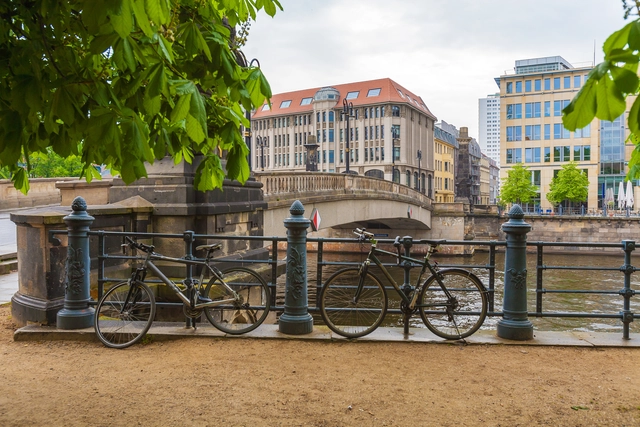
Volksentscheid Berlin Autofrei (People’s Decision for Auto-Free Berlin), has proposed a plan to limit cars within Berlin's Ringbahn, a long circle route around the inner city, making it the world's largest car-free area once approved. The citizen-initiative is aimed mostly at banning the use of private cars in central Berlin, with the exception of emergency vehicles, garbage trucks, taxis, delivery vehicles, and residents with limited mobility, who would all be given special access permits.
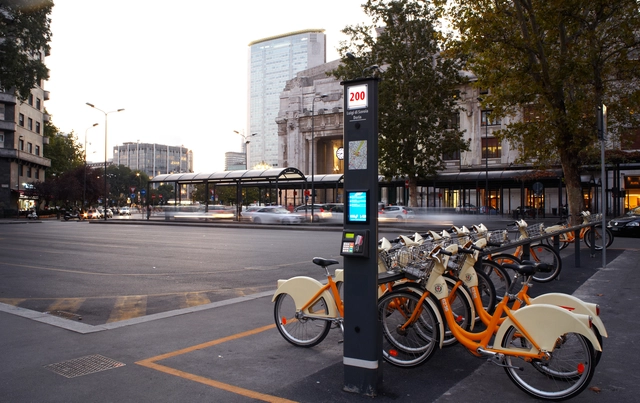
As part of Milan's ongoing vision of bicycle-friendly highways, the Metropolitan Council of Milanhas approved its Biciplan “Cambio” project, a new transportation system that introduces "super-cycle" corridors across the urban fabric, prioritizing cycling, environmental protection, safety, and wellbeing. The project aims to compliment existing cycle paths with 750 kilometers of new corridors that will connect the city's 133 communes with its wider metropolitan area, and increase the amount of bicycle trips and reach by 10% internally and 20% on a greater scale.
In December, the European Commission adopted several proposals that put the transport sector on track for a 90% reduction in carbon emissions, moving a step further in implementing the European Green Deal. The initiatives seek to increase rail transport, encouraging long-distance and cross-border rail travel, support the roll-out of charging points for electric vehicles and alternative refuelling infrastructure and further develop multimodality.
The rise of electric scooter fleets in cities around the globe happened almost overnight. By making transportation fun, they quickly took over a new market share and provided not only an easy way to travel but one that also prides itself in being sustainable. First becoming popular on the West Coast of the United States, scooters migrated eastward, eventually sweeping across Europe as well. Easy to maneuver and a convenient solution to get from place to place, we have to ask- can cities handle the accelerating rise of scooters and other forms of micromobility?
J. Mayer H. has won a competition to design the new façade of Cologne Main Station on Breslauer Platz in Germany. The design proposal frames the sides of the rail station with an all-around façade that offers an innovative use of space by making the best of the site's circulation and natural resources. The intervention will feature rooftop landscaping with local flowers and greenery, rainwater collection, protection from rain, wind, and sunlight, and a visual emphasis on the station's points of access.
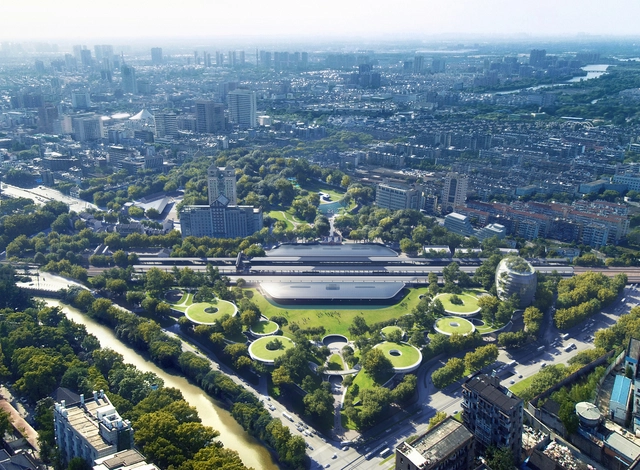
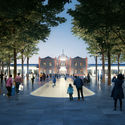
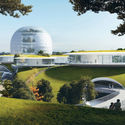
MAD Architects has just unveiled its design for the “Train Station in the Forest.” Under construction and scheduled for completion by July 1st, 2021, the project is located in the center of Jiaxing, in southeast China, in close proximity to Shanghai, Hangzhou, and Suzhou. Covering an area of 35.4 hectares, the intervention consists of rebuilding the historic station while creating a new infrastructural annex underground. It also includes the creation of plazas to the north and south and the rehabilitation of the adjacent People’s Park.
The pandemic provided a unique circumstance for city-scale experiments regarding mobility, while immediate responses showed the transformative power of tactical urbanism. In many cities, the measures meant to ensure social distancing are to be kept in place post-pandemic, paving the path towards recovery with less traffic and more outdoor activities. How did the pressure of rethinking streets, functions, and transportation systems transform public space in 2020?
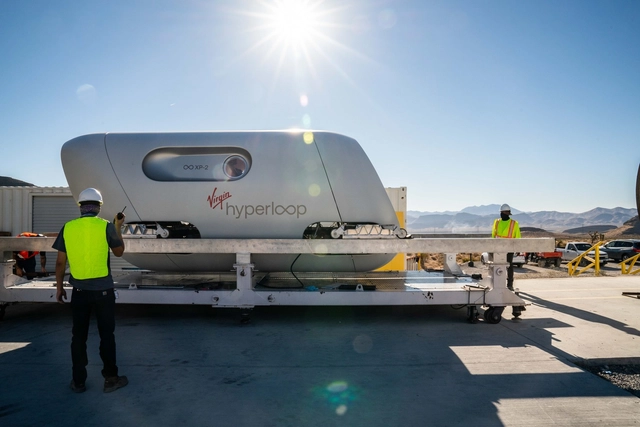
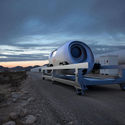
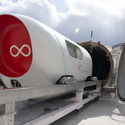
Making history, Virgin Hyperloop’s Pegasus pod carried its first passengers in the Nevada desert. Designed by BIG-Bjarke Ingels Group and Kilo Design, Pegasus or XP-2 is a new vehicle typology for an autonomous transportation system to achieve hyperloop travel at the speed of over 1,000km/hour, the fastest form of land-based travel.
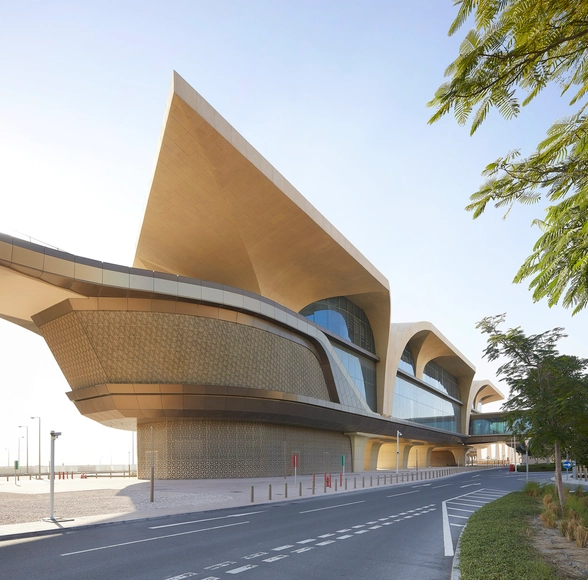
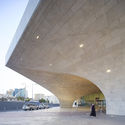
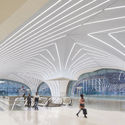
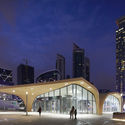
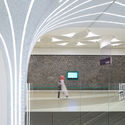
UNStudio has unveiled images of the first finished stations on the new Doha Metro Network, one of the most advanced and fastest driverless systems in the world. Phase one of the Qatar Integrated Railway Project (QIRP), involved the construction of three metro lines (Red, Green, and Gold), with 37 stations currently having been completed.
Ronald Lu & Partners, the leading TOD expert with over 60 TOD projects across China, is currently developing flagship Shunde ICC Country Garden Sanlonghui. Showcasing an upgraded TOD4.0 design concept, the mixed-use project generates “a harmonious relationship between people and the environment”.
Space-saving fully automate parking solutions buy U-tron. 50% reduced parking footprint and superior user experience. Image Courtesy of U-tron Parking
As ride-sharing services grow and personal ownership of automobiles declines, office building owners and developers are re-thinking the value of parking structures, and their capacity and ability to convert. As part of the total transformation of One Post Office Square (OPOS), located in the heart of Boston's financial district and designed by Gensler, a new automated parking garage will optimize the use of valuable leasable space, enhance the user experience and create long term flexibility.
Ronald Lu & Partners has announced the completion of phase one of Tianhui TODTOWN: China’s first transit-oriented development, after 13 years of collective effort. The project promoting sustainability, mass transit, and community in Shanghai, takes the concept of public transit-oriented development (TOD) important in the development of China’s urban areas to the next level.