1. ArchDaily
  2. transportation

transportation: The Latest Architecture and News

The (E)motional Landscapes of the Extra-urban: How Does the Perception of Surroundings Evolve Through Mobility Innovation?

Subscriber Access | 

Autonomous vehicles can read Baidu POIs (Point of Interests) and digitally enable a physical interaction between riders and surrounding landscapes. (Image © Shuman Wu, Huai Kuan Chung, Carmelo Ignaccolo for the UABB 2019 “Transforming the landscapes of mobility”)

What happens when the sensor-imbued city acquires the ability to see – almost as if it had eyes? During the 2019 Shenzhen Biennale of Urbanism\Architecture (UABB), titled "Urban Interactions," Archdaily is working with the curators of the "Eyes of the City" section at the Biennial to stimulate a discussion on how new technologies – and Artificial Intelligence in particular – might impact architecture and urban life. Here you can find all the information about the “Eyes of the City” section, curated by Carlo Ratti, Politecnico di Torino, and SCUT - including exhibits, events, and project's blueprints.

From horse-drawn trolley to railways to the automobile, innovations in transportation have shaped not only the way our cities develop but also how people experience the surrounding landscapes while in motion. When in the 5th millennium BCE, Sumerians developed the first freely-spinning wheel with axle mechanism, this invention not only brought significant military advantage during the city-state wars in Mesopotamia but it also boosted the development of cities.

Architecture post COVID-19: the Profession, the Firms, and the Individuals

Subscriber Access | 

As the world is slowly reopening, easing lockdown measures, everyone is adapting to new realities. Imposing drastic adjustments to our lives, the coronavirus has introduced a new “normal”, changing our perceptions and altering our priorities. Driven towards questioning and evaluating our environment, we are constantly reacting and anticipating a relatively unknown future.

A casual conversation between two editors at ArchDaily generated this collaborative piece that seeks to investigate the current trends, predict the future, and offer insights to everyone/everything related to the architectural field. Tackling the evolution of the profession, the firms, and the individuals, especially young adults and students, this article, produced by Christele Harrouk and Eric Baldwin, aims to reveal what is happening in the architecture scene.

London Introduces Car-Free Streets as Lockdown Eases

After Milan and Paris, London has announced its plans to transform large areas in the city, converting streets to car-free zones, as the coronavirus lockdown loosens up. Repurposing the city for people, London aims to emerge differently from the pandemic, supporting a low-carbon and sustainable recovery. Works have already started and are expected to be completed within six weeks.

Paris Plans to Maintain Anti-Pollution and Anti-Congestion Measures post Covid-19 Lockdown

Paris, just like Milan, is planning on keeping its streets car-free after the coronavirus lockdown. Mayor Anne Hidalgo announced plans to maintain the anti-pollution and anti-congestion measures introduced during the confinement period, as the city reopens.

People to Reclaim Streets in Milan in Post Covid-19 Vision of the City

The city of Milan has announced its Strade Aperte plan or “Open streets” plan that favors pedestrians and cyclists over cars. In order to reduce car usage, the Lombardy area will repurpose 35km of roads, over the summer, after the coronavirus lockdown, transforming them into people-friendly streets.

MVRDV and Airbus Integrate Air Mobility into Urban Environments

MVRDV in collaboration with Airbus, Bauhaus Luftfahrt, ETH Zurich, and Systra, is developing a plan for the future of Urban Air Mobility (UAM). The investigation tackles the integration of “flying vehicles” into our urban environments and envisions a comprehensive mobility concept.

MVRDV and Airbus Integrate Air Mobility into Urban Environments  - Image 1 of 4MVRDV and Airbus Integrate Air Mobility into Urban Environments  - Image 2 of 4MVRDV and Airbus Integrate Air Mobility into Urban Environments  - Image 3 of 4MVRDV and Airbus Integrate Air Mobility into Urban Environments  - Image 4 of 4MVRDV and Airbus Integrate Air Mobility into Urban Environments  - More Images+ 13

Why Budapest's Contemporary Architects had to Go Underground to Find Success

Subscriber Access | 

This article by ArchDaily's former managing editor Vanessa Quirk first appeared on ArtsCultureBeat, the web magazine of Arts & Culture concentration at Columbia Journalism School’s MA program, titled "The Secret Life of Hungarian Contemporary Architecture."

This time last year, Hungarian Prime Minister Victor Orbán stood at a podium in a pristine new subway station. Raw concrete beams criss-crossed above him; state-of-the art, driverless trains stood silently beside him. It was the opening ceremony for Line 4, a subway line that due to delays, corruption, and disputes had been 40 years in the making.

“The people of Budapest began to accept the thought that only their grandchildren would use Budapest’s new Metro line, or not even them.” Orbán told the crowd. He recounted an old joke that embodied the cynicism that once surrounded the project: Chuck Norris had been on Metro Line 4.

Orbán credited the line’s completion, which occurred only a few weeks before the 2014 parliamentary elections, to “the solidarity and unity that was established in 2010 [when Orbán’s government took power] and has since been maintained.” He didn’t mention how, under his first government (1998 to 2002), he had withheld funds from the project, contributing significantly to its delay. Nor did he mention that his party had fought against the idea that the line, an expensive infrastructural project, needed architecture at all.

Today, though, the line’s stunning architecture is its most noticeable feature. Line 4 is not just a watershed achievement in Hungary’s history, but also a symbol of what it takes to make contemporary architecture in Hungary today. Both literally and figuratively, contemporary architecture had to go underground.

Why Budapest's Contemporary Architects had to Go Underground to Find Success - Image 1 of 4Why Budapest's Contemporary Architects had to Go Underground to Find Success - Featured ImageWhy Budapest's Contemporary Architects had to Go Underground to Find Success - Image 2 of 4Why Budapest's Contemporary Architects had to Go Underground to Find Success - Image 3 of 4Why Budapest's Contemporary Architects had to Go Underground to Find Success - More Images+ 2

AERIAL FUTURES: The Next Frontier

A public event will be held to kick off World Space Week at AIA Houston on the evening of Thursday, Oct 4 as part of the AERIAL FUTURES: The Next Frontier think tank taking place in Houston between Oct 4-5, 2018.

Expanding Houston’s reputation as Space City, USA, Ellington Airport’s conversion into the Houston Spaceport will reiterate the city’s role as a front-runner in the space race of the 21st Century. As the most urban-centered commercial spaceport to date – Houston Spaceport is within a 15-minute drive of the central business district – this development will serve as a detonator in

Call for Submissions: AIANY + ASLANY Transportation + Infrastructure Design Excellence Awards

The AIANY + ASLANY Transportation + Infrastructure Design Excellence Awards recognize exceptional design by New York, New Jersey, Connecticut, and Pennsylvania AIA and ASLA members. The awards program is open to registered architects, landscape architects, and planners.

UNStudio Designs Future-Proof Cable Car for Amsterdam

UNStudio has released images of its design for IJbaan, a green, future-proof cable car linking West and North Amsterdam. The result of a crowdfunding campaign started by founders Bas Dekker and Willem Wessels in 2015, the project is to be implemented by 2025, marking the city's 750th anniversary. The “all electric” transport scheme forms part of Amsterdam’s ambition to be a European center for urban innovation, integrating forward-thinking technology with existing public transport modalities.

Stretching over one mile (1.5 kilometers), the cable car links the two thriving residential districts of Amsterdam-West and Amsterdam-Noord through a system of three slender pylons and two stations. The cable car has been designed to accommodate a future third station depending on the pattern of growth for surrounding districts.

UNStudio Designs Future-Proof Cable Car for Amsterdam - Image 2 of 4UNStudio Designs Future-Proof Cable Car for Amsterdam - Image 3 of 4UNStudio Designs Future-Proof Cable Car for Amsterdam - Featured ImageUNStudio Designs Future-Proof Cable Car for Amsterdam - Image 4 of 4UNStudio Designs Future-Proof Cable Car for Amsterdam - More Images+ 3

2018/19 Fentress Global Challenge: Re-Envisioning the Airport Terminal Building for the Year 2075

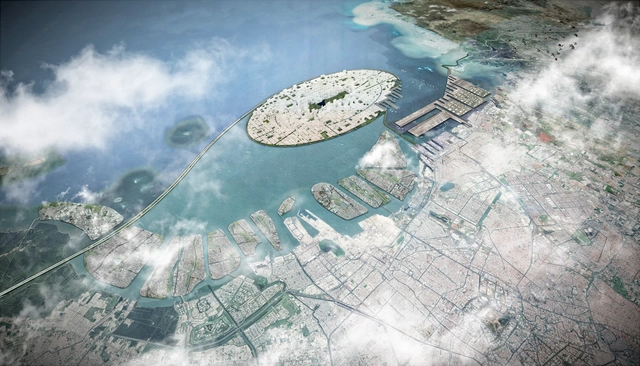
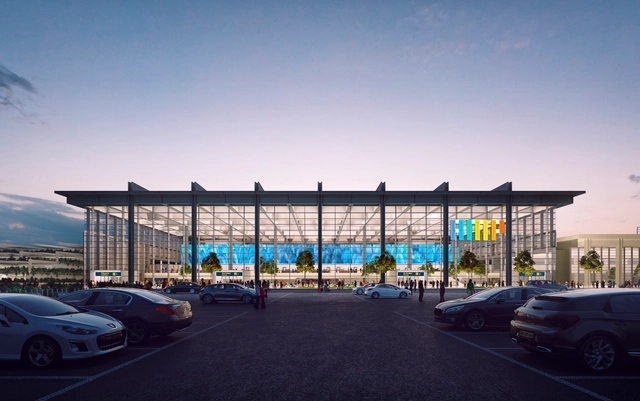
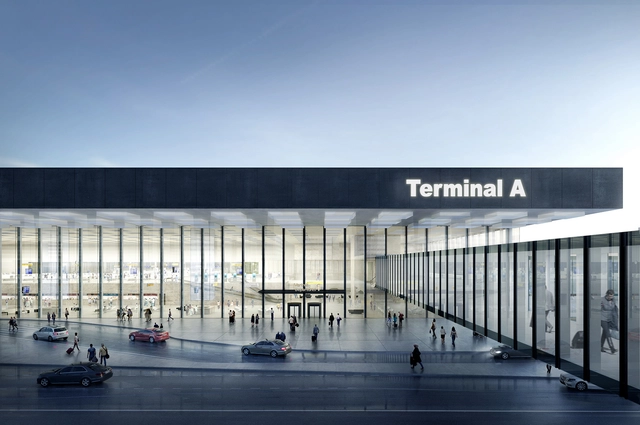
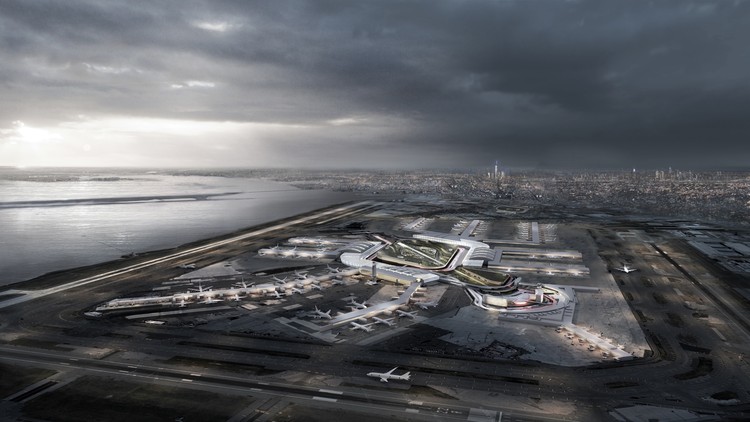
Global commerce and the unprecedented demand for travel and have resulted in the proliferation of airports around the world. In their short history, terminal buildings have been criticized for employing generic architectural forms that are unapologetically disconnected from their context and cultural identity. Technical complexity and functional design have often taken precedence over quality and comfort for users.

Voids and Canopies Feature in Stefano Boeri Architetti's Renovated Transport Hub in Southern Italy

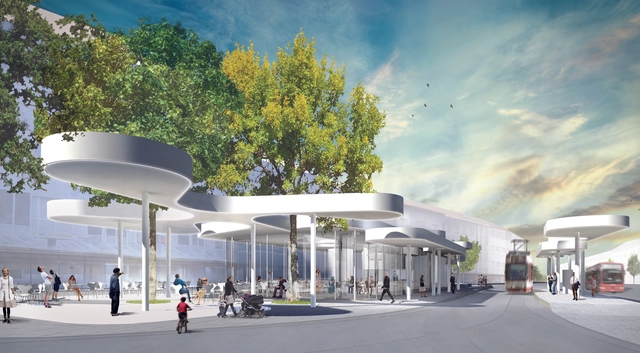
Stefano Boeri Architetti has released images of their proposed renovation of Matera Central Station in Southern Italy. Matera Central FAL railway station will be structurally altered through an “aesthetic and functional redevelopment together with technological upgrading of the railway itself.”

The proposal seeks to alter the existing hierarchy of space in the city by making the transport hub a genuine and significant urban landmark, rather than simply an infrastructural node. The scheme is therefore designed to incorporate a recognizable, pedestrianized public square, forming connections with the nearby historic city center.

Voids and Canopies Feature in Stefano Boeri Architetti's Renovated Transport Hub in Southern Italy - Image 1 of 4Voids and Canopies Feature in Stefano Boeri Architetti's Renovated Transport Hub in Southern Italy - Image 2 of 4Voids and Canopies Feature in Stefano Boeri Architetti's Renovated Transport Hub in Southern Italy - Image 3 of 4Voids and Canopies Feature in Stefano Boeri Architetti's Renovated Transport Hub in Southern Italy - Image 4 of 4Voids and Canopies Feature in Stefano Boeri Architetti's Renovated Transport Hub in Southern Italy - More Images+ 4

New Video Shows Foster + Partners' Vision for Cargo-Carrying Hyperloop Network

Foster + Partners has released a video depicting their vision for a future high-speed transportation infrastructure, taking advantage of recent advances in hyperloop technology. Designed for DP World Cargospeed, a collaboration between cargo giant DP World and Virgin Hyperloop One, Foster + Partners’ vision for an infrastructural network seeks to create a new ecosystem where urban centers and rural landscapes are interconnected, as are humans and nature.

The World's First Commercial Hyperloop is Coming to Abu Dhabi in 2020

Hyperloop Transportation Technologies (HyperloopTT) has released details of their plan to create the world’s first commercial Hyperloop system in Abu Dhabi. Situated on the border between Abu Dhabi and Dubai, in close proximity to both the Al Maktoum International Airport and Expo 2020 Dubai site, the HyperloopTT will begin with the construction of six miles (ten kilometers) of infrastructure, with future development potentially creating a commercial Hyperloop network across the United Arab Emirates and beyond.

The World's First Commercial Hyperloop is Coming to Abu Dhabi in 2020 - Image 1 of 4The World's First Commercial Hyperloop is Coming to Abu Dhabi in 2020 - Image 2 of 4The World's First Commercial Hyperloop is Coming to Abu Dhabi in 2020 - Image 3 of 4The World's First Commercial Hyperloop is Coming to Abu Dhabi in 2020 - Image 4 of 4The World's First Commercial Hyperloop is Coming to Abu Dhabi in 2020 - More Images+ 12

When it Comes to Building a Better Airport, "It Never Pays to Use Cheap Materials"

Subscriber Access | 

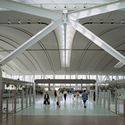
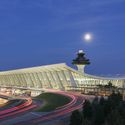
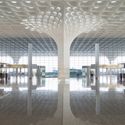
Airport design is both an art and a science: the best terminals are not only functional, but also beautiful and awe-inspiring spaces. Millions of people pass through these terminals every day, yet few understand their inner workings as well as Roger Duffy and Derek A.R. Moore—design leaders at SOM who have conceptualized some of the most ambitious aviation projects around the world, including Terminal 2 at Chhatrapati Shivaji International Airport in Mumbai. In this interview, Moore, a Director, and Duffy, a Design Partner, reflect on the complicated challenges of airport design, and how these constraints can fuel creative solutions.

When it Comes to Building a Better Airport, "It Never Pays to Use Cheap Materials" - Image 5 of 4When it Comes to Building a Better Airport, "It Never Pays to Use Cheap Materials" - Image 7 of 4When it Comes to Building a Better Airport, "It Never Pays to Use Cheap Materials" - Image 10 of 4When it Comes to Building a Better Airport, "It Never Pays to Use Cheap Materials" - Image 13 of 4When it Comes to Building a Better Airport, It Never Pays to Use Cheap Materials - More Images+ 10

Studies Show Ridesharing Services Like Uber, Lyft Actually Increase Congestion in Cities

Despite being heralded as services that will reduce congestion on our streets, ride-hailing companies like Uber and Lyft actually are making traffic problems worse, a new study from Boston’s Northeastern University has revealed.

UNStudio Selected to Design New Cable Car in Gothenburg

UNStudio has won a competition to design a new, 3-kilometer long cable car in the Swedish city of Gothenburg. The cable car's route, which will connect the old city on the south of the river with three locations to the north, will feature a total of six towers which have been designed around an adaptable, asymmetrical structural system intended to mimic the cranes in the city's shipyards. The expected opening date for the cable car is in 2021, with the new transportation system being inaugurated as part of the celebrations of Gothenburg's 400th anniversary.
These GIFs Compare Cities' Metro Maps to Their Real Life Geography

Metro and subway maps can tell us a lot about cities. For example, by comparing metro maps from different cities, you might be able to understand those cities' relative size or level of development. Or, by comparing a metro map to an earlier version from the same city, you can learn about the pace of development being experienced in that city. What these "maps" rarely tell you with any reliability, though, is the actual geography of the city itself.

In a fascinating series of posts over at /r/dataisbeautiful earlier this year, Reddit users created GIFs comparing the official metro maps of cities around the world with the real geography those maps correspond to. The results show the incredible changes that cities are subjected to in the name of visual clarity: in cities such as London, Tokyo, and Berlin, transit maps expand the urban core, masking the density at these regions' centers; in other cities such as Washington DC, shortened lines hide the extent of the city's suburbs; while in some cities, entire neighborhoods are moved to the other side of the city to make the map layout more attractive (we're looking at you, Prague). Read on to see 11 of the best creations by Reddit users.