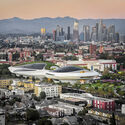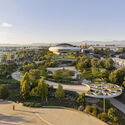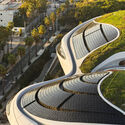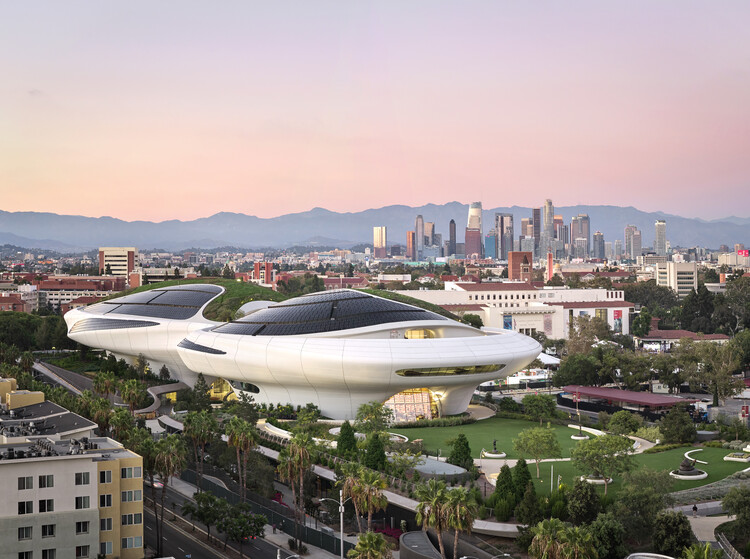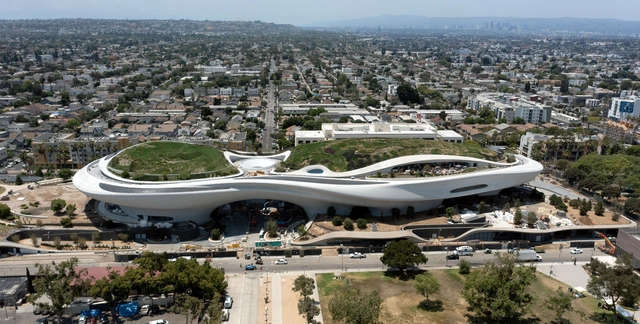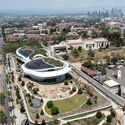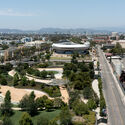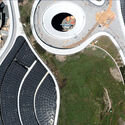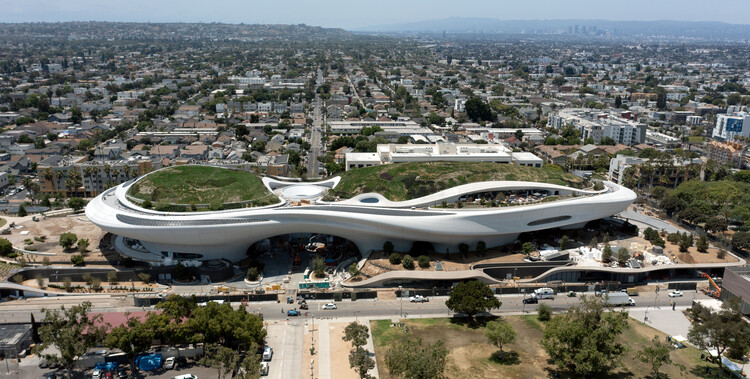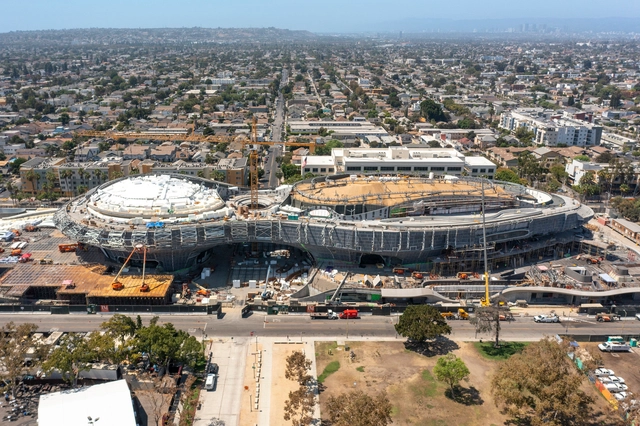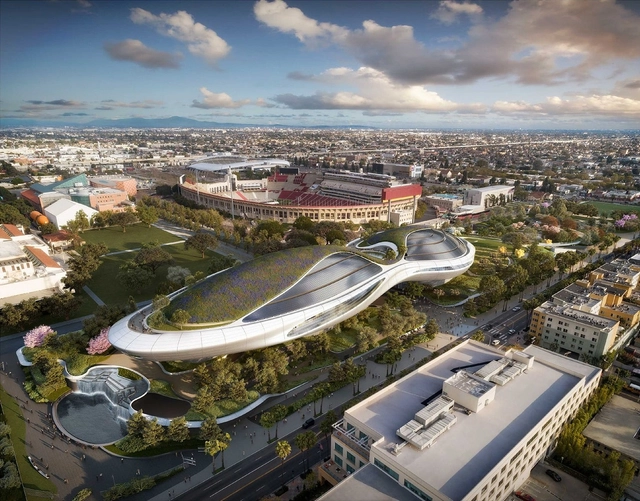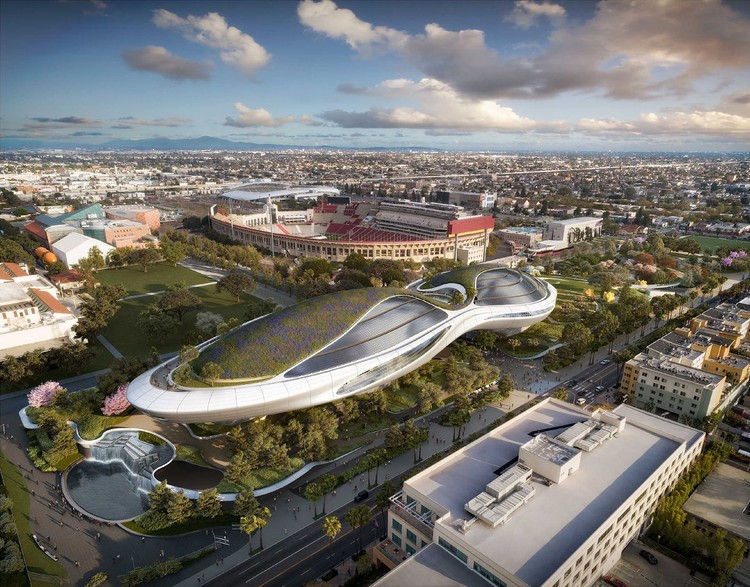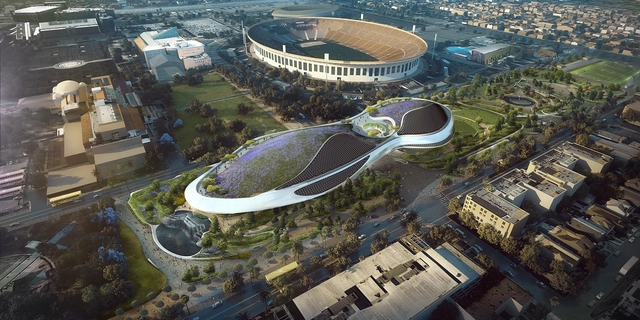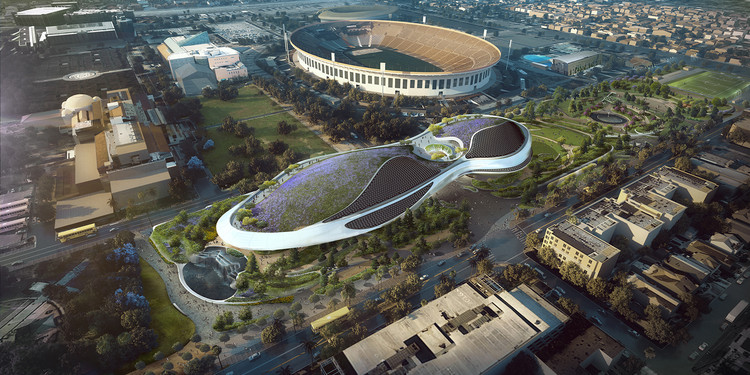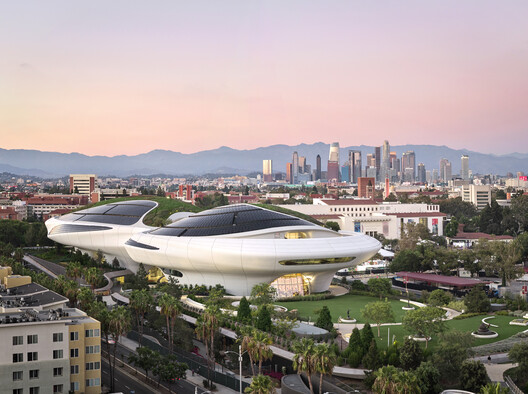
The Lucas Museum of Narrative Art has announced that it will open to the public on September 22, 2026, adding a new cultural institution to Los Angeles's Exposition Park. Founded by George Lucas and Mellody Hobson, the museum is dedicated to illustrated and narrative storytelling, understood as visual works that communicate stories across media and periods. The building is designed by Ma Yansong of MAD Architects, with landscape architecture by Mia Lehrer of Studio-MLA and Stantec serving as executive architect.
Scheduled to open in 2025, the Lucas Museum of Narrative Art in Los Angeles’s Exposition Park, reveals the latest details in the construction and addition of artwork. The first of its kind, the Lucas Museum, founded by filmmaker George Lucas and his wife Mellody Hobson, will be devoted to all forms of visual storytelling, including painting, photography, sculpture, illustration, comic art, performance, and video. Designed by Ma Yansong of MAD Architects with Michael Siegel of Stantec, the five-story and 27900 square-meter building will feature a gallery space, two state-of-the-art theaters, and dedicated spaces for learning and engagement, dining, retail, and events.
The steel frame of the Lucas Museum of Narrative Art is beginning to take shape in Los Angeles. Designed by MAD Architects, the project takes its name from Star Wars creator George Lucas and will stand at the gateway to the city’s Exposition Park. The landmark project will be MAD’s first museum built in the United States.
The Lucas Museum of Narrative Art, designed by MAD Architects, has broken ground in Los Angeles, California. Founded by “Star Wars” creator George Lucas, and standing at the gateway to the city’s Exposition Park, the scheme is envisioned as a “futuristic spaceship” landing on the site’s natural environment.
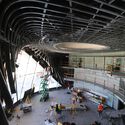
The building’s interior has been designed as an expansive, open cave, flooded with natural light from skylights above. At least $400 million worth of art will be housed in the museum, including over 10,000 paintings, illustrations and movie memorabilia. The first floor and roof will be designated as public areas for visitors to exercise, relax, and “directly experience nature in the urban environment."
https://www.archdaily.com/890808/new-images-of-mads-spaceship-lucas-museum-released-as-construction-breaks-ground-in-los-angelesNiall Patrick Walsh
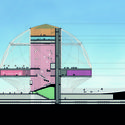
Following the news last week that the Lucas Museum of Narrative Art will abandon plans for their Chicago location, OMA has released images of their proposal for the museum, which had been beaten out in the original competition by MAD Architects' Volcano-like entry. OMA’s design attempts to preserve as much of the lakefront park space as possible, lifting the majority of gallery and educational spaces into the air and capping them with a sky garden enclosed within an ETFE envelope. The plan would have offered up to 8 times more public space than the footprint it occupies.
The Lucas Museum has been looking for a home in all the wrong places. Following months of fiery debate over the future of the museum’s proposed lakefront location, George Lucas announced that he is abandoning plans to build the project in Chicago and will instead return to looking for a site in California. This is the second failed location for the museum, after being rejected by San Francisco’s Presidio Trust in early 2014.
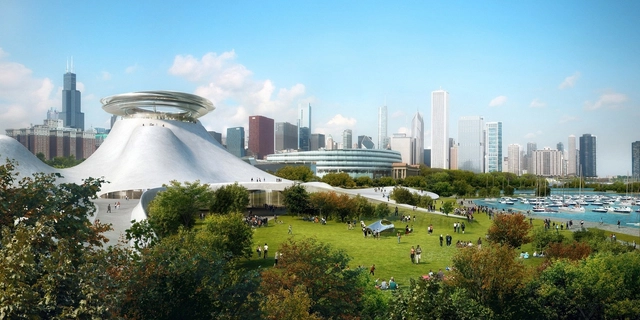
The Chicago City Council has voted to approve zoning for George Lucas' controversial, MAD-designed Lucas Museum of Narrative Art. Planned for a lakefront site on Chicago's Museum Campus park, near the Shedd Aquarium and Field Museum, the "mountainous" design faced opposition from environmentalists who claim the building is a "confiscation of public land." Despite this, and according to reports on NBC News, the Star Wars director won the Council's approval by promising more parking and tailgating space to Chicago Bears fans.
“The Lucas Museum of Narrative Art will be an incredible addition to Chicago’s Museum Campus,” said Mayor Emanuel in an official statement. “The Lucas Museum will join the 56 other museums in Chicago to provide new cultural and educational benefits for generations to come. And the new parkland will add more open greenspace that will be enjoyed by residents across the city.”
"The architecture is like a scene from a movie where the story is the life, the script is dictated by the use of the building and where the actors are the residents. A labyrinth where all - characters, director, audience –are lost and found in the intensity of their emotions," Babina adds.
What some believe to be an act of revenge, George Lucas has unveiled plans to build the San Francisco Bay Area's largest affordable housing project in the wealthy community of Marin County. As CBS reports, the news comes just three years after valley residents shot down Lucas' proposal to develop the land with a 265,000-square-foot production studio. The new plan aims to provide veterans, firefighters, teachers and other service-oriented working class people with 224 low-income homes.
"We’ve got enough millionaires here. What we need is some houses for regular working people," said Lucas, according to his lawyer Gary Giacomini who also ensured that the plan was "not a form of retaliation."
Concerns regarding the environmental sensitivity of George Lucas’ proposed Lucas Museum of Narrative Art in Chicago has caused the project to halt, and may even prevent it from being realized. According to a suit filed against the museum by the Friends of the Parks, environmentalists believe that the “mountainous” lakefront proposal, designed by MAD Architects, will disrupt the site’s ecosystem.
As reported by the Los Angeles Times, Lucas’ hasn’t given up on Chicago yet. However, considering that Lucas wants to see the museum built within his lifetime, the 70-year-old Star Wars director is starting to reconsider a University of Southern California (USC) campus site in Los Angeles.
“Chicago is a great city for architecture and has historically supported innovative, forward-looking work. There is a natural impulse to deride a project in the early stages of design, particularly one that has a new shape or expression. This is not a new concept,” says Gehry, citing that both the Guggenheim Museum Bilbao and Los Angeles Walt Disney Concert Hall were shrouded in criticism before becoming “great assets to their mutual cities.”
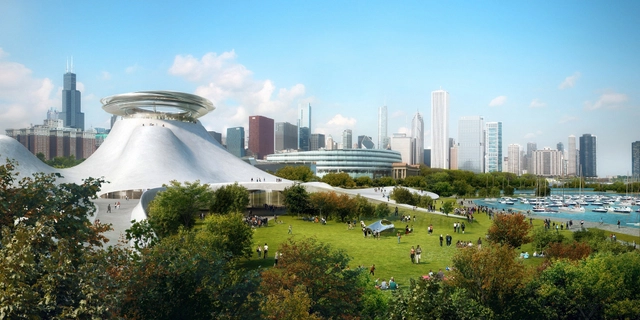
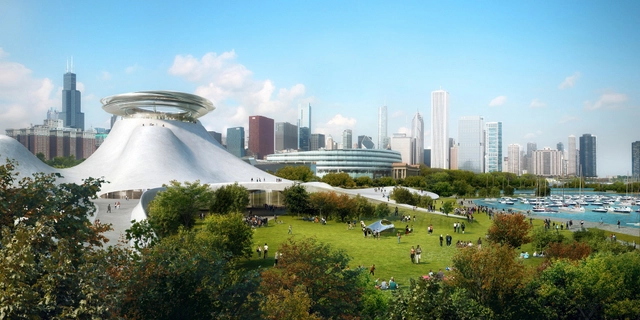
The design for Chicago's Lucas Museum of Narrative Arts has been revealed, with MAD Architects unveiling their plans for a sculptural white "mountain," rising from the site to be topped by a metallic crown. Designed as a landscape that can be approached from all sides, with the main entrance located on a 'floating' public plaza accessed via a network of ramps and steps, the building is organized around a central domed lobby and events space, with four stories of gallery spaces, a set of four theaters, and at the top of the building an observation deck and glass-encased restaurant. In a connected, smaller "mountain" are the building's educational functions, with classrooms, lecture theaters and a library.
Speaking to ArchDaily from Chicago, director of MAD ArchitectsMa Yansong explained how he wanted the design "to be futuristic but at the same time to be natural," connecting with the landscape of the waterfront site.
More about the design from Ma Yansong after the break
The building itself will be designed by MAD Architects, chosen "because of its innovative approach to design and the firm’s philosophy of connecting urban spaces to natural landscapes." In this case, that landscape will be designed by Studio Gang, who will also add a bridge to Northerly Island, an area which they have worked on turning into an ecologically diverse urban park.
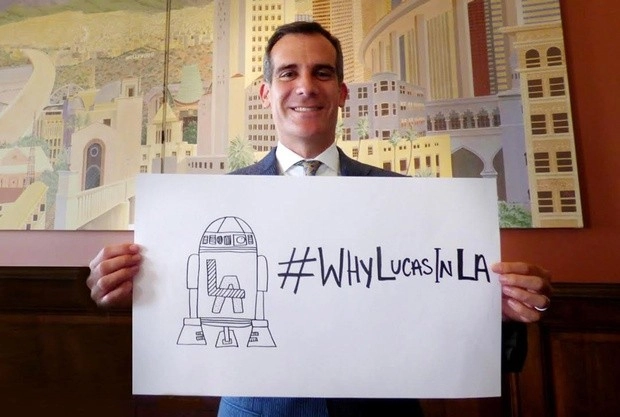
Los Angeles Mayor Eric Garcetti proudly displays his pro-Lucas Twitter hastag. Image Courtesy of City of Los Angeles
Before George Lucas found a home for his museum in Chicago, the mayors of other cities were desperately vying for the honor (see Los Angeles Mayor Eric Garcetti above). If they are still disappointed about losing out, a new study about the aftermath of building cultural centers might offer some consolation. To learn about the planning fallacies and negative outcomes often associated with these building types, check out CityLab's recap.
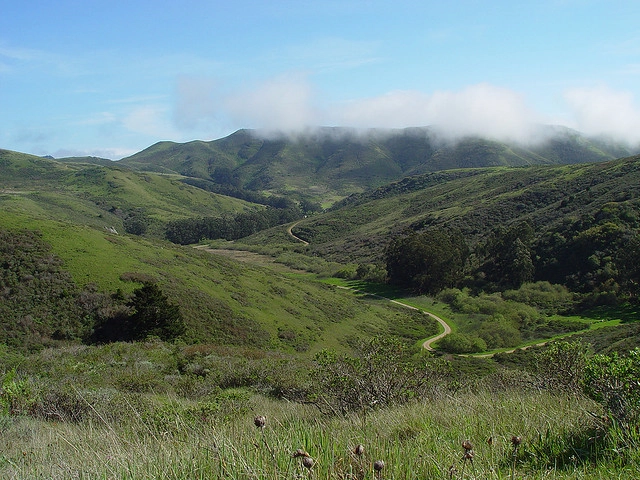
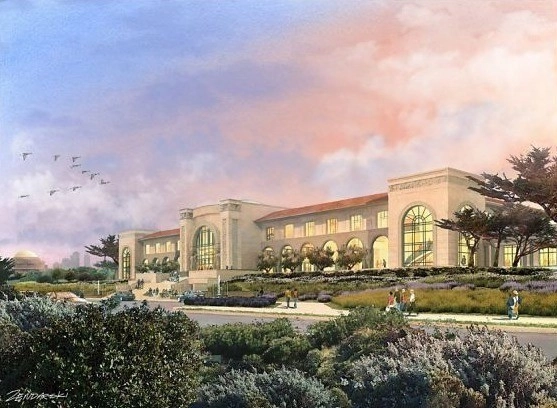
This week, just two weeks after the three shortlisted teams submitted their revised proposals for Crissy Field, San Francisco’s Presidio Trust unanimously decided to end the competition. Though the competition raised high hopes over its 14-month duration that the Trust would transform the prominent 8-acre site into a "cultural institution of distinction," its fate has been left to the “wind,” as the SFGate’s John King reports. This means, neither George Lucas’ self-titled cultural arts museum, WRNS Studio and the Chora Group’s sustainability institute, or the Golden Gate National Parks Conservancy’s “park-based” cultural center will be realized. You can view each of the rejected proposals here and more details on the cancelation here.
With the news earlier this year that San Francisco's Presidio Trust was planning a new cultural centre on the former site of a military base, now a national park, further details have emerged on the three finalists. The competition has attracted proposals from George Lucas (for the Lucas Cultural Arts Museum), WRNS Studio and the Chora Group (for 'The Bridge'), and the Golden Gate National Parks Conservancy (for the Presidio Exchange). Each proposals offer different visions for the eight acre site, the ex-military building of which currently hosts the retailer Sports Basement.
The first film of George Lucas is without any doubt a master piece in terms of how to represent futuristic spaces. In THX 1138 the underground spaces are absolutely controlled. People’s behavior is driven by different drugs depending on the physical effect required. The movie contained a catalogue of spatial experiences and explore new forms of spaces that are many years forward the ’70 ideas.
We invite you to enjoy this magnificent film and let us know your comments below!