Infographic: Saving the Earth with Sustainable Cities

via thisbigcity

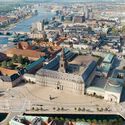
With Stockhom, Hamburg and Copenhagen leading the way, urban metropolis’ worldwide are beginning to rethink their infrastructure and envision ways to transform their city into an efficient, sustainable model of the future in an effort to preserve a high quality of life and stay competitive in the global society. This shift is already being reflected in the education system, with the rapid growth of -focused academic programs and a sizable, projected increase in “green” jobs. 

Get an understanding as to how sustainable will save the earth with an infographic after the break.

Milan Design Week 2013: Energetic Energies for Panasonic / Akihisa Hirata

© Santi Caleca

Envision a future where undulating “solar plants” transform the rectangular masses of our into a vibrant metropolis where technology aids in the coexistence of humans and nature. Represented in the conceptual installation “Energetic Energies” at the Milan Design Week 2013, this notion of redefining our relationship with the sky through photovoltaics is based on years of technological research and development by the Panasonic Corporation, who commissioned Japanese architect Akihisa Hirata to imagine the possibilities.

The exhibition features a 30 meter-long makeshift city, whose “hills” of photovoltaics overtake clusters of white, translucent buildings while shadows of clouds move in and out of the space.

A video interview with and more images after the break…

Local Economies Suffer as Foreign Investments Dominate London and NYC

Belgravia, one of ’s priciest and most deserted neighborhoods © Herry Lawford

An interesting phenomenon is taking place in London: the priciest tiers of its housing market are increasingly being driven by overseas investment, primarily from the Far East. The most interesting – and perhaps most concerning – aspect of these investments is that at least 37% those who buy property in the most expensive neighborhoods of central London do not intend to use that property as a primary residence. This results in upscale neighborhoods and residential properties that are largely abandoned and contribute almost nothing to the local economy of the city. Parts of Manhattan are experiencing similar behavior, leading us to ask the question “what is happening to our as they become more and more globalized and how will this trend affect city economies around the world?”

Read more after the break…

2012 Worldwide City Rankings Reveal Important Regional Trends

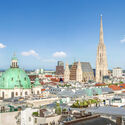
Vienna, the city with the best quality of life in the world.

Mercer, a consulting leader that helps other organizations around the world advance the health, wealth and performance of their employees, releases a survey annually that helps multinational companies and other organizations compensate employees when placing them on international assignments. Their survey for the year 2012 evaluates over 221 around the world on their with New York City as the base city and highlights several trends that can add onto what we as designers and urban planners believe makes a city successful and livable.

Read on for the 2012 results.

4 Lessons the UK Should Take from Denmark

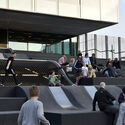
Superkilen masterplan designed by BIG + Topotek1 + Superflex. Image © Iwan Baan

Last week the UK’s Culture Minister Ed Vaizey announced that he was commissioning a review of the country’s architecture policy, to be led by Sir Terry Farrell along with a number of high profile advisors, including Thomas HeatherwickAlison Brooks and Alain de Botton. According to Vaizey, the review, expected to be complete by the end of the year, “will be a rallying point for the profession.”

In his article in The Guardian, Olly Wainwright rather hopefully questioned: “might this year-long study result in an innovative new piece of legislative guidance – perhaps along the lines of Denmark’s architecture policy, introduced in 2007?” While Wainwright somewhat flatly concludes, “somehow, that seems unlikely,” there’s no doubt that the UK could only stand to gain from learning from ’s innovative policy.

So what lessons could the UK (and the world) learn from the Danes? Read on after the break…

Without Architects, Smart Cities Just Aren’t Smart

Visualization of Masdar City © Foster + Partners

Arguably the biggest buzzword in right now is the ‘Smart City’. The idea, although certainly inclusive of eco-friendly practices, has even replaced “sustainability” as the major intent of planning for positive future development. Smart City thinking has been used successfully in countries as diverse as Brazil, the US, the UAE, South Korea, and Scotland (Glasgow just won a £24million grant to pioneer new schemes throughout the city).

But what exactly are Smart Cities? What benefit do they bring us? And, more importantly, how can we best implement them to secure our future?

The answer, in my opinion, lies in the hands of architects.

More on the potential of Smart Cities after the break…

AD Interviews: Ricky Burdett

“The architect has to continue doing what he or she has done for the last 5,000 years, which is to make objects of great beauty, which uplift the spirits of whoever commissions them or occupies them or sees them. But, increasingly, [the architect] has to take on two other things, which is: to make things in such a way that they are part of an environmental whole; but also to be much more conscious of what the social impacts are of the decisions the architect may make. [...] The architect, unless they want to wipe themselves out and become aesthetes, has to deal with these big issues.” –

As the world becomes increasingly urbanized, there lies an important question ahead of us. There can be no doubt that cities will grow, but how can we make sure that they grow sustainably and – what’s more – equitably?

To get to the bottom of these important questions, we spoke with Ricky Burdett, a professor of Urban Studies at the London School of Economics  (where he directs the program LSE Cities), the author of The Endless Cityand one of the world’s leading experts in urban planning. Not only was he the Chief Advisor of Architecture and at the London 2012 Olympics, but he is also a founder of the Urban Age Project, an interdisciplinary investigation into the future of cities. We caught up with Burdett while he was in Chile, invited by CREO Antofagasta to advise on the development of Chile’s sprawled-out city of Antofagasta.

Burdett had so much to share about his varied experiences that we’ve decided to split this AD Interview into two. Part I (above) covers Burdett’s conception of what architecture is/should be; the London Olympics; and his strong opinion on the state of architecture in England today.

The second part of this interview, which you can see after the break, explores Burdett’s work studying urban environments – including the Urban Age project; the secrets to sustainable, equitable growth (for more on Burdett’s take on this, read Jared Green’s article “The Rise of the Endless City“); and how architects and policy makers must work together if we are to design cities that serve the greater social and environmental good.

Aerotropolis: The Key to a Prosperous, 21st Century City?

via Evolve Media & Dr. John Kasarda

“The rapid expansion of -linked commercial facilities is making today’s air gateways anchors of 21st century metropolitan development where distant travelers and locals alike can conduct business, exchange knowledge, shop, eat, sleep, and be entertained without going more than 15 minutes from the . This functional and spatial evolution is transforming many city airports into airport .” - Dr. John Kasarda

Major international airports have developed over time into key nodes in global production and enterprise systems through speed, agility and connectivity. These transportation hubs are able to dramatically stimulate local economies by attracting a wide range of aviation-related businesses to their peripheries and resulting in what John Kasarda, a US academic who studies and advises governments on city planning issues, has dubbed the “Aerotropolis.” The Aerotropolis, like any other traditional city, consists of a central core with rings of development permeating outwards; unlike a traditional city, however, the city’s core is an airport and all neighboring development supports and is supported in turn by the airport industry. Several airports around the globe have organically evolved into these airport-dependent communities, generating huge economic profits and creating thousands of jobs, but what Kasarda is arguing for is a more organized and purposeful approach to the development of these Aerotropolises – what he believes to be the future model of a successful city.

Read on for more on the Aerotropolis vision.

Providence Wins Bloomberg’s Mayors Challenge

Courtesy of

Bloomberg Philanthropies has announced the winners of the Mayors Challenge, a competition to inspire American to generate innovative ideas that solve major challenges and improve city life – and that ultimately can be shared with other to improve the well-being of the nation. Out of the 305 that competed in this inaugural competition, Providence, Rhode Island, was presented the Mayors Challenge Grand Prize for Innovation and a $5 million implementation award for its “cutting-edge early education initiative”. Mayors Challenge innovation prizes also were awarded to Chicago, Houston, Philadelphia, and Santa Monica, all of which will receive $1 million to support implementation. 

The Rise of the Endless City

Aerial view of San José, California, USA. Image via Wikimedia Commons User Robert Campbell

“While [...] everyone would like to be as sustainable as Copenhagen, creating true in a mega-city is a totally different story.” 

In this article, which originally appeared in The Dirt, Jared Green explores how mega-cities - expanding and merging with other cities, fast becoming endless cities – must focus their growth in a productive, sustainable way. Expanding on the theories of Ricky Burdett, a Professor of Urban Studies at the London School of Economics, he explores which mega-cities are doing growth right (Bogota, London) and which are only headed towards increased inefficiency and inequality.

Read more about our endless cities – and how limiting them is the key to sustainable development – after the break…

OMA Masterplans Airport City in Qatar

Courtesy of

After winning an international competition, OMA has been commissioned to a new 10km2 Airport City for a population of 200,000, linking the new Hamad International Airport with the city of Doha, Qatar. OMA’s is a series of four circular districts along a spine parallel to the HIA runways, intended to create a strong visual identity and districts with unique identities. Phase One of the 30-year , which links airside and landside developments for business, logistics, retail, hotels, and residences, will be mostly complete in time for the 2022 World Cup, hosted by Qatar.

Rem Koolhaas commented: “We are delighted and honored to participate in the exciting growth of Doha, in a project that is perhaps the first serious effort anywhere in the world to interface between an international airport and the city it serves.”

More on OMA’s airport city after the break…

Hands On Urbanism: “Cities in the 21st Century” at IHP

Sao Paulo; Courtesy of Flickr User Mau Alcântara. Licensed via Creative Commons

Urban planning and design as programs of study emerged at professional and graduate schools in the early to mid 20th century, but did not become an option for undergraduate students until the 1970s.  Today, urban studies associated with every social science have become a part of regular discourse in colleges and universities throughout the United States.  As Andrew Wade, professor for the International Honors Program (IHP) points out – “Urban studies programs are sprawling faster than the they critique. The qualifier “urban” has become ubiquitous: where once stood geography, politics, and ecology now stand urban geography, urban politics, and urban ecology.”

As urbanism becomes a larger part of our colloquial vocabulary – describing more specifically the way cities emerge, develop, thrive, and collapse or endure – it has become clear that “cities are a source of problems and solutions for contemporary life” that require a deep level of exploration and understanding.  The “Cities in the 21st Century” study abroad program offered by the is a unique opportunity that incorporates a hands on and observational approach to an urban planning education.  In an essay via Urban Omnibus, instructor Andrew Wade shares his and his students’ experiences in the program.  Read on after the break for more.

India’s Evolution vs. China’s Revolution

Shanghai Skyline. Image Flickr User CC Gaëtan Bruneteau

This article, by Austin Williams, originally appeared in The Asian Age as “, China: Talk of the Town.” Williams is the co-author of Lure of the City: From Slums to Suburbs and director of the Future Cities Project. He teaches architecture and urban studies at XJTL University in Suzhou, China. Email him at futurecitiesproject@gmail.com

As an architect living in Suzhou, just outside Shanghai, I have become blasé about the skyline being transformed before my very eyes. The classic view of Shanghai’s towering waterfront may not represent great architecture, but it’s impressive all the same… and constantly improving. In most cities across China it is the same story: high-speed construction activity, modernisation, transformation and skyscrapers everywhere. There is a palpable sense of opportunity pending — what the émigrés to America must have felt when arriving in New York 100 years ago.

While many Western commentators point to the failures (the accidents, the pollution and the corruption) with an unremitting Schadenfreude, China marches on. Where else can you watch a modern city grow and change in real time? Where else, indeed?

Read more of Austin Williams’ account of the different kinds of urban development happening in China and India, after the break…

Should Obama Create U.S. Department of Cities?

Skyline © David Blaikie

Author Richard Florida of the NY Daily News made an argument in his “Obama, build a lasting urban legacy” article that President Obama should create a new federal department at the cabinet level called the Department of . Although the President has listed many issues that he would like to focus on in his second term, such as immigration, gun control and climate change, an initiative to create a more promising future for American could define the President’s term and leave a lasting impression on the country.

The President made efforts in his last term to rethink and revitalize America’s urban centers with the Office of Urban Affairs, created in 2009, but these efforts have gone largely unrewarded. Pair this with the existing Department of Housing and Urban Development, which is becoming increasingly out of date and irrelevant, and it’s clear that Mr. President needs to rethink his approach. But despite the challenges that the Obama Administration faces, creating a Department of Cities to finally tackle the issues plaguing our most vital urban nuclei could be one of the most important and far-reaching moves he makes.

Read more about the future of our cities!

Ten Points for Liveable Cities: Lessons from Singapore

© Flickr User Chooyutshing

As urban populations expand, people are migrating to city centers in search of economic opportunities, which promise social mobility and access to education, health resources, and jobs.  Nations once considered in the “third world” are making leaps to accommodate growing populations with thoughtful considerations in designing these new urban capitals.  Population trends have shifted considerably and have contributed to some of the densest urban cities never before seen in history.  The rise in the classification of cities as “mega-cities” and the problems that such high population densities face speak to the fact that our cities have reached a saturation point that needs to addressing.

, an island nation in the Asian Pacific, is the third densest country in the world. Last year the Center for Livable Cities and the Urban Land Institute participated in a summit of leading planners and makers to discuss the steps that Singapore was taking in its development in response to its growing urban populations.  The result of the conference was a list of ten points that contribute to making Singapore a livable high dense city.

Follow us after the break for more on the 10 Points for Singapore.

AIA College of Fellows Awards 2013 Latrobe Prize for “The City of 7 Billion”

Courtesy of Plan B Architecture & Urbanism, LLC

The American Institute of Architects () College of Fellows has awarded Bimal Mendis and of the Yale School of Architecture and Plan B Architecture & Urbanism, LLC the 2013 Latrobe Prize of $100,000 for their proposal, “The City of 7 Billion.” The research will study the impact of population growth and resource consumption on the built and natural environment at the scale of the entire world as a single urban entity. An antidote to the fragmentary analyses of current practices, this project will remove arbitrary boundaries and reframe the entire world as a continuous topography of development: the city of 7 billion.

The grant, named for architect Benjamin Henry Latrobe, is awarded biennially by the AIA College of Fellows for research leading to significant advances in the architecture profession.

More on “The City of 7 Billion” after the break…

San Francisco Paves the Road to Zero Waste

© Flickr user Sudheer G.

Approaching zero- is a matter of changing the way our culture thinks about use and reuse.  It’s not an impossible task, and San Francisco is leading the march to establish a feasible means of enacting public , structuring programs and educating the public on what it means to be “zero-waste”.  With a goal set for 2020, the Bay City hopes to keep 100% of its waste out of landfills.  Mayor Ed Lee estimates that the leading waste management company “Recology” is diverting nearly 80% of trash from landfills to be recycled or turned into compost.  This begins with a public that sets a standard and gains traction as citizens embrace the goals of the city.  Support programs reinforce these guidelines that eventually become habits and a cultural response to treating our environment.

Read on after the break for more on San Francisco’s road to “zero-waste”.

Which Bold Idea Should Win Bloomberg’s Mayors Challenge?

Courtesy of

During a time of crippling political turmoil, local leaders are stepping up to fulfill their role as pragmatic problem-solvers and combating the tough challenges – such as economic growth, environmental protection, public safety and poverty – facing our today. This empowering phenomenon is highlighted by Bloomberg Philanthropies’ Mayors Challenge, a competition designed to further inspire America’s mayors and local leaders to generate innovative ideas that solve major challenges and improve city life.

Over 300 cities across the nation took the challenge and 20 finalists were selected in November. Now, it is your turn to vote on the idea you believe to have the greatest potential for impact. Five bold ideas will be selected in the coming weeks, each receiving national and local recognition. In addition, the winning city will receive a $5,000,000 grand prize and four other cities will receive $1,000,000 to help implement their ideas.

The proposals after the break…

How to Design Safer Cities

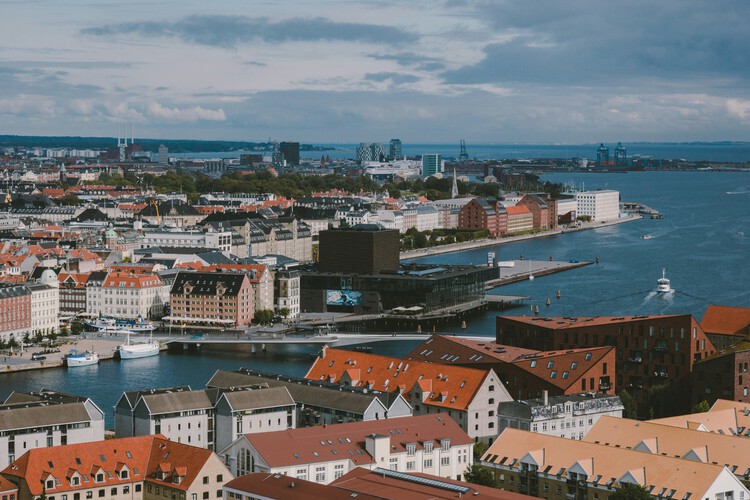
Copenhagen, Superkilen

Can a good public space influence social behavior and make a city more secure? 

In 1969, Philip Zimbardo, professor at the University of Stanford, performed a social psychological experiment. He placed an unlicensed car with a lifted hood in a neglected street in The Bronx, New York, and another similar car in a wealthy neighborhood of Palo Alto, . The car in The Bronx was attacked in less than ten minutes, its apparent state of abandonment enabling the looting. The car in Palo Alto, however, remained untouched for more than a week.

Zimbardo then took his experiment one step further and broke a window of the car in Palo Alto. Almost immediately, passersby began to take things out of the car and within a few hours, the car had been completely dismantled. In both cases, many of the looters did not appear to be dangerous people. This experiment lead Harvard Professors George Kelling and James Wilson to develop the Broken Windows Theory in 1982: “If a broken window is left without repair, people will come to the conclusion that no one cares about it and that there is no one watching it. Then more windows will be broken and the lack of control will spread from the buildings to the streets, sending a signal that anything goes and that there is no authority.”
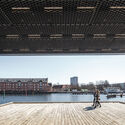
Read more about designing safer after the break…

Our Ideal City? Seen through the eyes of the Pacific West Coast.

View of via Flickr user Shootyoureyeout

As most New Yorkers know, people are willing to shell out a hefty sum to live in a place where work and play are right around the corner from each other.  But as the article by Ken Layne in The Awl points out, the west coast is a somewhat different place.  UNLIKE , which is crowded with restaurants, bars, and entertainment, as well as offices, design firms and businesses; Silicon Valley, which caters to programmers and tech companies that hire at $100k a year, offers few of the amenities that a nearby town like San Francisco does.  So, Layne concludes, residents are willing to spend hours of their day  making their way into the fortressed office parks of Silicon Valley, flanked by parking lots and boulevards, just to have a cultural reprieve to call home.


TEDx: Who will run the world for the next 100 years? / Desmond Wheatley

Who will run the world for the next 100 years? Envision Solar President and CEO argues that it will be whoever has abundant sources of power. That is constructive power, rather than destructive power, which is essential to run the information and technology industries that our world is entirely dependent on. Additionally, Wheatley states that energy equals . And, with less than 1% of the world’s fresh available for use, desalination is becoming an increasingly plausible solution. The only problem now is that energy is expensive. But, once cities have the will to switch over to renewables, that will no longer be an issue. Could you imagine San Diego as an net exporter of ? Desmond Wheatley can.