What Does San Francisco’s New Apple Store Say About Commercial Architecture?

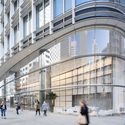
This past May, Apple filed plans to close its existing flagship retail store at 1 Stockton Street in San Francisco and move it three blocks north to one of the city’s most popular spots: Union Square. This plan was met with enthusiasm from city officials until they realized that Apple, and the store’s architects at Foster + Partners, were disregarding a beloved bronze folk art fountain by San Francisco sculptor Ruth Asawa that currently occupies the site. Many have also criticized the store’s design for being a characterless box of metal and glass that contributes nothing unique to the local landscape, raising awareness of a commercial architecture defined more by trademark and less by its surroundings.
More on Apple’s proposal in San Francisco and the problems of trademarked design after the break.
Facades+ Performance Workshop

Presented by The Architect’s Newspaper and enclos, Mode Lab recently announced their upcoming Facades+ Performance Symposium in San Francisco taking place July11-12. The event consists of hands-on instruction by industry experts in a small, one-on-one, classroom setting. These workshops will provide professionals and academics with the skills and knowledge to work with cutting edge technologies in a fast-paced and intensive environment. The workshop will explore the use of Grasshopper, Firefly and Arduino as creative and technical tools in the design, simulation and prototyping of intelligent building skins. For more information, please visit here.
280 Freeway Competition

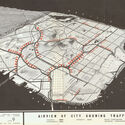
This past spring, Mayor Ed Lee announced an exploration of the potential of removing Highway 280 north of 16th Street in San Francisco. Presented by the Center for Architecture and Design + the Seed Fund, and co-sponsored by AIA San Francisco, the 280 Freeway Competition asks entrants to create hypothetical project designs for space in and around Highway 280. Open to architects, designers, planners, students, artists, landscape architects, and academics, participants are welcome to submit concepts that explore any aspect of the transformative opportunities introduced by the freeway removal. Entry is free, and up to $10,000 in prizes will be awarded. The registration and submission deadline is July 31. For more information, please visit here.
Architecture at Zero 2013 Competition

Open to students and professionals worldwide, the Architecture at Zero 2013 competition is challenging participants to create a design for a new, roughly 150 unit mixed-use residential apartment building located in the Tenderloin neighborhood in San Francisco, California. With the aim of being as close to zero net energy as possible, the building must be a mix of affordable and market rate housing units and include a full neighborhood-serving grocery store on the ground level. The competition is presented by Pacific Gas and Electric Company (PG&E) and AIA San Francisco, in partnership with the Tenderloin Neighborhood Development Corporation (TNDC). Submissions are due October 1. To register, and for more information, please visit here.
Update: Golden State Warriors Stadium / Snøhetta + AECOM

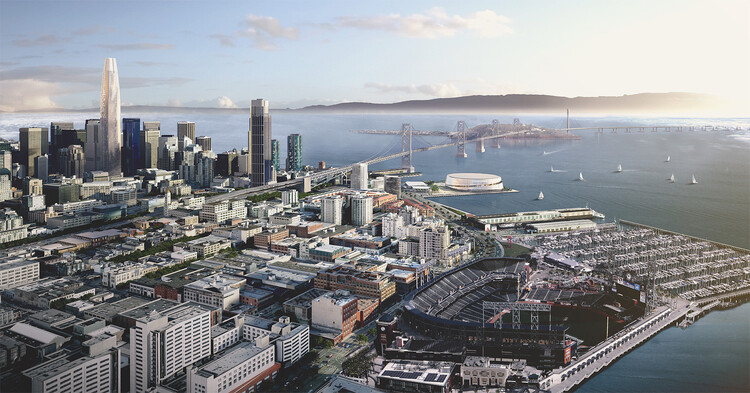
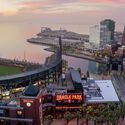
Snøhetta and AECOM have released updated renderings of the Golden State Warriors’ Stadium, which is scheduled to debut on a preeminent San Francisco waterfront site for the 2017-18 NBA basketball season. Located on Piers 30-32, just walking distance from the downtown Financial District and easily accessed by a variety of public transportation, the 728,000 square foot arena will please the masses with its expansive open space, Bay Bridge views, and amenities. Not only will the 125-foot, disk-shaped stadium cater to Warriors’ needs, but it will also provide 90,000 square feet of retail space, ferry and cruise ship access, along with a waterside fire station. In addition, the 18,000-seat venue will also accommodate for music concerts, conventions and other cultural events.
The Presidio Trust of San Francisco Announces 3 Finalists for Cultural Hub Competition

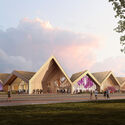
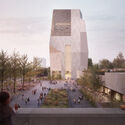
San Francisco is planning a new cultural facility on the former commissary of the military base that has been turned into a national park and has announced three finalists in its competition held by the Presidio Trust, according to news outlet SFGate. The 92,000 square-foot building is part of the Golden Gate National Recreation Area and has an ambitious future that will be developed on this unique location. The three finalists have diverse agendas that range from turning the future cultural center into a performance and exhibition space to an institute that focuses on sustainability issues. The Presidio Trust is currently laying out guidelines in the next step of the competition that will likely be due in the fall. The trust also plans to engage the public with a to-be-scheduled forum in June that will host presentations by the finalists.
Join us after the break for a look at the three finalists.
Transbay Transit Center in San Francisco / Pelli Clarke Pelli

The revamped Transbay Transit Center in downtown San Francisco broke ground earlier this week, a 1.5 million square foot development that will be part transportation hub, part public park and urban space, and part office and retail establishments. The massive undertaking, designed by renowned architecture firm Pelli Clarke Pelli will bring together 11 systems of local and national transportation, serving 45 million people per year. In addition to securing access to myriad transit lines, the project will also provide downtown San Francisco with a 5.4-acre rooftop park, designed by PWP Landscape Architecture, along with numerous cultural programs.
The project is budgeted at $4.2 billion and is projected for completion in 2017. It is funded in part by the construction of a 1,070-foot tower that is adjacent to the Transbay Transity Center, which is also designed by Pelli Clarke Pelli and slated to be the tallest tower in San Francisco. The tower will secure 60 stories of office space and will contribute to the projected $87 billion of revenue through 2030.
Join us after the break for more details on this project.
A Conversation on Firm Culture with Carole Wedge and Jessica Lane

As part of AIA San Francisco‘s continuous effort to highlight women in architecture and better understand the imbalance of gender in the profession, they are hosting two great women for a conversation on firm culture, leadership and mentorship which will take place March 19th from 6:00pm-8:00pm PST. Carole Wedge, FAIA - Shepley Bulfinch‘s first female President in its 130 year history- will talk with emerging designer Jessica Lane of EHDD to discuss Carole’s start at Shepley Bulfinch, in 1986, working in the mailroom as a co-op architecture student at the Boston Architectural Center, as well as her appointment, in 2004, as president. For more information, please visit here.
Video: Bridge of Light
The NY Times published this amazing video of a spectacular art installation on the Oakland-San Francisco Bay Bridge. Thousands of computer controlled LED lights can be seen during the night with this fantastic display. Enjoy!
Ray and Dagmar Dolby Regeneration Medicine Building / Rafael Viñoly Architects with SmithGroupJJR

Architects: Rafael Viñoly Architects with SmithGroupJJR
Location: San Francisco, California, United States of America
Architect In Charge: Rafael Viñoly
Area: 6,364 sqm
Year: 2010
Photographs: Bruce Damonte
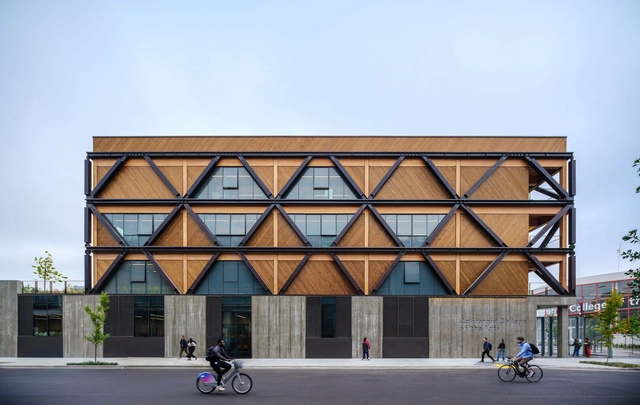
College Track / Turnbull Griffin Haesloop Architects

Architects: Turnbull Griffin Haesloop Architects
Location: San Francisco, CA, USA
Project Team: Eric Haesloop, Stefan Hastrup, Jerome Christensen
Area: 13,800 sq ft
Year: 2012
Photographs: David Wakely
San Francisco Paves the Road to Zero Waste

Approaching zero-waste is a matter of changing the way our culture thinks about use and reuse. It’s not an impossible task, and San Francisco is leading the march to establish a feasible means of enacting public policy, structuring programs and educating the public on what it means to be “zero-waste”. With a goal set for 2020, the Bay City hopes to keep 100% of its waste out of landfills. Mayor Ed Lee estimates that the leading waste management company “Recology” is diverting nearly 80% of trash from landfills to be recycled or turned into compost. This begins with a public policy that sets a standard and gains traction as citizens embrace the goals of the city. Support programs reinforce these guidelines that eventually become habits and a cultural response to treating our environment.
Read on after the break for more on San Francisco’s road to “zero-waste”.
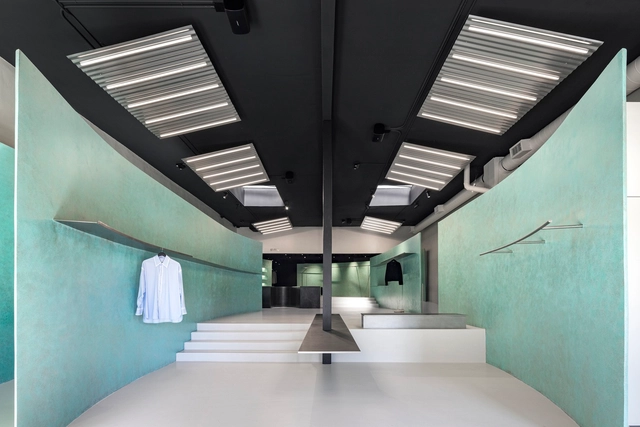
Aesop Store in Fillmore Street / NADAAA

Architects: NADAAA
Location: San Francisco, USA
Principal In Charge: Dan Gallagher
Design Principals: Nader Tehrani, Katherine Faulkner
Project Manager: John Chow
Team: Jonathan Palazzolo, Parke MacDowell
Project Year: 2012
Photography: Juliana Sohn
Update: SFMOMA Expansion / Snøhetta

The San Francisco Museum of Modern Art (SFMOMA) has announced further details of its 235,000-square-foot building expansion that will support the museum’s increasing role in city life and the international art community. Designed by Norway-based practice Snøhetta, in collaboration with local firm EHDD, the 10-story concrete structure will compliment SFMOMA’s original, Mario Botta-designed, red-brick museum by offering more free-to-the-public space, expanded education programs and an abundance of flexible performance-based gallery space.
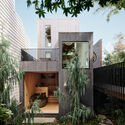
Construction will commence this Summer and is expected to reopen in early 2016.
More after the break…
Our Ideal City? Seen through the eyes of the Pacific West Coast.

As most New Yorkers know, people are willing to shell out a hefty sum to live in a place where work and play are right around the corner from each other. But as the article by Ken Layne in The Awl points out, the west coast is a somewhat different place. UNLIKE New York City, which is crowded with restaurants, bars, and entertainment, as well as offices, design firms and businesses; Silicon Valley, which caters to programmers and tech companies that hire at $100k a year, offers few of the amenities that a nearby town like San Francisco does. So, Layne concludes, residents are willing to spend hours of their day making their way into the fortressed office parks of Silicon Valley, flanked by parking lots and boulevards, just to have a cultural reprieve to call home.
SFMoMA: Lebbeus Woods, Architect

SFMoMA will highlight the legacy of Lebbeus Woods in an exhibition that will run from February 16 through June 2, 2013. It will include 75 works from the past 35 years of his career. Lebbeus Woods is often categorized as an architect, but always as an artist and visionary. His career has been filled with imaginative leaps through the concepts of space and form, exploring politics, society, ethics and the human condition. He was a great influence on architects, designers, filmmakers, writers and artists. The exhibition will celebrate his untimely death late last year and the breadth of influence that his work had on the art and design community.
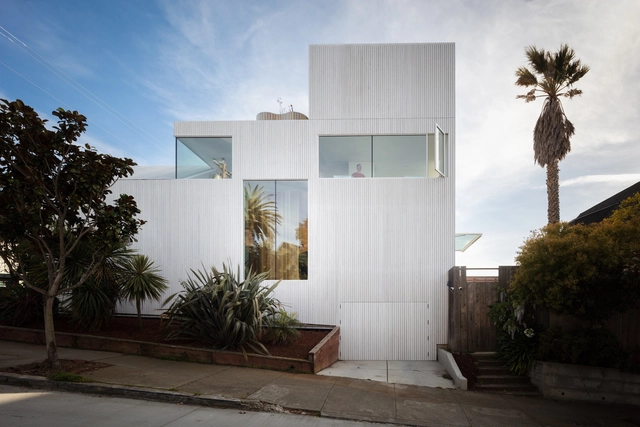
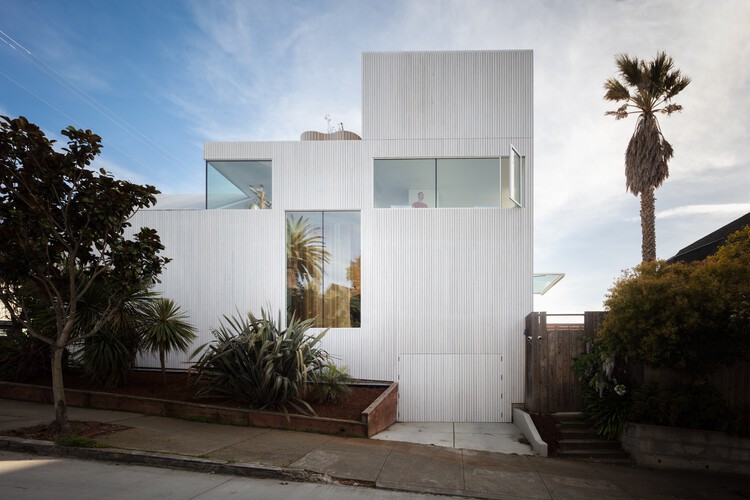
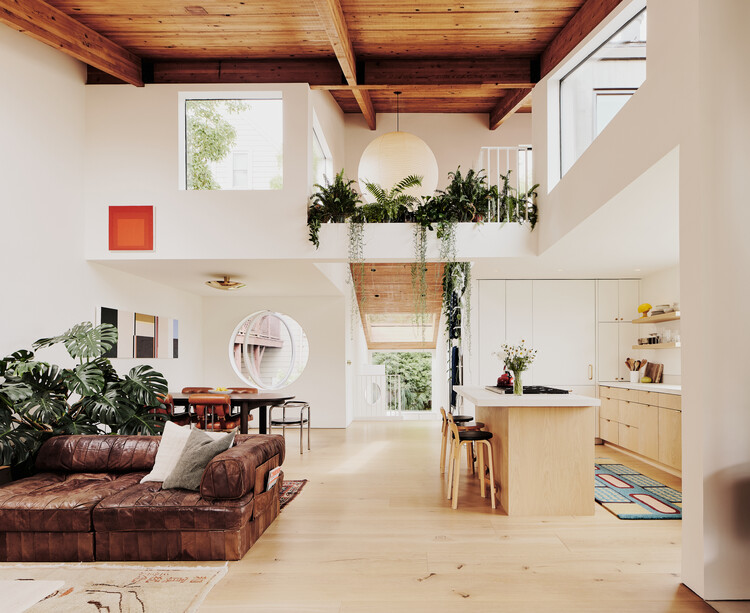
Flip House / Fougeron Architecture

Architects: Fougeron Architecture
Location: San Francisco, CA, USA
Year: 2012
Photographs: Joe Fletcher
UPDATE: Complications for Snohetta and Aecom’s Warriors’ Arena

Complications could be on the rise for Snøhetta and AECOM, who were recently announced as the Golden State Warriors’ architects of choice to design their new sports and entertainment complex on the San Francisco waterfront. Despite the complications, however, the architects still have time to execute the hoped-for ‘slam dunk’. More information after the break.
Fillmore Park / David Baker + Partners Architects

Architects: David Baker + Partners Architects
Location: San Francisco, United States
Design Team: David Baker, Peter MacKenzie, Ian Dunn
Site Area: 26,708 sqf
Landscape Architects: Fletcher Studio
Client: Michael Simmons Property Development
Area: 44,330 sqf
Year: 2012
Photographs: Bruce Damonte
Golden State Warriors Stadium / Snøhetta + AECOM

The Golden State Warriors recently announced that Snøhetta and AECOM have been selected as the architecture team to design the Warriors’ new sports and entertainment complex on the San Francisco waterfront. Currently in the final stages of the agreement, the new stadium will be a true centerpiece in hosting the Bay Area’s NBA basketball team, as well as provide a great venue concerts, cultural events and conventions, which are all prominent events the city currently cannot accommodate. More images of the architects’ design can be viewed after the break.