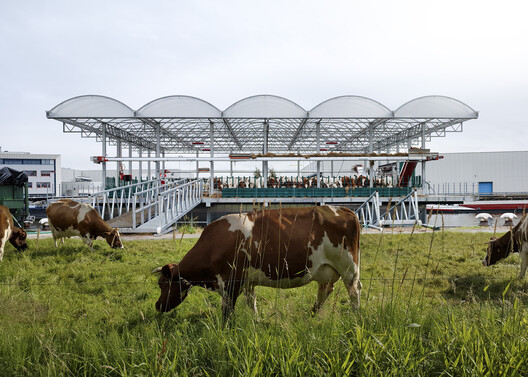
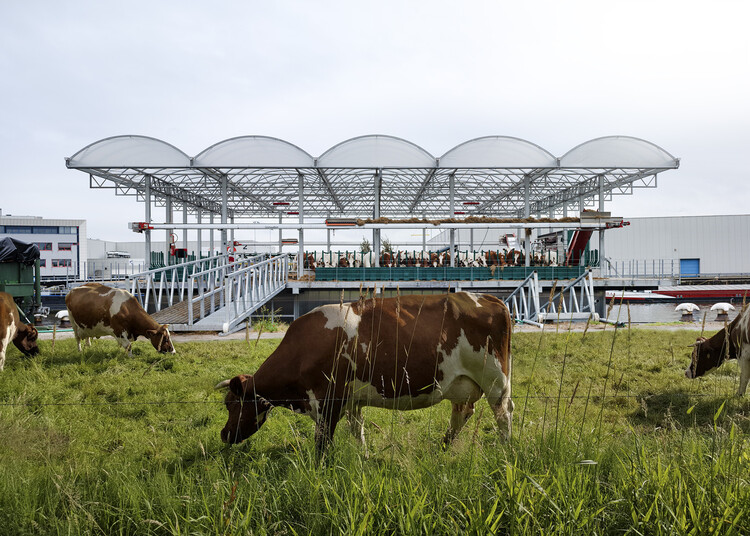
There is a standard way of telling the history of architecture and food. It begins with the human decision to cultivate, to store, to distribute, to consume, and ends with the building that decision produced. In this version of events, food is the occasion and architecture is the response.
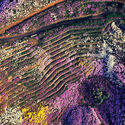
But what if the story runs differently? What if the tomato built Almería? What if the cod redesigned the North Atlantic? What if the soybean is, at this moment, constructing a port in Santos and demolishing a forest in the Cerrado simultaneously, and the architect has simply not been told? These are descriptions of processes already complete, or well underway, that have produced some of the most spatially consequential contemporary landscapes. Much of the built environment is shaped by the pressures, metabolisms, and territorial ambitions of what we eat. Architecture, in this, is often less a project than a consequence, and the discipline has been telling its own story from the wrong end.
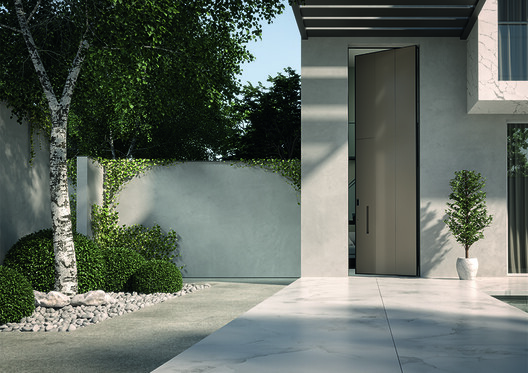
Di.Big pivot security door. Image Courtesy of Porte Blindate
What transforms a space of living into a home? Beyond ownership or shelter, a home is tied to a quieter sense of certainty: the feeling that one can retreat, rest, and momentarily step away from the world's unpredictability. Homes are where routines accumulate, memories settle into spaces and objects, and where personal identity takes physical form through occupation and everyday rituals. Yet this sense of belonging depends on another condition that often goes unnoticed until disrupted: security. To feel "at home" implies a condition of comfort and stability. When domestic environments fail to provide this, spaces designed for rest become sources of unease, subtly affecting routines and well-being.
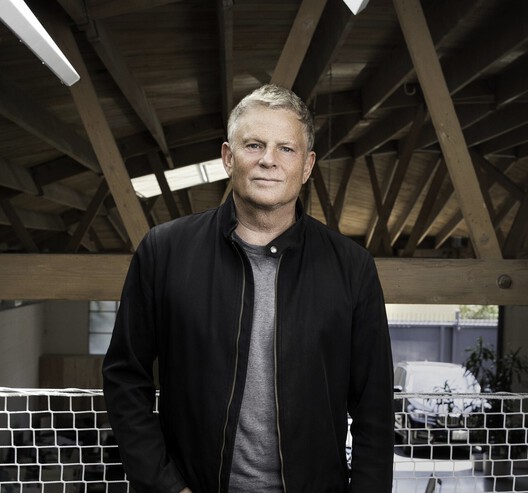
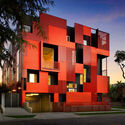
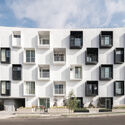
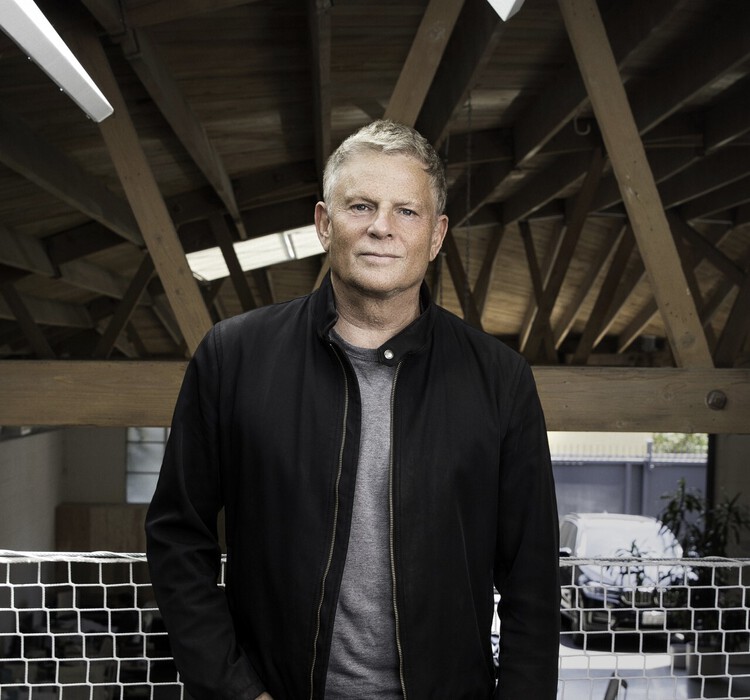
Lorcan O'Herlihy, the Irish-born architect, educator, and founder of Los Angeles-based Lorcan O'Herlihy Architects (LOHA), has died at the age of 66. His death was confirmed by the firm on June 14, 2026. Over a career spanning more than three decades, O'Herlihy became known for advancing an architectural practice centered on housing, urbanism, and social engagement, helping shape conversations around density, affordability, and the civic role of design in contemporary cities.
Contemporary architecture has learned to celebrate living matter. Mycelium panels, algae systems, living walls, life is now welcomed into buildings, framed as innovation. Yet the same discipline that celebrates these organisms treats mold as contamination. Both are biological. Both respond to moisture, temperature, and material conditions. The difference is not scientific. It is about which forms of life architecture is willing to accept, and which it prefers to remove.
Mold is not limited to abandoned buildings or poorly maintained interiors. It appears in homes, schools, offices, historic structures, and new construction, across different climates and contexts. This makes it harder to ignore as a minor or isolated problem. If mold keeps returning, what is it telling us about the environments buildings create?
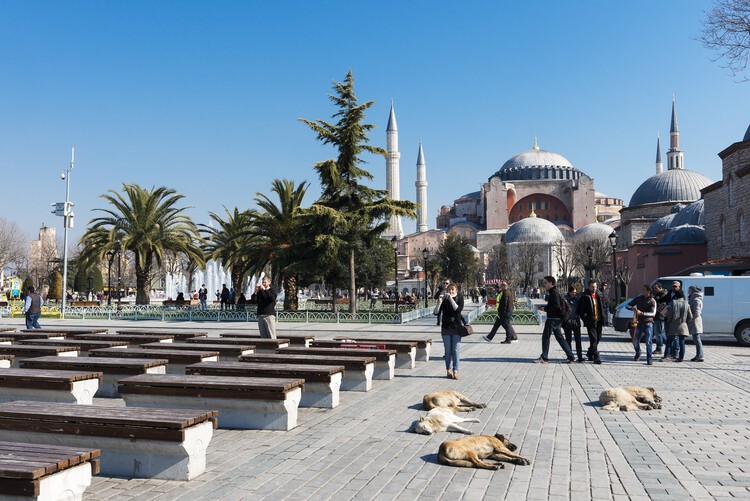
Stray dogs in Istanbul. Image by istanbulphotos, via Shutterstock
Architecture continues to draw cities as though humans occupy them alone. Plans trace circulation routes, zoning maps assign functions, and buildings are evaluated according to human comfort, safety, and efficiency. Walking through cities across India and Southwest Asia reveals something much more complex. Dogs sleep beneath market stalls, monkeys move across rooftops, birds nest in temple towers and mosque façades, and insects pollinate urban landscapes hidden in plain sight. These species are woven into daily urban life as consistently as human occupants. Streets, courtyards, roofs, drainage systems, markets, and vacant lots are already occupied by multiple species simultaneously. Architectural thinking has been slower to account for this reality.
Produced on an industrial scale since the 19th century, steel has profoundly transformed the way we build. The combination of iron and small amounts of carbon has given rise to a material capable of combining mechanical strength, relative lightness, and constructive precision, making possible some of the major achievements of modern engineering and architecture. From skyscrapers and bridges to facades, roofs, and industrialized systems, few materials have had such a significant impact on shaping the built environment.
However, the quality of a material cannot be measured solely by its initial structural performance or its appearance at the time of delivery. Although buildings are often evaluated when they are completed, their true performance only reveals itself over time. Photographs record impeccable facades, newly installed surfaces, and spaces ready for use. The following decades, however, expose these constructions to solar radiation, rain, humidity, salinity, air pollution, and thermal variations. It is in this continuous contact with the environment that material choices are effectively put to the test.
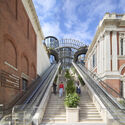
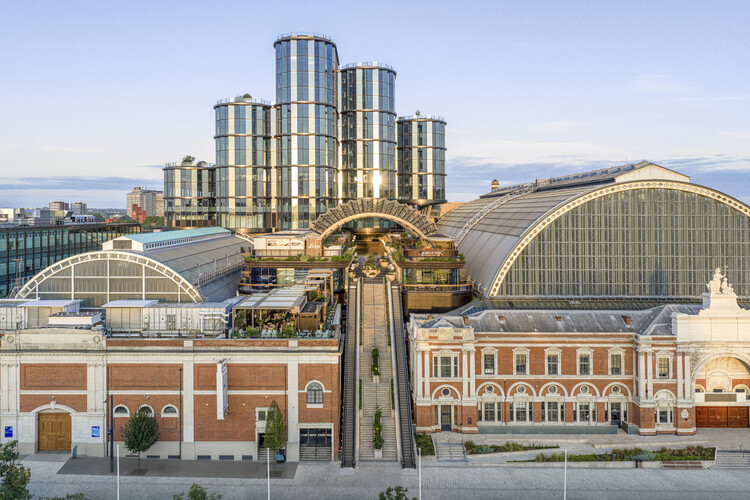
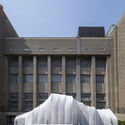
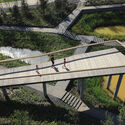
Heatherwick Studio and SPPARC have unveiled the first phase of the transformation of Olympia, a historic exhibition complex in West London, into a mixed-use cultural destination. Originally opened in 1886, the Victorian landmark is undergoing a large-scale redevelopment that aims to reconnect the 14-acre site with the surrounding city through new public spaces, cultural venues, hospitality programs, and commercial facilities. The opening is marked by the completion of a new public canopy, which introduces elevated pedestrian circulation and serves as a gateway into the broader master plan while framing new views across Olympia's historic roofscape. The intervention forms part of a broader master plan that will be implemented through 2026 and 2027.
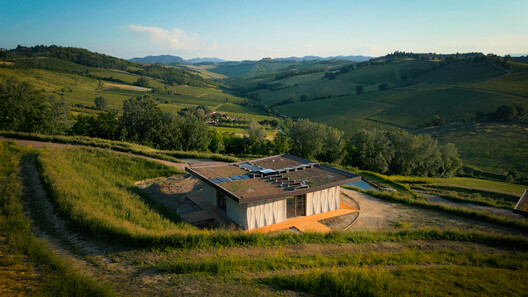
Shamballa: Laboratory for Sustainable Living. Itaca, 2026. Image Courtesy of WASP
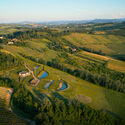
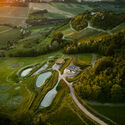
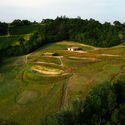
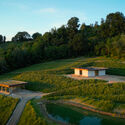
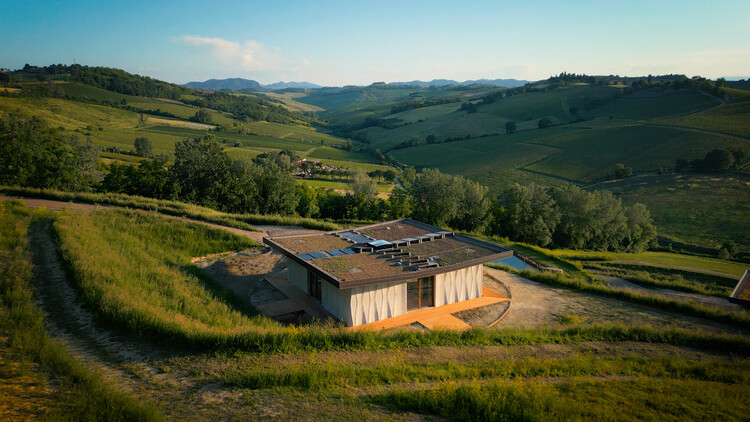
Shamballa, an 8-hectare open-air laboratory and research site dedicated to sustainable living and advanced architectural 3D printing, was inaugurated on June 8, 2026, in the hills of the Emilia-Romagna region in northern Italy. The project is a collaboration between WASP, a 3D printing technology company, and Olfattiva, an aromatherapy and botanical perfumery company, hosting a makers laboratory, a medicinal botanical garden, and "Itaca," a self-sufficient farm built using 3D printing. The building was designed as a model for 3D-printed construction, representing a certified and replicable structure. The outdoor areas host research and development centers, forming an experimental "ecosystem" to develop new ideas in bio-construction and sustainable living, along with automated gardens, rainwater harvesting systems, and initiatives focused on micro circular economies.
Concept : Living and Working on the Moon. Image Courtesy of NASA
After Artemis II's return to Earth, NASA unveiled a new phased plan to establish a Moon Base. Although most of the media's attention went to rockets, budgets, and geopolitical competition, a quieter question was lingering for architects in the background: How can a human being actually live on the surface of the Moon, and for how long? The establishment of a permanent human presence on the Moon marks a fundamental shift in space exploration that requires a new architectural paradigm. In their presentation, NASA officials suggested the strategy would drift away from highly constrained, vehicle-dependent environments toward autonomous, site-adaptive, and eventually permanently habitable structures.
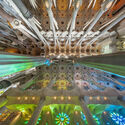
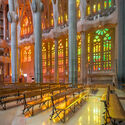
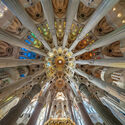
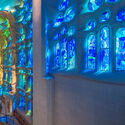
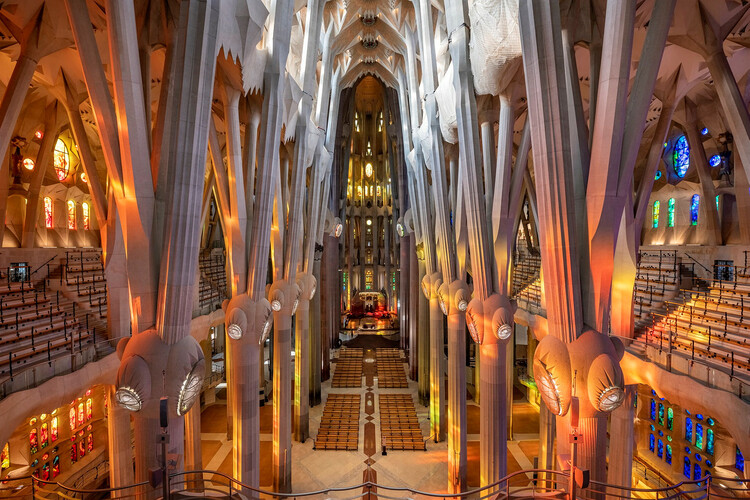
It is afternoon in the summer, and the nave of the Sagrada Família is saturated with warm colors. Shafts of amber and crimson sweep across the stone floor, shift as a cloud passes over Barcelona, then deepen again. Around you, visitors slow without quite realizing it. Some raise their phones — not to capture the architecture, but to step into the light itself, positioning themselves in a pool of orange or gold as if the colours were something you could wear.
They are, without knowing it, doing exactly what Gaudí intended: surrendering, however briefly, to the sensation of being bathed in something larger than themselves.
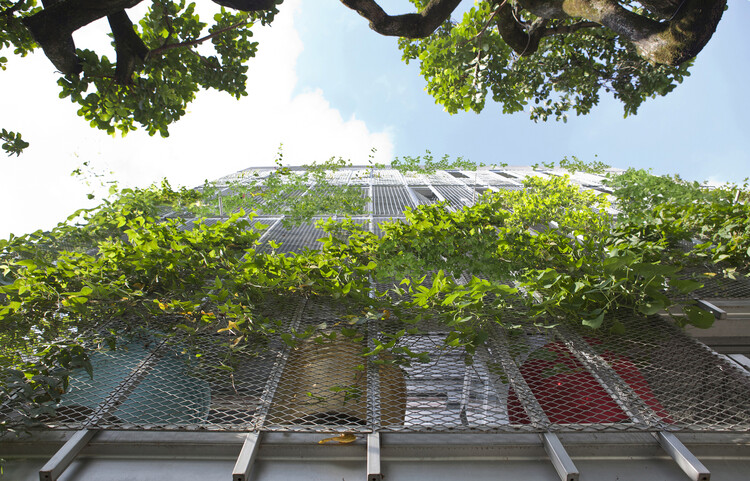
When we think of façades, we rarely think of them as habitats. We see them as the elements that separate interior from exterior, regulate temperature, reduce noise, and protect buildings from external conditions. They give architecture its visual language, but they are also expected to keep the outside world at a distance. In doing so, façades have often been understood as barriers: surfaces that define where human comfort begins and where the environment is meant to remain outside.
But the outside of a building is never empty. For centuries, architecture has unintentionally created opportunities for other forms of life. Birds nested beneath roof tiles, insects occupied cracks in masonry walls, and mosses or plants took root along ledges, gutters, and rough stone surfaces. These conditions were rarely designed with other species in mind, but they created small opportunities for life to inhabit them.
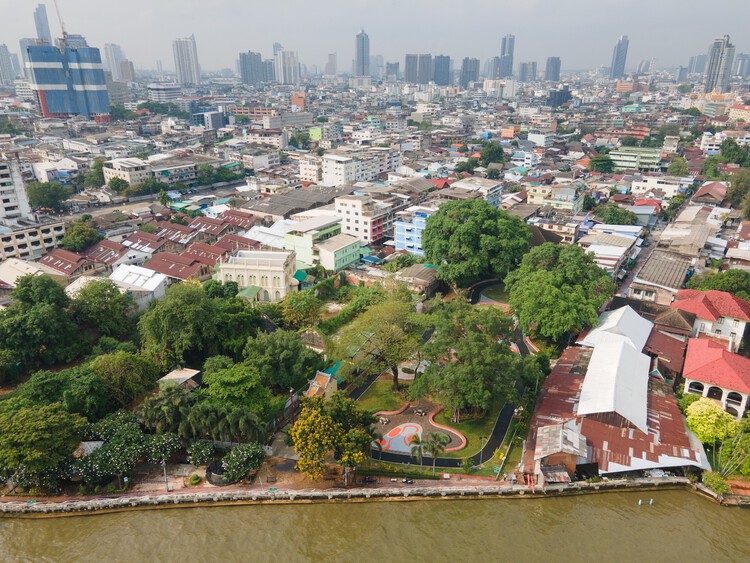
"By 2050, almost every child in the world — nearly 2.2 billion children — will be exposed to frequent heat waves." UNICEF's warning is often read as a public health forecast, but it is also a challenge to architecture and the way cities are built. As extreme heat intensifies across Asia, Europe, and beyond, thermal comfort should not be reduced to merely an indoor service delivered by machines. Air-conditioning has become a life-support system for many cities, especially in dense, humid, and rapidly urbanizing regions. Yet to rely on it as the default answer is to treat heat as something that can simply be moved elsewhere (and in the process generating extra heat) — expelled from interiors into streets, service alleys, energy grids, and the atmosphere. Its expansion increases energy demand, produces waste heat, and reinforces unequal access to comfort.
Heat, however, does not stop at the human body. It reorganizes the wider urban ecosystem: trees struggle with compacted soil and radiant paving; birds and insects lose habitat when planting is reduced to decorative greenery; aquatic systems warm, microbial life shifts, and materials absorb and release heat long after the sun has set. Heat is not simply a climatic problem to be escaped indoors. It is an urban actor that reshapes public space, labor, mobility, planting, material choices, and the fragile relationships between human and nonhuman life.
Over the past decade, the definition of a performing arts venue has shifted. No longer singular-purpose destinations, today's cultural facilities are expected to operate as flexible, revenue-generating, community-centered ecosystems. This evolution has challenged architects, operators, and owners to rethink not just how venues are designed, but how they function over time.
Unlike many other activities that now take place entirely in digital environments, the final result of work in the architecture, engineering, and construction industry does not remain on a screen. Files become buildings, models transform into structures, and decisions made during the design process ultimately shape streets, neighborhoods, and entire cities. A building often lasts for decades, sometimes centuries, and the impacts of the choices made during its development extend far beyond the moment of delivery, influencing the daily lives of thousands of people.
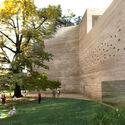
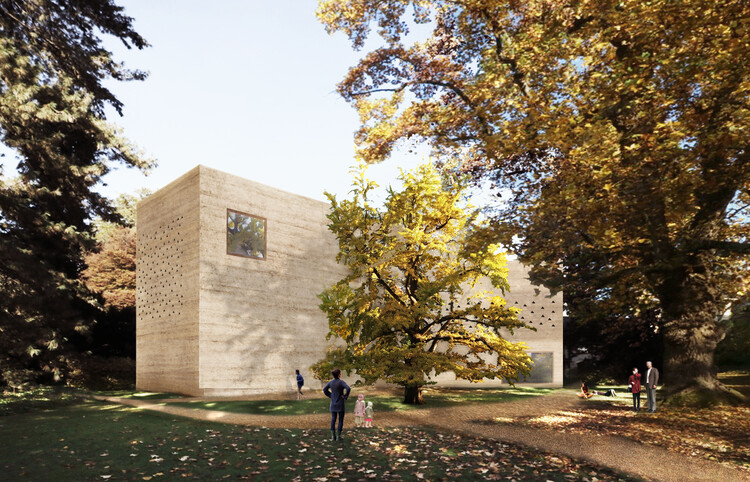
The extension project of the Fondation Beyeler with Atelier Peter Zumthor New museum building, view from Iselin-Weber Park. Image Courtesy of Atelier Peter Zumthor
The Fondation Beyeler in Riehen, near Basel, will begin opening its expanded campus to the public this autumn, with the full ensemble set to be accessible in January 2027. The project brings together the museum building designed by Renzo Piano Building Workshop and opened in 1997 with a series of new additions by Peter Zumthor, as well as several repurposed historic structures. Through the expansion, the institution increases its exhibition capacity while extending its grounds to include a larger public landscape. The development represents a new phase for the Fondation Beyeler, building on its focus on the relationship between art, architecture, and nature.
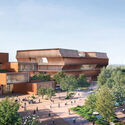
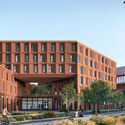
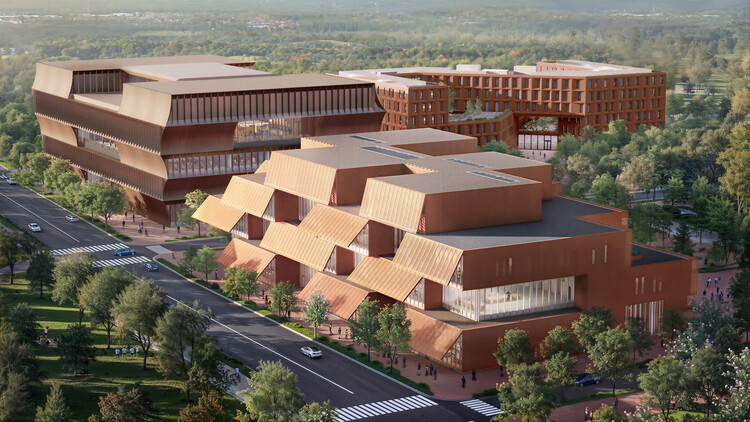
BIG–Bjarke Ingels Group was selected to design the campus of a new STEM university in Arkansas, United States, on a site located near Bentonville's downtown, formerly home to Walmart's headquarters. The project comprises three buildings occupying two city blocks and was designed in collaboration with Polk Stanley Wilcox Architects, who will serve as the Architect of Record. The campus comprises around 422,000 square feet (nearly 39,200 square meters), including green spaces, public squares, an academic building, a makerspace, and a student residence. While the project was recently unveiled, the university intends to welcome its first class of students in 2029.
The context of the ongoing war marks Ukraine's place in the international consciousness. Architecture, however, most often transcends the span of a human life and can therefore be a tool for imagining the future. The practice of architectural design, whether speculative, conceptual, or practical, serves as a means of bringing to life ways of living and interacting beyond our current realities. In this selection of conceptual projects submitted by ArchDaily readers, we see material, spatial, and symbolic strategies that seek to address contemporary contexts in the residential, educational, and commercial sectors.
As the line of conflict has been relatively static since late 2023, Ukrainian cities continue to be subject to new architectural and urban development projects. In this article, we have compiled a selection of unbuilt projects in the cities of Vinnytsia, Lviv, and Kyiv. The selection includes residential, commercial, and mixed-use architectural designs, as well as an educational complex. Two residential projects have also been designed as prototypes without a specific location, as a potential response to the loss of infrastructure and unstable conditions in the region.
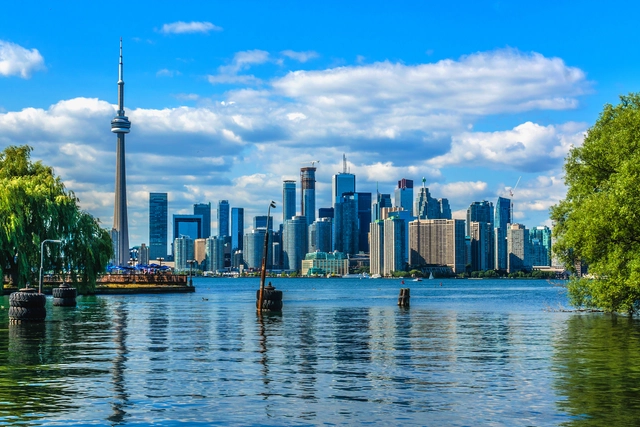
As one of the host cities of the 2026 FIFA World Cup, Toronto is preparing to welcome fans from across the globe. The Canadian city, the fourth largest in North America, has become a cosmopolitan center with its renowned business district and cultural venues that come alive during the summer and early fall nights. Toronto offers a beautifully diverse urban setting, with shimmering high-rises and smaller brick houses, intertwining residential and vibrant commercial areas, public parks, and even beaches. All become part of the city's striking skyline, crowned by the iconic CN Tower.
Toronto's ongoing sprawl and constant urban development are evident as new projects spread through the city, weaving themselves into existing buildings, from 19th-century landmarks such as the Gooderham Building to major contemporary works like the Aga Khan Museum. These new constructions include increasing adaptive reuse and retrofitted projects throughout the city as more efforts and incentives are provided to reduce carbon emissions.
Sunlight House / HEIN-TROY Architects. Image Courtesy of VELUX
Can architecture shape comfort before mechanical systems enter the equation? As buildings account for nearly 40% of global energy consumption and people spend close to 90% of their time indoors, thermal performance has become one of architecture's most urgent concerns. Yet despite often being associated with insulation values, energy ratings, or mechanical systems, thermal performance begins with spatial decisions made long before technical equipment is introduced. Orientation, airflow, daylight, and the placement of openings all influence how a building absorbs, retains, and releases heat throughout the day.
Thermal performance is not only about reducing energy demand but also about maintaining comfortable indoor conditions in response to climate. Closely tied to thermal comfort—the way occupants experience temperature, airflow, humidity, and radiant heat—it influences health, well-being, and productivity as much as it does operational efficiency. Research suggests that healthy indoor environments can improve learning ability and productivity by up to 15%, reinforcing the growing relationship among environmental performance, resilience, and space quality.
Covering a broad array of subjects, this week's headline stories have reflected the wide scope of architecture's practice: its potential to respond to the climate crisis, the construction and renovation of cultural infrastructure around the world, and events that promote contemporary disciplinary reflection. This does not preclude questions about the contradiction between the technical and creative skills demanded by the discipline and the role it has come to occupy in today's market. Alongside these reflections, this week we feature projects that reinforce architecture's cultural significance in preserving knowledge, hosting collective entertainment, and supporting new forms of living: a comic book museum in Taiwan, a membership club for families in London, and the renovation of a landmark stadium in Riyadh.
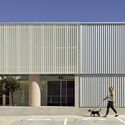
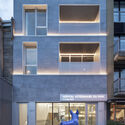
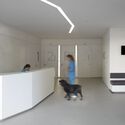
In 2025, the global animal health market was valued at approximately $70 billion, and projections suggest it could double by 2033. Behind this figure, however, lies a quieter transformation of the built environment, exemplified by the veterinary hospital. A building type that for decades occupied the back rooms of improvised clinics and pet shops is increasingly developing its own architectural language and identity. It is the spatial consolidation of a bond that has endured for more than 15,000 years.
Between the moment a material is specified in a project and the moment it is installed, there is an invisible layer that plays a decisive role in the final outcome: fabrication, logistics, and coordination. These factors shape timelines and costs, but more critically, determine whether the original design intent is preserved or diluted in execution. Cladding systems, especially those that function as visible and expressive components of the building envelope, make this gap particularly evident, as they are the most outward-facing layer of a project.
Selecting a cladding system is never a purely aesthetic decision. It activates a chain of dependencies: profile availability, fixing systems, tolerances, sequencing, and compliance with local codes. When elements are misaligned, the fallout is rarely subtle. Integrated cladding systems—those that anticipate assembly as much as appearance—tend to close this gap, embedding coordination into their logic and reducing the need for on-site improvisation.