The Technosphere

ArchDaily Topic

A curated selection of articles, interviews, and essays on architecture at the intersection of technology, ecology, and planetary systems.

Mapping the Technosphere: Architecture as an Interface Between Systems and Territories
Mapping the Technosphere: Architecture as an Interface Between Systems and Territories

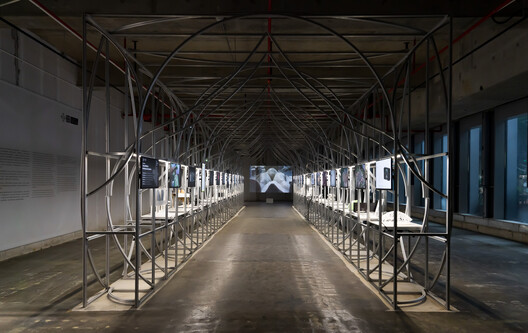
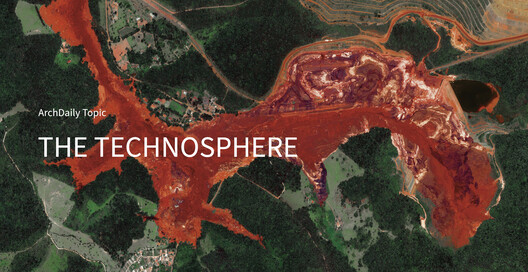
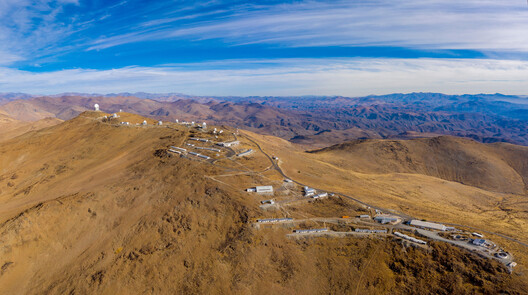
Architecture can no longer be conceived as an isolated object, detached from the technical networks that sustain contemporary life — a condition that calls for new readings and approaches. It is within this context that, in March, ArchDaily’s monthly theme focused on The Technosphere, a topic both broad and inherently complex. Drawing on the concept of the technosphere, coined by geoscientist Peter Haff to describe the totality of human-made artifacts, a landscape emerges in which contemporary life is deeply intertwined with machines, data, and energy networks.

Read more »

The Line at a Crossroads: Revisiting NEOM's Vision for a Utopian City

The Line at a Crossroads: Revisiting NEOM's Vision for a Utopian City

In 2023, ArchDaily's editor-in-chief sat down with Tarek Qaddumi, Executive Director of the Line Design at NEOM, at the closing of the Line Exhibition in Riyadh. Qaddumi described a layered, three-dimensional city organized around the idea of a "five-minute sphere" of access: walkable communities stacked vertically, connected by high-speed rail, freed from cars and conventional street infrastructure, and designed to coexist symbiotically with the surrounding natural landscape. It was a compelling vision, and in the context of the moment, it was simultaneously credible and appealing. For architects and urban thinkers grappling with the failures of twentieth-century city-building, the ideas articulated were worth engaging and planning.

Read more »

Unearthing the Ground: Architecture and the Politics of Oil

Unearthing the Ground: Architecture and the Politics of Oil

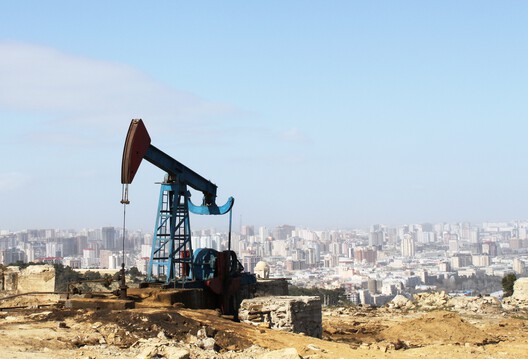
Beneath the ground lies a material that has quietly shaped the architecture of the modern world. Petroleum is rarely discussed within architectural discourse, yet the extraction, circulation, and consumption of oil have profoundly reorganized the spatial logic of territories. Pipelines, refineries, drilling platforms, ports, highways, and petrochemical complexes form a vast infrastructural landscape that sustains contemporary life, composing a dispersed architecture of energy.

Read more »

Logistics Landscapes: The Architecture of the 24-Hour Supply Chain

Logistics Landscapes: The Architecture of the 24-Hour Supply Chain

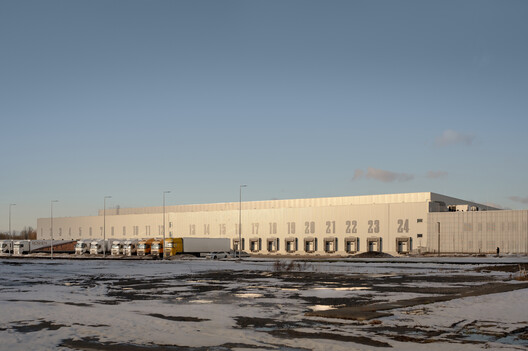
At the edge of most cities, beyond the ring roads and interchanges, a different kind of architecture is taking shape. It is not designed to be seen, visited, or remembered. It does not gather people; it moves things. Inside, thousands of parcels travel continuously, being sorted, lifted, scanned, and dispatched with minimal interruption. These buildings rarely enter architectural discourse, yet they are among the most consequential spaces of our time. The defining typology of the 21st century is increasingly the warehouse.

Read more »

Designing with Living Matter: 5 Installations Using Bio-Based Materials and Digital Fabrication

Designing with Living Matter: 5 Installations Using Bio-Based Materials and Digital Fabrication

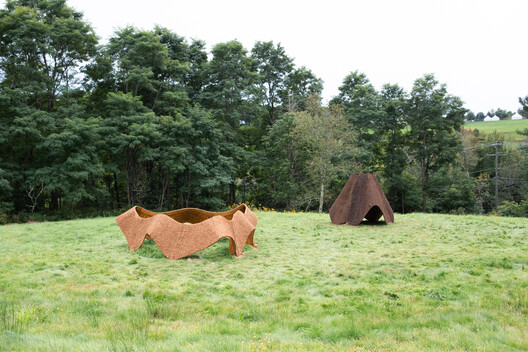
At a time of ecological emergency, architecture cannot be separated from the extractive systems on which it depends. As the technosphere expands, linking material flows, energy consumption, and digital infrastructures, design becomes increasingly entangled in these processes. How can design practice intervene in anthropocentric systems and transform the architectural process and aesthetics through an investigation of material intelligence? More broadly, how does architecture engage with the agency and intelligence of non-human entities to rebalance the environmental burden? 

Read more »

Designing for Obsolescence in an Age of Perpetual Upgrades

Designing for Obsolescence in an Age of Perpetual Upgrades

In the nineteenth century, entire railway networks became obsolete almost overnight, not due to physical deterioration, but because of changes in the technical standards that supported them. The expansion of railroads across Europe and North America adopted different track gauges (the transverse distance between rails), and as a dominant standard gradually emerged, these infrastructures became incompatible with one another. This required large-scale adaptations, conversions, or even complete reconstruction, in what became known as the "Gauge War."

Read more »

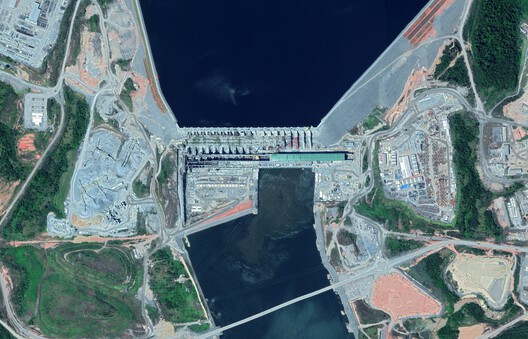
Energy Landscapes: How Infrastructure Reshapes Territory in South America

Energy Landscapes: How Infrastructure Reshapes Territory in South America

Some of the most significant transformations of South American landscapes have been produced not by cities, but by large infrastructures built to extract and distribute natural resources. Mining operations, energy systems, and transport networks have connected remote landscapes to broader economic structures while transforming rural territories and urban settlements throughout the continent. These infrastructures do not simply occupy space; they reorganize it. They have not only supported economic growth but also reconfigured territories in ways that continue to generate political, environmental, and social debate across the continent. From this perspective, territories can be understood not as fixed geographic areas but as socio-ecological systems shaped by cultural, environmental, and political relations, a point emphasized by anthropologist Arturo Escobar in his work on territorial thinking in Latin America.

Read more »

Rethinking Architecture at the Scale of Planetary Systems

Rethinking Architecture at the Scale of Planetary Systems

Architecture has traditionally been described as a discipline concerned with space, form, and material presence. Yet this understanding becomes increasingly limited when confronted with the conditions that shape contemporary construction. Buildings no longer emerge from a stable relationship between site, program, and material. Instead, they are produced within a dense web of technological systems that operate across territorial, ecological, and temporal scales. Energy networks, data infrastructures, extraction processes, and global logistics shape architecture as decisively as climate or urban context.

Read more »

Designing the Sensory City: Architecture, Light Pollution, and Urban Noise

Designing the Sensory City: Architecture, Light Pollution, and Urban Noise

For most of human history, night arrived as a planetary certainty. Darkness spread across landscapes, and the sky revealed thousands of stars. Today, that sky is disappearing. Artificial light spills upward from cities, scattering through the atmosphere and turning night into a permanent haze. Research mapping global sky brightness shows that more than 80 percent of humanity now lives under light-polluted skies, and the Milky Way has vanished from view for over a third of the world's population. The disappearance of dark skies is usually discussed within astronomy, but the sources of that change are deeply embedded in the built environment. Buildings emit light, reflect it through glass façades, and extend illumination far beyond their walls. In the technosphere, the vast system of infrastructures and materials humans have constructed, architecture now shapes both physical space and the sensory conditions surrounding it.

Read more »

From Cloud to Coast: The Physical Cost of AI in Hong Kong’s Borderlands

From Cloud to Coast: The Physical Cost of AI in Hong Kong’s Borderlands

Amid the rapid build-out of data centres and AI economies across the Greater Bay Area—and alongside the celebration of AI as a tool and "author," as featured in 2025 Hong Kong–Shenzhen Bi-City Biennale of Urbanism\Architecture (Hong Kong)—a parallel question becomes unavoidable: how do the planning and construction of AI infrastructure actually begin to shape everyday life? Many of the facilities already built remain intentionally distant from daily experience. The "cloud" may be marketed as immaterial, but its architecture is profoundly physical: high-power, high-heat, service-heavy environments that are often sited in remote or low-density areas to take advantage of lower land costs and to minimize friction with nearby communities. Security and risk management further reinforce this logic. Data centres hold sensitive, privileged information—corporate assets, legal records, government and institutional data—and remoteness becomes part of their operating model, keeping the infrastructures of AI both spatially and socially out of sight.

Read more »

Gateway in Lunar Orbit: Extending Architecture Beyond Earth

Gateway in Lunar Orbit: Extending Architecture Beyond Earth

The concept of the technosphere provides a framework for understanding the scale of human impact on Earth. The term was coined by Peter K. Haff, and it is defined as the global network of human-made artifacts: a physical layer of infrastructure, buildings, vehicles, and machinery that functions alongside the biosphere and atmosphere. Currently estimated at 30 trillion tons, this human-constructed mass is dominated by the built environment. In this context, architecture serves as the primary interface, shaping how technology interacts with local ecologies. However, it seems that soon, the Technosphere will no longer be confined to the terrestrial surface. Through NASA's Artemis program, this network of human-made mass is expanding beyond Earth's atmosphere and is looking to establish new orbital infrastructure that represents the first permanent off-world extension of this man-made system.

Read more »

Facing the Age of Robots? Material Innovation in Architectural Structures

Facing the Age of Robots? Material Innovation in Architectural Structures

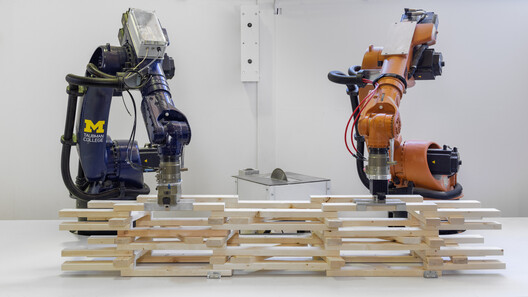
By exploring the art of robotics in construction, advances in architectural technologies are increasingly shaping multiple aspects of human life. From robotic arms and drones to robots that move across large surfaces and even 3D printing robots, their use in construction is accelerating research and the development of new working methods, as well as structural and material experimentation. In collaboration with multiple disciplines and spanning various facets of architecture, the role of robots in the contemporary landscape demonstrates a potential that extends beyond merely automating processes or reducing construction times and costs. This raises the question: Are we building architecture to serve technology, or technology to serve architecture?

Read more »

Making Infrastructure Visible: When Systems Become Architecture

Making Infrastructure Visible: When Systems Become Architecture

For centuries, large-scale infrastructure operated in the background. Ports, power plants, and energy facilities were positioned at the edges of cities, designed primarily for efficiency, and rarely considered part of civic life. Their function was indispensable, yet their architectural presence remained secondary. These structures supported urban growth and global exchange while maintaining a spatial distance from everyday urban experience.

Read more »

Archiving the Technosphere: How Museum Architecture Mediates Human-Made Systems

Archiving the Technosphere: How Museum Architecture Mediates Human-Made Systems

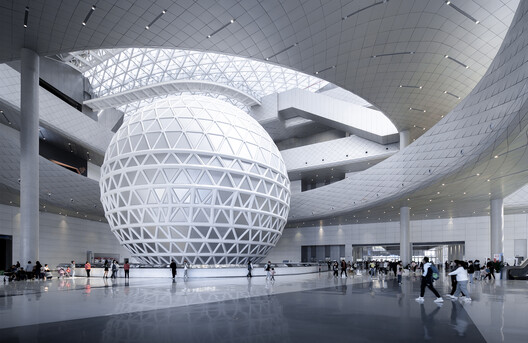
Far from the perception of the exhibition space as a sterile and untouchable, almost sacred place, the contemporary technology museum has emerged as a performative participant in the systems it seeks to document. The architecture of these institutions has become increasingly fluid and bold, often mirroring the velocity and complexity of the systems it houses. They operate as mediators between the human, the ecological, and the technological realms, transforming from encyclopedic warehouses into active educational engines. By spatializing complex scientific data through immersive rooms, these structures make the technological networks of our world accessible, engaging, and tangible.

Read more »

Compute Isn’t Weightless: AI Infrastructure and the Architecture of the City

Compute Isn’t Weightless: AI Infrastructure and the Architecture of the City

As artificial intelligence continues to disrupt sectors of the economy and reshape entire industries, institutions and individuals alike are bracing—and rapidly adapting—to the changes that machines seem to hold over our heads. Yet the more precise pressure is not simply AI altering the way people work and live, but the business models and investment logics of the companies developing these systems: the concentration of capital, the new requirements for compute, the race for compartmentalized talent, and the infrastructural footprint needed to sustain it. In the Greater Bay Area—anchored by Guangzhou, Shenzhen, and Hong Kong—this dynamic is especially pronounced. Government-led initiatives are actively accelerating the industry's growth, with policy and planning mechanisms beginning to translate an ostensibly intangible field into physical form: zoning updates, earmarked land, and the emergence of AI-oriented building types, from research laboratories to large-scale data centers.

Read more »