As major cultural events, institutional transformations, and new architectural commissions unfold across different geographies, this week's discourse highlights how architecture operates at the intersection of public life, creativity, and long-term adaptation. With Milan Design Week 2026 foregrounding process, experimentation, and citywide participation, the projects and initiatives emerging this week point to a broader shift toward openness, accessibility, and experiential engagement across disciplines and urban contexts. Ongoing investments in cultural infrastructure, from new museums to large-scale renovations and competition-winning proposals, further underscore how institutions continue to recalibrate their spatial and social roles in response to evolving environmental, technological, and cultural demands.
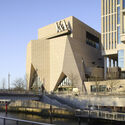
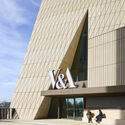
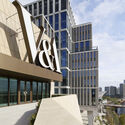
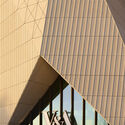
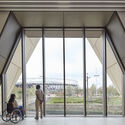
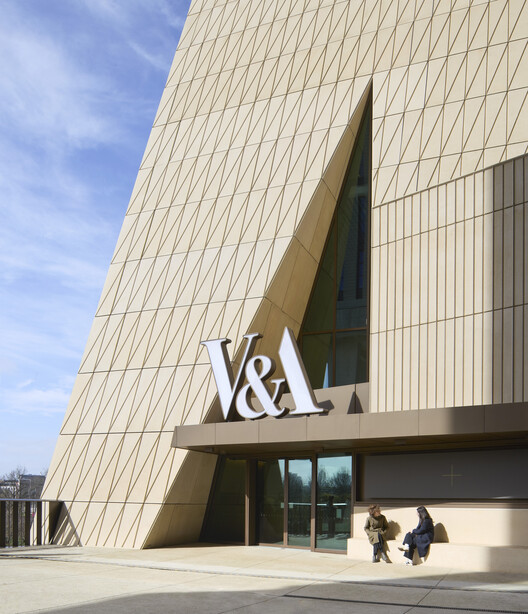
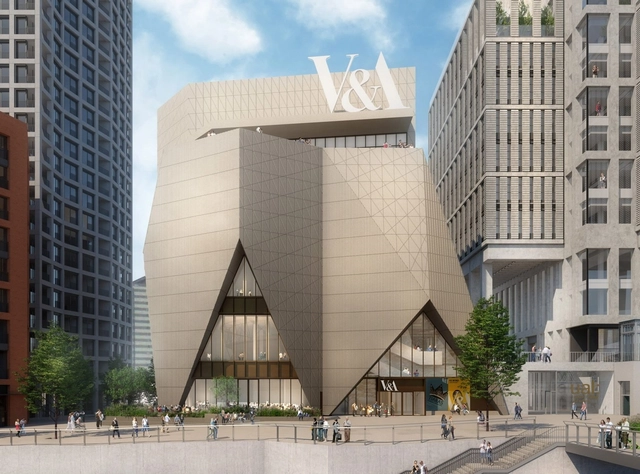
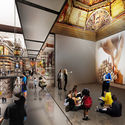
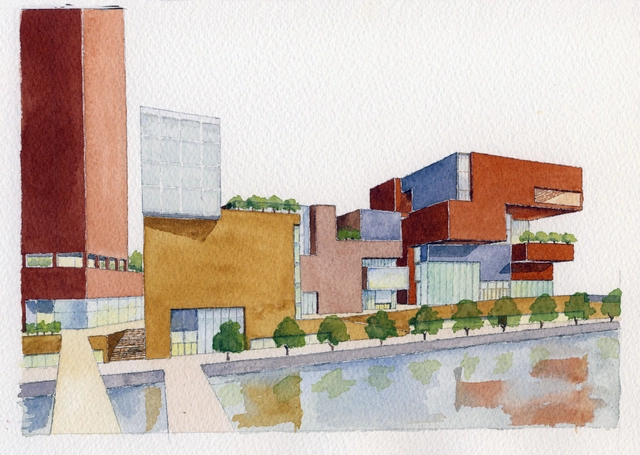
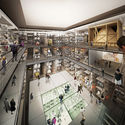
V&A East Museum, designed by architects O'Donnell + Tuomey, will open to the public on 18 April 2026. Assigned to the firm in 2015, the new building is located in the Queen Elizabeth Olympic Park, near its recently opened sister facility, the V&A East Storehouse, designed by Diller Scofidio + Renfro. Located in East London, the UK's newest cultural quarter supported by the Mayor of London, the two-building complex aims to "spotlight the many ways global artists, designers, and makers use creativity to shape the world." Dedicated to creative opportunity and its power to bring change, the museum's five public levels contain two permanent galleries, a 900 sqm temporary exhibition gallery, a top-floor project and event space, learning facilities, and a café.
This article is part of our new Opinion section, a format for argument-driven essays on critical questions shaping our field.
Traditionally, a museum visit is a calendared occasion with a clearly scripted sequence. Arrival is ceremonially marked—by grand stairs or thresholds, by ticketing and information desks, by an audio guide and a concise institutional preface about mission and history. That deliberate "special occasion" quality extends from how museums were long conceived: deliberately exceptional, tightly curated, and organized around a specific narrative arc. In this model, the museum assumes an authoritative voice—its knowledge deep, vetted, and to be respected rather than contested—while architecture and choreography reinforce a rather singular way of entering, learning, and remembering.
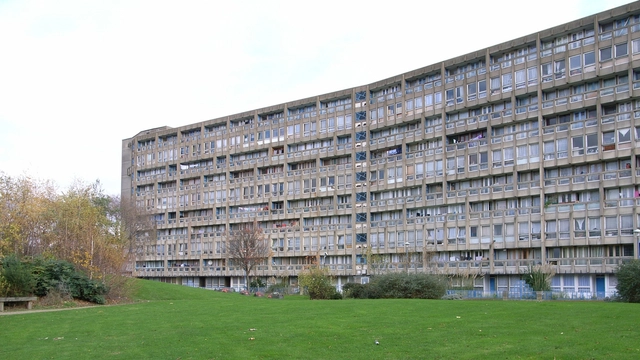
London’s architectural history is a rich tapestry that weaves together styles of various periods and influences. In the post-war era, the city experienced a surge in modern architecture, becoming a canvas for experimentation. New stylistic movements saw their expression crystalized through buildings such as Richard Rogers’ Lloyd’s Building, one of the most representative examples of High-Tech architecture, or the Barbican Estate, a large-scale housing estate that became the iconic structure for Brutalist architecture.
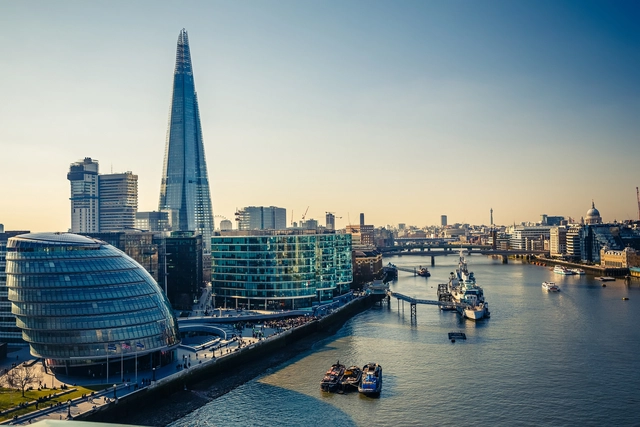
London’s contemporary architectural landscape continues to evolve, in part through the works of internationally-recognized architects such as Norman Foster, Zaha Hadid, and Thomas Heatherwick. This varied blend of styles, and ways of expression reflects the city’s ability to embrace architectural movements of global significance. As a center for innovation, London continues to attract established and emerging architects who shape its skyline and contribute to its international architectural discourse, with each new building offering a glimpse into the ever-changing nature of London’s urban fabric.
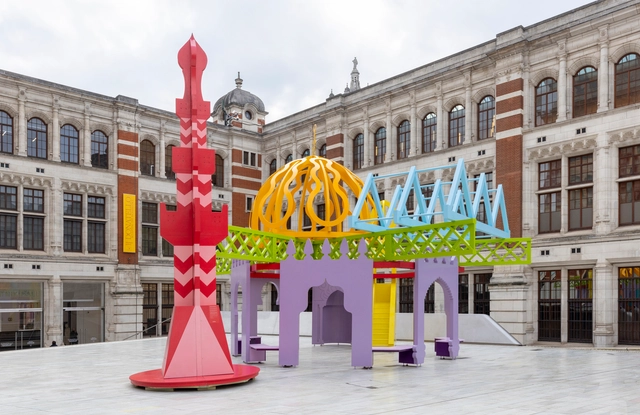
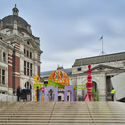
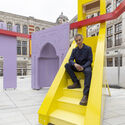
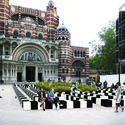
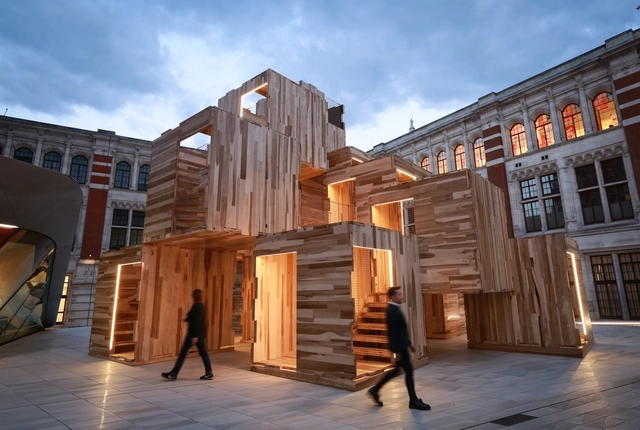
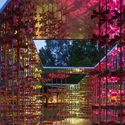
Ramadan Pavilion. Image Courtesy of Victoria & Albert Museum
Ramadan Tent Project and V&A present the Ramadan Pavilion 2023, an architectural installation inspired by the holy month of Ramadan, which starts today. The Ramadan Pavilion 2023 is designed by architect Shahed Saleem and will be open to the public at the Exhibition Road Courtyard of the V&A South Kensington until May 1, 2023. As part of the annual festival, the pavilion is accompanied by a series of events, performances, and workshops curated by the Ramadan Tent Project.
V&A East Museum. Image Courtesy of O'Donnell + Tuomey
London's V&A has revealed new images and information about V&A East, a museum by O'Donnell + Tuomey and research center by Diller Scofidio + Renfro. Sited within London's Queen Elizabeth Olympic Park, the projects will be built at the Here East complex and Stratford Waterfront. The V&A have stated that the museum will include two galleries to showcase the collections, while the research center aims to be a new model for collection storage and public display.
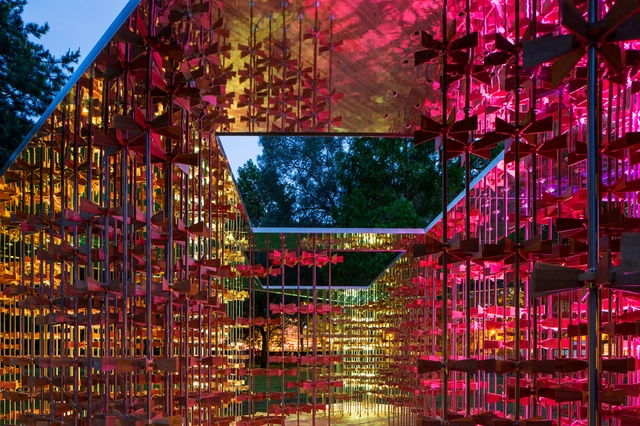
The 2018 London Design Festival is now underway, having returned for its 16th year. Running from 15th to 23rd September, and spread across the city, the Festival features works such as Snøhetta’s rotating book pavilion and a series of installations at the V&A celebrating the venue’s 10th year as the Festival’s official hub.
Below, we have compiled a list of collaborations to look out for throughout the week, including investigations into issues such as climate change and plastic pollution, and artistic themes such as Cubism and classical music.
https://www.archdaily.com/902215/7-installations-to-watch-out-for-at-the-2018-london-design-festivalNiall Patrick Walsh
The three-story section will consist of both the exterior facades and interiors of a maisonette flat, one of the signature typologies of the development and a defining example of the Brutalist movement in architecture.
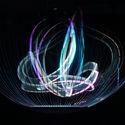
In this video from CNN Style, London designers Edward Barber and Jay Osgerby discuss Forecast, a wind-powered installation they created in collaboration with V&A Museum for the first London Design Biennale. With the intent to help city residents find their way “at a time of turbulence,” the installation responds to the Biennale's theme "Utopia by Design."
This week, Museum Gardens became the host to the annual Triumph Pavilion, this year focusing on the concept of "energy." Five Line Projects' aptly titled "Energy Pavilion" takes a multi-faceted approach to the theme, addressing social sustainability, movement and the power of community. The pavilion presents a playful meeting place, designed to explore the impact of a single positive action on its surroundings.
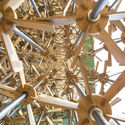
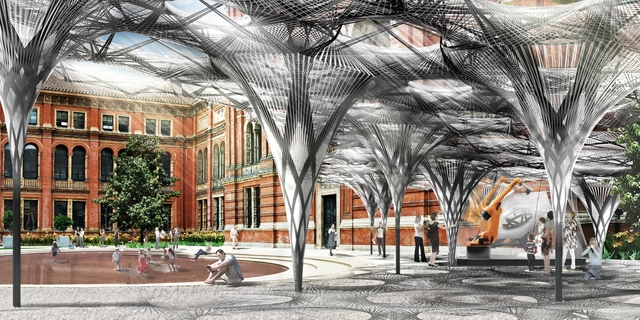
Stuttgart experimental architect Achim Menges has been commissioned to kickstart the V&A's first ever Engineering Season with a site specific, nature-inspired installation fabricated by robots. Complemented by Ove Arup's first major retrospective, Engineering the World: Ove Arup and the Philosophy of Total Design, the Elytra Filament Pavilion will be Menges' first public commission in the UK. He will work with Moritz Dörstelmann, structural engineer Jan Knippers and climate engineer Thomas Auer to complete the project.
"Elytra Filament Pavilion will explore the impact of emerging robotic technologies on architectural design, engineering and making," says the V&A. "Inspired by a lightweight construction principle found in nature, the fibrous structures of the forewing shells of flying beetles known as elytra, the Pavilion will be an undulating canopy of tightly-woven carbon fibre cells created using a novel robotic production process."
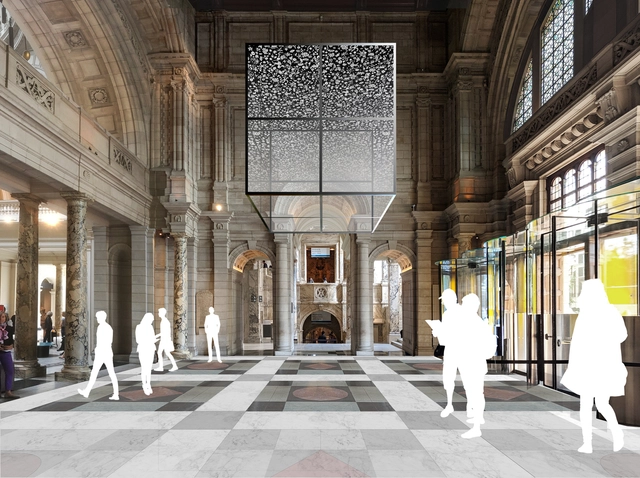
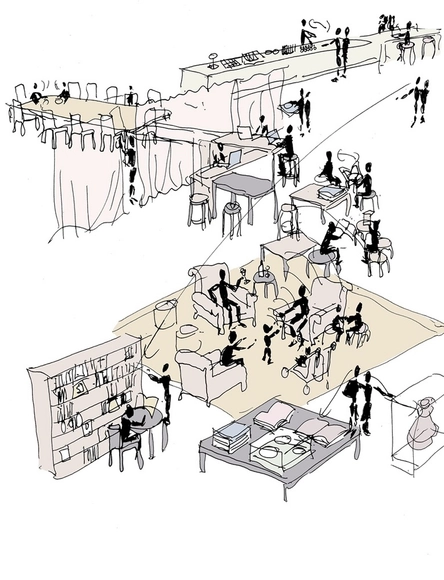
“We are delighted with the quality of the architects’ submissions," said V&A senior staff member David Bickle. "Carmody Groarke’s proposal created a stage not the performance, responding to our brief and the heritage of the Museum in a loose, relaxed, conversational way, creating a comfortable room for the Museum’s broad member constituencies and a framework for creative programming."
Videos
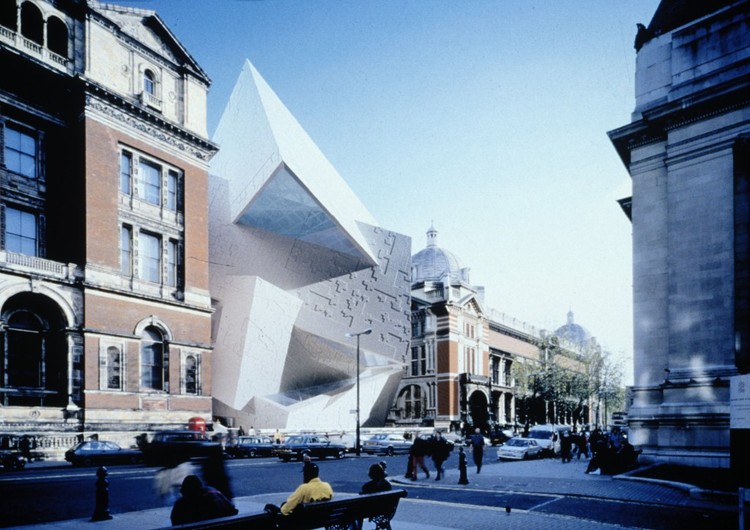
Courtesy of Balmond Studio & Studio Libeskind
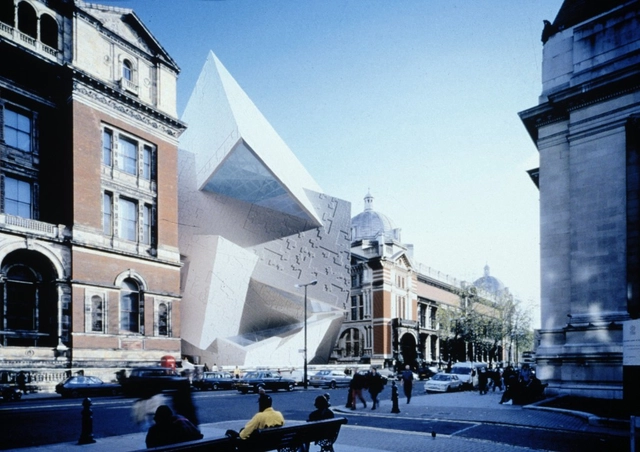
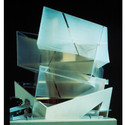
The violent insertion of Daniel Libeskind’s Spiral into the Victorian neighborhood of South Kensington renders a cataclysmic disruption into a landscape of order and propriety. It envisions a rupture in the fabric of space and time, aggressively anachronistic from the building it adjoins, unapologetically appealing not to cultured humanism but to the mathematical logic of complexity and chaos. What is now textbook "Libeskind" was in 1996 a shocking non-starter for the London establishment, an unacceptable risk for a city perpetually torn between its agitated cosmopolitan energies and its quintessential impulse toward nostalgia and restraint. Nearly twenty years after the Spiral was selected as the winner of a distinguished international competition, this controversial extension proposal for the Victoria and Albert Museum remains unbuilt.
London's Victoria & Albert Museum have announced that David Bickle, formerly a partner at Hawkins\Brown, has been appointed as the new Director of Design, Exhibitions and FuturePlan. In this role Bickle will be responsible for the care and future development of the V&A’s buildings, as well as the presentation of all of the museum’s permanent collections and exhibitions. With the construction of Amanda Levete Architects' new addition on Exhibition Road underway - coupled with the V&A's plans for new exhibition spaces in Dundee, Scotland, and in East Stratford on the former site of the 2012 London Olympic Games - the museum is also in the process of helping to establishing a collection in Shenzhen.
When Kengo Kuma's concept for the new Victoria and Albert Museum of Design (V&A) in Dundee, Scotland, was unanimously chosen as the winning design in late 2012, the jurors had stated that the proposal has been "subject to exhaustive scrutiny, including having external assessors do a detailed examination of projected costs." They stated that they "did not have to exclude any of the submissions on grounds of affordability." It is now reported, a little over two years later, that the original £45million budget has now exceeded £80million in spite of the fact that the building has already been 'redesigned' once in order to try to reign in soaring costs.
The latest obstacle in a tumultuous project history, figures released by Dundee City Council predict that Kengo Kuma and Associates'V&A museum in Dundee will cost an extra £31 million. Since unanimous selection by a competition jury in 2010, the project has been plagued by budget concerns, prompting a relocation from the original waterfront on the River Tay to a site further inland in 2012. Described by the V&A as "much more than just a building," Kuma's V&A Dundee is now slated to welcome the public in 2018, three years later than originally planned. Learn more about the delays after the break.