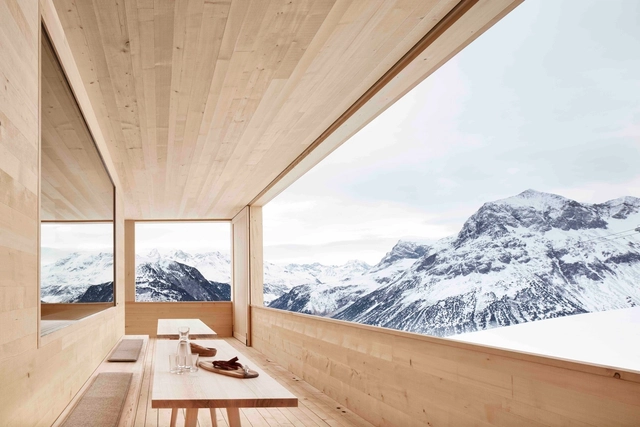
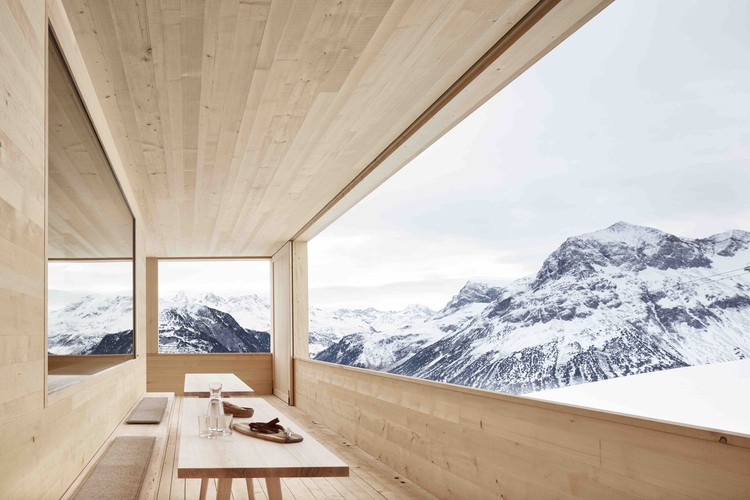
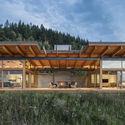
The mountains—one of the contexts that almost every architect would like to build in at least once. And yet even though it's an attractive setting, the associated challenges, including, but not limited to the sheer remoteness of mountain regions and their distance from basic services, make building in the mountains particularly demanding.
We've compiled a selection of 15 incredible works of architecture that maximize the breathtaking surroundings found in mountainous areas, featuring photographs from Felipe Camus, Janez Martincic, and Anze Cokl.
Example of pedestrian pattern heatmaps, as produced by software-translated timelapse recordings in our project Co-Creating Responsive Urban Spaces, transmitting interaction installations in the practice of urban design to activate public spaces. See www.responsiveurbanspaces.amsterdam
What happens when the sensor-imbued city acquires the ability to see – almost as if it had eyes? Ahead of the 2019 Shenzhen Biennale of Urbanism\Architecture (UABB), titled "Urban Interactions," Archdaily is working with the curators of the "Eyes of the City" section at the Biennial to stimulate a discussion on how new technologies – and Artificial Intelligence in particular – might impact architecture and urban life. Hereyou can read the “Eyes of the City” curatorial statement by Carlo Ratti, the Politecnico di Torino and SCUT.
Cities, as Goethe had already pointed out, should be understood as continuously developing 'forms in motion' (see Batty 2018). In the past, technological developments and our hopeful, as well as our dystopian imaginations of them, have been one of the main sources of kinetic energy to kick-off the shapeshifting processes of urban transformations. Most of the time with unexpected side-effects, evolving center stage in retrospect.
https://www.archdaily.com/930040/from-the-city-as-a-service-to-the-city-as-a-license-martijn-de-waal-and-frank-suurenbroek-for-the-shenzhen-biennale-uabb-2019Martijn de Waal and Frank Suurenbroek
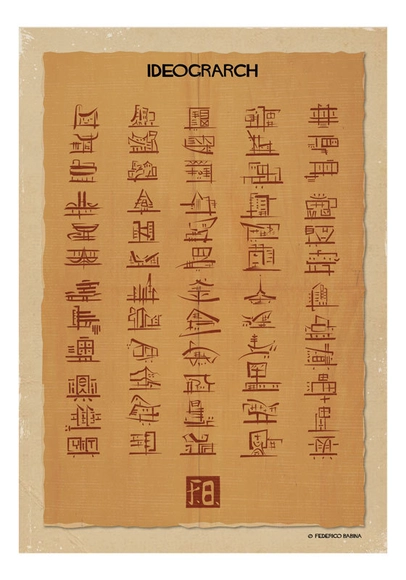
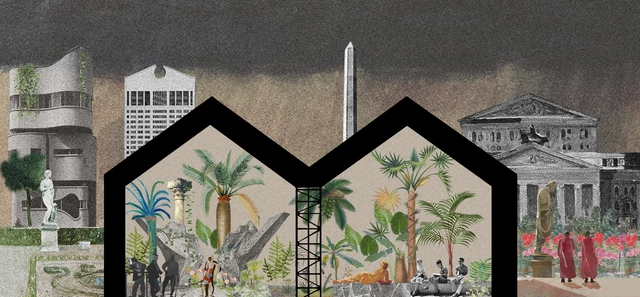
Frederico Babina is an Italian architect and graphic designer who creates artwork that focuses on the abstract replications of famous imagery and buildings. Through a strong focus on geometry and form his work represents a sense of innocence, inexperience and spontaneity throughout.
Conversations around resiliency today seem to imply that planners and designers might be capable of—might even be expected to—save every building and public space at risk. The sad truth is, however, that we cannot, and perhaps we should not. Climate change and its attendant sea level rise will radically redraw urban edges, forcing us to make difficult decisions. Even if we had the vast sums of money required to protect the precarious status quo, that might not be enough to stave off the inevitable.
So, then: What are our priorities? How do we choose what to save? How do we responsibly chart this uncertain future? I believe the answers to these and similar questions should begin with an honest assessment of three essential considerations:
ArchDaily in collaboration with Google Arts & Culture. Image Courtesy of Tomás Olivos
Bauhaus: a school, a design discipline, and a movement that has been influencing generations of architects and designers for 100 years.
The school was a lot more than modernist designs and primary colors, it was a movement with a political, social, and cultural impact, led by some of the most notable figures in the field. Since its inauguration in 1919, the school has defined its own style through the intersection of architecture, art, industrial design, typography, graphic design, and interior design. When the school was forced to close its doors in the face of political pressure, its professors and students dispersed, spreading its teachings across the world.
Open More Doors is a section by ArchDaily and the MINI Clubman that takes you behind the scenes of the world’s most innovative offices through exciting video interviews and an exclusive photo gallery featuring each studio’s workspace.
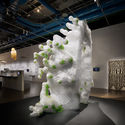
Instant Lounge, invented by UEO, will be exhibited on the 2019-2020 Shenzhen Biennale. Instant Lounge is a site-specific room-size retractable 3D printer that makes temporary furniture in real time. The exhibition will be in Shenzhen Futian High Speed railway station from December 21- March 21.
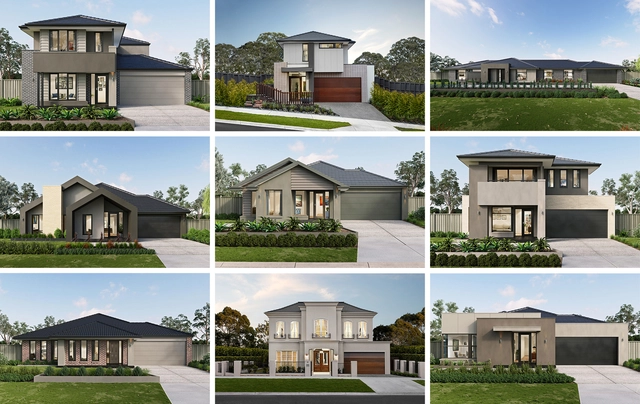
Use the term ‘volume builder’ in front of an architect, and there’s a fair chance they’ll shudder. Conjuring a vision of homogenous, mass-produced boxes squished together, ruining the look of leafy suburbs traditionally populated by impeccably designed homes, volume building is often seen as the poor cousin.
However, not all volume builders are cut from the same cloth.
More than 5.000 architecture projects were published in ArchDaily this year. Year after year, we curate hundreds of residential projects, and as we know our readers love houses, we compiled a selection of the most visited residential projects published on the site.
Set in various locations around the world, in urban, rural, mountain and beach landscapes; a variety of structural designs, from traditional masonry to the most technological prefabricated systems; from small dwellings to large houses and materials such as concrete, wood, and bricks as the most used. We also found their design and typology solutions were very much aligned with their specific settings and all of them share a strong dialogue between the house and nature, whether it is its direct surroundings or the introduction of green into a more condensed urban setting.
This selection of 50 houses highlights the most visited examples during these twelve months and, according to our readers, were the most attractive in innovation, construction techniques, and design challenges. Check them out below:
Relatively unknown outside his home country, Clorindo Testa (December 10, 1923 – April 11, 2013) was one of Argentina’s most important 20th-century architects. Consistently defying categorization, Testa had a hand in two of Buenos Aires’ most iconic buildings, the Bank of London and South America, and the National Library, as well as many others throughout his long career. Characteristically enigmatic, Testa would only ever acknowledge Le Corbusier as an influence, saying, “I never paid attention to other architects.” As a former colleague Juan Fontana described, Testa spoke the language of brutalism with an Argentine accent.
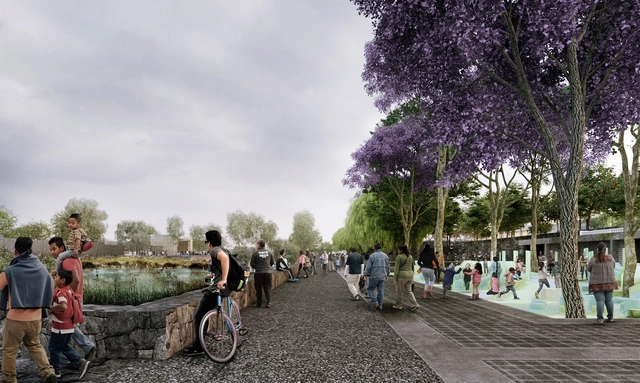
“Hydropuncture”, Global LafargeHolcim Awards Gold winning project 2018 in Mexico City. Image Courtesy of LafargeHolcim Foundation
Seeking international projects that combine sustainable construction practices with architectural excellence, the LafargeHolcim Awards are open for entries to their 6th cycle through February 25, 2020. The Awards offers a total of $2 million USD in prize money to projects and concepts from architecture, engineering, urban planning, materials and construction technology, and related fields.
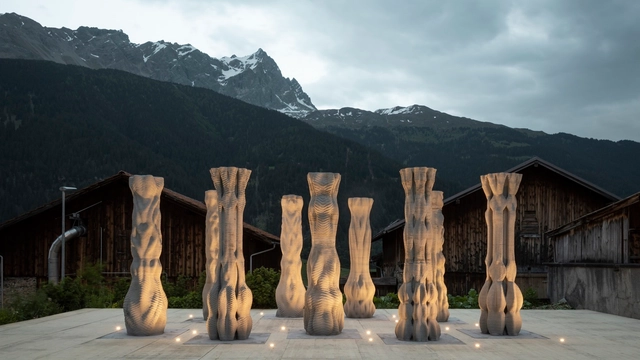
At the beginning of 2019, we identified 3D printing as a trend that would influence architecture in 2019. This was not a difficult prediction to make. Aside from noting a 70% increase in reader interest in 3D printing throughout the previous year, we saw how the architectural community has had a long-running engagement with 3D printing, from using the technology to tackle homelessness, to creating affordable yet complex structural connections.
This does not mean that 2019 was a "boring" year in the 3D printing world. In fact, while the influence of the technology in the architecture of 2019 was predictable, the various ways in which this influence manifested was not. Throughout the year, 3D printing seemed to appear everywhere, from spanning a canal to replicating timber, and imagining neighborhoods for Texas and Mars.
Humans spend almost 90% of the time indoors; that's approximately 20 hours a day in closed rooms and 9 hours a day in our own bedrooms. The architectural configurations of these spaces are not random - that is, they have been designed or thought of by someone, and are at least slightly "guided" by the conditions of their inhabitants and their surroundings. Some people inhabit spaces specially catered to their needs and tastes, while others adapt and appropriate designs made for someone else, perhaps developed decades before they were born. In either case, their quality of life may be better or worse depending on the decisions that are made.
Understanding the importance of carefully designing our interiors, particularly through the lens of access and enjoyment of natural light, was the purpose of the 8th VELUX Daylight Symposium, held on October 9 and 10 of 2019 in Paris. This year, more than 600 researchers and professionals attended and reaffirmed the importance of natural light, presenting a series of concrete tools that could help quantify and qualify light by designing its entry, management, and control with greater depth and responsibility.
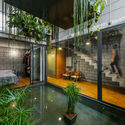
Interior gardens and plants produce many day-to-day benefits, like mood boosting and memory enhancing effects. Interior landscape design, also known as "plantscaping", is much more than the act of bringing plants indoors; it's actually about the strategic placement and selection of plant species within an architectural project to highlight and enhance aspects of spatial design.
Videos
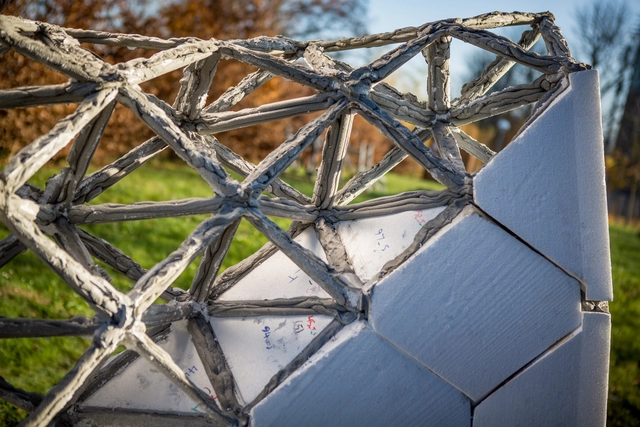
Mortar space truss wall with robotic extrusion (IASS 2019, Form and Forces) by Romain DUBALLET (Design by Data Research Studio Academic Director) with Mahan MOTAMEDI, Nicolas DUCOULOMBIER, Paul CARNEAU, Léo DEMONT, Romain MESNIL, Olivier BAVEREL, Jean-François CARON.
The Advanced Master “Design by Data” program in Computation Design & Robotics for Architecture and Construction was launched in 2016 and is one of the latest programs in innovative professional education at Ecole des Ponts ParisTech. The program was designed to meet the increasing need for the professional sectors of architecture and engineering to combine architectural skills with creative engineering. Design by Data trains professionals to master advanced design tools (coding, algorithmic approach, artificial intelligence) as well as digital manufacturing and design processes (robotics, 3D printing, electronics and mechatronics) and apply them to architectural and construction projects.
With a mission to provide tools and inspiration to improve the quality of life in our built environment, ArchDaily curators constantly track and share with our audience the best "built projects" in the world. In order to celebrate these achievements and thank our readers for actively participating in our community, we selected the 50 best architectural works published during 2019.
XXX TIMES SQUARE WITH LOVE, Photographs by Rob Kassabian @ RK Films
What happens when the sensor-imbued city acquires the ability to see – almost as if it had eyes? Ahead of the 2019 Shenzhen Biennale of Urbanism\Architecture (UABB), titled "Urban Interactions," ArchDaily is working with the curators of the "Eyes of the City" section at the Biennial to stimulate a discussion on how new technologies – and Artificial Intelligence in particular – might impact architecture and urban life. Hereyou can read the “Eyes of the City” curatorial statement by Carlo Ratti, the Politecnico di Torino and SCUT.
The history of Times Square and 42nd street is a history of the human gaze. Broadway theaters and X-rated shows used to enjoy a neighborly relationship of “looking at” and “being looked at” in musical theaters, peep shows and x-rated cinemas. Voyeurism was the business that is lost since for an urban context which by now transformed into an almost aseptic shopping and entertainment district.
https://www.archdaily.com/929807/xxx-times-square-with-love-jurgen-mayer-h-for-the-shenzhen-biennale-uabb-2019Jürgen Mayer H.
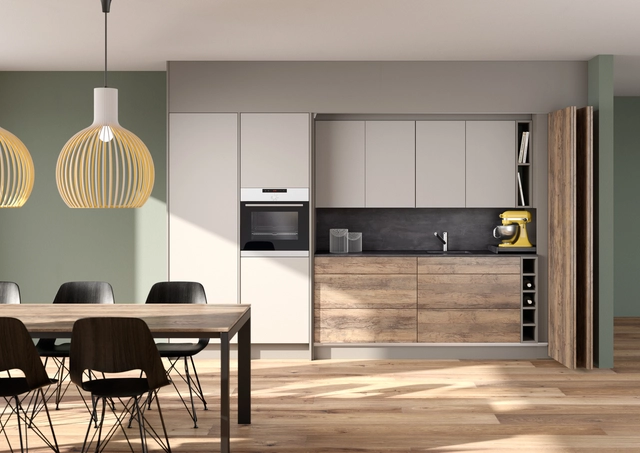
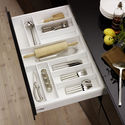
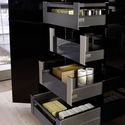
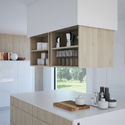
Over the past decade, tiny houses and micro-apartments have gained an immense amount of popularity as affordable and environmentally-friendly options for modern living. With compact architecture growing increasingly preferable or necessary for many, spatially-conscious furniture design is becoming increasingly relevant as well. One of the most critical areas for space-saving is the kitchen, where the multitude of functions and necessity of storage can make it difficult at times to make efficient use of space. Below, we outline several examples of space-saving furniture designs to make the best use of a small kitchen.






.jpg?1576062728&format=webp&width=640&height=580)


_0230.jpg?1575597078&format=webp&width=640&height=580)
_0193.jpg?1575596907 "© Laurian Ghinitoiu")
_0118.jpg?1575596723 "© Laurian Ghinitoiu")
_0109.jpg?1575596632 "© Laurian Ghinitoiu")
_0296.jpg?1575597214 "© Laurian Ghinitoiu")
_0230.jpg?1575597078)









.jpg?1506954757 "© Quang Dam")
_Image-MORKULNES-ARTISTSTUDIO-56201-PH_10_photo%C2%A9BruceDamonte.jpg?1506955584 "© Edward Hendricks")