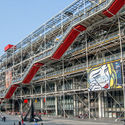
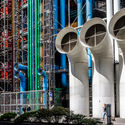
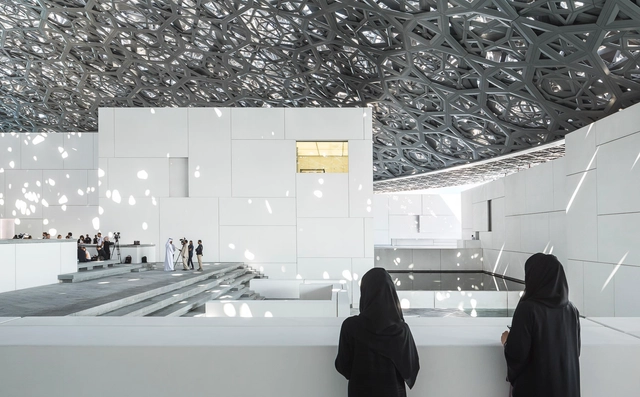
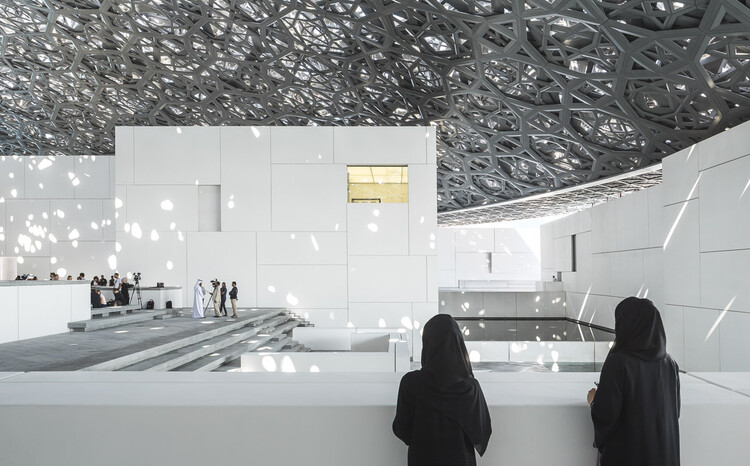
It is undeniable that, at first glance, the idea of a Louvre in Abu Dhabi or a Centre Pompidou in Brazil may seem somewhat disconcerting. The image of these museums, internationally renowned, appears in many ways inseparable from their original cultural contexts. And to some extent, it truly is. The Louvre, deeply rooted in the history of France as a former fortress and later royal residence, embodies a set of invaluable heritage values, further amplified by I. M. Pei’s iconic glass pyramid intervention in 1989. The Pompidou, meanwhile, is remembered as a historic turning point: by redefining the concept of public infrastructure through radically unconventional architecture, it marked the first time culture drew in mass audiences.
The cultural center is an architectural typology that has fascinated architects and urban planners for decades. Whether due to its multifaceted program, its often emblematic scale, or its potential to transform the urban context in which it is inserted, it is a building type that carries strong symbolic and conceptual value. The wide circulation of international references—many designed by renowned architects—reinforces the aura of prestige associated with this program, frequently seen as a privileged ground for formal and conceptual experimentation. Not by chance, cultural center designs are among the most recurring themes in competitions, exhibitions, and academic studios.
Yet behind this contemporary fascination lies a complex history in which the notion of space dedicated to culture has been redefined over time, gradually taking the form we recognize today. This ongoing evolution invites us to reflect not only on the historical path of these spaces but also on the possibilities that will shape their future.
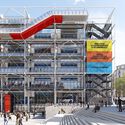
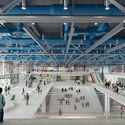
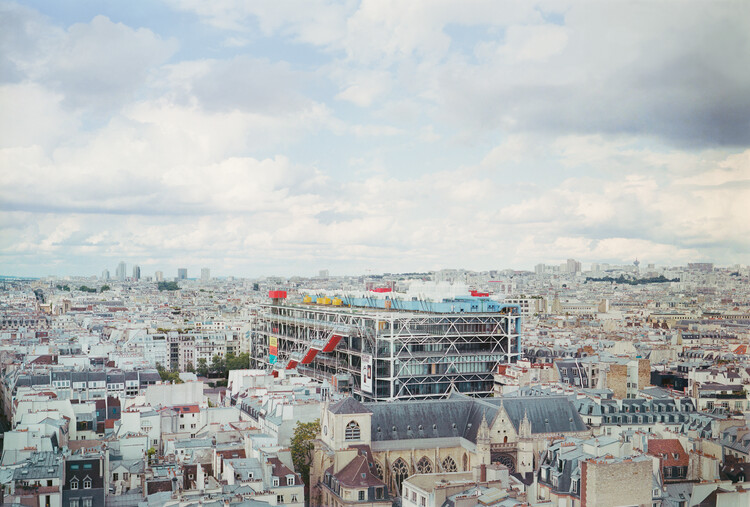
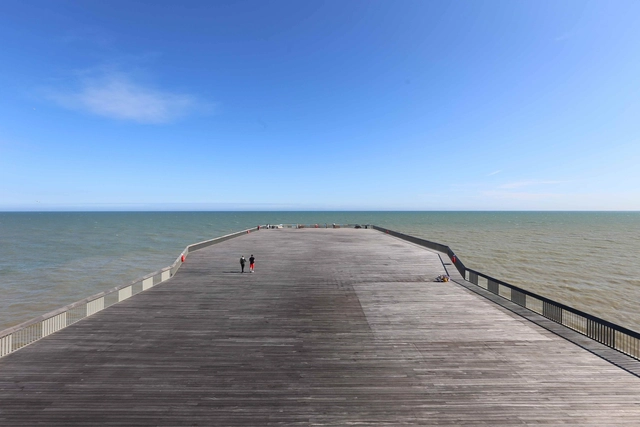
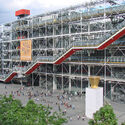
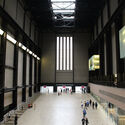
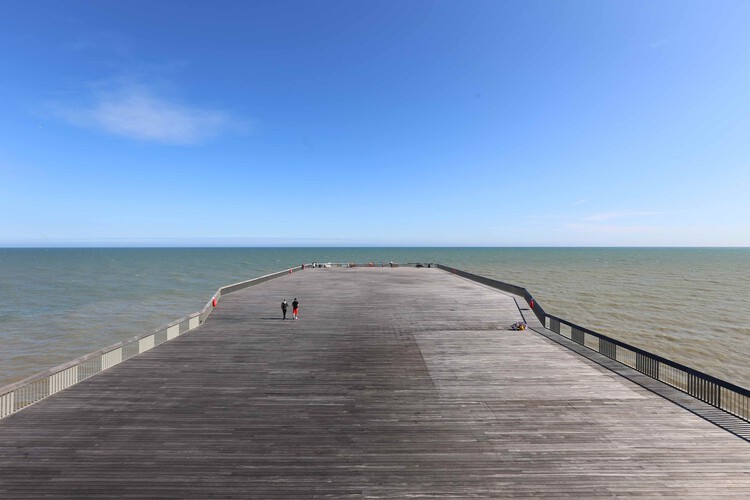
Whether for design competitions or architectural awards, buildings are often judged for what they offer–the programmed functions, the form, or the visual delight. In a minority of cases, it is the absence or the reduction of intervention that made a project successful. In 1971, a high-profile architectural competition in Paris was won by a proposal that only utilized half the available site, giving the rest as an urban space to the city. In London, a proposal to convert a disused power station with minimal additions, leaving large spaces untouched, won a design competition in 1994. The Stirling Prize, the UK's most prestigious architectural award, in 2017 was won by a proposal that was little more than an empty platform. These examples of cultural buildings from Northwestern Europe illustrate how the absence of intervention can provide more.
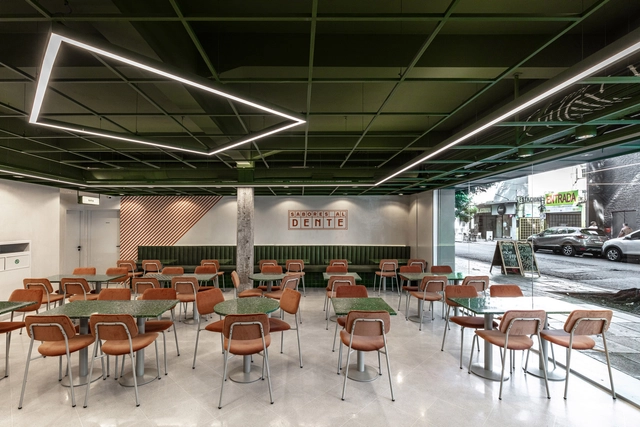
In contemporary interior architecture, service provisions—mechanical, electrical, HVAC, plumbing—are almost always treated as elements to be concealed. Thickened wall cavities, extensive dropped ceilings, and, in regions where solid construction such as brick or concrete prevails, furred-out walls are routinely employed to hide these systems. This approach has become so normalized that it often forms the starting assumption for spatial planning, inherently constraining imagination and reducing the range of spatial possibilities. The priority shifts towards covering-up, rather than exploring how these systems might coexist visibly within a design language.
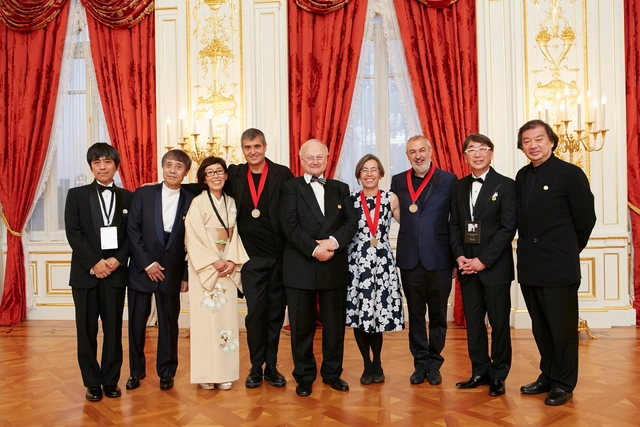
The Pritzker Prize is the most important award in the field of architecture, awarded to a living architect whose built work "has produced consistent and significant contributions to humanity through the art of architecture." The Prize rewards individuals, not entire offices, as took place in 2000 (when the jury selected Rem Koolhaas instead of his firm OMA) or in 2016 (with Alejandro Aravena selected instead of Elemental); however, the prize can also be awarded to multiple individuals working together, as took place in 2001 (Herzog & de Meuron), 2010 (Kazuyo Sejima and Ryue Nishizawa of SANAA), and 2017 (Rafael Aranda, Carme Pigem, and Ramon Vilalta of RCR Arquitectes).
Modernism, a movement that sought to break away from traditional forms and embrace the future, laid the groundwork for many technological and digital advancements in contemporary architecture. As the Industrial Revolution brought about mass production, new materials, and technological innovation, architects like Le Corbusier, Walter Gropius, and Mies van der Rohe championed the ethos of "form follows function" and a rational approach to design. Their principles resonate in the digital age, where computational design and high-tech materials redefine form and construction.
The 20th century's modernist ideals — efficiency, simplicity, and functionality — created a foundation for architects to experiment with structural clarity and material honesty. High-tech architecture, which emerged in the late 20th century, evolved from these principles, merging modernism's clean lines with advanced engineering and technology. This paved the way for parametricism and algorithm-driven design processes, revolutionizing architecture and enabling complex forms previously thought impossible.
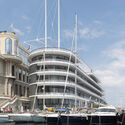
The relationship between architecture and naval design has been a fascinating interplay of form and function that has evolved significantly. Both disciplines have a shared history of innovation, aesthetics, and functionality that have informed and inspired each other. This "love affair" has seen architects drawing inspiration from boats, particularly in the modernist era when ships' streamlined, efficient designs influenced the aesthetic of buildings. Conversely, architectural principles have also been adapted to enhance the functionality and form of boats, demonstrating a reciprocal exchange that continues to shape both disciplines.
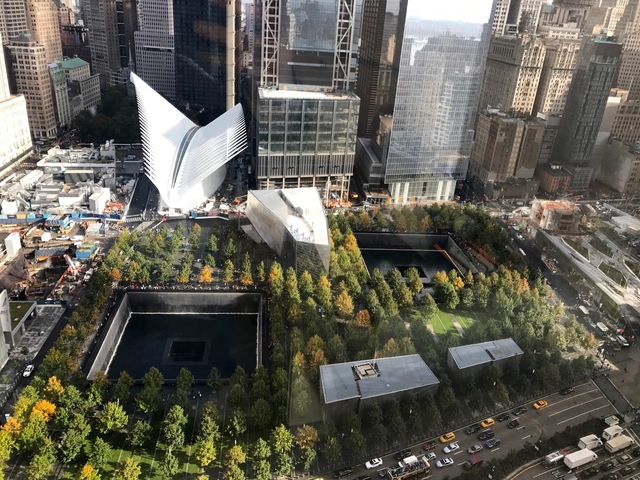
On the morning of September 11, 2001, two hijacked commercial jetliners struck the Twin Towers in Lower Manhattan, a third plane struck the Pentagon, and a fourth crashed in rural Pennsylvania. A total of 2.977 people were killed in the terrorist attacks. In the face of this unprecedented loss, the city of New York promised to rebuild Lower Manhattan as a lively neighborhood while honoring and maintaining the memory of this day. Thus began one of the largest reconstruction projects in New York City, a process that is still ongoing now, 23 years after the tragedy.
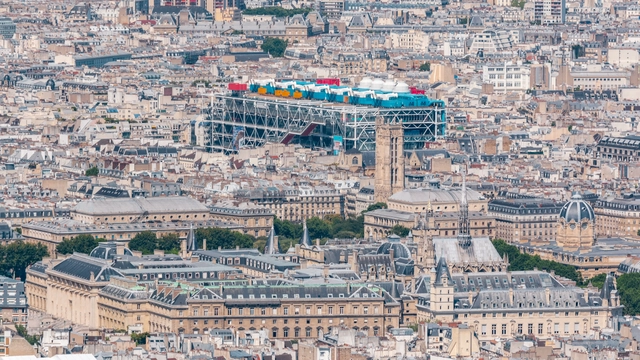
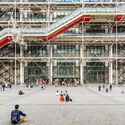
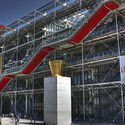
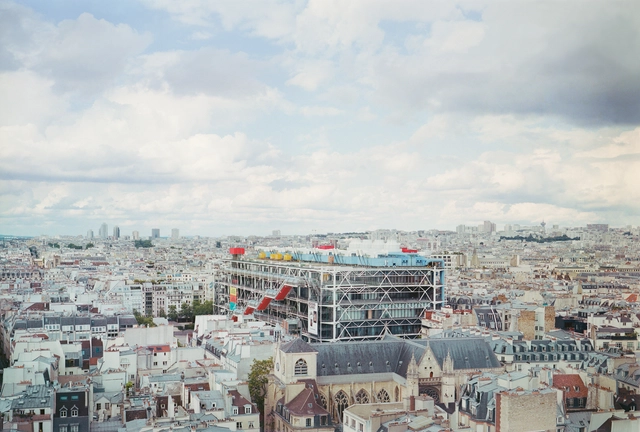
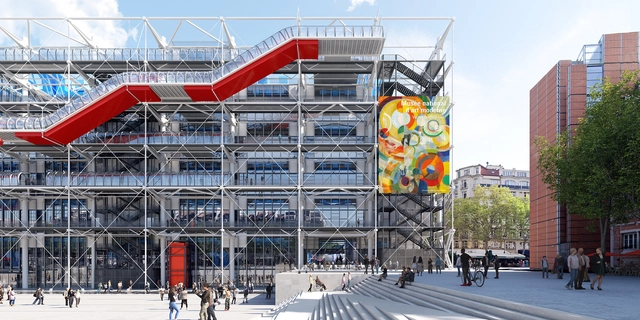
In 2020, the French Minister of Culture approved an extensive renovation program for the Centre Pompidou with the purpose of resolving the building's technical issues and ensuring the long-term viability of the iconic structure. Designed by Renzo Piano and Richard Rogers in 1971, the museum was conceived as a "living cultural machine," sparking controversy due to its unusual architecture. To ensure an efficient renovation process, the building will be fully closed for a period of 5 years, from September 2025 until 2030. French architecture studio Moreau Kusunoki has been commissioned to lead the renovation project, collaborating with Frida Escobedo Studio and AIA Life Designers, who are entrusted with the technical component of the project. The architects have been selected following an international competition, with Renzo Piano as one of the jury members.
Rising demands for energy efficiency, technical functionality, and interior comfort in buildings necessitate the development of more efficient building envelope constructions. The building envelope serves as a mediator between a building's exterior and interior. In today's architectural landscape, it performs a multitude of functions to enhance the building's performance. These functions include building control systems, energy supply (such as gas and electricity), and heating, ventilation, and air conditioning (HVAC), among others. These elements primarily determine the functionality, efficiency, and safety of building spaces. Given that the nature of building envelopes heavily depends on these services, how can they serve as primary frameworks for building design development?
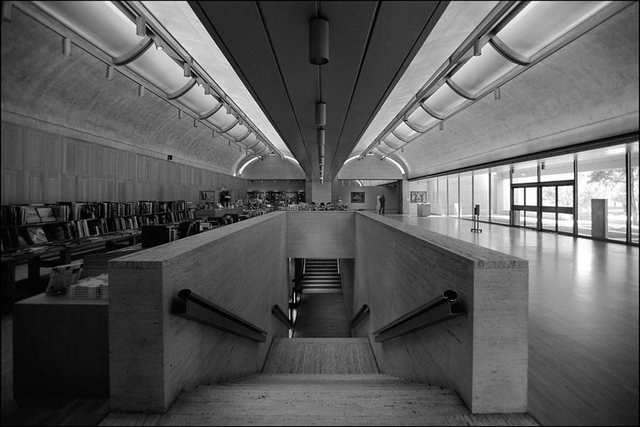
Kimbell Art Museum / Louis Kahn. Image Courtesy of Xavier de Jauréguiberry
AD Classics presents you with some of the greatest buildings of the past that have influenced and shaped architecture today. Throughout ArchDaily's 13 years, more than 200 classics were published, and for this edition, we have rounded up the top 20 most visited Architecture Classics to date.
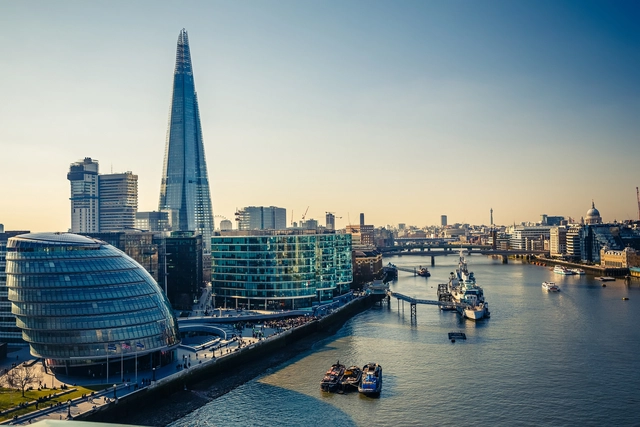
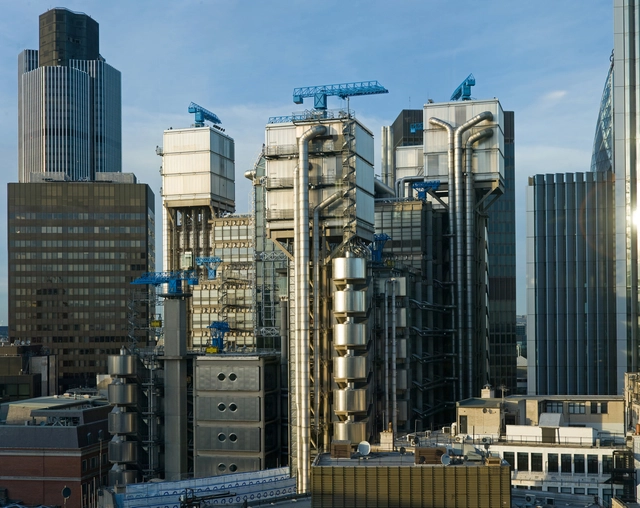
London’s architectural history is a rich tapestry that weaves together styles of various periods and influences. In the post-war era, the city experienced a surge in modern architecture, becoming a canvas for experimentation. New stylistic movements saw their expression crystalized through buildings such as Richard Rogers’ Lloyd’s Building, one of the most representative examples of High-Tech architecture, or the Barbican Estate, a large-scale housing estate that became the iconic structure for Brutalist architecture.
London’s contemporary architectural landscape continues to evolve, in part through the works of internationally-recognized architects such as Norman Foster, Zaha Hadid, and Thomas Heatherwick. This varied blend of styles, and ways of expression reflects the city’s ability to embrace architectural movements of global significance. As a center for innovation, London continues to attract established and emerging architects who shape its skyline and contribute to its international architectural discourse, with each new building offering a glimpse into the ever-changing nature of London’s urban fabric.
The profession of architecture is often marked by those individuals who employ their talent and resources to enable change and bring forth a vision for a better future. While some of them began their careers with bold gestures that captured the attention of the architectural world and changed paradigms, others worked in a more quiet manner, shifting the focus to the users of the space and asking themselves how they can best contribute to enriching the lives of those around them.
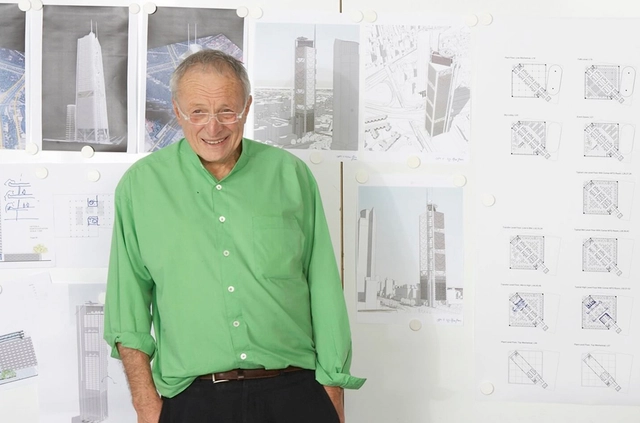
As the new year begins, we pause to look back to the architects who have passed away over the course of the last year but whose legacy and contribution to architecture outlive them. Among them, we remember Pritzker Prize laureate and pioneer of the High-Tech Richard Rogers, Post-Modern icon Ricardo Bofill, the thoughtful Gyo Obata, advocate and innovator Doreen Adengo, social housing pioneer Renée Gailhoustet and the many-sided Pritzker Prize laureate Arata Isozaki.
Richard Rogers, the fourth British architect to be awarded the Pritzker Prize, has passed away at 88 on Saturday, December 18, as reported by The New York Times.
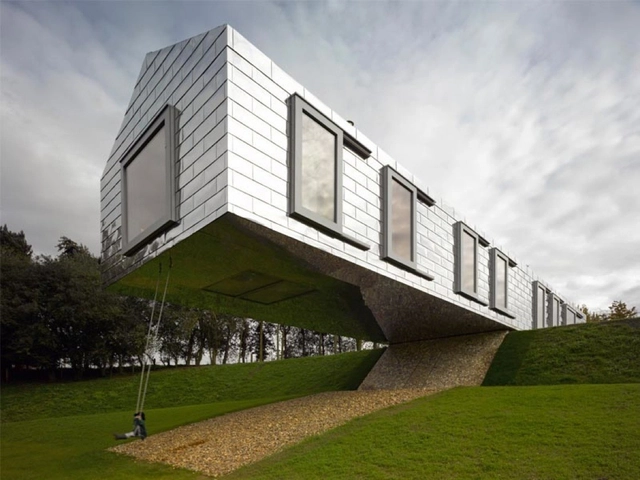
As a design feature, cantilevers can exist for any number of reasons, as rational results of form-making, impressive feats of engineering, or just unnecessary spectacles. Either way, they often result in buildings that appear both heavy and light at the same time and they present safely precarious situations for their inhabitants. The video describes what cantilevers are as well as some of the structural principles which govern their design like tension, compression, moment, and shear. It also goes over some great examples by architects like MVRDV, Rem Koolhaas, Ensemble Studio, and Richard Rogers. Finally, it concludes with appreciation for structural engineers and lists a few of the ones responsible for some of the most daring of delicate dangles.
The Centre Georges Pompidou in Paris, France, known also as Beaubourg, is set to undergo major renovation works. Designed in the 1970s by architects Renzo Piano and Richard Rogers, and inaugurated in 1977, one of the capital’s leading cultural attractions is scheduled to be closed completely as of the end of 2023 until 2027. Showing signs of aging, especially when it comes to the heating and cooling system, escalators and elevator malfunctions, and asbestos that must be removed, this is not the inside-out museum's first revamp, in fact, it was closed down once before in 1997, during its 20th anniversary, for a couple of years.



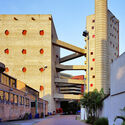
























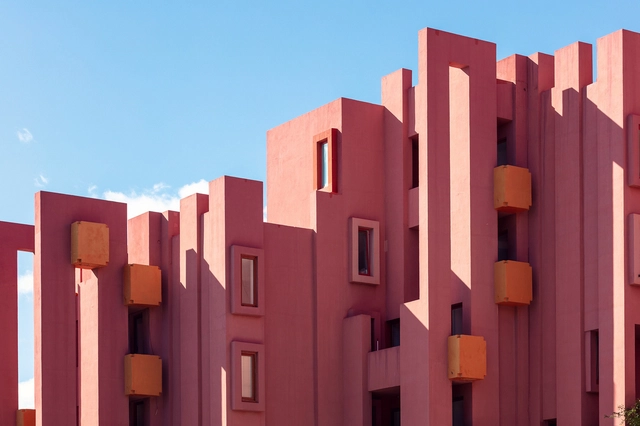
.jpg?1570002957 "La Muralla Roja / Ricardo Bofill. Image Courtesy of Ricardo Bofill")